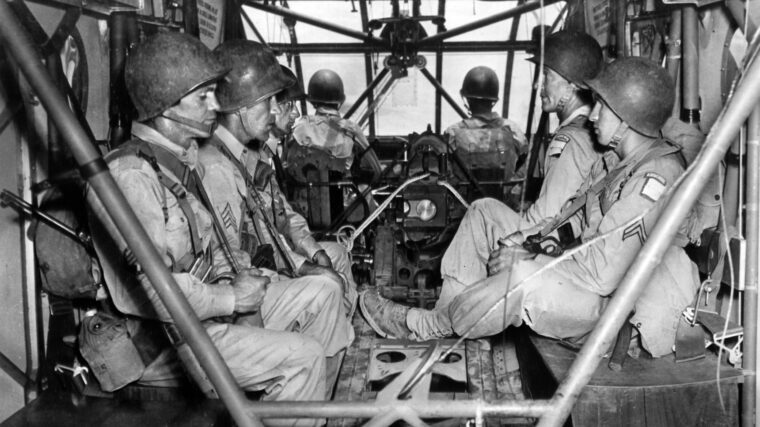
Glider Pilots: No Engines, No Parachutes, No Second Chances
By Scott McGaughDuring the decade of the U.S. Army’s experiment with gliders in war, nearly as many glider pilots died in training as they did in combat. Read more
During the decade of the U.S. Army’s experiment with gliders in war, nearly as many glider pilots died in training as they did in combat. Read more
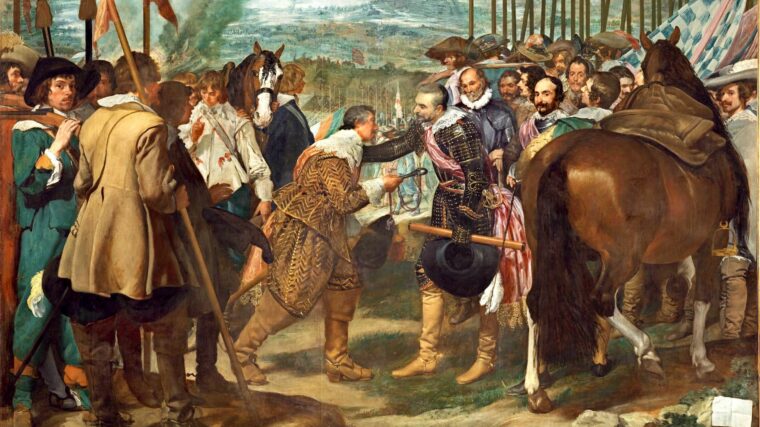
The crown of Spain and the wealthy banking families of Genoa had a symbiotic relationship during the Renaissance. Read more
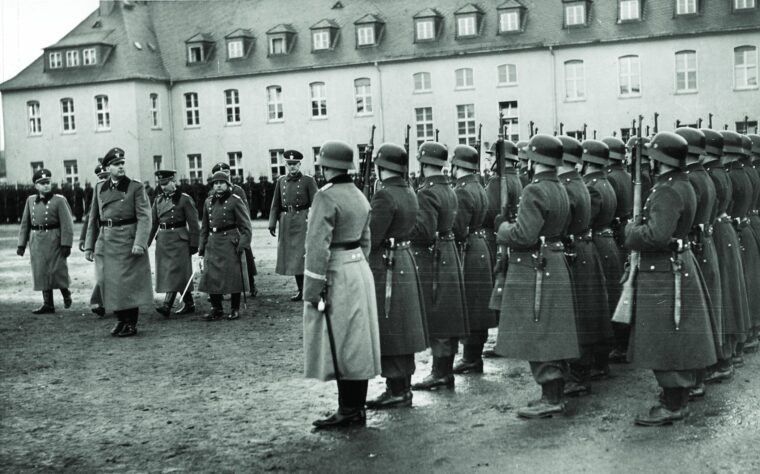
A challenging but rewarding pursuit for collectors of World War II headgear is the acquisition of authentic helmets worn by military and civilian organizations of the Third Reich. Read more
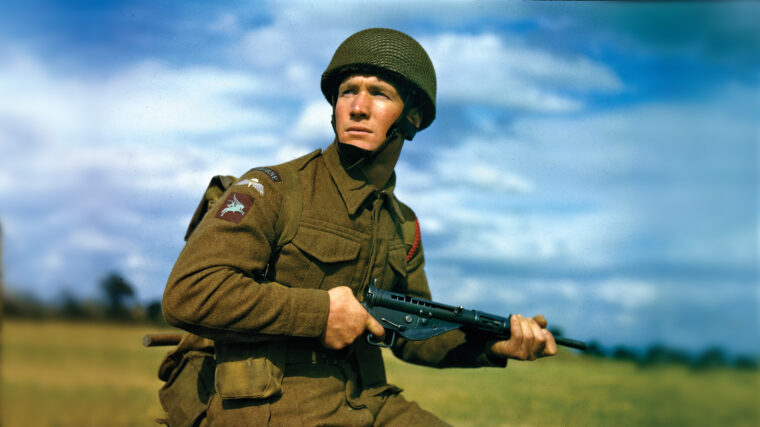
The small French village of Merville (1940 population: 470), located just south of the coastal town of Franceville-Plage, had as its neighbor on its southern fringe an unwelcome German battery consisting of four concrete bunkers housing artillery pieces that pointed northwest toward Ouistreham and the mouth of the Orne River. Read more
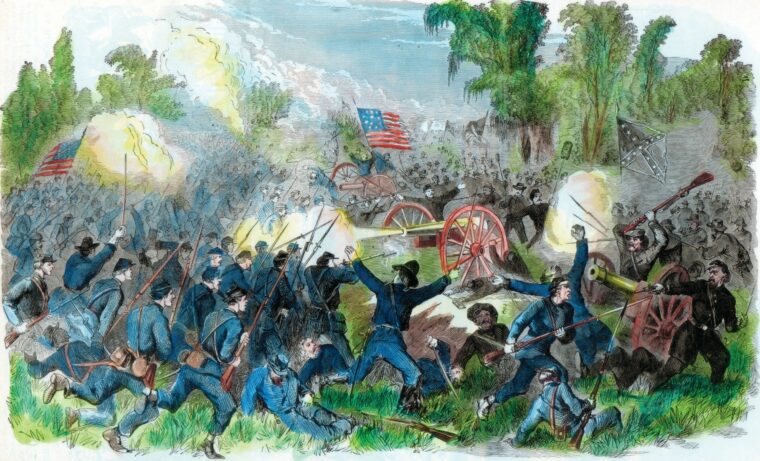
The barren summit of Champion’s Hill presented an ideal site for Lt. Gen. John C. Pemberton’s Confederate army to deploy artillery batteries on the morning of May 16, 1863. Read more
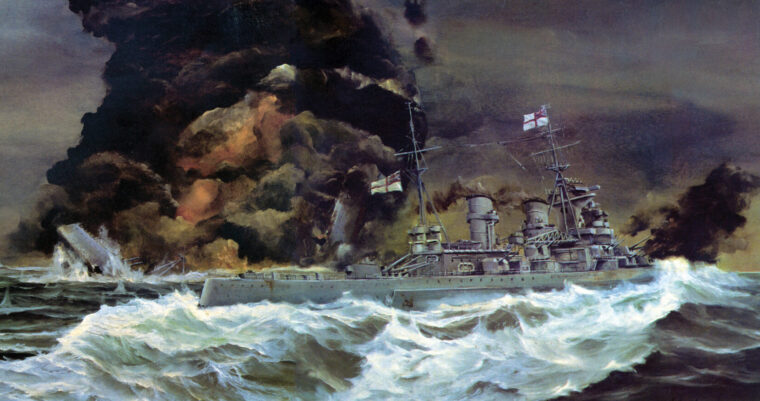
by Mark Carlson
The era of the battleship reached its apogee at Tsushima Strait in May 1905, when Admiral Heihachiro Togo’s powerful Japanese battleships annihilated the Russian fleet in the Russo-Japanese War. Read more
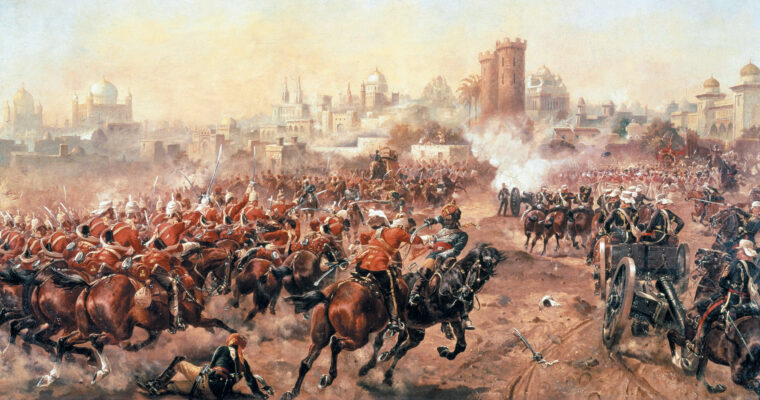
Three months before the Indian Rebellion of 1857, British East India Company officials manning outstations in the northwestern provinces of India began to notice the revival of a strange and disturbing local custom. Read more
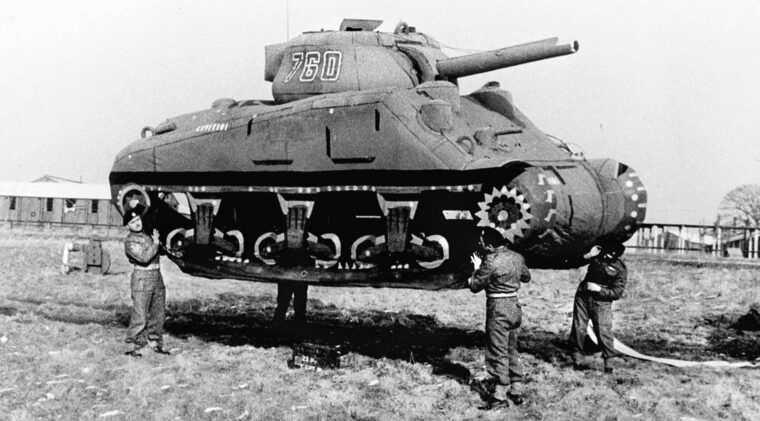
For Operation Neptune/Overlord, the Allies had 6,939 naval vessels, 11,590 aircraft, and 156,000 infantrymen and airborne soldiers (both parachute and glider) ready to participate in the D-Day invasion of northern France on June 6, 1944. Read more
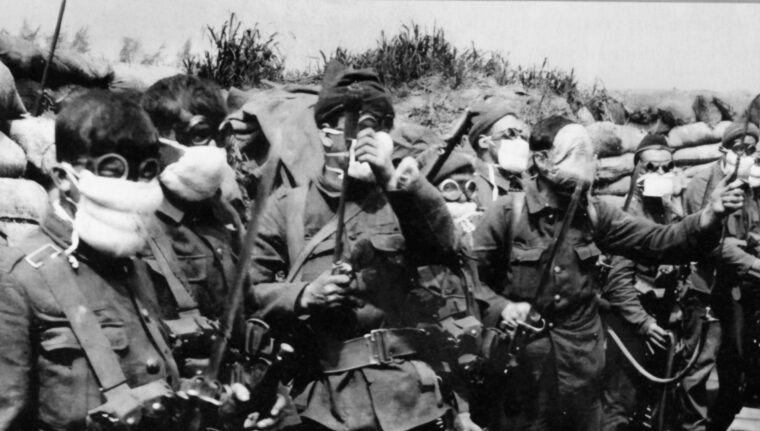
With World War I in a seeming stalemate, German forces in late April 1915 introduced a horrific new weapon to the fighting. Read more
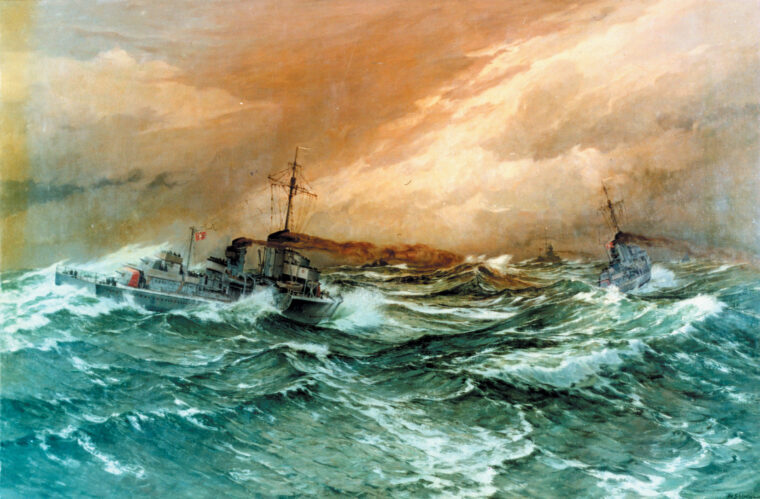
Operation Bolero, the marshaling of Allied forces for the planned 1944 invasion of Normandy, was in full swing by late 1943, and much of England had been turned into a great armed camp. Read more
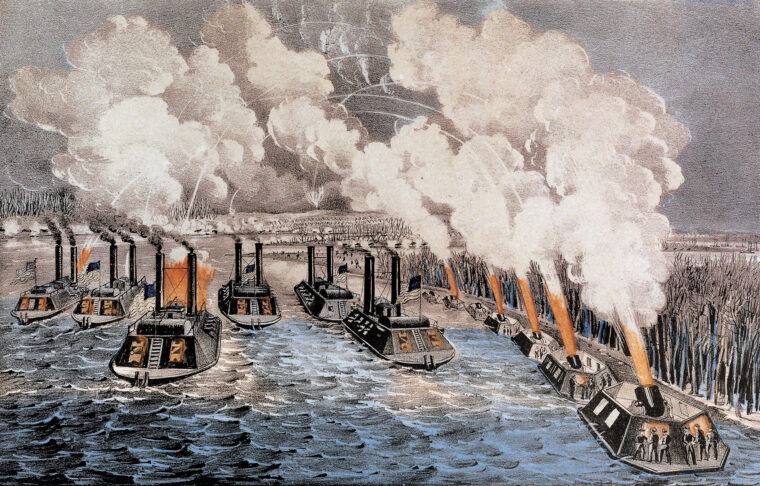
With its whistle blaring, the Confederate gunboat Grampus steamed into Madrid Bend, where Missouri, Kentucky, Tennessee, and Arkansas come together on the Mississippi River. Read more
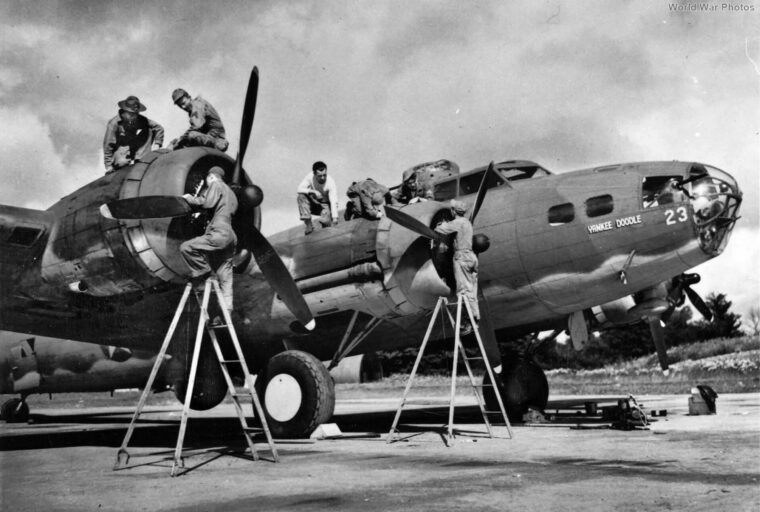
Forty-eight Wright Cyclone aero engines coughed into life on the hardstands at windswept Polebrook Airfield in Northamptonshire, England, early on the afternoon of Monday, August 17, 1942. Read more
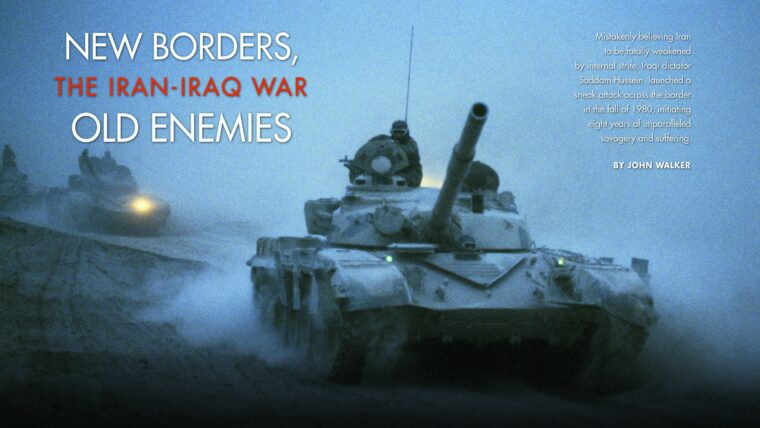
The world awoke to ominous news on September 22, 1980. Iraqi despot Saddam Hussein had launched a massive armored and air attack across the Iraq-Iran border. Read more
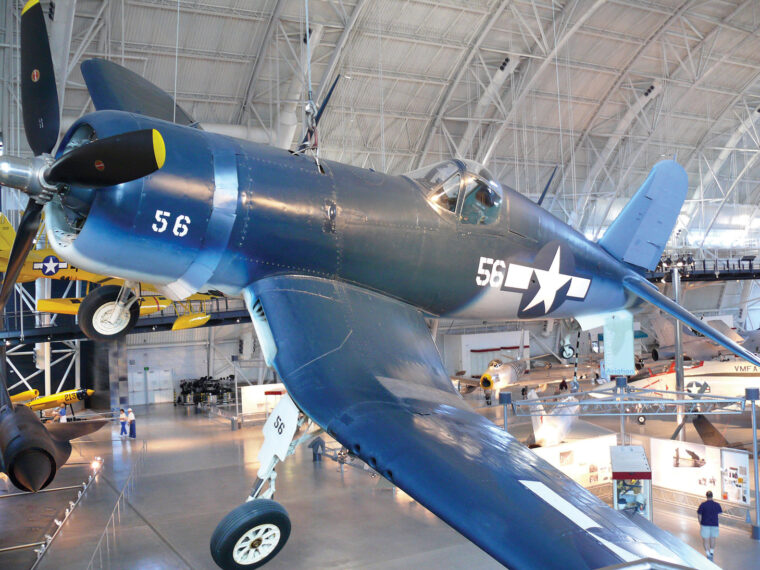
Anyone traveling to Washington, DC, should take the time to head west to Chantilly, Virginia (near Dulles International Airport), and visit the Steven F. Read more

World War I’s stalemate on the Western Front ushered up varied solutions. The Allies developed tanks for traversing no man’s land to get at the enemy. Read more
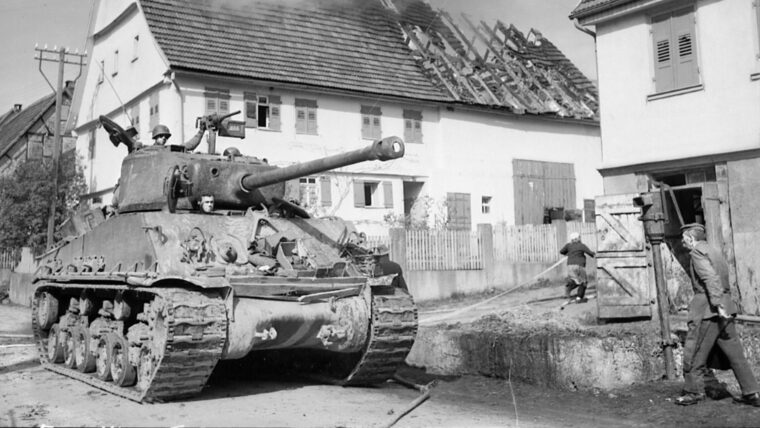
During World War II, the United States fielded 16 armored divisions, and all contributed to the Allied victory. Read more
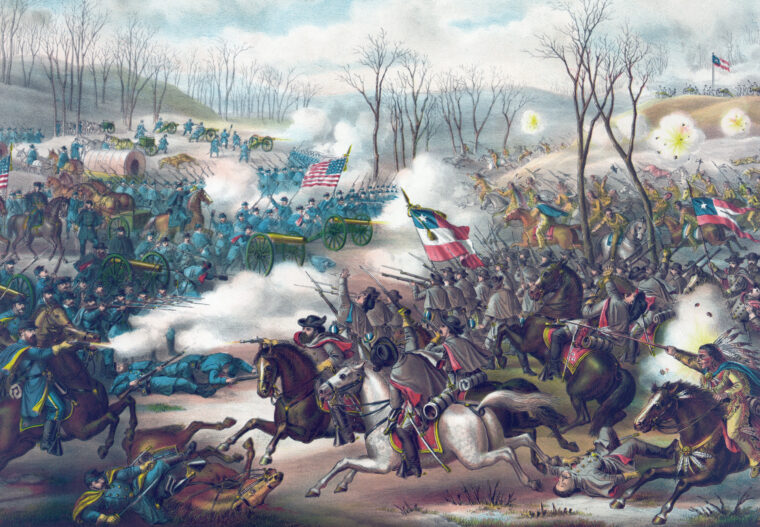
For three weeks in February 1862, Union Brig. Gen. Samuel Curtis led his Army of the Southwest on a 200-mile advance southward across the Ozark plateau in Missouri and into northern Arkansas. Read more
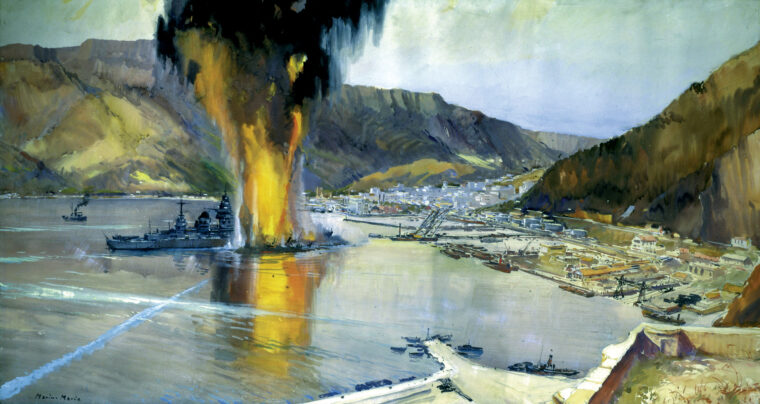
Steaming through the summer Mediterranean night, the world having gone sour in two awful months, British Vice Admiral Sir James Somerville read the message just sent to him from London: “You are charged with one of the most disagreeable and difficult tasks that a British Admiral has ever been faced with, but we have complete confidence in you and rely on you to carry it out relentlessly.” Read more
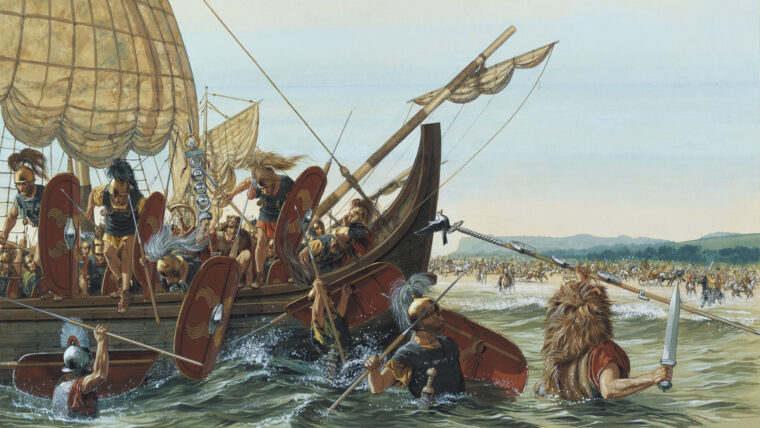
By the summer of 55 bc, 45-year-old Roman proconsul Gaius Julius Caesar was a veteran military campaigner. For the past three years, under his lead, the tramp of hobnailed sandals had resounded across the countryside of Gaul, the westernmost province of the Roman empire. Read more
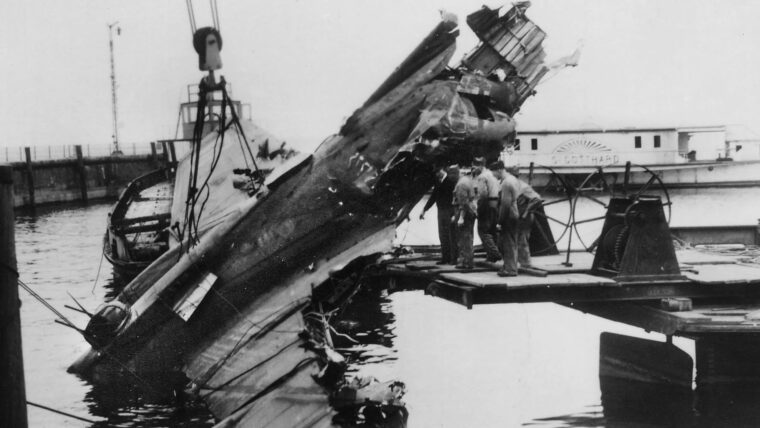
Lieutenant Martin Andrews was not scheduled to fly that day. He and his Boeing B-17 Flying Fortress bomber crew had survived 12 missions out of the required 25 and were due for a much needed week of rest and recuperation. Read more