Abraham Lincoln
City Under Siege: The New York Draft Riots
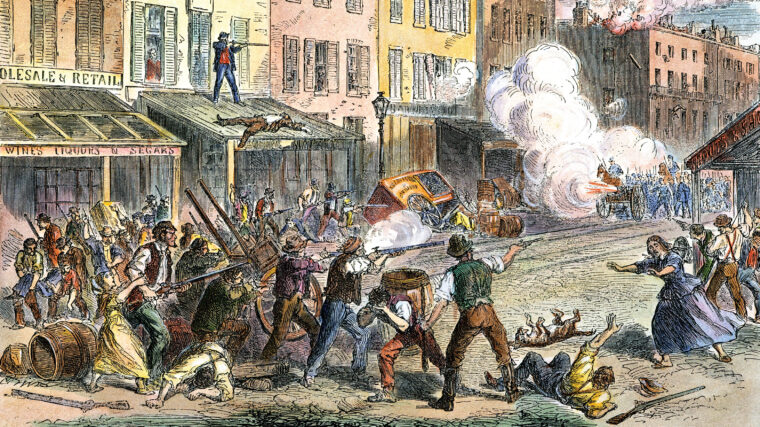
By Rick BeardFor four breathlessly hot days in mid-July 1863, New York City became the northernmost battleground of the Civil War. Read more
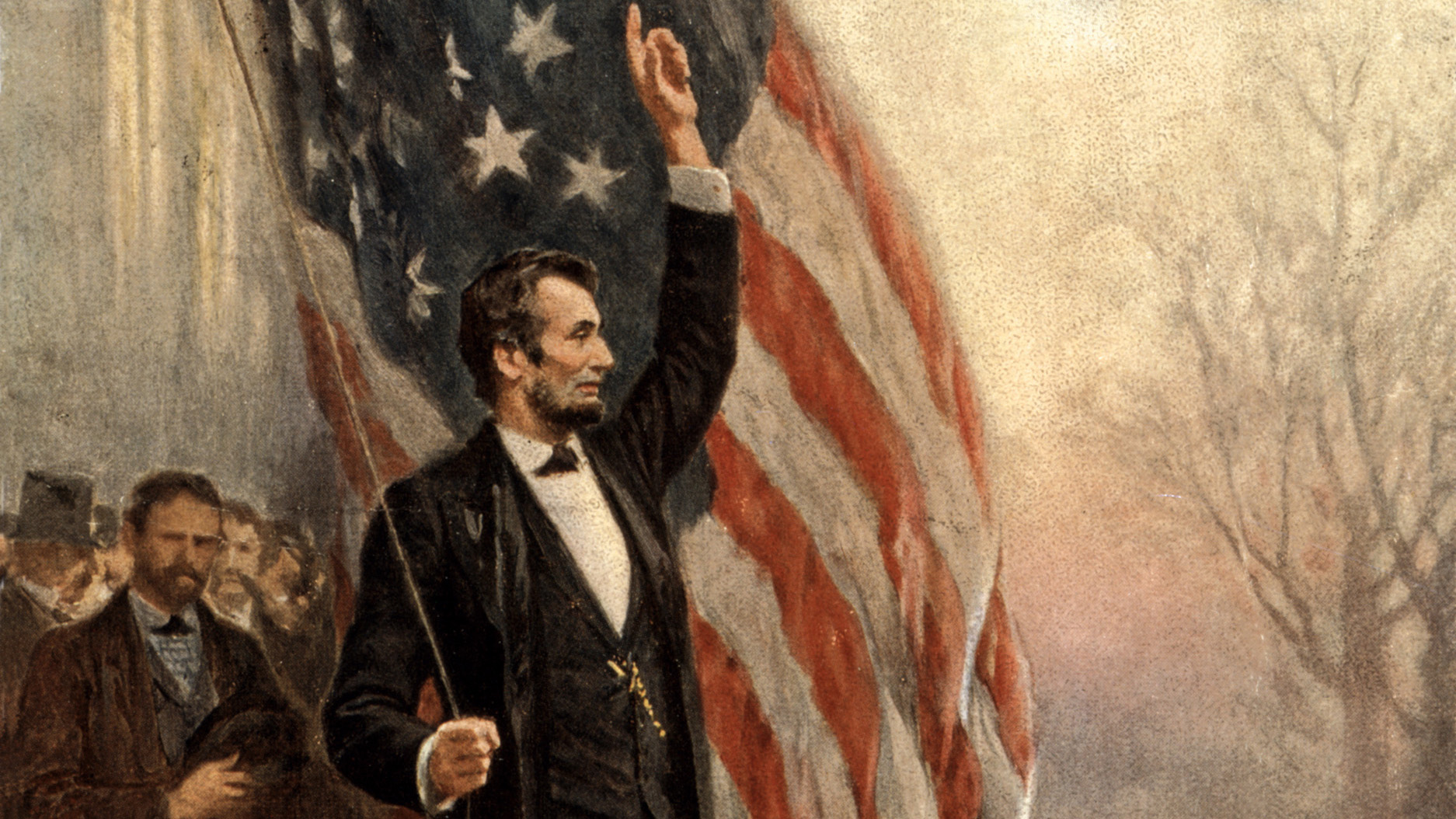
Abraham Lincoln served as the 16th President of the United States during the American Civil War. Abraham Lincoln was in office during perhaps the most critical time in the nation’s history and provided exceptional leadership. Lincoln is remembered as a man of wit and strategic vision. Abraham Lincoln’s Gettysburg Address is among the nation’s most treasured documents of freedom along with his Emancipation Proclamation, effective January 1, 1863, which freed slaves in territories in revolt against the United States. Abraham Lincoln was mortally wounded by assassin John Wilkes Booth on April 14, 1865, and died the following morning at the age of 56.
Abraham Lincoln
For four breathlessly hot days in mid-July 1863, New York City became the northernmost battleground of the Civil War. Read more
Abraham Lincoln
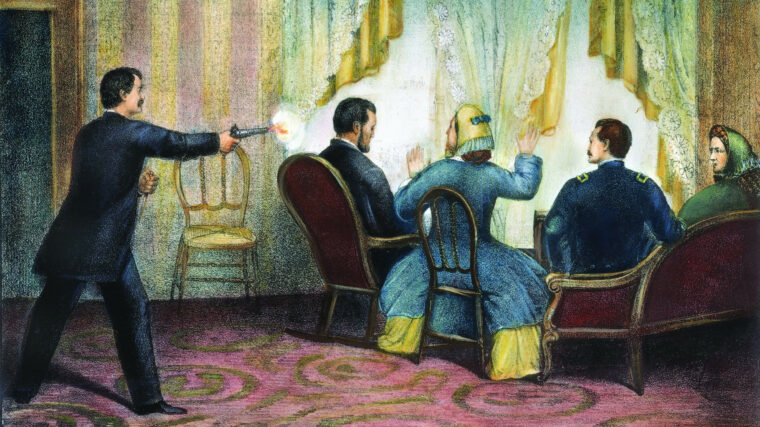
On the evening of April 14, 1865, noted actor John Wilkes Booth entered Ford’s Theater in Washington, D.C., Read more
Abraham Lincoln
The White House was a somber place in the summer of 1862. The Civil War was in the midst of its second costly year, and the Union armies had yet to win a significant victory in the eastern theater. Read more
Abraham Lincoln
After the crushing Union defeat at the Battle of Fredericksburg on December 13, 1862, President Abraham Lincoln relieved Maj. Read more
Abraham Lincoln
On March 4, 1861, with war clouds threatening the land, Abraham Lincoln was inaugurated the 16th president of the United States. Read more
Abraham Lincoln
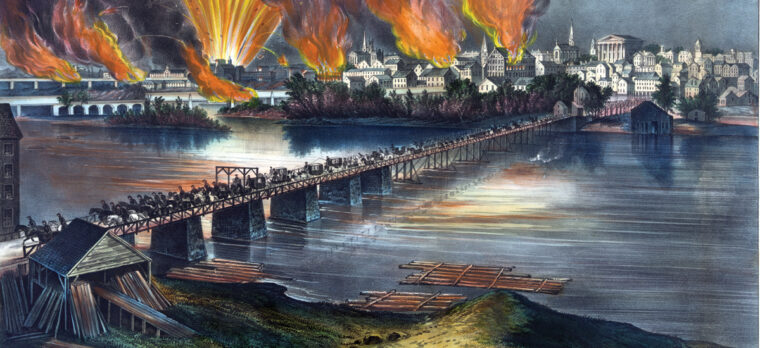
When the end came, on April 2, 1865, Confederate President Jefferson Davis was sitting in his customary pew at St. Read more
Abraham Lincoln
After an almost uninterrupted, four-month-long string of Union successes beginning in early 1862, followed by the advance of a 100,000-man enemy army to the eastern outskirts of its capital at Richmond, Virginia, the Confederacy suddenly found itself in a life-or-death struggle for its very survival. Read more
Abraham Lincoln
When the Civil War erupted, so many of Lisbon, Ohio-born Robert McCook’s large extended family joined the Union Army that the clan became known as the “Fighting McCooks.” Read more
Abraham Lincoln
Brigadier General James S. Rains’s Confederate cavalry rode confidently toward the prosperous little town of Lexington, Missouri. Dressed in Missouri homespun, Rains’s men hardly looked the part of a flying military column, but most of the hard-riding horsemen had known only victory during their short service. Read more
Abraham Lincoln
For the Federal government at Washington, D.C., the news from Tennessee was grim in late September 1863. The Union Army of the Cumberland, under Maj. Read more
Abraham Lincoln
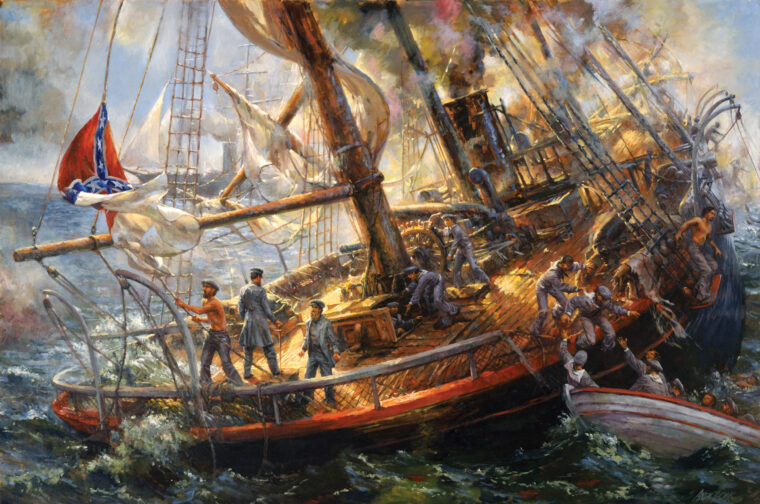
On August 24, 1862, newly promoted Captain Raphael Semmes of the Confederate States Navy called his largely English crew to the quarterdeck of his new command, the 220-foot battle cruiser Alabama, lying off the coast of Terceira in the Azores. Read more
Abraham Lincoln
Men have been reporting their wars almost as long as they have fighting them. The first prehistoric cave drawings depicted hunters bringing down wild animals, and spoken accounts of battles, large and small, formed the starting point for the oral tradition of history. Read more
Abraham Lincoln
In the late hours of April 14, 1865, Secretary of War Edwin Stanton sat at a small table in the Petersen House across the street from Ford’s Theater in Washington, D.C. Read more
Abraham Lincoln
In 1864, the Civil War was raging across the United States. At the epicenter of the seemingly stalemated conflict was the vital Confederate stronghold at Petersburg, Va. Read more
Abraham Lincoln
On August 3, 1864, near Atlanta, Georgia, Captain Henry Lawton of Indiana led a group of Union skirmishers in a charge against Confederate rifle pits. Read more
Abraham Lincoln
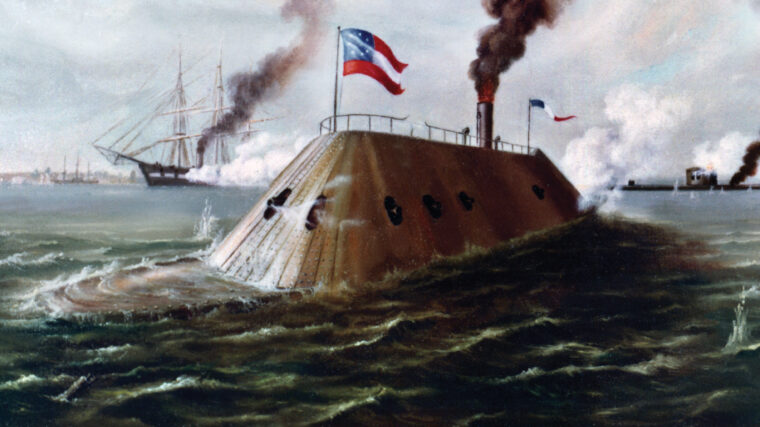
Smoke swirled amid the thunderous noise that roared from powerful Dahlgren guns and Brooke rifles. Thousands of spectators along the shore watched the two most dangerous warships in the world at each other at point-blank range. Read more
Abraham Lincoln
During the Civil War, the strategic importance of Vicksburg, Mississippi, was readily apparent to both the Union and the Confederacy. Read more
Abraham Lincoln
One of the primary reasons given for the Union defeat at the First Battle of Bull Run was the lack of adequate cavalry. Read more
Abraham Lincoln
Seemingly from birth, William Haines Lytle was bound for glory. As the last surviving male offspring of one of Cincinnati’s leading pioneer families, Lytle was the prototypical golden boy. Read more
Abraham Lincoln
The two men facing each other across the debate stage at Ottawa, Illinois, on the afternoon of August 21, 1858, were no strangers to one another. Read more