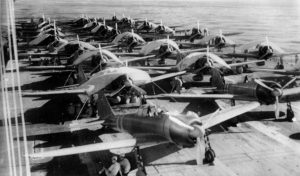
Japanese planes prepare for takeoff from the flight deck of the aircraft carrier Zuikaku in 1942. A veteran of Pearl Harbor, Zuikaku was heavily damaged during the 1944 Battle of the Philippine Sea but survived.

Marianas Turkey Shoot

Dear Editor:

I just finished reading David Lippman’s article on the Marianas Turkey Shoot in the March 2011 issue of WWII History magazine. Read more

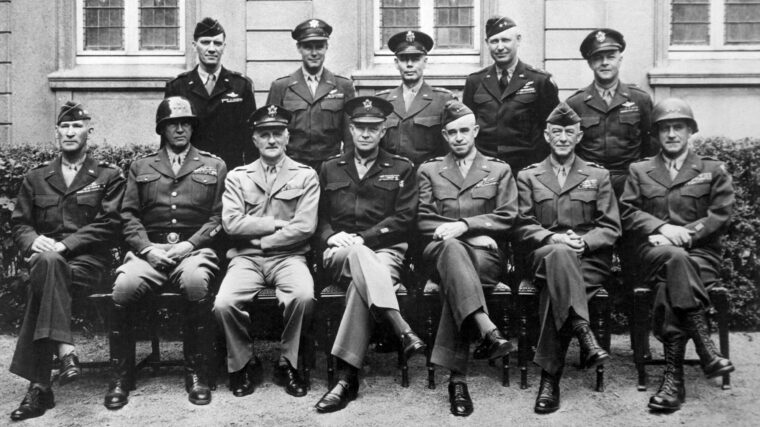
Eisenhower’s Hatchet Man

By Al Hemingway

They called him “Beetle.” He could be gruff and downright insulting at times to his subordinates. New officers joining his staff cringed when they had to go in and “meet the old man.” Read more

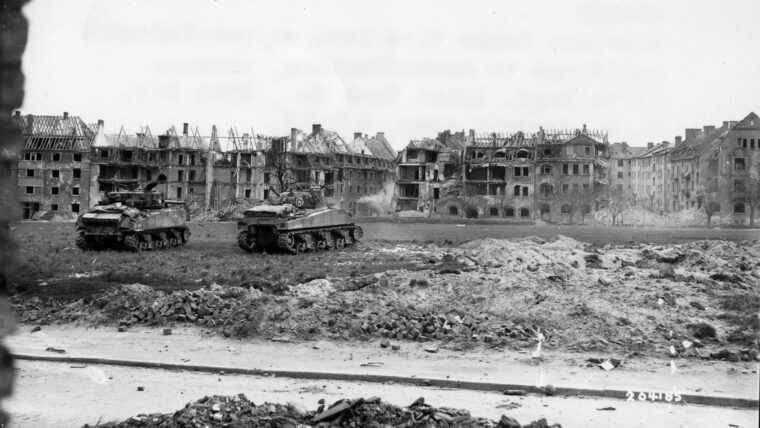
A pair of Sherman tanks trains its heavy guns on sniper positions at Aschaffenberg. German snipers were capable of holding up large formations of American troops unable to leave cover.

Aschaffenberg

Dear Editor:

I read with interest the story of the Battle of Aschaffenburg (January 2011 issue). I was stationed in the village of Munster bei Dieburg in the mid to late 1980s and was in Aschaffenburg many times as it was about 15 miles away. Read more

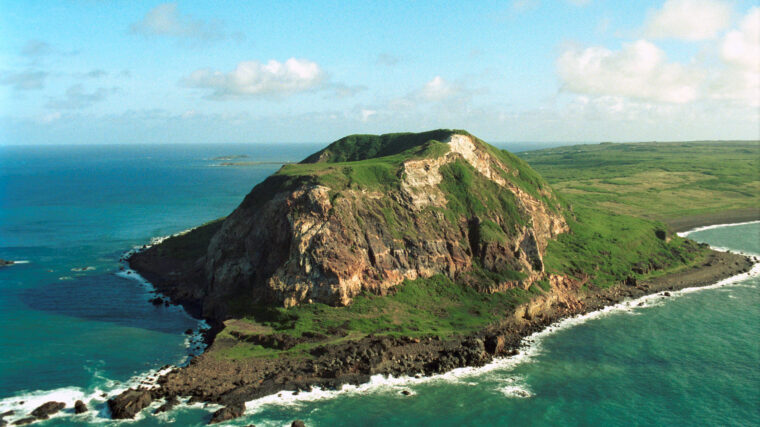
Bodies of Japanese Casualties Discovered on Iwo Jima.

While most images of a tourist trip to Hawaii have to do with beautiful beaches, hula skirts, and great surfing, a student of history must make it a point to visit two sites, Pearl Harbor and the Memorial Cemetery of the Pacific, commonly referred to as the Punchbowl because of its distinctive location within the crater of a extinct volcano in sight of modern downtown Honolulu. Read more

Stalin’s Wartime Paranoia

By Al Hemingway

It has long been common knowledge to most historians and followers of World War II history in the European Theater, that the Soviet Union defeated Nazi Germany on the Eastern Front. Read more

Revisiting the Tet Offensive

By Al Hemingway

Many who remember the 1968 Tet Offensive in South Vietnam still believe that the U.S. military suffered a disastrous defeat at the hands of the North Vietnamese Army. Read more

Gettysburg in Black and White

By Michael E. Haskew

By the 1860s, photography itself was little more than 30 years old. Photographic techniques had progressed somewhat in three decades, but the process was still lengthy and the equipment was cumbersome. Read more

When War Came Home

By Kevin Hymel

Unlike most civil wars, the American Civil War took place primarily in one section of the country—the South. Read more

He Was Full of Pluck!

By Al Hemingway

Covering the left flank of the Union Army at Gettysburg, the hill known as Little Round Top, was heroically defended against determined Confederate attack. Read more

Trouble In The Winds

By Peter Kross

The Japanese strike on Pearl Harbor on December 7, 1941—a “Day of Infamy,” as President Franklin D. Roosevelt described it—left the American Pacific Fleet in almost total ruin, plunged the United States into World War II, and set off a controversy regarding the events that led up to the attack that is still being hotly debated. Read more

A Nation at War

It has become my nightly habit to take a half-hour walk around my Denver neighborhood, during which time I have come to notice a number of homes displaying the American flag. Read more