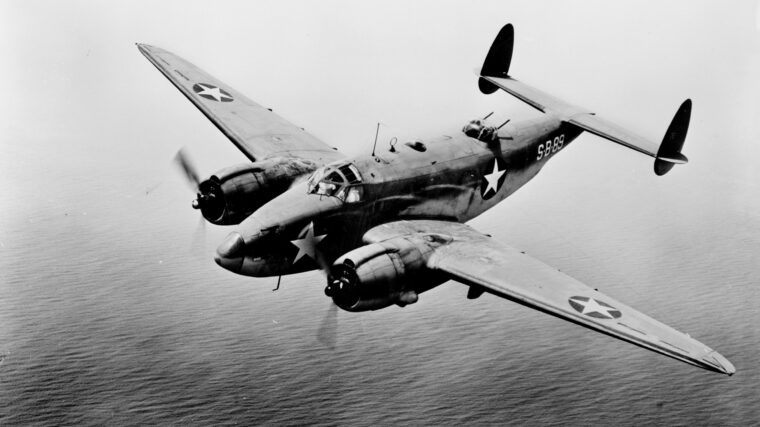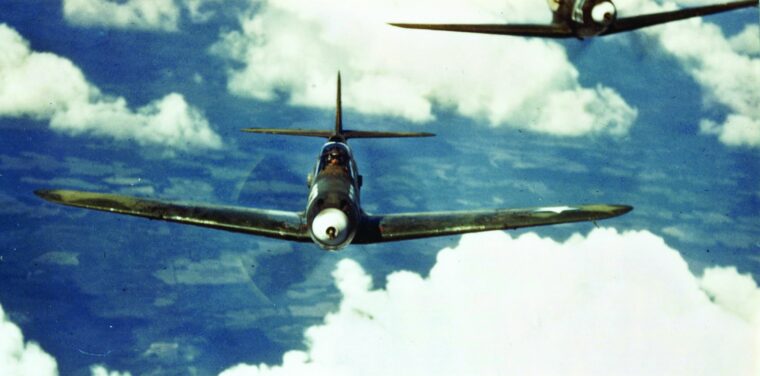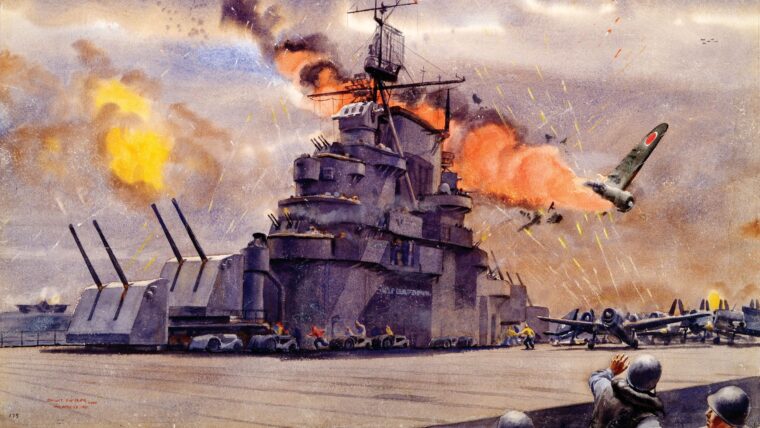
The F-4U Corsair

By William F. Floyd Jr.

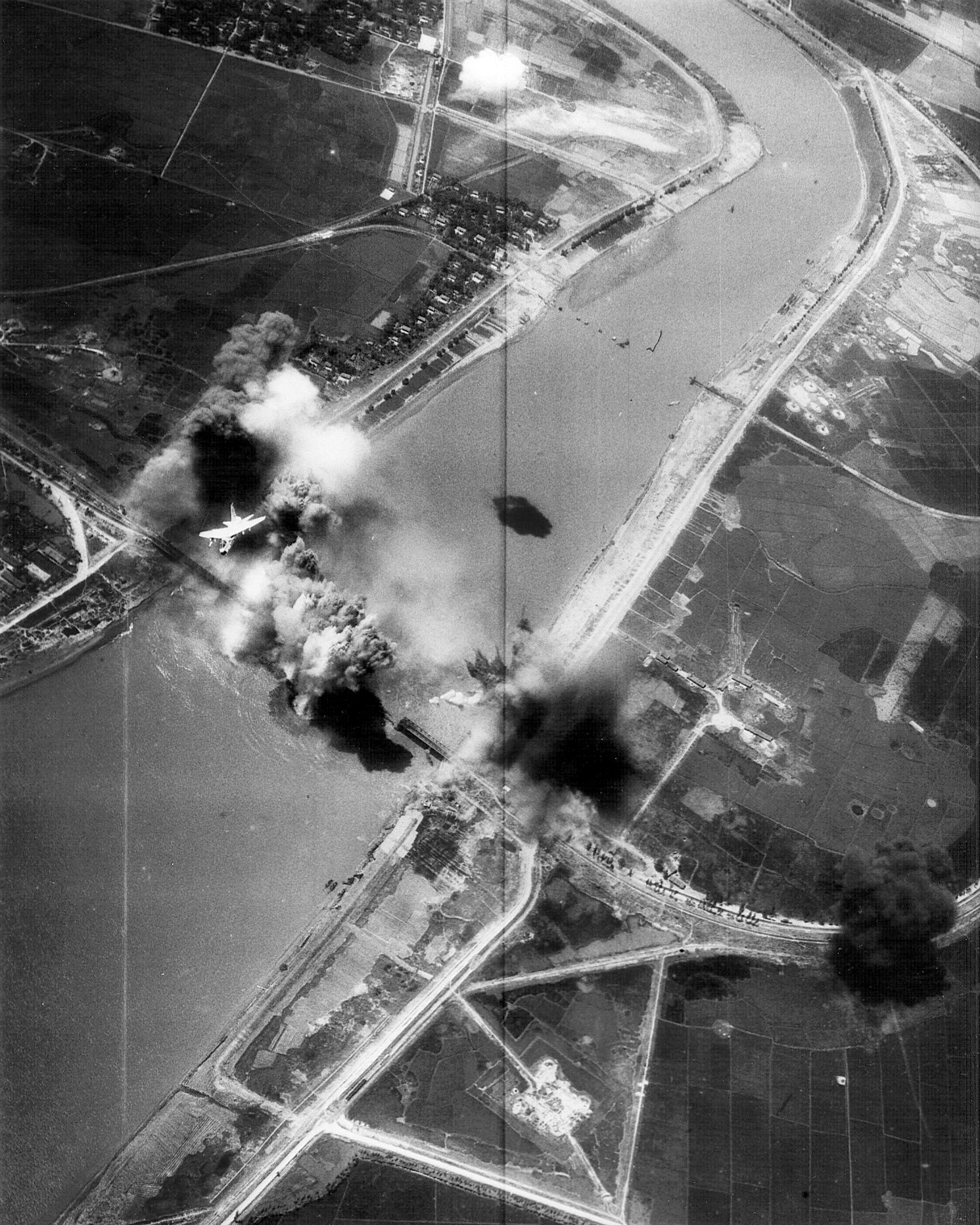
On December 4, 1950, Jesse Brown, U.S. Navy Ensign and the Navy’s first African American aviator, was flying 1,000 feet above the icy Korean mountains in his Corsair when its engine cut out. Read more

The first U.S. M4 Sherman enters the German city of Aachen through a hole opened in the railroad station entrance by a tank dozer—German defenders had demolished a viaduct on the main avenue into Aachen, slowing the Americans’ progress.

Smashing in to Germany

By William R. Hogan

Task force commander Lieutenant Colonel Samuel Hogan, eager to get any advantage over the entrenched enemy of the 12th Infantry Division, requested a section of M2 flamethrowers from the 23rd Engineer Battalion. Read more

Allied vessels burning after a Luftwaffe raid on the Italian port of Bari on December 2, 1943, sank 27 cargo and transport ships, including the US Liberty ship John Harvey—with a secret cargo of 2,000 M47A1 mustard gas bombs, each holding 60–70 lbs of the chemical agent.

The SS John Harvey’s Mustard Gas Disaster

By Neil Taylor

Ensign Kay Kopl Vesole, USNR, did not like being a sitting duck. Normally he would have enjoyed the warm Italian sunshine, but as commander of the Navy Armed Guard aboard the John Bascom, a 7,176-ton Liberty ship, he was not permitted to relax while his ship lay moored in crowded Bari harbor, a small though vital port on the heel of Italy. Read more

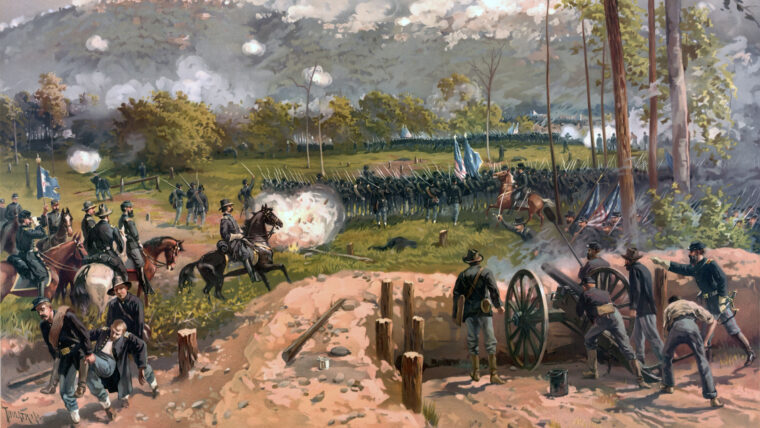
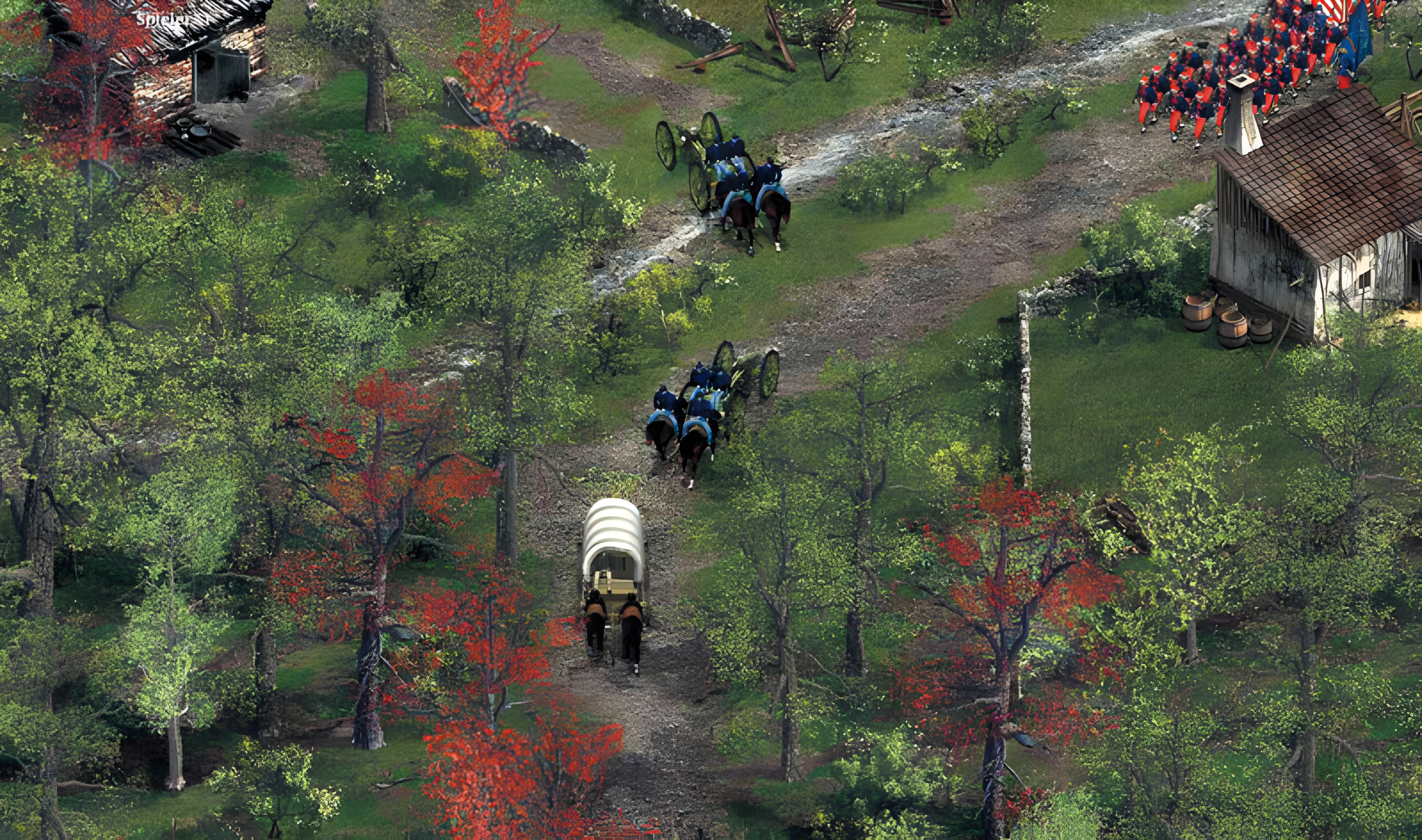
Uniform: The 8th Texas Cavalry

By Don Troiani & William Welsh

Colonel Benjamin F. Terry, a sugar planter from Fort Bend County on the coastal plains of Texas, raised the 8th Texas Cavalry Regiment. Read more

Standing on what is most likely a PzKpfw. III, a German tank commander scans the desert horizon in North Africa. The battle-hardened forces of Gen. Erwin Rommel’s Afrika Korps would inflict a stinging defeat on the Americans at Tunisia’s Kasserine Pass in February 1943

Chaos Pass

By David Lippman

The message was sent to a staff officer for Brig. Gen. Paul Robinett to read, and it made very little sense. Read more

Flint Whitlock’s ‘Patton and the Battle for Sicily’

By Kevin Seabrooke

Launched on the night of July 9-10, 1943, the amphibious assault of Operation Husky was the largest the world had ever seen—more than 3,200 vessels and half a million Allied soldiers, sailors, and airmen attacked the island of Sicily, Adolf Hitler’s “Fortress Europe.” Read more

Thick clouds of smoke billow from the West Loch of Pearl Harbor after a series of massive explosions on May 21, 1944, sank or damaged several vessels.

Christine Kuehn’s ‘Family of Spies’

By Kevin Seabrooke

A letter from a screenwriter researching WWII in 1994 turned journalist Christine Kuehn’s world upside down. The writer wanted to know what her father, 70-year-old Eberhard Kuehn, remembered about his own father’s life as a spy. Read more

Joe Jackson’s ‘Splendid Liberators’

By Kevin Seabrooke

The explosion of the USS Maine on February 15, 1898, Cuba’s Havana harbor, did not directly result in war with Spain—but with the help of the “yellow press” and public opinion it did escalate tensions between the two countries. Read more