Military History
The Duke of Monmouth vs. King James II
By William WelshThe Duke of Monmouth’s rebel army marched briskly out of Bridgwater into the dark of night on July 6, 1685. Read more
Military History
The Duke of Monmouth’s rebel army marched briskly out of Bridgwater into the dark of night on July 6, 1685. Read more
Military History
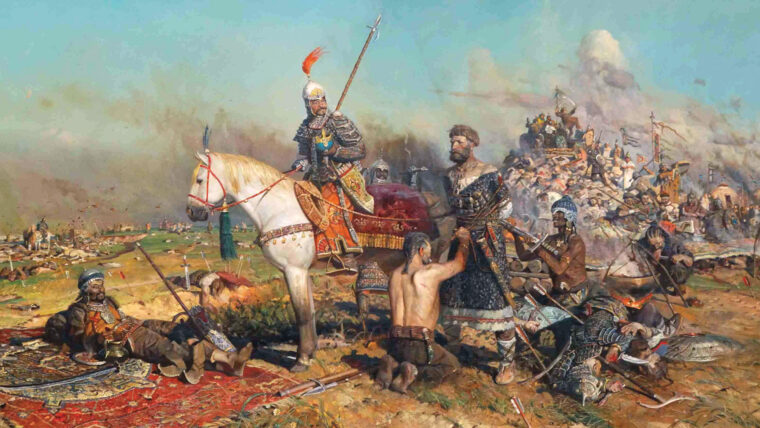
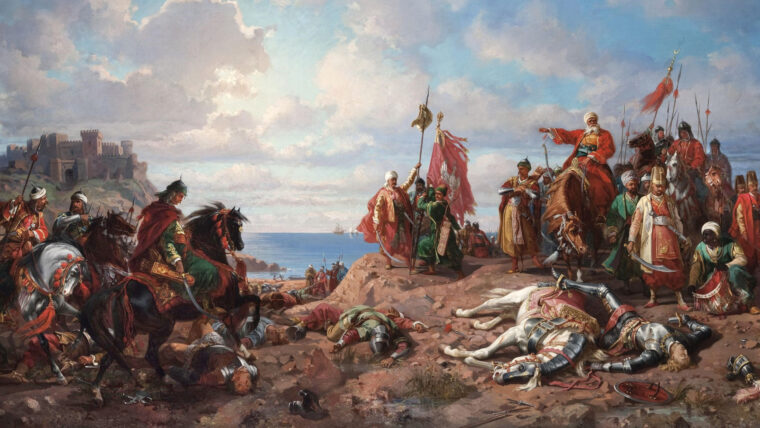
Thousands of dead Turkish soldiers choked the river and littered its bank. It was the fall of 1697 and the young Imperial Field Marshall, Prince Eugene of Savoy, had just vanquished the Ottoman army at Zenta (or Senta), on Hungary’s River Tiza. Read more
Military History
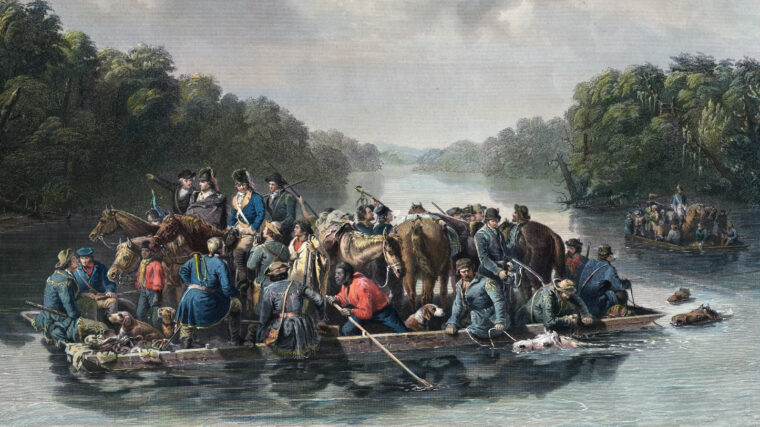
At last, students of American military history have recently been accorded some measure of respect to the tactical genius of Daniel Morgan. Read more
Military History
During the last two years of the War of 1812, the Americans had a unit serving with them that knew well the people and country they were invading. Read more
Military History
One of the most decisive battles in American history is also one little discussed, the April 21, 1836 Battle of San Jacinto. Read more
Military History
“To be a knight was to be potentially a Lord or Lordling … and a fate worse than death, was to set one’s hand to the plow.” Read more
Military History
During the Battle of the Little Bighorn, June 25-26, 1876, troopers of the U.S. 7th Cavalry Regiment under the command of Lieutenant Colonel George A. Read more
Military History
Excavations conducted in a Hyksos palace at Tell el-Daba (ancient Avaris) in Egypt have for the first time provided archaeological evidence for a gruesome practice previously known only from texts and temple reliefs, according to an article by the Biblical Archaeology Review. Read more
Military History
By the time the American colonies declared their independence from Great Britain on July 4, 1776, Benjamin Franklin was 70 years old. Read more
Military History
On the morning of December 3, 1757, Frederick the Great ordered all his generals and regimental and battalion commanders to his headquarters at Parchwitz. Read more
Military History
This WWI Timeline covers the first decade of the 20th century, in which the so-called “Great Powers” of Europe attempted to advance their economic and technological prowess to out-do—or at worst, at least keep pace—with their neighbors and rivals. Read more
Military History
Numerous pictorial representations show us the arms and armor of the 12th-century Anglo-Norman knight, the most famous being the Bayeux Tapestry. Read more
Military History
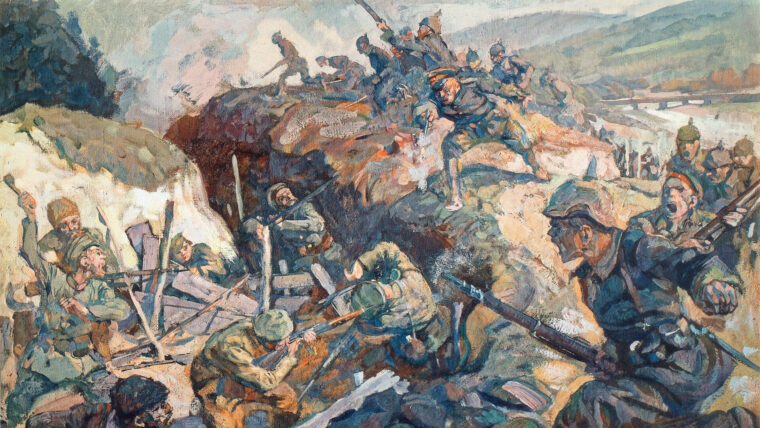
As the fateful day drew to a close, the exhausted World War I soldiers of the German 25th and 82nd Reserve Divisions huddled in their trenches. Read more
Military History
The struggle of the Americans to free themselves of British rule and to establish self-government on their own continent was never in greater peril than in the year 1776, and it was still three years before Benedict Arnold would change sides. Read more
Military History
The castle (shiro) played an important role in 16th- and early 17th-century Japan. Like its medieval counterparts in Europe, the Japanese castle was a fortified building or series of buildings that had both defensive and offensive capabilities. Read more
Military History
Although the terrain around the Battle of Borodino presented the Russians with a number of good opportunities for a defensive battle, they further strengthened their positions with hastily constructed earthworks. Read more
Military History
Deborah Sampson was born in Plympton Massachusessts in December 1760. The oldest of seven children, she grew up poor, and after being abandoned by her father, she became an indentured servant. Read more
Military History
There were several African American Revolutionary War heroes that made major contributions on and off the battlefield, but not all of them fought for the Colonists. Read more
Military History
One of the more obscure and contestable female Revolutionary War heroes, Molly Pitcher was said to have fought in the Battle of Monmouth. Read more
Military History
There were many African Americans in the Revolutionary War, and although some of them fought for the Colonists and others for the British, freedom was usually their motivation. Read more