Corpsmen attend to a wounded Marine while others bring another wounded man up the beach at Betio. Illustration by Kerr Erby.

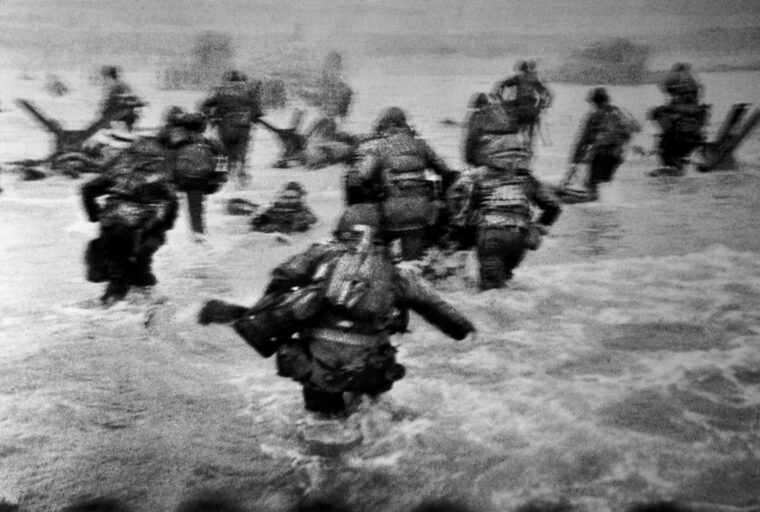
Brutal Battle For Betio

By Steven Weingartner

Betio is the main island of the Tarawa Atoll in the Central Pacific nation of Kiribati, formerly known as the Gilbert Islands. Read more

Seaplane Striking Force

By William H. Langenberg

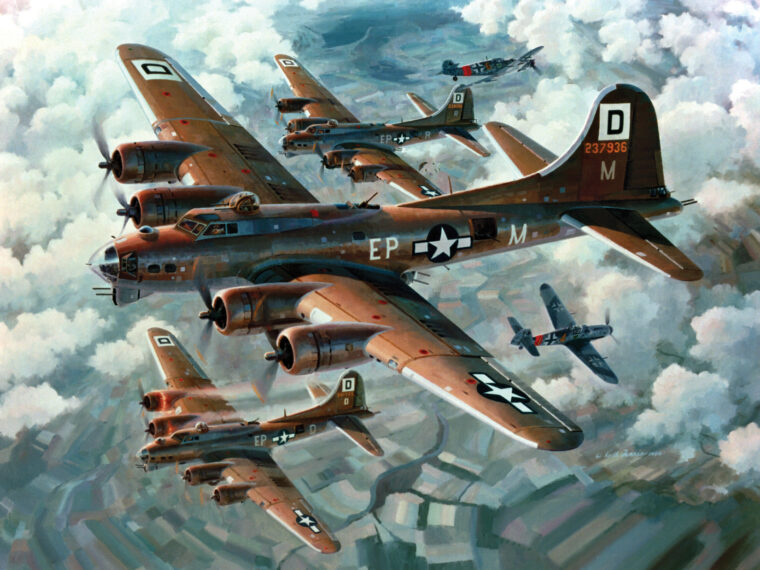
The first few years after World War II were challenging ones for the U.S. Navy. Massive demobilization of personnel and rapid scrapping or retirement of ships created internal disruptions. Read more

Home Front USA: Rationing

By Herb Kugel

In 1941-1942, British journalist Alistair Cooke traveled through the United States. In his description of his trip, American Home Front 1941-1942, he reported stopping for breakfast at a restaurant in West Virginia where, “the sugar was rationed at breakfast, and there was a note on the menu requesting that … in the interests of ‘national defense,’ keep to one cup of coffee.” Read more

From their position inside a ruined house, two solders from the 4th Infantry Division’s 22nd Infantry Regiment fire on a German tank with a 3.5-inch rocket launcher, commonly called a “bazooka,” during the Battle of the Bulge, December 1944.

The Cold Shoulder

By Allyn Vannoy

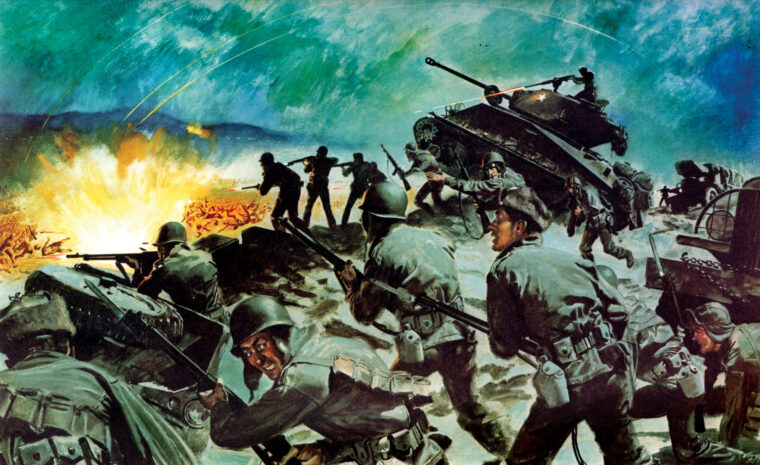
Army commanders understand that the key to dealing with an enemy breakthrough is to slow the enemy’s advance and prevent the breach from widening—that is, “holding the shoulders.” Read more

Pikemen participate in a re-enactment of the pitched battle. Parliamentary forces fought with great professionalism in a slugfest marked by heavy casualties on both sides.

Savage Action at Newbury

By Robert L. Durham

Prince Rupert eyed the Parliamentarian position atop the low ridge south of the village of Newbury on the morning of September 20, 1643, with deep concern. Read more

Collecting Vintage Grenades

By Peter Suciu

Even now, six decades after the end of World War II, the words “potato masher” just as easily conjure images of the legendary German hand grenade as they do kitchen utensils. Read more

A Marine Scout’s War Journey

By Matt Broggie

Sergeant Larry Kirby will always remember the fighting on the morning of March 12, 1945, as his unit, Easy Company, 9th Marines, 3rd Marine Division, attempted to move against Hill 362C under the cover of darkness in northeastern Iwo Jima. Read more

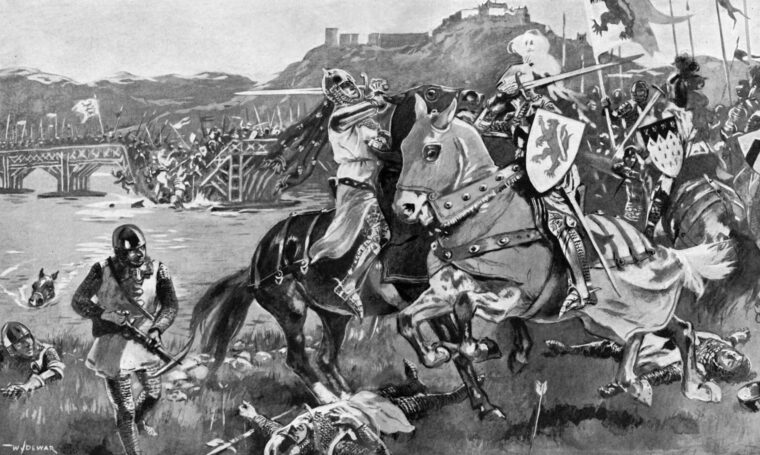
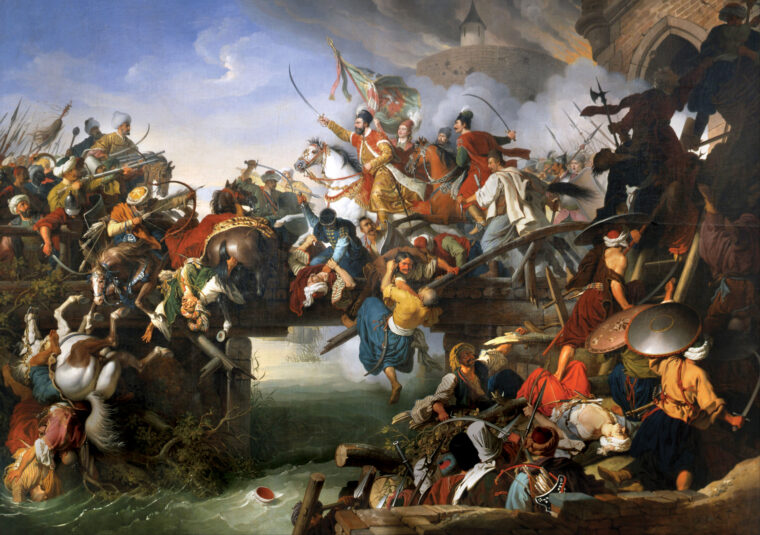
Disaster at Nicopolis

By William E. Welsh

Thick black smoke rose skyward from burning villages on the southern frontier of the Hungarian Kingdom in the spring of 1395. Read more

Polish cavalry operates in rough terrain against German forces. Not surprisingly, elite Polish cavalry units were among the last to surrender to the Germans in October 1939.

WWII Polish Cavalryman: Lance-Wielding Anachronism?

By Alex Zakrzewski

In the late afternoon of September 1, 1939, the 18th Uhlan Regiment of the Pomorska Cavalry Brigade was holding its position along Poland’s heavily forested northwest frontier when orders arrived to attack the flank of the advancing German 20th Motorized Infantry Division. Read more

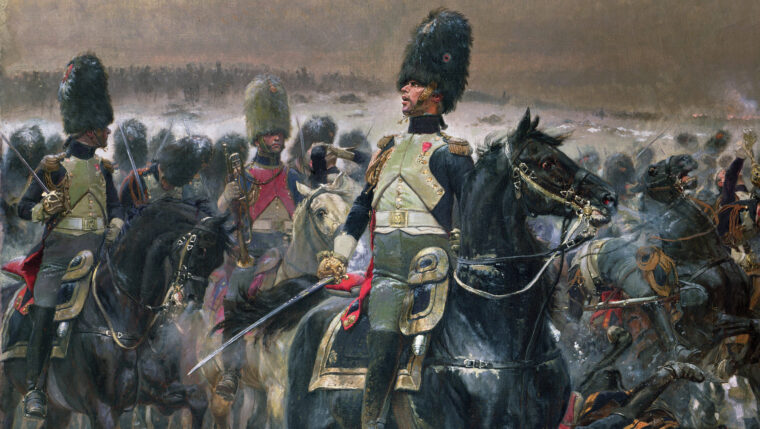
Prussian grenadiers advance at Leuthen. After his victory at Rossbach, Frederick the Great sought to drive the Austrians from Silesia.

Covered in Glory at Leuthen

By Joshua Shepherd

In the early afternoon of December 5, 1757, the men of Prussia’s 26th Infantry Regiment were drawn up in assault formation just south of the Silesian village of Leuthen. Read more

A Russian flying column of mounted infantry, dragoons, and horse artillery attacked the Swedish convoy in a forested region in the Polish-Lithuanian Commonwealth.

Sweden’s Desperate Stand at Lesnaya

By Eric Niderost

Colonel Axel Gyllenkrok had had a lot on his mind in recent weeks. It was the autumn of 1708, and as the Swedish Army’s general quartermaster he was not only responsible for supplying its needs on campaign, but he also functioned as an operational manager. Read more

Teutonic Fury

By Ludwig Heinrich Dyck

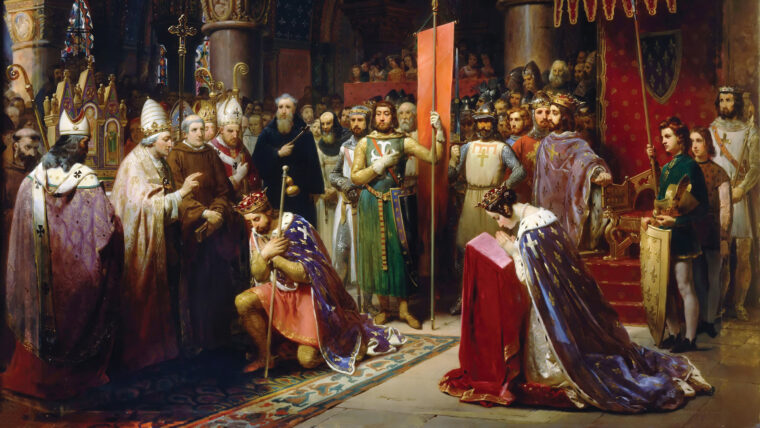
As part of tribal obligations to appease Rome, Segimer, the powerful Cherusci chief, surrendered his sons Arminius and Flavus to the Roman emperor Augustus. Read more