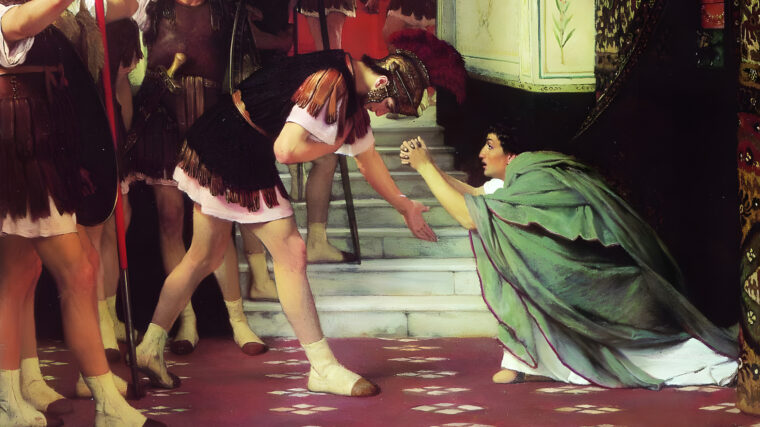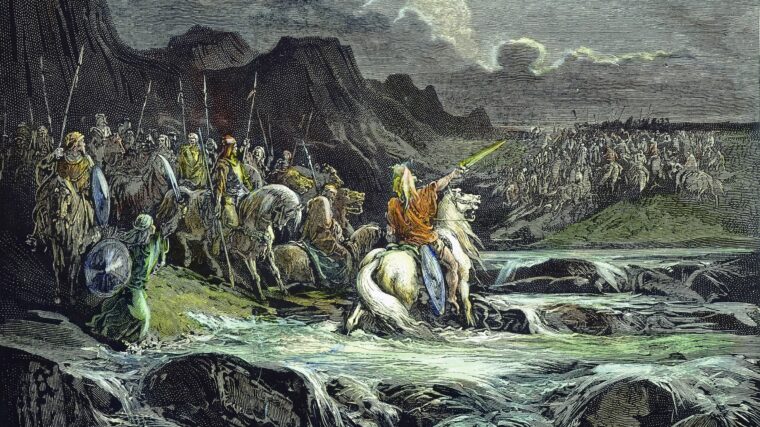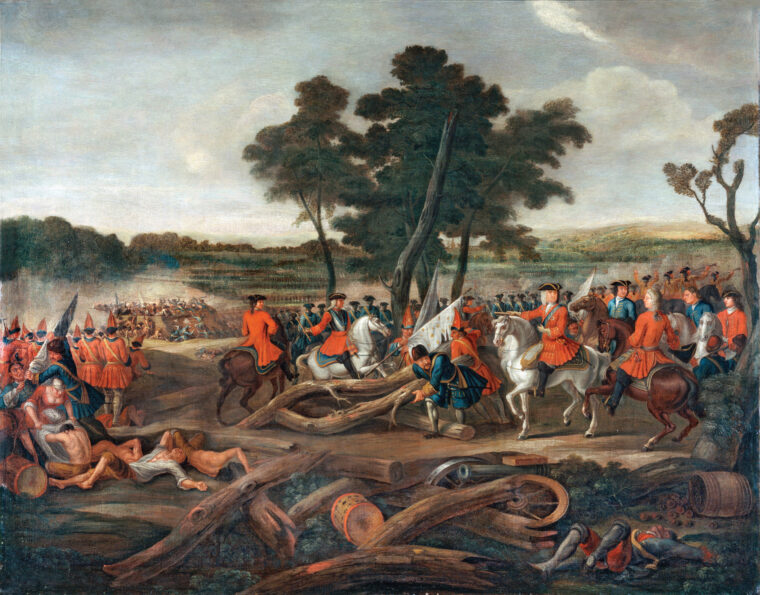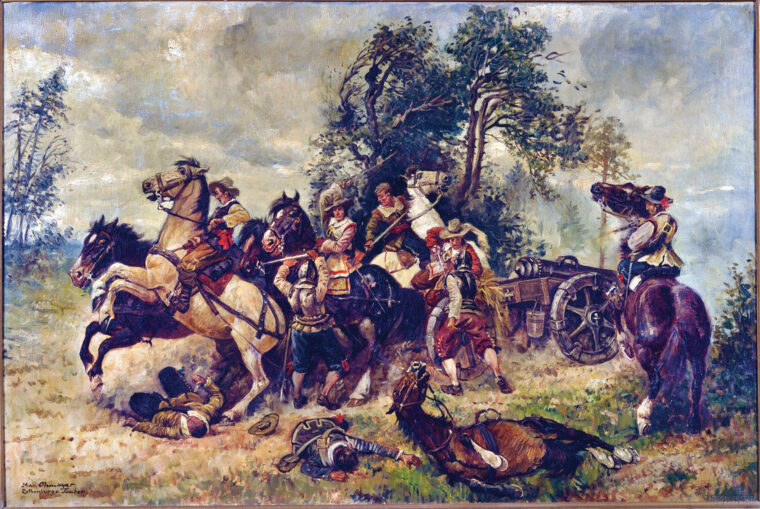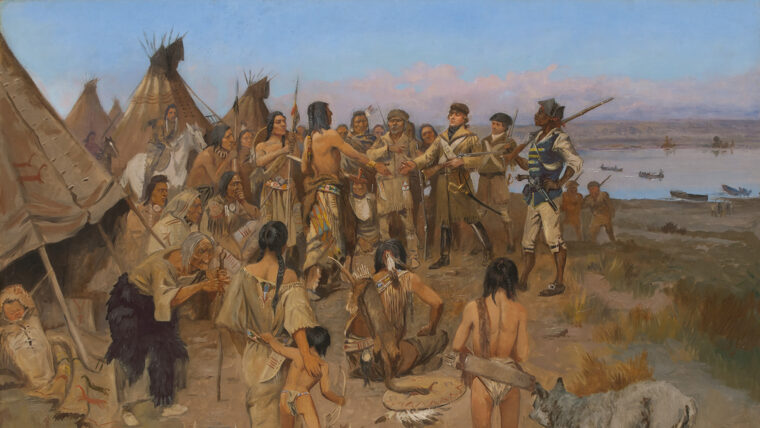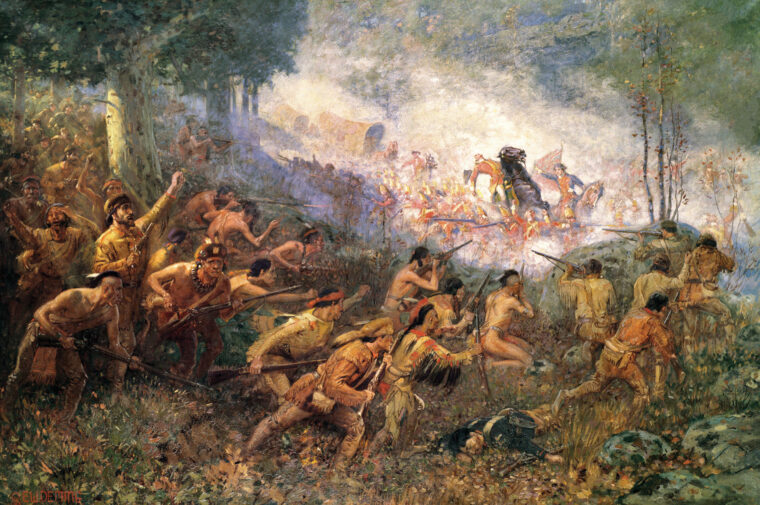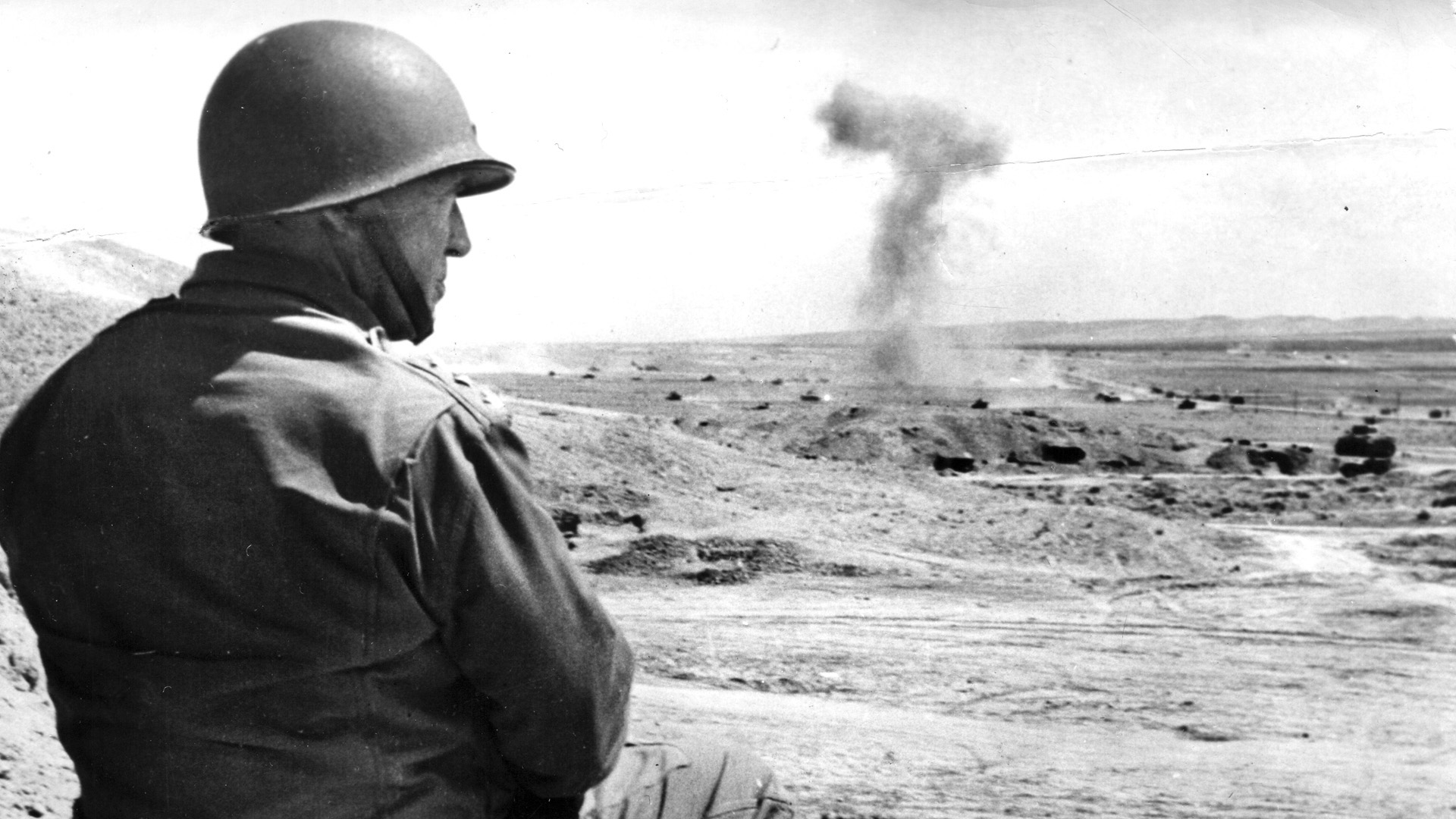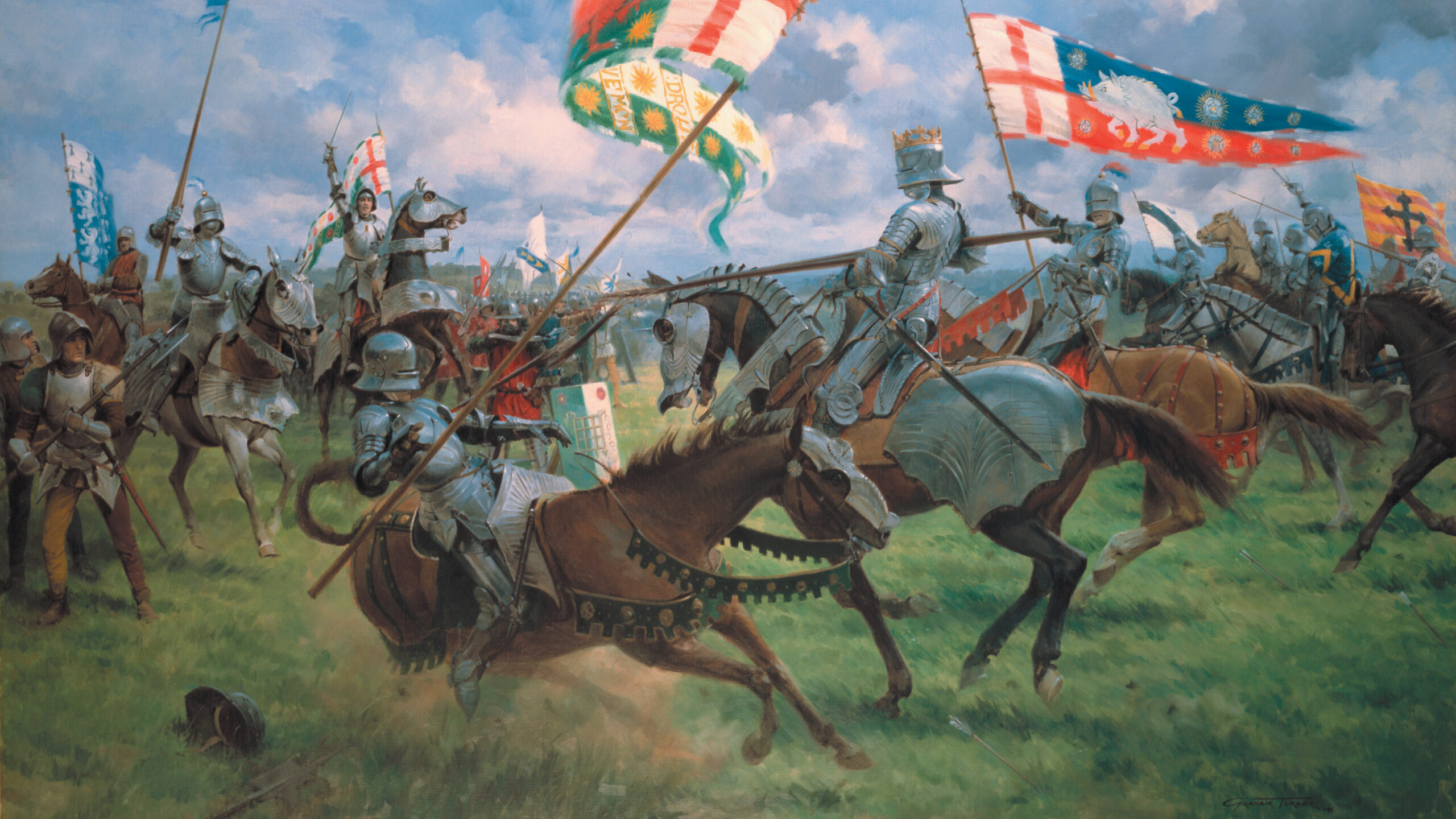
Yermak’s Cossack brigade drives a wedge into Khan Kuchum’s Tatar horde in the climactic Battle of Chuvash Cape on the Irtysh River in 1582.

Russia’s Conquest of Siberia

By Victor Kamenir

Russian historical documents dating back to 1095 speak of an unknown people living beyond the Ural Mountains in Siberia who spoke an incomprehensible language and traded furs for iron knives and axes. Read more

A Tiger tank of Waffen SS division Das Reich goes into action against Soviet forces in the southern part of the Kursk salient. Its 88mm gun could penetrate the armor of a Soviet T-34 at 1,800 yards.

Last Lunge in the East

By Victor Kamenir

Soviet machine-gunner Mykhailo Petrik and his platoon comrades lay in their makeshift bunker on the open steppe land 30 miles northwest of Belgorod awaiting the enemy’s advance on the first day of the titanic clash at Kursk. Read more

Daring Strike on Havana

By Mike Phifer

The guns of the British warships assaulting the Cuban shoreline just east of Havana on the morning of June 7, 1762, roared to life in a flash of orange flames and grey smoke. Read more

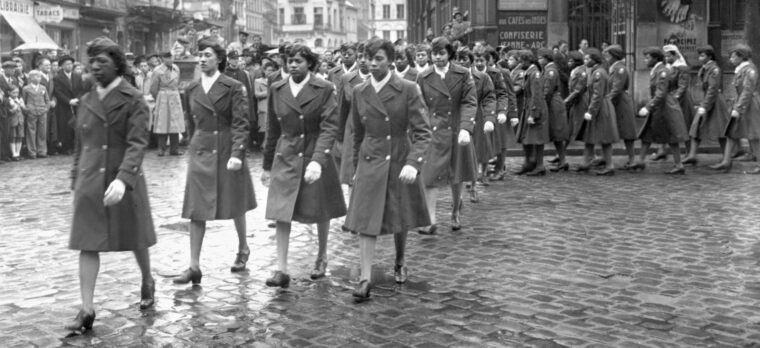
Six steward’s mates who received Bronze Stars for heroism pose aboard the USS Intrepid around the gun they manned until a Japanese kamikaze dive-bomber crashed into their position, July 28, 1945.

My War On Two Fronts

By J. (Joseph) Conklin Lanier, II

How I, then a teenager of African descent, found myself thousands of miles away from my placid, rural Mississippi home and on a dangerous volcanic island known as Iwo Jima in the middle of the Pacific Ocean, where tens of thousands of men met violent deaths, is a journey at which I still marvel today, some 65 years later. Read more

Edward Longshanks & William Wallace at Falkirk

By John Walker

After the disastrous Battle of Dunbar in April 1296, the Scottish revolt against England stalled for more than a year until a rebel force led by Andrew de Moray and William Wallace rekindled the flames of rebellion with a stunning victory over the English at Stirling Bridge. Read more

The tragic death of Continental Army Brig. Gen. Richard Montgomery in an assault on the south end of Quebec's Lower Town is vividly, albeit romantically, portrayed in John Trumbell’s period painting. A partial siege of the town that followed the failed assault ended when a British fleet arrived in spring 1776.

Arnold’s Flawed Invasion of Quebec

By Eric Niderost

On November 9, 1775, a British resident of Quebec wrote a letter back home, a missive that he knew might not even reach England, because the Canadian fortress city would soon be under a state of siege. Read more

For All The Wrong Reasons

By Edward G. Miller

Hürtgen Forest. Chilling rain, freezing fog, mud, impenetrable forest. Unremitting misery for GIs and Landsers alike. War correspondent Ernest Hemingway famously called it “Passchendaele with tree bursts.” Read more

Twenty-two members of the Nazi regime on trial at Nuremberg for their part in war crimes. This, the first of 13 tribunals, lasted 11 months—from November 1945 until October 1946. Ten men were hanged; three committed suicide in prison.

Was There Justice at Nuremberg?

By Blaine Taylor

After Imperial Germany lost the Great War (1914-1918), the Treaty of Versailles punished her severely in terms of ruinous restitution payments to the victors, economic sanctions, the loss of territory and colonies, the forced abdication of Kaiser Wilhelm II, and the heavy restrictions imposed on her armed forces. Read more

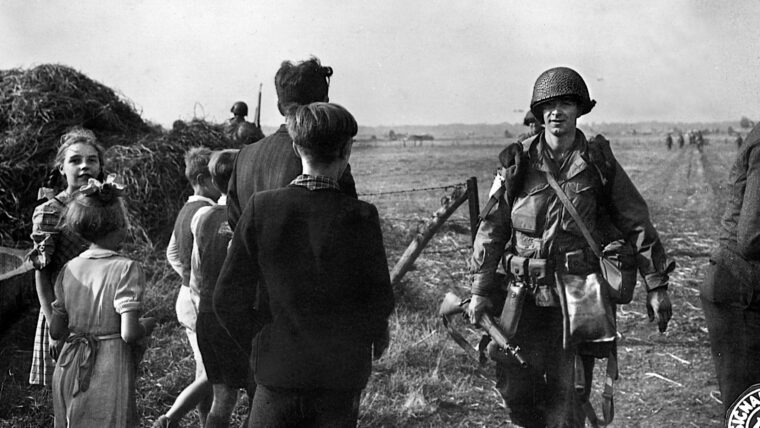
A little girl hands a flower to a lieutenant of the 110th Infantry Regiment, 28th Infantry Division, as flag-waving Luxembourgers welcome the liberating Yanks to their village, September 1944. Unfortunately, the celebration was premature; the Germans launched a counteroffensive that became known as the Battle of the Bulge three months later and nearly drove the Americans out of Luxembourg. Tom Myers was a soldier in the 110th Infantry whose unit was caught up in the chaos.

The Fight for Weiler

By Allyn Vannoy

IN a house in a small, nameless Belgian village, 26-year-old Sergeant Tom Myers, a newly assigned member of the 5th Armored Division, was upstairs changing his filthy uniform for a fresh one. Read more

Faces of World War I

By David DeJonge

November 11, 2008, marked the 90th anniversary of the end of World War I. Some 4,734,991 American soldiers served in the conflict, and 116,516 Americans lost their lives during the nation’s two-year participation in the war—a casualty rate far surpassing the deaths incurred in the combined wars of Korea, Vietnam, and the Persian Gulf. Read more

San Francisco residents snap up the latest editions of the city’s newspapers and try to separate fact from rumor amid a swirl of information related to enemy activity in the early days of the war. The Japanese made numerous attempts to bring the war home to the U.S. West Coast, including submarines surfacing off the coast to shell targets or attempting to launch attack aircraft.

War on the West Coast

By Glenn Barnett

Throughout World War II, the Imperial Japanese Navy dreamed of taking the war to the West Coast of the United States. Read more

Croatian nobleman Nikola Zrinski leads a sortie against the Turks at the Hungarian fortress of Szigetvar in 1566. The bloody siege was Suleiman’s last battle.

Ottoman Sultan Suleiman I

By William E. Welsh

Venetian military engineer Gabriel Tandini listened intently in the semi-darkness of the Knights Hospitaller counter-tunnels beneath the walls of Rhodes for sound of Turkish sappers trying to dig under the city’s walls. Read more

Robert Capa’s famous blurry image of the 1st Infantry Division’s amphibious landings at the Easy Red/Fox Green sectors of Omaha Beach indelibly captures the fear and chaos of the D-Day invasion. Four rolls of Capa’s film were rushed back to LIFE magazine’s London office, where a darkroom mistake ruined all but 11 images.

“A Hell of a Good Place to Die”

By Christopher Miskimon

Corporal Michael Kurtz stood on the deck of an attack transport ship sitting off the Normandy coast. Gazing out over the ship’s railing in the pre-dawn hours, he could see the ship’s crew working the davits and ropes for the landing craft. Read more

The Gettysburg cyclorama shows a badly wounded Alonzo Cushing commanding one of his guns in The Angle.

Union Lieutenant Alonzo Cushing

By William E. Welsh

One of the smoothbore cannons in Captain Merritt B. Miller’s Third Company of the Washington Artillery deployed west of Emmitsburg Road just south of the town of Gettysburg fired a single round at 1:07 p.m. Read more

U.S. troops fire on Chinese during Battle of Chipyong-Ni, which marked the high tide of the Chinese counteroffensive in the Korean War. The Chinese attacked at night to take full advantage of their superb infiltration tactics.

Matthew Ridgway’s Eighth Army at Seoul

By John Walker

As Lt. Gen. Matthew Ridgway boarded a flight to Tokyo, Japan, on December 23, 1950, on his way to a meeting with General of the Army Douglas MacArthur, he was not fully aware of the depth of the crisis still unfolding on the frozen Korean peninsula, where American-led United Nations forces and their South Korean allies, who were seemingly on the verge of complete victory in North Korea, were now suddenly on the brink of collapse and perhaps outright defeat. Read more

Pope Eugenius III presents his pilgrim staff to King Louis VII at the Church of St. Denis. A high-ranking knight holds the Oriflamme, which was the battle standard of French kings.

Crusader Calamity at Damascus

By William E. Welsh

The hot sun beat down on the mud-brick and wooden buildings, the lush orchards, and the patchwork of pastoral fields around the oval-shaped, walled city of Damascus in southern Syria on the morning of July 24, 1148. Read more