WWII
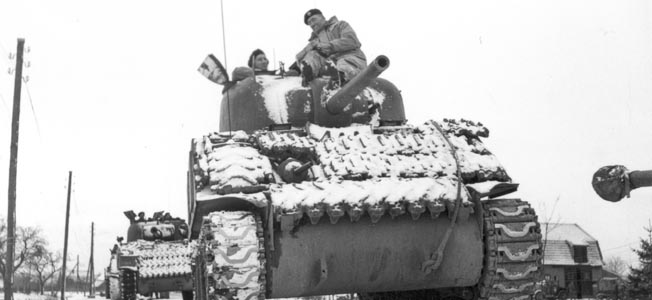
Clear Skies Over Bastogne: Patton’s Prayers Answered
By David H. Lippman“This is the shortest day,” General Dwight D. Eisenhower, supreme commander of Allied forces in Western Europe, wrote in his diary for December 21, 1944. Read more
WWII
“This is the shortest day,” General Dwight D. Eisenhower, supreme commander of Allied forces in Western Europe, wrote in his diary for December 21, 1944. Read more
WWII
It was the storm that forced the battle. On June 19, 1944, a massive gale hit the English Channel, sweeping in from the west, hitting the gigantic artificial harbors the Allies had built on their D-Day invasion beaches. Read more
WWII
Several Allied operations targeted a single enemy commander: the unsuccessful raid on General Erwin Rommel’s headquarters in North Africa to kill the Desert Fox; the assassination of the Butcher of Prague, SS Reichsprotektor of Bohemia and Moravia Reinhard Heydrich; and the shooting down of Admiral Isoroku Yamamoto’s plane in the sky above Rabaul in 1943. Read more
WWII
Nearly three-quarters of a century distant from the end of World War II and the defeat of Nazi Germany, one may conclude with confidence that few images of mankind’s violent history stir greater revulsion and, yes, lingering fear than that of a glowering Adolf Hitler—steely eyes gazing outward from a page or the glow of a computer screen. Read more
WWII
Just after midnight on September 3, 1939, a stylish young former socialite from Boston, Massachusetts, made her way toward London aboard the Harwich boat train after crossing the English Channel. Read more
WWII
In April 1941, things were going quite well for the German armed forces. In a series of earlier campaigns, they had conquered Poland, the Low Countries, Norway, and France. Read more
WWII
In 1976, the Soviet city of Tula joined an elite group of nine other Soviet communities designated as “Hero Cities.” Read more
WWII
The U.S. 29th Infantry Division was formed in July 1917, three months after America entered World War I. Read more
WWII
Sunsets over Manila Bay are nothing less than spectacular. Once the sun dips below the horizon there is a lingering illumination known as “blue hour” as the sky gradually shifts from pale azure to deep indigo before fading completely into the black tropical night. Read more
WWII
During World War II British and American aircraft carriers, serviced and ready for naval combat, averaged 20,000 to 30,000 tons. Read more
WWII
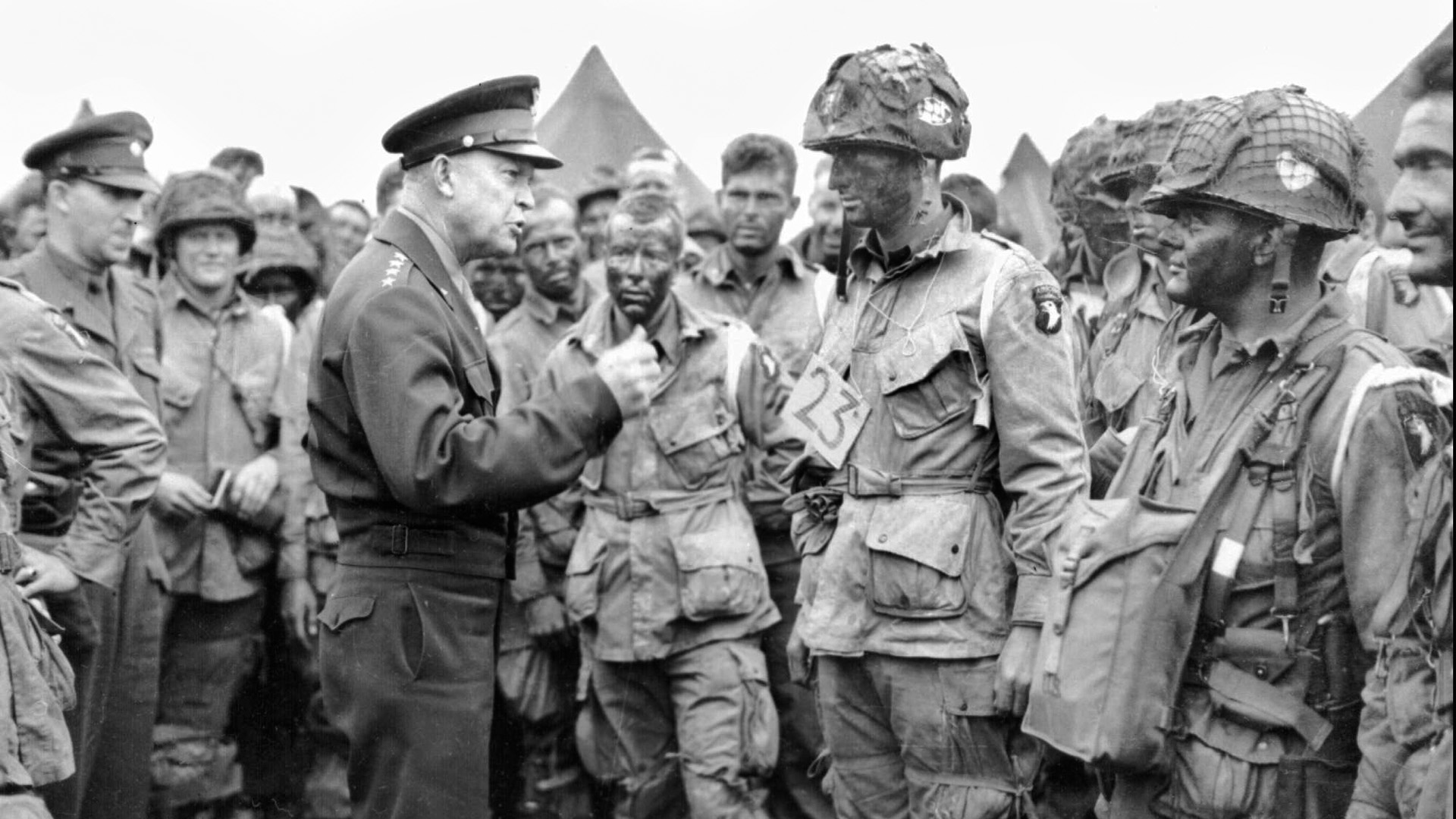
German defenders hunkered in their concrete and steel bunkers along the Normandy coast were in for two major shocks on Tuesday, June 6, 1944. Read more
WWII
From the training grounds to the battlefront, soldiers and Marines usually dined on C and K rations. Read more
WWII
Between September 1939 and December 1941, the United States moved from neutral to active belligerent in an undeclared naval war against Nazi Germany. Read more
WWII
On the morning of June 13, 1944, the brilliant new aircraft carrier Taiho weighed anchor and slowly moved out of Tawi-Tawi anchorage in the Sulu archipelago in the southwestern Philippines. Read more
WWII
Fresh off a tense telephone conversation with Maj. Gen. Lucian Truscott, Lt. Gen. George S. Patton, Jr., climbed into a jeep and rumbled over to Truscott’s 3rd Infantry Division headquarters east of Terranova, on Sicily’s northeastern coast. Read more
WWII
The darkness held a terror of its own—any false movement or unwarranted sound could easily betray the presence of the 16-man patrol that crept ever closer to the enemy lines. Read more
WWII
By the autumn of 1944, most of Nazi-occupied Europe had been liberated by Allied forces. The conquering armies now faced the invasion of the German homeland. Read more
WWII
The U.S. Army entered the war in North Africa in November 1942, eager to engage the German and Italian armies and prove itself their equal. Read more
WWII
To plead Superior Orders one must show an inexcusable ignorance of their illegality. The sailor who voluntarily ships on a pirate craft may not be heard to answer that he was ignorant of the probability that he would be called upon to help in the robbing and sinking of other vessels … a man who sails under the flag of skull and crossbones cannot say that he never expected to fire a cannon against a merchantman,” wrote Judge John L. Read more
WWII
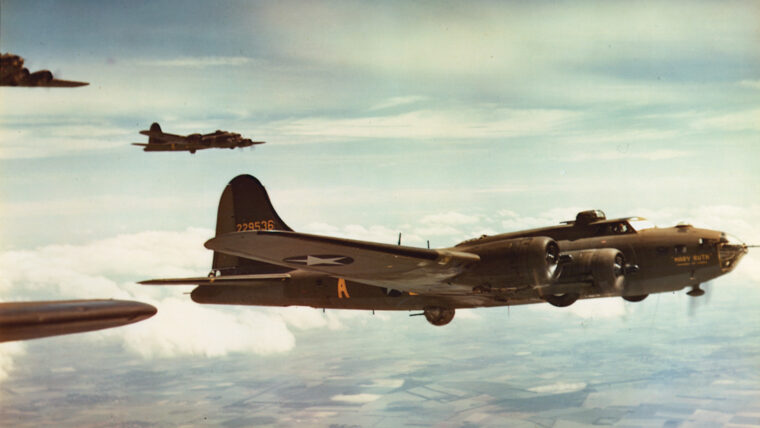
The following story describes one of our air raids when I was piloting a Boeing B-17 Flying Fortress during World War II. Read more