Latest Posts

Latest Posts

From the Publisher

From the Publisher

Welcome to WWII History’s new format and publishing frequency—you’ll now find more pages, and more stories, in each issue. Read more

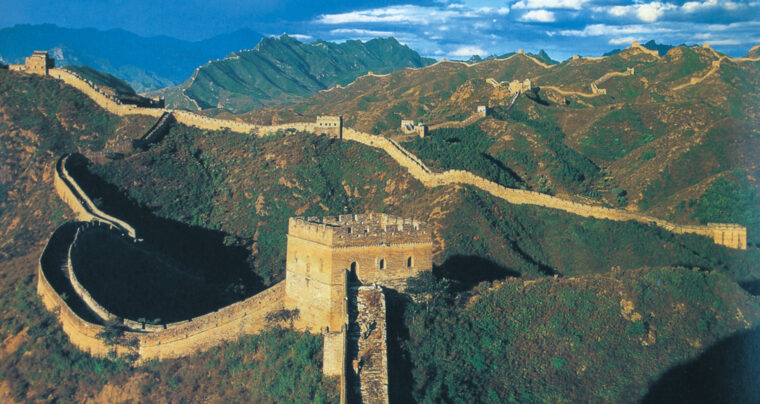
The Great Wall of China stretches 3,000 miles from the Pacific coast to the present-day Gansu province. The massive wall was to serve as Qin Shih Huang-ti’s northernmost fortification.

Latest Posts

Famous Soldiers: Shih Huang-ti

By Ludwig Heinrich Dyck

When rebel peasants under a charismatic army deserter named Liu Pang descended on the capital city of Hsien Yang in 206 bc, they did so under the considerable shadow of the Ch’in dynasty’s former ruler, Shih Huang-ti. Read more

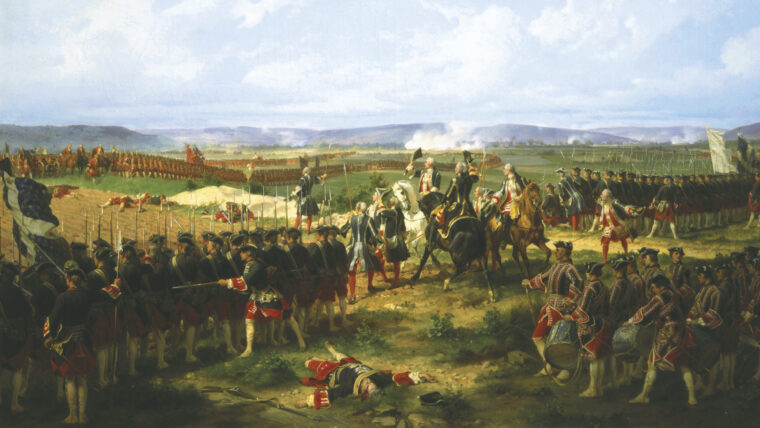
In this painting of the Battle of Fontenoy by Felix Philippoteaux, British and French officers salute each other before their opposing armies begin firing.

Latest Posts

Stately Minuet of Death: Maurice de Saxe at Fontenoy

By Vince Hawkins

In the Age of Reason, even wars were fought reasonably. Well-ordered marches, carefully dressed ranks of impeccably turned-out soldiers, and elaborately sketched battle plans were the order of the day in the so-called “lace wars” of the mid-18th century. Read more

Latest Posts

WWII Spies: Oreste Pinto

By Robert Whiter

Two men were seated on either side of a paper-strewn table inside an office of MI5, the British intelligence service, in the Royal Victoria Patriotic School at Clapham, London, shortly after the fall of France in the spring of 1940. Read more

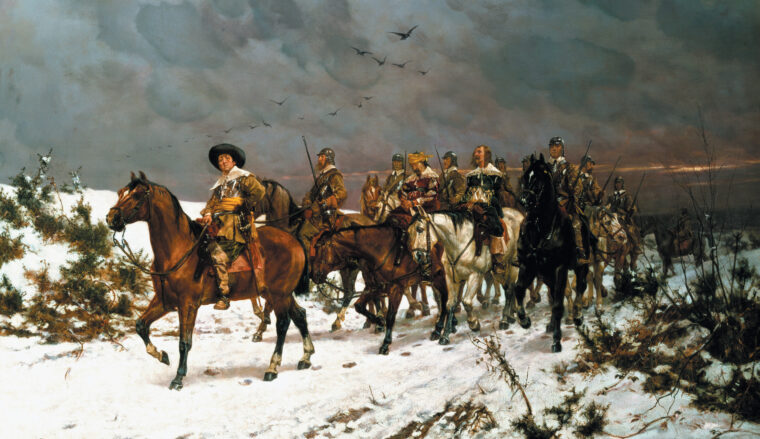
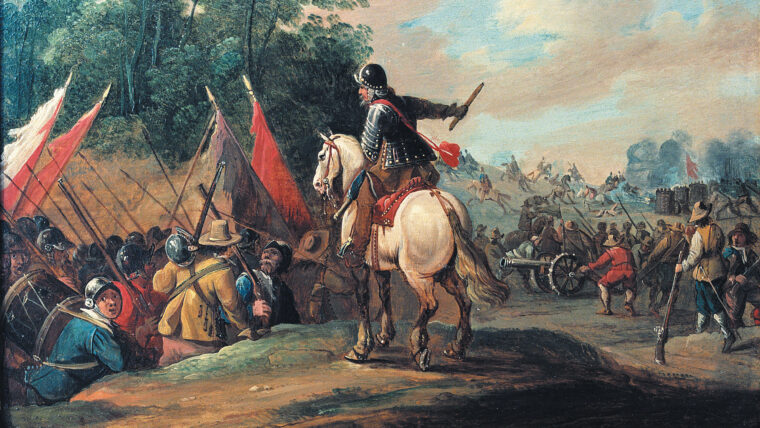
In this painting by Edgar Bundy, a despairing Charles I retreats atop his white charger with members of the Life Guard after suffering defeat at Naseby.

Latest Posts

King Charles I: Decision at Naseby

By Arnold Blumberg

By the spring of 1645, the open warfare between King Charles I and his rebellious Parliament had dragged on for nearly three years, with no apparent end in sight. Read more

Latest Posts

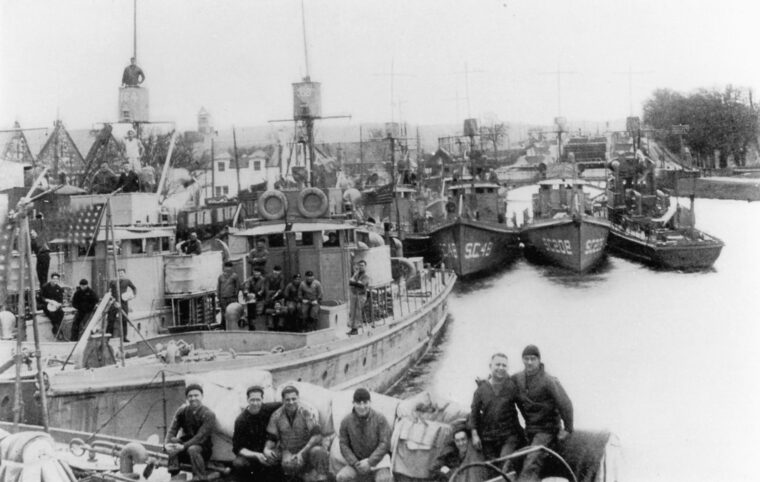
The U.S. Splinter Fleet

By A.B. Feuer

When the United States entered World War I in April 1917, the nation’s Navy was shockingly short of combat ships—particularly the submarine chasers that would be vital to combating the German U-boat menace. Read more

Latest Posts

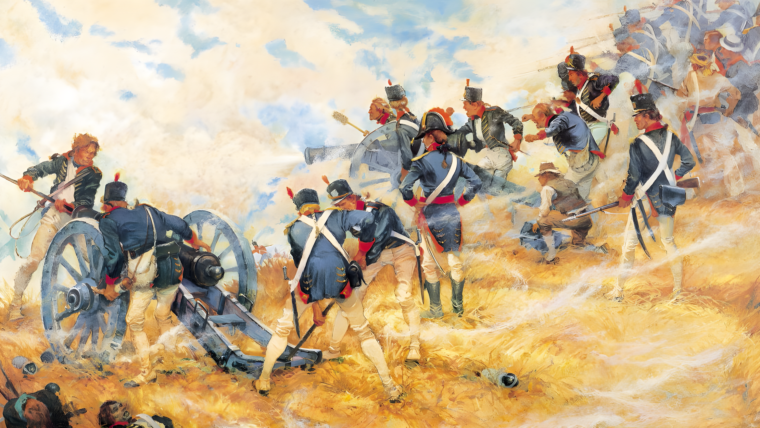
Shaky Stand at Bladensburg

By Blaine Taylor

The British Army of soldiers, Royal Marines and naval infantry—actually sailors from His Majesty’s Navy fighting on dry land with musket, pike and cutlass—were marching full-tilt for the capital of the United States this hot, sweltering August 24, 1814. Read more

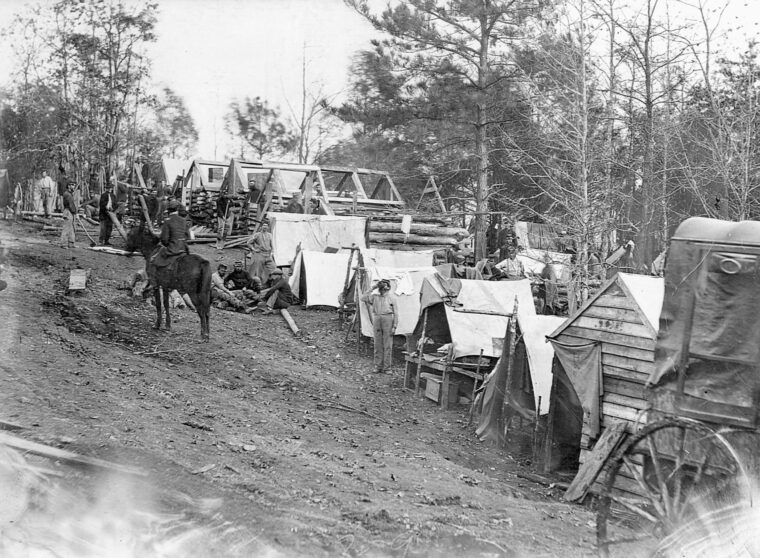
Soldiers construct log huts from nearby trees. One soldier takes a drink (center) while others split timbers (left) as a mounted officer looks on.

Latest Posts

Union Soldiers in the Civil War: Camping Along the Potomac

Photo Essay By Kevin M. Hymel

Before the fighting even began, before the first impassioned chorus of “On to Richmond!” was raised by the men in blue, the soldiers comprising the Union Army of the Potomac during the Civil War had to create their own precarious living quarters in the forested wilderness of the eastern seaboard. Read more

Latest Posts

Ian Gardner’s Sign Here for Sacrifice

By Christopher Miskimon

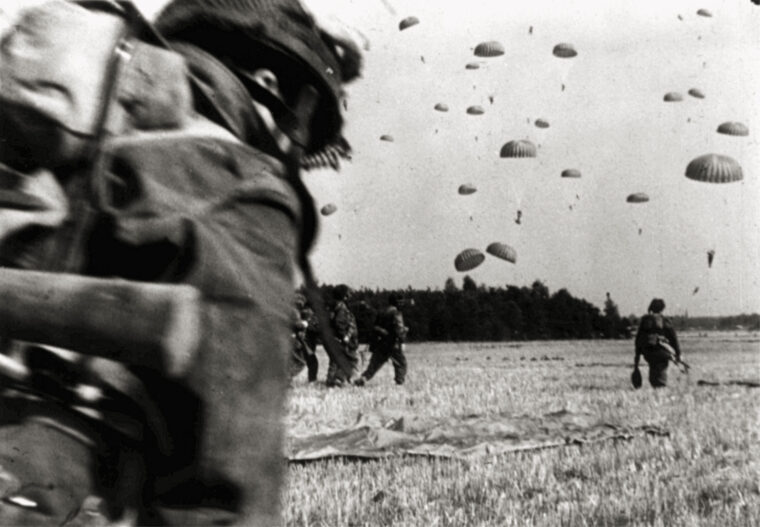
Climbing a ridge, Phil Vernon spotted wisps of smoke coming from somewhere below. The paratrooper from Company A of the 506th Parachute Infantry Regiment was in Vietnam in December 1967 and the unit was participating in “Operation Klamath Falls.” Read more

Latest Posts

Phillip Thomas Tucker’s ‘Brothers in Liberty’

By Christopher Miskimon

When British fortunes waned in the north during the American Revolution, they turned their attention south. They formed an expeditionary force which sailed from New York to Savannah, Georgia, which they captured in 1778. Read more

Alexander enters Babylon after defeating Persian King Darius III at Gaugamela in 331 BC.

Latest Posts

William Nester’s ‘Land of War’

By Christopher Miskimon

As long as human beings have lived on the European continent there have been wars on it. They began with stones and flint axes and progressed through bronze, iron and eventually steel weapons, but the advent of gunpowder changed the nature of combat from a largely face to face struggle to one of ever-increasing distances. Read more

Latest Posts

Michael McNally’s ‘Tannenberg 1914’

By Christopher Miskimon

A month after World War I began, as the French, British and German armies vied for a quick victory in France and the Low Countries, a fast-moving campaign evolved in the East, where the German and Russians maneuvered for advantage. Read more