WWII
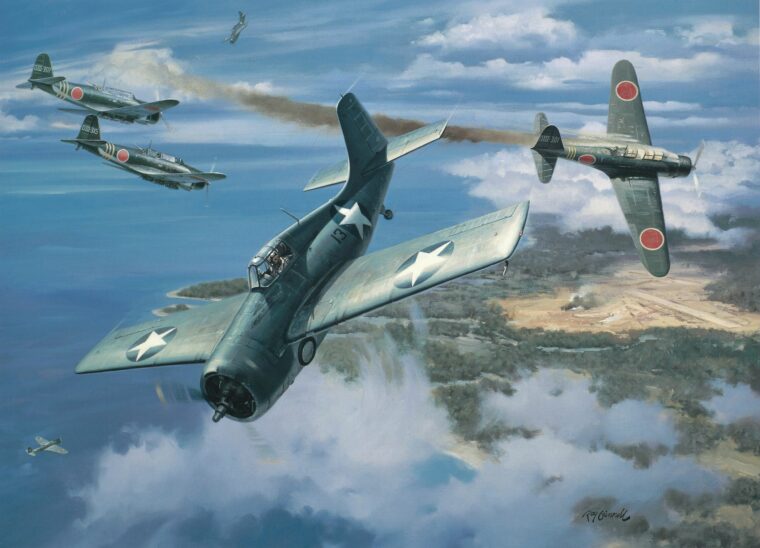
The Curtiss SB2C Helldiver: An Unpopular and Flawed Allied War Machine
By Robert F. DorrIt sent Japanese warships to the bottom of the ocean. It pulverized fortifications on Japan’s home islands. Read more
WWII
It sent Japanese warships to the bottom of the ocean. It pulverized fortifications on Japan’s home islands. Read more
WWII
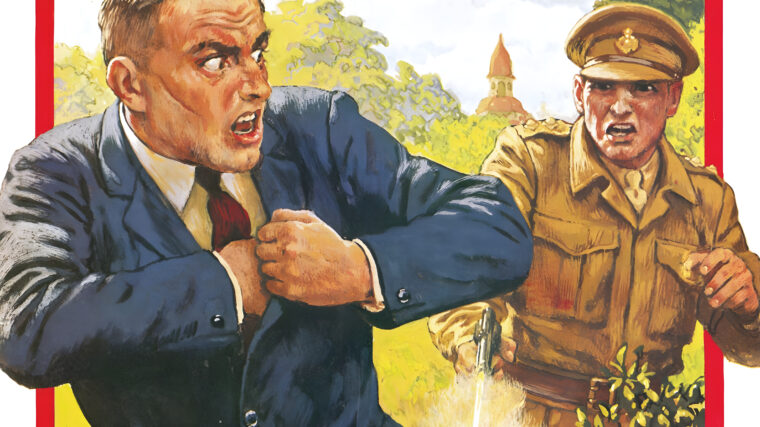
World War II in the Pacific was fought in thousands of remote locations. The island of Borneo was the site of one of the least known clandestine operations of the conflict, led by an adventurous, but arrogant, anthropologist. Read more
WWII
In 1920, a young, handsome Jewish boy from New Jersey took the train from Grand Central Station to Princeton, New Jersey, where he would enroll that fall. Read more
WWII
The very nature of war means that some participants will be killed and others will be wounded, and some estimate the deaths in WWII to be around 85 million. Read more
WWII
Operation Bagration, the largest operation of World War II, has never been adequately acknowledged in the West to the same extent as a number of smaller campaigns. Read more
WWII
By June 1, 1943, British actor Leslie Howard, 50, was one of the most famous actors in the world, one of the leading male stars of one the greatest box-office draw movies of all time, the 1939 blockbuster Gone with the Wind. Read more
WWII
Without warning, from behind his desk in his miniature coliseum of an office in Rome’s Palazzo Venezia, Benito Mussolini on the morning of May 26, 1940, pronounced those words that were to prove fateful for Italy, fatal for him: “I have sent Hitler a written statement, making it clear to him that I do not intend to stand idly by and that from June 5th I shall be in a position to declare war on France and England.” Read more
WWII
General Bernard L. Montgomery, commander of the British 21st Army Group, was delighted to learn by secret cipher on December 23, 1943, that he had been chosen to lead three Allied armies in history’s greatest invasion, scheduled for the following May. Read more
WWII
By the summer of 1944, the United States was advancing on Japan’s Home Islands in a two-pronged attack through the Central and Southwest Pacific theaters. Read more
WWII
Japan’s road to World War II was a long one. Throughout the late 19th century, the island nation broke out of its feudal past on a path to modernity with a ruthlessness and singlemindedness that would have scared Western nations had they been paying attention. Read more
WWII
As the 450 ships of the Operation Avalanche invasion force approached Salerno on the evening of September 8, 1943, the Allied troops, packed tightly aboard transport vessels, broke into wild celebration. Read more
WWII
On the veranda of his temporary headquarters in a Dutch country house outside Veghel, Holland, renowned Luftwaffe General Kurt Student played lunch host to an old comrade, the chief of staff of the German Seventh Army. Read more
WWII
It was a beautiful September day over Holland. Gradually, a faint rumble began to grow, and the sunny sky was darkened. Read more
WWII
Almost every American veteran has fond memories of a Track-Side Free Canteen, or a USO center at some train station or airport situated at locations around the world, or a “USO Camp Show” that provided entertainment close to the front lines, during every conflict since World War II. Read more
WWII
Down in the basement of my father’s medical office a Nazi helmet stood guard. It sat on top of the pea-green Army trunk, CAPT R LEVINSON stenciled in white letters under a beaten-up leather handle. Read more
WWII
The vast Soviet War Memorial in Berlin’s Treptower Park commemorates 5,000 Red Army soldiers who fell in battle in the city in April and May 1945. Read more
WWII
In 1979, Dr. Hugh Thomas, a British physician, came out with a highly controversial book that made the startling claim that Nazi Germany’s Deputy Führer, Rudolf Hess, did not commit suicide in Berlin’s Spandau Prison in 1987, but actually died in 1941, and that the man who died in prison was, in reality, Hess’s double! Read more
WWII
It seemed like just another ordinary day at sea. Early on December 7, 1941, a U.S. Army-chartered cargo vessel, the 250-foot SS Cynthia Olson, under the command of a civilian skipper, Berthel Carlsen, was plying the Pacific waters about 1,200 miles northeast of Diamond Head, Oahu, Hawaii, and over 1,000 miles west of the Tacoma, Washington, port from which she had sailed on December 1. Read more
WWII
The small (population 12,000), central-Texas town of Fredericksburg, about an hour’s drive west of Austin and a little more than that northwest of San Antonio, may seem an odd location for the National Museum of the Pacific War until one realizes that Fredericksburg is the hometown of Fleet Admiral Chester Nimitz––the Eisenhower of the Pacific Theater. Read more
WWII
In 1941, Finland joined Nazi Germany in its attack on the Soviet Union, resulting in the third war with its giant eastern neighbor in 23 years. Read more