Latest Posts

Latest Posts

Flint Whitlock’s ‘Patton and the Battle for Sicily’

By Kevin Seabrooke

Launched on the night of July 9-10, 1943, the amphibious assault of Operation Husky was the largest the world had ever seen—more than 3,200 vessels and half a million Allied soldiers, sailors, and airmen attacked the island of Sicily, Adolf Hitler’s “Fortress Europe.” Read more

Seven American guerrilla leaders in the Philippines were presented the Distinguished Service Medal by General Douglas MacArthur. Shown from left are Major Maury McKenzie, Major Robert B. Lapham, Major Edwin P. Ramsey, General Manuel A. Roxas, Lieutenant Colonel Bernard L. Anderson, Captain Ray C. Hunt, Major John Boone, and Captain Alvin J. Farretta.

Latest Posts

Raquel Ramsey’s ‘Reflections’

By Kevin Seabrooke

During the Japanese invasion of the islands in December 1941, 2nd Lt. Edwin Ramsey commanded the U.S. Army’s 26th Cavalry Regiment (Philippine Scouts) in rearguard action that allowed Allied forces to fall back to the Bataan Peninsula. Read more

Thick clouds of smoke billow from the West Loch of Pearl Harbor after a series of massive explosions on May 21, 1944, sank or damaged several vessels.

Latest Posts

Mark Stille’s ‘Pearl Harbor: Japan’s Greatest Disaster’

By Kevin Seabrooke

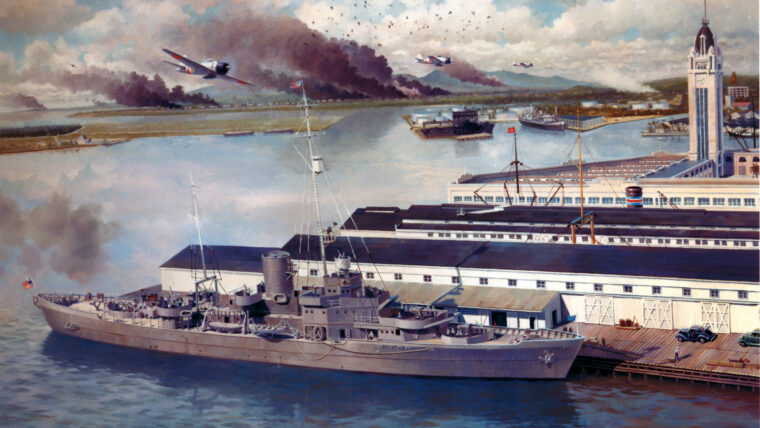
Author Mark Stille bemoans the “continuing flood of Pearl Harbor books [that] focus on the failure to avoid conflict in the months before the attack or on the deeply flawed concept that ‘Washington’ conspired to let the Japanese take the first shots of the war while not informing the commanders at Pearl Harbor what was coming.” Read more

Making its way toward a berth at Pearl Harbor, the highly successful USS Tang comes into port.

Latest Posts

Christine Kuehn’s ‘Family of Spies’

By Kevin Seabrooke

A screenwriter’s letter asking what her father, 70-year-old Eberhard Kuehn, remembered about his own father’s life as a spy in WWII turned journalist Christine Kuehn’s world upside down. Read more

Latest Posts

Bruce Henderson’s ‘Midnight Flyboys’

By Kevin Seabrooke

Flying classified missions under the cover of darkness to support underground resistance fighters in Nazi-occupied Europe is not the kind of volunteer work that garners much contemporary press. Read more

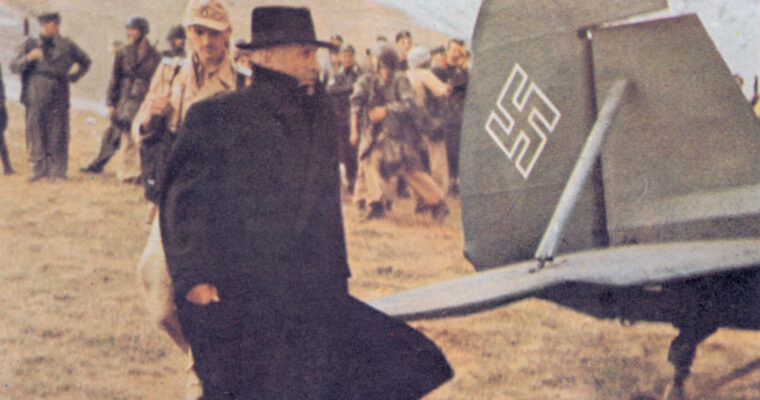
During the 1943 Battle of Kursk in Russia, specialized antitank versions of the Junkers Ju-87 known as “Gustavs” used tungsten-core shells to knock out Soviet tanks. With its upgraded speed, firepower, and armor, the “Dora” (D-series) version of the Ju-87 proved crucial in supporting ground troops and destroying Soviet antiaircraft batteries.

Latest Posts

The Stuka

By Richard Rule

During World War II the exploits of certain aircraft saw them indelibly associated with the battles in which they fought. Read more

Latest Posts

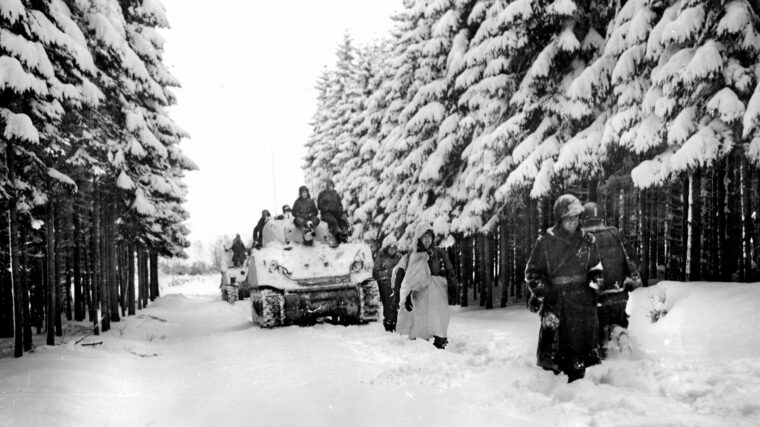
Fighting 80th Division at Bastogne

By Leon Reed

In a letter to his fiancée, Betty Craig, on December 16, 1944, from Helleringen, France, newly promoted Staff Sergeant Frank Lembo of Company B, 305th Engineer Combat Battalion, 80th Division, wrote of a battalion show the night before, complete with Red Cross girls serving donuts and the division band; an upcoming dance; doing laundry; and other pastimes of a soldier experiencing a period of reserve status. Read more

Latest Posts

Battle of the Thames

By Christopher Miskimon

A British squadron lay wrecked on the waters of Lake Erie. Six vessels of war floated in ruins and 135 English sailors lay dead or wounded. Read more

This mortar battery was erected outside Confederate earthworks at Yorktown, Virginia, in 1862. McClellan slowed his advance to bring mortars up. The Southerners then retired toward Richmond.

Latest Posts

Civil War Artillery

By John D. Gresham

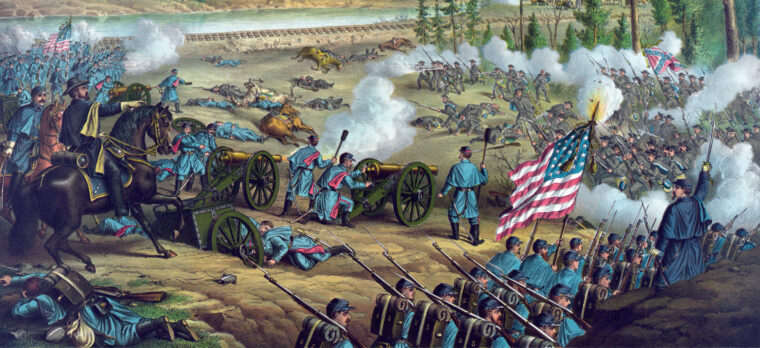
For much of its history, artillery has been a weapon of mass destruction and attrition, a force designed to cause casualties, destroy fortifications, and wear an enemy down with its noise, explosions, and shrapnel. Read more

Latest Posts

M18 Hellcat Tank Destroyers Failed on the Battlefield

By William F. Floyd Jr.

In 1940, existing U.S. Army tactical doctrine called for a cordon of towed antitank guns to defend against an enemy tank attack, but army planners studying the Battle of France in May of that year realized that a tactical plan of that nature was outdated and likely would not thwart a large-scale armor attack. Read more