Latest Posts

Latest Posts

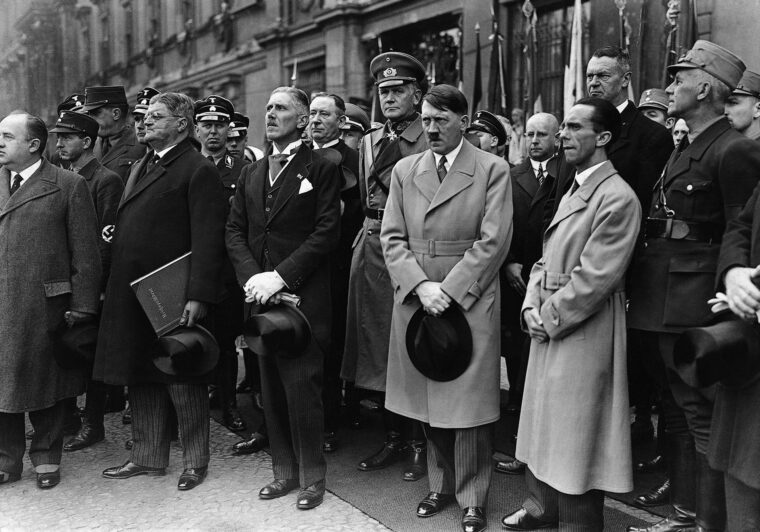
The Nazi ‘Gold Train Incident’

By Peter Kross

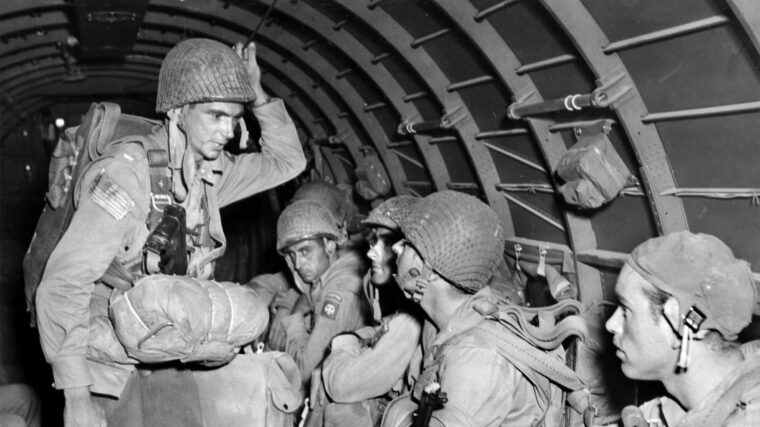
By the spring of 1945, Hitler’s thousand year Reich had come crashing down in flames. The Allied armies that had landed at Normandy almost one year earlier had penetrated deep inside Germany. Read more

Latest Posts

Collecting Tanker Helmets

By Peter Suciu

Since the first tanks rolled across the battlefield in World War I, armored crews have required specialized equipment to protect them inside the giant metal beasts. Read more

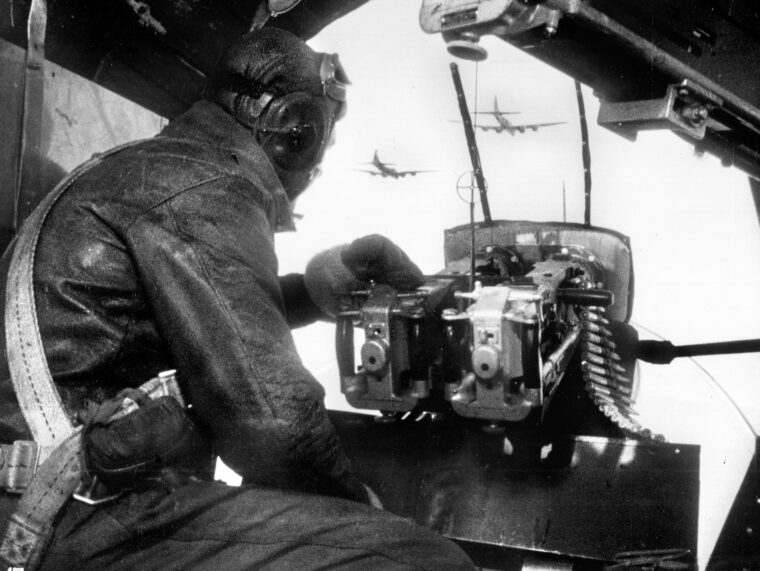
Consolidated B-24 Liberator bombers of the U.S. Fifteenth Air Force fly through thick enemy flak during bombing runs against the oil refinery complex at Ploesti, Romania. These bombers executed one of the most hazardous missions of World War II, and accurate weather information decrypted from German sources facilitated such air operations.

Latest Posts

Thomas McKelvey Cleaver’s ‘Bloody Skies’

By Kevin Seabrooke

Though the “Mighty Eighth” based in England earned the most headlines, the U.S.A.A.F.’s Fifteenth based in Italy played no less important—and every bit as dangerous—a role in bombing targets in Nazi Germany, France and Eastern Europe. Read more

Latest Posts

Eight World War II Book Reviews for Summer 2026

By Kevin Seabrooke Full Reviews

Ghosts of Sicily: The True Story of the Naval Intelligence Agents Who Courted the Mob to Fight Nazis in America and the Battlefields of Italy (Mark Harmon and Leon Carroll, Harper Select, New York, NY, 304 pp., Read more

This artist’s impression of the sinking of Indianapolis shows the warship engulfed in flames in the distance with Japanese submarine I-58 on the surface in the foreground. The cruiser sank within minutes of being struck by a torpedo.

Latest Posts

Sara Vladic’s ‘The Dangerous Shore’

By Kevin Seabrooke

While the fighting raged in Europe and the Pacific during WWII, those on the homefront had to deal with all manner of threats—both imagined and real, maintaining constant vigilance in the hunt for spies and saboteurs, both homegrown and those landed on America’s shores by German submarines. Read more

Latest Posts

Evelyn Iritani’s ‘Safe Passage’

By Kevin Seabrooke

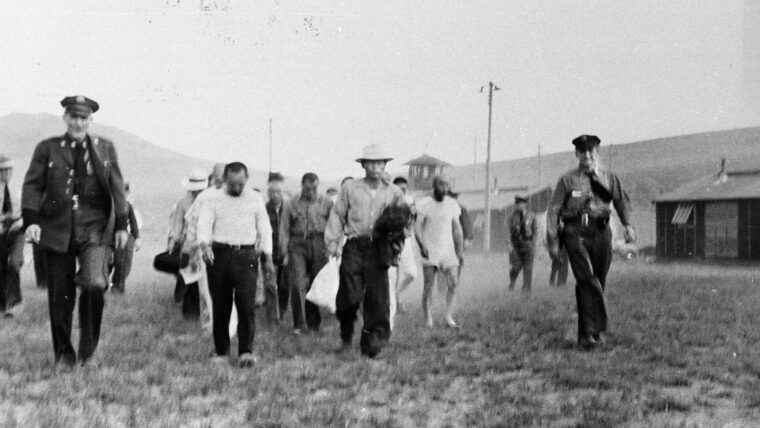
Long and difficult, beset by bureaucracy, xenophobia and suspicion, the process of trading Allied civilians who had become trapped in Axis countries with the outbreak of world war for Axis civilians who had likewise become trapped in the United States was an exhausting process for American diplomat James Hugh Keeley Jr., Read more

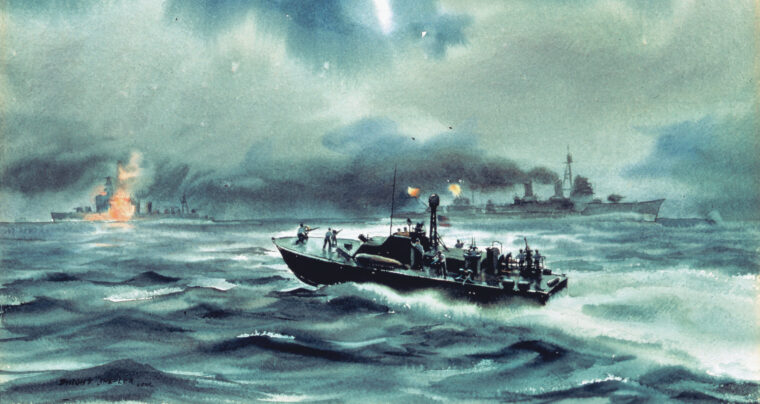
Carlson's Raiders pull away from a fast transport (APD) during training for the Makin Raid in early 1942. This exercise was to gain proficiency in the use of small rubber boats. However, heavy seas swamped several of the craft during the run-in from the submarines to the beach at Makin.

Latest Posts

Stephen R. Platt’s ‘The Raider’

By Kevin Seabrooke

The enigmatic Colonel Evans Fordyce Carlson, a “racially progressive, bleeding-heart communist sympathizer,” returned to China in 1937 for almost two years to observe the Chinese Communist Party’s 8th Route Army, led by Mao Tse-Tung, and spent nearly a year with guerrillas behind Japanese lines. Read more

Latest Posts

Jasper Craven’s ‘God Forgives, Brothers Don’t’

By Kevin Seabrooke

Craven first delved into this topic with an investigative article featured in the May/June 2022 issue of Mother Jones with the headline, “Hazing, Fighting, Sexual Assaults: How Valley Forge Military Academy Devolved Into ‘Lord of the Flies.’” Read more

An RAF Westland Lysander Mark I flies over the Beirut waterfront shortly after the city fell to the British in July 1941.

Latest Posts

Paul Smiddy’s ‘Moonlight Crusaders’

By Kevin Seabrooke

A pilot since the age of 16, later trained by the RAF, the author has assembled a dashing narrative of the Royal Air Force’s Special Duties pilots, who performed clandestine operations such as inserting or extracting agents, dropping supplies, and flying secret missions into occupied Europe, often using aircraft like the Westland Lysander—noted for its Short Take-Off and Landing (STOLT) capabilities. Read more

Latest Posts

The Dawn of Destruction

By John Wukovitz

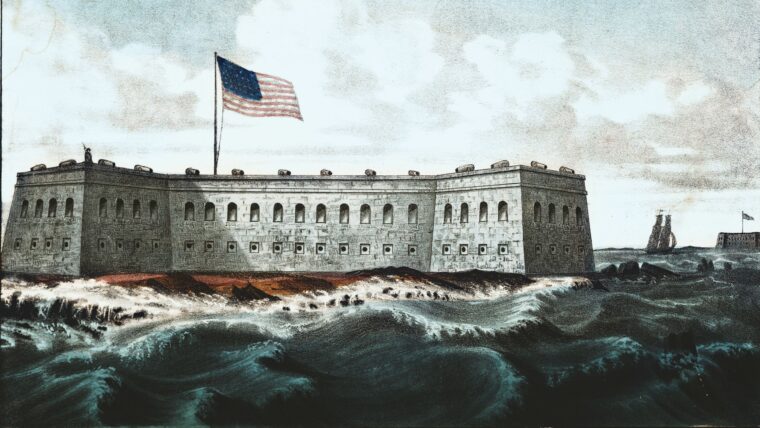
The seaplane tender USS Tangier floated at its moorings that peaceful day at Pearl Harbor. Little disrupted the serenity of the beautiful Sunday morning. Read more

Staff Sergeant Audie Murphy races through the set of a war-torn village in a scene from the the 1955 autobiographical film, To Hell and Back, based on his 1949 memoirs of the same name. Murphy, the most decorated U.S. soldier of World War II earned 33 awards, decorations, and citations—including the Medal of Honor, Distinguished Service Cross, two Silver Stars, Legion of Merit, two Bronze Star Medals (one with a “V” device), three Purple Hearts, a French Legion of Honour and a French Croix de Guerre with silver star—played himself in the film.

Latest Posts

Through the Vosges

By Daniel R. Champagne

On the morning of October 3, 1944, an all-out assault was launched to drive the enemy from Cleurie Quarry in northeast France. Read more

A 12th Armored Division GI stands guard over a group of surrendering Wehrmacht soldiers in April 1945. Manpower shortages forced the U.S. Army to retrain soldiers in service units—including African-Americans—as combat riflemen in 1945.

Latest Posts

Ending the Divide

By David H. Lippman

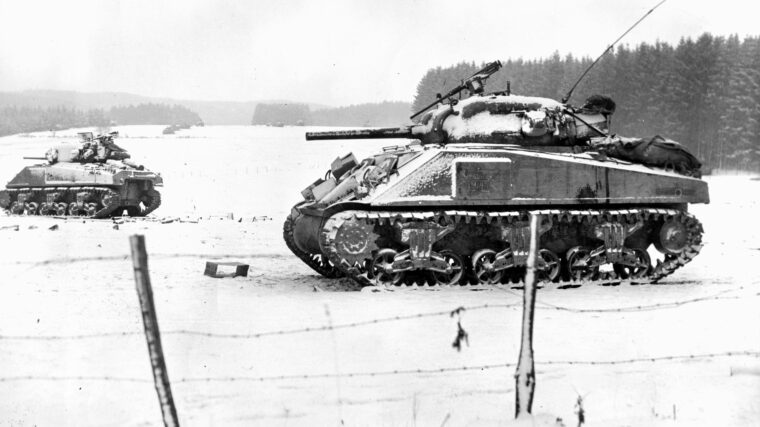
Three German armies surprised the Allies by breaking across the Our River and storming into the Ardennes on December 16, 1944. Read more

This illustration shows Britain’s “desert workhorse,” the Valentine Mk. III navigating the heat of North African combat in WWII. Though celebrated for its mechanical grit and reliability in the sand, the tank’s 2-pounder gun eventually proved inadequate. Large numbers of “Valentines” were later shipped to the Soviet Union to bolster the Eastern Front.

Latest Posts

Bitter Road to Tobruk

By Michael D. Hull

When powerful German forces stormed through the Low Countries and France was about to fall in the late spring of 1940, Great Britain faced the darkest hour in its history. Read more

Latest Posts

Roar of the Lightning Brigade

By Joshua Shepherd

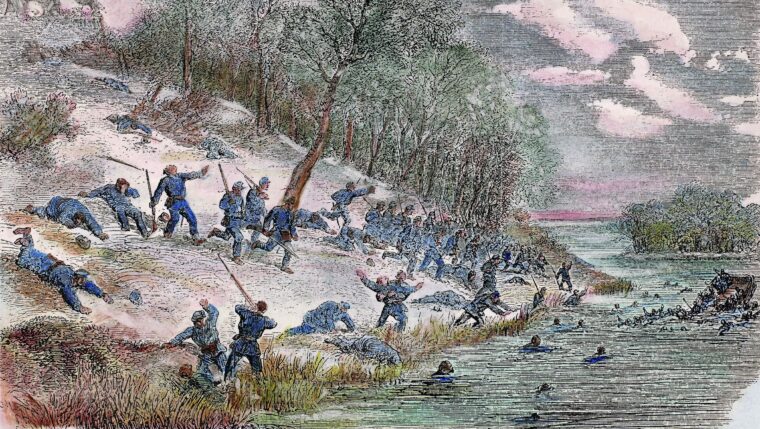
Convinced that a major fight was in the offing, 33-year-old Colonel John T. Wilder clambered up the branches of a nearby tree as the sun dipped below the horizon. Read more

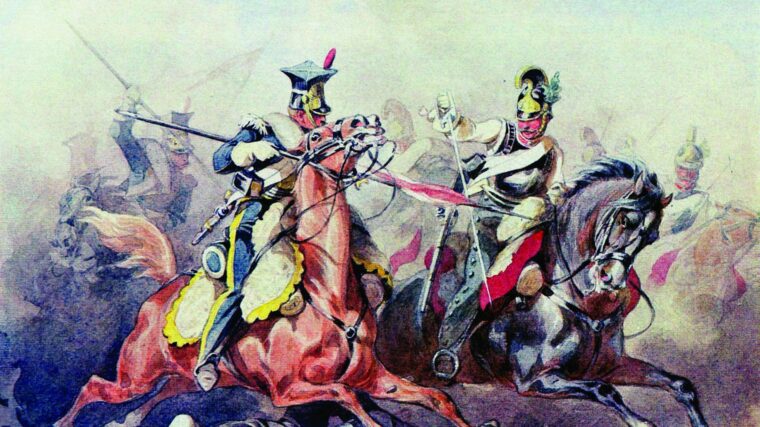
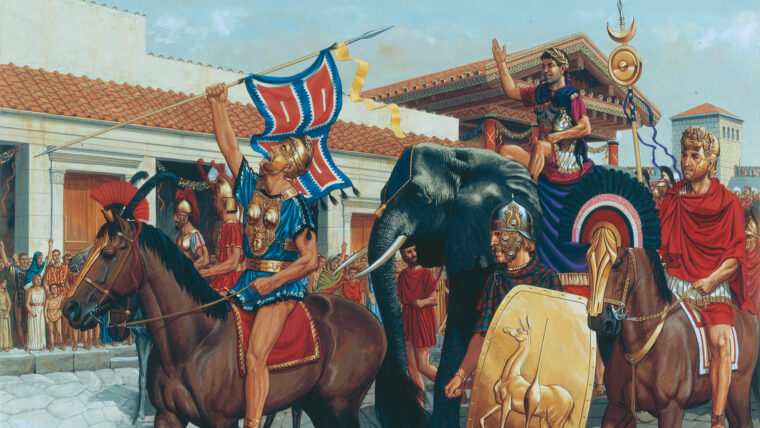
Cloaked in distinctive white mantles with red crosses, a charge of the “warrior monks” known as the Knights Templar was a fearsome sight. The devout medieval Catholic military order was established to protect Christian pilgrims after the Holy Land was reopened following the First Crusade.

Latest Posts

Bloody Brotherhood

By Kelly Bell

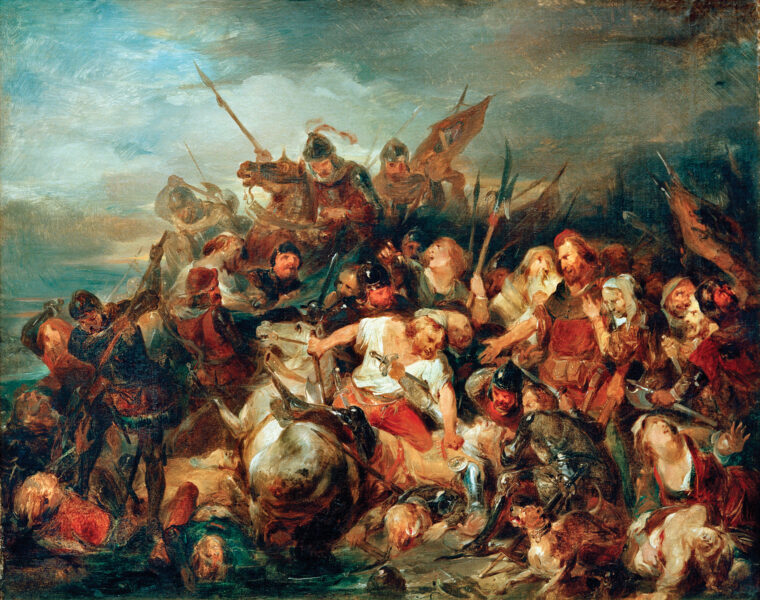
By 1119, the Holy City of Jerusalem had been back under Christian control for 20 years. The soldiers of the First Crusade had secured the city and re-opened it as a center for Christian pilgrimage. Read more

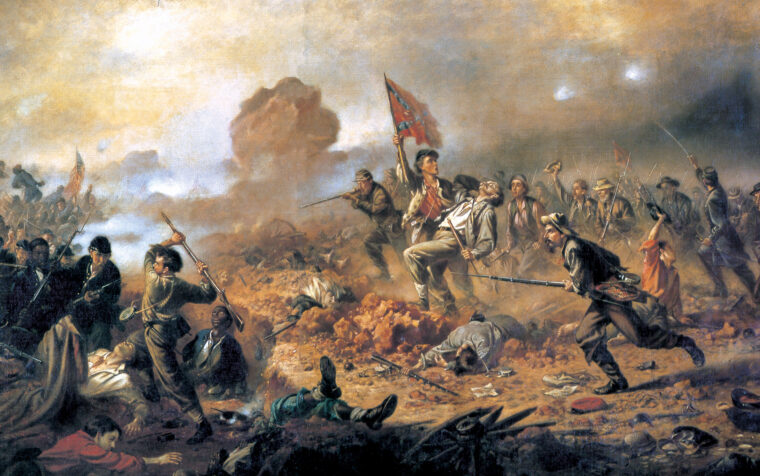
A drawing of the 92nd Illinois Mounted Infantry by John Hillen, a soldier in the unit before he was wounded and discharged.

Latest Posts

The Unforeseen Precipice

By Roy Morris Jr.

Every war will astonish you,” American General Dwight D. Eisenhower said after World War II. As the leader of the Allied forces that successfully landed on D-Day and marched into Berlin 11 months later, Eisenhower obviously knew what he was talking about. Read more

In July 1781 a company of African American soldiers of the Continental Army’s Rhode Island Regiment under Lt.-Col. Jeremiah Olney marches through Philadelphia on their way to Yorktown.

Latest Posts

Black Soldiers in the American Revolution

By Kevin Seabrooke

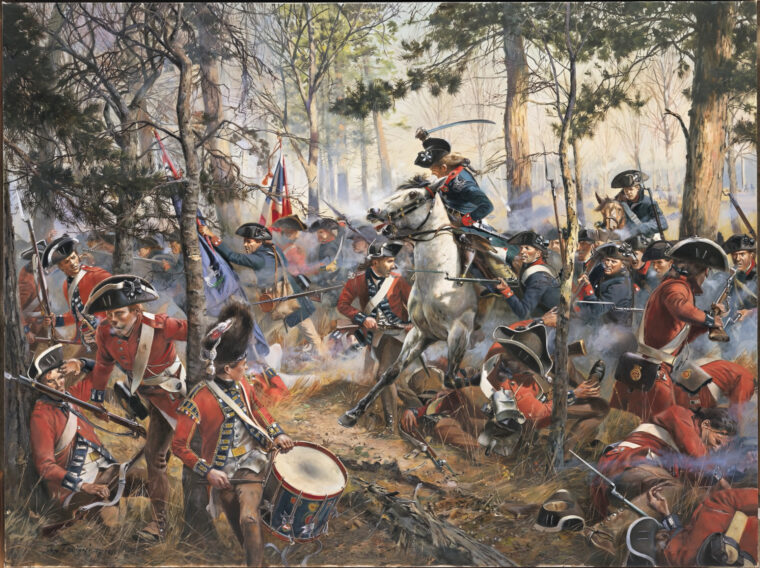
When the first shots of the Revolutionary War were fired at Lexington Green on the morning of April 19, 1775, Black men had already been serving in colonial militias for some time, particularly in New England. Read more