Edwin P. Hoyt’s ‘The U-Boat Wars’
By Michael D. HullWhen Chancellor Adolf Hitler started rearming Germany in 1934, his submarine force commander, Admiral Karl Doenitz, asked for men and materiel to create a fleet of 300 U-boats. Read more
When Chancellor Adolf Hitler started rearming Germany in 1934, his submarine force commander, Admiral Karl Doenitz, asked for men and materiel to create a fleet of 300 U-boats. Read more
On the same day that the atomic bomb was dropped on Hiroshima, America’s ace of aces, Richard Ira Bong, was killed while test piloting the experimental Lockheed P-80 Shooting Star in Burbank, Calif. Read more
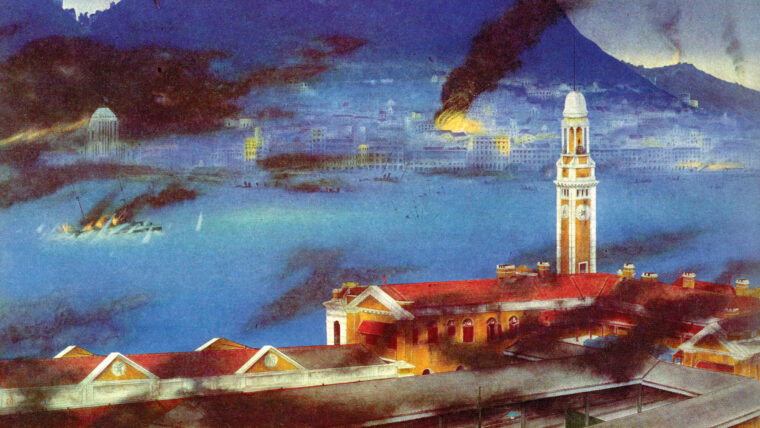
With rhythmic tread, the Canadian soldiers marched behind the bagpipers of the Royal Scots up Nathan Road. Read more

That would be absurd,” responded the legendary Royal Navy Admiral Sir (later Lord) Horatio Nelson to the patriotic lady asking to rename her pub the Nelson Arms, “seeing I have but one.” Read more
Dear Mr. Stoddard,
I have just finished reading Pedro Garcia’s “Highway to Victory” (October 2002). In it he states that “only three of these vessels [ironclads] ever became operational, none proving capable of going to sea.” Read more
Strange it is that American independence owes not only to a crushing American defeat but also to an infamous American traitor. Read more

A few days after German panzers rumbled through the chill, foggy Ardennes Forest early on December 16, 1944, breaching thinly held American lines and causing widespread confusion and near panic, a number of Allied units were rushed in to plug the gaps. Read more

From their hiding places in the valley below, the soldiers looked up at the wall of shale looming more than 3,000 feet above them. Read more
Dear Sir,
The article “Anything, Anywhere, Anytime” (July 2002) about the Air Transport Command (ATC), written by Sam McGowan, was excellent. Read more
A mere six months passed between the tragedy of Pearl Harbor and the triumph of U.S. naval forces during the Battle of Midway. Read more
Dear Sirs:
Regarding the article on the Doolittle Raiders attack on Japan entitled “Pearl Harbor Payback” (July 2002), there are several corrections that should be noted. Read more

Everywhere General George S. Patton, Jr., went, from North Africa to Sicily to continental Europe, his camera swayed from his neck, ready to capture images that interested him. Read more

The World War II campaign in Italy, fought in rugged terrain that favored the German defender, inhibited maneuver, and restricted resupply efforts, had ground to a standstill by the end of 1943. Read more
Dear Mr. Stoddard,
The article “Fighting the Tiger” by Eric Niderost (August 2002), regarding the first U.S. military action in Korea in 1871, was very well written. Read more
The most astonishing looking common aircraft of World War II was the Lockheed Lightning P-38. It had two tails.
Or rather in aircraft talk, it had twin booms ending in vertical stabilizers and rudders. Read more

It could have been a futuristic nightmare straight from the science fiction tales of H.G. Wells, with terror weapons raining death and destruction on an unsuspecting London. Read more
After nearly seven months of bitter fighting, the Japanese called it quits on Guadalcanal. Under cover of darkness during three nights in February 1943, slightly more than one-third of the 36,000 Japanese troops who had fought on this strategically important island in the Solomons chain were evacuated. Read more

Undeniably “war is hell,” but surely no war was more hellish for the common soldier thanWorld War I. The United States’ participation in the conflict, although of vital strategic benefit to our allies, was relatively brief, limited in scope, and overwhelmingly successful. Read more
Dear Editor,
The otherwise excellent article, “Destroyer Matchup at Kula Gulf,” is marred by the conclusion that this was a “clear American victory.” Read more
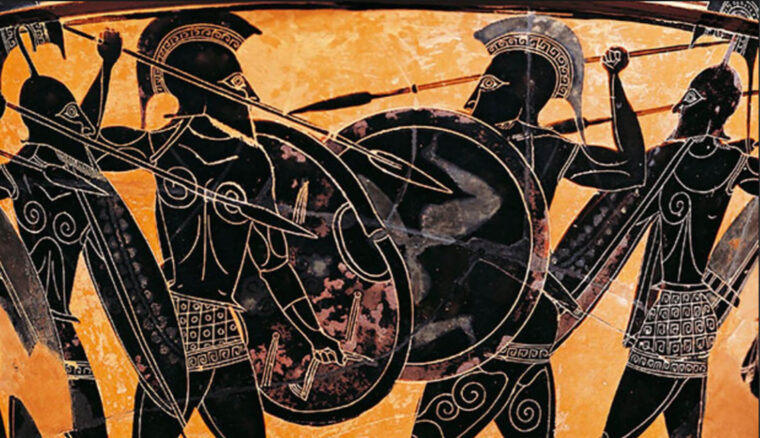
War is a terrible thing to study, but under the assumption that fresh ones are in the offing, such study is at least instructive and at best useful. Read more