By Scott Elliott
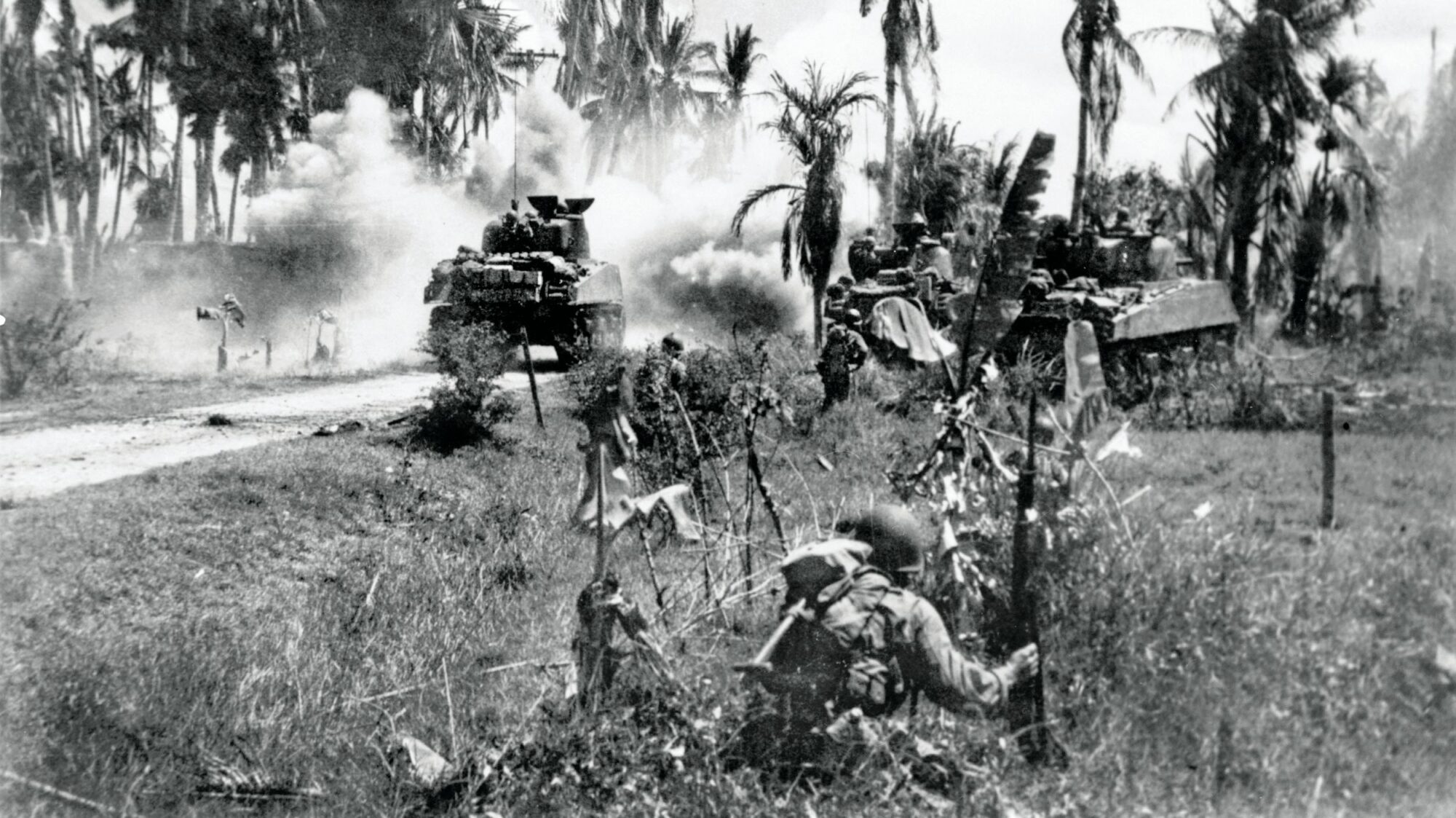
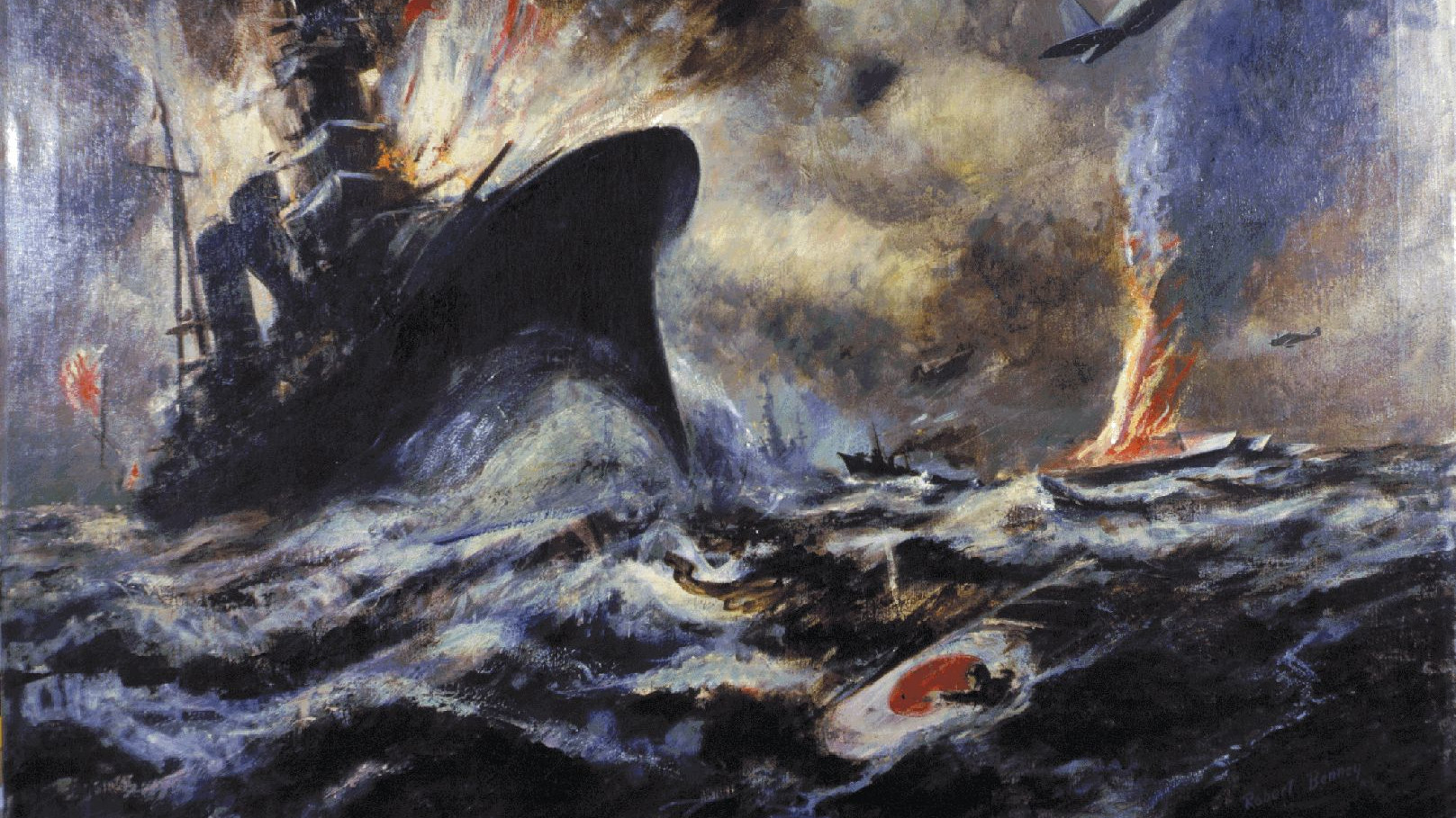
The time had finally arrived. They would play second fiddle no more. An armada of American ships stretching as far as the eye could see entered Lingayen Gulf in Northwestern Luzon on the morning of January 9, 1945. Japanese planes attacked and damaged several of the ships, and a Kamikaze sank the aircraft carrier Ommaney Bay. But the several divisions of General Krueger’s 6th army of American troops were more than ready to get off the ships and retake the island.
Among these divisions was the 40th, also known as “The Sunburst Division.” They had been a California National Guard outfit stationed at San Luis Obispo, consisting of soldiers from California, Utah and Nevada. They were federalized in March of 1941, and men were drafted in to bulk up the division.
One of those men was my father, Lloyd R. Elliott, aka “Bud.” Born in Nampa, Idaho, he grew up there and in Northern California. An excellent athlete, he was on the Sequoia High School wrestling and swimming teams, and played varsity football all four years, two of them at quarterback. After graduation, he worked as a carpenter and married his high school sweetheart, Charlot Loptree. They had a son, Lloyd R. Elliott III (Rick.)
However, the marriage did not last long and Elliot was trying to gain custody of his son when the draft notice arrived in April of 1941. The timing for him personally couldn’t have been worse. The country was not at war, and he didn’t feel it was right to be sent away at such a crucial time.
He reported to Fort Ord, California, in June for 13 weeks of basic training. It was a rigorous course in those days and not for the faint of heart. He told me they once had to run 30 miles in full gear. Whether he meant forced marching or actually running I don’t know. He was often short and abrupt with his stories, sometimes just a single sentence.
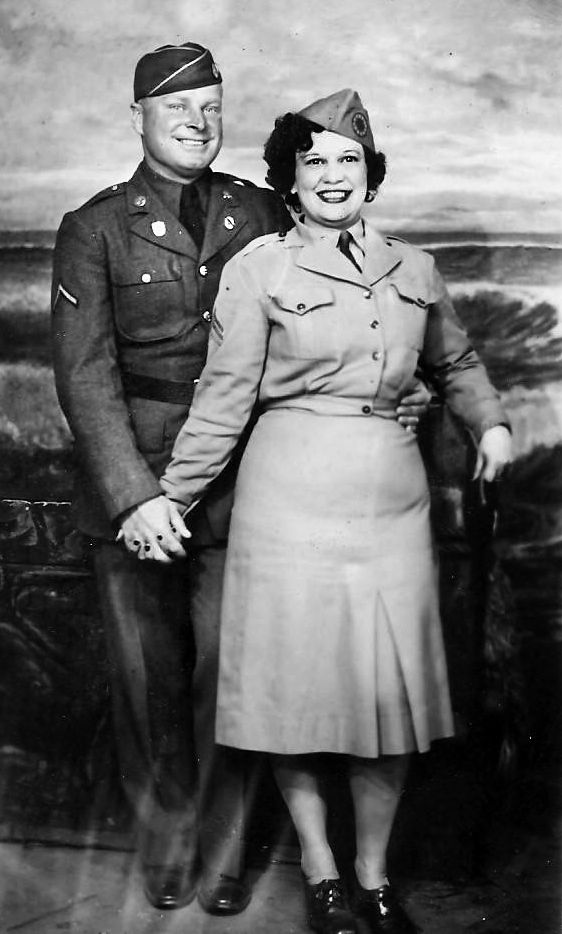
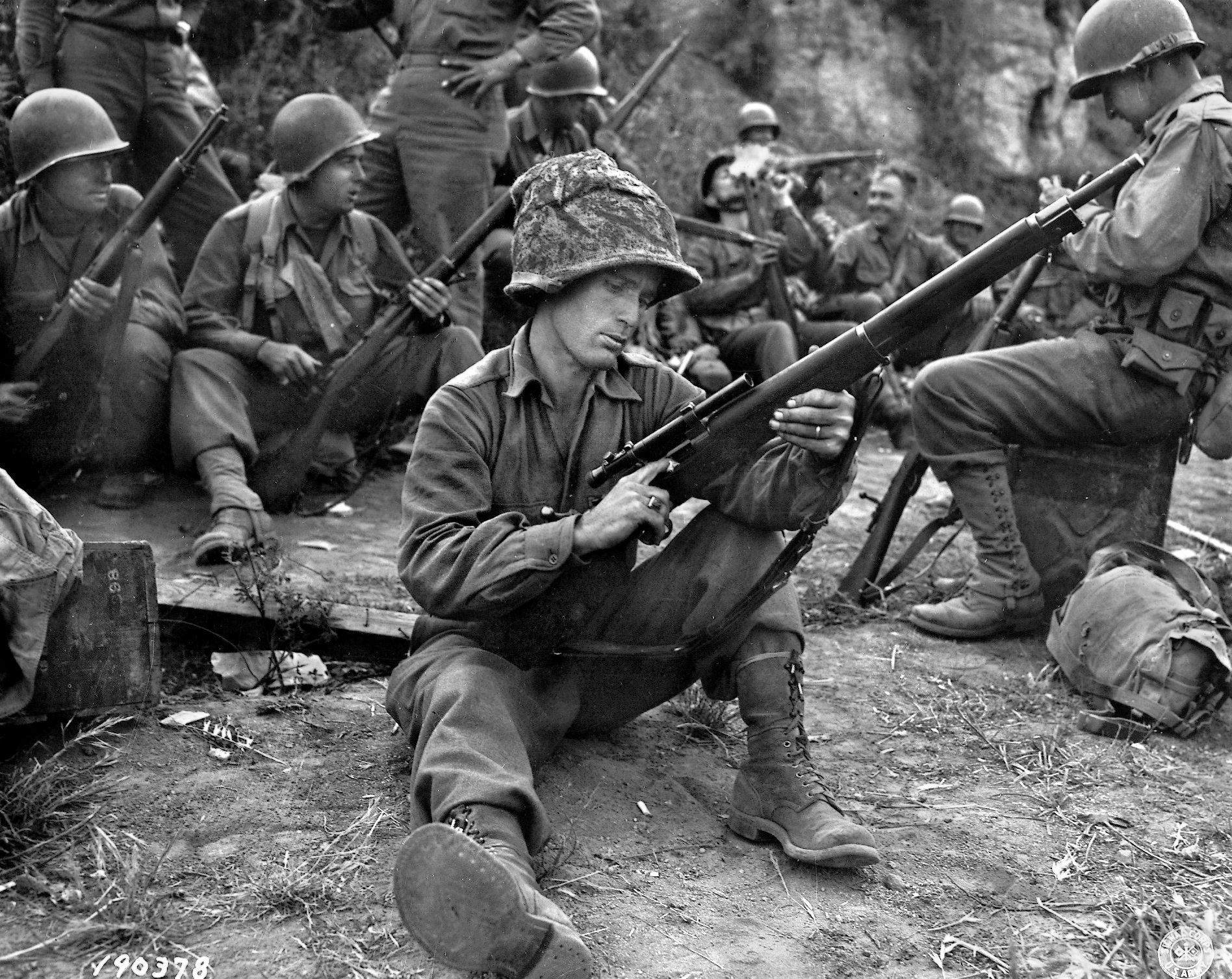
He had been an exceptional shooter before the army and became one of the best marksmen in his unit. He said that instead of helmets, they wore smokeys back then. They had to improvise in training as well, as there was a shortage of military training gear before the war.
After basic, Private Elliott was stationed at San Luis Obispo for infantry training. He was assigned to the 160th Infantry Regiment of the 40th Division and became both a machine gunner and a mortar man. The men trained hard in the California woods and beaches, practicing tactics, concealment, and logistics. It wasn’t until early December that he was able to go home to Palo Alto on leave for a well-earned rest.
But he would not be home for long. He and his father were listening to the radio on December 7 when the emergency broadcast was delivered about the bombing of Pearl Harbor. “We were just shaking our heads in disbelief,” he said. Soon after, another broadcast came across ordering all military personnel to their bases. He put on his uniform and caught the next train back to San Luis Obispo.
The following day, December 8, the division got its first wartime mission. They were ordered to guard the California beaches against Japanese invasion. My father patrolled a three-mile stretch of Santa Barbara Beach. The first few weeks were tense for the division. There was shelling from an enemy submarine, sightings of Japanese planes, and many false alarms. But the war thus far was not so tough to keep the Red Cross girls from coming out to their positions with coffee, hot chocolate, and treats for the soldiers.
It was not until April that the beaches were deemed safe from Japanese invasion, at which time the division received orders to relocate to Ft. Lewis, Washington, in preparation for overseas assignment. They spent four months there, undergoing various forms of training, before reassembling in California to board ships for Hawaii. Their mission was another defensive one—to guard the Hawaiian Islands against the Japanese threat.
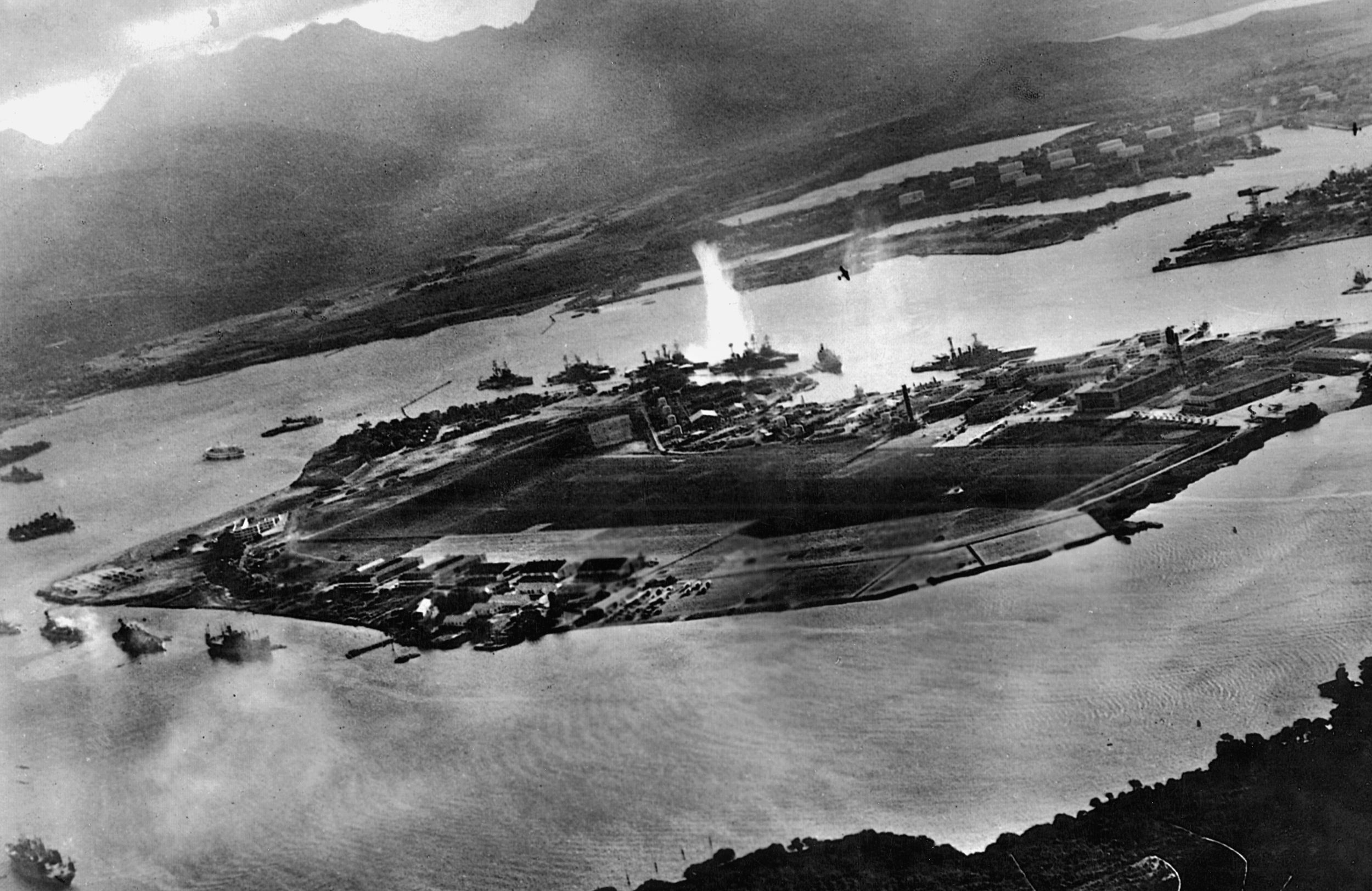
My father told me that when he arrived at Pearl Harbor, other than the ships at the bottom of the harbor, “The place was pretty well cleaned up!” It had been eight months since the attack and now the 160th Regiment was sent to the Big Island to set up defensive positions. Beaches were guarded by barbed wire and big guns. But after some time, like California, the threat subsided. Then they began intense amphibious and jungle warfare training.
They also had time for fun and frolic, attending luaus, going to town, and swimming in the ocean. My father was fond of diving for abalone. “Water so clear and blue it was hard to believe,” he said. He also told me of a time he found a human skeleton in the water. He erected a pole on the beach and affixed the skeleton, “to scare someone,” he laughed.
The division spent a total of 16 months in the Hawaiian Islands, probably their happiest time of the war. In December 1943 they went to Guadalcanal. The fight there was long over by then, and patrols searching for any Japanese stragglers proved fruitless. Instead, the fight was with windstorms, flooding, and falling coconuts. My father never mentioned Guadalcanal that I can recall. But I have read that American soldiers agreed that the meanest thing they could do to the Japanese was to give the island back to them.
![The 185th Infantry Regiment (40th ID) hits the beach in an LCVP [Landing Craft Vehicle, Personnel] during amphibious training on Guadalcanal in the Solomon Islands in early March 1944.](https://warfarehistorynetwork.com/wp-content/uploads/2026/01/W-Spr26-Bud-Elliott-3.jpg)
In April 1944, they relieved the 1st Marine Division in the Brunswick archipelago off New Guinea. Again, the Marines didn’t leave much for the 40th, and any enemy action was quickly subdued by patrol-sized units. But, once again, living in the jungle was the main fight. My father was at Cape Gloucester, but was involved in patrolling other parts of the island as well.
My father told me he met a native boy in the jungle once who was hungry and looking for food for his village. It was not clear if my father was alone with the boy, but the story made it sound so. He shot two large birds and helped carry the fowl back to the boy’s village. After he had delivered the food, the tribal leader wanted my father to stay. “He kept saying, ‘Sing Sing!’ and put an ax into a stump. Oh, no thank you I said and left right away, remembering that many of these tribes were cannibals,” my father explained.
The division spent eight months there. Near the end they were relieved by the Australians so they could train for the liberation of the Philippines. They set sail on the last day of 1944. The first few days were a quiet and uneventful voyage. But as they approached the Philippines, sporadic attacks by Japanese planes ensued. “A Jap plane tried to bomb our ship,” my father mentioned once, “but he missed us by a couple hundred yards.”

And now the time had finally arrived. The 40th would be among the first in on the invasion of Luzon.
The 40th Division consisted of the 160th, 185th and 108th Infantry Regiments. They were backed by numerous artillery and tank battalions. The division commander was Maj. Gen. Rapp Brush, who was no stranger to this area. He had lived here in the early 1900’s when his father, Brig. Gen. Daniel Brush, had been the Military District Commander of Lingayen Gulf. He returned to the Philippines as a young infantry officer and fought in the Battle of Bud Bagsak in 1913. He was back, 32 years later, with an entire division at his command.
As the men approached the beach in their landing craft, they had never heard of places like Snake Hill or Storm King Mountain, where they would fight horrific battles in the coming weeks. They had already done plenty of jungle living but not while facing fortified Japanese positions.
The 40th hit the beach as the right flank of the invasion force, with the 37th Division on its left. “Lingayen Gulf!” my father would say cheerfully, the last cheerful mention of anything to come after. By this time, he was a staff sergeant with an 18-man mortar team under him. He also doubled as a Reconnaissance NCO.

There was little opposition on the beach as the Japanese, in typical fashion, had burned what they could and retreated inland to fight the Americans in the harsh terrain of the mountains. By noon they had secured the town of Lingayen and advanced six miles to the Agno River with only minimal resistance by the Japanese rear guard. At first, the hardest obstacle was getting across the many rivers.
The division advanced 70 miles along the central plain toward Manila in 16 days, with few casualties. Here, they entered the burned town of Bamban under sniper fire and shelling from a Japanese 120-mm gun. They took the town and its airfield after a day-long battle and continued toward Clark Field and Fort Stotsenburg. To the west were thousands of Imperial Japanese soldiers waiting on strategic high ground of the Bamban Hills and Zambales Mountains overlooking the plain. These soldiers were part of the 30,000-man Kembu Group led by Rikichi Tsukada. And the bitter fighting began.
Initially, only the 160th assaulted the hills, but soon other units joined in as the Japanese were found to be entrenched in a clever network of caves and tunnels. Not even bombers could get to them. “B-24’s came and bombed the hell out of those hills,” my father griped, “Ten minutes later the japs were back out running all over the place.”
Flamethrowers, hand grenades, and other hand thrown explosives had to be used to silence or seal caves. In addition to this, the Americans were fighting uphill. The enemy, dominating the landscape, threw everything they had at them, including antitank guns, artillery, and even naval guns taken off damaged ships. This, joined with heavy machine guns, slowed the advance of the 40th to a crawl. Men attempted to scratch out the slightest recess with their hands as enemy rounds cracked inches overhead. As the 40th kept the Kembu Group busy in the mountains to the west, the 37th Division overran Clark Air Base and Fort Stotsenburg.
It took four days for the division to effectively defeat the Japanese in the foothills, only to bring them to the base of Storm King Mountain, where the next line of Japanese defenses awaited. But at the outset of this next battle the Japanese attacked with multiple Banzai charges. All the attackers were killed.
Different units had different ways of defending against the Banzai charges. My father described one method:
“Once we had three banzai charges in one night. We didn’t shoot at them, so they did not know exactly where we were. Instead, we hid behind trees and threw grenades at them. The ones that got through we stuck with our bayonets.”

Storm King Mountain would prove to be 10 days of hellish combat. Even after a prolonged and effective artillery assault, the thickly wooded and menacing mountain would cost the 40th more casualties than the battle before. The only suitable approach up the mountain was a slender jungle-covered neck of land 300 feet long and only 75 feet wide at its widest point. Entrenched within this narrow avenue were a 70-mm field piece, three 90-mm mortars, 10 knee mortars, 10 heavy machine guns, 17 light machine guns and 150 rifle pits. The troops of the 160th received crossfires from all weapons.
Finally, by February 6, the mountain was secured. But this only provided a view of the next battle to come, which was Snake Hill, and then Scattered Trees Ridge. Following these came the battle for Seven Hills, Sacobia Ridge and The Top of The World. Every hard fought and exhausting victory would lead to the threshold of the next dimension of hell.
By this time the living conditions of the men had deteriorated. They were able to bathe and shave from a helmet once a week. “One time we had a lot of japs shooting at our hole,” my father began, “I had to apologize to the guy next to me because I had just shaved and I think my shiny face was attracting the fire.”
Disease was also creeping in and there were many casualties from heat exhaustion. At one point the 160th was down to half strength. Morale took a dive when it was announced that the 40th Division would not accompany other divisions to the battle for Manila. Instead, they would continue to fight the Kembu Group to keep them from marching to Manila to aid in defense of the city.
There were other incidents as well. Sometimes after a hard-won fight, an area was declared clear, but this was not always accurate. My father remembered:
“We thought we were in a cleared area. There were three of us standing there with binoculars, observing and discussing a distant hill. I was in the middle. Suddenly, a jap with a machine gun opened up from the bushes in front of us. The sergeant on one side of me was killed instantly and the lieutenant on the other side of me was hit in the legs. I didn’t get a scratch. Me and some others killed the jap. The lieutenant was back in six weeks.”
During the fighting for these hills several company-sized units were cut off from the division, leaving them isolated and without food or supplies. The only thing saving them from being overrun by the enemy was water and ammunition dropped from a couple of cub planes.
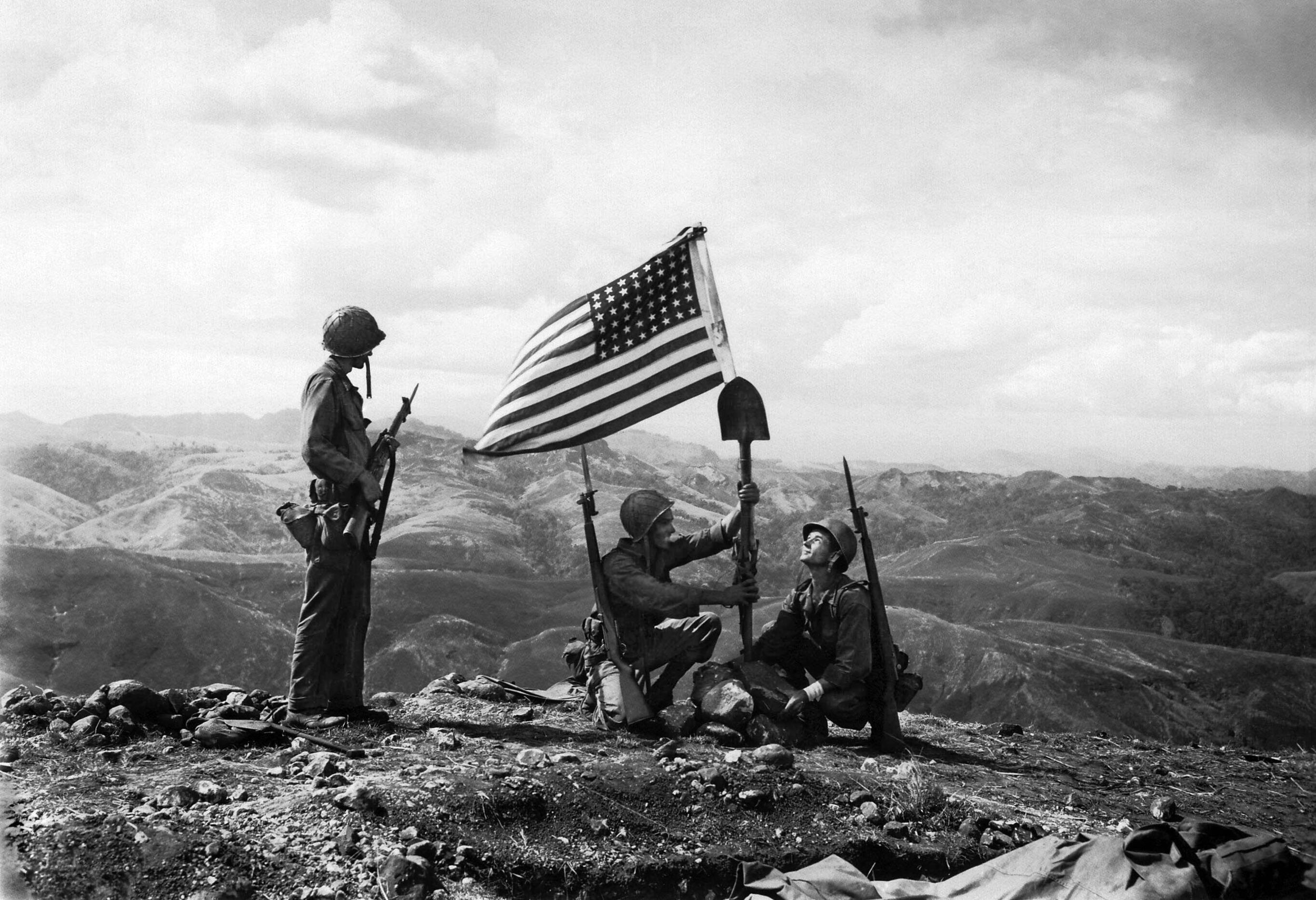
The 40th Division, after a month on Luzon, was battle-hardened and determined. But so were the Japanese. Fighting for hill after hill seemed never-ending, inching across nearly impassable terrain through crossfires and engrained enemy positions. One hill alone counted 304 enemy dead, eight twin 20-mm guns destroyed, five single 20-mm guns destroyed, three 120-mm D/P naval guns destroyed, and one medium tank destroyed.
Though my father was never seriously injured he did remember a bullet nicking the bridge of his nose just enough to make it bleed as he turned his head to yell something to the nearest man in a heavy firefight. Close calls like this—along with men dying on either side of him on a regular basis—was his reason to tell me he was living on borrowed time.
Sometimes they would come across critical Japanese intelligence documents and it was through these that it was learned that the Japanese Army had developed a healthy respect for the 40th Division.
Mopping up after an assault was largely done by rigging improvised explosives to destroy or seal caves and tunnels where enemy troops were staging a final fight. In some cases, drums of gas were lowered from a bluff to cave openings and electrically detonated. At this point, some of the Japanese, seeing the futility of their circumstance, committed suicide by holding hand grenades to their chest.
Still, counter attacks, night raids, hand-to-hand combat, and small arms fire hindered every advance. Even “carrying parties” hauling supplies and water were pelted with enemy mortar fire and repeatedly subject to infiltration attacks.
It took until February 27 for the Japanese resistance in these mountains to be broken and contained to isolated pockets of mostly tired, hungry and sick soldiers. This did not make the mopping up any easier, but it did provide a glimpse at the end of enemy dominance of the Zambales Mountains. General Tsukada eluded capture and escaped, reemerging from hiding only after the Japanese surrender in August. The Clark Field-Stotsenburg plain was now safe from enemy assault from the west.
More than 6,000 enemy troops had been killed in these battles, as opposed to several hundred Americans. The 40th Division held the area until March 2, at which time they were relieved by the 43rd Division. The 40th had been in continuous combat for 53 days. They headed back to the Lingayen Gulf area for some much-needed Rest and Recuperation (R&R).

This consisted of medical care, haircuts, swimming in the ocean, an occasional hot meal, religious services, sports, various activities and maybe even a movie night. It also included preparation for what was to come next. It was soon realized that after fighting in all these bloody battles, it had been only the first mission of several. All in all, the much sought after R&R was a mere two weeks before they boarded ships and sailed to invade the next island.
Operation VICTOR I was part of MacArthur’s plan to capture the Visayan Islands in the Southern Philippines. The 40th Division was tasked with the solo mission of taking Panay Island, an important staging and supply center for the Japanese occupation of the Philippines. It was also a primary hospital and rehabilitation base.
Much of this island was controlled by the Filipino resistance fighters. Thousands of these guerillas had been fighting against the Japanese since they had invaded and occupied the islands at the outset of the war. They became invaluable to assisting the American efforts, not only as fighters, but as guides and as eyes-on intelligence.
The 40th waded ashore on March 18. The beach where they landed was controlled by the guerrillas, several miles from the Japanese-held city of Iloilo. Col. Macario Paralta’s men, in parade formation, greeted the American amphibious landing. “They were all in a row at attention, welcoming us,” my father said.
In addition to the strong Guerrilla presence, many Japanese troops stationed on Panay had been sent to the battlefields in Leyte and Luzon, further weakening their hold on this central island. Units of the 40th moved inland with only small pockets of resistance. On the second day several key positions were taken after some short but furious fights, including Mandurrio airfield and Molo, where 500 civilians imprisoned in a church were freed. That night, large fires could be seen in the cities of Iloilo and Jaro. The Japanese were burning what they could, including their own vehicles, and attempting to block the roads to hamper the American advance as they retreated north where they were able to fight through the Guerrilla lines and take to the hills.
The 40th took control of both Iloilo and Jara on March 20. The people of the partially destroyed urban areas greeted the arriving Americans with eggs, fruits, and candy. Dock and warehouse facilities received only minor damage and were still usable. The retreating enemy was cut off by reconnaissance units and whittled down. My father was leading a long-range reconnaissance team and found an enemy unit, “just marching up the road,” he said. He positioned his men into an ambush as the Japanese approached. On his command they opened fire on the retreating soldiers and completely wiped them out without taking any casualties.
“After it was over we went down to have a look.” My father went on, “There was one guy still alive. His arm was blown off and he was moaning and groaning. I shot him in the head.”

Many retreating Japanese units divided into smaller groups to avoid further detection. By March 22, Santa Barbara airfield was taken and mopping up operations were initiated. Nearly 2,000 of the Japanese survivors would remain living in the mountains until the end of the war.
My father told me that as Panay was being secured, an amphibious patrol of the 160th Regiment landed on Guimaras Island, a few miles off the southwest coast of Panay. The small garrison of Japanese had fled into the nearby hills. But they left behind a gruesome find, as they had killed 28 civilians, many of them tied together and bayoneted to death. I don’t know if my father was on this mission, but he talked as if he had been in several landings. He told me, “Sometimes we would be dumped far from shore, wading in with water to our chest, other times we would jump off the boat without even getting our feet wet.”
Back on Panay, a military hospital of 50 bedridden Japanese soldiers was another hideous scene. They had been sedated and the hospital burned to the ground before the Americans could arrive. This was not the only instance on Panay where the Japanese killed their own.
Toshimi Kumai, an officer stationed in Iloilo during the Japanese occupation, published a book on his experiences in 1977. An English translation of this book, Blood and Mud in the Philippines: The Worst Guerrilla War in the Pacific War, details a moment in the Japanese retreat to the hills when a group of about 40 Hôjin (resident Japanese civilians) from a school led by principal Isao Kayamori, decided they were too much of a burden on the soldiers.
“They sang their farewell song in unison—Umi Yukaba (If I Go to Sea)—and bowed in the direction of the Imperial Palace. Some killed themselves with pistols and hand grenades,” Kumai wrote. “Failing to kill themselves, some mothers in agony sought the help of passing straggling and wounded soldiers who used bayonets or hand grenades.”
In only 10 days all organized resistance had been broken on Panay. However, this was only one island in the Visayas that the division was selected to attack. Neighboring Negros, the 4th largest of the Philippine Islands, was next on the list. Negros had been an important air staging base. By this time, however, the airfields had been bombed until they were unserviceable, and the island was cut off from food and supplies for the Japanese occupiers.
The majority of the division departed Panay for the west coast of Negros on March 28 and 29. The landings were unopposed, but some of the worst fighting for the Philippines would ensue. The initial push was for the western towns and cities, including the island capital of Bacolod. Resistance was light and sporadic until they reached the Magsungay River, where they encountered heavy machine guns, 90-mm mortars and a network of pillboxes. After a bitter fight the river was crossed, but that night the Americans were targeted in a series of infiltration attacks.

They were able to fight their way to the outskirts of Bacolod, at which time the enemy burned the business district and evacuated, leaving behind a plentiful number of snipers and booby traps to make the American entry as costly as possible. By the sixth day, Bacolod, Talisay and other objectives on the west coast were secured.
The division fought a series of smaller engagements before moving on to the main battle of the island, Dolan Hill, which would be a week’s long affair. Dolan Hill commanded approaches to the west and was the left flank of the enemy’s defensive line. Portions of several Japanese units were dug in here, including Colonel Yamaguchi’s 172nd Infantry Battalion.
Two days of aerial and artillery attacks preceded the advance up the northwest slopes of the hill. It was a hard climb, grasping at branches and roots while under fire. Blocks of dynamite, grenades and pole charges were thrust into the American’s perimeter, forcing them to withdraw the next day. In the following days there were several failed attempts to reach the crest, each followed by American artillery barrages to, hopefully, soften up the enemy. With heavy rains and fog, a cleverly entrenched enemy, and a lack of supplies reaching the men, the effort to take the hill slowed to a standstill.
With little other option, division command ordered a withdrawal from the area and called in all air power possible. For four days P-38s, F4Us and A-20 bombers struck the hill on mission after mission. When the planes weren’t bombing, the division artillery concentrated on the area to devastating effect. The troops went back up Dolan hill to find nothing left but tree stumps, destroyed pill boxes and hundreds of bodies. The core defense of the island was broken and mopping up began.
A starving and sickly enemy scattered and began foraging for food. Groups of surrendering Japanese became more frequent. Others committed suicide. It was not uncommon to come across a small group, or even single stragglers walking dazed through the jungle. My father was walking point when he ran into one:
“I was up front and this Japanese soldier walks around the bend right at me. He was all worn out, too tired to know what was happening. He didn’t raise his rifle; probably never knew I was there only a few feet in front of him. I shot him twice in the head before he hit the ground. We were still under orders to take no prisoners.”
In addition to the Negros campaign there were selected units from the division that went on special missions to Leyte, Masbate, and Mindanao. Most of these operations were to cut off retreating enemy forces. This would continue until June when all of the units of the division headed back for Panay. The movement was completed by July and the 40th entered a hard-earned period of R&R.

They had endured six months of continuous combat, broken only by two weeks in which they had prepared for the Visayan campaign. Now, at last, they received a true rest. The 40th Division had killed 6,145 Japanese soldiers on Luzon and another 4,732 on Panay and Negros. The cost to the division during the Philippines campaign was 715 killed in action, 2,407 wounded and 5 missing in action.
Despite all this, the army had more war plans for the battle-hardened 40th. The OLYMPIC Operation was in the planning phase and was to be the invasion of Japan. The 40th Division was selected to be the first in, invading and capturing five Islands just off Kyushu in southern Japan days before the main effort of the OLYMPIC Operation. Through July and early August, the plans were drawn up, called Field Order No. 19, and prepared for 6th Army Headquarters.
Of course, this never happened. Even if it had, my father would not have been a part of it. Upon his return to Panay, a bout with malaria got so bad they put him on a ship and sent him home. He departed on July 6 and arrived at Camp Beale, California, on the 27th. He was honorably discharged from there on July 31, with the reason for separation listed as “Convenience of the government” (demobilization). He left the army as a staff sergeant with an American Defense Service Medal, Asiatic Pacific Campaign Medal, Good Conduct Medal, Philippine Liberation Ribbon with one bronze Star, and $9.10 travel pay.
He returned home to Palo Alto. He had not been there for over three years. His father was working in New Mexico, and his brother was in Germany. Recovering from his illness, he learned of the ending of the war the same way he had learned of its beginning 45 months before—at home on the radio.
He told his sisters that he could hardly believe he had survived so many brushes with death. How men all around him were killed or maimed and he was uninjured. How a position he was in only seconds before was hit with mortar or artillery. How, on many occasions, he had bullets cracking inches to either side of him and over his head, killing the man next to him but leaving him unscathed.
Back on Panay the 40th Division accepted the surrender of all remaining Japanese troops on that island. With the war over the division would go on to be occupation forces in Korea for seven months before returning to the U.S. and deactivation.
Though the efforts of the 40th Division have been nearly forgotten or overlooked, other divisions have suffered a similar fate. In the case of the 40th, it is very possible the Second World War would have dragged on much longer had it not been for their contributions.

My father went back to his carpentry career and focused on shake roofing. He would specialize in this for 31 years. He seldom spoke of his war experiences, and it took me many years to get the few stories I know.
I often was confused as to when and where something happened because once he had mentioned it, he clammed up. Things like, “we went awhile without food once,” he stared at the wall, reluctantly trying to bring it back, “about eight days,” or “I once shot a guy from 600 yards! Good shot, the gut next to me said. We saw two other japs run out with a stretcher and take the guy away.”
One time I remember he said something as if to almost justify things, “I was so hardened in the war. Nothing bothered me. I would sit down and eat my rations with dead and rotting Japs all around me. Now, I almost puke if a fly gets in my milk.”
Though he survived countless battles, he did not survive a 35-year battle with alcoholism, which killed him in 1981 at the age of 65.
Everyone knew him as a gentle and patient man. He had a stubborn streak, but tried to be fair with everyone. He loved all animals, especially dogs and horses. He preferred to put a spider outside rather than kill it. I saw him save a scorpion from being stomped on. He was an avid gardener and loved to build things.
When I was 14 my father bought me my first firearm, a single-shot bolt-action .22. We went into the woods, and he helped me sight it in. He had been an avid hunter before the war with a 30.06, a 30/30, an over-and-under, a ruger and many others, but had sold them all before I was born. When I asked him why he had sold the guns and quit hunting his answer, as always, was short and to the point—“I have been the hunted.”
Scott Elliott is a freelance travel and history writer who has contributed to various online and print publications, including Wild West, Route, and Idaho Magazine.
Interesting story! Thanks much!