Latest Posts

Latest Posts

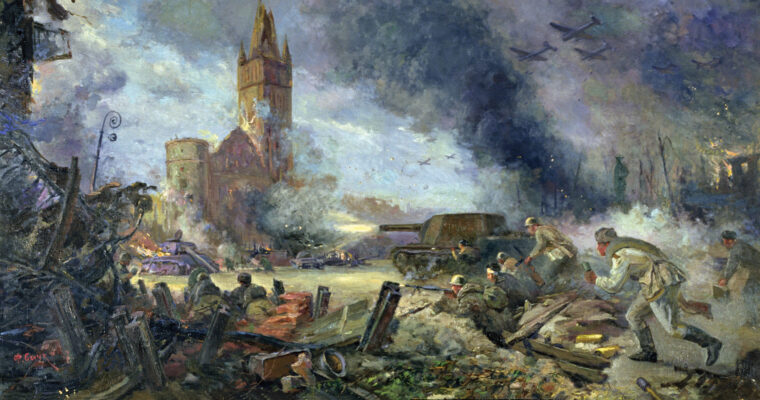
To Conquer a Fortress

By Bastiaan Willems

The storming of Fortress Königsberg in April 1945 was the finale of a two-month Soviet siege. The city, one of the few triumphs of Hitler’s fortress strategy, had been encircled by late January and lay hundreds of kilometers behind the main front line by the time the Soviets launched their final assault toward the Nazi capital of Berlin. Read more
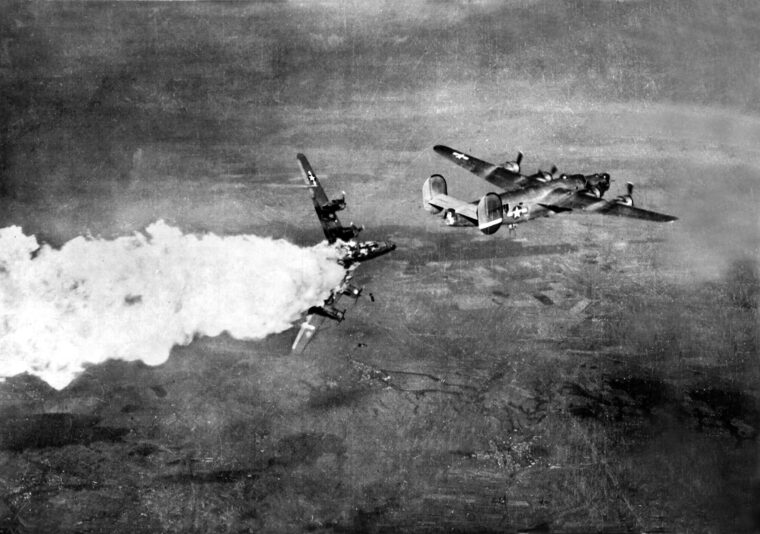
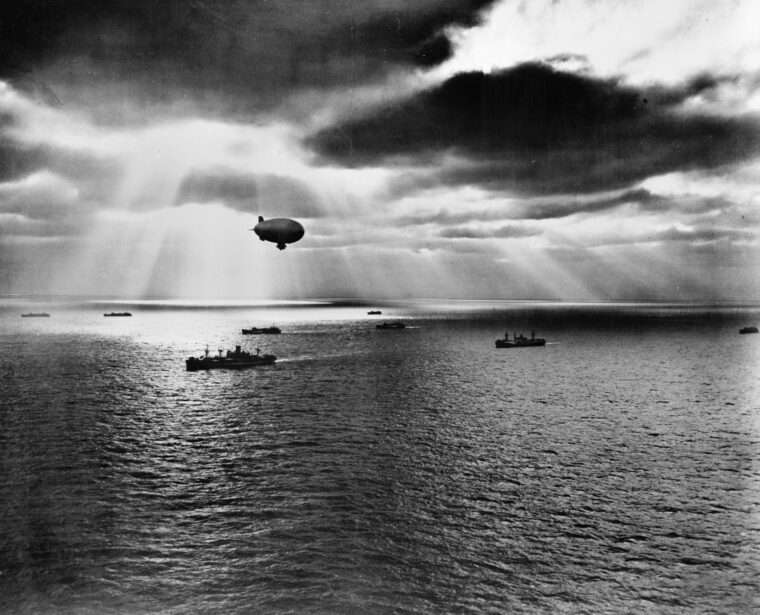
A Consolidated B-24 Liberator heavy bomber of the U.S. Army Air Forces disintegrates in a catastrophic explosion over Germany after a direct hit from flak batteries defending a target below. Senior American air commanders chose daylight bombing over the Royal Air Force’s preference for night raids, believing that accuracy would increase substantially. However, the tactic came at a tremendous cost.

Latest Posts

An Airman’s Saga

By Allyn Vannoy

Howard Linn was a member of the 492nd Bombardment Group—the “Hard Luck” group of the Eighth Air Force. Read more

Latest Posts

Saga of the Eggbeater

By Mark Albertson

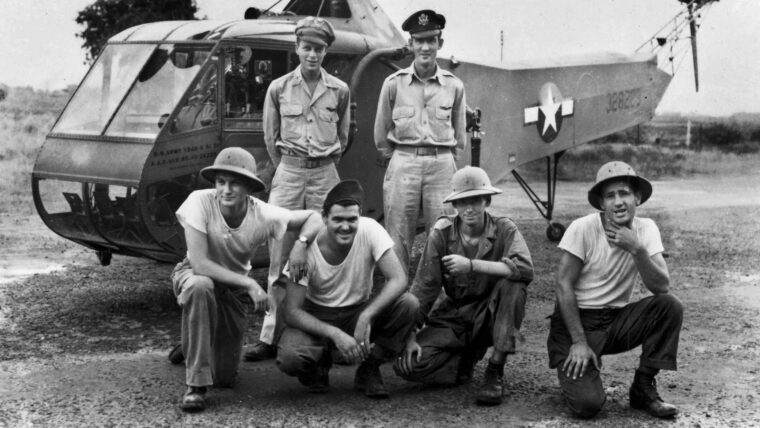
On September 14, 1939, Igor Sikorsky attained stability and control with the initial flight of an open cockpit test bed known as the VS-300. Read more

Latest Posts

U.S. Navy Captain Forrest Biard

By Hervie Haufler

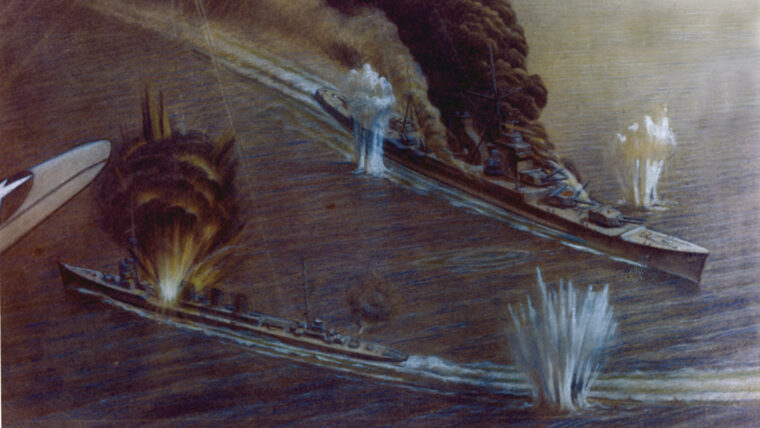
“For several months after the outbreak of the war with Japan the very fate of our nation rested in the hands of a small group of very dedicated and highly devoted men working in the basement under the Administration Building in Pearl Harbor.” Read more

Latest Posts

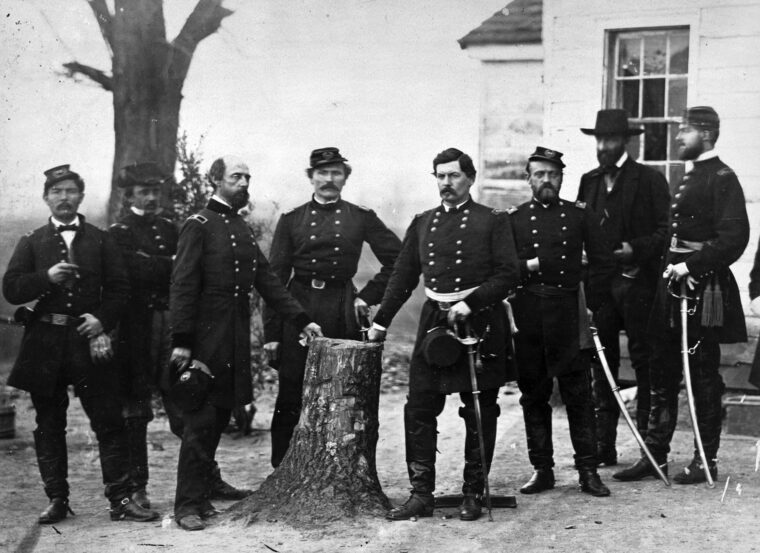
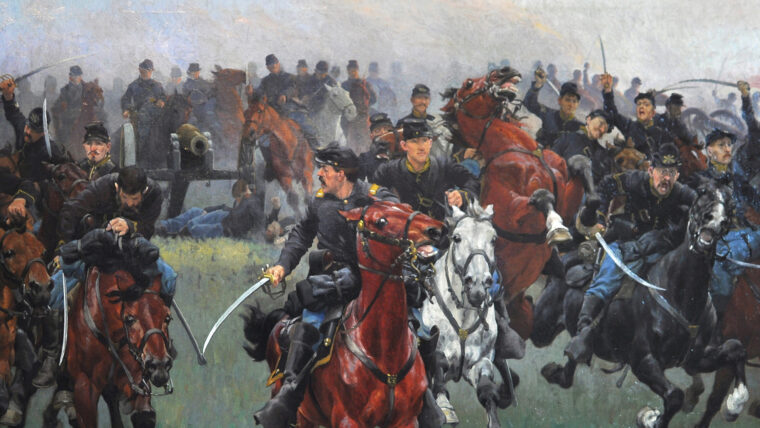
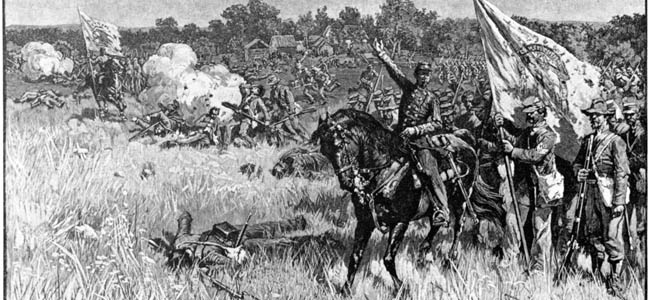
Battle of Mechanicsville: McClellan’s Unexploited Victory

By John Walker

After an almost uninterrupted, four-month-long string of Union successes beginning in early 1862, followed by the advance of a 100,000-man enemy army to the eastern outskirts of its capital at Richmond, Virginia, the Confederacy suddenly found itself in a life-or-death struggle for its very survival. Read more

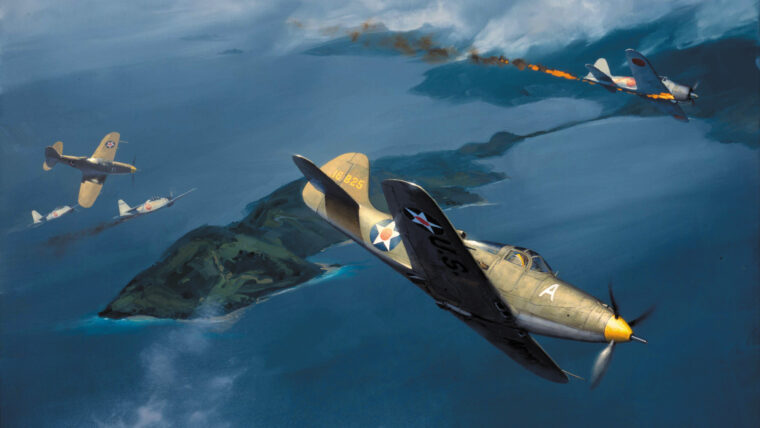
In this painting by Jack Fellows, P-39s flown by Major George Greene, Jr., (foreground) and “Buzz” Wagner take on Japanese Zeros over the Salamaua Peninsula.

Latest Posts

WWII Planes: The Bell P-39 Airacobra “Peashooter”

by Sam McGowan

If there is an American combat airplane that has achieved an ill-deserved reputation, no doubt it would be the much-maligned Bell P-39 Airacobra, a tricycle landing gear single-engine fighter whose reputation was greatly overshadowed by the more famous, and of more recent design, Lockheed P-38 Lightning, Curtiss P-40 Tomahawk, Republic P-47 Thunderbolt, and North American P-51 Mustang. Read more

Latest Posts

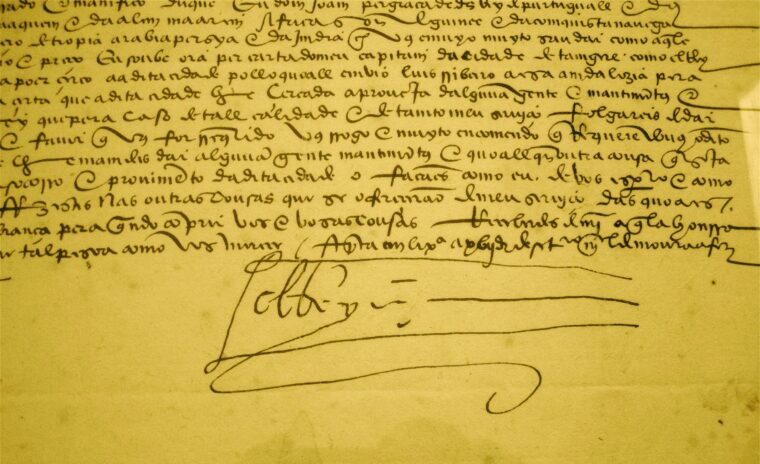
Historical Autographs

By William McPeak

Collecting handwritten documents and letters on military subjects is as long-standing as military history itself. By general definition, when a letter is written and signed by a person, it is considered a holograph (or autograph letter), but a document is something written by an official or servant and then signed by an important person. Read more

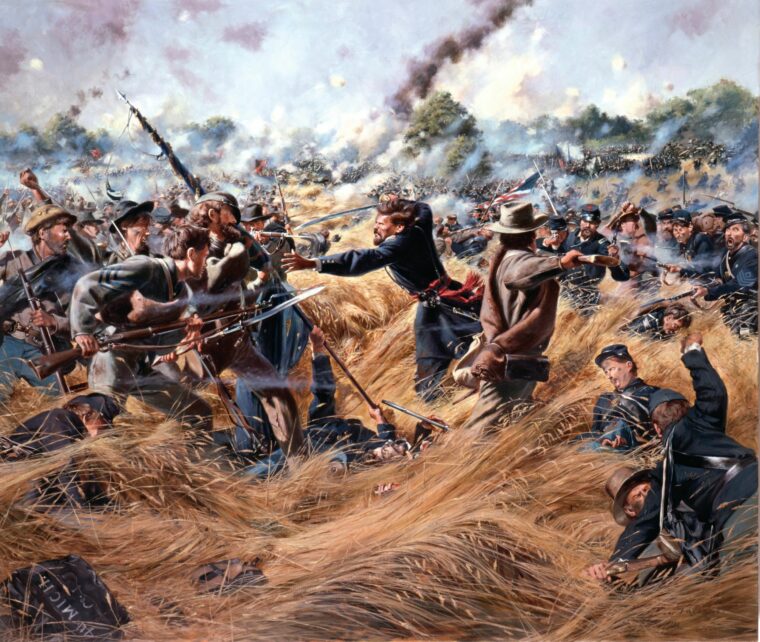
Colonel Harrison Jeffords retakes the regimental colors of the 4th Michigan Infantry during hand-to-hand combat in the Wheatfield at Gettysburg, July 2, 1863. Painting by Don Troiani.

Latest Posts

Civil War Diary

By Eric Niderost

It was about four o’clock in the afternoon of July 2, 1863, when Colonel Ira Coray Abbott ordered his regiment to halt on a low rise called “Stony Hill,” near Gettysburg, a small town in southern Pennsylvania. Read more

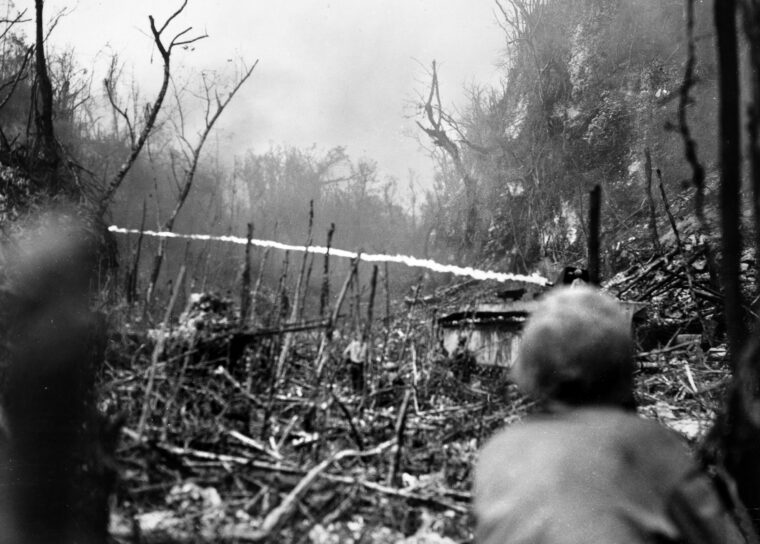
Marines watch as a flame-throwing amphibious tractor fires at caves in the mountainous areas used by the Japanese during the fight for the Pacific island of Peleliu. The lowlands and the airport were quickly captured, but the Umurbrogol massif—a series of limestone and choral ridges rising as high as 300 feet took much longer. A moonscape of sinkholes, canyons and cliffs further fortified by Japanese engineers, the “Umurbrogal Pocket,” and the island, was finally declared secure 73 days after the Marines had landed.

Latest Posts

Savage Struggle for Peleliu

By Joshua Shepherd

Amphibious landing craft carrying U.S. Marines plunged through heavy surf toward the beaches of Peleliu Island, a formerly inconspicuous tropical paradise in the Palau Islands. Read more

Latest Posts

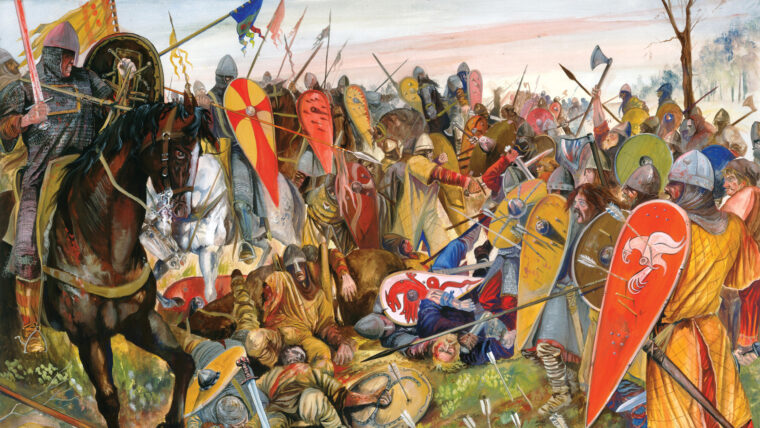
Hammer of the Normans

By William E. Welsh

Bright sunshine flooded the sedge-covered, damp ground in Sussex on the morning of October 14, 1066. Having attended mass at sunrise, Duke William of Normandy shouted commands to his senior officers outlining their positions for the coming battle with English King Harold II Godwinson’s army. Read more

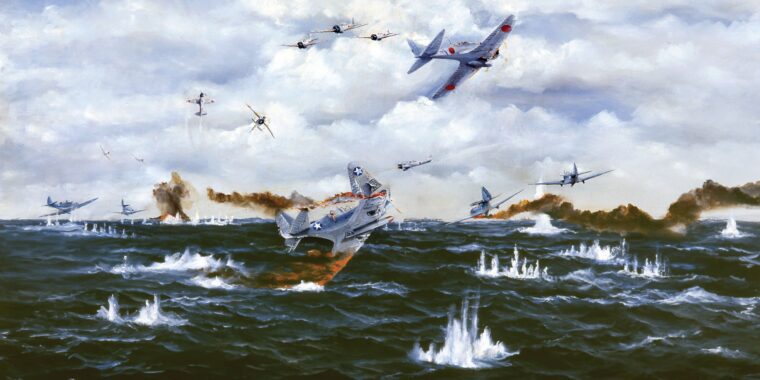
Under the relentless onslaught of Japanese Mitsubishi A6 Zero fighter planes, the Douglas TBD Devastator torpedo bombers of the USS Hornet’s Torpedo Squadron 8 are massacred as they attempt to attack Japanese aircraft carriers during the Battle of Midway in this dramatic painting by artist John Hamilton titled “Destruction of a Torpedo Bomber.”

Latest Posts

Remembering Torpedo 8 of Midway

By Mark Carlson

In 1982, Captain Bert Earnest and Commander Harry Ferrier were present at an event to commemorate the 40th Anniversary of the Battle of Midway. Read more

Latest Posts

Royal Marine of the 2nd Battalion (1813-1815)

By William E. Welsh, Art by Don Troiani

After nearly 150 years of service to the British crown, the Royal Marines had upwards of 31,000 marines worldwide at the time of the War of 1812, which constituted about 13 percent of the 240,000 British troops under arms around the globe at that time. Read more