By Jack Adamson
Oberleutnant zur See Walter Köhler floated alone in the freezing Atlantic in the predawn hours of December 21, 1941. He had been treading water for what seemed like hours since the bridge of U-451 had descended into the depths beneath his feet. As the adrenaline of recent events wore off, he felt the cold settling in and knew hypothermia could not be far away. It didn’t take long to succumb to death by exposure in the open ocean in winter. However, Köhler slowly became aware of a droning overhead and noticed an aircraft circling the area. The plane dropped a flare and as the curtain of night was being disseminated by twilight of dawn, the lines of a ship steaming toward him came into focus.

Walter Köhler was born in Lubeck on July 14, 1916. He and his older brother Ludwig grew into manhood during the time Adolf Hitler and the Nazi Party were coming to power in Germany. Walter joined the Kriegsmarine in 1935, a year after his brother. Following nearly three years of training, he was assigned as an officer aboard the geriatric pre-dreadnought Schleswig-Holstein. But by September 1, 1939, when the ship fired the first shots of the war on the Polish port of Danzig, Köhler was no longer aboard. Earlier in the year he had been assigned to the new battleship/battlecruiser Scharnhorst as a “plank owner”—crew members serving aboard a new ship when it is commissioned. The Scharnhorst saw several successful operations early in the war that included sinking the auxiliary cruiser HMS Rawalpindi and the British aircraft carrier HMS Glorious. Scharnhorst was ultimately damaged by an air raid and was laid up for six months for repairs during which time Köhler, who had received the Iron Cross Second Class for the action against the Glorious, transferred to the U-Boat arm.
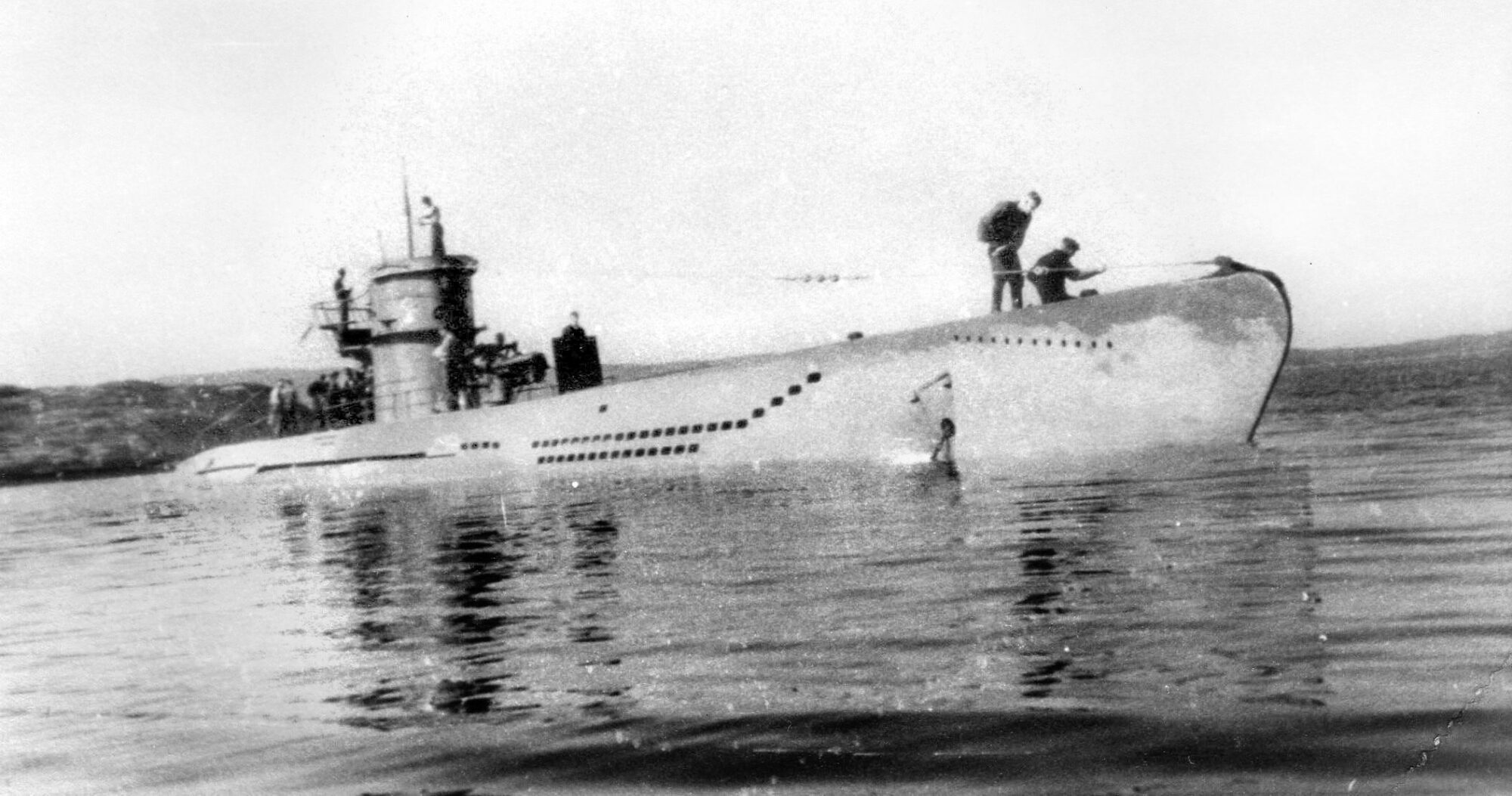
Following his submarine training, Köhler was assigned as Erster Wachoffizier (First Watch Officer, IWO) to the new Type VIIC U-Boat U-451 under the command of 29-year-oldEberhard Hoffman, known affectionately as “Lushke” to his friends. Hoffmann was a devoted family man who was smitten with his wife, Hanna, and adored his two children: daughter Sigrid born in 1939 and son Peter born in November 1941.
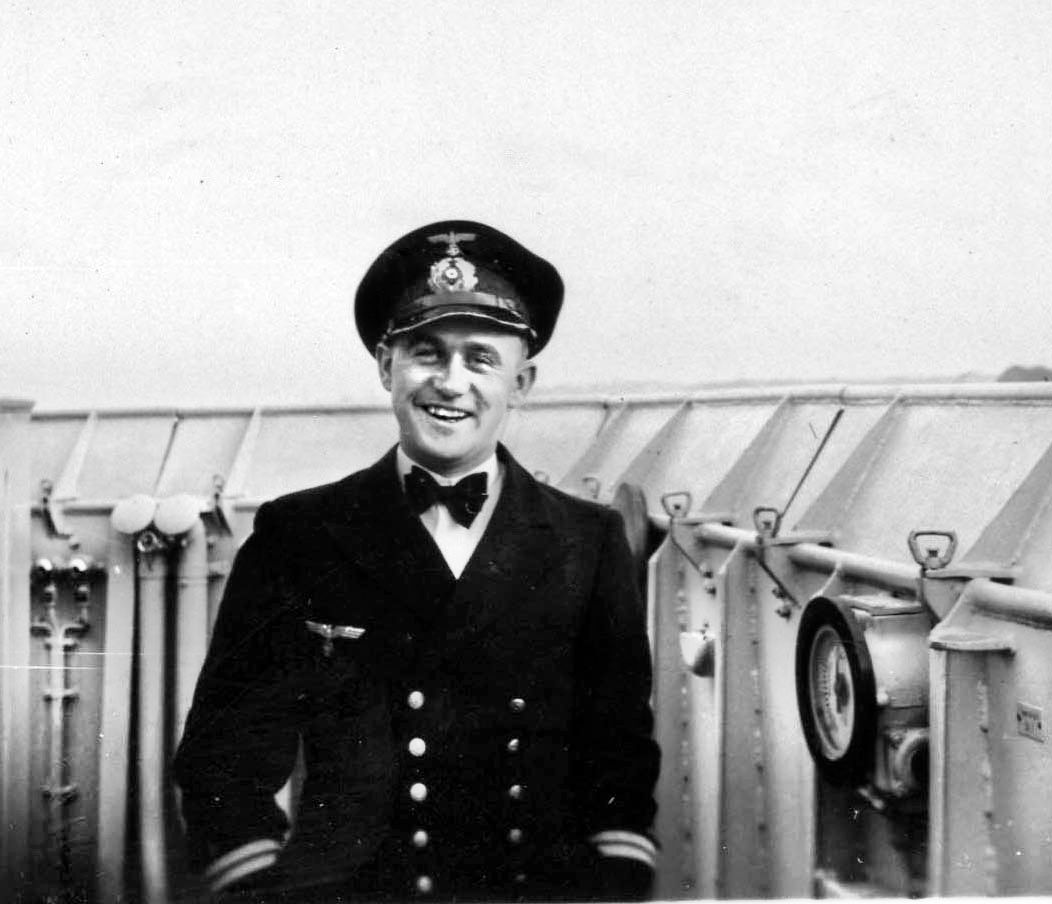
He was close friends with Reinhard Hardegan who would go on to be a successful U-Boat ace, sinking numerous ships off the eastern coast of the United States in early 1942. Like Hardengan, Hoffmann began his career in the Coastal Aerial Reconnaissance before transferring to the U-Boat arm in November 1939. He served first aboard U-51 and later on Günther Prien’s U-47 (the commander and U-Boat famous for sinking the British battleship Royal Oak in Scapa Flow) during Prien’s 7th patrol for which Hoffmann was awarded the Iron Cross 2nd Class before going to command school to take over his own boat, U-451. He oversaw the last of the submarine’s construction at the Deutsche Werke shipyard at Kiel. “[He] was an extremely popular commander,” Köhler later recalled, “very understanding towards the individual and always full of humor. The harmony on the boat couldn’t have been better.”
U-451 was commissioned in May 1941 and based in Norway to patrol Arctic waters following its sea trials. The average age of the 44-man crew was 22, though some were as young as 18 or as old as 32. U-451 engaged the enemy several times over the course of two Arctic patrols and succeeded in sinking the Russian destroyer Zhemchug. After that second patrol, it was decided to send U-451 into the Battle of the Atlantic and the boat was sent back to Kiel for an overhaul. Köhler was slotted to leave the boat during this refit period to attend a command course after which he would be captain of his own submarine, but the course was already well underway when they arrived at Kiel and so Köhler would be in limbo until the next course began on January 5. Instead, Köhler requested and was granted permission to stay aboard U-451 to gain more combat experience in the boat’s coming Atlantic patrol. He was replaced as IWO by the previous Zweiter Wachoffizier (Second Watch Officer-IIWO) and he stayed aboard as a command student there to observe and learn, but not take bridge watch on a regular basis as an official member of the crew.
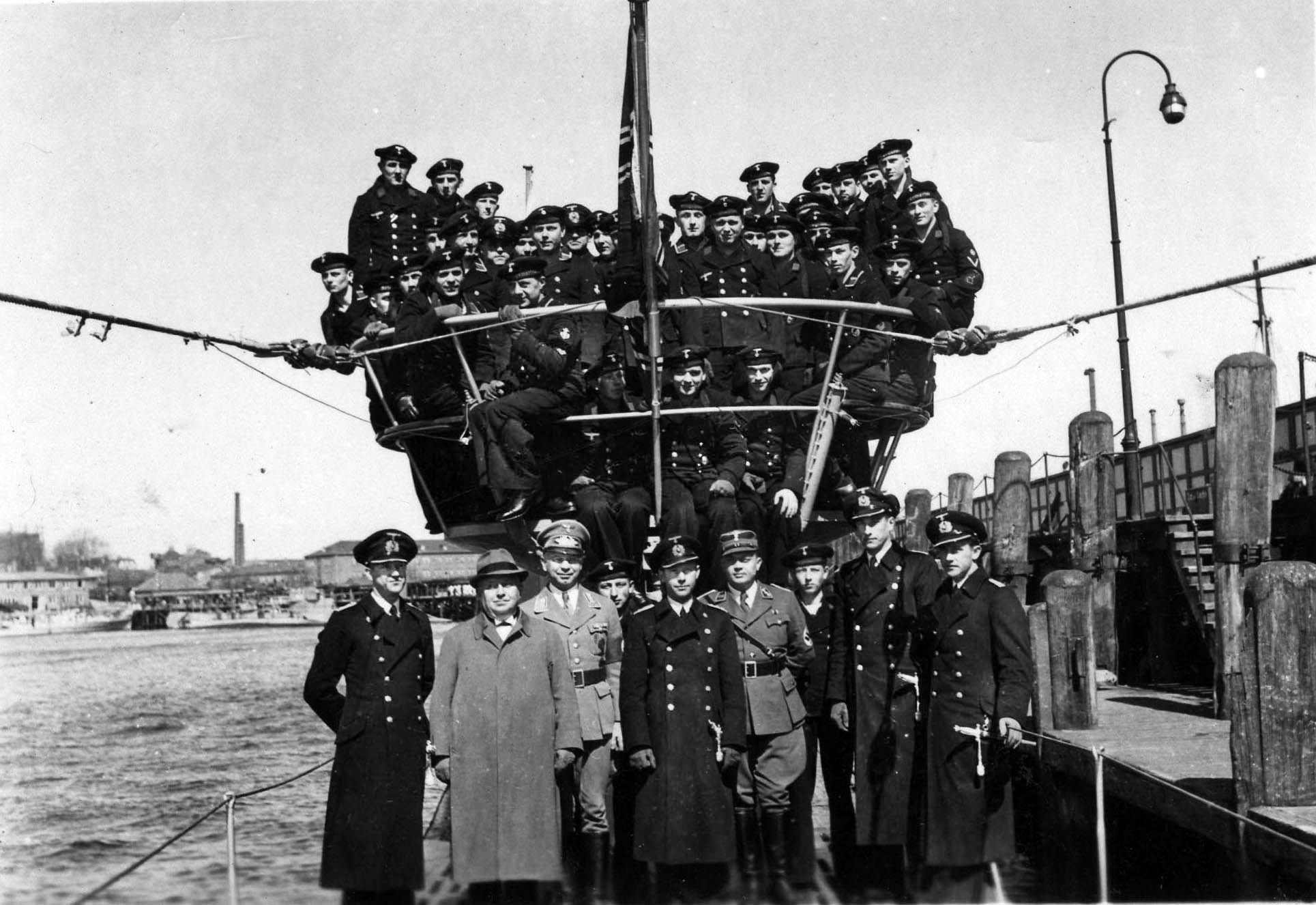
The overhaul in Kiel was fortuitous for Hoffmann as he was able to go on leave and be home when his son Peter was born on November 11, 1941. The third patrol into the Atlantic was short and mostly uneventful. Hoffmann was promoted to Korvettenkapitän (Commander-KKpt) while at sea December 1, 1941 and U-451 missed a steamer with a single torpedo on the 7th. The boat was ordered to Lorient for immediate refueling shortly after this and arrived on the 12th. The freshly overhauled U-451 was one of a handful of submarines chosen to move into the Mediterranean. Hoffmann was able to make a phone call home and speak to his family and send several letters during this time. Dated December 14, his last letter home before departing is full of wistful affection: “My dear little wife and mother! I am happy to know that you are all well and cheerful. Have you already done some Christmas shopping? And already got a tree? […] Whether Sigrid already knows anything about the Christ child? […] I wish you, my dearest little wife, a really, really merry Christmas. I long for you so very much, my dears. I hope to see you again soon in a few weeks. Many warm greetings again and especially warm kisses to you! Your Ebi and your daddy.”
On December 15, U-451 departed for the Mediterranean on its fourth patrol. Their first task would be to traverse the Strait of Gibraltar, only seven nautical miles across. The British had possessed a fortress there at the tip of Europe since the 18th century for the purpose of controlling this maritime chokepoint. By 1941 these defenses consisted of a large garrison of troops, a substantial naval facility and an airfield. Overlooking the strait and honeycombed with artillery and antiaircraft batteries was the Rock of Gibraltar, an imposing monolith of limestone jutting abruptly into the sky some 1,400 feet above the sea. The waters below it were constantly and heavily patrolled by Royal Navy warships on the surface and Fleet Air Arm aircraft from above. The Strait of Gibraltar was at this time, arguably, the most fortified and heavily defended stretch of water in history.

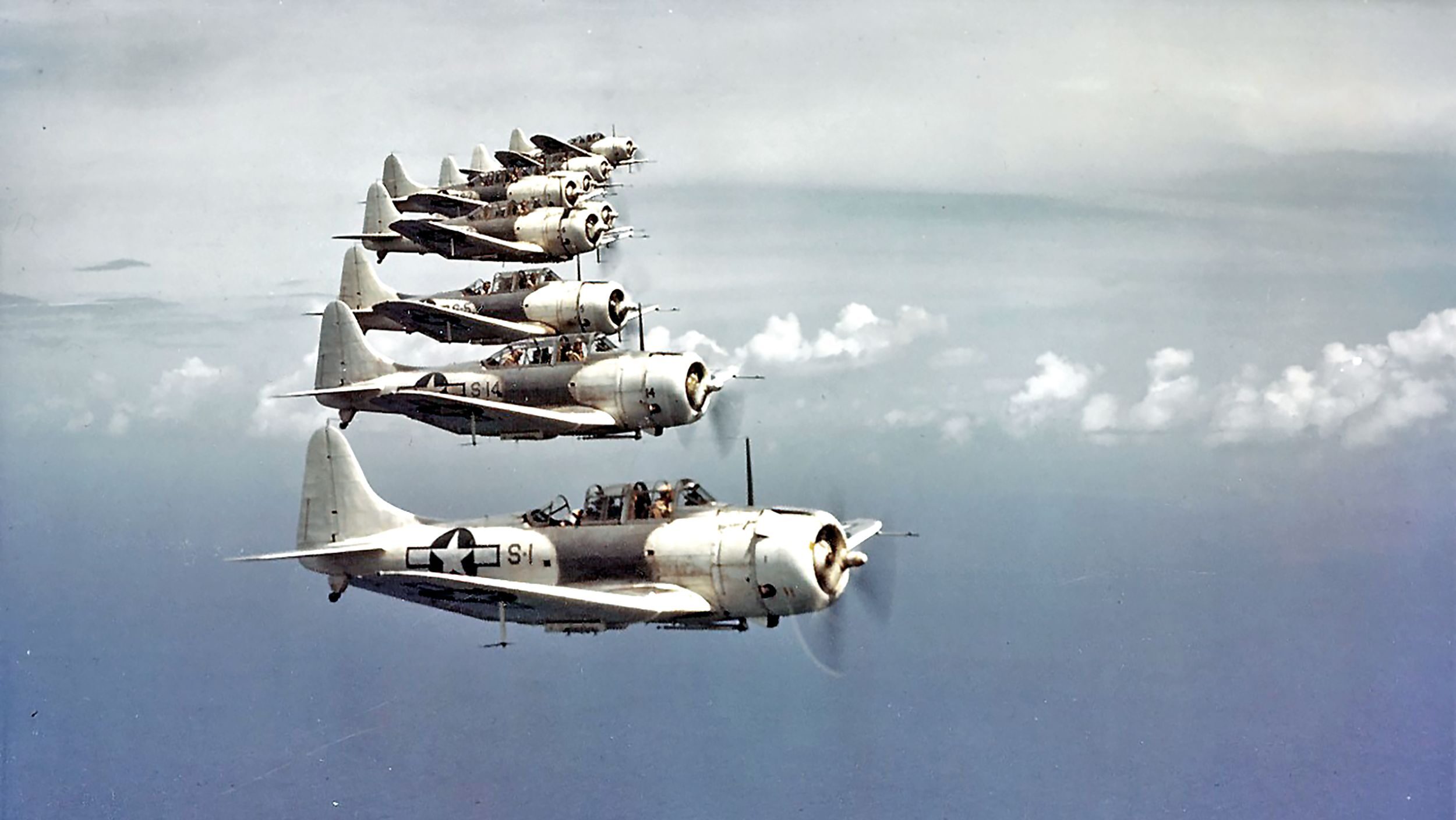
The aircraft carrier HMS Ark Royal had been sunk in the Mediterranean on November 13/14 by U-81. Its complement of Fairey Swordfish biplanes belonging to Fleet Air Arm 812 Squadron were orphaned and shifted to operating from Gibraltar’s airfield. The Fairey Swordfish was a single-engine medium-sized biplane designed in the early 1930s. It was slow but nimble and versatile, able to launch torpedoes, drop depth charges, or bombs. While its slow speed was a handicap—one that had often allowed enemy ships and subs to escape—its attacks were very accurate when a payload was delivered. A Fairey Swordfish of 812 Squadron took off into the darkness for an anti-submarine patrol on the Atlantic side of Gibraltar on the night of December 20/21, 1941. Manned by a pilot and rear gunner, it was armed with aerial depth charges, and equipped with a newly installed Air-to-Surface Radar—allowing them to locate U-Boats on the surface long before they could be seen with the naked eye at night. They didn’t know it yet, but they were soon to gain some retribution for the loss of their carrier five weeks to the day after it sank.
Hoffmann’s plan for U-451’s break into the Mediterranean was to cruise on the surface as close as possible to the Strait of Gibraltar under the cover of darkness before diving at 0400 to push through the narrows around dawn. Throughout the night U-451 cruised toward the Strait, charging its batteries with the diesel engines. Köhler stepped in for another officer and took over the bridge watch at around midnight on Sunday December 21, 1941. Joining him on the conning tower was Chief Helmsman Kaak, a midshipman and a corporal sailor with all four watching their individual quadrants for the enemy. Below, a skeleton crew was awake operating the boat but everyone else (including Hoffmann) was supposed to be asleep so that they would all be well rested and at their best when they made the run past “The Rock.” The tension of the task to come most likely kept a few of these men awake. The diesels were running at half speed and the weather was clear, with a light breeze. The lights of Spain to the north and Morocco to the south could be seen in the extreme distance. The sea was short and choppy, but the boat phosphoresced rather strongly in the clear night as it glided through the water.

At about 3:40 a.m., the starboard-aft bridge watch suddenly shouted “PLANE ASTERN!” Köhler (who was opposite at the port-forward watch) turned around to see the reported aircraft as Kaak simultaneously shouted “ALARM! GET BELOW” and the three other crew of the bridge watch instinctually jumped into the hatch and down the 10-meter ladder to the control room in an instant. Köhler’s split-second analysis, however, kept him from following suit. The enemy biplane was bearing down on them from directly astern and already approximately 30 meters away and 30 meters off the water. Crash diving and/or evasive maneuvers were impossible. They were either sunk already, or would have to engage the aircraft with their anti-aircraft gun.
“ALL MEN UP!” he screamed down the hatch while glancing up just in time to see two depth charges drop from the wings of the 812 Squadron Swordfish and land 5-8 meters in front of the boat. Köhler opened the air bottle of his life preserver inflating it and just as a crewman’s head appeared in the hatch coming out, a deafening explosion obliterated the quiet night. The two depth charges, each set to explode at 25 feet, had detonated directly under U-451, nearly amidships. Köhler was thrown against the conning tower wall, but the padding on his life preserver absorbed a good amount of the impact, likely keeping him from becoming incapacitated. The crewman in the hatchway disappeared back below in the violence of the explosion and the deluge of water now engulfing the bridge from above. The boat seemed to Köhler have a broken keel as he and the bridge sank rapidly while the stern and bow rose acutely. U-451 plummeted toward the bottom, rapidly disappearing from the surface. The suction dragged Köhler down a considerable depth before releasing him to rise again. His life jacket had saved him again..

When Köhler broke the surface, he saw no debris or oil, and none of his shipmates. The plane circling above was dropping flares, turning the night into day, and even then he saw nothing but water. It was as if U-451 had simply performed a standard dive leaving no trace behind but himself. Köhler was alone and, miraculously, uninjured. He got rid of all objects he had on him that might weigh him down and started swimming toward the Spanish coast. The silhouette of a ship slowly lurked out of the darkness and turned on its searchlights. Somehow, in the vastness of the open ocean, they spotted the single man floating alone. Salvation! The ship, which he was soon to find out was the corvette HMS Myosotis (K-65), glided in close and hauled him out of the water. Köhler was met by an armed guard and a British officer who extended his arm in a handshake saying in respectful, warm tone “Welcome aboard. We’ve been waiting for you for almost two days.” That officer was the ship’s captain, Lt. Com. Gerald Peter Shiers Lowe, RNVR. After the handshake and introduction, Köhler gave his name and rank and was taken below to the officers’ mess.
Peter Lowe, 30, was one of three brothers serving in the Royal Navy. He had joined the Royal Navy Volunteer Reserve (RNVR) in the mid-1930s and was an honorable man instilled with the values of the Royal Navy to the core. Lowe was short by modern norms standing just 5’8,” with a discolored front tooth and missing a finger on one hand as the result of an equestrian accident. He loved the ocean, sailing, and the work ethic and discipline of a military ship. Lowe was a natural leader who was approachable and paternal toward those under him, making his ship professional and efficient, but also happy.

Myosotis combed the waters for other survivors, but found none. Two large oil slicks were observed confirming the death of U-451 and all 44 crew aboard, including Hoffmann. Köhler was allowed to dry off and found himself treated surprisingly well by Lowe and his crew. He was never interrogated about the sinking but rather was viewed as a fellow sailor they had rescued, albeit with some reservation as, of course, he was still the enemy. Lowe and Köhler, who spoke excellent English, even shared a drink in the captain’s cabin at one point. Myosotis sailed into Gibraltar the following day and Köhler officially entered captivity as a POW.
At Gibraltar, Köhler recalled he “had a short but unpleasant stay in terms of treatment. There I stayed in solitary confinement under what seemed to me to be an exceptionally strong guard. After a few days there, when I was taken to the courtyard, I saw numerous submarine officers I knew.” The battle of convoy HG-76 had just concluded and there was a plethora of captured Kriegsmarine sailors as a result. Köhler and the other POWs departed Gibraltar via steamer around December 30 during which time he had a brief opportunity to speak with fellow POWs KKpt Arend Baumann (U-131) and Kapitänleutnant Wolfgang Heyda (U-434). When they arrived in England, Köhler was cycled through Trent Park interrogation center for several weeks and then sent to Shap Wells POW Camp for officers, 95 miles north of Manchester, England. He was then transferred to Canada in late March 1942 where he ended up at Camp 30 a.k.a. Bowmanville.

The town of Bowmanville was on Lake Ontario, about 50 miles east of Toronto. Köhler, Baumann, and Heyda were interned here with several thousand enlisted men and some 880 high-ranking German officers including one of Germany’s most famous U-Boat aces, the so-called “Tonnage-King” KKpt Otto Kretschmer (U-99). From the perspective of a POW, life at Bowmanville was idyllic, with sports and theater, interluded with work parties and the like. Although Bowmanville had the high fences, watch towers, and armed guards typical of a prison, the allies didn’t have the same level of POW escape concerns that their counterparts did; after all, if a prisoner succeeded in escaping he was in Canada and unlikely to swim the Atlantic back to Germany to rejoin the war effort. Nevertheless, there were escape attempts with the most notorious being OPERATION KIEBITZ.

KIEBITZ was developed by the Kriegsmarine for the purpose of retrieving four of the top U-Boat officers from captivity at Bowmanville, especially Kretschmer. The plan was orchestrated through coded messages sent by POW mail via the Red Cross. The German officers would escape through a tunnel that had been previously dug, make their way to the coast, and be picked up by a U-Boat on a certain day. All went to plan until shortly before their scheduled escape, when the tunnel was discovered. There was no way to get word to Germany and the incoming U-Boat that the operation had failed and so Heyda was chosen to make an escape individually, get to the rendezvous, and inform the Kriegsmarine of the situation. Heyda made his break from the camp the night of September 24, 1943, riding over the perimeter fence on the powerlines via a rigged trolley. He successfully made his way to the rendezvous point on the coast of Chaleur Bay, New Brunswick, but was ultimately captured before making contact with the U-Boat sent to retrieve them. Heyda returned to captivity, KIEBITZ failed, the war played out to its end with Heyda, Kretschmer, Köhler, and the rest of the POWs firmly behind barbed wire.

There is no direct evidence of Köhler’s participation in KIEBITZ, but he had close connections with all the aforementioned Kriegsmarine officers at Bowmanville (and several even before) and it so it can be assumed that he was aware of the plan and most likely participated in preparations in some way or another, perhaps even planning to join in the escape himself. The POWs were repatriated to Germany in the months and years after the war. Heyda was released in April 1947. He and his young wife repeated their vows at church wedding in late April, but the bliss was short-lived as Heyda contracted polio and died just three months later on August 21, 1947. Kretschmer was repatriated in December 1947, rejoined the West German Navy and eventually achieved the rank of Flottillenadmiral. He died in 1998 at the age of 86.

Köhler returned home on December 24, 1946, five years and three days after the sinking of U-451. He immediately looked up Hoffmann’s widow, Hanna, and visited her and her mother to pay his respects and give a detailed account of Hoffmann’s death. It is a testament to Hoffmann’s character that Köhler did this a half decade after the fact. Köhler married and ultimately immigrated with his family to the United States where he got into hotel management first in West Virginia and then in Florida, ultimately managing the eloquent La Coquille in Palm Beach. His favorite television program was, naturally, Hogan’s Heroes.
Sometime in the mid-1960s, two men, one British one German, involved in the establishment of a Volkswagen factory in the United Kingdom were sitting next to one another exchanging formalities. “Köhler…were you on a submarine that was sunk in the war?,” the British man inquired. “No, but my brother Walter was,” came the reply. “I think my brother rescued your brother.” The two men were Walter’s brother, Ludwig, and Peter Lowe’s brother, Joe. Peter Lowe had survived the war and moved with his family to Rhodesia where he ran a business and was involved in both the local and national government. After their brothers’ chance meeting, Peter and Walter were put in touch, first exchanging letters back and forth, and ultimately meeting with their wives for a face-to-face. The two became close friends and visited one another regularly over the proceeding years. Walter Köhler died in 1987, while Peter Lowe lived until 1998.
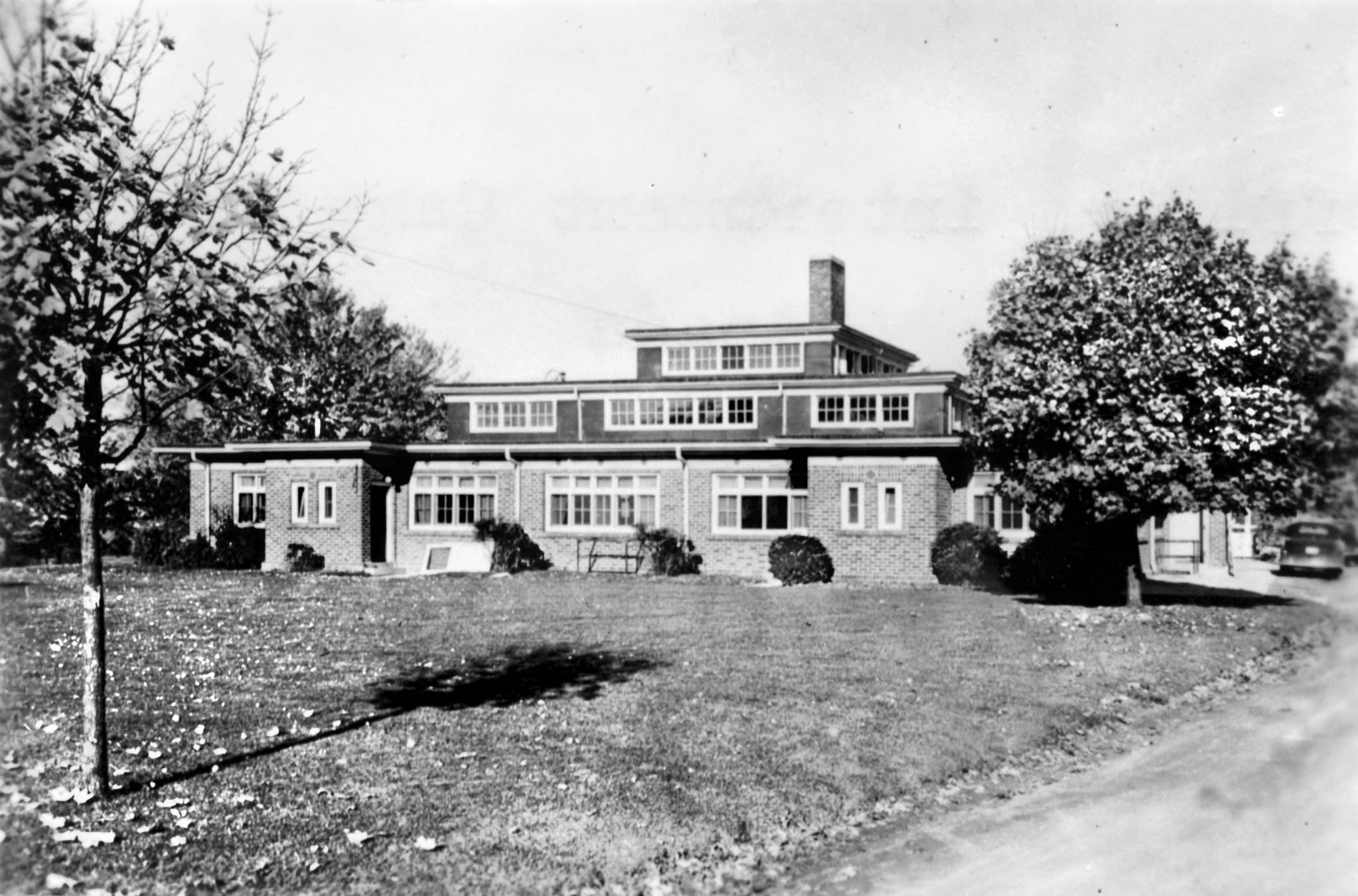
Author Jack Adamson is a maritime archaeologist based out of Dickson, Tennessee, with a focus on historical and conflict archaeology.

Interesting story! Thanks much!