 By Kevin Seabrooke
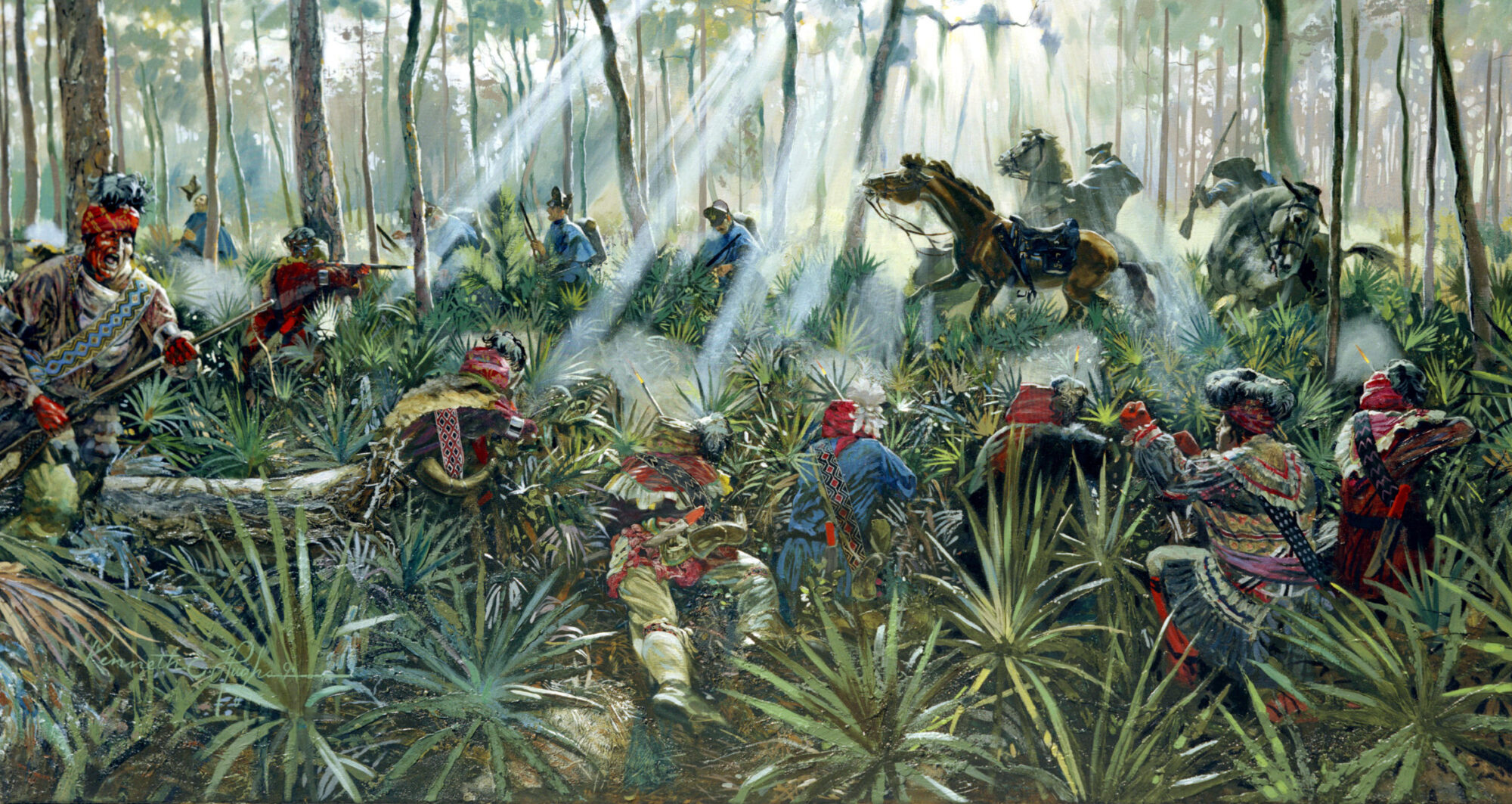
Following the end of the Revolutionary War, parts of Florida reverted to Spain, becoming a continuing source of conflict boundaries, the presence of formerly enslaved people and Native Americans from the region attacking the United States. The U.S. took possession of Florida in 1821 and President Andrew Jackson signed the Indian Removal Act of 1830—lumping all Indigenous peoples in the territory collectively as “Indians,” and all of those as “Seminoles,”the majority of which were Muscogees, known at the time as “Creeks,” and “Black Seminoles,” their African American allies—directing the removal of them all to “Indian Territory” in modern Oklahoma. Though many were removed, the Seminoles resisted under the leadership of Osceola and a former enslaved man named Abraham, for nearly seven years in the Second Seminole War (1835-42), the longest and most costly war fought by the U.S. Government against Native Americans.
The Free and the Dead: The Untold Story of the Black Seminole Chief, the Indigenous Rebel, and America’s Forgotten War (Jamie Holmes, Atria/One Signal Publishers/dist. Simon & Schuster, 384pp., Feb. 3, 2026 $30 HC)
Join The Conversation
Comments
View All Comments