By Jeffrey Morris
Six months after the attack on Pearl Harbor, the Japanese Empire appeared unstoppable. By the summer of 1942, Japan had conquered vast territories across the Pacific and Southeast Asia, shattered Allied naval power, and established a defensive perimeter that seemed nearly impregnable. The Imperial Japanese Navy possessed some of the finest carrier forces in the world, commanded by experienced officers whose victories had stunned Western military observers. Confident after a string of spectacular successes, Japanese leaders believed one more decisive blow would destroy America’s ability and willingness to fight in the Pacific.
They planned to deliver that blow on the Midway Atoll, whose three small islands (Sand, Eastern and Spit) became the first offshore islands ever annexed by the U.S. government in 1867. Located roughly 1,300 miles northwest of Honolulu, about a third of the way to Tokyo, the atoll is geographically part of the Hawaiian Archipelago, but not part of the state. Sand Island, by far the largest at 1.7 square miles, once served as a refueling stop for the Boeing 314 Clipper seaplanes of Pan American Airways. The Army Corps of Engineers and the Navy began work to turn the island into a naval air station in 1938.
Instead, the Battle of Midway became one of the most catastrophic military reversals in modern naval history. At this point in the war, Japan had the larger and more experienced Navy, but this advantage disappeared in a single morning—losing four frontline aircraft carriers, hundreds of elite aviators, and the strategic initiative it had seized so dramatically in December 1941. But the reversal of fortune had not been simply a twist of fate. A number of factors, including overconfidence, flawed planning, intelligence failures, poor reconnaissance, and critical command decisions combined to transform what should have been a Japanese triumph into a disaster from which its Imperial Navy would never fully recover.
One of the most decisive factors in the American victory at Midway occurred long before the first aircraft took off from a carrier deck. Months before the battle, American cryptanalysts had succeeded in partially breaking the Japanese naval code known as JN-25, allowing U.S. intelligence officers to piece together crucial details about Japanese operations. Though not fully deciphered, enough fragments had been translated to reveal that the Japanese were preparing a major offensive against a target identified only as “AF.” American commanders strongly suspected that “AF” referred to Midway Island, but they needed confirmation before risking their limited carrier forces in what could become a decisive engagement.
To verify their suspicions, intelligence officers stationed at Midway Atoll devised a simple but brilliant deception. Midway transmitted an uncoded radio message stating that its water desalination system had broken down and that the island was running short of fresh water. Shortly afterward, American codebreakers intercepted a Japanese communication reporting that “AF” was experiencing a water shortage. The message confirmed beyond doubt that Midway was the intended target. Armed with this information, Adm. Chester W. Nimitz was able to position American carriers northeast of Midway and prepare an ambush for the approaching Japanese fleet.
Japanese confidence in the security of the JN-25 naval code before the Battle of Midway was remarkably reckless, especially given recent events in the Pacific. Only a month earlier, during the Battle of the Coral Sea, American forces had already demonstrated an uncanny ability to anticipate Japanese movements. U.S. naval commanders knew enough about Japanese intentions to position carrier forces in the Coral Sea and contest Japan’s planned invasion of Port Moresby, Papua New Guinea. Although the battle was tactically inconclusive, it strategically frustrated Japanese expansion and forced the cancellation of the invasion operation.
Japanese military leaders should have recognized that such rapid American reactions were unlikely to be coincidence. The U.S. Navy had suffered severe losses at Pearl Harbor and possessed limited carrier strength, yet they repeatedly appeared in the right place at the right time. Instead of suspecting compromised communications, Japanese commanders convinced themselves that American successes resulted from luck or routine reconnaissance.
This complacency reflected a dangerous mixture of overconfidence and underestimation of American capabilities. By refusing to seriously consider that JN-25 had been partially broken, Japanese planners entered Midway assuming operational surprise still existed. In reality, the Americans were already waiting for them.
Another lesser-known, but critical, reason for Japan’s defeat at Midway was the failure of its submarine picket line to provide timely reconnaissance of the approaching American fleet. Japanese planners had intended to use a screen of long-range submarines east of Hawaii to detect any movement by the U.S. Navy toward Midway. Had this plan worked properly, Adm. Isoroku Yamamoto might have received advance warning that American aircraft carriers were already at sea and waiting in ambush. Instead, the submarines arrived too late, and the Japanese fleet sailed into disaster almost blind.
The Japanese operation relied heavily on surprise. Yamamoto believed the Americans would respond slowly to the attack on Midway, giving Japan time to destroy the island and then defeat any American ships that attempted a counterattack. To help ensure this, the Imperial Japanese Navy organized a submarine reconnaissance barrier known as the “picket line.” The submarines were supposed to patrol routes northeast of Hawaii and report any major U.S. naval movement. However, by the time the submarines finally reached their assigned positions, the American carriers USS Enterprise (CV-6), USS Hornet (CV-8), and USS Yorktown (CV-5) had already passed through the area.
Several factors caused this delay. First, Japanese operational planning for Midway was extremely complex and spread across vast distances. Yamamoto’s forces were divided into multiple groups, creating logistical confusion and slowing coordination. More importantly, the submarine operation itself was postponed because planners expected the attack schedule to allow sufficient time for deployment. In addition to overestimating the secrecy of their own plans, Japanese commanders underestimated how quickly the Americans could react.
Another reason for the delay was the cancellation and rescheduling of “Operation K-2,” a planned reconnaissance mission using flying boats launched from French Frigate Shoals near Hawaii. This mission failed after the Japanese discovered the area was occupied by American ships, making the submarine picket line crucial to success.
Unfortunately, the submarines were already behind schedule and the consequences were nothing short of disastrous. Because the subs had failed to spot the American carriers, Japanese commanders incorrectly assumed they still possessed the element of surprise. On June 4, 1942, American carrier aircraft struck first, sinking four Japanese carriers and permanently shifting the balance of naval power in the Pacific. The late deployment of the submarine screen therefore deprived Japan of crucial intelligence at the exact moment accurate reconnaissance was most needed.
Another critical intelligence failure that contributed directly to Japan’s defeat at Midway came on the morning of June 4, 1942, when the delay of a single reconnaissance aircraft helped set in motion one of the greatest naval disasters in Japanese history. The aircraft was a floatplane launched from the heavy Japanese cruiser Tone, specifically from its No. 4 scout aircraft position—commonly called the “Tone 4” plane.
Japanese Admiral Isoroku Yamamoto had designed the Midway operation around surprise and precise timing. Vice Admiral Chuichi Nagumo commanded the carrier strike force that would attack Midway and destroy any American carriers responding to the assault. To make this possible, Japanese scout planes were assigned to search vast sectors of ocean for the American fleet before it could threaten the carriers.
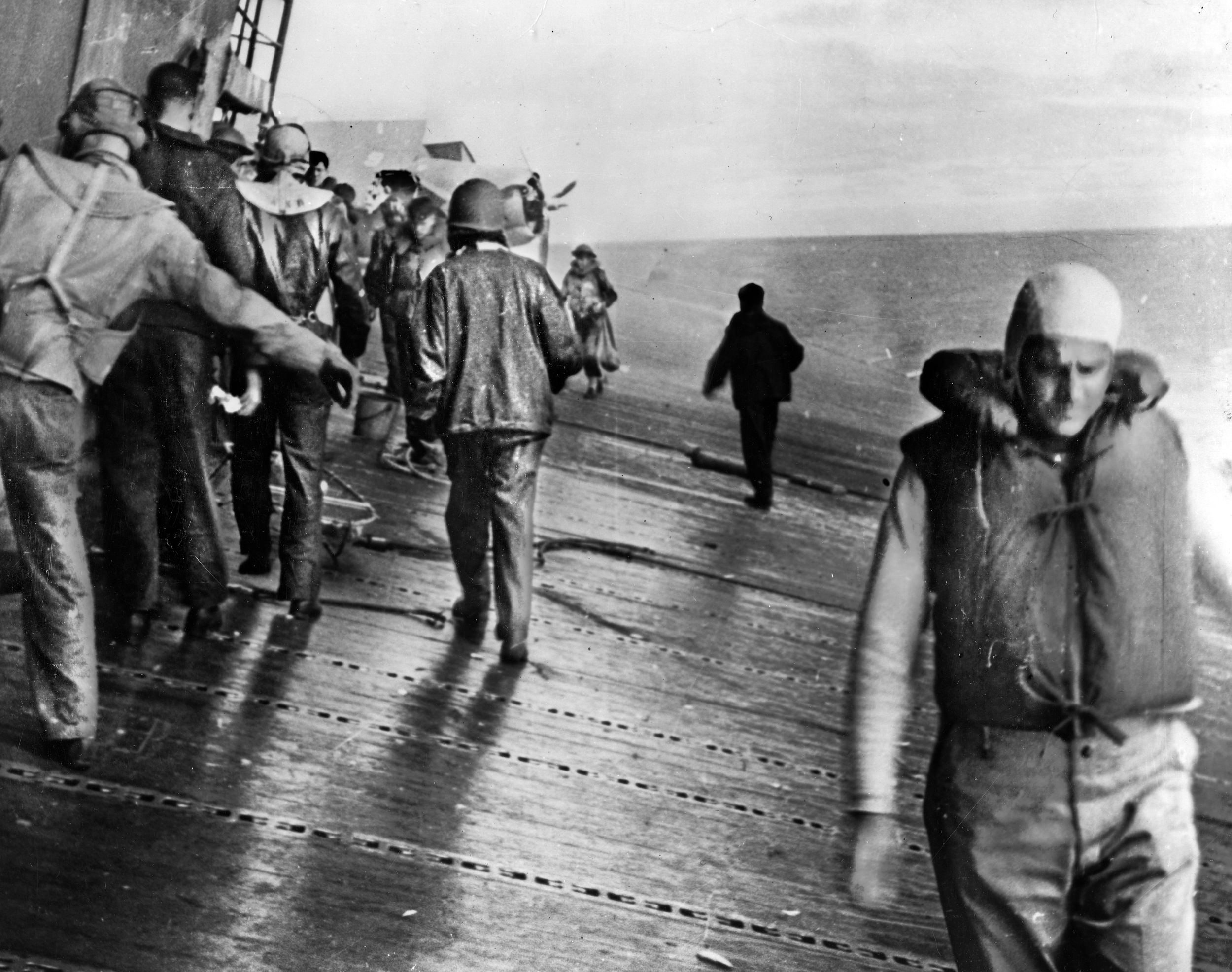
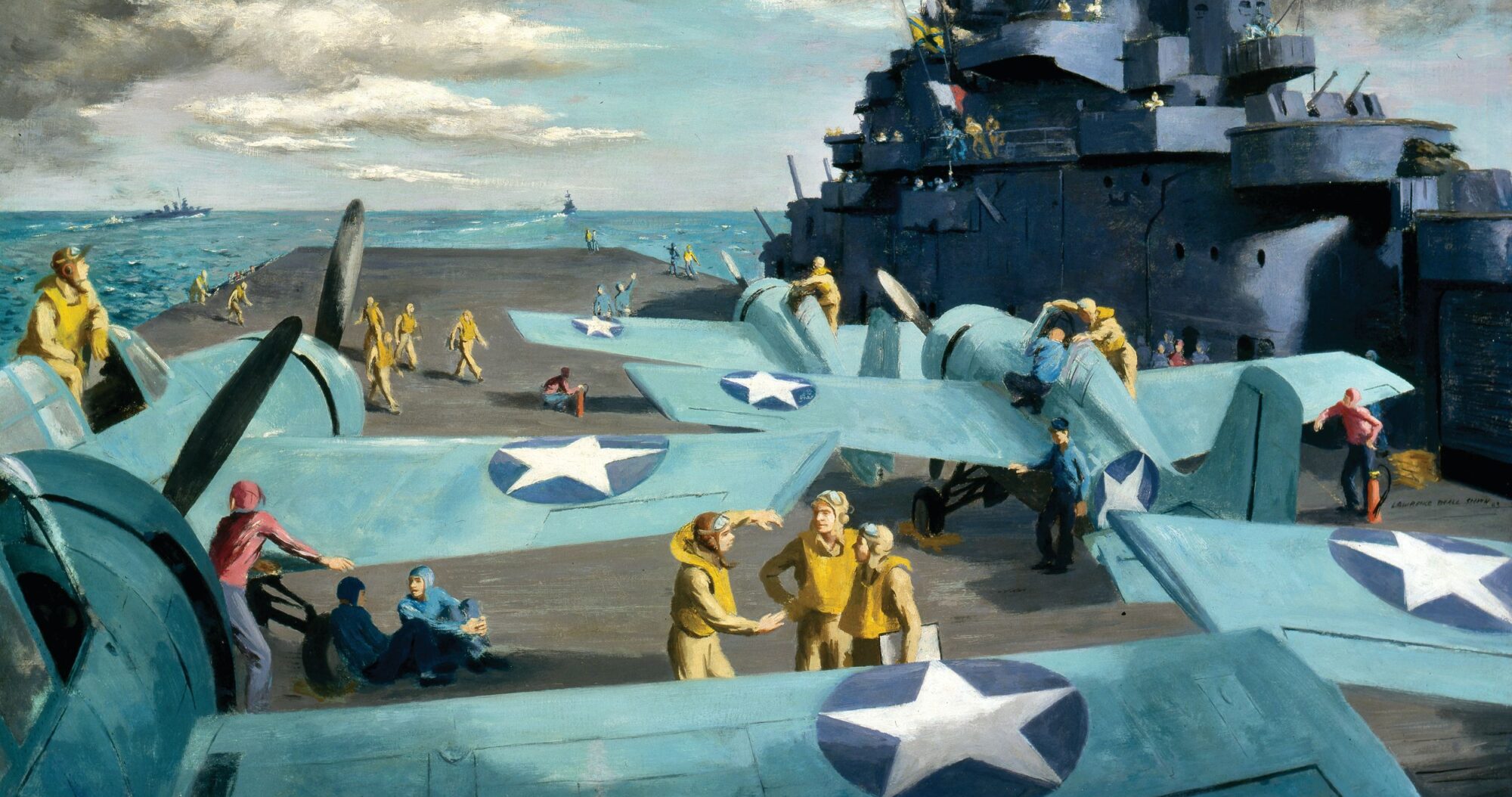
The Tone 4 floatplane was supposed to launch before dawn with the other search aircraft. However, a catapult malfunction delayed its takeoff by roughly 30 minutes. The delay appeared to be minor—except that it turned out that the aircraft was assigned to search the exact sector where the American carriers were approaching. As Nagumo’s first strike aircraft attacked Midway, Japanese commanders still believed no American carriers were nearby. Around 7:15 a.m., Nagumo began preparing a second strike against Midway because reports indicated the island’s defenses had not been fully destroyed. Japanese carrier decks and hangars became crowded with aircraft being refueled and rearmed with bombs intended for land attack.

About 7:28 a.m., there finally came a report that the tardy Tone 4 scout plane had sighted elements of the American fleet—though the pilot initially failed to identify the presence of a carrier. Only later did he confirm that an American carrier was indeed part of the force. But by then, valuable time had been lost. The delayed and incomplete reconnaissance report threw Nagumo into confusion. He reversed earlier orders and began rearming planes yet again—this time with anti-ship weapons for a naval attack. The Japanese carriers were caught in the middle of this chaotic reconfiguration when aircraft from the Enterprise, Yorktown and Hornet appeared overhead.
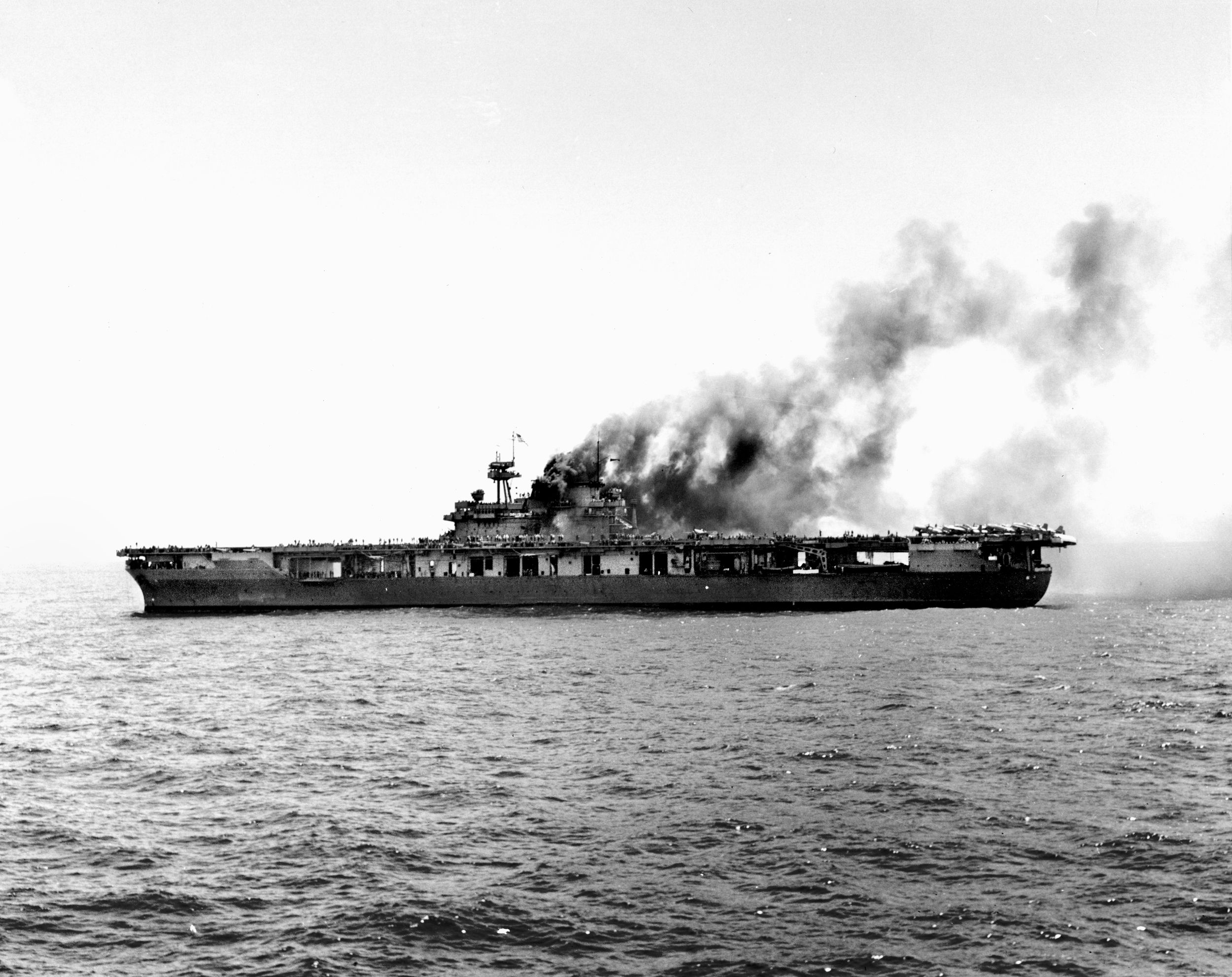
U.S. dive bombers struck the vulnerable Japanese carriers at approximately 10:20 a.m., igniting the fueled and armed aircraft down in the hangar decks. Within minutes, three Japanese carriers were fatally damaged. A fourth was destroyed later that day. By itself, the delayed launch of the Tone 4 plane did not lose the battle, but it denied Japan the early warning and decisive timing upon which the entire Midway plan depended.
In addition to mistakes in intelligence, the Japanese defeat at Midway was also facilitated by a series of structural weaknesses in their naval doctrine—a key one being the decision to divide the attacking force into several separate operational groups spread across enormous distances. What appeared on paper to be a sophisticated and flexible battle plan instead became a fatal weakness that prevented the Japanese from concentrating their strength at the decisive moment.
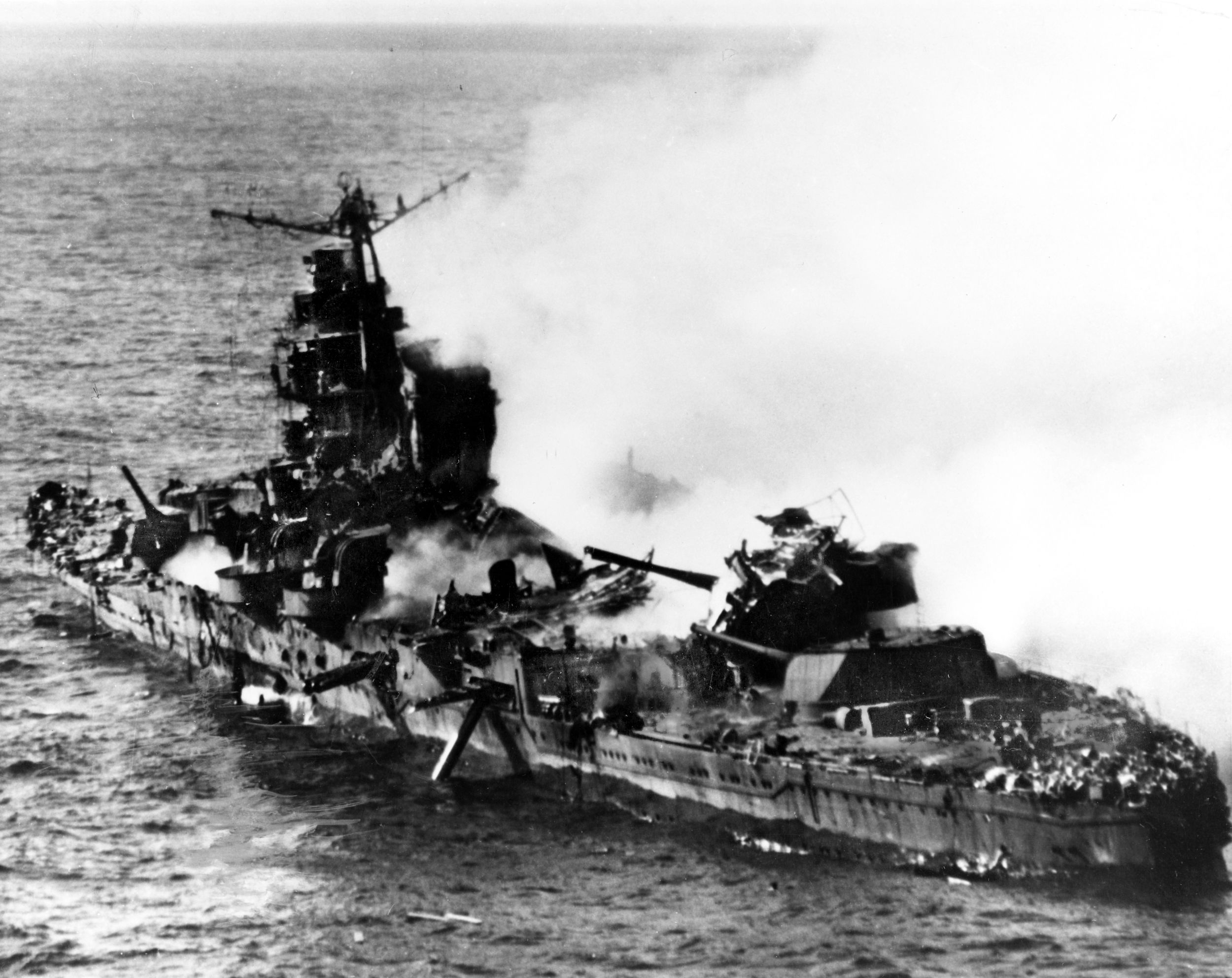
Admiral Isoroku Yamamoto designed the Midway operation with multiple objectives: seize Midway Atoll, lure the surviving American carriers into battle, and destroy them in one decisive engagement. To accomplish this, the fleet had been divided into four major strike elements. Vice Adm. Chuichi Nagumo commanded the First Carrier Strike Force, which carried the four fleet carriers responsible for the main air attack. A separate Midway Invasion Force transported troops for the occupation of the island. Yamamoto personally commanded the Main Body, including powerful battleships positioned hundreds of miles behind the carriers. Another force under Vice Adm. Nobutake Kondo operated separately to support the invasion and engage enemy surface forces.
This arrangement reflected traditional Japanese naval thinking—that complex, multi-pronged operations would confuse the enemy and create opportunities for a decisive battle. However, the plan depended on perfect timing, reliable reconnaissance, and flawless communication across vast distances of ocean. In reality, these separated forces were unable to support one another when the battle suddenly turned against Japan.
The greatest weakness was the isolation of Nagumo’s carrier force. Although it was Japan’s most powerful offensive weapon, it operated far ahead of Yamamoto’s battleships and support units. When American carriers unexpectedly appeared on June 4, Nagumo had no nearby heavy surface forces to assist him. The battleships that might have provided anti-aircraft support or additional striking power were too far away to intervene in time.
The separation of forces also weakened Japanese reconnaissance and coordination. Because scouting responsibilities were spread across different groups, gaps appeared in their search coverage. This contributed directly to the delayed discovery of the American carriers. At the same time, the widely dispersed command structure made rapid decision-making difficult. Yamamoto, despite being overall commander, was too distant from the main action to effectively direct events as they unfolded.
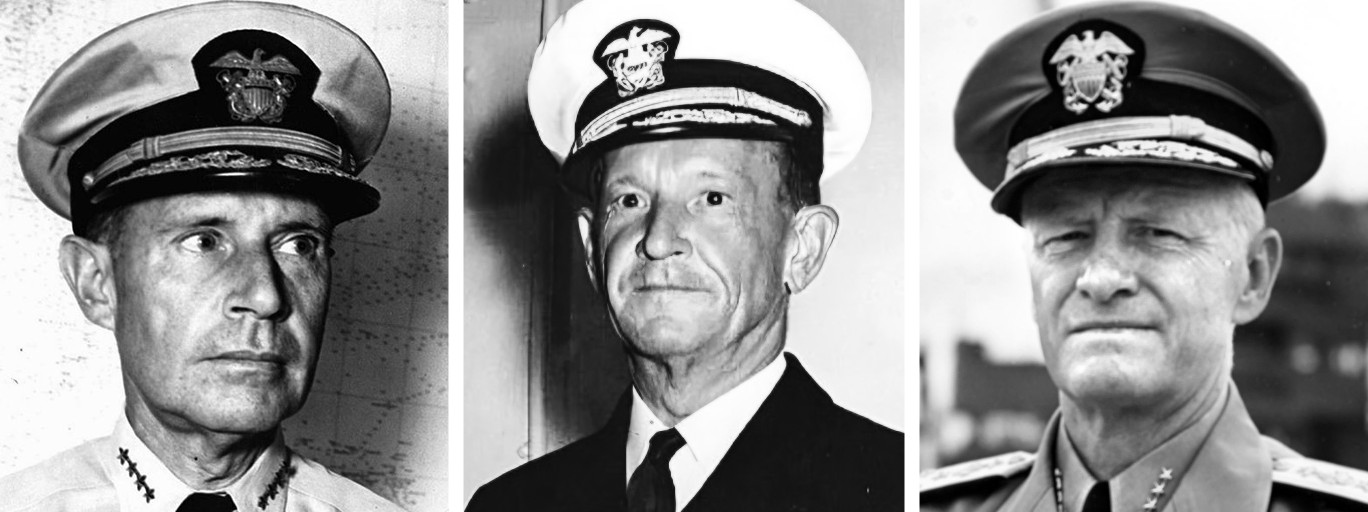
Meanwhile, the Americans benefited from concentration of force. Nimitz, along with Adms. Frank Jack Fletcher and Raymond A. Spruance, concentrated their available carriers into a unified striking force. Though smaller than the Japanese fleet overall, the Americans ensured their carriers could support each other and launch coordinated attacks.
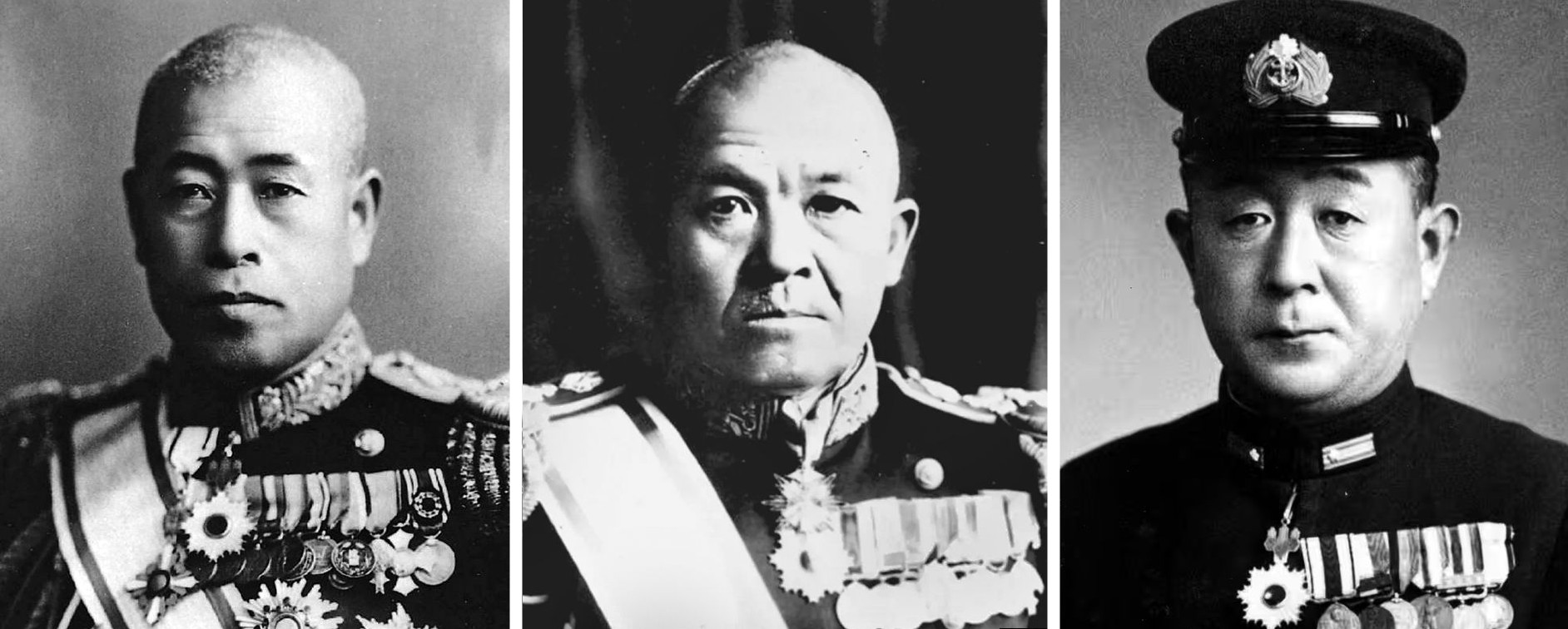
When American dive bombers attacked Nagumo’s carriers, the dispersed battleships and support fleets could do nothing to prevent their destruction. By the time Yamamoto attempted to reorganize his scattered forces for a night engagement, the strategic situation had already collapsed.
The division of the Japanese fleet into multiple strike groups reflected an operational doctrine that valued complexity and dispersion over concentration and flexibility. At Midway, the flaw in that doctrine was catastrophically exposed. Instead of overwhelming the Americans, the scattered Japanese forces became isolated fragments unable to react quickly to surprise. The result was the destruction of four irreplaceable carriers and the permanent loss of Japan’s strategic initiative in the Pacific War.
One of the defining moments of the Battle of Midway—one that played a crucial role in Japan’s defeat—has come to be known as “Nagumo’s dilemma.”
Early on the morning of the battle, Nagumo launched a major airstrike against Midway to weaken its defenses before a planned amphibious landing. However, the first wave of Japanese aircraft reported that the defenses on Sand Island had not been fully neutralized and that another strike would likely be necessary. Nagumo ordered his reserve aircraft, which were initially armed with torpedoes and anti-ship bombs for naval combat, to be rearmed with high-explosive ordnance suitable for attacking land targets.
It was in this moment, during the “fog of war,” that Nagumo faced his dilemma and made his fateful decision. While Japanese crews were hastily rearming and refueling aircraft below decks, the reported sighting of American warships east of the Japanese fleet arrived from the delayed plane from the Tone. After another delay came the news that a U.S. carrier had been spotted.
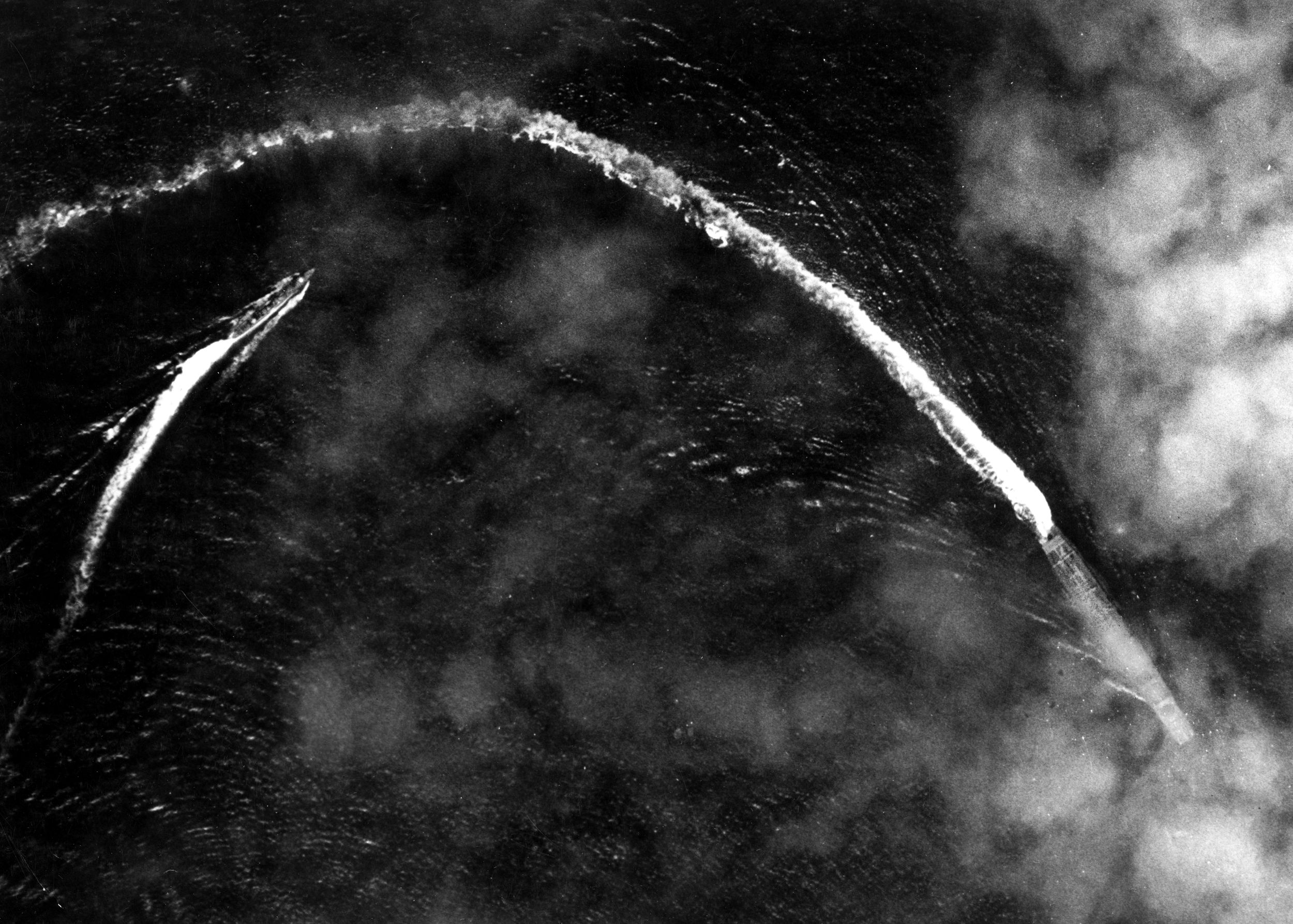
Nagumo could launch his reserve planes immediately against the American fleet, even though many aircraft still carried weapons designed for attacking land targets, or he could wait until the rearming process was completed so the strike force could attack properly equipped for naval combat. Japanese naval doctrine emphasized carefully coordinated attacks launched in full strength, and Nagumo feared sending aircraft in a disorganized piecemeal assault.
He chose the conventional option to continue reorganizing his strike force. Aircraft were moved between hangars and flight decks while bombs and torpedoes were exchanged. Fuel hoses, ammunition carts, and armed aircraft crowded the carrier hangars. The carriers became floating fire hazards at precisely the moment American aircraft were approaching.
Meanwhile, American commanders Raymond A. Spruance and Frank Jack Fletcher had already launched their own carrier strikes from the Enterprise, Hornet and Yorktown. Although American torpedo squadrons suffered devastating losses, their attacks forced Japanese fighters down to low altitude and disrupted Japanese defensive coordination.
When the American dive bombers targeted the Japanese carriers Akagi, Kaga, and Soryu around 10:20 a.m.—their hangar decks packed with fueled and armed aircraft—the explosions triggered catastrophic fires that quickly spread beyond control. The carrier Hiryu would later launch counterattacks against Yorktown, but it was eventually destroyed by American dive bombers as well.
The Nagumo decision was fatal because it trapped the Japanese carriers in a vulnerable transitional state. Nagumo’s effort to prepare the ideal strike delayed offensive action long enough for the Americans to seize the initiative. The resulting destruction of four carriers crippled Japan’s naval aviation strength and marked a turning point in the Pacific War.
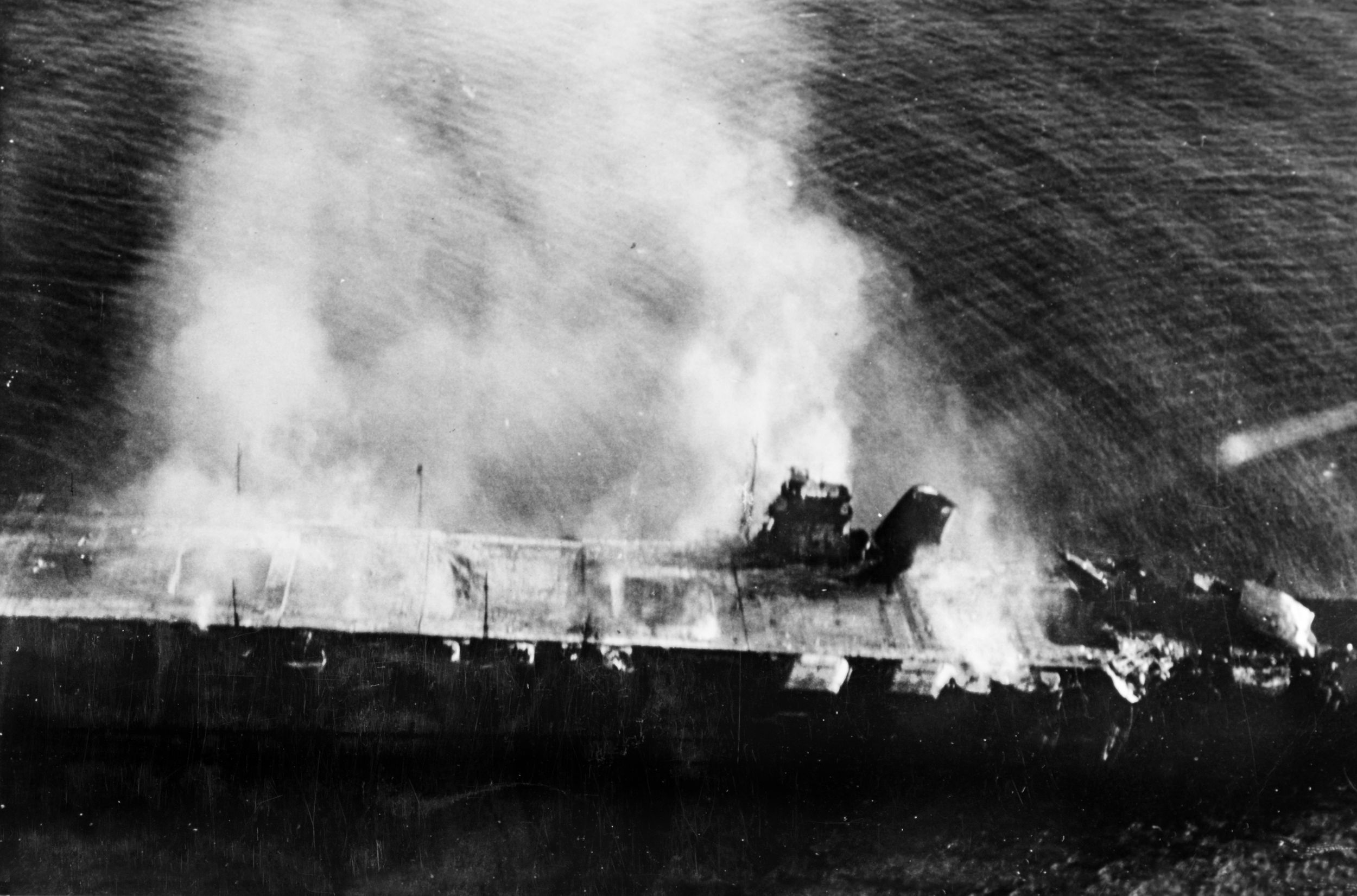
Once it became clear that the American carriers were nearby and actively attacking, the Japanese compounded their previous mistakes with one of their most consequential at Midway—the failure to shift from an offensive mindset to a defensive operational posture. Japanese commanders, particularly Nagumo, continued pursuing the decisive offensive battle envisioned by Japanese naval doctrine even after mounting evidence suggested that the initiative had already passed to the Americans. This refusal to disengage and fight defensively contributed directly to the destruction of the Japanese carrier force.
Japanese naval doctrine before Midway emphasized aggressive action and decisive engagement. The carrier strike group known as the Kido Butai, “Mobile Force,” had achieved stunning victories since the beginning of the Pacific War, including the attack on Pearl Harbor. Years of success reinforced the belief that offensive pressure and coordinated strikes would overwhelm any opponent. At Midway, however, circumstances rapidly changed in ways that should have forced Japanese commanders to reconsider their approach.
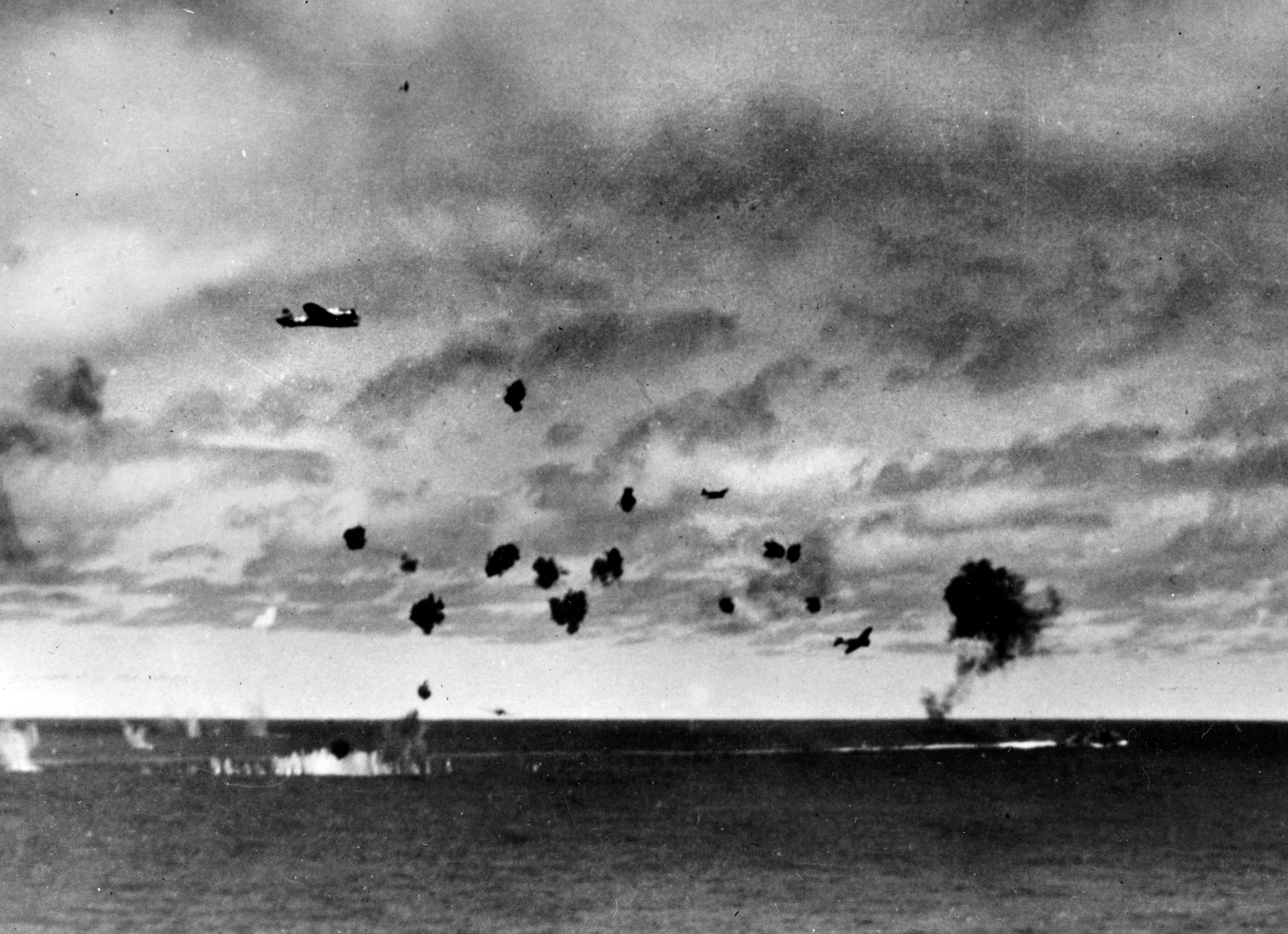
Throughout the morning of June 4, Nagumo’s carriers faced repeated American attacks. Aircraft from Sand Island first struck the Japanese fleet in a series of uncoordinated but persistent raids. These attacks caused little direct physical damage, but they continuously disrupted Japanese flight operations, forced combat air patrols into repeated interceptions, and showed that U.S. forces already knew the approximate location of the Japanese carriers.
The situation worsened when reconnaissance reports confirmed the presence of American carriers east of the Japanese fleet. At this point, Japanese commanders effectively knew they had lost the element of surprise. More importantly, they faced an enemy capable of launching repeated carrier strikes. Ideally, withdrawing temporarily to reorganize and exploit Japan’s advantages might have helped—Japanese aircraft such as the Aichi D3A and Nakajima B5N generally possessed greater range than their American counterparts. By turning away and increasing distance, the Japanese fleet could potentially have moved outside the effective strike range of American carrier aircraft while still remaining capable of launching long-range attacks of its own. But Nagumo was forced to recover the planes returning from the morning’s first strike before he could launch an attack or reposition his carriers. Because aircraft recovery required the carriers to steam directly into the wind (which was blowing from the southeast), Nagumo was forced to sail closer toward the approaching American fleet while his decks were operationally locked down; carrier landings and launchings could not happen simultaneously.
Ultimately, it was not just American bombs, but the unyielding laws of physics and carrier mechanics that sealed the fate of the Kido Butai. Caught in a tactical vice of their own making, the Japanese commanders ran out of time—and the strategic initiative in the Pacific was lost forever.
Join The Conversation
Comments
View All Comments