U-Boat
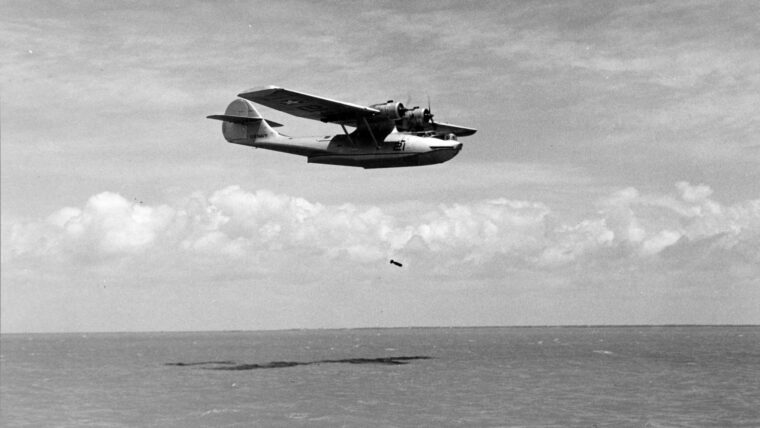
Sub Hunters Over the Bay of Biscay
By Patrick J. Chaisson“Am over enemy submarine in position …”
Cut off in mid-transmission, this contact report came from a U.S. Read more
U-Boat
“Am over enemy submarine in position …”
Cut off in mid-transmission, this contact report came from a U.S. Read more
U-Boat
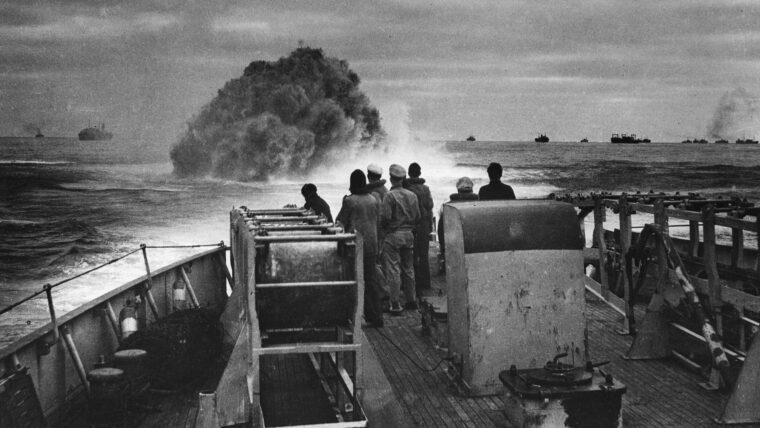
British Prime Minister Winston Churchill, who rode in a cavalry charge in the Sudan in 1898, escaped from the Boers in 1899 and served for six months as a troop leader in the Western Front trenches in 1915-1916, remarked during World War II, “The only thing that ever really frightened me during the war was the U-boat peril.” Read more
U-Boat
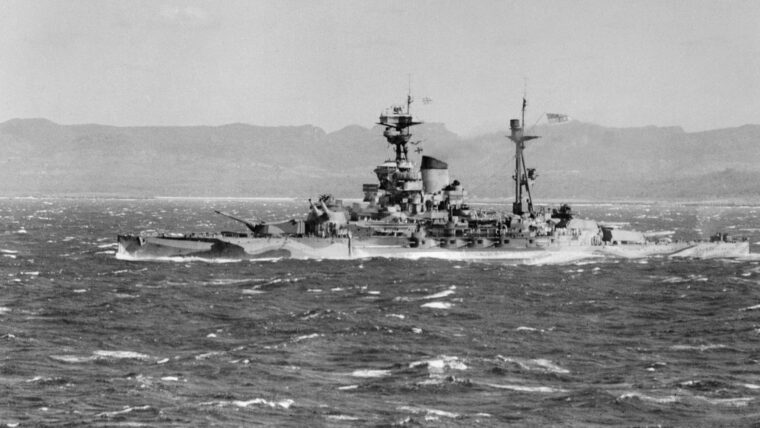
In early 1942 things could have hardly looked bleaker for the Allies. In Europe, Hitler’s war machine had steamrolled across the entire continent and was now battling before the gates of Moscow. Read more
U-Boat
Snow flurries swirled out of the darkness over the Baltic Sea. Chunks of ice floated on the water, and lookouts shivered at their posts. Read more
U-Boat
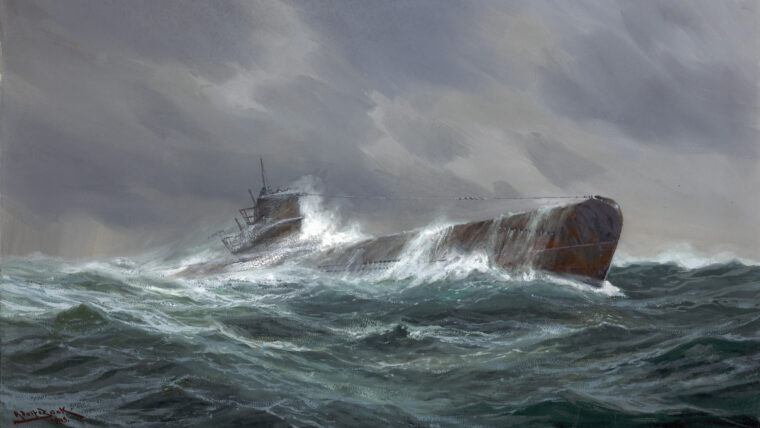
After refueling in the mid-Atlantic and suffering bow damage from being rammed by a tanker, a 769-ton German submarine reached its destination, the American East Coast, early on Monday, May 4, 1942. Read more
U-Boat
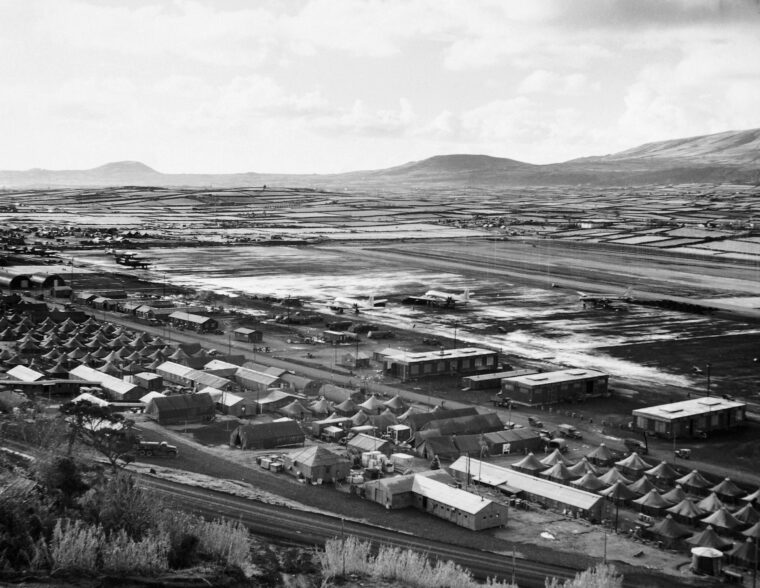
The year 1944 dawned with America already at war for over two years. In an event not marked by history books, the 96th Navy Construction Battalion, Seabees, crossed the Atlantic from Davisville, Rhode Island, on the Abraham Lincoln, a converted banana boat escorted by two destroyers, the USS Ellis and USS Biddle. Read more
U-Boat
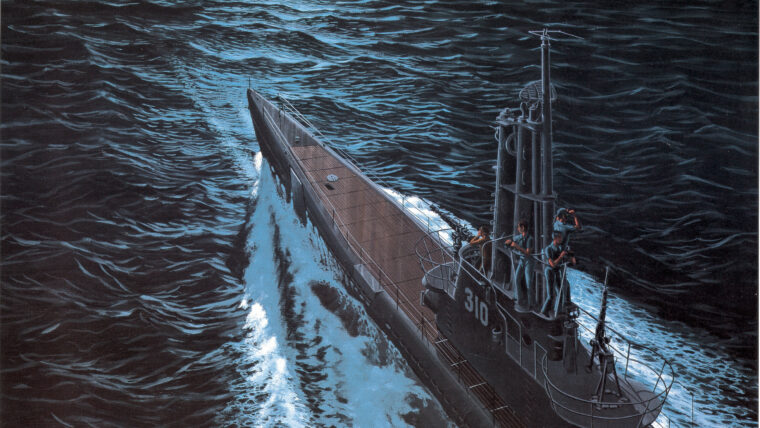
She was a sleek, efficient, deadly killer, a home to six officers and 60 enlisted men, and a holy terror to the enemy. Read more
U-Boat
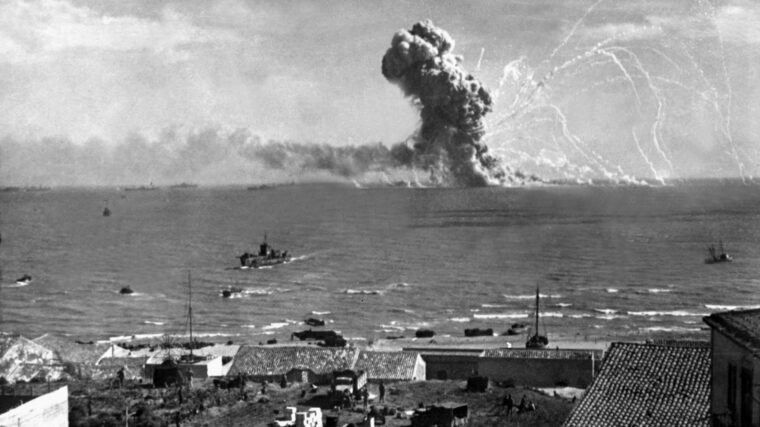
In the opening months of 1942, German U-boats pushed Allied supply lines to the breaking point. In the month of January, Axis submarines claimed over 20 Allied vessels including a tanker just 60 miles off the coast of Long Island. Read more
U-Boat
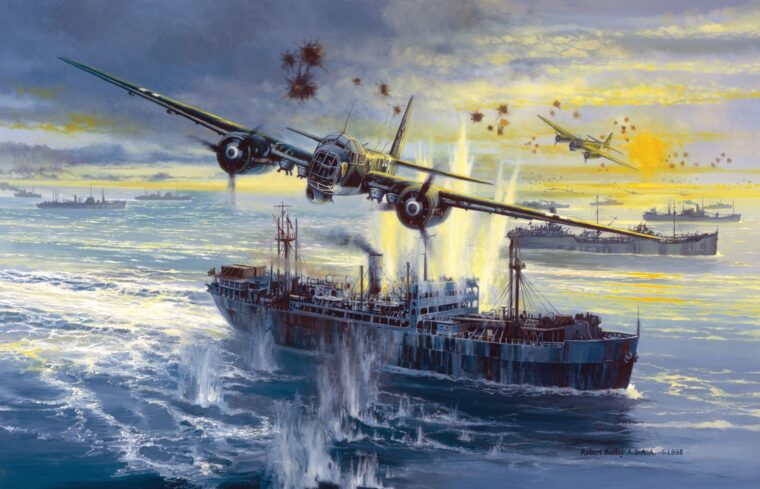
British Prime Minister Winston Churchill had made the promise to Soviet Premier Josef Stalin, and Admiral Sir John Tovey of the Royal Navy had to keep it: to sail three convoys loaded with critical supplies from Britain to Russia every two months, with 25 to 35 ships in each convoy. Read more
U-Boat
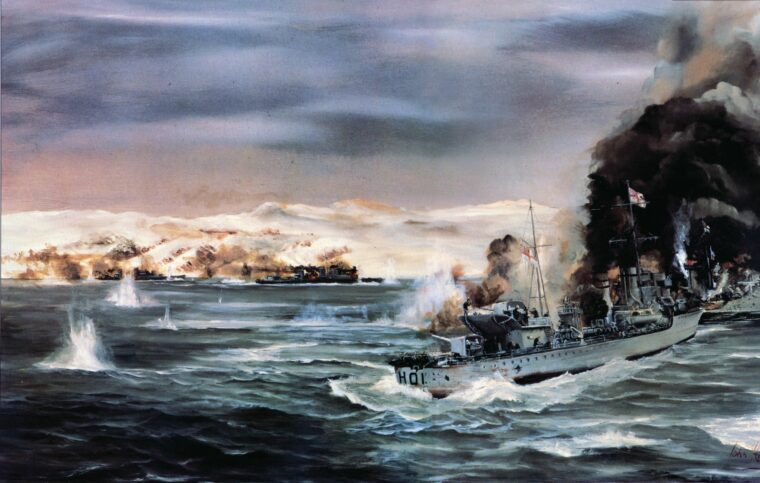
The Germans could not believe it. Without suffering the loss of a single soldier or sailor, the German Army and Navy had sailed 1,500 miles through waters dominated by the British Royal Navy and captured Narvik without firing a shot, bagged nearly 500 Norwegian soldiers, seized one of Norway’s major military depots, and even taken five armed British merchant ships and their crews. Read more
U-Boat
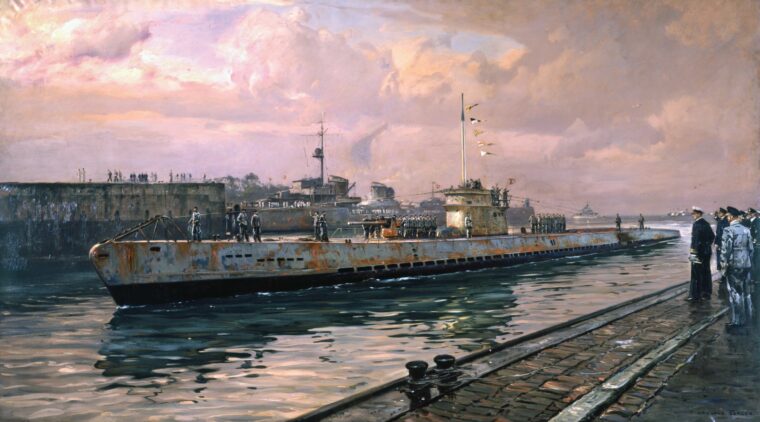
On December 9, 1941, Grand Admiral Erich Raeder, the commander of the Kriegsmarine, lifted all restrictions on German naval attacks against American vessels by his surface and submarine fleets. Read more
U-Boat
In April 1941, things were going quite well for the German armed forces. In a series of earlier campaigns, they had conquered Poland, the Low Countries, Norway, and France. Read more
U-Boat
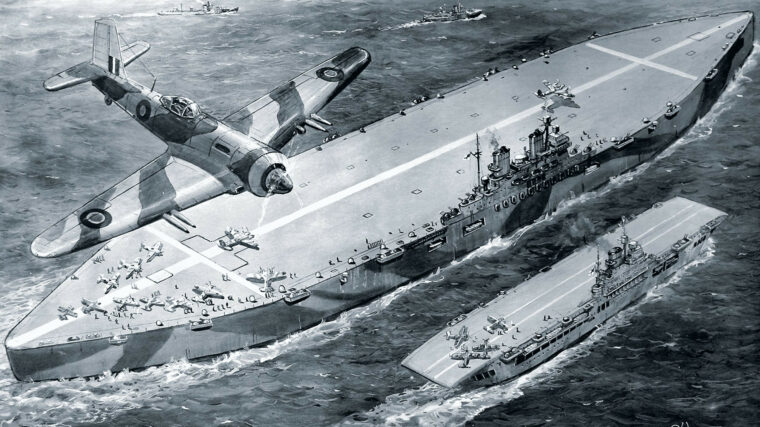
During World War II British and American aircraft carriers, serviced and ready for naval combat, averaged 20,000 to 30,000 tons. Read more
U-Boat
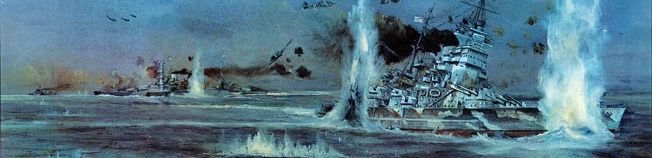
History was made in the Mediterranean Sea on the night of Monday, November 11, 1940, when the Italian Navy’s battle fleet was devastated at Taranto, off the Ionian coast of southern Italy. Read more
U-Boat
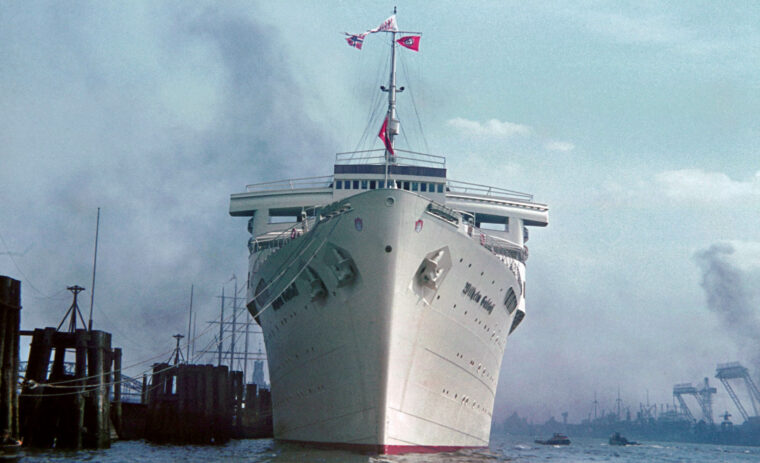
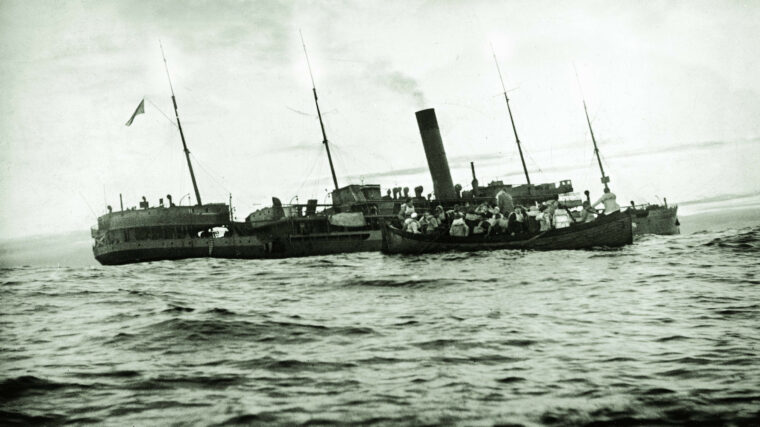
In her previous life, she had been the Hansa-line freighter Goldenfels. She was launched in 1937 and displaced 7,862 tons. Read more
U-Boat
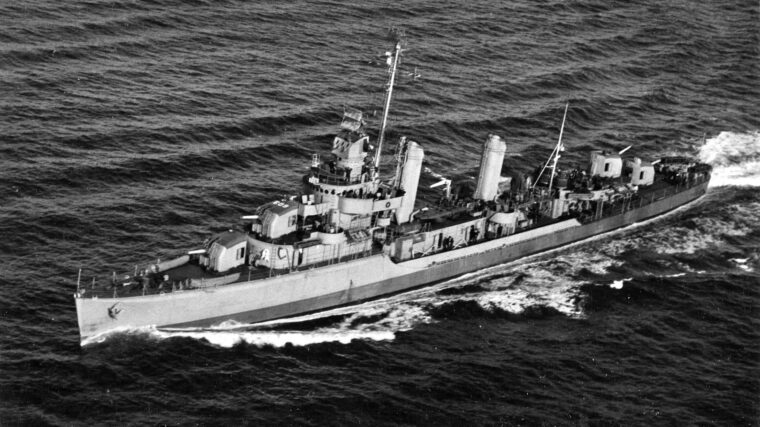
Eighty miles off the coast of New Jersey and 280 feet below the surface of the Atlantic Ocean lies the forward section of a World War II destroyer, where it came to rest more than 60 years ago. Read more
U-Boat
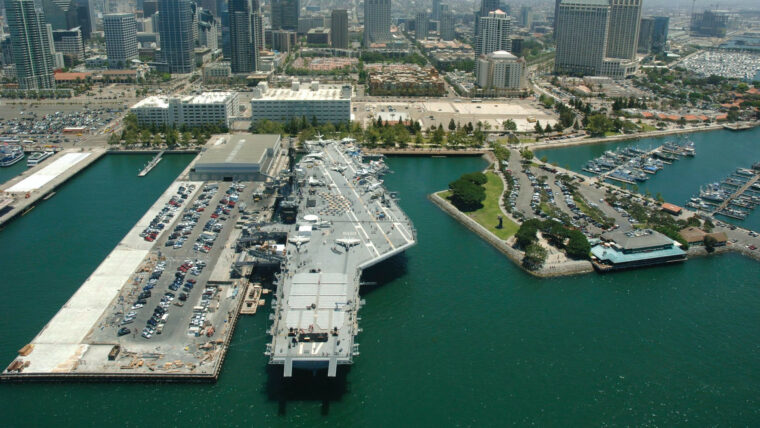
A boat trip through San Diego harbor provides visitors with tangible proof of America’s military might. San Diego is one of the U.S. Read more
U-Boat
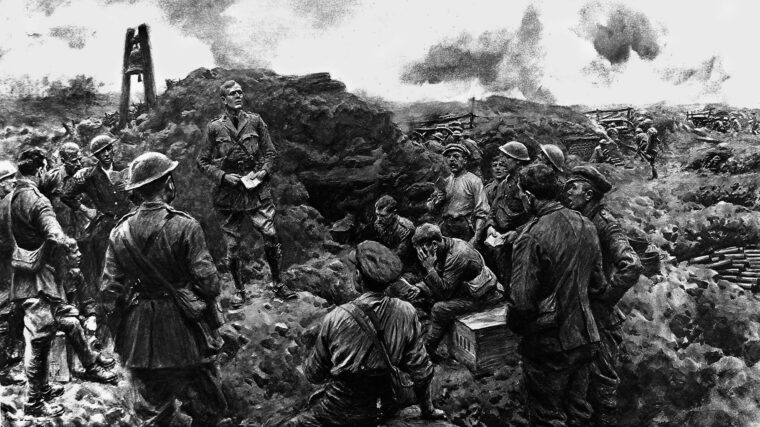
They carried no weapons, only holy books and rudimentary vestments, a crucifix or a Star of David and sometimes a little Communion kit. Read more
U-Boat
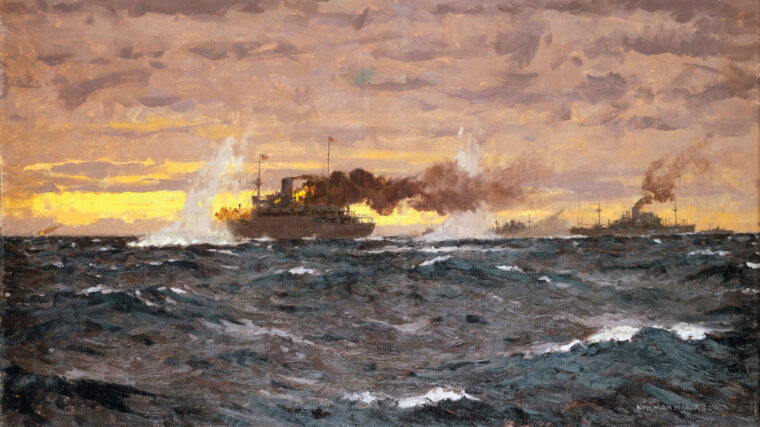
Throughout World War II, the British Admiralty’s deepest concern was the all-important shipping lanes that supplied their island fortress. Read more
U-Boat
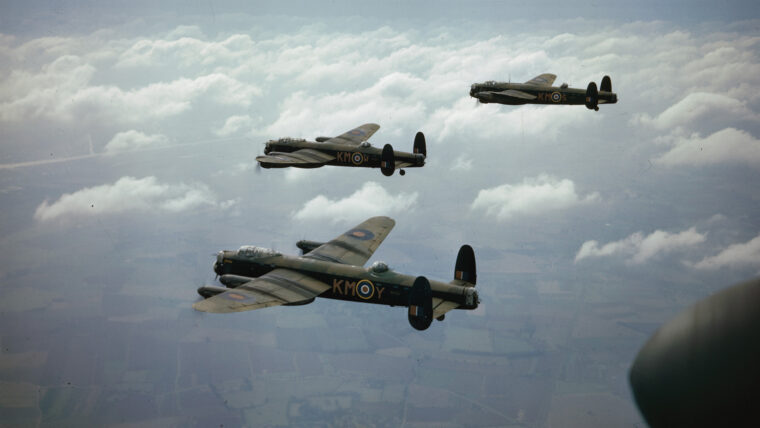
In the spring of 1942, the Allies were hard pressed battling German U-boats in the Atlantic as Britain was struggling to feed its people. Read more