Alexander I
General Mikhail Kutuzov and the Battle of the Danube
By Victor KamenirOn April 1, 1811, one-eyed General Mikhail Kutuzov arrived in the Romanian capital of Bucharest to take command of Russia’s Moldavian army. Read more
Alexander I
On April 1, 1811, one-eyed General Mikhail Kutuzov arrived in the Romanian capital of Bucharest to take command of Russia’s Moldavian army. Read more
Alexander I
Had he—and not Emmanuel, the Marquis of Grouchy—been named a Marshal of France on April 1, 1815, General Count Jean Rapp might have helped the Emperor Napoleon Bonaparte win the Battle of Waterloo. Read more
Alexander I
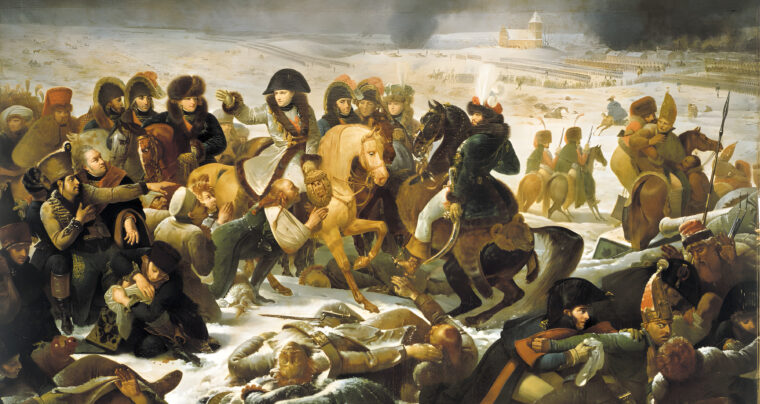
Following the French Army’s brilliant victories at the twin battles of Jena and Auerstadt on October 14, 1806, the Emperor Napoleon Bonaparte subsequently launched his Grande Armée in a devastating pursuit of the remnants of the Prussian Army. Read more
Alexander I
For many, the fascination of military history lies in the “What if …” What if Hitler had not ordered the Luftwaffe to shift from bombing RAF airfields to bombing London in 1940? Read more
Alexander I
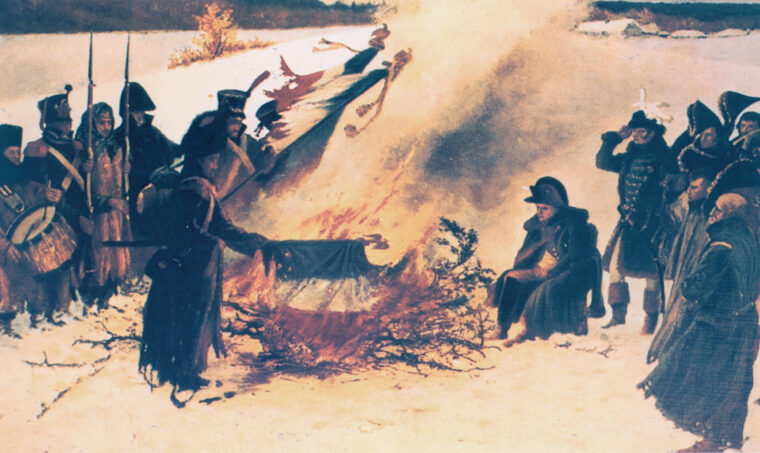
After his disastrous invasion of Russia in 1812, French emperor Napoleon Bonaparte desperately needed to reassert his military dominance over Europe. Read more
Alexander I
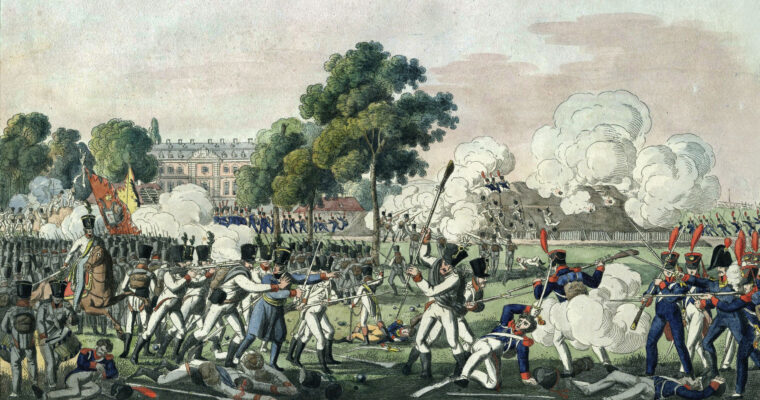
Marshal Gouvion Saint-Cyr was in a tight spot, and he knew it. It was the morning of August 26, 1813, and Saint-Cyr and his French XIV Corps were defending Dresden, the capital of Saxony, from a large and menacing Allied army that outnumbered his own by at least four to one. Read more
Alexander I
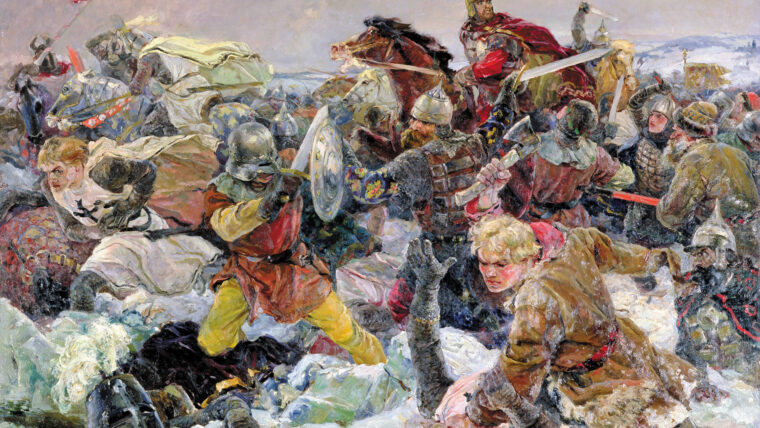
In the early 13th century, the Baltic frontier in central Europe remained a hostile and uninviting place. Pagan Europeans far outnumbered Christians, and the area was a focal point for constant conflict between mutually exploitive neighbors slavering to carve out new territorial holdings at the expense of anyone who stood in their way. Read more
Alexander I
Field Marshal Arthur Wellesley, Duke of Wellington, was in Vienna when the news arrived in early March 1815 that Napoleon had escaped from exile on Elba and returned to France. Read more
Alexander I
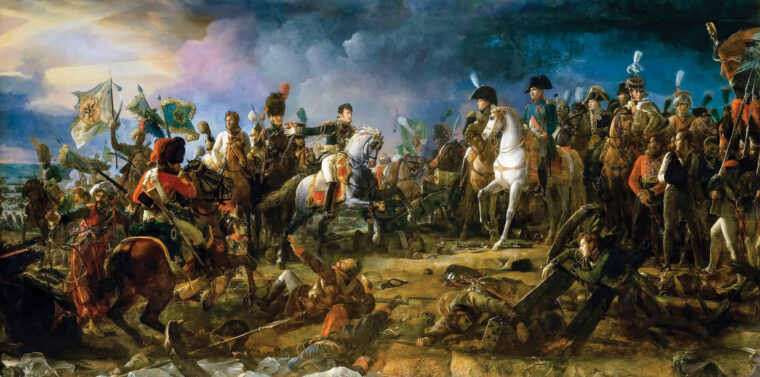
During the War of the Third Coalition, Napoleon Bonaparte, a year after proclaiming himself Emperor Napoleon I of France, won perhaps the greatest victory of his military career near the Bohemian village of Austerlitz, also known as the Battle of the Three Emperors because Napoleon confronted Austrian and Russian armies led by Francis II and Alexander I respectively. Read more