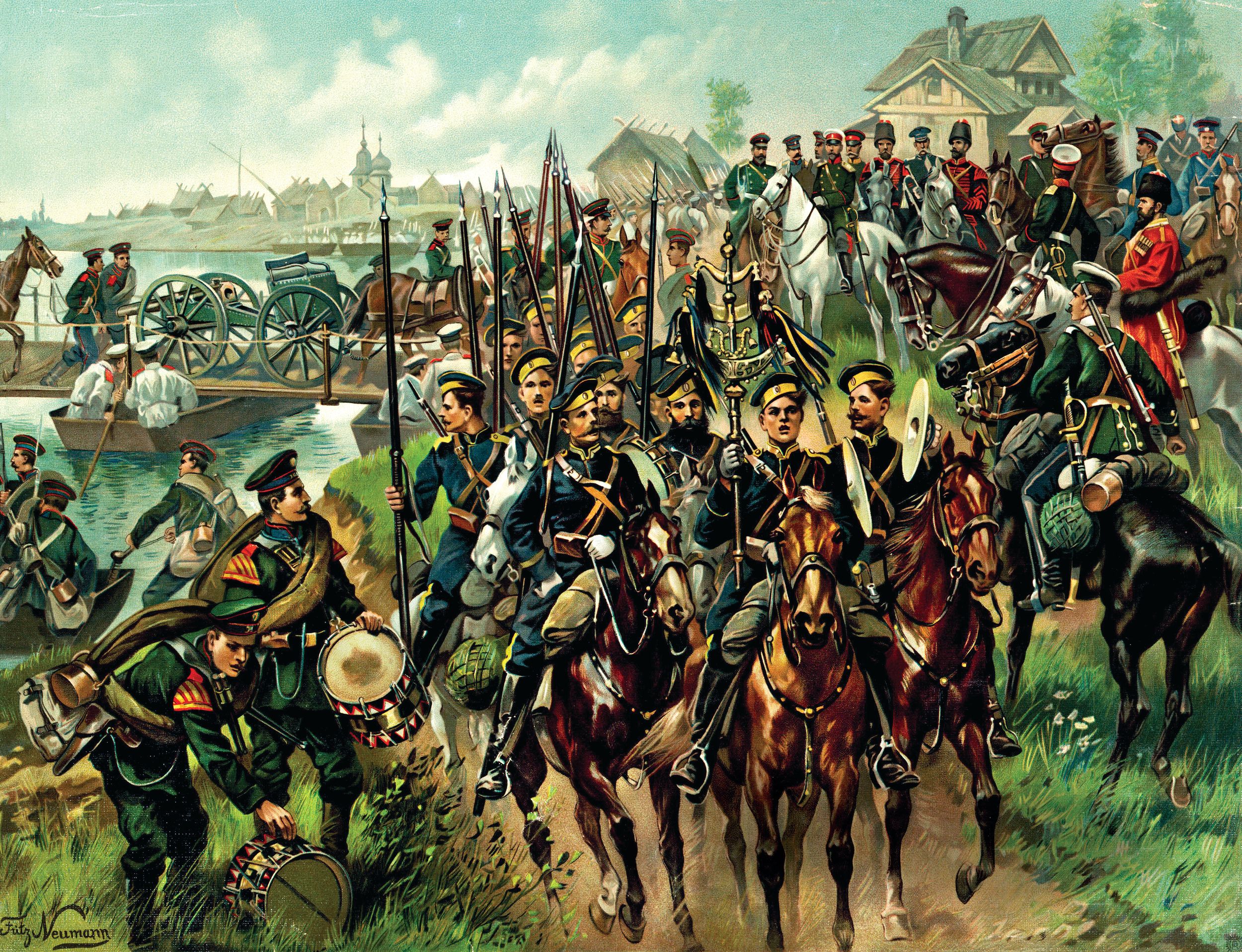
An Air Force KC-135 Stratotanker refuels a flight of F-105 Thunderchiefs on their way to strike targets in North Vietnam. Refueling operations in the Vietnam War peaked during Operation Rolling Thunder.

European Theater

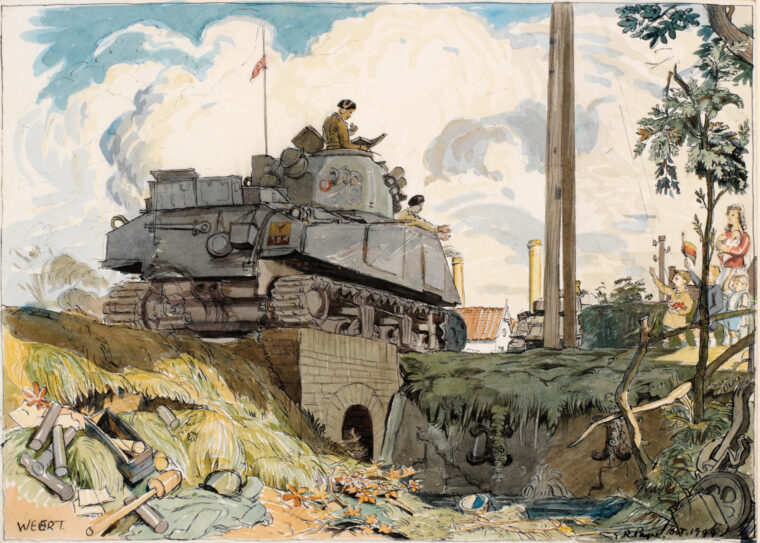
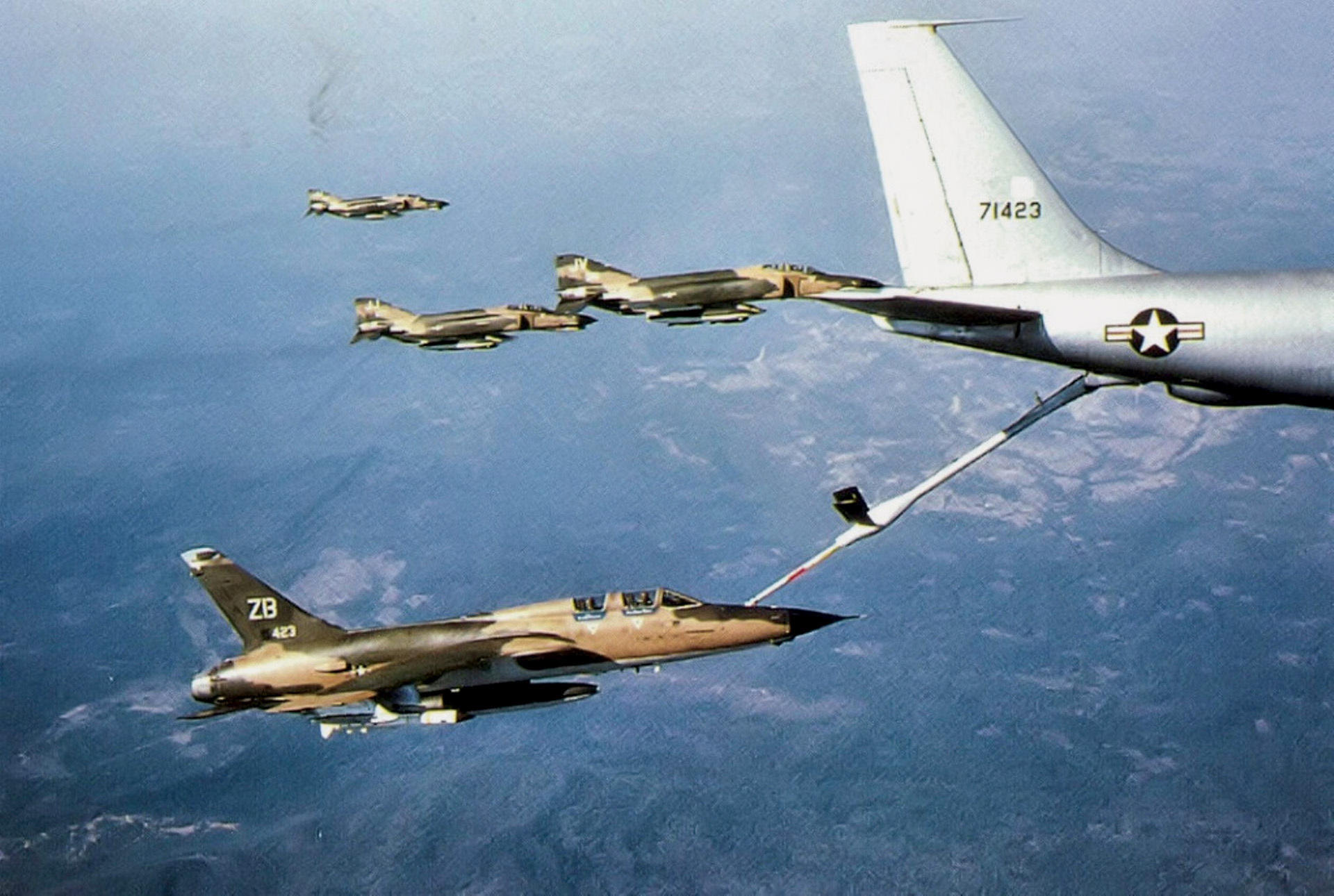
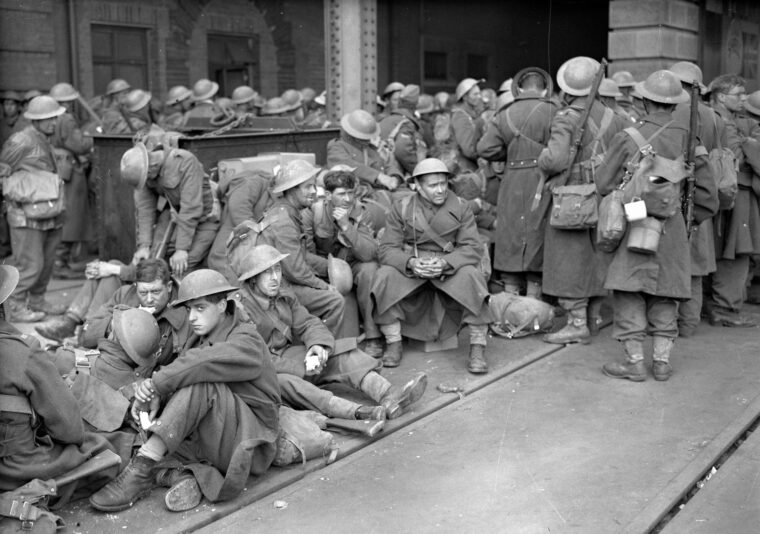
British troops, just rescued from the beach at Dunkirk on May 31, 1940, reflect desperation and relief after their ordeal on the European continent. Operation Dynamo did succeed beyond the expectations of its organizers.

European Theater

Desperation at Dunkirk

By Michael E. Haskew

Within days of Nazi Germany’s invasion of Poland on September 1, 1939, and the British declaration of war two days later, the vanguard of the British Expeditionary Force (BEF) arrived on the continent of Europe. Read more
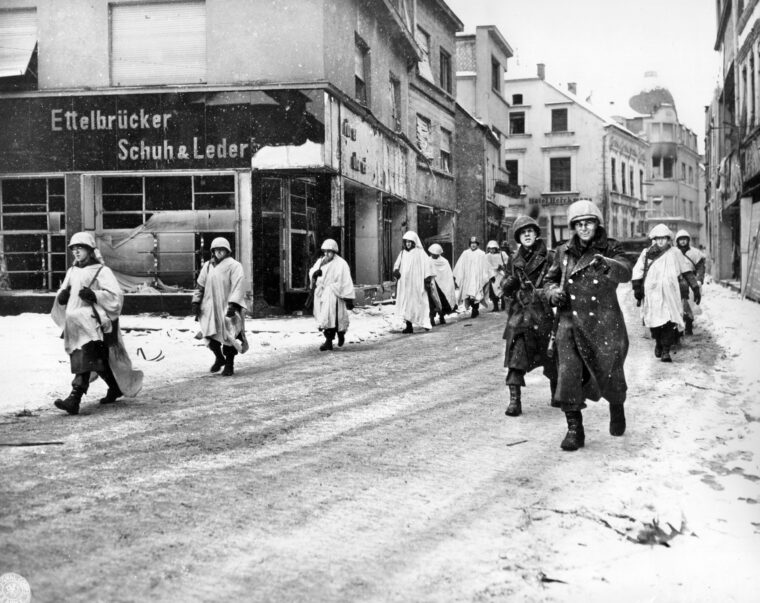
Soldiers of the U.S. 5th Infantry Division, part of General George S. Patton’s Third Army, march through the snowy streets of the town of Ettelbruck, Luxembourg, in January 1945. These soldiers were involved in the Allied counteroffensive that reduced the bulge formed by the German Ardennes Offensive. Some of these soldiers are wearing white sheets as camouflage.

European Theater

Flattening the Bulge

By Patrick J. Chaisson

Corporal Thomas B. Tucker stood shivering in the bitterly cold night air as he looked down on a ribbon of water that separated his unit from the enemy’s front-line positions. Read more

European Theater

Gray Wolves and the Ides of March

By Kelly Bell

Adolf Hitler and his military commanders were feeling a new and unsettling emotion early in 1943—desperation. A year earlier, they had seemed on top of the world as their forces ruled a region that surpassed Rome at its greatest. Read more

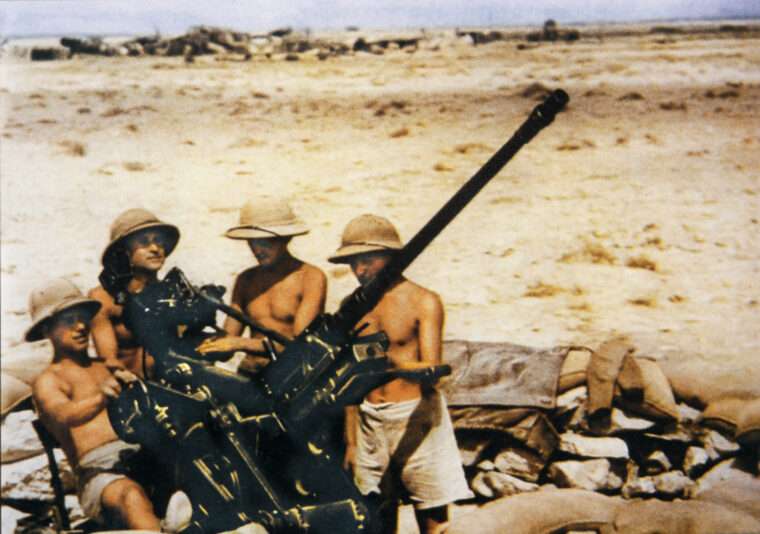
An Afrika Korps antiaircraft gun crew scans the sky for enemy planes in 1941. Homeland antiaircraft units were also raised in Germany to augment the air defenses against massive Allied bombing raids.

European Theater

Defending the Skies Above the Reich

By Allyn Vannoy

During the Allied air campaign against the Third Reich in World War II, well over a million tons of bombs were dropped on German territory, killing nearly 300,000 civilians and wounding another 780,000. Read more

European Theater

The Allies’ Biggest Blunder?

By Brig. Gen. (ret.) Raymond E. Bell, Jr.

Before World War II, the Belgian port city of Antwerp was one of the world’s great ports, ranking with those of Hamburg, Rotterdam, and New York. Read more

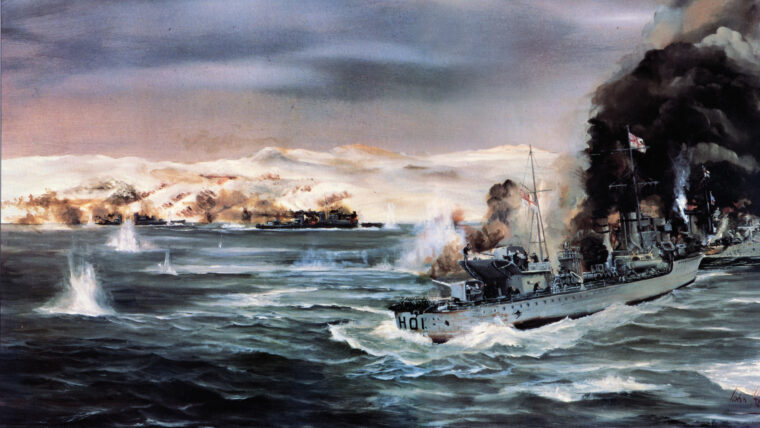
The damaged HMS Hotspur collides with the HMS Hunter on April 10, 1940, during the destroyer battle in the Narvik Fjord. Both the British and German naval commanders died in the heavy fighting at sea that day.

European Theater

Hell in a Norwegian Fjord

By Phil Zimmer

Captain Odd Isaachsen Willoch knew what had to be done. The 55-year-old career Norwegian officer, commander of an aging coastal defense ship, was looking down the five-inch gun barrels and 21-inch torpedo tubes of the Wilhelm Heidkamp, a state-of-the-art German destroyer. Read more

European Theater

How “The Few” Saved Britain

By Mark Simmons

The legend of 1940, “their finest hour,” has become almost considered fact in Britain. Many felt, as they saw it at the time, the Germans merely had to turn up on her shores for Britain’s defeat. Read more

European Theater

Remembering the End of the War in Europe

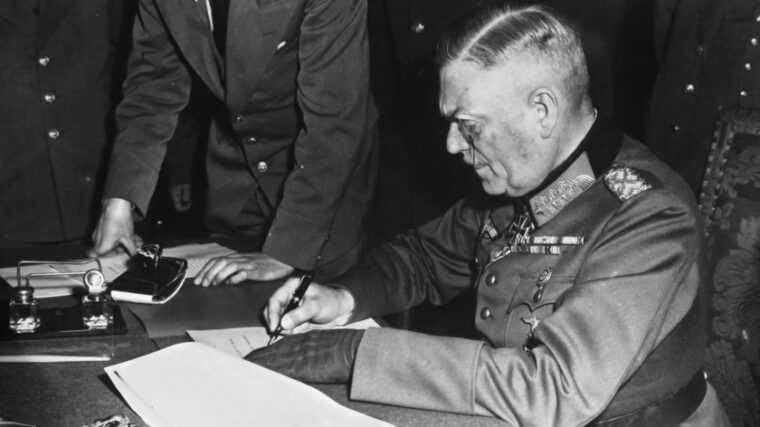
In May 1945—70 years ago—the Supreme Headquarters Allied Expeditionary Force (SHAEF) sent out a terse, unemotional, 15-word communiqué: “The mission of this Allied force was fulfilled at 0241 local time, May 7, 1945.” Read more

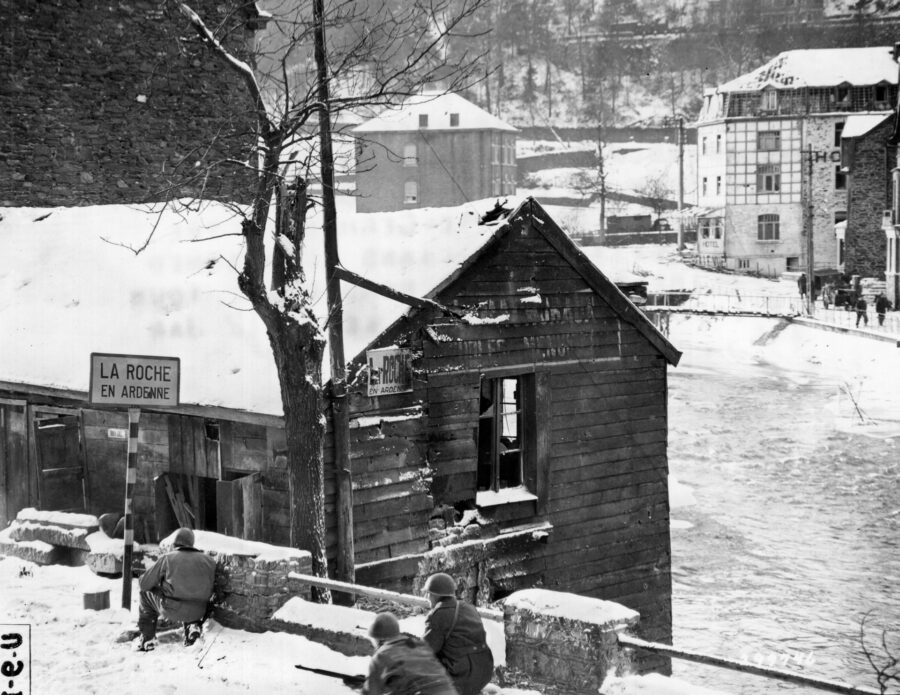
American soldiers move through La Roche, Belgium, during the Battle of the Bulge. Task Force Hogan reached La Roche on December 19, 1944, and Hogan’s men made a stand along with an assault-gun platoon in defense of the town. The remainder of Hogan’s command kept moving northward.

European Theater

A Letter from a Bastogne Foxhole

Recently, a close family friend our son’s age gave me a copy of a letter written by his late grandfather, Sergeant David Warman, a member of Company E, 18th Infantry Regiment, 1st Infantry Division. Read more

European Theater

Discovery in the depths of Lake Garda.

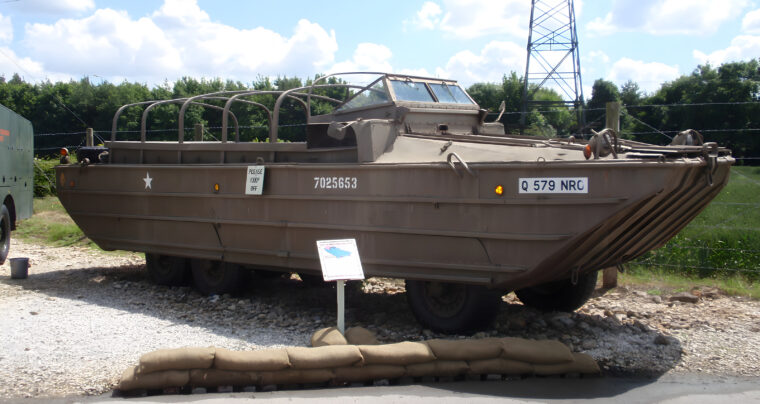
Sixty-seven years after it sank in the depths of Lake Garda in northeastern Italy on the stormy night of April 30, 1945, an American amphibious vehicle, a 2.5-ton DUKW, has likely been located sitting upright in 905 feet of water. Read more

European Theater

The Search for the Missing DUKW of Lake Garda

It was April 29, 1945. World War II was nearly over. Former Italian Fascist leader Benito Mussolini was dead, killed by partisans at Lake Como on April 28, and his body mutilated and strung up in a Milan gas station. Read more

European Theater

Battle Against an Ally

By Michael D. Hull

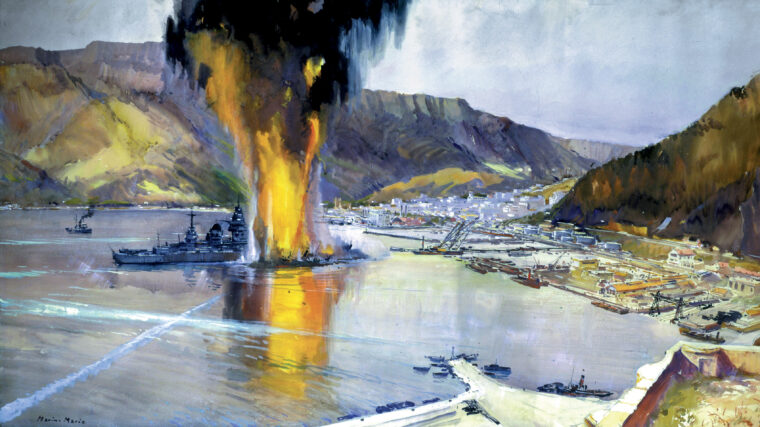
When the armistice between France and Germany was put into force on June 25, 1940, the fate of the powerful French Navy—the fourth largest in the world—was of critical importance to the British. Read more