Latest Posts

Latest Posts

Japanese American National Museum

By Mason B. Webb

Shortly after the Japanese attack on Pearl Harbor on December 7, 1941, many Japanese Americans, especially those living on the West Coast, were suspected of being possible spies, saboteurs, and disloyal Americans. Read more

Latest Posts

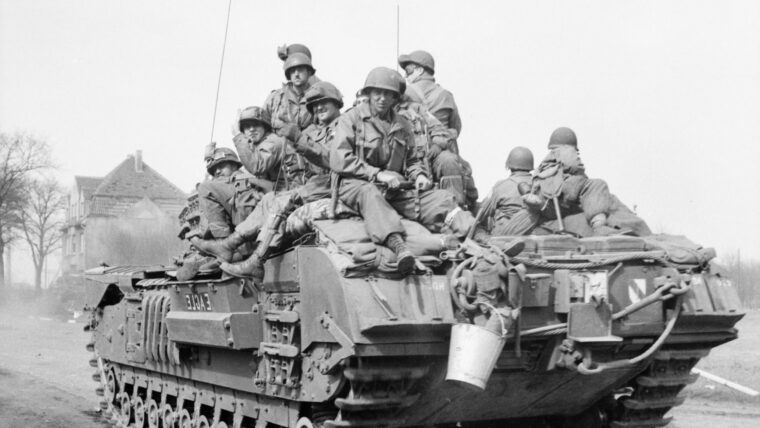
Rankin C: The Occupation of Germany

By Michael E. Haskew

Almost from the beginning, the fractious alliance that defeated Nazi Germany was in peril. The United States and Great Britain had long distrusted the communist regime of the Soviet Union, and the feeling was strongly mutual. Read more

Latest Posts

Last Stand at Völkerschlachtdenkmal: The Battle of Leipzig, 1945

By Michael E. Haskew

In October 1813, the combined allied armies of Russia, Austria, Prussia, Sweden, Saxony, and Württemberg met and defeated the French Grand Armee under Napoleon Bonaparte at the German city of Leipzig, forcing him to retreat and hastening his eventual abdication and exile to the island of Elba. Read more

Latest Posts

Tom Harrisson: An Anthropologist’s War in Borneo

By John W. Osborn, Jr.

World War II in the Pacific was fought in thousands of remote locations. The island of Borneo was the site of one of the least known clandestine operations of the conflict, led by an adventurous, but arrogant, anthropologist. Read more

Latest Posts

The Last Long Ride: Wilson’s Selma Raid

By Arnold Blumberg

As reveille sounded through the Union encampments on the south bank of the Tennessee River between Eastport, Mississippi, and Chickasaw, Alabama, on March 22, 1865, sleepy Federal troopers roused themselves, built fires, and cooked breakfast. Read more

Latest Posts

The Grand Review of 1865

By William Stroock

Robert E. Lee’s surrender at Appomattox, presaging the subsequent surrender of other Confederate forces in the West and the capture of Southern President Jefferson Davis a few weeks later, marked the triumphant end of the nation’s great sundering. Read more

Latest Posts

Mussolini’s French Invasion

By John W. Osborn, Jr.

Without warning, from behind his desk in his miniature coliseum of an office in Rome’s Palazzo Venezia, Benito Mussolini on the morning of May 26, 1940, pronounced those words that were to prove fateful for Italy, fatal for him: “I have sent Hitler a written statement, making it clear to him that I do not intend to stand idly by and that from June 5th I shall be in a position to declare war on France and England.” Read more

Latest Posts

Crucible of Caen

By Michael D. Hull

General Bernard L. Montgomery, commander of the British 21st Army Group, was delighted to learn by secret cipher on December 23, 1943, that he had been chosen to lead three Allied armies in history’s greatest invasion, scheduled for the following May. Read more

Latest Posts

End Game at Appomattox

By Mike Phifer

Lieutenant Colonel Horace Porter, personal aide to Lt. Gen. Ulysses S. Grant, maneuvered his mount past ammunition wagons, ambulances, stragglers, and prisoners jamming the muddy roads leading back to headquarters from Five Forks, Virginia, on the evening of April 1, 1865. Read more

Latest Posts

Storming the Point at Peleliu

 By Dick Camp

By the summer of 1944, the United States was advancing on Japan’s Home Islands in a two-pronged attack through the Central and Southwest Pacific theaters. Read more

Latest Posts

Japan’s Road to War

By Eric Hammel

Japan’s road to World War II was a long one. Throughout the late 19th century, the island nation broke out of its feudal past on a path to modernity with a ruthlessness and singlemindedness that would have scared Western nations had they been paying attention. Read more

Latest Posts

Savagery at Salerno

By Michael E. Haskew

As the 450 ships of the Operation Avalanche invasion force approached Salerno on the evening of September 8, 1943, the Allied troops, packed tightly aboard transport vessels, broke into wild celebration. Read more