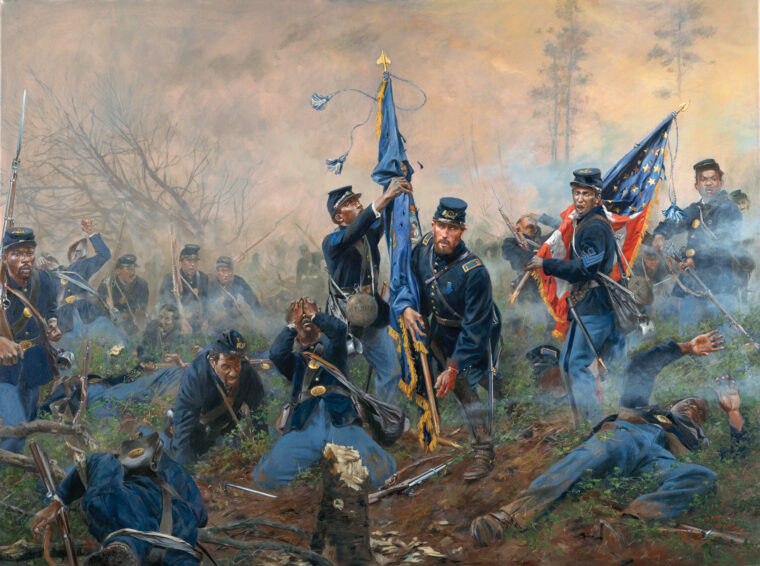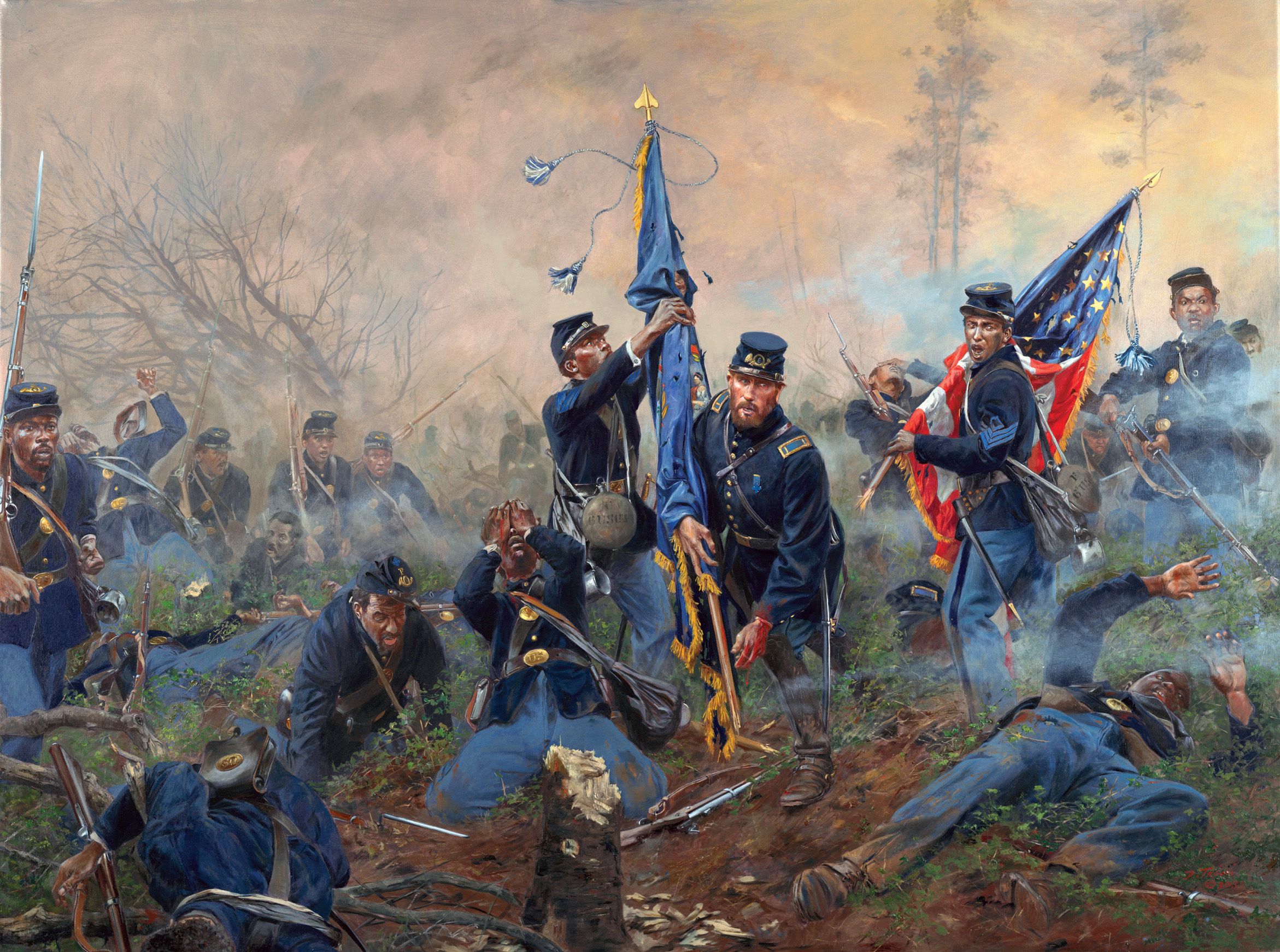
Lieutenant Nathan Huntley Edgerton, Sgt. Maj. Thomas R. Hawkins, and Sergeant Alexander Kelly of the 6th Regiment U.S. Colored Troops carry forward the regiment's colors as it presses its attack at Chaffin's Farm in a painting titled "Three Medals of Honor" by artist Don Troiani.

Civil War

Captain Horatio Gibson’s battery of the 3rd U.S. Artillery in park at Fair Oaks, Virginia, in June 1862. The unit was one of five batteries that comprised the Union Army’s first horse artillery brigade in 1861.

Civil War

Elite Units of the Civil War

By Christopher Miskimon

The Civil War came at a crossroads moment in world history. New weapons made possible by industrialization were putting paid to old techniques of warfare that had endured since the Napoleonic Era. Read more

Civil War

Jackson Confounds the Yankees

By Brooke. C Stoddard

Arguably the most celebrated campaign feat of arms of the American Civil War is that of Stonewall Jackson in the Shenandoah Valley in May and early June 1862. Read more

A provost marshal’s office at Aquia Creek, Virginia, in February 1863 draws a desultory crowd. Some soldiers used provost duty to avoid combat.

Civil War

The Confederate Provost Guard

By Joan Wenner

With the bombardment of Fort Sumter in April 1861, the Civil War began in earnest. The first recruits, on both sides, were completely uninitiated in the ways of military life. Read more

Civil War

18th Georgia Infantry Regiment, 1862

Art by Keith Rocco

Cap: French chasseur-style gray kepi with blue band.

Coat: Military-style butternut colored greatcoat with brass buttons.

Backpack: Box hardpack knapsack, tarred canvas and leather with wood frame. Read more

Civil War

Photographing the Battle of Antietam

By Roy Morris, Jr.

Two days after the unparalleled bloodletting at Antietam, a bushy-bearded Scottish photographer and his pudgy, clean-shaven assistant rolled onto the battlefield with their bulky stereoscopic cameras and portable darkroom. Read more

Civil War

The CSS Alabama’s Place in Naval History

By Roy Morris, Jr.

The CSS Alabama went to her watery grave on June 19, 1864, off the coast of France, but the lingering effects of her wartime successes made naval history: she continued to haunt the American and British governments for years to come, embroiling the two English-speaking nations in a legal test of wills that would last well into the next decade. Read more

Civil War

Firing on Fort Sumter: the Start of Civil War

By Al Hemingway

Shortly after midnight on the morning of April 12, 1861, four men in a rowboat made their way across the pitch-black harbor at Charleston, South Carolina, toward an unfinished and architecturally insignificant masonry fort three miles out from the city where the harbor meets the Atlantic Ocean. Read more

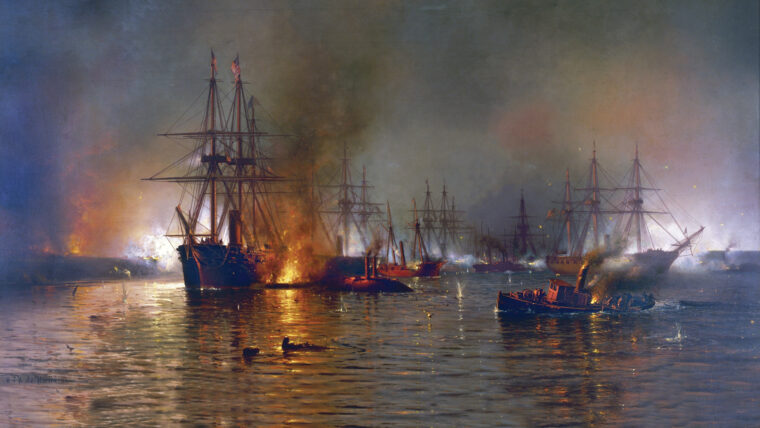
Captain David Farragut’s flagship, the Hartford, is attacked by a Confederate fire raft as the Union fleet makes its run past Forts Jackson and St. Philip on April 24, 1862. The Hartford caught fire, but prompt action by the ship’s crew saved her from destruction.

Civil War

Conquering the Queen City

By Pedro Garcia

The victory at Manassas on July 21, 1861, had made the Rebels overconfident bordering on lethargic. As one observer noted, “It created a paralysis of enterprise that was more damaging than disaster was for the North.” Read more

Civil War

Civil War Fieldworks

By Kevin O’Beirne

Ever since Julius Caesar’s legions conquered Gaul, opposing armies have built temporary fortifications, or fieldworks, during campaigns in the open countryside. Read more