 By Kevin Seabrooke
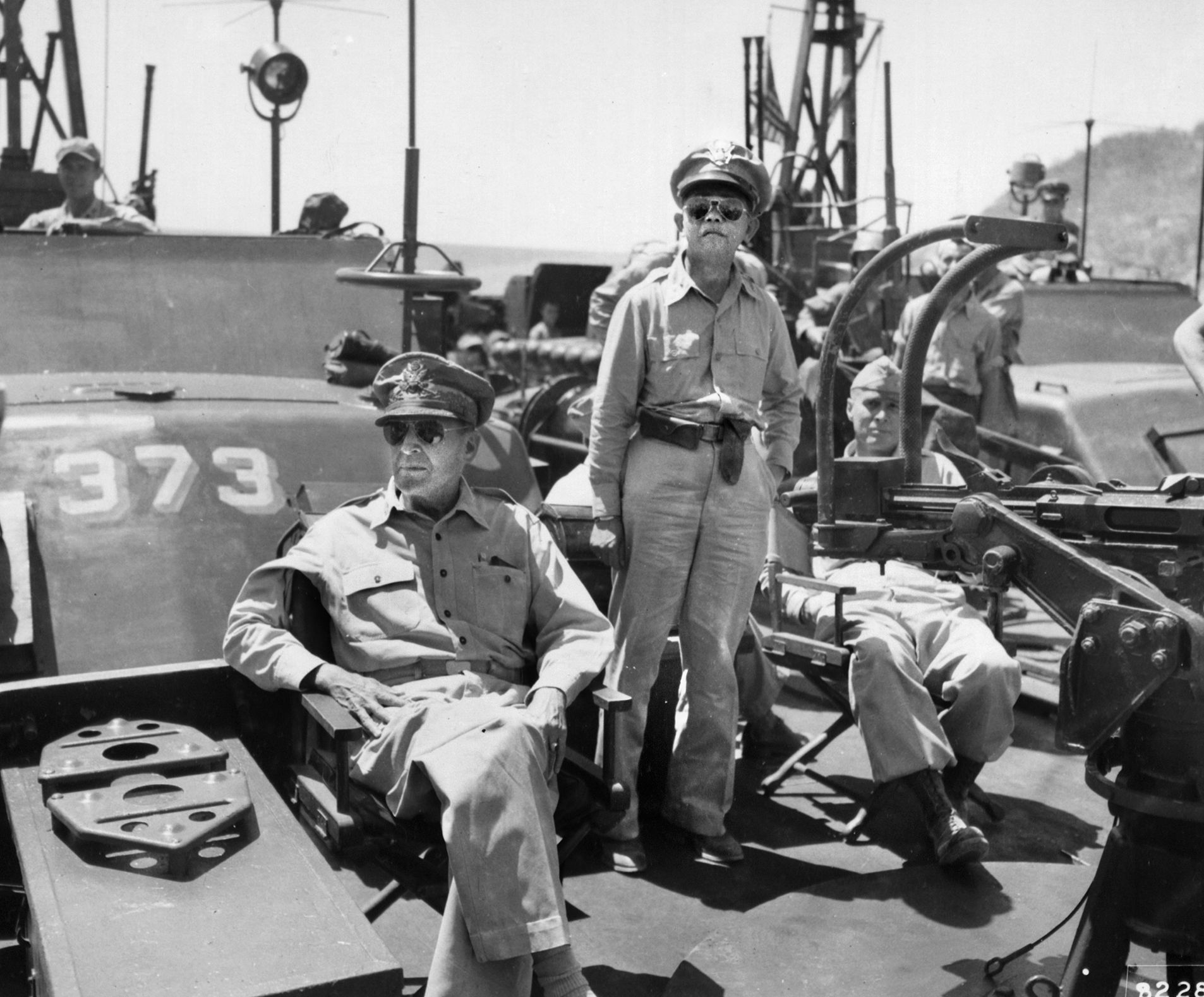
The 1944 Battle of Leyte and the liberation of the Philippines was the largest and costliest campaign of the War in the Pacific. Commanding the campaign, Gen. Douglas MacArthur was able to earn redemption for his earlier defeats at Bataan and Corregidor in the island nation—fulfilling his 1942 promise, “I shall return”—and successfully freeing millions while severing Japanese supply lines.
Mansoor re-evaluates the leadership of MacArthur, who could be both brilliant and egotistical, courageous and self-certain. Mansoor also considers the expertise and competence of the fanatically loyal core of officers MacArthur surrounded himself with, the so-called “Bataan Gang” that would serve with him for the duration.
While some historians have argued that the invasions of Leyte, Mindoro, and Luzon were unnecessary and costly—only meant to boost MacArthur’s ego—Monsoor points out that, “the mere fact that MacArthur was vainglorious does not mean that he was wrong.”
Roosevelt and the Joint Chiefs of Staff saw strategic and political value in liberating not those islands as well as the capital city of Manila, saving millions of Filipinos that would suffer under Japanese occupation, especially if the war had gone on into 1946.
Redemption: MacArthur and the Campaign for the Philippines (Peter R. Mansoor, Cambridge University Press, 600 pp., maps, photos, U.S. Division nicknames, notes on sources, index, Aug.14, 2025, $34.95 HC)
Join The Conversation
Comments
View All Comments