By Al Hemingway
Brigadier General Gouverneur K. Warren peered down at the rugged terrain of southern Pennsylvania from his vantage point on Little Round Top, a small promontory about two miles south of Gettysburg. It was now early afternoon on July 2, 1863, and Federal troops under Maj. Gen. George G. Meade had been hotly engaged with Confederate forces outside of town since the previous morning.
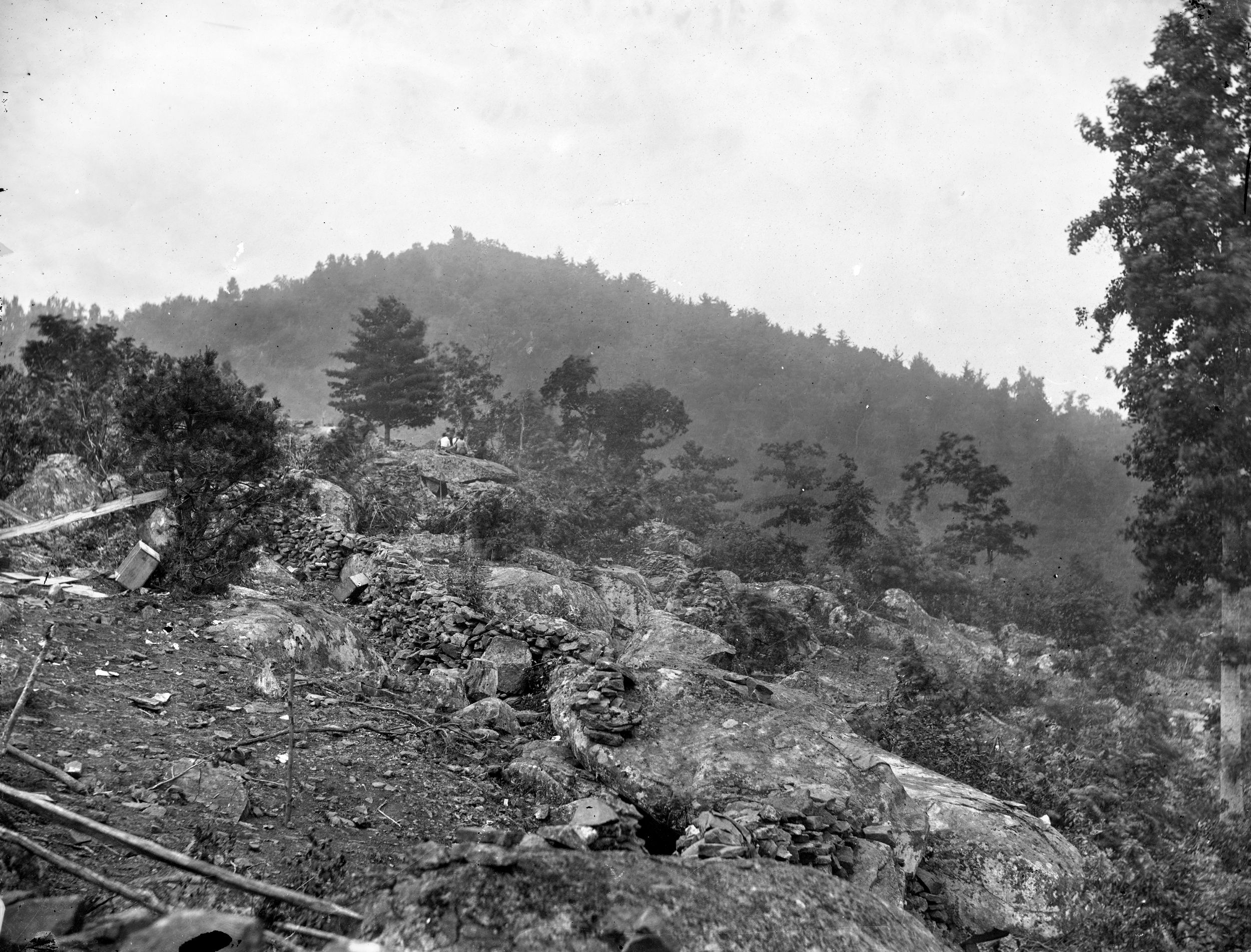
Midway through the second day of the battle, the defensive perimeter of the Union army at Gettysburg looked like a giant fishhook. It ran from Culp’s Hill in the north, around Cemetery Hill, then southward to Cemetery Ridge and finally, Little Round Top. At 548 feet high and nearly devoid of trees, its loose rocks and large boulders made natural ramparts to anchor the entire Union left.
A former brigade commander now serving as the army’s chief engineer, Warren had gone to inspect the site after Meade reported hearing “a little peppering going on in the direction of the little hill off yonder.” What he discovered on Little Round Top shocked him. “There were no troops on it, and it was used as a signal station,” Warren said later. “I saw that this was the key to the whole position, and that our troops in the woods in front of it could not see the ground in front of them, so that the enemy would come upon them before they would be aware of it.”
Warren instructed the officer of a nearby rifle battery to lob a shell into the woods. As the round crashed through the trees, Warren witnessed movement from enemy soldiers and saw the glistening of their gun barrels and bayonets. Realizing that the Confederates were massing below for an attack on the undefended position, Warren dispatched a message to Meade urging him to send another division to Little Round Top.
Earlier that morning, infantrymen from Brigadier General John W. Geary’s division of the XII Corps had manned the promontory. Then Meade decided to relieve Geary’s men with those of Maj. Gen. Daniel E. Sickles’ III Corps, while Geary went to rejoin his corps at Culp’s Hill.
However, as often happens in the fog of war, Geary left his position too soon, and Sickles never even made it to Little Round Top. Consequently, the entire Union left was dangerously exposed.
Robert E. Lee, an old engineer himself, saw the value of Little Round Top and ordered Maj. Gen. John B. Hood’s division to get ready to attack. Brig. Gen. Evander M. Law had his Alabama brigades posted on the right, with Brig. Gen. J.B. Robertson’s Texas and Arkansas brigades on the left.
Luck, however, was on the Union side. It took the bulk of the day for Lee’s men to reach their positions and move toward Little Round Top. Lee spent much of this time sitting idly on a tree stump, occasionally looking through his field glass or conversing with Lt. Gen. A.P. Hill and Col. A.L. Long, one of his staff officers.
“What I remarked especially was, during the whole time the [artillery] firing continued he sent only one message, and only received one report,” observed Col. Arthur Fremantle, a British Army officer attached to Lee’s headquarters as an observer.
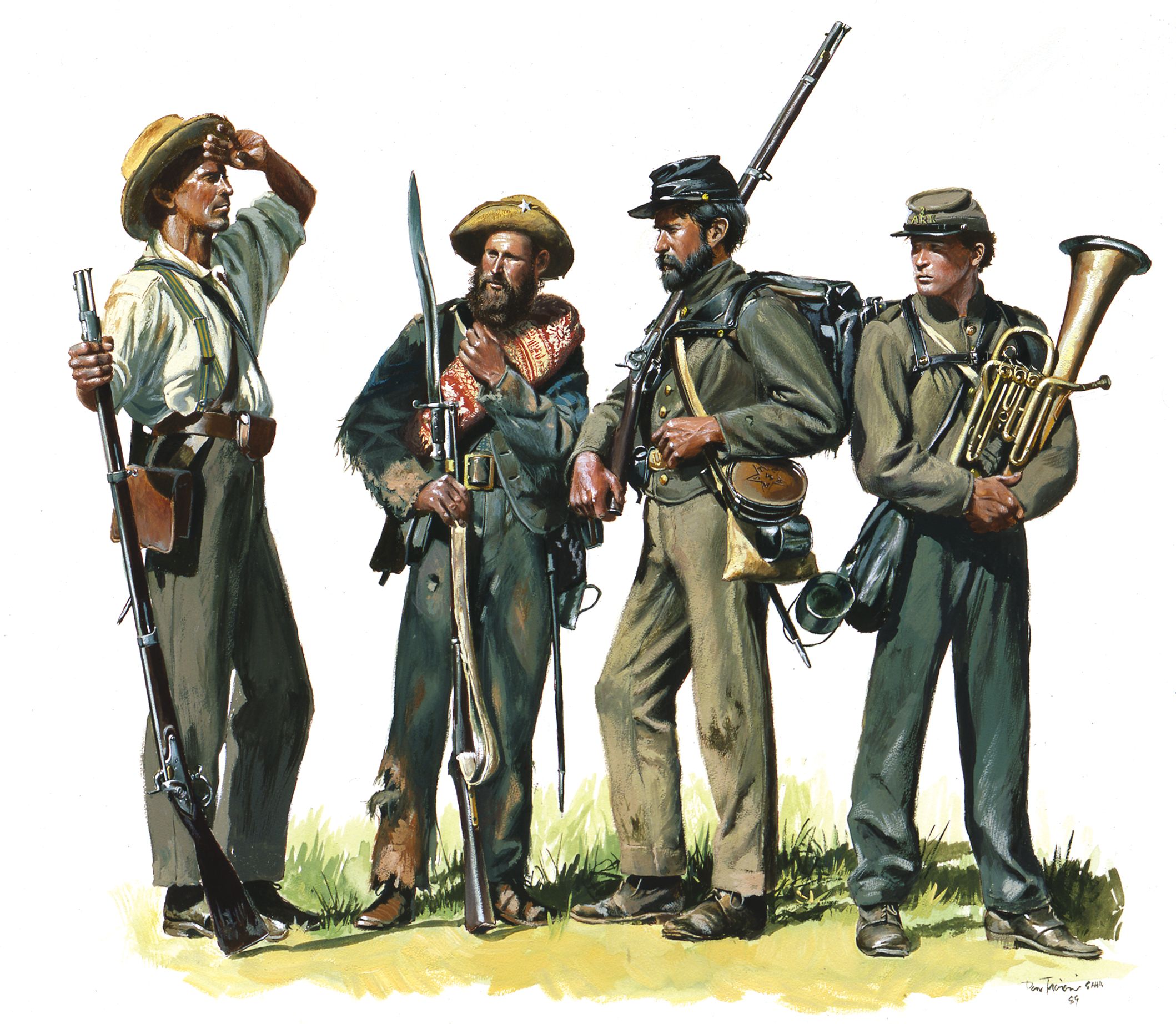
As the assault commenced about 4:30 p.m., Fremantle couldn’t help but wonder at the oddity of the scene. “When the cannonade was at its height,” he continued, “a Confederate band of music began to play polkas and waltzes, which sounded very curious accompanied by the hissing and bursting of the shells.”
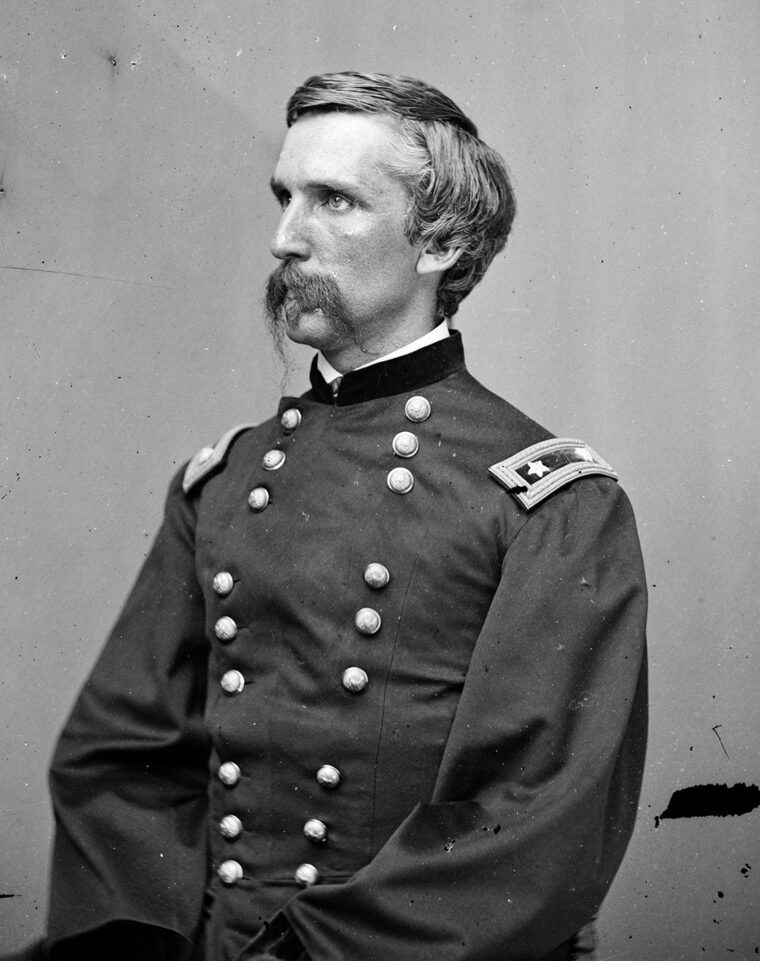
Meanwhile, Union Colonel Strong Vincent, leading the 3d Brigade, 1st Division, V Corps, received word of the impending peril on Little Round Top. He swiftly led his four regiments—the 20th Maine, 83rd Pennsylvania, 44th New York, and 16th Michigan—at the double-quick to defend the hill. Once there, Vincent dispersed his troops onto the western and southern slopes of Little Round Top to halt the Confederate advance. Commanding the 20th Maine was Col. Joshua Lawrence Chamberlain, a former theology and language professor at Bowdoin College in Brunswick, Maine. As Chamberlain recalled later, “Passing to the southern slope of Little Round Top, Colonel Vincent indicated to me the ground my regiment was to occupy, informing me that this was the extreme left of our general line, and that a desperate attack was expected in order to turn that position, concluding by telling me I was to ‘hold that ground at all hazards.’ This was the last word I heard from him.”
As the Maine volunteers peered across the saddle separating Little Round Top from Big Round Top, Private Theodore Gerrish recalled, “The ground sloped to our front and left, and was sparsely covered with a growth of oak trees which were too small to afford us any protection. Shells were crashing through the air above our heads, making so much noise that we could hardly hear the commands of our officers. The air was filled with fragments of exploding shells and splinters torn from mangled trees. But our men appeared to be as cool and deliberate in their movements as if they had been forming a line upon the parade ground in camp.”
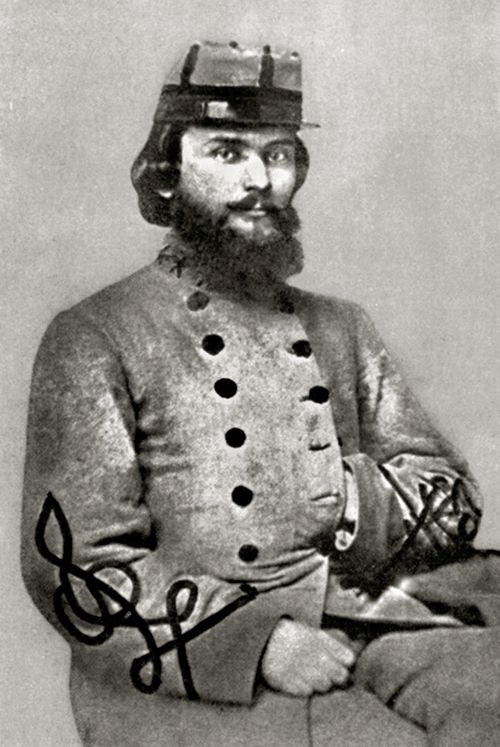
Facing the 20th Maine was the 15th Alabama Infantry, commanded by Col. William C. Oates, a lawyer from Abbeville, Alabama. Oates’s regiment, part of Law’s brigade of Hood’s division, had marched nearly the entire day, covering a distance of about 25 miles before arriving at Gettysburg. With little rest, Oates’s men were immediately ordered to the right flank, moving in a circuitous march to disguise their movement from the enemy.
As they approached their objective, Oates remembered, “Finally, Hood marched across the rear of [Maj. Gen. Lafayette] McLaws and went into line on the crest of a little ridge, with [Brig. Gen. Henry L.] Benning’s brigade in rear of his center constituting a second line, his battalion of sixteen artillery pieces, in position on his left. McLaws then formed his division of four brigades in two lines of battle on Hood’s left, and with sixteen pieces of artillery in position on McLaws left.”
As the brigade prepared for the assault, Oates’s 15th Alabama was in the center. To his left were the 4th and 47th Alabama, to his right the 44th and 48th Alabama. At about 3 p.m., the Confederate artillery let loose a thunderous broadside on the Union lines. As the Federal cannon returned fire, the butternut infantry moved in quick-time through the valley and across a muddy, meandering stream.
At the outset of the attack, Hood was severely wounded in the arm and evacuated from the battlefield. Law was now in charge of the division. His men pushed ahead toward Plum Run, a stream that ran north and south between the Emmitsburg Road and Little Round Top.
“The men sprang forward as if at a game or ball,” recalled Private W.C. Ward of the 4th Alabama. “A long line of Federal skirmishers, protected by a stone wall, immediately opened fire. Men were falling, stricken to death.”
As the Alabamians rushed the Union bulwarks, artillery fired from Devil’s Den, a jumble of huge rocks less than a mile away on the left. The shelling and musket fire grew in intensity. “Immediately to the right, Taylor Darwin, orderly sergeant of Company I, suddenly stopped, quivered, and sank to the earth dead, a ball having passed through his brain,” Ward said.
Fighting was raging all around Little Round Top and Devil’s Den. The defenders of Devil’s Den managed to hold on, but the Federals behind the stone wall at the western base of Big Round Top were being pushed aside. Some retreated northward between Devil’s Den and Little Round Top, others ascended Big Round Top. Law’s right wing also divided, several regiments bearing left to the mouth of the valley between the Round Tops, while the 15th and 47th Alabama, with Oates in command, followed the Federals who had retreated up the hillside.
Oates’s riflemen found the going extremely difficult. “My men had to climb up, catching to the bushes and crawling over the immense boulders,” Oates wrote, “in the face of incessant fire of their enemy, who kept falling back, taking shelter and firing down upon us from behind the rocks and crags that covered the mountain side thicker than grave stones in a city cemetery.
“Seeing that they were fatigued by their arduous climb, Oates halted the regiment temporarily to rest. A few moments later, one of Law’s aides galloped up to Oates and demanded to know why he had stopped the advance. The aide informed him that Hood had been wounded and that Law had assumed command. Law, he added, wanted the Alabamians to drive the Yankees from Little Round Top. Although he disagreed with the order—he wanted to stay where he was and entrench—Oates reluctantly acquiesced.
Meanwhile, the 4th Alabama moved on Vincent’s position atop Little Round Top. The regiment advanced quickly until it encountered a withering volley of musket fire, the enemy bullets falling through the leaves like hail in a thunderstorm.
At first, the Union soldiers repelled the Confederate onslaught, until the Rebels seized Devil’s Den, allowing for an unimpeded advance from the west.
Grasping the seriousness of the situation, Warren, still on Little Round Top, rode down the hill to muster any troops he could find. He stumbled across Col. Patrick H. O’Rorke’s 140th New York Volunteers, part of Brig. Gen. Steven H. Weed’s brigade.
The New Yorkers were headed toward the fighting in the Wheatfield when Warren, who knew O’Rorke from the Regular Army, intercepted him.
“Paddy! Paddy! Turn your regiment this way!” Warren shouted, pointing toward Little Round Top.
“General Weed is ahead, and he expects me to follow him,” O’Rorke replied.
“Never mind that! Bring your regiment up here, and I will take responsibility,” Warren barked.
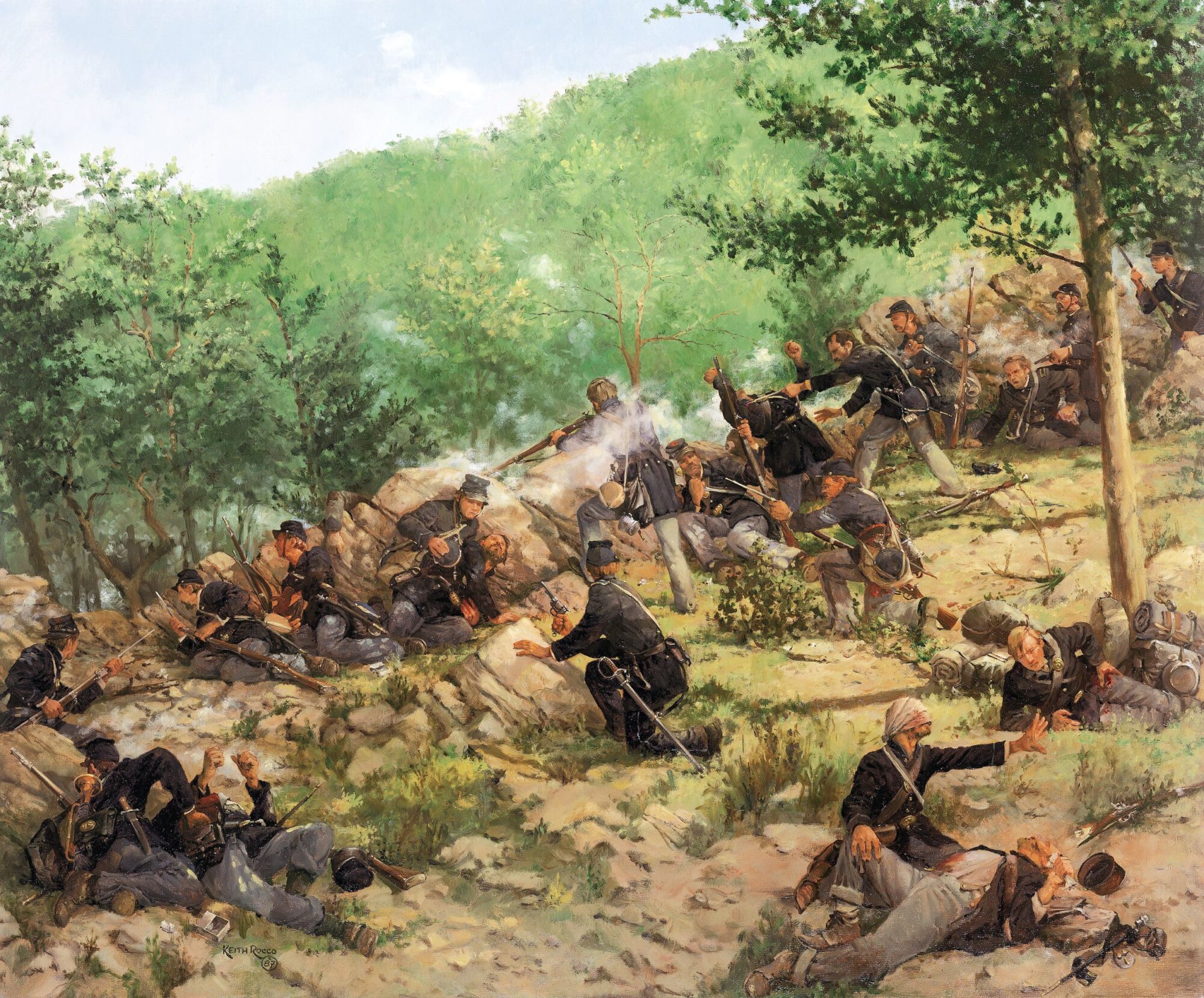
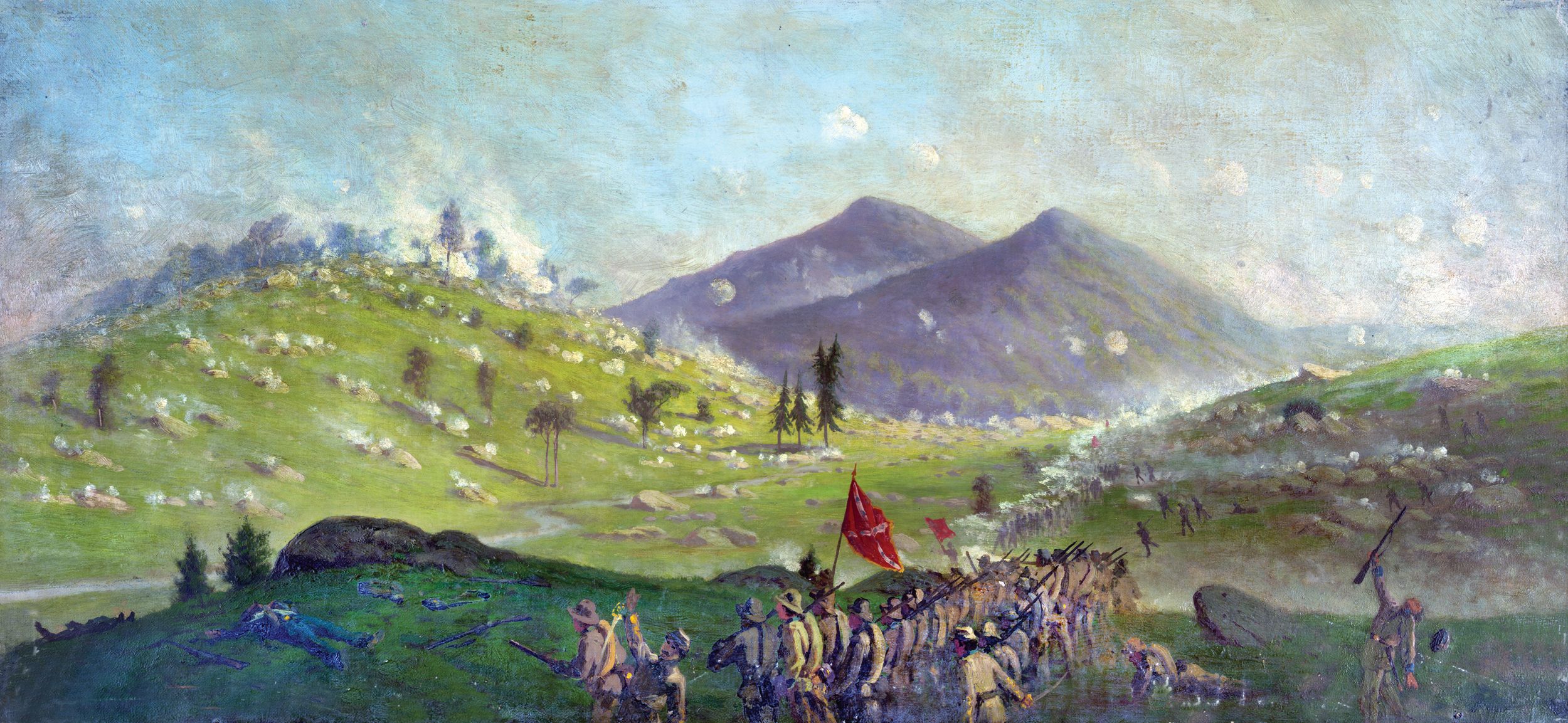
Without hesitation the Union riflemen, clad in brand-new Zouave uniforms of baggy blue trousers, red jackets, and fezzes, scrambled up the hill. “The bullets flew in among the men the moment the leading company mounted the ridge,” said Capt. Porter Farley, a member of the 140th New York, “and, as not a musket was loaded, the natural impulse was to halt and load them. But O’Rorke permitted no such delay. Springing from his horse, he threw the reins to the sergeant-major. His sword flashed from its scabbard into the sunlight; and calling: ‘This way boys!’ he led the charge over the rocks, down the hillside, till he came abreast the men of Vincent’s brigade, who were posted in the ravine to our left.”
The sharp crack of rifle fire from Confederate sharpshooters at Devil’s Den further harassed the Union defenders on Little Round Top. A bullet caught O’Rorke in the neck, killing him instantly. Another ball struck Weed as he was speaking to Lt. Charles E. Hazlett of the 5th U. S. Artillery. Hazlett knelt over the general to catch his dying words and immediately pitched forward himself, fatally shot through the head. Weed was carried to an aid station on the far side of the hill, where an aide, Lt. William H. Crennell, tried to comfort him. “General, I hope that you are not so very badly hurt,” he said. “I’m as dead a man as Julius Caesar,” Weed replied. On the other side of the crest, Vincent also fell mortally wounded, his blood splashing crimson on the rocks.
Although driven back, the Confederates came at the Union defenders once again. As before, the Union soldiers poured a destructive fire on the Alabamians. The attackers were stunned, but the line did not break. As one infantryman fell, another jumped up to take his place in the formation.
To his horror, Oates learned that the left flank of the 47th Alabama had become disconnected from the right flank of the 4th Alabama, exposing both regiments to enfilading fire from the enemy. Musket balls snapped through the air and found their mark. The soldiers of the 47th Alabama were being mowed down like grain before a scythe.
Lieutenant Colonel Michael Bulger, commanding the regiment, fell severely wounded, a Minié ball lodged in his lung. When his regiment retreated, Bulger was abandoned on the battlefield and left for dead. Propped against a tree and bleeding profusely, Bulger awaited the end. When a Union captain approached and asked for his sword, Bulger refused, saying, “I am a lieutenant colonel sir, and will surrender my sword only to an officer of equal rank.”
The Federal officer persisted, warning that he would have to kill him and take the saber. Bulger told him to go ahead—he would never give up his weapon to him while he was alive. Impressed by Bulger’s courage, the young subordinate sent for his colonel and Bulger willingly gave his sword to the senior officer. Despite the severity of his wound, Bulger survived the war and returned to Alabama.
As the attack of Bulger’s men faltered, Oates opted to maneuver his troops to the left flank, swing them around, and try to push the Union troops from the rocky enclaves. If he could accomplish this, he would take the pressure off the hard-pressed 47th Regiment and roll up the Union line.
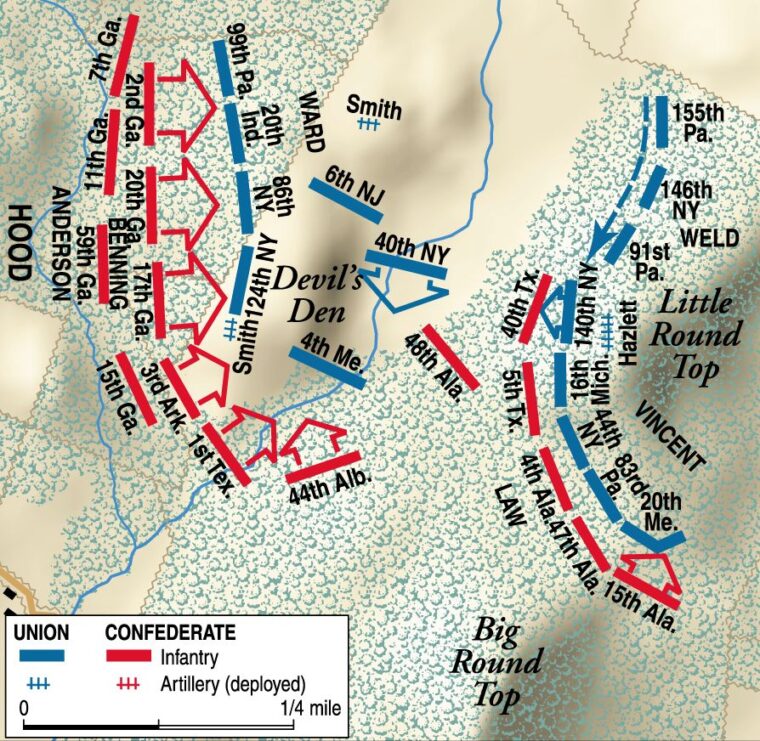
The 650 Alabamians under his command struck with intense ferocity. This day, however, Oates’s superb troops met a regiment of equal valor. Although numbering just 358 soldiers, Chamberlain’s 20th Maine knew the surmounting importance of the engagement.
“It was a critical moment,” Gerrish said. “If that line was permitted to turn the Federal flank, Little Round Top was untenable, and with this little mountain in the Confederates possession, the whole position would be untenable.”
At about 6 p.m., the Rebels moved against Little Round Top. “They [were] rushing on, determined to turn and crush the left of our line,” continued Gerrish. “Colonel Chamberlain, with rare sagacity, understood the movement they were making and bent back the left flank of our regiment until the line formed almost a right angle, with the colors at the point.”
The air was quickly filled with the acrid smell of gunpowder, the ear-shattering sounds of close-range musket fire, and the screams of the wounded. It was nearly impossible to hear the orders being shouted by the officers. “My men advanced about half way to the enemy’s position,” Oates reported, “but the fire was so destructive that my line wavered like a man trying to walk against a strong wind, and then slowly, doggedly, gave back a little.”
Many of the regiment’s best officers were killed as they ascended Little Round Top that sweltering afternoon. Capt. James H. Ellison was straining to hear Oates’s commands when he was hit in the head by a bullet, collapsed, and lay motionless.
Lieutenant Colonel J.B. Feagin, Oates’s second in command, also fell mortally wounded when enemy shrapnel tore off his leg. Capt. Henry C. Brainard, leading his men into the natural stone formations of Little Round Top, was wounded as well. As he lay dying, Brainard cried out: “Oh God! That I could see my mother!”
Also among the dead was Oates’s brother, Lieutenant John A. Oates. The younger sibling had taken ill and had only rejoined the regiment after commandeering a horse. His older brother recommended that he stay in the rear and not participate in the battle, but John Oates vehemently disagreed. “Brother, I will not do it,” he said. “If I were to remain here people would say that I did it through cowardice. I will never disgrace the uniform I wear.” Mustering his strength, John Oates went to be with his troops. A short time later, pierced by eight bullets, he fell dead.
The 20th Maine was suffering staggering casualties of its own, as described vividly by Private Gerrish: “I wish that I could picture the awful details of that hour[,] how rapidly the cartridges were torn from the boxes and stuffed in the smoking muzzles of the guns; how the steel rammers clashed and clanged in the heated barrels; how the men’s hands and faces grew grim and black with burning powder; how our little line, baptized with fire, reeled to and fro as it advanced or was pressed back; how our officers bravely encouraged the men to hold on, and recklessly exposed themselves to the enemy’s fire—a terrible medley of cries, shouts, cheers, groans, prayers, curses, bursting shells, whizzing rifle bullets, and clanging steel.”

At various places, small groups of Confederates managed to breach the Federal perimeter. Fighting was at close quarters—in the front as well as the rear. One Maine soldier tried to grab the colors of the 15th Alabama. Sergeant Pat O’Connor coolly stepped forward and jabbed his bayonet into the man’s head. The combat surged backward and forward like a wave.
As quickly as the Southern infantry was repulsed, Oates urged his men to move forward again. Flushed with renewed spirit, the grayclad riflemen momentarily dislodged Chamberlain’s men, but again were pushed back. During the melee, Chamberlain was hit in the leg by a bullet. The wound, however, proved to be superficial as the bullet ricocheted off his scabbard, leaving the ex-professor with only a nasty bruise on his thigh.
“We drove the Federals from their strong defensive position,” wrote Oates. “Five times they rallied and charged us—twice coming so near that some of my men had to use the bayonet—but vain was their effort.”
With victory seemingly his, Oates realized reluctantly that his men’s tremendous drive could not be sustained. “The long blue lines of Federal infantry were coming down on my right and closing in on my rear,” he reported, “while some dismounted cavalry were closing the only avenue of escape on my left, and had driven in my skirmishers.” He was determined to sell his men dearly.
Although they had withstood the Rebel attacks, Chamberlain’s regiment was still in dire straits. “Our ammunition [was] nearly all gone, and we [were] using the cartridges from the boxes of our wounded comrades,” said Private Gerrish. “A critical moment [had] arrived, and we [could] remain as we [were] no longer; we must advance or retreat.”
Chamberlain knew full well the precarious position his regiment was in—one more Confederate charge could drive them off Little Round Top. As a brief lull developed over the battlefield, he quickly called his officers around him. Of the 358 men he had mustered at the beginning of the battle, only 228 remained standing. Chamberlain, however, had already decided on his next course of action—he was going to charge right into the Rebel force.
“Not a moment was about to be lost,” he later wrote. “Five minutes more of such a defensive and the last roll call would sound for us! Desperate as the chances were, there was nothing for it but to take the offensive. I stepped to the colors. The men turned towards me. One word was enough—Bayonets!”
The left wing of the 20th Maine started forward, running and yelling as they charged the Confederate infantry. “Come on! Come on! Come on boys!” hollered Lt. Holman S. Melcher, waving his saber over his head. Caught up in the excitement, Melcher was a full 10 paces in front of his men.
The Union right flank also charged and swung forward in an extended right-wheel maneuver. Never suspecting that the Union defenders would attempt such an audacious maneuver, the Confederates were caught completely off guard. Some threw their hands in the air and begged for their lives.
“Many of the enemy’s first line threw down their arms and surrendered,” wrote Chamberlain. “An officer fired his pistol at my head with one hand, while he handed me his sword with the other. Meanwhile Captain [Walter G.] Morrill with his skirmishers (sent out from my left flank), with some dozen or fifteen of the U.S. Sharpshooters who had put themselves under his direction, fell upon the enemy as they were breaking, and by his demonstrations, as well as his well-directed fire, added much to the effect of the charge.”
The Confederate command disintegrated. “With a withering and deadly fire pouring in upon us from every direction, it seemed that the entire command was doomed to destruction,” Oates reported. “While one man was shot in the face, his right hand or left hand comrade was shot in the side or back. Some were struck simultaneously with two or three balls from different directions.”
Oates finally had to order a retreat. When he did, he and his men “ran like a herd of cattle.” Oates continued, “As we ran, a man named Keils who was to my right and rear had his throat cut and he ran past me breathing at his throat and the blood spattering. His windpipe was entirely severed.”
Oates tried to reorganize his regiment atop Big Round Top, but any further effort to regroup was futile. Overcome with heat and exhaustion, Oates collapsed unconscious and had to be carried to the rear.
The fighting on Little Round Top was over. Out of nearly 700 soldiers, only 225 were left of the 15th and 47th Alabama regiments. The 20th Maine could only muster 200 of its original officers and men.
Chamberlain, wounded twice that fateful day, would suffer six wounds in all during his improbable military career. His extraordinary bravery and brilliant tactical moves on Little Round Top would earn him a Medal of Honor, although he would not receive the award until 30 years after the fact. For the time being, he shared full credit with his men. “In such an engagement there were many incidents of heroism and noble character which should have place even in an official report,” Chamberlain wrote in his after-action report, “but, under present circumstances, I am unable to do justice to them. I will say of that regiment that the resolution, courage, and heroic fortitude which enabled us to withstand so formidable an attack have happily led to so conspicuous a result that they may safely trust to history to record their merits.”
The Confederacy had lost a golden chance to take Little Round Top, roll up Meade’s left, and perhaps win the Battle of Gettysburg on the afternoon of the second day. The fate of the Union had rested then on a small group of untested soldiers led by a colonel with no formal military education. Against all odds, Chamberlain and the 20th Maine had risen to the challenge and won the day. Their chief opponent summed it up best. “There never were harder fighters than the 20th Maine and their gallant colonel,” William Oates said later. “[Chamberlain’s] skill and persistence and the great bravery of his men saved Little Round Top, and the Army of the Potomac, from defeat. Great events sometimes turn on comparatively small affairs.”
Great story! Thanks!