By Kevin Seabrooke
Few aviation organizations have shaped the modern world as profoundly as Lockheed’s Skunk Works, formally known as Advanced Development Programs. Born in a rented circus tent next to an odorous plastics factory in 1943, the division has spent decades making the impossible fly as the aerospace industry’s version of a “mad scientist’s basement.”
Under the legendary leadership of the brilliant and uncompromising Clarence “Kelly” Johnson, and later Ben Rich, Skunk Works produced a stable of “black projects” that redefined air power to become synonymous with radical innovation, secrecy, and engineering that seemed to leap decades into the future. Its aircraft weren’t just machines; they were breakthroughs that redefined what flight could be.
In the late 1920s and early 1930s, aviation was a cultural phenomenon and pilots were as famous as movie stars, with the press covering every new record attempt. For a company that had already gone bankrupt once, 1927 was a watershed year thanks to the Vega—sleek, futuristic and fast. The high-wing monoplane was beautifully engineered, using a plywood monocoque (single shell) fuselage and a powerful Wright Whirlwind engine at a time when most airplanes were still fabric‑covered biplanes. Fast, rugged, and reliable, the Vega didn’t just sell well—it became a symbol of the Golden Age of Aviation.
 Celebrity pilots such as Amelia Earhart, Wiley Post, Ruth Nichols and air racer Roscoe Turner, who often flew with his pet lion, all flew the Vega.
This early celebrity association—the Hughes Aircraft Company, founded in 1932 at the Union Air Terminal in Burbank—where Lockheed also operated—helped cement Southern California as the center of America’s aviation industry.
As much as it is about the incredible technology and engineering, this book is about the Johnson, who was awarded the Presidential Medal of Freedom, the National Security Medal and the National Medal of Science—and should perhaps be as famous as the Wright brothers in the public mind, but for the fact that so much of his work was classified. As he told 60 Minutes in 1982, “If I can talk about it, it’s obsolete.”
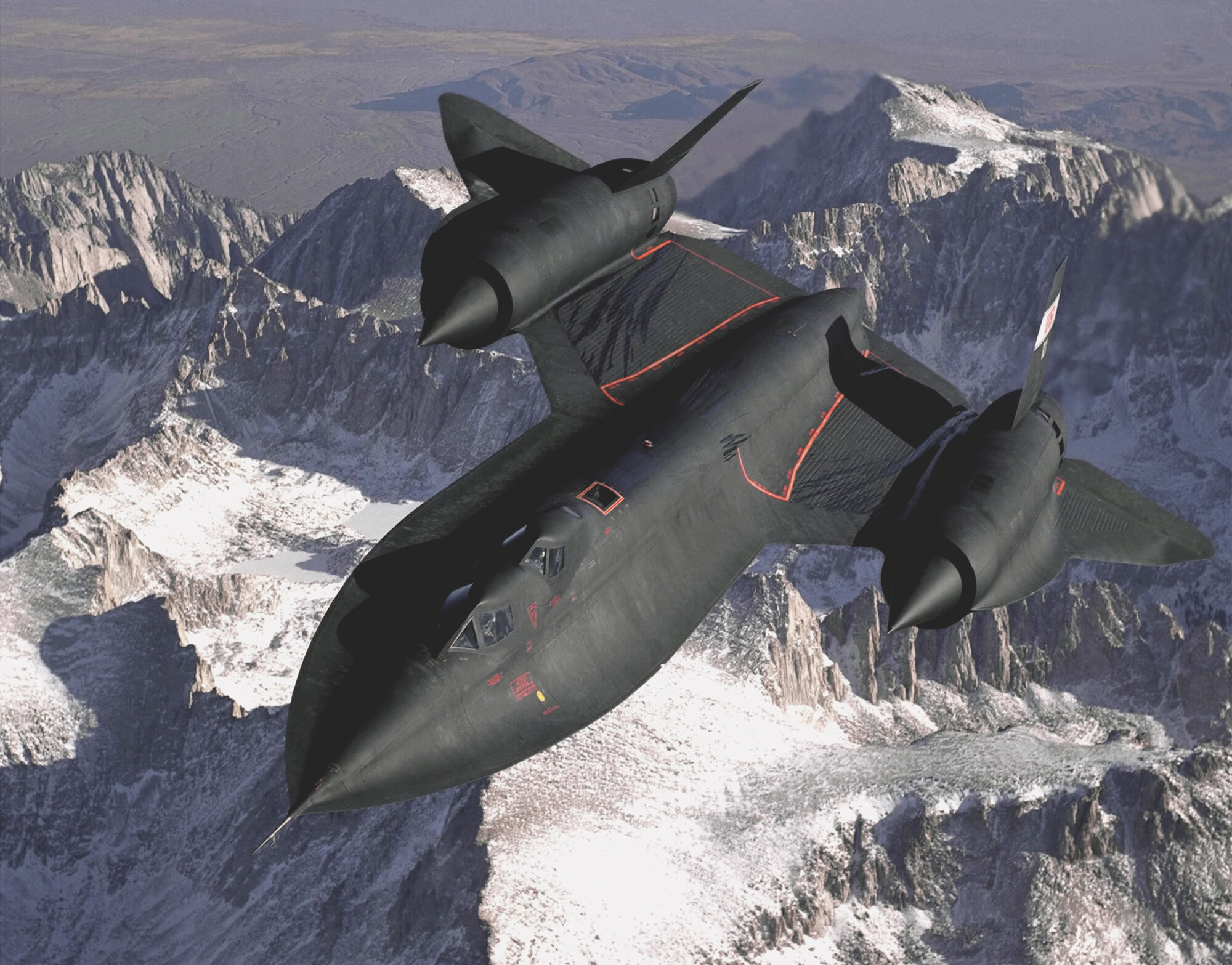
Under Johnson, the Skunk Works’ audacious “black projects” consistently turned the impossible into the operational. This legacy began in the 1950s with the U-2 “Dragon Lady,” a high-altitude spy plane that cruised above 70,000 feet, and reached a pinnacle in the 1960s with the SR-71 “Blackbird.” Capable of sustaining speeds above Mach 3 at altitudes exceeding 80,000 feet, the Blackbird remains the fastest air-breathing aircraft ever to fly.
Pivoting from speed to invisibility in 1981 with the F-117 Nighthawk, the first operational stealth aircraft, established the low-observable technology that paved the way for the F-22 Raptor and the F-35 Lightning II. Their RQ-170 Sentinel reconnaissance drone continues the unit’s half-century tradition of dominating the high-frontier through “quick, quiet, and quality” engineering.
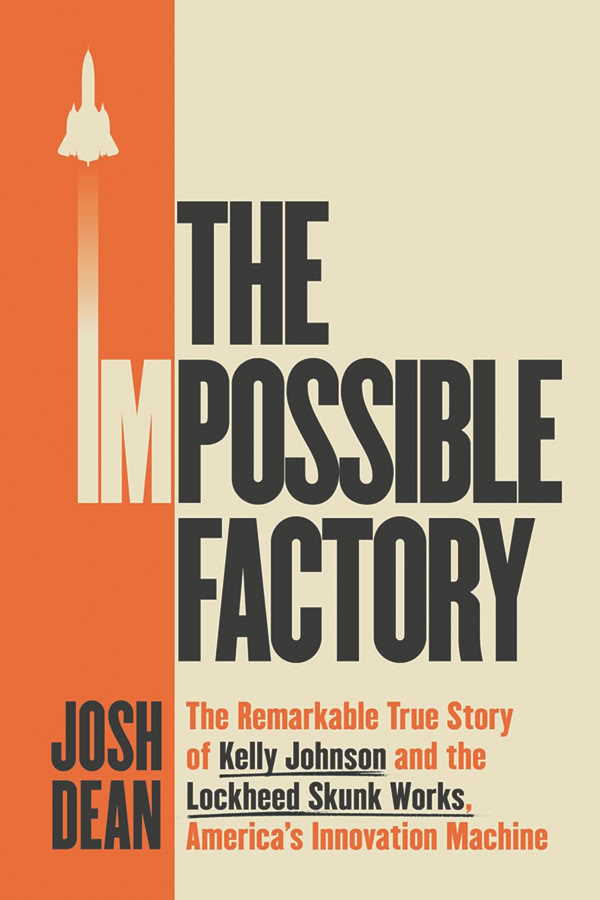
The Impossible Factory: The Remarkable True Story of Kelly Johnson and the Lockheed Skunk Works, America’s Innovation Machine (Josh Dean, Dutton, New York, NY, 496 pp., May 19, 2026 $36 HC) is for everyone who has ever looked up in wonder at the amazing feats of engineering crossing the sky.


Join The Conversation
Comments
View All Comments