By Kevin Seabrooke
Viking literature has been popular since the 13th century and is more so than ever in the 21st, with television shows such as Vikings, Vikings: Valhalla, The Northman and The Last Kingdom (based on Bernard Cornwell’s books)—as well as the Viking-adjacent Game of Thrones (based on George R. R. Martin’s books). Throw in video games like Assassin’s Creed: Valhalla and the Marvel movie characters Thor and Loki, and it’s still only the tip of the iceberg.
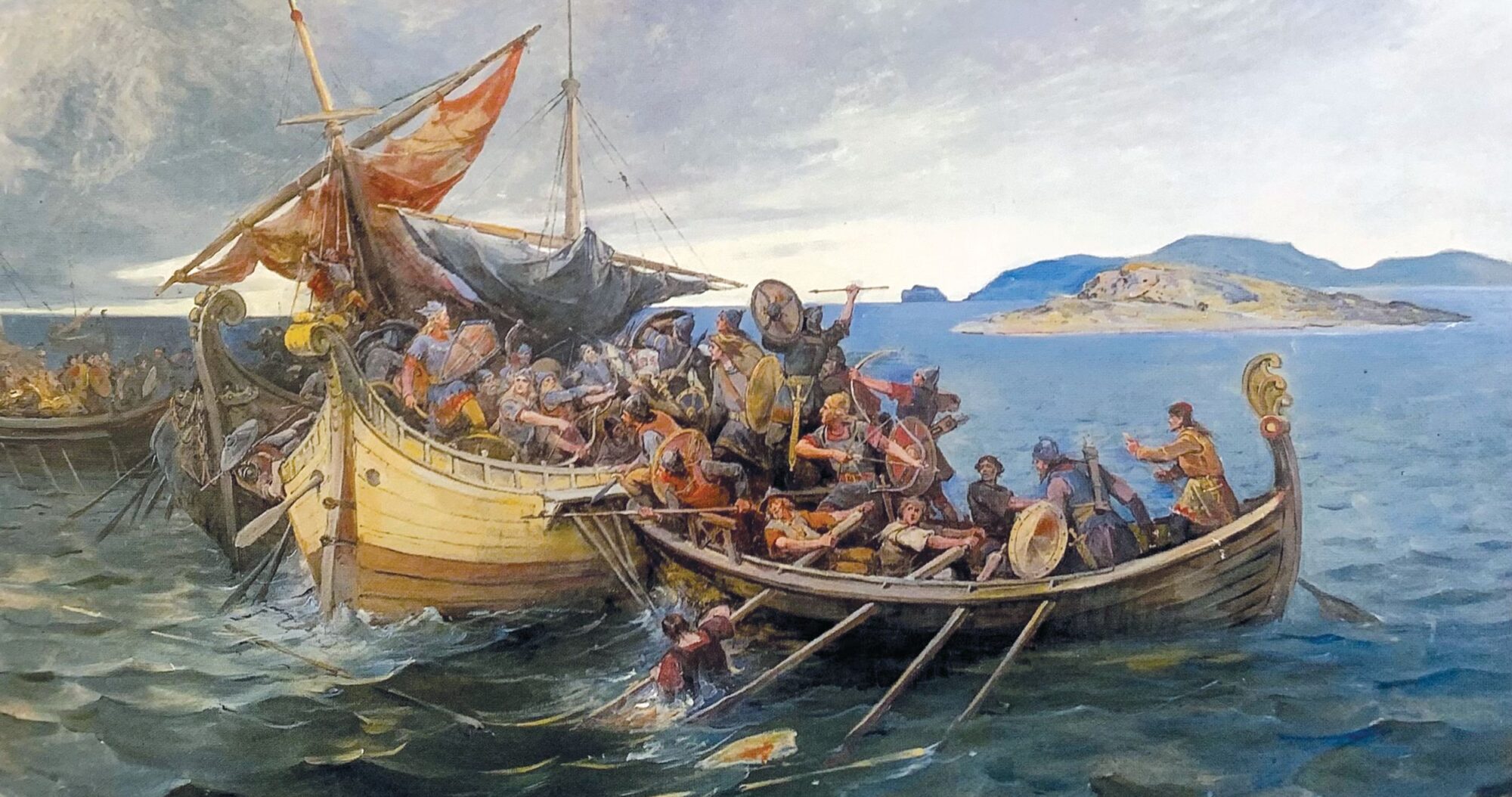
Olaf Tryggvason fled southern Norway with his mother at age 3 after his chieftain father was slain, was later captured by Estonian pirates and sold into slavery, then raised by another as a son for six years. Rescued by Vladimir I, Prince of Novgorod (one of the oldest cities in Russia), Olaf was educated and trained as a soldier and a leader.
While he lived there, Vladimir’s mother, Malusha, foretold: “When at last he is grown to manhood he will return to his native land and gain the kingdom which is his by birth. As king he will shine with bright glory and become a savior to many men of the northern regions.”
 “Loveless, godless, aimless, meaningless, living only for the moment,” Hollway writes. “From 985 to 988, according to the various sagas… Olaf Tryggvason wandered the western coasts: Bretland (Wales); Kumraland (Cumbria); even Valland (Gaul).”
On the island of St. Helen, in Enesek Syllan (Isles of Scilly) off the southern coast of England, a hermit told Olaf, “I am here to teach you the true faith and preach the name of the Christ and that baptism will bring you, and all who join the true faith with you, salvation.”
This man would go on to unite Norway as its king and, a fierce convert to the new faith of Christianity, would force it on his subjects through torture, murder, and the destruction pagan shrines.
Perhaps because it was believed the ends justified the means, the sagas of Olaf were written by religious scribes. Benedictine monks Oddr Snorrason and Gunnlaugr Leifsson both wrote Latin versions of Óláfs saga Tryggvasonar (The Saga of Olaf Tryggvason) in Iceland in the 1190s. The texts were lost, but are believed to be the source of later Norse versions.
There are some mentions of Olaf in Skaldic verses (Skald, Old Norse for poet) which were traditionally composed to honor kings, as well as other sources written long after his death.
Hollway, who is also the author of The Last Viking: The True Story of King Harald Hardrada (Osprey Publishing), is an entertaining guide, smoothly annotating his narrative as it plies the riverine twists of nearly two millennia of history. His straightforward prose is easy to follow as he points out where the various sources differ in their interpretation, or often, as he notes, sheer invention—after all, most of these scribes were monks who knew little of the activities about which they wrote. Where possible, he offers thoughts on sources or other legends that could have found their way into the tale over time. He juggles myth, archeology, ancient texts and history without getting bogged down. He does include an extensive dramatis Personae, which is vital for keeping track of all the parents and children who share some or most of their names.
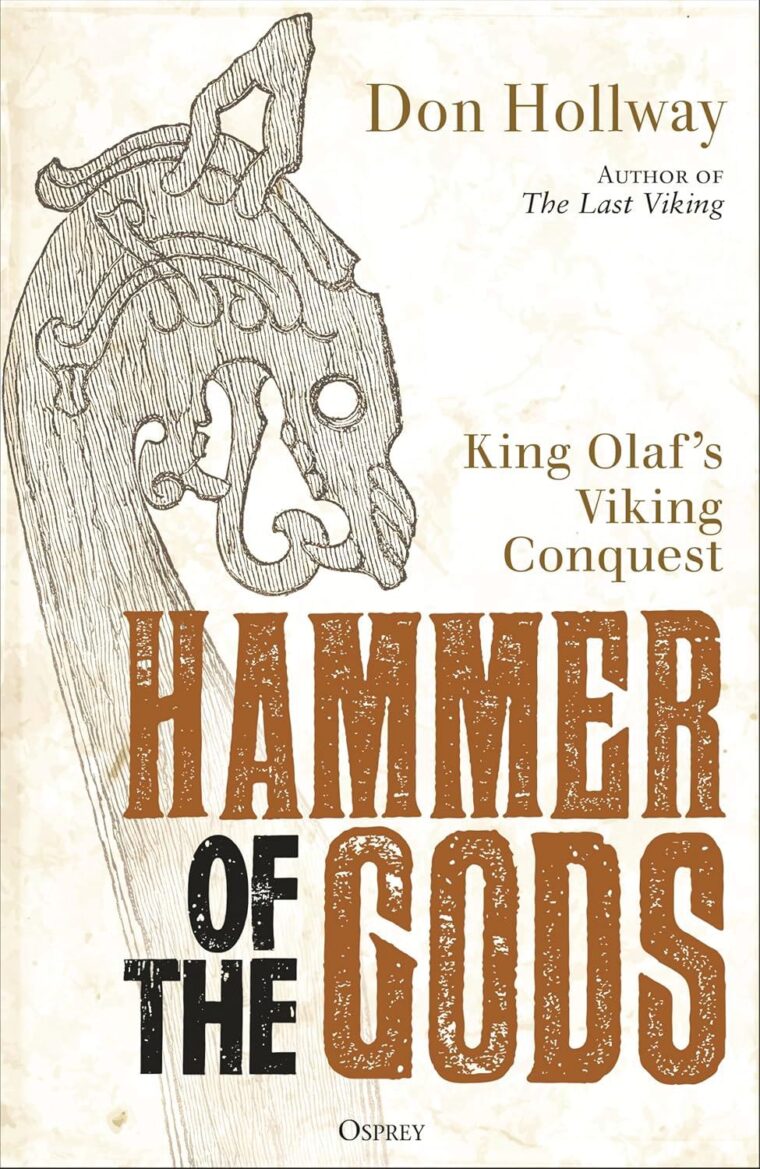
Hammer of the Gods: King Olaf’s Viking Conquest (Don Hollway, Osprey Publishing, New York, NY, 400 pp., glossary, maps, illustrations, May 5, 2026 $40 HC), a compendium of all the main sources pertaining to the life one of the world’s most famous Vikings, is in itself a saga–and a highly readable one.
Join The Conversation
Comments
View All Comments