By John E. Spindler
With his Tiger tank, SS-Obersturmführer Michael Wittmann famously annihilated a British tank brigade at Villers-Bocage on June 13, 1944. More than four years earlier, there was a similar one-sided tank battle in France—only that time the victim was a German panzer regiment. Early in the morning of May 16, 1940, a lone French tank took on a group of panzers as part of a two-day clash in which the key village of Stonne changed hands 17 times.
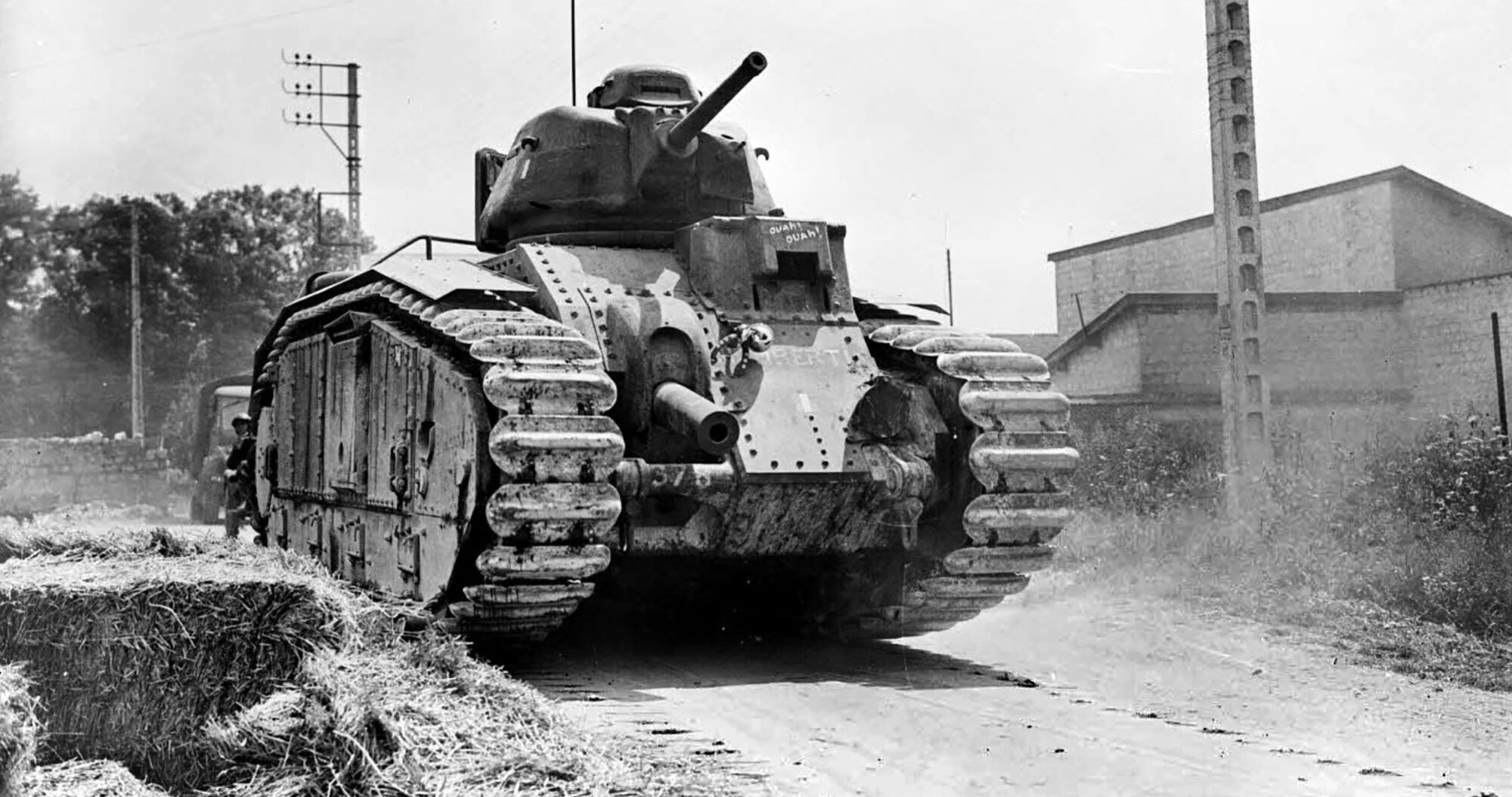
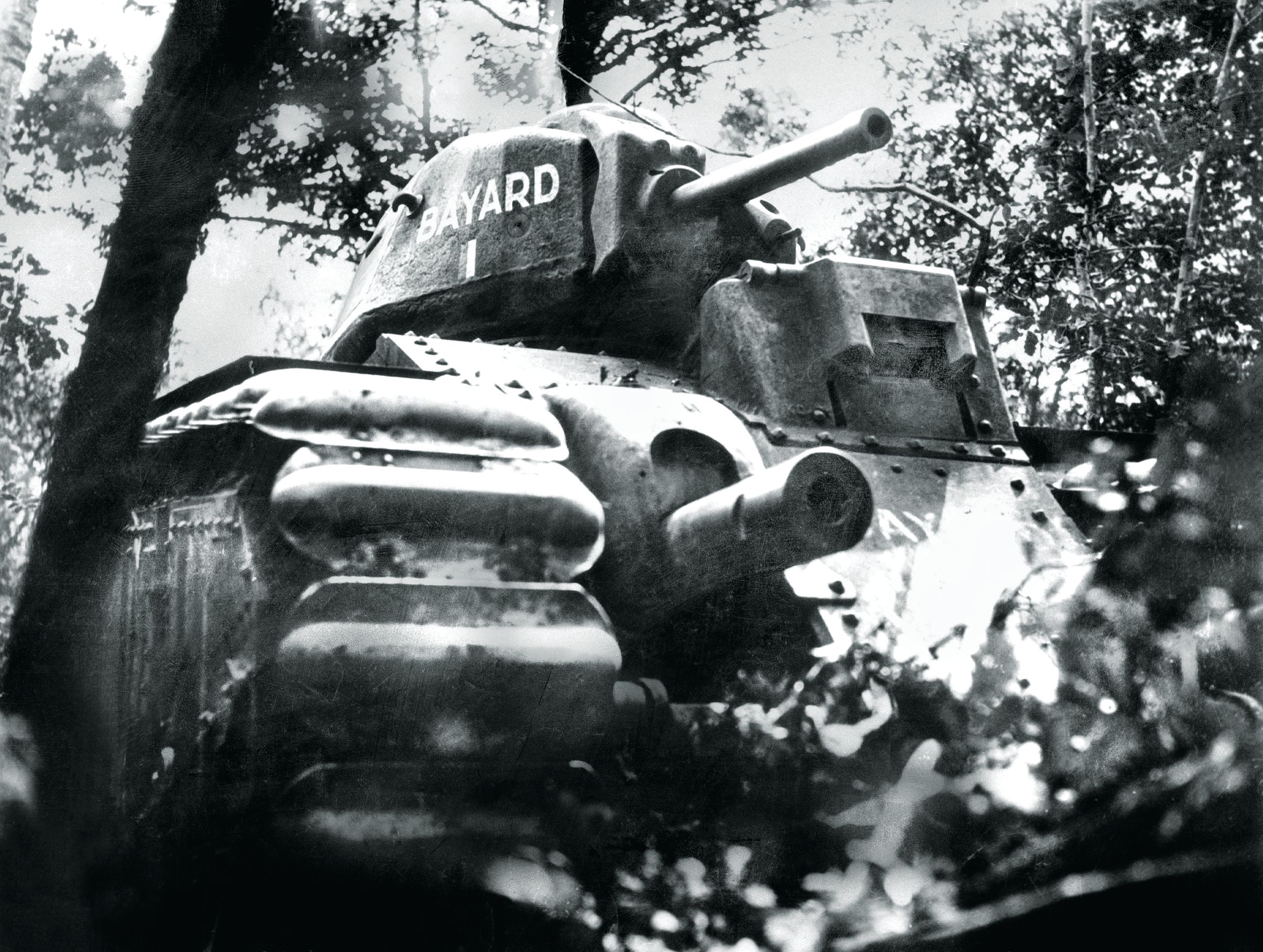
French Captain Pierre Billotte aggressively attacked the enemy armor with what was arguably the most powerful tank in 1940—the French Char B1 bis. Its main gun was a short-barreled 75mm ABS SA 35 howitzer mounted directly into the hull on the right side. Conceived as a weapon against fortifications and entrenched positions, the 75mm could be elevated between -15 to +25 degrees, but the entire tank had to be moved for lateral aiming. Though it carried armor-piercing and explosive rounds, it was mostly only effective against tanks at close range. The 47 mm SA 35 mounted on its turret, however, proved to be a powerful antitank weapon.
In command of the 1st Company, 41st Combat Tank Battalion—French designation 1/41e BCC (Bataillon de Chars de Combat)—Billotte simply pushed down Stonne’s main street from the northwest in his Char B1 bis, nicknamed “Eure,” where he came upon a column from the 8th Panzer Regiment as it sheltered alongside a row of buildings. Of the eight panzers lined up, most were Panzer IIs with a couple of Panzer IIIs and Panzer IVs for support.
Billotte ordered driver/gunner Sergeant Durupt to fire the 75mm at the lead tank at point-blank range, destroying it immediately. At the same time, Billotte fired the 47mm gun, knocking out the last panzer. With no room for the enemy to maneuver, Billotte and Durupt destroyed the remaining six panzers driving southeast down the main thoroughfare. “Eure” continued out of the village and engaged five more panzers. The German tank crews never had a chance as all ended up flaming wrecks. At the bottom of a slope, the road made a sweeping 180-degree turn. At the apex of the hairpin, the Germans had positioned a 37mm antitank gun. Its crew fired with no apparent effect on the 60mm front and side armor (55mm at the rear) and either Billotte or Durupt took it out. Billotte continued down the valley road, destroying another antitank gun. Shortly afterwards, he turned back, retracing his route through Stonne. Upon returning to his company, the crew discovered “Eure” had taken 140 hits without penetration in just minutes of combat.
Germany’s 1940 invasion of France was the first campaign in which both combatants fielded armored divisions, leading to the first large scale tank-vs.-tank battles. The Germans had little success against the Char B1 bis, as its 47mm turret gun could pierce the armor of any German panzer. Conversely, Germany’s 37mm antitank gun, whether it was a field piece or mounted on a Panzer III, could not normally penetrate the armor of the French tank. Unfortunately, mechanical breakdowns and poor fuel economy, combined with poor French armor tactics and organization, overshadowed its ability on the battlefield.
When the Second World War began, as powerful as the Char B1 bis was, its design had already been rendered obsolete by Germany’s new tanks. This comes as no surprise as its origins date back to the early 1920s. In January 1920, France’s War Ministry set up a commission to determine the need for future tanks. It worked in cooperation with Gen. Jean-Baptiste Estienne, the father of France’s World War I tank force. With views shaped by experiences during the Great War, the new tank design would need to resist enemy artillery, possess the firepower to overcome fieldworks, and boast sufficient speed to penetrate through enemy lines. Estienne envisioned a 15-ton vehicle, which was between the Renault FT light tank and the monstrous FCM 2C breakthrough tank.
Five designs were submitted with one rejected immediately. In this competition, Estienne made a point that “the State reserved the right to take from each design, the elements thought to offer the best advantages to be incorporated into a vehicle suitable for mass production.” Of the four remaining contestants, two were armed with a short 75mm gun—one from FCM (Forges et Chantiers de la Méditerranée) and one from FAHM (Compagnie des forges et aciéries de la marine et d’Homécourt). Schneider et Cie, which built the first French tank during WWI, and Renault collaborated on a pair of designs. The Schneider-Renault SRA used a hull-mounted 75mm fortress gun, while their SRB sported a 47mm naval gun for better antitank capability. Both models had turrets armed with machine guns.
For the next three years, the manufacturers designed and built their prototypes. Trials ran from May 1924 until March 1925, when design specifications were revised. With the exception of the Schneider-Renault SRB, all experienced lengthy mechanical difficulties. The SRB was chosen as the preferred design. However, Estienne took what he saw as beneficial features from the other designs and had them incorporated into a modified SRB. From the FAHM prototype, Estienne used its pneumatic spring suspension and appropriated from the FCM21 the method of tensioning the tracks from inside the vehicle. Though Estienne knew through combat experiences the advantages of a turreted main gun, the hull-mounted 75mm main gun was kept.
In 1926, the new tank became known as the Char de Bataille (Battle Tank) B1 and a pair of key design changes were introduced— the 47mm gun replaced machine guns on the turret and the armor was increased from 25mm to 40mm. Though this caused the vehicle’s weight to grow to 22 tons, contracts were issued on March 18, 1927, to Renault, FAHM, and FCM for each to build a prototype. Another round of trials were held from 1929 to 1934, also with lengthy delays caused by various mechanical and design modifications. The most critical of these were caused by its complex Naeder steering system, developed to overcome the hull-mounted 75mm gun’s lack of lateral mobility. The Naeder system employed a series of advanced servo-motors in the powertrain to help the driver aim, but the trials revealed its fragility.
French defense budget constraints delayed production contracts, but the rise of a militaristic Nazi Germany in 1933 provided motivation. In early 1934, the first production contract for seven Char B1s was issued, followed in December with a contract for twenty. A third contract brought the total to 35 tanks, including the three prototypes. Production was slow and difficult, as each Char B1 was essentially hand-built.
When the first tanks were delivered without turrets between December 1935 and March 1936, they were deemed unacceptable with 30mm armor, not the specified 40mm, and the original turret was replaced. Unlike most contemporary French tanks, the Char B1 used a four-man crew—commander, driver, loader, and radio operator. The one-man turret design meant that the commander had to direct the crew and conduct operations during battle, he was also responsible for the aiming of the main gun as well as the turret gun. The driver also acted as the gunner for the 75mm and the loader was responsible for both guns and assisted the driver. Only the operator of the radio—which only transmitted and received morse code—had no secondary tasks.
Powered by a 6-cylinder Renault 250-horsepower engine, the Char B1 reached a maximum speed of 17.4 mph. The 30-ton weight and its 400-liter fuel tank gave the 22’ 7” long tank an operational range of 8 to 10 hours. Supplementing the two major armaments, the design had one coaxial machine gun in the turret and a fixed one in the hull, both 7.5mm MAC M1931 (Reibel). A pair of guards prevented the 47mm gun from striking protrusions on the tank’s rear.
The Second Battalion, 511th Combat Tank Regiment became the first unit to receive the Char B1. Some officials believed that by the time the first tanks had been delivered, they were already obsolete. Upgrades were ordered in 1936. Frontal and side armor was increased to 60mm and rear armor to 55mm, which brought the combat weight to 34.7 tons. The 47mm gun with better antitank capabilities was installed in a new turret model. With the increase in weight, a Renault 300-horsepower engine with a second carburetor replaced the earlier model. The operational range between refueling decreased significantly, now five hours at best if traveling via roads. Among the minor alterations introduced during production, the number of 47mm rounds carried was increased from 50 to 72 (the number of 75mm rounds stayed at 74). This new version was designated the Char B1 bis.
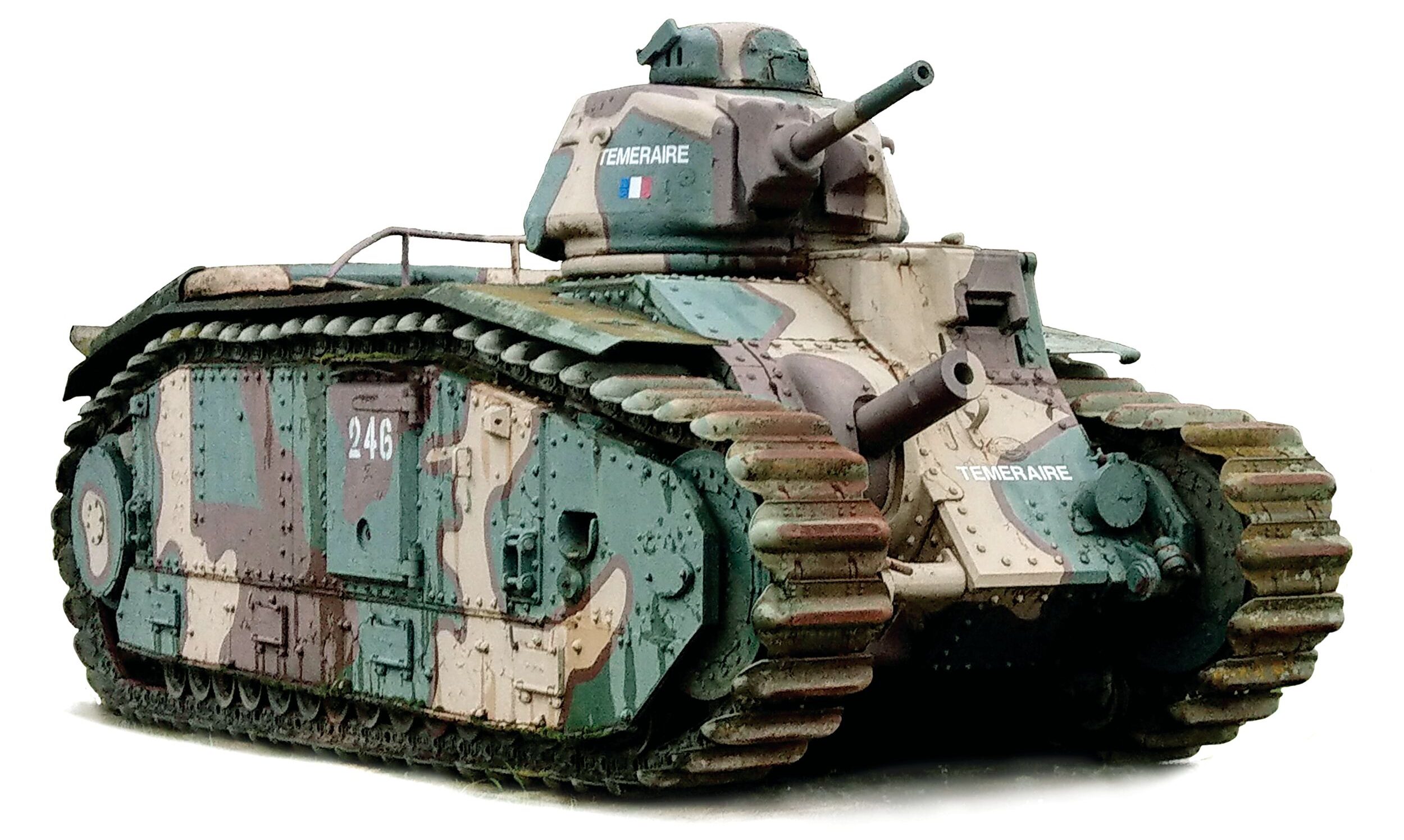
The first upgraded tanks, now designated the Char B1 bis, were delivered in February 1937. When France declared war upon Germany on September 3, 1939, it had 350 of them on order. The French Army had taken delivery of 35 Char B1 and 89 Char B1 bis. Many of France’s industrial giants participated in the vehicle’s production—Renault, Schneider, FCM, FAHM, and AMX. While production of the B1 bis was ongoing, the Char B1 ter was being designed. This design would increase the armor from 60mm to 75mm and the 75mm howitzer was given two vertical trunnions to allow five degrees of traverse. The radiator air intake on the left side, which would be a weakness German gunners exploited, was moved atop the hull. Only three Char B1 ter were ever built and two of them were aboard a ship sunk during evacuation in June 1940.
When the German blitzkrieg through France and the Low Countries began, only 369 Char B1 bis and 34 B1s had been completed, though 1,178 more had been ordered at the onset of World War II. French armored units continued to accept deliveries up to the 1940 Armistice, though few probably arrived after mid-May.
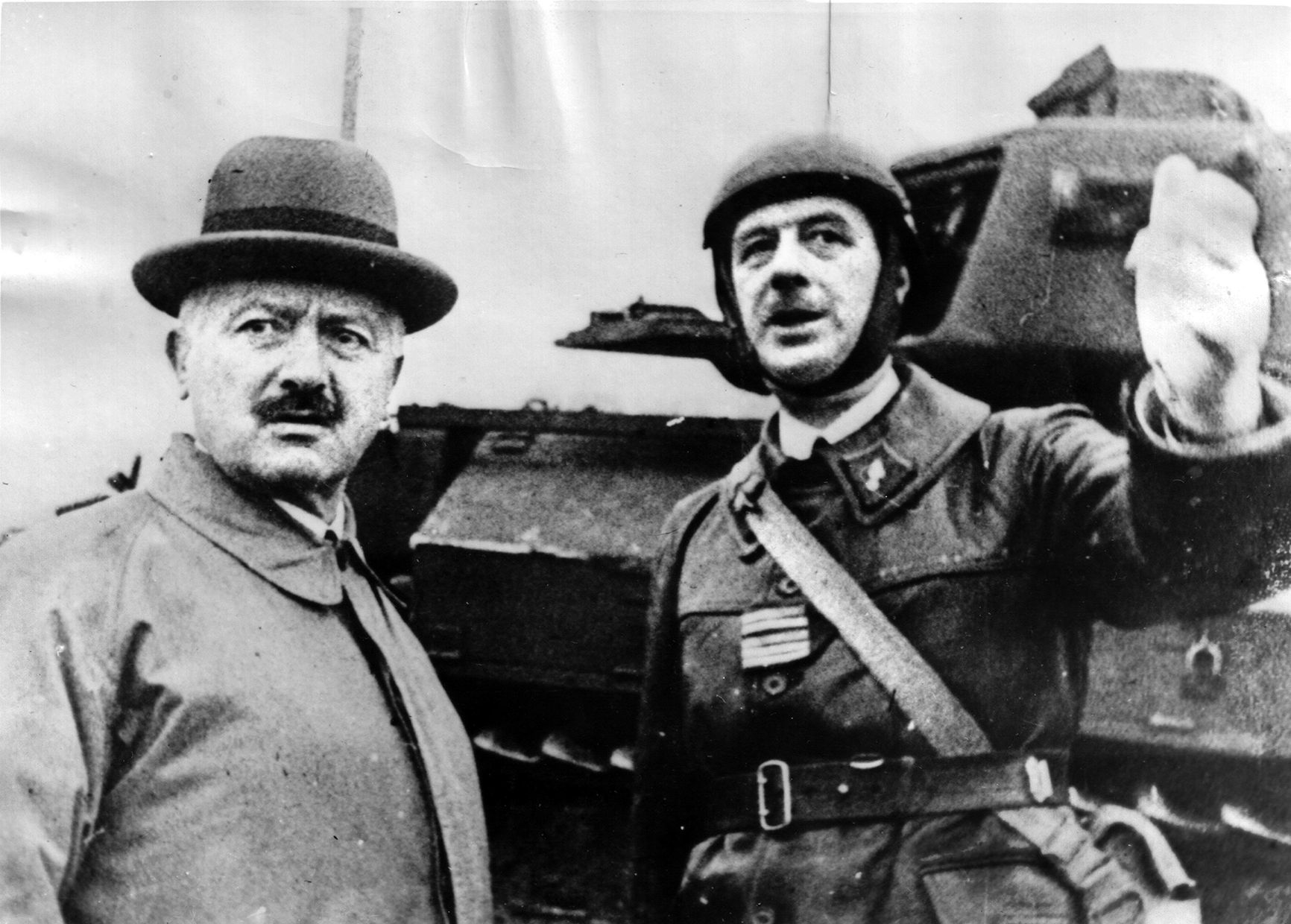
One issue for the Char B1 bis throughout its development, production, and deployment was never assigned a defined role. The majority of French military officials viewed tanks as mechanized cavalry or infantry support. The organization of panzers in the Spanish Civil War and the invasion of Poland gave those few who advocated the creation of an offensive-minded armored division, such as Colonel Charles de Gaulle, confidence that their modern views were the future of armored warfare.

In response, three armored divisions, or Division Cuirassée (DCr) were created in the first three months of 1940. These divisions were organized as two demi-brigades with two Char B1 bis battalions and two Hotchkiss H-39 cavalry tank battalions. Numbering no more than 159 machines and 6,155 men, a French DCr was significantly smaller than the standard German panzer division of 13,000 men and 265 tanks. More crucially, German panzer divisions had already been battle-tested in Poland. Issues concerning battle organization, logistics, and tactics had been overcome as opposed to their French counterparts who had little time to develop unit cohesiveness or conduct adequate training for the tank crews.
Six Char B1 bis battalions were created during the “Phony War” period from September 1939 to May 10, 1940, though not all had received their full complement of tanks. Prior to that, the only Char B1 bis unit to see action, the 15th Combat Tank Battalion, crossed into Germany near Tunting on September 10, 1939, before withdrawing back into France 12 days later. In January and February 1940, the 1st and 2nd DCrs were established, both allotted 69 Char B1 bis and 90 H-39s. In March, the 3rd DCr arrived with ninety H-39s and sixty-two Char B1 bis. In a rapid response to the enemy’s blitzkrieg, the 4th DCr under de Gaulle was quickly formed. His division only had 33 Char B1 bis and 35 H-39s. Of the 233 vehicles fielded in May, 53 surviving Char B1 bis were deployed in Compagnies Autonomes (Autonomous Companies) during the last few weeks of combat.
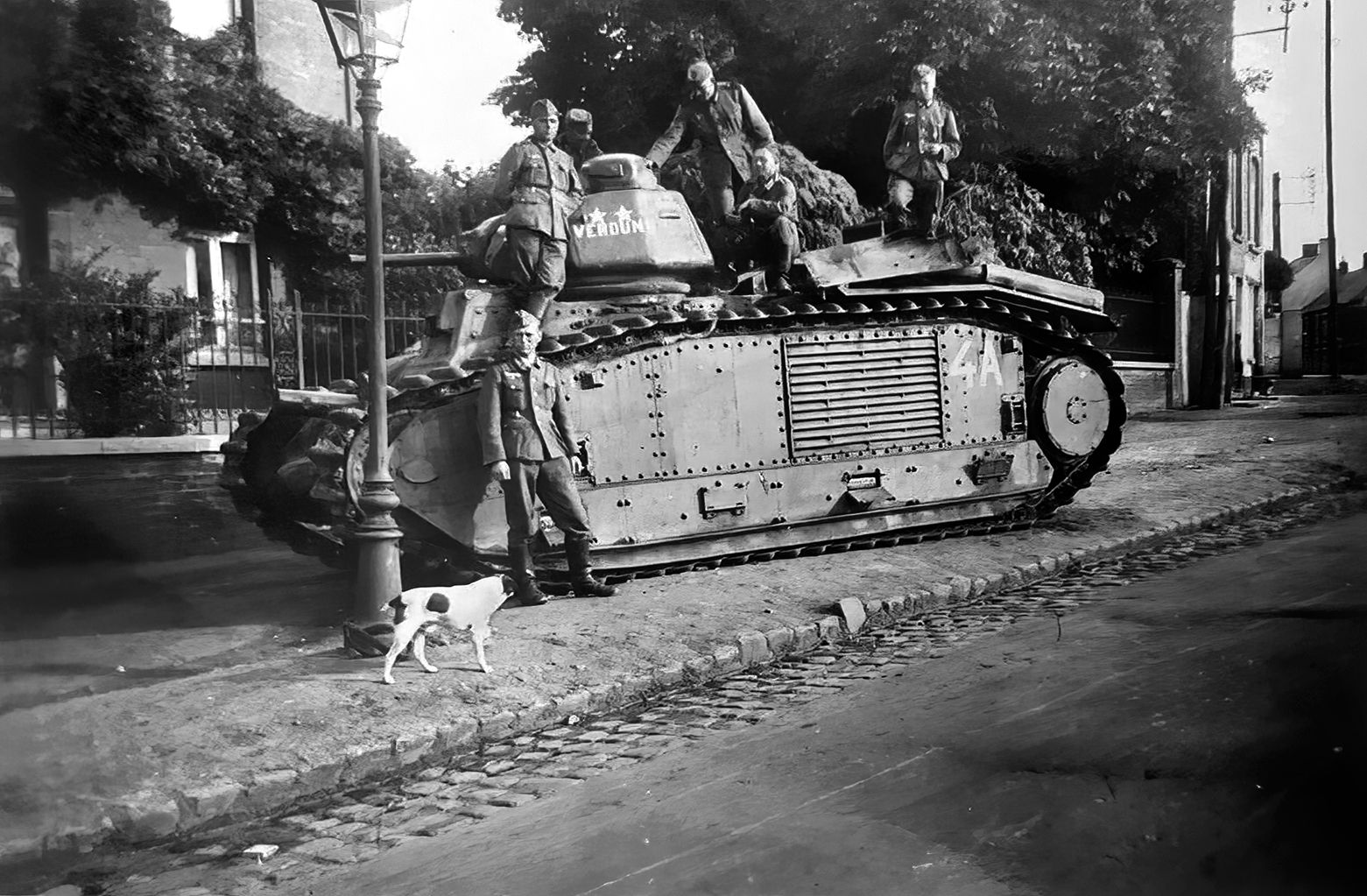
The speed of the German advance surprised the French, who expected attacks like those in WWI. Unexpectedly the enemy had seized bridgeheads on the west bank of the Meuse River at Sedan. Due to its location, the village of Stonne became key for both sides. Among the forces dispatched to counter the German 10th Panzer Division’s bridgeheads was the 3rd DCr and its Char B1 bis battalions. Due to its limited range between time-consuming refueling, it took two days to move from Reims to a point six miles south of Stonne. Mechanical breakdowns, mainly due to the Naeder steering system, reduced the number of vehicles to 53. A miscommunication led to a pair of Char B1 bis companies attacking without support on May 15. This may have been the first time the Germans saw and engaged this French tank. Although the antitank gunners knocked out a pair of them, many were left stunned watching their 37mm rounds bounce off the vehicles.
The same day, a small number of Char B1 bis supported an attempt to retake Stonne. In the course of the skirmish, more were damaged and one German gunner targeted the radiator air intake grill on the left side and knocked out the vehicle. Again, the Germans were horrified to see their antitank guns had little effect. Due to a handful of losses and mechanical issues, only 29 Char B1 bis were available for any attack on the Sedan bridgeheads. The next morning Captain Billotte decimated the 8th Panzer Regiment at Stonne with ease. In the two-day bitterly-contested battle for Stonne, a number of Char B1 bis were lost. Still working out how to properly deploy and coordinate them in battle, the French lacked an adequate way to recover disabled tanks.
A few days later, the 1st DCr was sent to oppose the German XV Army Corps near Dinant. Its 28th Combat Tank Battalion ended up critically low on fuel due to poor logistical organization. Radio communication was negatively impacted when engines were shut off, resulting in low battery power. The delay in getting the fuel trucks to the battalion allowed it to be caught while refueling. German panzers surrounded and poured mass fire on the immobile tanks, destroying 23 of them. However, the French managed to inflict heavy losses on the panzer division, knocking out 60 panzers including 32 Panzer IVs.
The Char B1 bis performed well in localized actions and caused the Germans consternation. However, superior German tactics and organization overshadowed what the Char B1 bis accomplished on the battlefield. For example, the 2nd DCr was wasted in futile and poorly-coordinated actions, first sent to counter the Oise River crossings, then rushed south of Amiens to block the invaders. Just as they dealt with the heavily-armored British Matilda II, the Germans discovered that their 88mm flak guns were able to knock out the Char B1 bis. Direct 105mm artillery fire was also found to be effective at stopping the French tanks.
On May 17, de Gaulle’s incomplete 4th DCr took part in the Abbeville counter-attack. He attacked near Montcornet, hitting the Germans unexpectedly in the flank. His armor shot up some vehicle convoys before the enemy erected an antitank defense that included 88mm flak guns. Though the Germans held, they took casualties until Luftwaffe Junkers Ju-87 Stuka dive bombers stopped the French. De Gaulle retired when the 10th Panzer arrived, threatening his meager force. De Gaulle would later launch a separate, equally fierce armored counteroffensive at the Battle of Abbeville between May 27 and May 30, but the structural collapse of the French main lines rendered these localized successes futile.
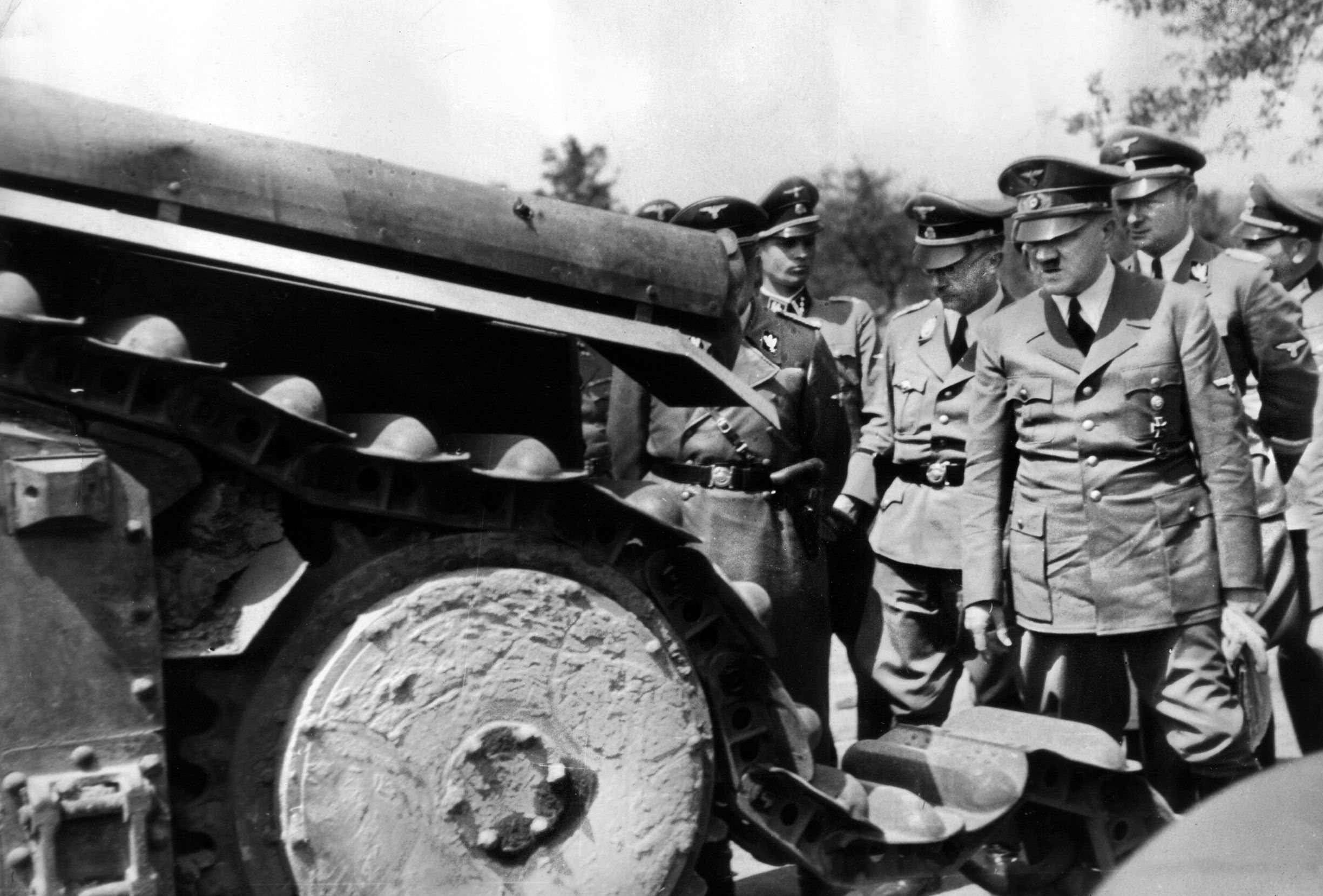
After the dissolution of the four armored divisions, the remaining Char B1 bis operated in autonomous companies. At Juniville in early June, German panzer master and commander of the 10th Panzer Division, Gen. Heinz Guderian, recorded that he tried to knock them out with 20mm and 37mm guns, as well as a captured 47mm gun. He watched in disbelief as the Char B1 bis withstood all shots.
The issues of mechanical breakdowns and fuel exhaustion that French armored units experienced were the same as the Germans had suffered during the prewar annexations of Austria and Sudetenland, and to a lesser extent, in Poland. This resulted in the number of operational vehicles decreasing rapidly throughout the campaign as 128 Char B1 bis were lost in combat, including two to air attacks, around six to mines, and at least four to friendly-fire. A larger number, 139, succumbed to fuel exhaustion and mechanical breakdown—the delicate Naeder steering system being the primary culprit.
After the 1940 Armistice, the Germans absorbed many surviving French tanks, including the Char B1 bis. Designated the PzKpfw B-2 740(f), 161 were used by the Germans. Many had their turrets removed and were employed for driver training. An estimated 60 vehicles had their 75mm gun replaced by a flamethrower. This version saw action in the first few weeks of Operation Barbarossa and the 1944 battle of Arnhem. A handful of Char B1 bis were captured by the French Resistance and turned against the Germans. As part of the French 3rd Armored Division, a small number of Char B1 bis remained in service until April 1946. Ten Char B1 bis survive today in varying conditions, all in France except for one on display in Britain’s Bovington Tank Museum.
Protected by 60mm frontal and side armor, the latest German 37mm antitank gun had no effect on the Char B1 bis unless it targeted the radiator air intake grill or tracks. Quite the opposite, the Char B1 bis 47mm turret gun was the best anti-tank weapon available during the 1940 invasion of France, and easily knocked out any German panzer.
Suffering from an archaic design reminiscent of World War I tanks, the Char B1 bis had issues such as poor radio reliability and short operational range between refueling. Also, the lack of an armor strategy led French armored divisions to be squandered in battle and badly supplied, especially for refueling their best tank. Regardless, the superiority of the Char B1 bis over his own panzers impressed Adolf Hitler and validated the development of their own heavy armor, the Tiger I (begun in 1937), which first entered battle in the Leningrad Offensive on the Eastern Front on August 29, 1942.
Join The Conversation
Comments
View All Comments