By Kelly Bell
Dread gripped the Connecticut settlers of the Wyoming Valley, as the alarm guns boomed from Wilkes-Barre Fort. The sound of those cannons meant trouble and local militiamen grabbed their muskets and rifles and began to gather at Wilkes-Barre and other forts that dotted the valley.
On July 1, 1778, bloodied and tired survivors stumbled into Jenkins’ Fort with word of an Indian attack further up the Susquehanna River the day before. This distressing news confirmed reports of scouts that had earlier ventured up the river and traded shots with lurking Tories and Indians. The threat of an attack, looming over the scenic valley for some weeks, now seemed frightfully imminent.
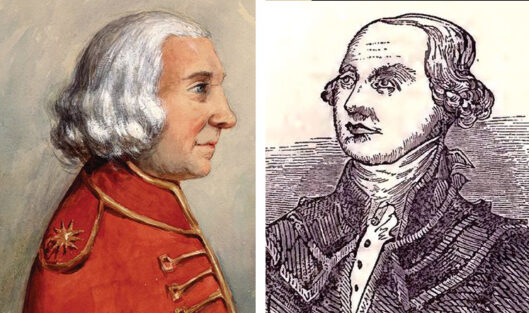
Continental Army officer Lieutenant Colonel Zebulon Butler quickly rode out of Wilkes-Barre for Forty Fort, headquarters of the 24th Connecticut Militia Regiment. There he was met by Col. Nathan Dennison who had sent for Butler, asking him to take temporary command of the valley’s defense as the veteran officer had much more military experience than he did. The other militia officers present agreed and Butler promptly took charge.
Small detachments of militia were quickly dispatched to provide protection to the forts in the valley where women and children were already flocking. Butler then wasted no time in marching out of Forty Fort with the remaining militia intending to confront the invaders. Moving up the west bank of the Susquehanna, the militia kept a sharp eye expecting anytime to be attacked. No resistance was met and Butler halted the militia at Sutton Creek. From there he dispatched a lone company to the scene of the Indian attack at a tannery and nearby cornfield.

Here two warriors were spotted and quickly killed. The mutilated bodies of the victims were then recovered and the company turned back to rejoin the rest of Butler’s command. After a 20-mile march, the weary militia returned to having not found the sizable Tory and Indian force reported to be nearby.
Meanwhile, four miles above Forty Fort, two Tories slipped out of the humble Fort Wintermoot. Driving a small herd of cattle, they headed northwest for a mile and half to Lookout Mount overlooking the valley. Here they met with the large Tory and Indian force Butler had been unable to find. Commanding this force was another officer named Butler—Maj. John Butler. This Butler, a Loyalist, had arrived with a large command of his Rangers and Indian allies. He had come to bring war and destruction to the scenic Wyoming Valley turning the settlers’ dread into sorrow.
The Wyoming Valley nestled in what is now northeastern Pennsylvania was no stranger to bloodshed and trouble. Located between two forest carpeted mountain ranges, the valley stretched for about 25 miles and was about three miles wide. Cutting through the valley was the wild Susquehanna River. In 1662, King Charles II of England granted the Colony of Connecticut a strip of land extending from sea to sea. An overlapping land charter was granted to William Penn in 1681, which in turn caused both Pennsylvania and Connecticut to believe they had the right to the land.
At the same time, the Wyoming Valley was claimed by the mighty Iroquois Confederacy in New York who had moved bands of tribes into the valley such as the Delaware, Nanticoke, Munsee, and Shawnee. By the mid-1750s the Iroquois sold the valley to a Connecticut land company much to the chagrin of their vassal tribes in the valley. With the end of the French and Indian War, Connecticut settlers began to move into the valley in the early 1760s, but it was short-lived and bloody. In 1763, Native warriors struck the fledgling settlement killing 20 people and forcing the rest to retreat back to Connecticut. The Yankee settlers, however, would be back.
Before they returned, Pennsylvania settlers nicknamed Pennamites began moving into the valley in 1768. When the Yankees returned the next year, violence erupted and would continue for the next six years. By 1774, the Yankees were in firm control of the Wyoming Valley and it was annexed by Connecticut and now known as Westmoreland County.
The following year in the valley the 24th Connecticut Militia Regiment was formed and placed under the command of Colonel Butler, a leading settler. In August of that year, Congress also approved the raising of the two Independent Continental companies to help defend the valley from the Tories and Indians. They would eventually leave the valley to serve elsewhere, as did Butler as he was appointed to the rank of lieutenant colonel in the 3rd Connecticut Regiment of the main Continental Army.
By early June of 1778, Colonel Butler had returned to the Wyoming Valley on a furlough only to find the inhabitants in a state of alarm. Tories and Indians had been attacking settlements on the upper Susquehanna River about 25 miles upriver from Wilkes-Barre. Scouts had clashed with the enemy as well. Rightly believing an Indian attack was imminent, Colonel Butler rode to where the Continental Congress was meeting in York Town, Pennsylvania, to seek help. He managed to get the two depleted Wyoming Independent Continental Companies ordered back to the valley, while at the same time Butler was permitted to remain in the valley to command forces being collected there.
Some of the settlers establishing homesteads on the Upper Susquehanna and the Wyoming Valley, many of whom were from New York, sided with the Crown with the outbreak of the American Revolution. They were the Loyalists who faced severe persecution from their Patriot neighbors in the valley. A number of these Loyalists were sent off in chains to Connecticut where they were packed into prisons. A number had fled the valley and made their way to Fort Niagara, joining numerous Loyalist refugees flooding in from the frontier of New York. Capt. Richard Lernoult of the British 8th Regiment writing from Niagara to the Governor of Quebec, Sir Guy Carleton, on April 28, 1777 noted that Loyalist refugees staggering in “are almost naked and have been so long hiding in the woods and almost famished that it is distressing to behold them.”
Many of the Loyalists from the Wyoming Valley and the upper Susquehanna enlisted in the newly formed Butler’s Rangers. John Butler had received permission from Carleton on September 16, 1777, to form a Corps of Rangers to consist of eight companies. This would later be expanded to 10 companies. Two of the companies were “to be composed of people speaking the Indian language and acquainted with their customs and manner of making war.”
John Butler, himself, could speak various Indian languages and was well acquainted with the intricacies of Native affairs and wilderness warfare. Although born in Connecticut, Butler had spent much of his life in the Mohawk Valley of New York. There he served in the British Indian Department under the tutelage of Sir William Johnson, the Superintendent of Indian Affairs. Butler proved himself a key Indian Department officer during the French and Indian War and afterwards. During the Revolution he would continue to serve as an Indian Agent even after his Rangers were formed.
With his Rangers and Indian allies, Major Butler planned to “break up the back settlements of Pennsylvania and Jersey and other parts of the Province of New York in order as well to distress the enemy.” At the same time he intended to draw away much needed Rebel troops facing the main British army under Sir Henry Clinton.

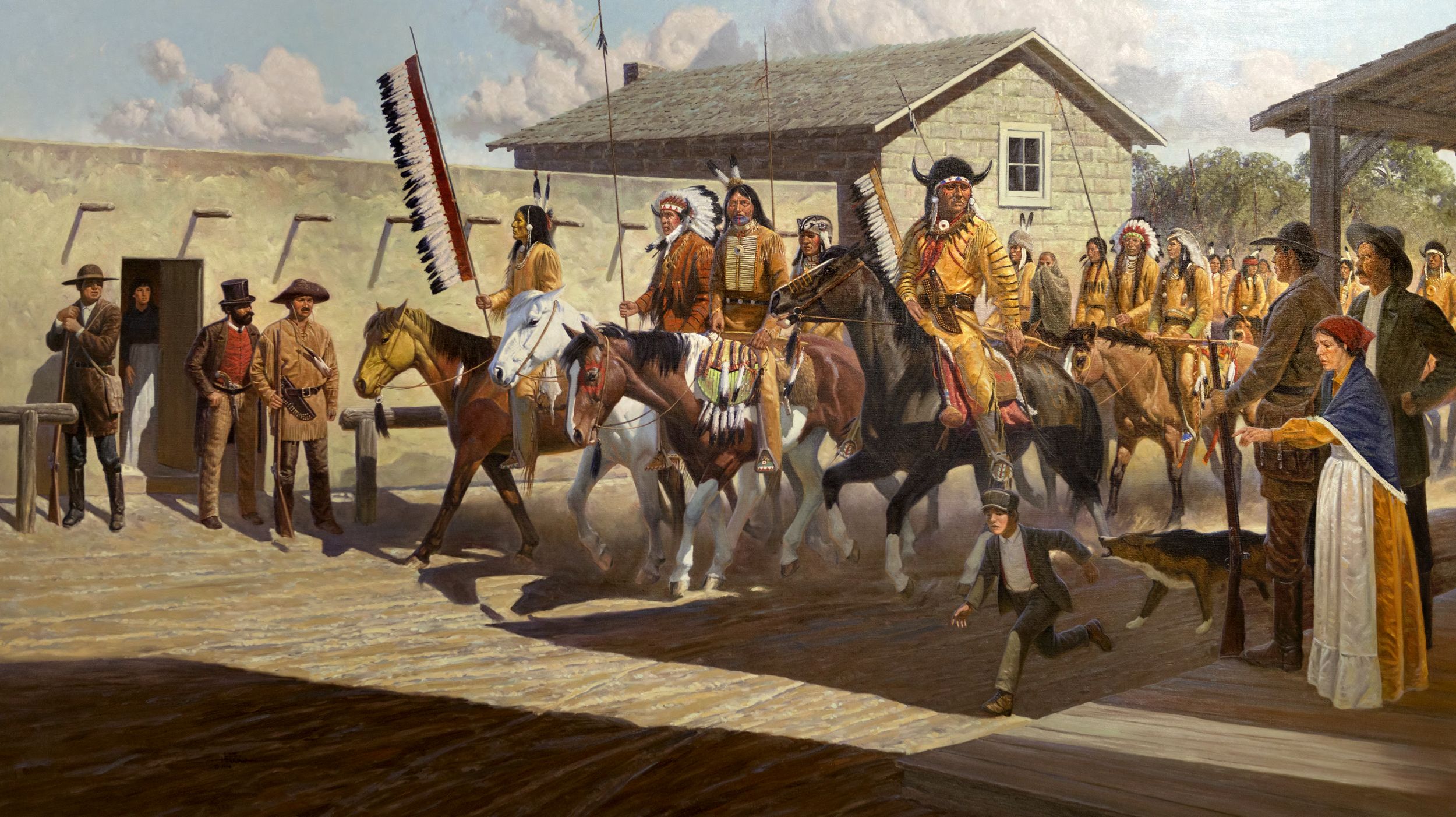
In early May 1778, Major Butler set out with about 70 Rangers and a small contingent of Indian Department Rangers for the Seneca village of Canadesaga with a pack train of arms and ammunition to be used by Natives and Loyalist recruits. There Butler met with Old Smoke, a tall Seneca leader who was nearly 70 years old, and some other principal chiefs of the Seneca. The Seneca were one of six tribes that made up the Iroquois Confederacy with the other tribes being the Mohawk, Oneida, Onondaga, Tuscarora and Cayuga. The Seneca and Cayuga were adamant on launching an attack against the Wyoming Valley to neutralize any threat from the Rebels there.
From Canadesaga, Butler and his Seneca allies pushed on for the town of Unadilla located at the junction of the Susquehanna and Unadilla Rivers. The Indian town was a Loyalist stronghold that boasted two much-needed gristmills and was strategically situated near the back settlements of Pennsylvania and New York. Butler had difficulty keeping his Rangers and Indian allies fed on their journey as Ranger Richard McGinnis would later write in his journal, “I was under the necessity of giving a hard dollar for 4 small Indian cakes, and sometimes could not get it at all.”
Messengers were dispatched to inform Mohawk war leader Joseph Brant and Lt. Barent Frey of Butler’s Rangers to join them at the Seneca village of Tioga. Brant and Frey had been harassing New York settlements along more than 150 miles of the frontier since mid-May, destroying enemy property, rescuing Mohawk and Loyalist families, as well as securing provisions and recruits for Butler.
Upon reaching Tioga, located along the Susquehanna about 90 miles northwest of the Wyoming Valley, Butler and Old Smoke held a council on June 24 with the Natives which were mostly Seneca, Cayugas, Delawares and a handful of Shawnee. When Frey and Brant joined the forces gathered at Tioga, the Ranger lieutenant with his men rejoined Butler. Brant, on the other hand, had no intentions of joining the expedition or taking orders from Butler. When the council broke up, Brant left, much to the chagrin of Old Smoke and other Native leaders.
On June 27, about 500 warriors and 110 Rangers climbed in canoes and rafts and set off down the Susquehanna River. They continued by water for two days until they reached Bowman’s Creek. On June 30, they set off overland in a southerly direction for about 12 miles before arriving at Mount Lookout. In a message to the commander of Fort Niagara, Lt. Col. Mason Bolton, Butler wrote, “I sent parties to discover the situation and strength of the enemy, who brought in eight prisoners and scalps.”

the 1700s. Many were burned by Loyalist forces under Major John Butler in 1778.
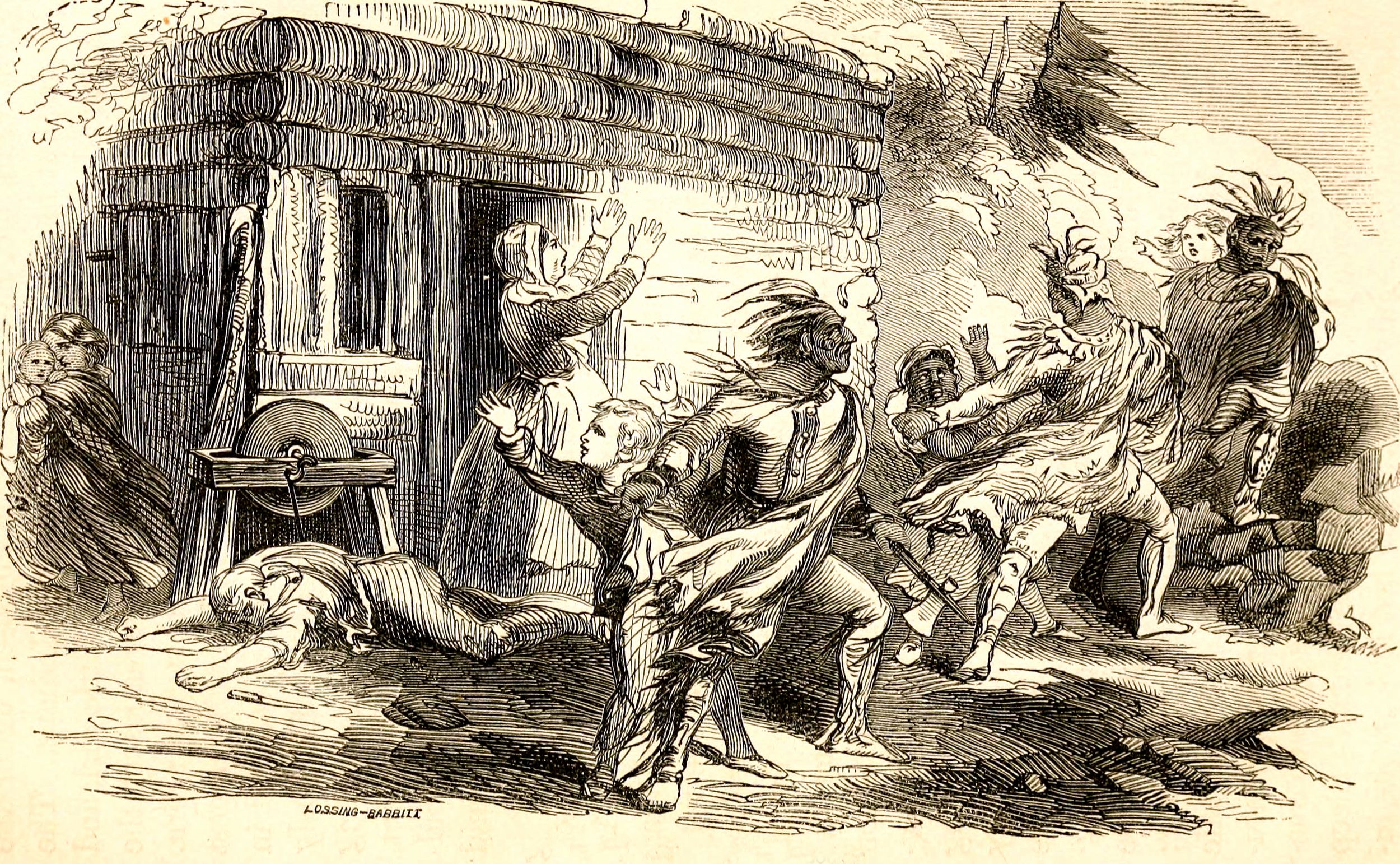
One of these parties included McGinnis, who recorded how they “came to a mill belonging to the rebels and the savages burnt the mill and took 3 prisoners, two white men and a negro whom they afterwards murdered in their own camp.” Another couple of Rangers and some warriors attacked settlers working in a cornfield. It was the survivors from the attack on the mill, actually a tannery, that sparked the alarm guns that were fired from Wilkes-Barre Fort.
The two Loyalists who had slipped out of Fort Wintermoot driving 14 head of cattle informed Major Butler “that the rebels could muster about 800 men who were all assembled in their forts.” Their estimation of the Patriot strength was considerably high. The arrival of the cattle was much welcomed as McGinnis recalled, “We were much distressed for provisions, having nothing to subsist on except a little parched corn.” The cattle were quickly butchered and divided among the Rangers and warriors.
With the two Loyalists acting as guides, Butler and Old Smoke quietly set out with their Rangers and warriors on the evening of July 1. They slipped through a gap in the mountain and halted about half a mile from Fort Wintermoot. Lt. John Turney of the Rangers and a drummer were ordered by Major Butler to carry a flag of truce to the fort and demand its surrender.
Butler’s surrender terms were generous, promising that the garrison and their families would be unharmed in return for remaining “neutral during the present Contest with Great Britain and America.” Most of the inhabitants of the fort were Loyalists and they urged Lt. Elisha Scovell to surrender with his small detachment of the 7th Company of the 24th Connecticut. Scovell agreed and Major Butler quickly set up headquarters in the fort, while his Natives allies made camp in the nearby woods.
The following day, July 2, Captain William Caldwell and a small party of Rangers was sent to offer surrender terms to nearby Jenkins’ Fort. The fort, which was a stockade constructed around the home of John Jenkins, was held by a small detachment of the 7th Company under Captain Stephen Harding. Seeing little option, Harding surrendered the small fort. Butler dispatched foraging parties to reconnoiter the other Rebels forts in the valley and drive in cattle and collect much needed provisions.
A prisoner taken at Fort Wintermoot, David Ingersoll, was sent by Major Butler on July 3 under a Ranger and Indian warrior escort to Forty Fort with a flag of truce. As ordered, Ingersoll delivered Butler’s capitulation terms which not only demanded the surrender of Forty Fort, but the rest of the forts in the valley as well. If the forts unconditionally surrendered, Butler promised the inhabitants would be given good terms. However, should the forts not surrender then Major Butler would waste no time in moving against them.
Dennison, still headquartered at Forty Fort, desperately needed time for the militia to assemble. He refused Major Butler’s demands stating he first needed to consult with Colonel Butler at Wilkes-Barre. While Ingersoll and his guards returned to Major Butler, a messenger was dispatched to Wilkes-Barre. Orders were also issued to the two Wilkes-Barre militia companies (1st and 6th), the Hanover (5th) and Pittston (4th) companies, and those members of the Alarm List companies not already garrisoning the other forts, to march for Forty Fort immediately. The Alarm Companies were made up of men over the age of 50. By noon all had arrived except for the Pittston’s company.
The Pittston’s commander decided to ignore the order as his fort had a considerable number of women and children seeking shelter there. He did not want to leave them defenseless as just across the Susquehanna, the Tories occupied Fort Jenkins. Messengers had earlier been sent to militia companies downriver, but no one was expecting much assistance from the Pennsylvanians.
Colonel Butler soon rode into the Forty Fort and again took command of the militia. Consulting with the officers present, it was decided the fort, which boasted 12-foot-high stockade walls, barracks and enclosed about an acre of land, would be held at all hazards. Word soon arrived that one of the Independent Continental Companies was on the march and would arrive in about two days. Butler, meanwhile, sent an adjutant galloping to the Board of War at Philadelphia with news of the critical situation in Wyoming.
In an effort to buy more precious time for reinforcements to arrive, Colonel Butler sent a messenger with a flag of truce to Major Butler asking to discuss his surrender terms. Scouts, meanwhile, were attempting to determine the strength of Butler’s Rangers and their Native allies with little success. The Patriot messenger carrying the flag of truce was fired upon by Indians and forced to return to Forty Fort. Another messenger sent bearing a flag of truce was forced to return as well.
Officers now began to assemble their troops which consisted of an incomplete company of Continentals being raised in the valley under Capt. Dethick Hewitt, the 1st, 2nd, 3rd, 5th, and 6th companies of the 24th Connecticut Militia Regiment. Also joining the command were elements of the 7th, 9th and 10th militia companies, as well a handful of men from the two Alarm Companies. These troops were assigned to strengthen the other five companies. Finally, about 25 men from one of the Independent Continental companies had reached Forty Fort ahead of the rest of their company and were absorbed in Hewitt’s Company.
Leaving behind a small garrison, Butler and Dennison marched out of Forty Fort with a force of 375 men about 2 p.m. with their flag fluttering and fife and drummers playing “St. Patrick’s Day in the Morning.” Heading northeast, the Patriot column reached Abrahams Creek about a mile from the fort where they stopped to rest. Scouts were again sent out ahead to locate the enemy.

The situation was growing critical for the Patriots as scouts soon brought in alarming news that the enemy were starting to burn some of the settlements and were driving away all the cattle they could gather. Scouts further warned that the Tories and Indians would likely burn, plunder and destroy all the upper settlements. It was also thought they would cross the river and capture Pittston Fort.
A Council of War was immediately held to discuss the report. Some of the officers argued that the Tories and Indians should be attacked immediately, while others, including Dennison, preferred to wait for reinforcements. Things turned ugly when accusations of cowardice were hurled at the officers who advised caution.
This bitter disagreement spilled over to the men of the militia. The 5th Company, for example, ousted their captain who advised caution and voted in a firebrand named Lazarus Stewart. In an attempt to keep unity, Butler and Dennison made the fateful decision to attack.
Indian parties collecting cattle spotted the Rebel force and quickly reported this to Major Butler and Old Smoke. “This pleased the Indians highly, who observed they should be upon an equal footing with them in the woods,” Butler later reported. Major Butler dispatched runners to recall his Rangers and Indian allies back to Fort Wintermoot. Caldwell was ordered to torch Jenkins’ Fort and soon smoke from it was billowing skyward.
By 3 p.m., Colonel Butler had his men formed again into column and set off from Abrahams Creek. About a mile from Fort Wintermoot, Colonel Butler formed his regiments into a battle line two ranks deep. The right of the Patriot line halted at where the ground sloped down to the bottomlands near the Susquehanna. The rest of the line stretched for about 300 or 400 yards northwest across a meadow known as Abrahams Plains. Hewitt’s Continentals held the right of the Patriot line, with the 1st Company being to their left. The 6th Company was next in line. These three companies made up the right wing of the Patriot’s command and were directly under Colonel Butler’s command. Next in line was the 2nd Company with the 5th Company to their left under the firebrand Steward. Finally, holding the far left of the line was the 3rd Company. These three companies on the left wing of the Patriot line were under Dennison’s command.
Another column of smoke billowed upward as Major Butler ordered Fort Wintermoot to be burned. With his headquarters on fire, John Butler hoped the Rebels would be deceived into believing he was retreating. To northwest of the burning fort was a six-acre field where on its far boundary was a log fence. Behind that fence Major Butler posted most of his Rangers and ordered them to lie down and wait for the approach of the enemy. On Butler’s right was a heavily wooded swamp where Old Smoke and the Native warriors, bolstered with Indian Department personnel and a handful of Butler’s Rangers, waited. Butler dispatched some Indian warriors and Rangers dressed in native garb to act as skirmishers. Rebel prisoners, along with Loyalist women and children, were sent to the rear under guard. It was now almost 4 p.m. and the Rebels were advancing toward Major Butler’s trap.
With the enemy not far away Colonel Butler reminded his men that,“We come out to fight, not only for liberty, but for life itself, and what is dearer, to preserve our homes from conflagration, our women and children from the tomahawk.” As he ordered an advance, Butler added, “Stand firm at the first shock, and the Indians will give way.” The Patriots advanced toward the burning fort. The Tory and Indian skirmishers, working in pairs, fired on the Rebels before withdrawing to their own lines.
Now convinced they were facing the rearguard of the retreating Tory force, the Patriots pushed ahead. At about 200 yards from the fence, they spotted the prone rangers through the gaps in the logs. Colonel Butler gave the order to fire and soon the militia line erupted in the flash and crash of musketry. Advancing another 30 yards, the militia loosened a second volley. The militia advanced another 30 yards and unleashed yet another volley.
Major Butler ordered his men to hold their fire. McGinnis remembered some of the Rebels shouting “Come out, ye villainous Tories! Come out, if ye dare, and show your heads, if ye durst, to the brave Continental Sons of Liberty!” The Patriots continued their advance until they were within 100 yards of the prone Rangers.
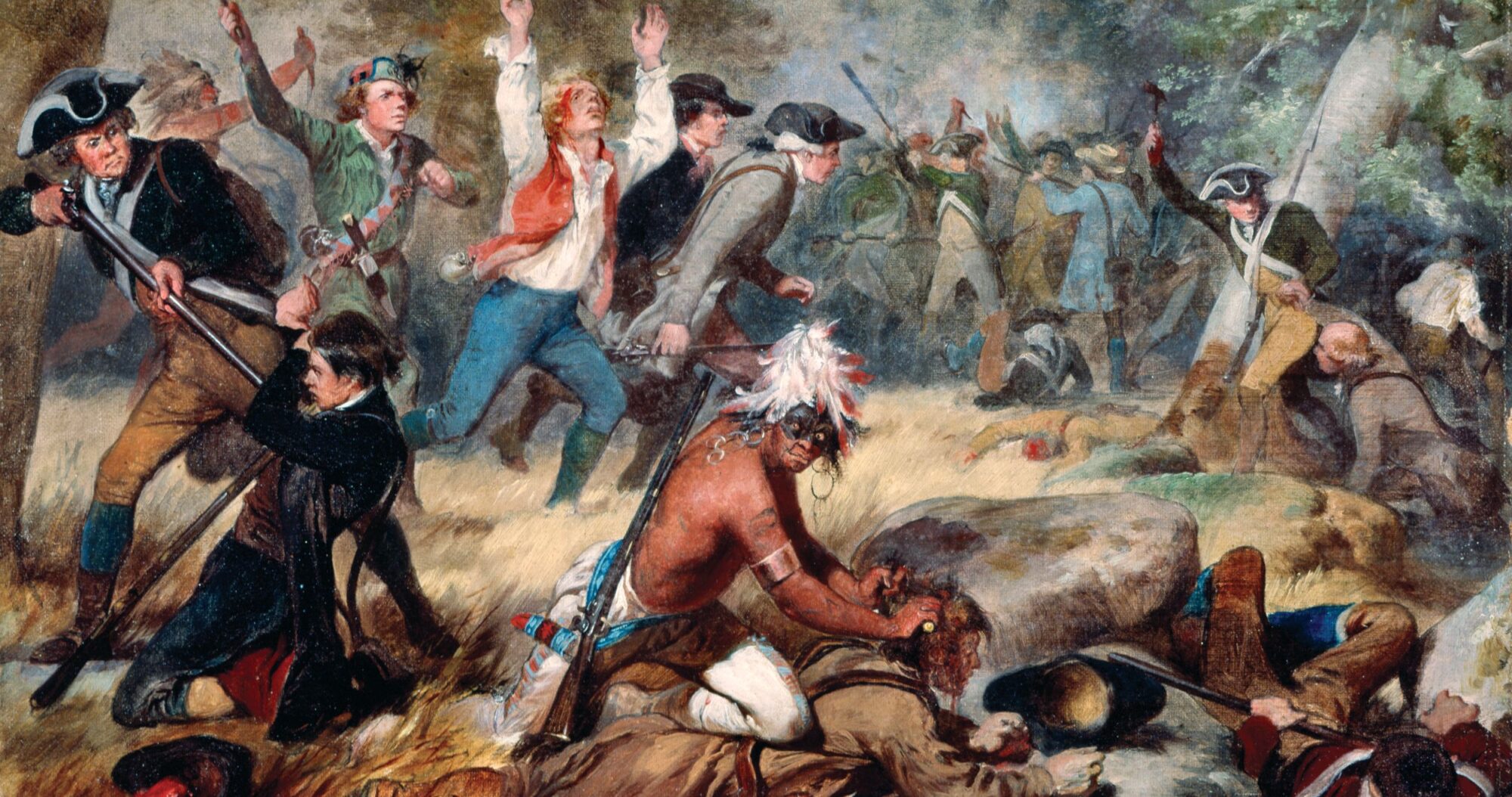
A blood-curdling yell erupted from the Indian warriors waiting in the swamp on the Rebel left. Butler’s Rangers took to their feet and let out a piercing war cry as well. A deadly volley erupted from the Ranger’s position tearing gaps in the Rebel line. As the Rangers fell back to reform and reload, Colonel Butler cried out to his men, “See the enemy retreat! Stand fast and the day is ours!”
Believing the Tories were in retreat, the right wing of the Rebel line advanced another 30 yards. The Rangers, however, were not retreating and the Patriot’s casualties began to mount as they endured a deadly fire from the Rangers on their right and Natives on their left. Quickly spotting the Native threat, Dennison ordered the 3rd and 5th companies to refuse the left flank by facing about and wheeling to reform on a right angle to the 2nd Company. Over the deafening noise of the battle the order was misunderstood and some of the troops thought a retreat had been ordered. As part of the Patriot battle line began to retire, the warriors under Old Smoke came crashing out of the swamp and slammed into the confused Rebel left.
Colonel Butler, seeing the turmoil on his left, could do nothing to prevent a panic overtaking his men. Lt. Col. George Dorrance, an aide to Dennison, shouted at the wavering left flank: “Stand up to your work!” It did little good and Dorrance fell wounded and was later killed. At the other end of the crumbling Patriot line, Captain Hewitt refused to budge despite his company giving way. “The day is lost, shall we retreat!” shouted one of his men. “I’ll be damned if I do,” Hewitt replied and shortly afterward he died fighting with the handful of his men who stayed with him. With most of their company commanders killed or wounded, and Butler’s Rangers charging forward, the Patriot line broke. Now the slaughter began.

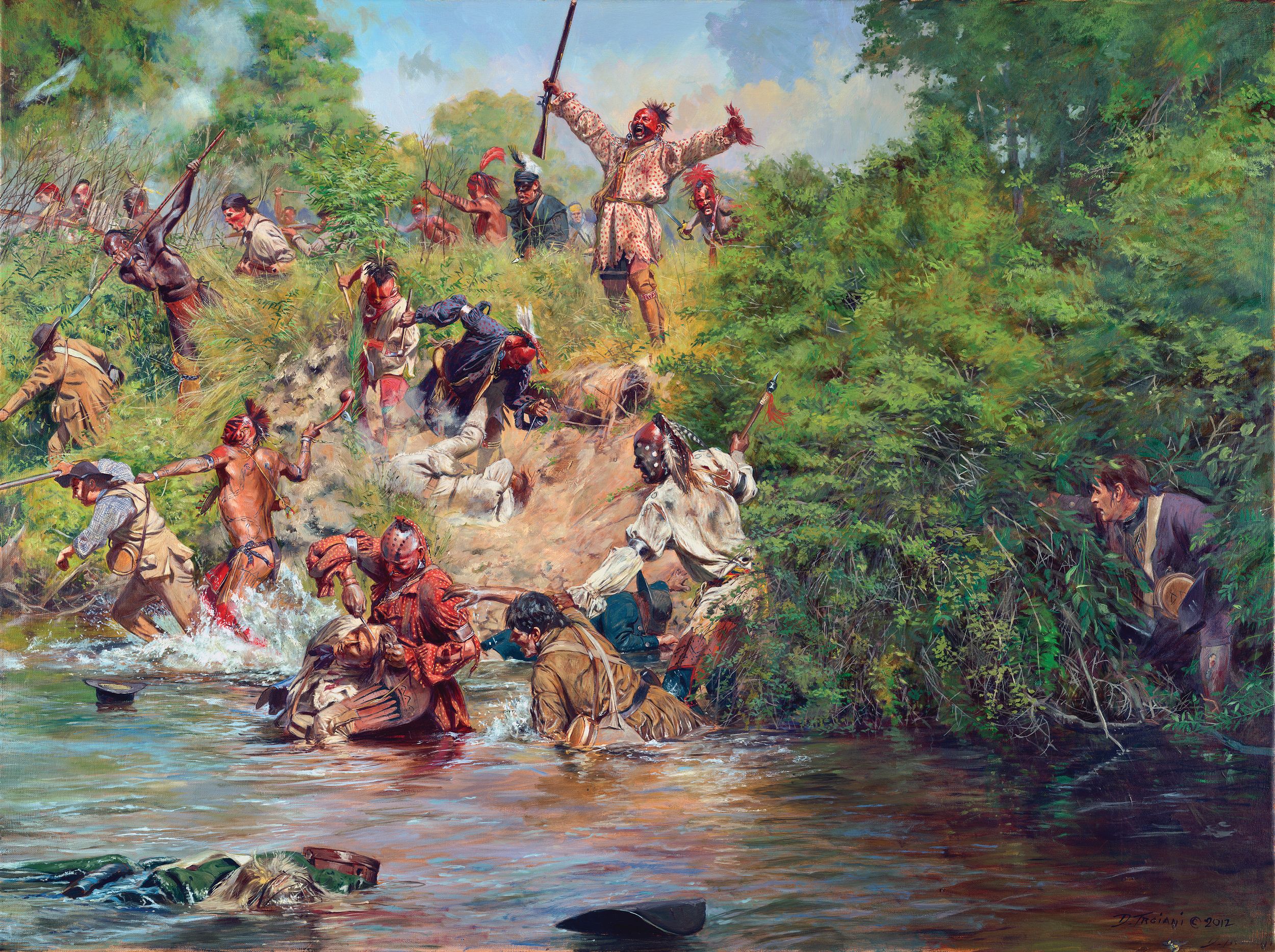
Many of the Patriots fled toward Forty Fort, but a contingent of Natives attempted to cut them off. A good number of the fleeing Rebels were now pressed toward the Susquehanna. Here at the river near the wooded and broad Monocanock Island, the slaughter continued as the Rebels were shot down in the water. Sixteen Rebels were lured back to shore with the promise of not being killed. They were then led into the woods and placed in a ring around a large rock. Here their heads were smashed in with a war club, possibly at the hands of a vengeful Queen Esther Montour who recently had her son killed. Other captured Rebels fared little better as they were led off to the smoldering Fort Wintermoot. Here they were tortured and killed by the Natives.
The bloody battle had only lasted half an hour. “In this action were taken 227 Scalps and only five prisoners,” reported Major Butler. He added that the Natives were so exasperated from their losses suffered in previous engagement the year before, “that it was with the greatest difficulty I could save the lives of these few.” Dennison, who had made it safely to Forty Fort, claimed they had lost 34 officers and 268 men. According to Major Butler the Natives had suffered one killed and eight wounded, while the Rangers had two wounded. Casualties for the Natives, however, may have been higher.
The next morning Major Butler offered Dennison surrender terms which would have the inhabitants lay down their arms and be allowed to return to their farms. The forts were to be demolished and any Continentals to be delivered up. Butler further promised to “use his utmost influence” to preserve the private property of the inhabitants. The Tories upriver were to be allowed “to remain in peaceable possession of their farms, and unmolested in a free trade in and throughout this state.” Finally, Dennison and the rest of the inhabitants were “not to take up arms during the present conflict.”
Before agreeing to these terms, Dennison requested time to meet with his other officers. Major Butler agreed and Dennison quickly headed to Wilkes-Barre Fort to meet with Colonel Butler, who had also escaped the previous day’s carnage. The Patriots had no choice but to surrender, but before they did Butler and a small number of surviving Continentals would immediately escape the valley before Dennison agreed to Major Butler’s terms.
Dennison then met with Major Butler and agreed to the capitulation terms. Despite Butler’s promises, he could not control his Indian allies or some of his Loyalist forces. Dennison elaborated on this in a report: “Nevertheless, the enemy, being powerful, proceeded, plundered, burned and destroyed almost everything that was valuable; murdered several of the remaining inhabitants, and compelled most of the remainder to leave their settlements, nearly destitute of clothing, provisions and the necessaries of life.”
The Natives, some Rangers and Loyalist irregulars in small parties had scattered over the valley and torched barns, homes and mills. About 1,000 buildings would be smouldering ruins before they were done. They also rounded up or killed about 1,000 head of cattle, sheep and pigs. Ranger McGinnis elaborated: “the rebels begged of us to restore them something back, but no, we replied … remember how you took their [Loyalist] property and converted it to rebel purposes; and the persons fell in your hands you immediately sent them off to prison clean into Connecticut, and left their numerous families in the utmost distress. Be contented, rebels, that your lives are still spared and that you have not shared the same fate with your seditious brethren.”

McGinnis added, “This was the argument we made use of to the surviving rebels of Wyoming. But on the whole my heart was affected for the women and children who came after us crying and beseeching us that we would leave them a few cows and we told them it was against the orders of Butler, however, privately we let them have 4 or 5 cows.”
Many Patriot families collected what possessions they could into wagons, oxcarts or boats and fled the valley. These beleaguered families’ horrific accounts spread like wildfire in the nearby Pennsylvania settlements causing many settlers to abandon their homes in what was called the “Great Runaway.”
One escaping Patriot, William Maclay wrote, “I never in my life saw such scenes of distress. The river and roads leading down it were covered with men, women and children flying for their lives.” Maclay confessed he once did not like the Connecticut Yankees of Wyoming Valley, but now felt sorry for them.
On July 8, Major Butler began the return trip back to Tioga with his Rangers and Indian allies. Not long after reaching Tioga, Butler was struck by a violent illness forcing him to retire to Fort Niagara to recover his health. He left Captain Caldwell in command of the Rangers with orders to send out raiding parties to “burn and destroy everything they possibly can,” adding, “If we can prevent the enemy from their grain, their Grand Army (who are already much distressed) must disperse and their country, of course, become an easy prey to the King, their Father.”
The Patriots, meanwhile, in the coming weeks moved back into the Wyoming Valley sending in Continentals troops. Among them was Colonel Butler who, with 113 Continentals and militia, constructed Camp Westmoreland upon the ruins of Wilkes-Barre. Settlers also slowly began to return to the Wyoming Valley to re-establish their farms and homesteads.
In late September, a Patriot force under Col. Thomas Hartley, which included troops from the Wyoming Valley who were breaking their parole earlier given to John Butler, moved up the Susquehanna River and torched Tioga and nearby Queen Esther’s Town. The following year a large Continental army under Maj. Gen. John Sullivan would partially assemble in the Wyoming Valley for a destructive invasion into Iroquois country, laying numerous Native villages, orchards and cornfields to waste. The bloody frontier war raged on, however, as Butler’s Rangers and their Indians allies continued to strike the Rebels from the Mohawk Valley, New Jersey, Pennsylvania, western Virginia and Kentucky.
Join The Conversation
Comments
View All Comments