By William Stroock
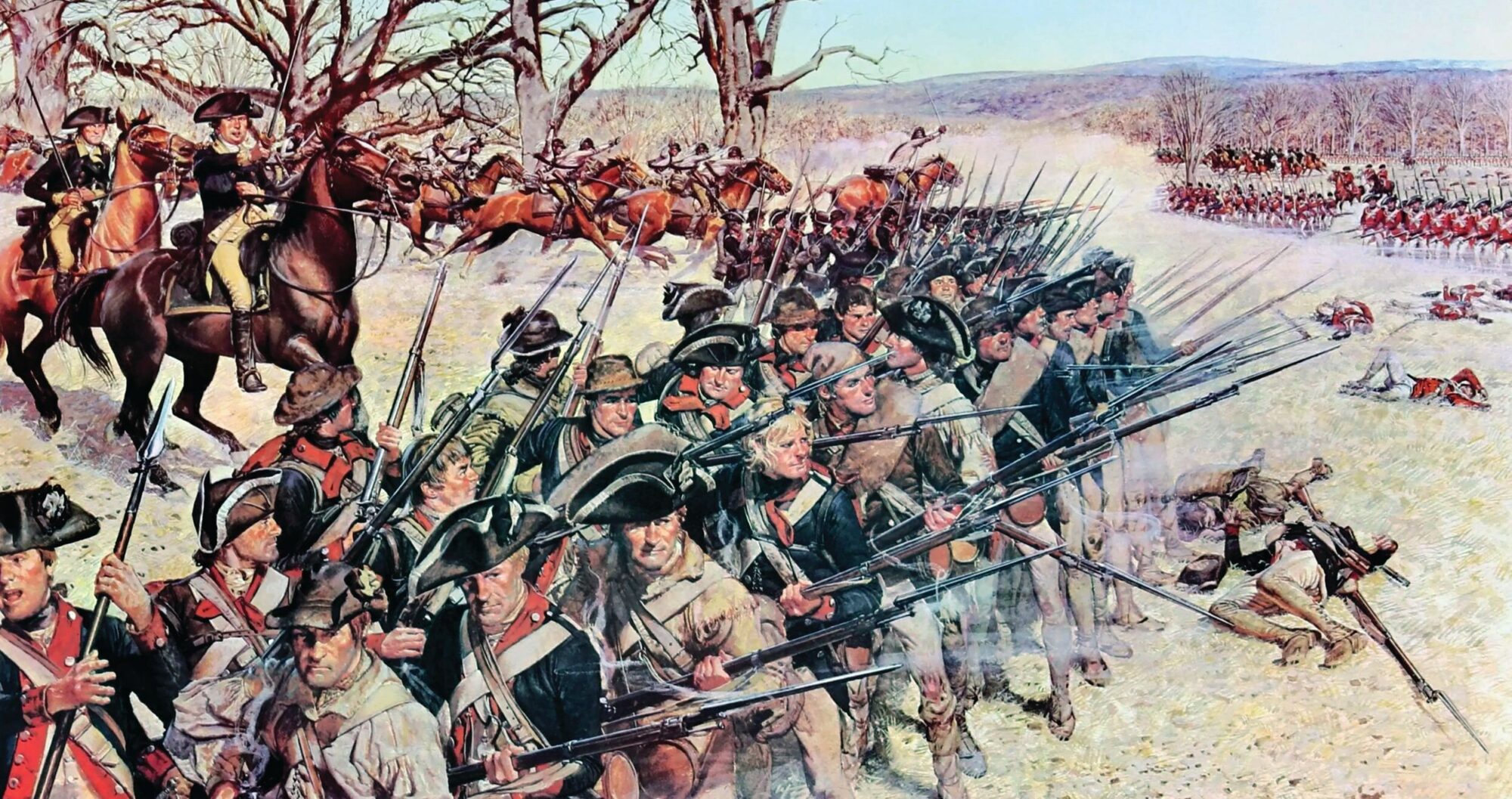
After George Washington, Major General Nathanael Greene was the best officer in the Continental Army. When Washington needed a general to rescue the desperate southern situation, he chose the already battle-hardened Quaker from Rhode Island—whose southern campaign was brilliant. Greene exhausted Cornwallis’s army and reduced the British presence in the Carolinas to a few strongholds. Without winning a pitched battle, he destroyed British power in the South and set the stage for victory at Yorktown.
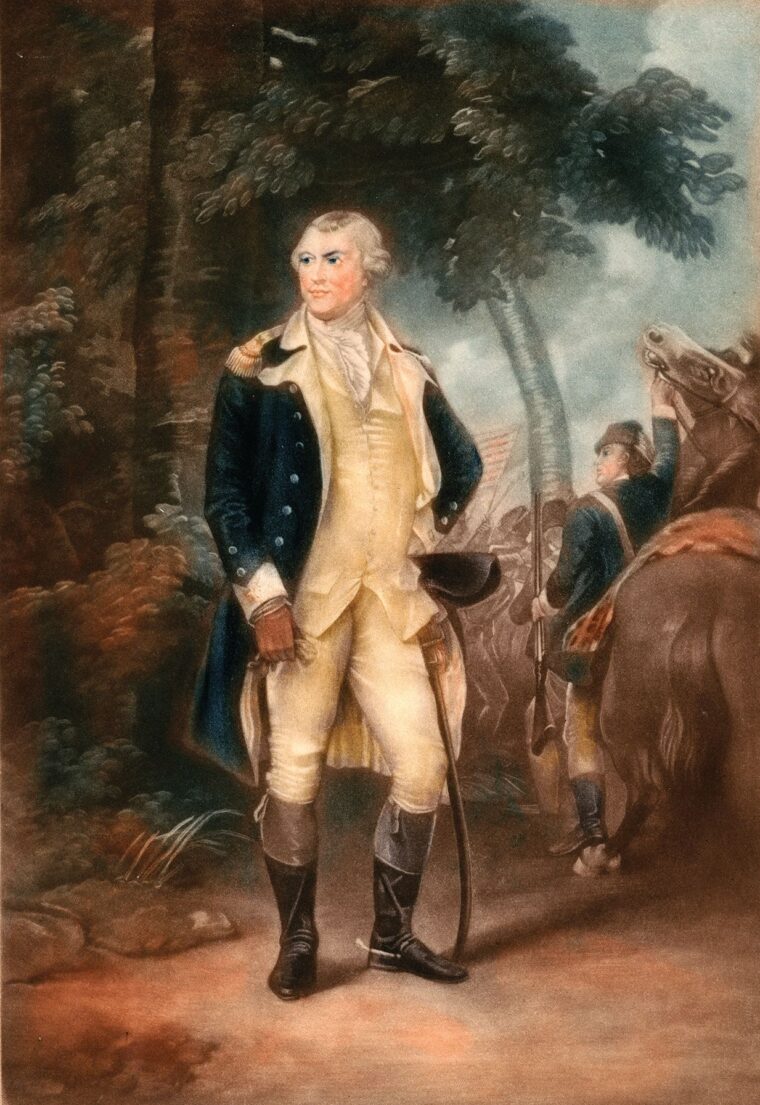
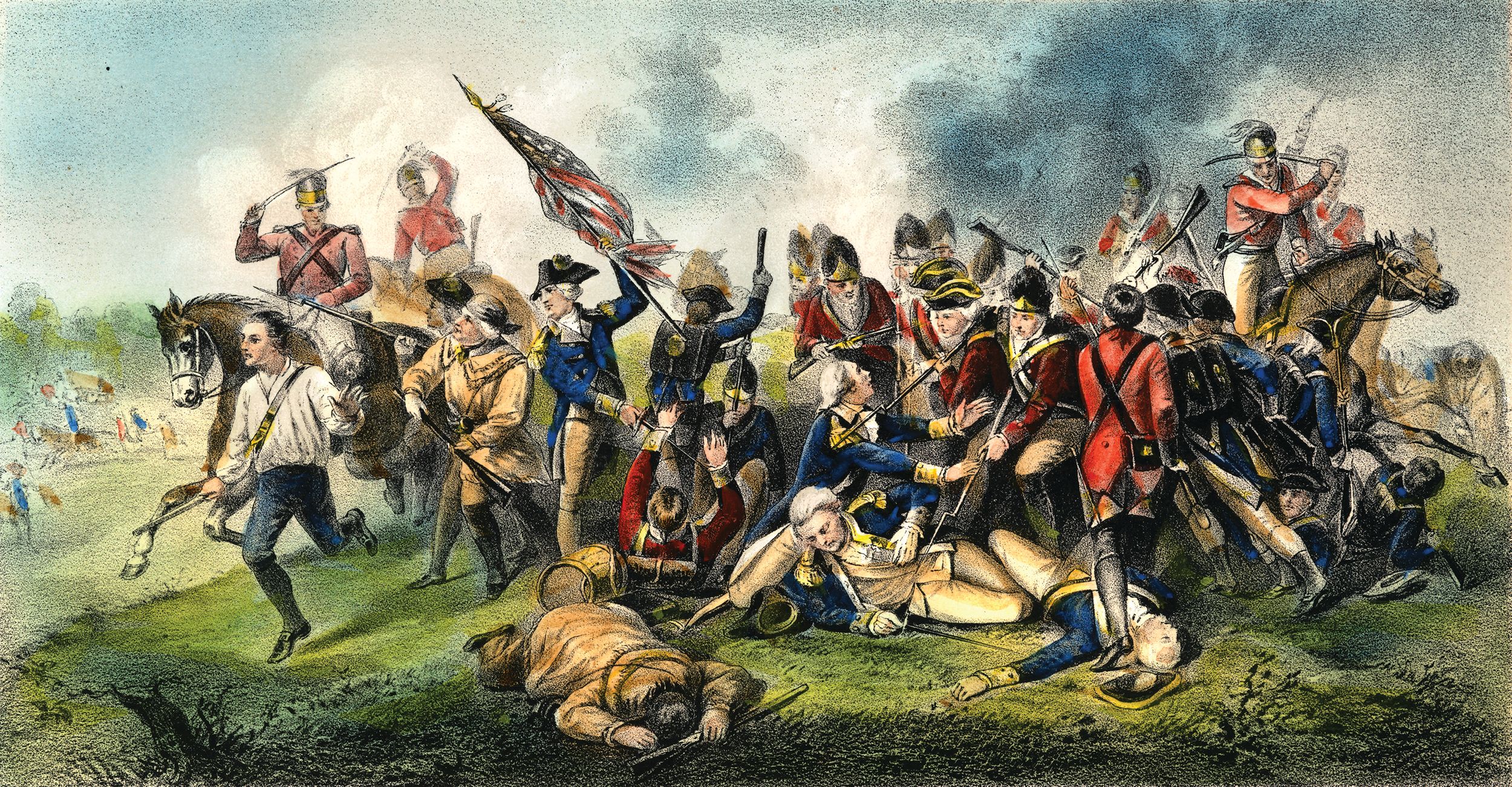
The situation had been far different when Greene took formal command of the Southern Department on December 2, 1780. Savannah had fallen to the British in December 1778, and a joint Franco-American assault to retake the city in October 1779 ended in bloody failure. Next, Charleston and an American force of about 5,500 militia and Continental soldiers capitulated after a long siege in May 1780. Finally, Gen. Horatio Gates’ “Grand Army” had been crushed at the Battle of Camden (August 16, 1780). As summer turned to autumn most of the major towns were in British hands, and Tory partisans roamed the countryside at will. After their tremendous victory, British forces fanned out across South Carolina and, despite increasingly ferocious partisan activity culminating in the Tory disaster at Kings Mountain (October 7, 1780), the British had a solid grip on the state.
Cornwallis reached deep into the interior, following the course of South Carolina’s many rivers.
On the South Carolina–Georgia border, a string of posts ran up the Savannah River to Augusta, within supporting distance of Ninety Six, about 50 miles north on the Saluda River. From Ninety Six, British fortifications extended back to the coast through Fort Granby, Fort Motte, and Nelson’s Ferry, terminating at Georgetown. South of Fort Motte lay Orangeburg, while 50 miles upriver at Camden, Cornwallis established a major operational base complete with supply depots and a garrison. From these posts, British forces threatened the interior toward Charlotte, North Carolina.

Cornwallis’ army was small, but battle-tested and confident. Under his personal command Cornwallis had the 7th Royal Fusiliers, 23rd Royal Welsh Fusiliers, the 33rd Regiment of Foot, and 71st Highlanders infantry regiments, which were augmented by Tory regiments, the Volunteers of Ireland, and two regiments of North Carolina Tories. His force also included the Hessian Regiment von Bose and a detachment of Jägers. Supporting Cornwallis was Lt. Col. Banastre Tarleton, with what amounted to a mobile field force which included the British Legion or “Green Dragoons” itself a mostly Tory outfit, and depending on the situation, interchangeable light infantry contingents. Cornwallis’ force totaled about 4,000 men. Greene was confronting a formidable, competently led army.
Greene’s first task was to get the Southern Department’s commissary in order. Having served as Quartermaster General for more than two years, Greene knew what must be done. Political bodies, wealthy merchants, and fellow generals must be begged, cajoled, and shamed into supplying the army. With this in mind, Greene left the Hudson River Valley for the Carolinas in mid-October.
Greene’s first stop was Philadelphia, where he consulted with Congress and begged them for weapons and provisions. They could supply little. “Congress are by no means alarmed with their critical situation,” a frustrated Greene wrote. He asked Joseph Reed, the President of Pennsylvania and a close friend, for 5,000 muskets. Reed gave him 1,500. He wrote Washington, requesting he make up the difference. Greene wrote to Gen. Henry Knox, asking for cannon as reports said guns in the South were in a “wretched, deranged state.” He scoured the Philadelphia region for wagons, and found about 100.
Having done all he could in Philadelphia, Greene rode on. In early November, he arrived in Annapolis and immediately pressed the governors of Maryland and Delaware for weapons and supplies. After haranguing the Maryland legislature, he acquired a small quantity of supplies and squeezed a little more out of Delaware. But of course, what Greene received was not enough. From Maryland he continued south.
On November 12, Greene checked in on Mrs. Washington at Mount Vernon. After enjoying her hospitality, he reluctantly continued on and reached Richmond on November 16. Here, Greene found a bankrupt government and a populace panicked with the prospect of British invasion. Greene conferred with Governor Thomas Jefferson, who promised supplies, but could deliver little.
At least in Virginia there was work besides begging intransigent legislatures for supplies. Greene put Baron von Steuben in charge of the state’s military establishment. “You must talk one language to the State and one to the Officers,” he advised. “The State must be pressed to provide, and the Officers to obey.” The Prussian immediately set about the task of establishing magazines in Virginia. Von Steuben was effective, if undiplomatic. Many Virginians described him as arrogant and accused the Prussian of having an “imperious contempt of natives.”
Greene took other steps to improve the logistical situation. Realizing that North Carolina was traversed by rivers, Greene arranged for the construction of boats specially outfitted with wheels so they could be easily transported on the march. Once he was satisfied he had done all he could do in Virginia, Greene rode south to take command of the army.
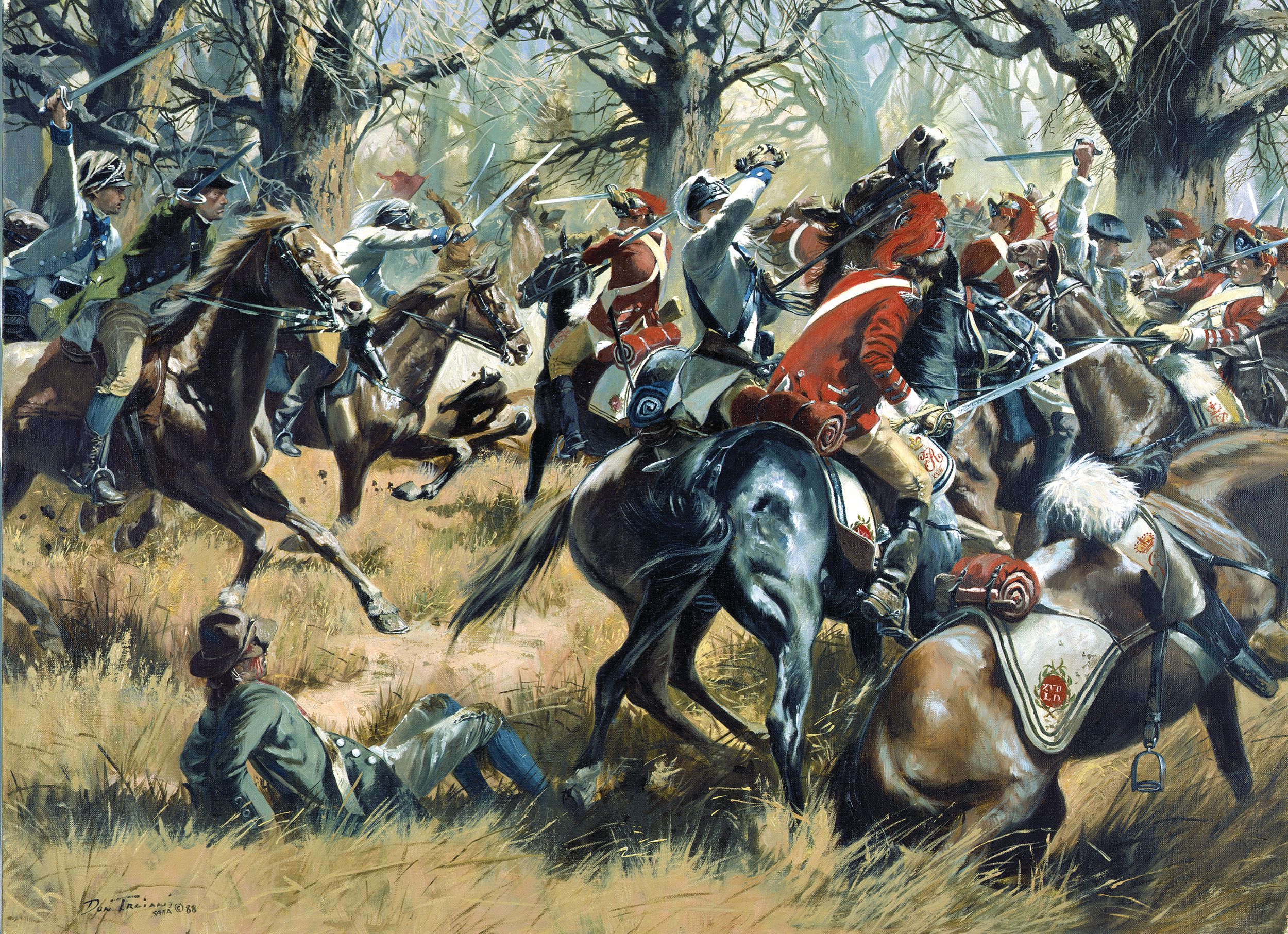
At Charlotte, the army greeted its new commander. Perhaps glad to be rid of his now decrepit “Grand Army,” Gates graciously turned over command to Greene. On paper, the army consisted of 2,307 men. Battered and demoralized, they were also ill-fed, ill-clothed and ill-equipped. Worse, fewer than 1,000 were actually Continentals, the rest being militia whom Greene loathed and distrusted. There were some solid units under his command, such as Kirkwood’s Delaware regiment, and the Maryland Line consisting of the 1st and 2nd Regiments. Greene also had the best cavalry in the Continental Army, William Washington’s 3rd Dragoons, and Harry Lee’s Legion. Even with professional units to round out his shattered army, Greene’s situation was desperate.
Greene’s overriding goal was the preservation of his army as a coherent fighting force. He feared that the British would simply entrench themselves at key points and from these, sortie into the countryside. He did not want to expend his meager strength in bloody frontal assaults since doing so “affords but a poor prospect for success” and “to make an attempt and not succeed will not only bring upon us disgrace, but will be attended with the loss of our best troops.” But as things stood, Greene had little chance of defeating Cornwallis in open battle. Greene reasoned that, if he could not immediately make himself stronger, he would weaken Cornwallis.
In an effort to even the odds, Greene sent Daniel Morgan west with 300 Continentals and 200 Virginia militia. Greene told Morgan that “The object of this detachment is to give protection to that part of the country [the western backcountry] and spirit up the people, to annoy the enemy in that quarter; collect the provisions and forage out of the way of the enemy.”
In pursuit, Cornwallis sent Tarleton, who commanded his own “Green Dragoons,” a battalion of the 71st Highlanders, a battalion of the 7th Regiment, 50 of the 17th Light Dragoons, and some Tory militia. He was aggressive in the field, and a sound organizer in camp who looked after the welfare of his men. But, in sending a hard-charger like Tarleton after Morgan, Cornwallis sowed the seeds of his own defeat.
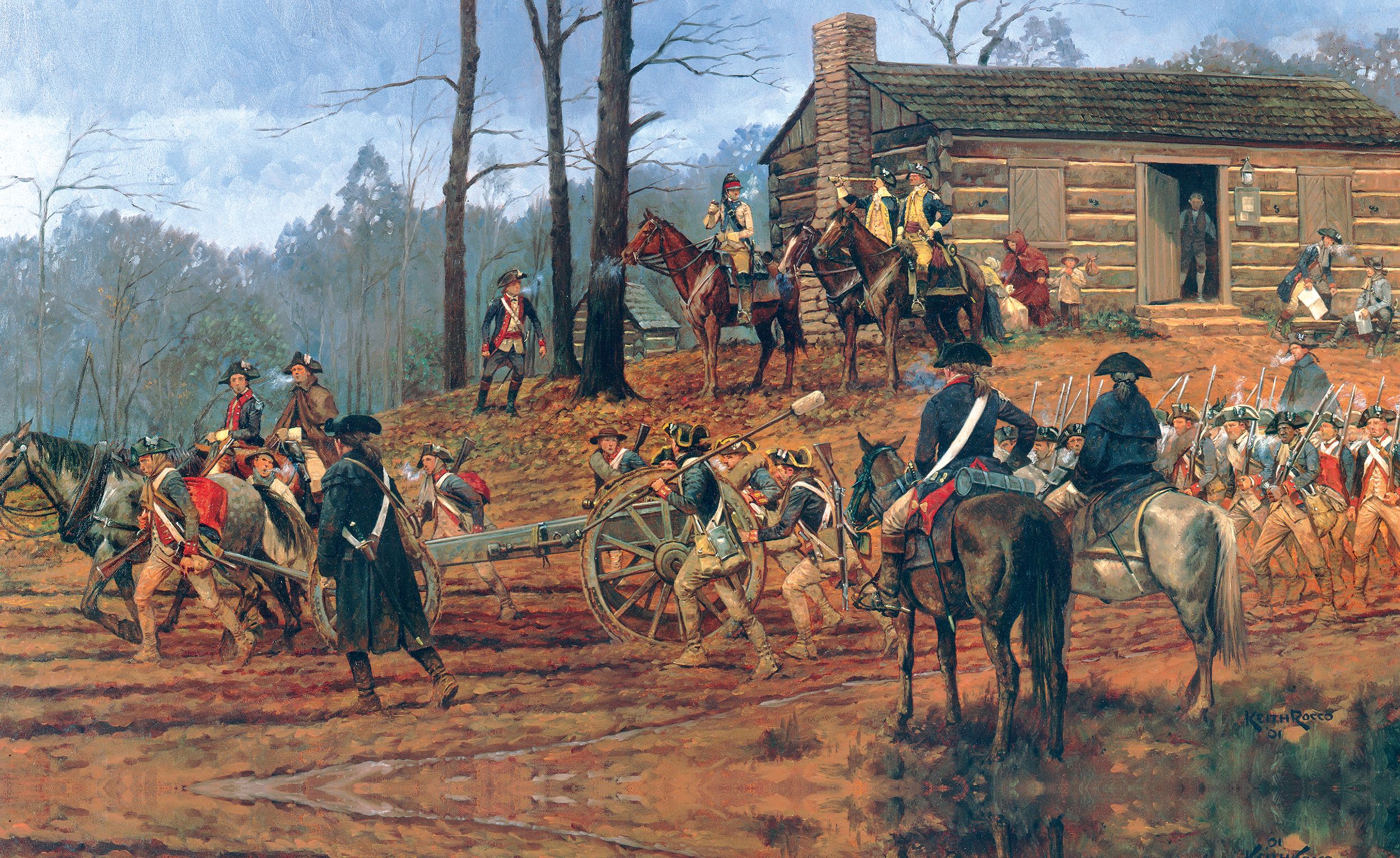
Morgan ran away from Tarleton, bringing him further and further into the Patriot interior, which drew him away from Cornwallis. Tarleton raced to overtake him, which he finally did on January 17 at Cowpens, or so he thought. Morgan was not caught so much as he was tired of running. Turning to fight with the best combination of infantry and cavalry in the Southern Department, Morgan crushed Tarleton. Though a small battle, the importance of this victory is not to be underestimated. W.J. Wood, author of Battles of the Revolutionary War, wrote, “The news of Cowpens was a boost to American morale that spread across the colonies from south to north…Cowpens was seen as a victory of an American combination of regulars and militia over veteran British regulars in a stand-up fight.”
Morgan was too good a general not to anticipate that Cornwallis was rushing to Tarleton’s rescue and he hurried to unite with Greene’s main army, which he did on February 8 at Guilford Courthouse. Upon reaching Greene, Morgan’s medical ailments forced him to relinquish command and return home.
Despite the Cowpens victory, Greene was still in no shape to fight. And with Cornwallis just 25 miles to the west at Salem, Greene was determined to get away fast. In a council of war, Greene and his officers decided that the best course of action was a headlong flight to Virginia. Here, the army could rest and refit, and place a river between themselves and Cornwallis. Importantly, Greene already knew what it would take to traverse North Carolina.
Greene had already reconnoitered the Dan River during his journey south, learning its fords and ferry points. While the upper fords were closer to his position at Guilford Courthouse, and more hospitable to crossing, they were also closer to Cornwallis. Greene hoped Cornwallis would make for these fords, because he had no intention of crossing there. Instead, Greene prepared the way to cross the lower fords near Dix’s Ferry, Boyd’s Ferry, and Irwin’s Ferry, assembling water transport there to augment his wheeled boats.
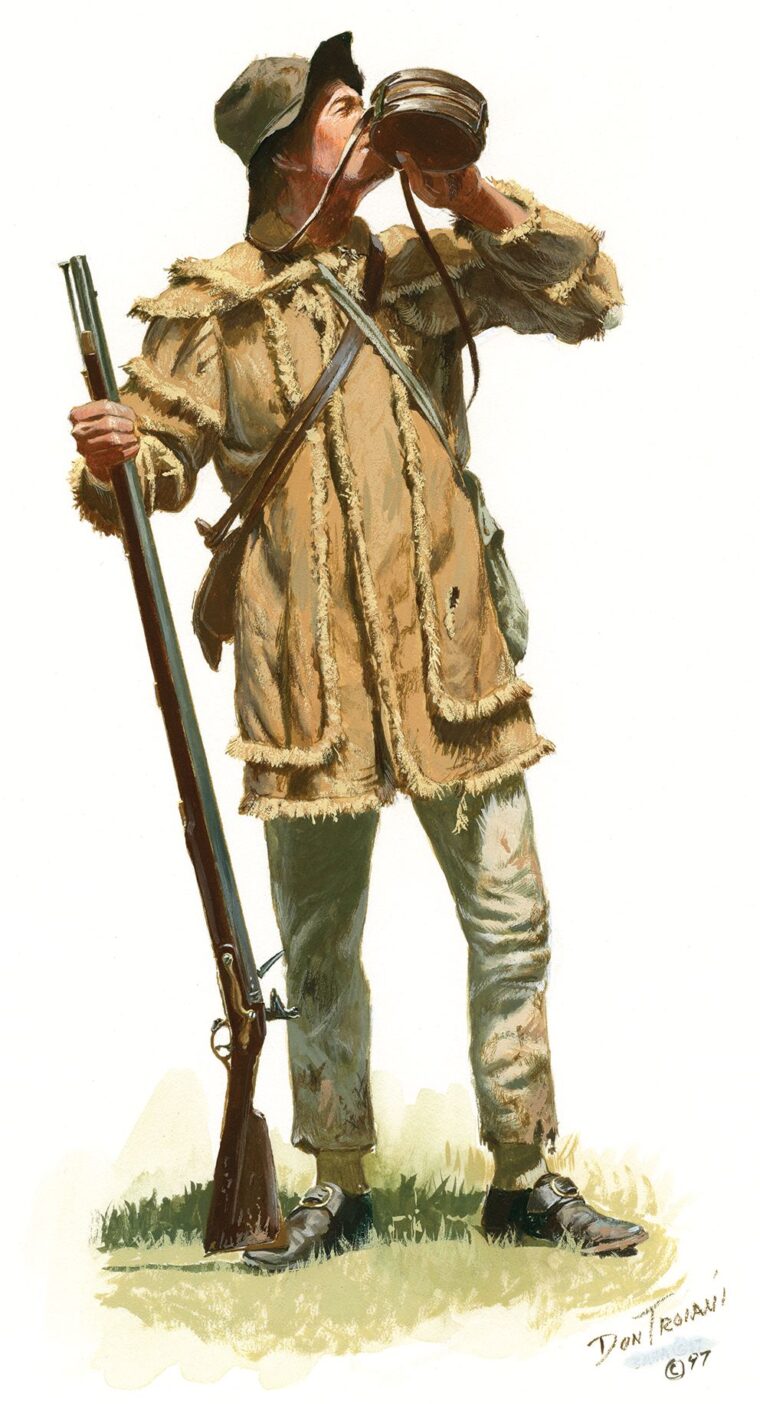
On February 10, the race to the Dan began with Cornwallis pointed in the wrong direction. Greene used his head start to gain a lead and keep his army just ahead of the British. Once Cornwallis realized his mistake, he corrected and pursued, Tarleton in the lead, harrowing Greene’s rear guard. But Greene had a rock-solid commander bringing up the rear, Brig. Gen. Otho Holland Williams, who used William Washington’s dragoons and Harry Lee’s cavalry to keep Tarleton at bay. Cornwallis was never able to catch up to Greene, who brought his main army across the Dan on the morning of the 14th.
In Virginia, Greene rested and refitted his army. Meanwhile, across the Dan, Cornwallis was far away from his base, at the end of a supply line more than 200 miles long, and in a hostile countryside in the dead of winter that had already been picked clean. His army was at the end of a long chase for which they had nothing to show, and they were tired. Greene grew stronger while weakening Cornwallis.
After resting and re-supplying his army, Greene recrossed the Dan on the 22nd, and proceeded to lead Cornwallis into another long and unproductive chase which ended on March 15 at Guilford Courthouse. Greene, having previously camped there, thought it a good place to fight, and fight he did.
The two armies slashed away at one another in the most ferocious battle of the war. At the decisive moment Greene may have been able to achieve victory had he been willing to risk everything. The wall of lead and bayonets thrown up by the Continentals inflicted heavy casualties on the British, so why risk the destruction of the only Continental army in the South? Rather than prolong the battle of attrition, Greene pulled back in good order, though he had to leave some guns and ammunition on the field. “But the purchase was made at so great an expense that I hope it may yet affect their ruin,” Greene wrote to Thomas Sumter the day after the battle.
For Greene, retreat was the right decision. Bloodied and battered, Cornwallis disengaged and withdrew to Wilmington where he could be re-supplied under the protection of the fleet. Cornwallis’ withdrawal all but conceded North Carolina to the Continentals, and opened the way for Greene to liberate South Carolina. The general was eager to take the field, “Our troops are refreshing themselves [at Cross Creek (modern Fayetteville) nearly 100 miles from Guilford Courthouse (modern Greensboro)] and I hope a few days will enable us to fight them with more decided advantage.”
Now holding the momentum, Greene gathered his army and marched into South Carolina, where Francis Lord Rawdon waited with his army of redcoats and Tories. Six weeks after the bloody Battle of Guilford Courthouse, Greene found Rawdon outside Camden at Hobkirk’s Hill (April 25, 1781). Again the field was hotly contested, and again the redcoats held it at the end of the day—but once again, the British were too weak to maintain their presence in the area. Not only did Rawdon leave Camden, he also ordered the abandonment of Fort Granby, the vital link between his westernmost outpost at Ninety Six and the supply base at Fort Motte. With Greene pressing hard, Rawdon gathered his troops and fell back farther east to Nelson’s Ferry.
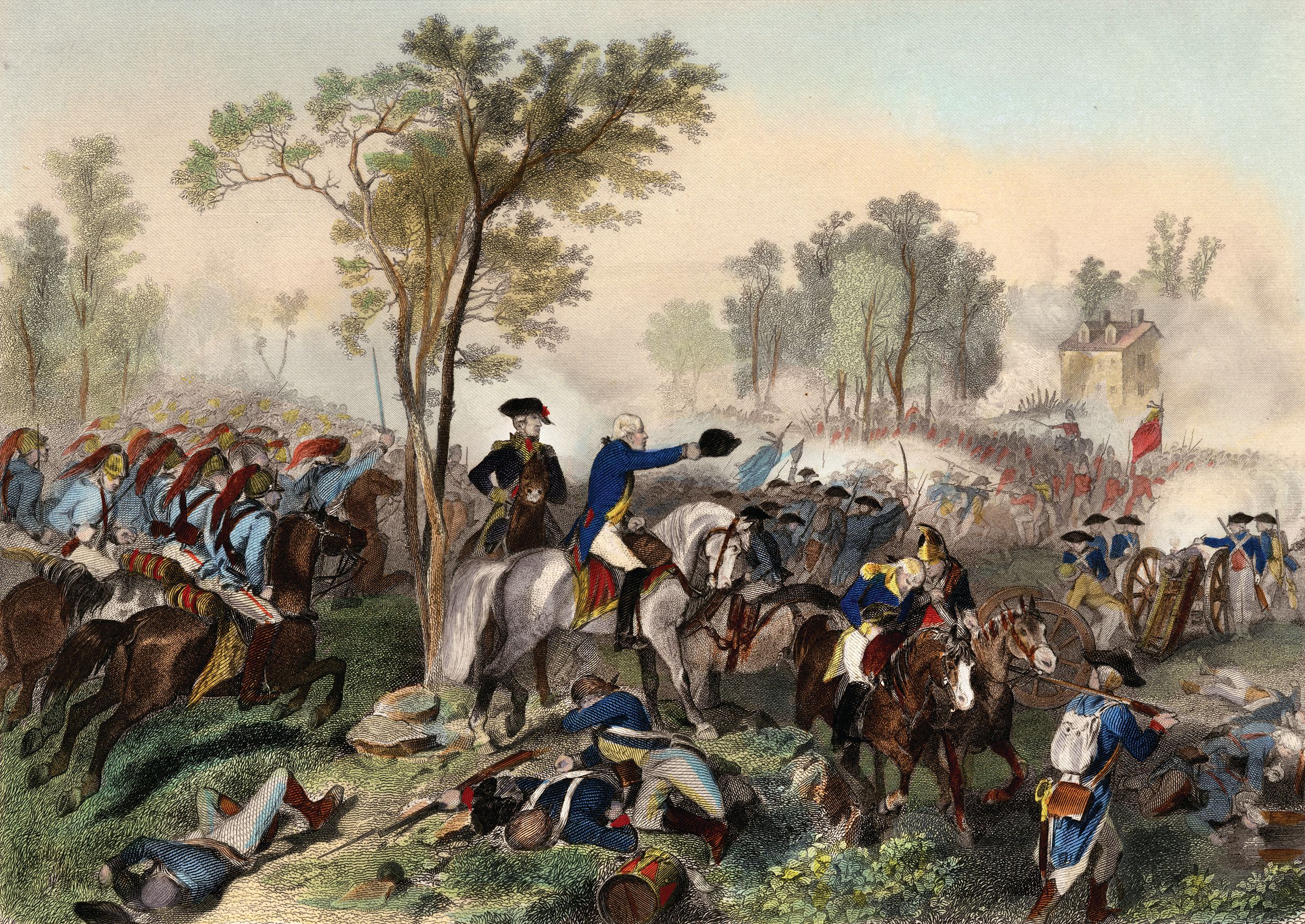
Greene positioned his army between the backcountry and Rawdon, unleashing his partisan forces on his interior strongholds. Thomas Sumter, the “Gamecock” assaulted Tory works at Orangeburg, while Marion and Lee besieged and took Fort Motte. With these two nearby forts in enemy hands, Rawdon ordered the evacuation of Nelson’s ferry, thereby doing Greene’s work for him. Soon afterwards, Marion moved against and took the Tory base at Georgetown while Lee negotiated the capitulation of Fort Granby. By late May, Tory resistance in the backcountry was collapsing and, with the exception of Charleston and Savannah, the only important posts still in British hands were Ninety Six and Augusta, Georgia.
Greene hit these strongholds next, sending Lee against Augusta supported by strong militia groups commanded by Andrew Pickens and Elijah Clarke. After a prolonged struggle, Augusta fell on June 6. Meanwhile, with the main army, Greene assailed Ninety Six which held on despite everything Greene could throw at it, even a frontal assault. Rawdon marched to the relief of the garrison at Ninety Six, but seeing his resources stretched so thin, Rawdon chose to abandon the outpost. Once again, the British briefly held the field before retiring. By July, he had lost the entire backcountry, and made Greene stronger in the process.
Having abandoned the interior, Rawdon used his consolidated force to retake Orangeburg. Greene cautiously moved into the area and, on September 8, 1781, met the British, now under Col. Alexander Stewart, at Eutaw Springs. It was a bloody battle in which Greene took nearly 25 percent casualties; British losses were even greater. But while Greene could replenish his losses, Stewart could not. Three days later, the British pulled back to Monck’s Corner, about 20 miles north of Charleston, where they could not even threaten the interior. With the exception of a few coastal strongholds, the Carolinas were back in Continental hands.
Greene won the campaign by maximizing his strength. These were his militia commanders, supported by regular officers like Lee and Washington, and his superior logistics, helped by the fact that he was fighting on his home turf. More importantly, he exposed the British weakness of long supply lines and diminishing resources. Lastly, Greene led the British onto ground of his choosing. Of course, the biggest threat was the British army. Greene never beat Cornwallis, Rawdon, or Stewart, but at each major battle he savaged them and compelled their strategic withdrawal. Despite heavy casualties, Greene preserved his army’s fighting ability.
“We get beat, rise and fight again,” Greene wrote.

Good history. Thank you. We have a such great heritage.