By Colonel Samuel J. Rob (Ret.)
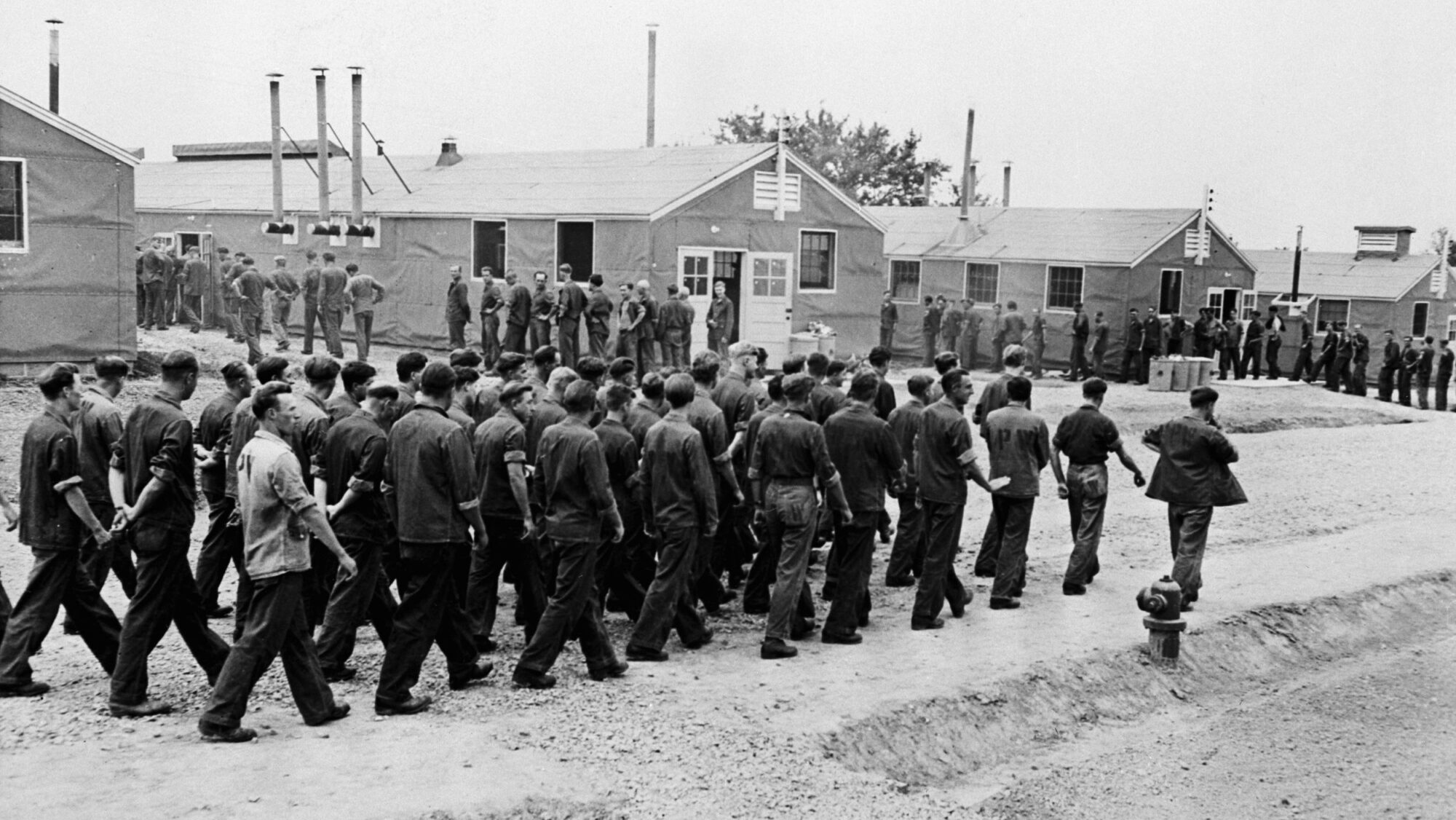
German U-boat crewman Werner Drechsler arrived at POW Camp Papago Park north of Tempe, Arizona, on March 12, 1944. Built by the Army in 1943 to house Kriegsmarine (German Navy) prisoners, the camp had a capacity of 3,000, with four compounds for enlisted men and one for officers. The inmates, most of whom had been captured from U-boats, referred to it as Schlaraffenland—the land of milk and honey. The experience in sunny Arizona was a far cry from that of Allied prisoners in Axis POW camps. At Papago Park, prisoners did not have to work or study, but could do so if they chose. There was a theater showing two films a week, a camp choir, and a prisoner-run newspaper called The Papago Rundschau (Review). But for Drechsler, Papago Park was a nightmare. Only six hours after his arrival, he was brutally beaten and hanged by his fellow inmates. The prisoners responsible for Drechsler’s death felt justified in executing a traitor, but the Army saw it differently and decided to prosecute the men.
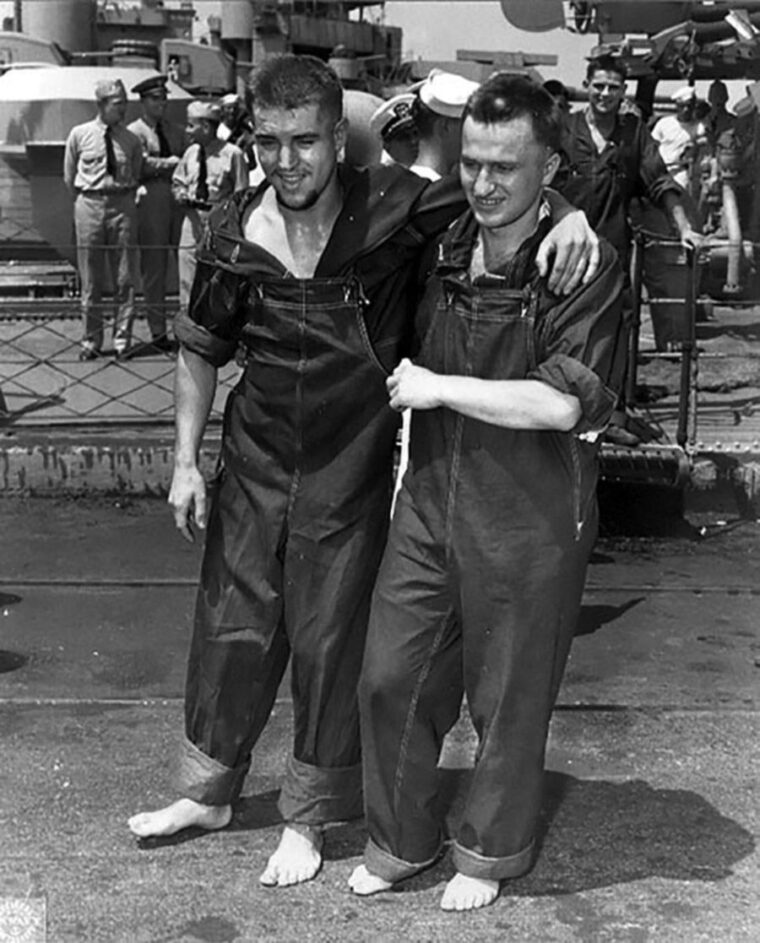
The German submarine, U-118, was commissioned on December 6, 1941. Its crew consisted of five officers and 47 enlisted men. On its first three patrols, U-118 sank three merchant ships and a convoy escort, the Canadian corvette HMCS Weyburn. On its fourth patrol off the coast of Africa, it was attacked and sunk by aircraft from an American escort carrier, the USS Bogue. The destroyer USS Osmond Ingram rescued 16 submariners and took them as prisoners of war.
The German submariners were taken to the United States and interrogated at Fort Meade, Maryland. Drechsler, who had been wounded, was part of the group of prisoners from U-118. He cooperated and provided information about the German submarines and their tactics. For seven months, he also acted as a spy for the Americans. Giving him a false name, Navy interrogators would put him in with new German prisoners being held at the interrogation center to befriend them and elicit information. Submariners were a very small percentage of the overall German POW population captured by the Americans, most of whom were sent to Camp Papago Park in Arizona. Navy officials had specifically warned the Army, which oversaw the operation of all POW camps in the U.S. not to send Drechsler to Camp Papago.
But, for reasons never explained and still not clear to this day, Drechsler was sent to Papago Park. His identity and his cooperation with the Americans were known to the camp POW population within two hours of his arrival. He was recognized by one of the POWs who had been his cellmate at Fort Meade, who told the others that Drechsler had gone by another name there. Unsure of how to proceed, the enlisted POWs surreptitiously passed a message to Fregattenkapitan (Frigate captain) Jurgen Wattenburg, the ranking German officer in the camp, requesting guidance.
Fearing that Drechsler might be moved to safety before a response was received, a “court” was hurriedly convened by the senior noncommissioned officer (NCO). Based on testimony regarding Drechsler’s activities at Fort Meade, the “court” found the evidence so overwhelming that it was deemed unnecessary for Drechsler to appear at his “trial.” While Drechsler was found guilty, the senior German NCO thought it was outside his jurisdiction to pass sentence, and thus left it up to the other POWS to decide punishment.
With no sentence having been pronounced, a small group of POWs (possibly as many as 15) decided among themselves that it was their duty as German fighting men to kill a traitor. That night, seven of the group attacked Drechsler, beat him and kicked him until he was unconscious, then hanged him with a rope from the rafters of the shower room in the POW bath house.
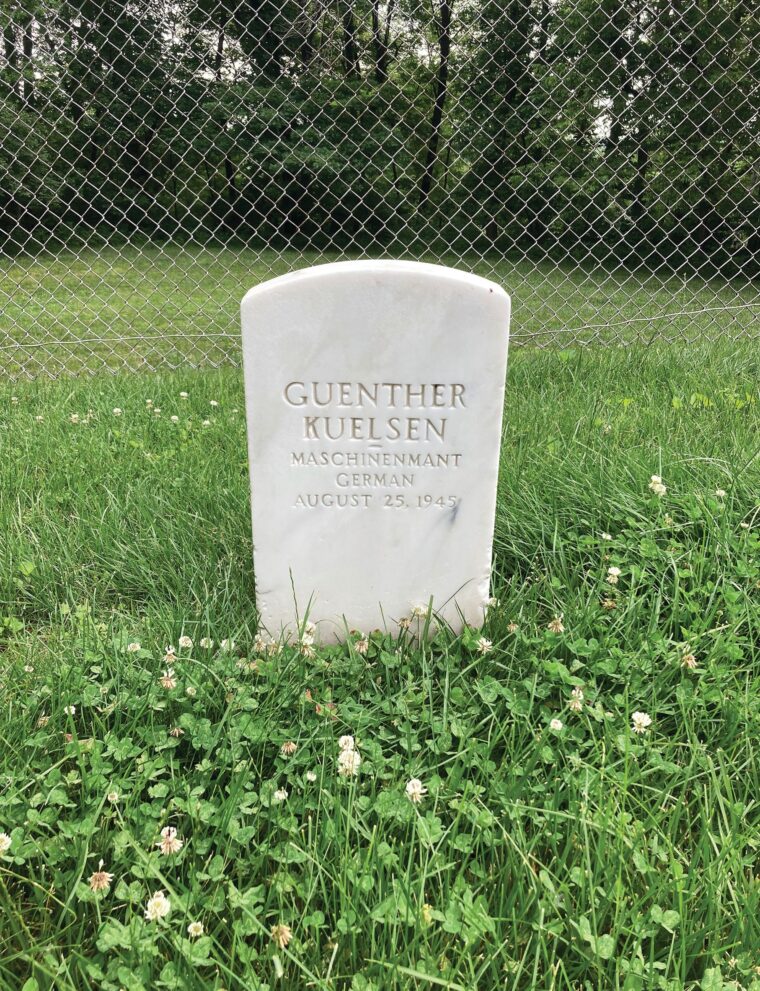
Seven men were identified by the Army as having killed Drechsler: Helmut Fischer; Fritz Franke; Bernhard Reyak; Guenther Kuelsen; Otto Stengel; Heinrich Ludwig; and Rolf Wizuy. A little more than six hours after his arrival at Camp Papago Park, the 21-year-old Drechsler was dead.
His body wasn’t discovered by the American guards until the next morning. Despite intense questioning that included lie detector tests, the murderers were not initially identified. In all, 20 POWs were targeted as suspects and moved to a secret interrogation camp near Stockton, California, on May 3, 1944. Repeated interrogations (interrogation techniques classified) resulted in confessions.
The investigation was completed June 20, 1944, two weeks after the D-Day invasion, with a recommendation that the seven POWs be tried for murder. A recommendation that two German POW NCOs, Siegfried Elser and Friedrich Murza, should also be charged, as accessories before the fact, never went forward for reasons that were not recorded.
First Lieutenant Harry A. Baldwin, a judge advocate from Camp Douglas (near Salt Lake City, Utah) was assigned to conduct the pretrial investigation. The seven POWS were moved from the secret interrogation camp to separate locations throughout California where they were subsequently interviewed by Baldwin. The prisoners waived their rights against self-incrimination and re-affirmed their prior confessions, believing they had simply carried out their duties as German sailors to kill a traitor.
The court-martial of the seven German prisoners was held August 15-16, 1944, at a POW camp near Florence, Arizona. Col. Cassius Poust was the president/law officer; the 12 court members, all officers, ranged in rank from colonel to captain. Maj. Francis Walsh, the judge advocate who had served as the board recorder for the initial murder investigation conducted at Camp Papago Park, was assigned to prosecute the case, assisted by another judge advocate, Capt. Robert O. Hillis. The seven accused were jointly represented by a judge advocate defense counsel, Maj. William H. Taylor. and his assistant defense counsel, Maj. Harold A. Furst, also a judge advocate. Through the same interpreter used for the interrogations, all pleaded not guilty at the court-martial.

The defense theory of the case was that the German POWS did not commit a crime since Germany was at war with the United States and Drechsler had committed treason. Three of the accused (Stengel, Wizuy, Fischer) also testified that the interrogations were coercive, giving as one example having to wear three heavy winter overcoats in hot weather and a gas mask with an onion placed inside it until the prisoner confessed. In closing arguments, the defense counsel asked the court to consider what American POWs would have done in a similar situation if they had found a traitor in their midst. But their argument was not persuasive as the court found all seven guilty of murder and sentenced them to death by hanging—though the latter was not revealed to the accused at the time.
Following the trial, the case was forwarded to the general court-martial convening authority for review. On September 15, 1944, the general court-martial convening authority forwarded his review approving the sentences, but recommended that each sentence be commuted to life imprisonment.
Since presidential approval was required to carry out the executions, the case was forwarded to the Office of The Judge Advocate General who, pursuant to Article of War 501/2, appointed a three-member board of review composed of judge advocates. On November 17, 1944, the three-member reviewing authority found the record of trial legally sufficient to support the findings of guilt, as well as the death sentences. The case was thereafter forwarded to the Secretary of War for review and presentation to the President of the United States.
On January 27-29, 1945, the seven German submariners were transferred to the Disciplinary Barracks at Fort Leavenworth, Kansas, where they joined eight other German POWs awaiting execution for the murder of other German POWs.
Article 66 of Geneva Conventions required the United States to send notice of the POW death sentences to the German Government. By note, dated January1945, the German Government responded that it held American POWs under death sentences, too, and would execute an equal number of American POWs. On April 12, 1945, the U.S. Government received notice of the German Government’s willingness to exchange the POWs in question in lieu of executions and the executions were accordingly delayed pending discussions between the two governments.

Unfortunately for the German POWs, these communications broke down on April 24, 1945, with the collapse of the German Government and its surrender on May 8, 1945. Once it was determined that all American prisoners were safely back under the control of the victorious Allies, the U.S. dropped the idea of a prisoner exchange. To add further misfortune for the German POWs, the Allies’ discovery of the Nazi concentration camps also hardened resolve against the Germans for their brutal conduct of the war.
In July 1945, President Truman, while grappling with the decision whether or not to use the atomic bomb against Japan in order to bring the war to an end, confirmed, with one exception, the death sentences of the 15 German POWs awaiting execution.
On March 22, 1945, at the Camp Chaffee Prisoner of War Camp in Arkansas, Edgar Menschner beat fellow prisoner Hans Geller so badly that he died the following day. Menschner was convicted of murder and sentenced to death. No official explanation has ever been offered for Truman’s July 6th, 1945, decision to commute this one death sentence to 20 years of hard labor. Menschner later returned to Germany and was lost to history.
On July 10, 1945, five German POWs sentenced to death for the murder of fellow German POW Johannes Kunze were hanged at Fort Leavenworth. Suspected of giving information to the Americans, Kunze was beaten to death in Oklahoma’s POW Camp Tonkawa.
Two other German POWs were tried at Fort McPherson, Georgia, and sentenced to death for the murder of fellow German POW Horst Gunther. Rudolf Straub and Erich Gauss were hanged at Fort Leavenworth on July 14, 1945. Gunther had been strangled to death at POW Camp Aiken in South Carolina and his body hung to disguise it as suicide.
On August 15, 1945, Japanese Emperor Hirohito announced the surrender of Japan after atomic bombs dropped on Hiroshima on August 6, 1945, and Nagasaki on August 9, 1945, killing anywhere from an estimated 110,000 to 210,000 Japanese civilians. The German POWs thought that the end of war meant they would not be executed, but returned to Germany instead, but they were mistaken.
The executions for the Drechsler case took place on August, 25 1945, beginning at one minute past midnight. Hanged one at a time in an elevator shaft in an abandoned warehouse within Fort Leavenworth’s United States Disciplinary Barracks (USDB), the prison personnel, applying lessons learned from the prior executions in July, completed all seven executions in less than three hours. The graves of all seven can be found today on a secluded hillside on Fort Leavenworth in the USDB inmate cemetery. Their victim, Werner Drechsler, is buried at the Fort Bliss National Cemetery.
In addition to the 14 German prisoners executed by the U.S. military, 129 people were executed in the United States in 1945—71 by electrocution, 34 by gas chamber, 23 by hanging, and one by firing squad.

The war was over. POWs were being returned to their countries. This was pure vengeance carried out against Submariners that had little if any knowledge of the concentration camps. Their families, if they were ever found and notified, should have sued the US.
That is nonsense. They committed murder and were punished accordingly. Using your logic that ‘the war was over’ can also be used against the prisoners who beat and murdered Werner Drechsler. Their war was ‘over’ and vigilante justice is not justice at all. Read the book ‘The OX Bow Incident’ by Walter Van Tilburg Clark and get back to us, Sir.
This seems to have been the inspiration for the film The MacKensie Break with a different setting in a British run POW camp and a different ending.
The war being over, their knowledge of concentration camps had nothing to do with their crime. They were hanged because they murdered a man. Also, prisoners of war do not have the authority to hang fellow prisoners. Kind of a dumb defense.
Sir,
With all respect, the seven were not hanged because a war was or wasn’t in progress. They were hanged cause they took vengeance into their own hands and murdered a fellow prisoner. They did not have authority to do this. If they had been US POW’s I’d expect a German military court to find them guilty as well.