By Eric Niderost
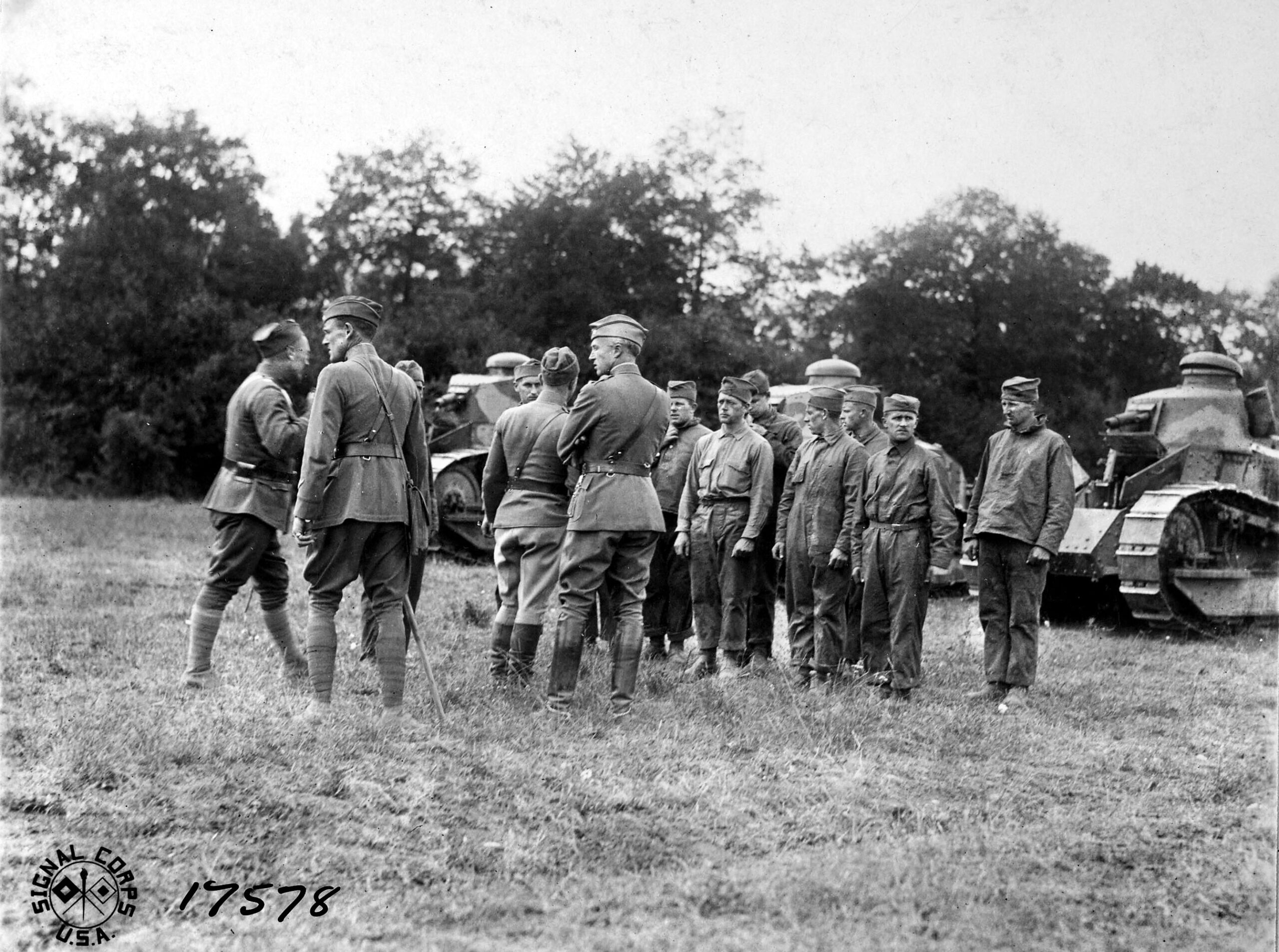
Colonel George S. Patton Jr. stood there in the rain, waiting for the offensive to begin. It came down in sheets, accompanied by a wind that chilled a man to the bone, but Patton’s mind was on other things. It was Thursday, September 12, 1918, and elements of his 1st Provisional Tank Brigade (later redesignated the 304th Tank Brigade) were preparing to support the 1st and 42nd Divisions of the American IV Corps, American Expeditionary Forces (AEF), in launching a major offensive against the German foe.
It was still night, but the dark sky was periodically brightened with flashes of light, the dazzling illuminations accompanied by rumbling thunder so loud that men could not hear themselves speak. The rain was still pouring down, but the peals of thunder were man-made, not natural. They came from Allied and American artillery, softening up the enemy positions with a barrage of such immense power and scope that eventually expended well over three million shells in a matter of a few hours.
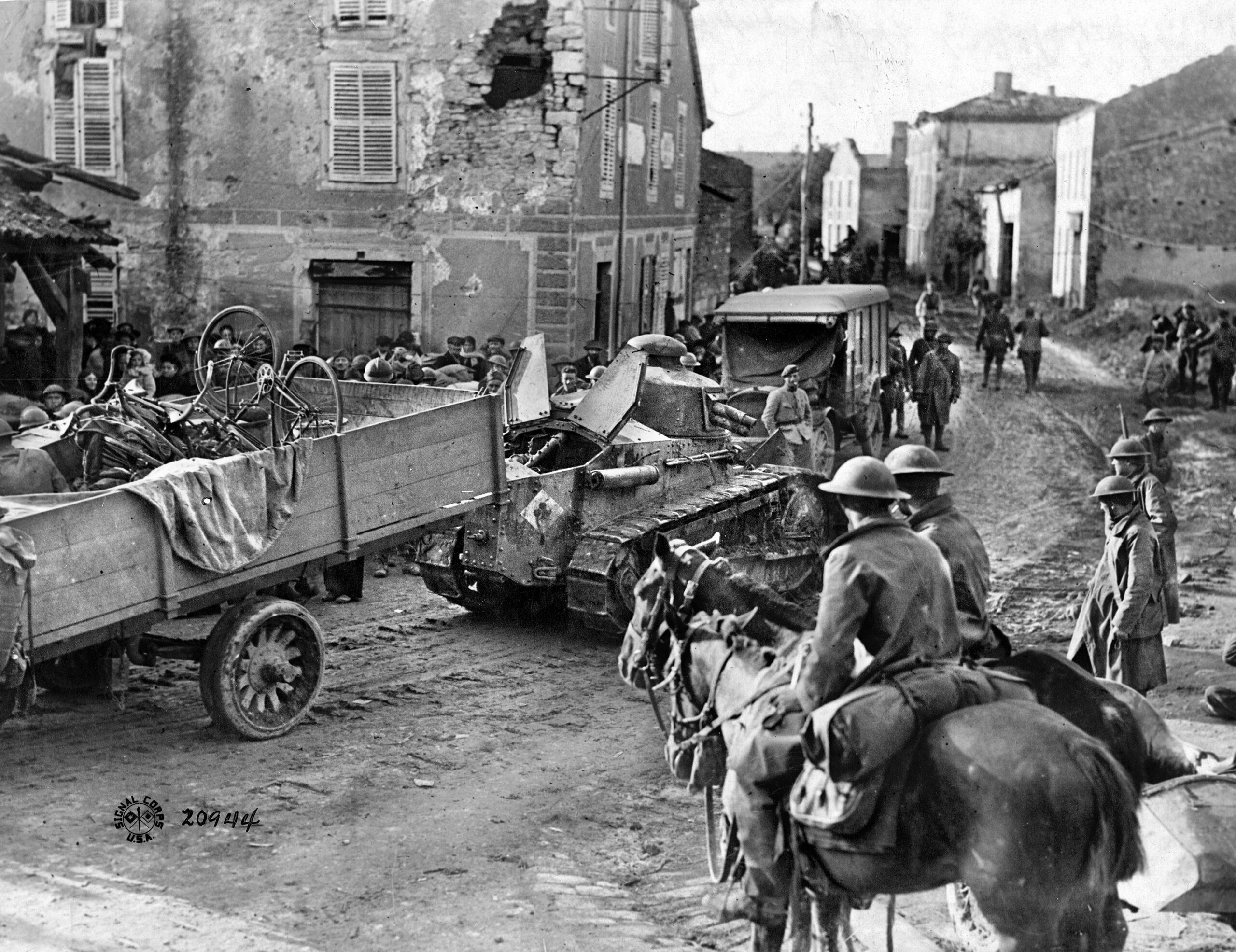
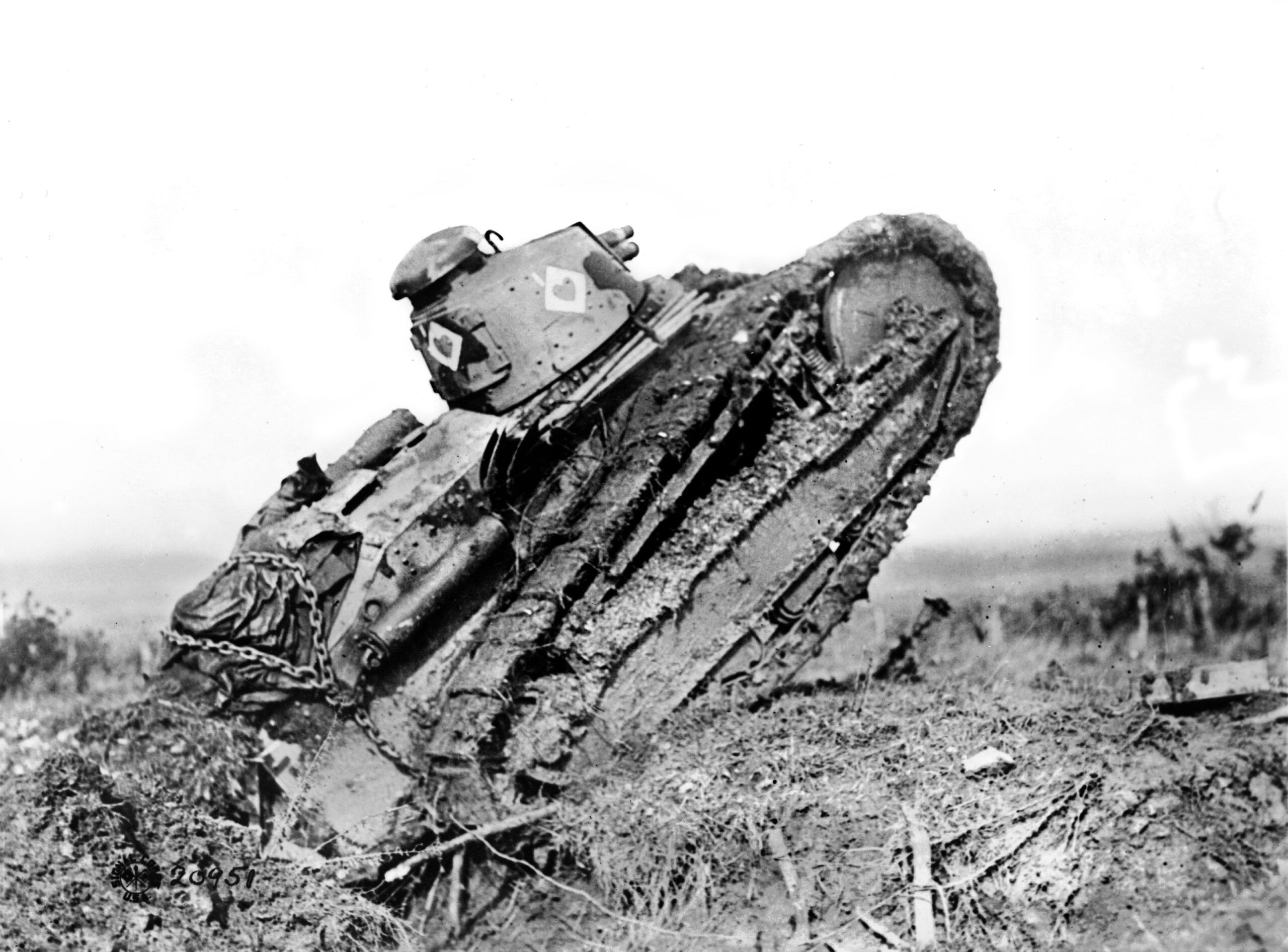
Patton had been a staff officer for a time, but switched to the fledgling Tank Corps in hopes that he could see real action and prove to himself that he had courage. He had no less than 144 machines for this offensive, light French-built Renault tanks that were manned by American crews. Just before the coming battle, Patton had sternly admonished his men that as long as one tank is able to move, it must go forward. “Finally,” he declared, “this is our big chance. Make it worthwhile.”
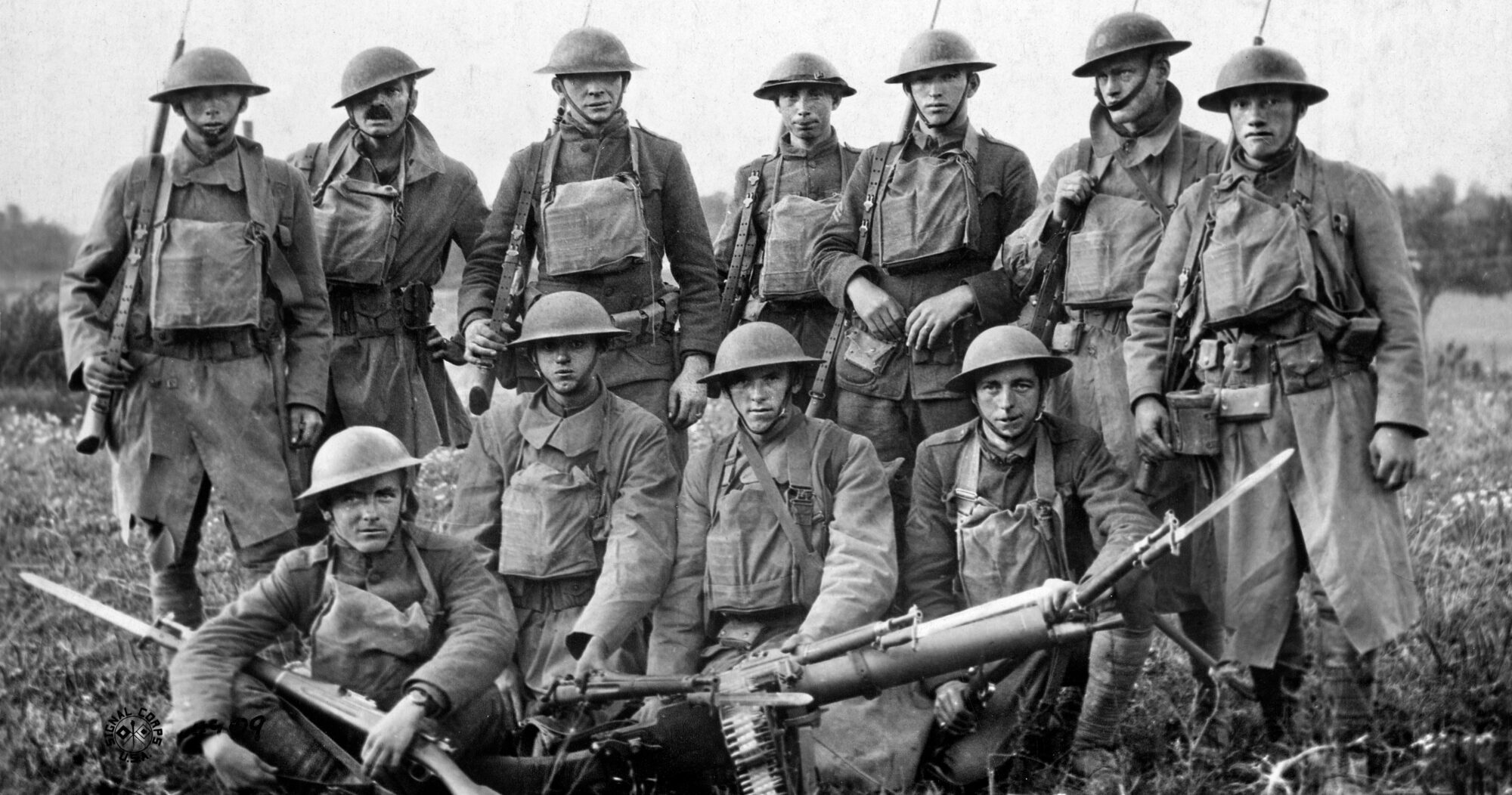
Patton was right; this was a trial by combat not just for the Tank Corps but for the entire American Expeditionary Force serving in France. America entered the First World War in 1917 woefully unprepared for the realities of modern war. The Western Front had become a brutal, bloody stalemate, and it took time for American armies to be raised, equipped, and trained for battle.
As the months wore on it was clear that their French and British allies initially looked on the Americans as one large manpower pool and little else. They had suffered horrendous casualties in such bloodbaths as the Somme and Verdun, and welcomed the “Yanks” as much needed additions to their depleted ranks, to be used as they saw fit.
General John J. Pershing, the no-nonsense commander of the AEF, saw things differently. He insisted that Americans should fight together as a cohesive, combined arms unit. Army, Marines, artillery, and the fledgling U.S. Air Service would serve as a national fighting force ready, willing, and able to mount its own offensives against the Germans. The Allies tended to dismiss such notions as pipe dreams, but Pershing stood his ground.
But discussions about an independent, all-American force were put on hold when the Germans launched their Spring Offensive in the spring of 1918. Russia, convulsed by revolution, quit the war by signing a humiliating peace with the Germans at Brest-Litovsk. That meant that thousands of German soldiers could be transferred from the east to the western front. German forces were initially successful in this spring drive, battling all the way to the Marne to threaten Paris as they had done in 1914.
Since the Allies were in crisis, Pershing relented and allowed American units to be used wherever they were needed. By the start of August it was clear that the tide had turned, and the Allies again were in the ascendant. When the reduction of the Aisne-Marne salient was nearly accomplished, Pershing once again suggested that American forces be concentrated to form a First American Army.
Allied Supreme Commander Marshal Ferdinand Foch reluctantly agreed, but events proved the mustachioed old Frenchman was still determined to have his way. By the summer of 1918 there were 1.2 million Americans in France, more than enough to form a respectable fighting force. Many were still in training, but gave every indication of future excellence.
But now Pershing needed an objective to showcase what a united AEF could do. Poring over maps, he chose the St. Mihiel salient as the most promising candidate for an American offensive. The Western Front was basically a series of trenches and fortifications that stretched roughly 400 miles from the North Sea to the Swiss border. The St. Mihiel Salient was a bulge that pushed the front noticeably to the southwest.
Roughly triangular, or perhaps one could say “U” shaped, it was about 27 miles wide (45km) at its base and bent the Allied lines back about 18 miles (30km). The salient was named after Saint- Mihiel, the village at the bottom of the “U” that straddled the Meuse River. The southeastern side crossed the Meuse Heights and Moselle Heights and the Woëvre Plain. The area was noted for its numerous small streams and stands of thick woods.
The plain also was low ground, dotted with lakes and swampy areas that made wheeled travel difficult, especially in the rainy fall and snowy winter. Not all of the ground was wooded, but two isolated hills of Loupmont and Montsec towered over the countryside. The 1,246-foot (380-meter) Montsec hill in particular afforded the Germans an excellent viewing platform to observe Allied movements.
The St. Mihiel salient was a thorn in the Allied side, a protruding “boil” that needed to be lanced if Allied plans could move forward. It had been formed in 1914, and resisted all French attempts to reduce it. It was of great strategic value to the Germans. Among other things, it cut the Verdun-Toul Road and interrupted traffic on the Paris-Nancy railroad. And, of course, there was always the threat, however remote, that that “bulge” would be the launching ground for further German attacks.
The salient was defended by eight full divisions and two separate brigades of the German army, collectively titled Army Detachment C. Lt General Georg Fuchs was its commander, well known even in Allied circles as a clever and resourceful officer. On paper his command was impressive, but its strength was more apparent than real.
Most of the divisions were understrength, and after four bloody years the Germans were just as war weary as the British and French. Morale was low, especially after the failure of the Spring offensive, and the knowledge that fresh American troops were arriving in France each day didn’t improve the mood. That said, any Allied attack on the salient would be no walkover. The Germans were still capable of hard fighting, and even though the Americans had shown their worth in smaller clashes, they probably still didn’t think much of doughboy abilities.
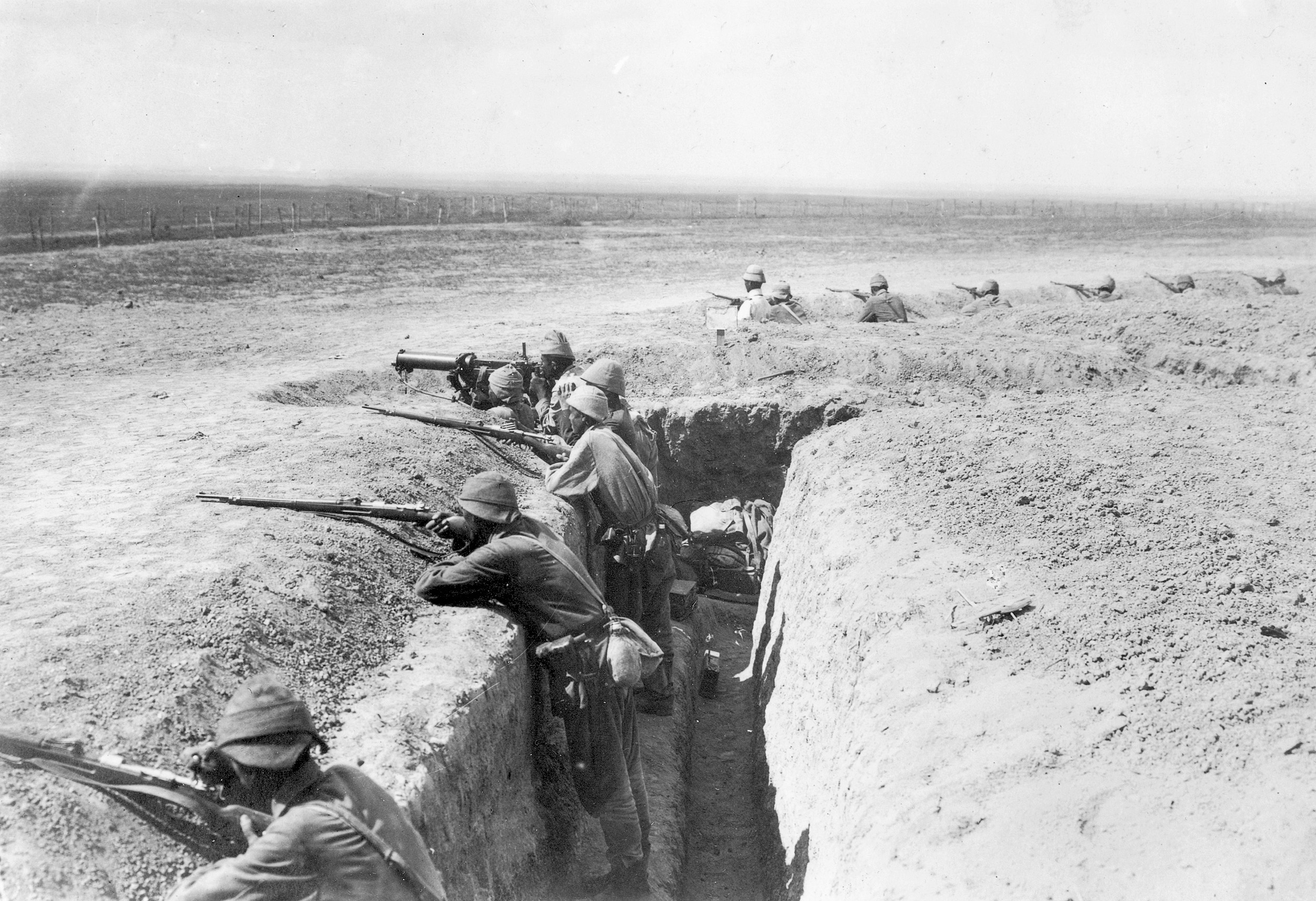
The Germans, ever methodical, had what might be called a “layered” defense of the St. Mihiel salient. There were three layers: the Wilhelm Line, the Schroeter Line, and the Michel Line. The Wilhelm line was the outermost defense zone, the one that hugged the boundary of the salient itself, and right behind it was the Schroeter line. Both featured a series of trenches, great tangles of barbed wire, concrete shelters, and machine gun nests.
The rearmost was the most elaborate of the trio, a veritable fortress, solid and imposing. The Michel Zone was part of the larger Hindenburg Line, with nearly one thousand pillboxes, large swaths of barbed wire, artillery positions, and machine guns that could sweep whole areas with a deadly spray of bullets.
In early September the Germans started to withdraw from the salient. They expected an attack soon, but the main issue was lack of men. The undermanned German divisions simply couldn’t do an adequate job of defending the large “bulge” against a determined American assault, and they knew it. General Fuchs ordered Operation Loki, a phased withdrawal to the fortress-like Michel Line, but the process had just begun when the Americans and French attacked on September 12.
Even though they started to withdraw, the overall Teutonic mood was one of defiance. According to some sources, a Swiss newspaper—Switzerland was supposed to be neutral—actually published much of the American salient plans a few days before. General Fuchs warned his men an offensive would probably be coming, but added “Army Detachment C will prepare to repel these attacks.”
Pershing’s staff began planning for a St. Mihiel offensive, and the work was progressing so well the general started thinking of expanding the operation. If the salient was reduced, the AEF could continue on to capture the biggest prize in the region: the fortress city of Metz. Metz was the gateway to Germany, and taking it would threaten the Briey Iron Basin, important to German war production. A vital railway also ran through the city to the nearby Saar coal fields.
But, after two weeks of careful preparation, Marshal Foch suddenly appeared on August 30 and had a meeting with Pershing that dashed all hopes of Metz. Basically, the Frenchman said that the St. Mihiel operation could go on, but reduced in size and scope. Instead, around September 20, most American divisions would serve as reinforcements to the French Second and Fourth Armies when the latter advanced in the Meuse-Argonne sector.
It was the same old story, of American forces being secondary players in the overall Allied strategic scheme. Pershing was upset with this sudden change of plans, and there was a series of tense negotiations over the next few days. The meetings became acrimonious at times, and at one point a frustrated Foch said, “Do you wish to take part in the battle?” to which Pershing replied, “Most assuredly, but as an American army and no other way.”
In the end, both sides compromised. Foch pushed his Meuse-Argonne offensive forward to September 25, and Pershing abandoned his idea of capturing Metz. In essence, the First American Army would reduce the salient as planned, but then, turn around and join the Meuse-Argonne offensive. It was a logistical nightmare, and Foch for one had doubts the Americans could pull it off.
Captain George C. Marshall of the Operations Section of General Headquarters, AEF, was largely responsible for putting together a workable plan for what amounted to almost back-to-back offensives. Marshall later recalled that the Operations Section was “deeply engaged in work preparing for the St. Mihiel Offensive” when they got “orders to start planning the troop movements for the Meuse-Argonne Offensive that was due to start just four days later.”
Marshall was, as he later put it, “rather disturbed” and to clear his mind for the task ahead decided to take a long walk. He returned to his office a few hours later with a comprehensive plan that enabled the AEF to achieve the seemingly impossible. When presented with the plans General Pershing, not a man easy to please, declared it a “fine piece of work.”
To make sure all units were working “in sync” and operating on the same time schedule, First Army planners invented “D-day” and “H-hour.” The code “D-Day” would be the day an operation would take place, and “H-hour” the precise time of an attack. Plus or minus would also be included; for example, D-Day plus 2 would be the second day of the operation. These innovations eventually became standard practice in military circles.
The American plan was classically simple, though the sheer size and scale of the operation called for hard work and precise timing. The main attack would be on the southern flank of the salient, and would be composed of First and Fourth Corps. A secondary attack by Fifth Corps would come in on the salient’s western face, the two efforts coming together in a classic pincers movement. The French II Colonial Corps would be in the center or bottom of the salient’s “U” shape. Their job would be to fix or hold the Germans in the Saint-Mihiel village area, distracting them while the pincers closed behind them, preventing escape.
The southern main thrust would be the job of the First and Fourth Corps. The First Corps, commanded by Maj. Gen. Hunter Liggett would consist of the 82nd, 90th, 5th, and 2nd Divisions, with the 78th Division in reserve. The First’s position would be the southeasternmost corner of the salient from Pont a Mousson to Limey.
The Fourth Corps would be to the left of the First, covering an area from Limey west to Xivray-et Marvoisin. The Fourth, commanded by Maj. Gen. Joseph Dickman, had the 89th, 42nd, and 1st Divisions, with the 3rd Division in reserve. The 42nd was famous as the so-called “Rainbow” Division, consisting of men from National Guard units from 26 states and the District of Columbia. The Division’s origins stretched from one end of the country to another as it collected men from many states, gathering all into one like a multihued rainbow.
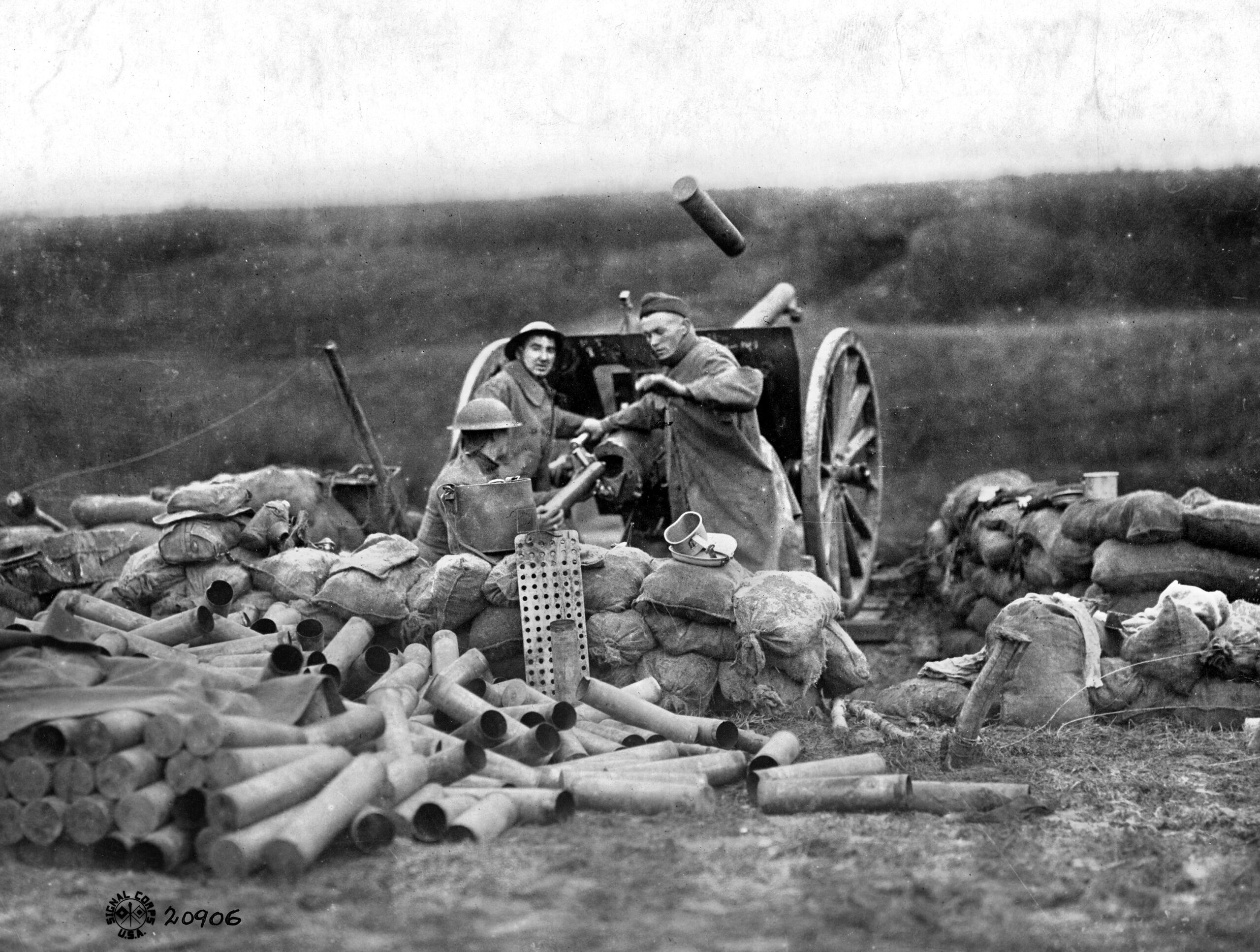
Artillery support was crucially important, with 2,900 guns assigned to the offensive. They ranged from the ever-reliable French 75mm gun, a legend in its own time, up to the monster 400mm (nearly 16-inch) railroad cannon, which could lob a shell about 10 miles. One of the reserve batteries assigned to the offensive was Battery D, 129th Field Artillery, 35th Infantry Division. It was led by Captain Harry S. Truman, later President of the United States.
Pershing made sure that the operational plan was meticulous in detail, so thorough that it ran eight pages of text. Each Corps had a precisely defined sector to operate in, with definite boundaries, so that no confusion could occur in the heat of battle. Each unit knew exactly what Pershing expected it to do. Later analysis showed that the American army’s successes were due in part to this attention to detail.
The Americans also had something that was unknown in previous wars—major air power. Colonel Billy Mitchell, chief of the American Air Service, was a visionary who passionately believed in the future of military aviation. The St. Mihiel Offensive was a trial by combat for the embryonic Air Service as well. Airplanes were still a relatively new invention, untested in such a major effort as an all-out offensive. But Mitchell was undaunted, and determined to prove that air power could make a difference in war.
On paper Mitchell had 1,481 aircraft for the operation. About 40 per cent of the aircraft and air crews were American, and the rest were British, French, and Italian. The French and Italian crews were under Mitchell’s direct command and subject to his orders. The British were cooperative, but preferred their own officers to direct missions.
The airplanes, or “machines” as they were sometimes called in those days, reflected the international nature of the Allied cause. The French provided several types, including Spad XIII and Spad XVI “pursuit” planes, aircraft that would be called “fighters” today. The British also had a variety of types to add, including the de Havilland DH-4. There were even Italian bombers for the offensive, 30 Caproni Ca 450s.
In World War One observation and reconnaissance were far more important than bombing and “pursuit.” Missions were often tasked with photographing and observing enemy movement on roads and railways, and establishing targets for future bombing. Especially hazardous because it involved low level flying, artillery registration—observing the effect of battery fire and relaying possible changes in targeting—was important to the success of any advance.
There was also an element of cloak and dagger espionage that occurred during the planning stages. False plans were drawn up, then a Major Arthur Conger checked into an expensive hotel in Belfort and “accidentally” left a piece of crumpled carbon paper of the overall plans for the coming attack in a wastepaper basket. The hotel was known to harbor German agents, at least on occasion, so it was hoped one of those agents might take the bait and grab the information.
According to the false plan, an attack was to occur at a place called the Belfort gap. Sure enough, the wastepaper basket was empty a short time after the carbon paper had been planted. The Germans weren’t entirely stupid, to the extent they thought an attack at Belfort unlikely. Nevertheless, the ruse was helped by the fact that the Germans had nothing but contempt for Americans as “cowboy” amateurs.
Still, there was always the possibility, however remote, that the carbon paper plan was real. Therefore, the Germans diverted forces, set up artillery posts, and made preparations for such an attack just in case. The ruse succeeded in fooling the Germans.
The St. Mihiel Offensive officially began with a preliminary barrage at 1 a.m., September 12, 1918. The effort was going to involve 16 American divisions and a total of around 500,000 doughboys. There were some who were veterans, and had been fighting since the first American arrivals in 1917, but many others were green and untried. The troops waited in the trenches, cold and wet from the rain that continued to plague them, while all hell broke loose all around them.
One of those men was 1st Lieutenant Clifford Hubbard of the 355 Infantry, 89th Division. The 89th was part of the Fourth Corps that was tasked to perform the major southern flank advance of the offensive. “It was the first big barrage we had ever heard,” Hubbard later recalled. “As far as you could see from the right and left the sky was lit up and you could scarcely hear your own voice.”
The Germans were surprised by the sheer intensity of the bombardment, even though they had anticipated an Allied attack was going to occur soon. The first steps in the evacuation of the salient had already begun, with ammunition stockpiles moved and some artillery batteries on their way to the rear. In the shock and confusion some German infantry units remained in their positions, but now without artillery support.
The American divisional artillery, mainly 75mm field guns, commenced firing infantry support rounds. These were the protective “rolling barrages” that advanced just ahead of the first wave of foot-slogging doughboys. Such barrages had to be precisely timed and coordinated, for obvious reasons. The protective wall of shellfire advanced about 300 feet (100 meters) towards the German trenches every four minutes.
Once the first wave encountered the first belt of barbed wire, teams of doughboys with wire cutters and engineers with Bangalore torpedoes went forward to deal with the prickly barriers. Soon paths were cut or blasted through the wire to allow the infantry to move forward once again. The Germans that survived the barrages came out of their shelters and manned their guns, determined that the Americans would have to pay for every foot of ground.
In general the Fourth Corps made good progress, and some units achieved their objectives with relative ease. Others were not so lucky, including the 84th Infantry Brigade of the 42nd Division, commanded by the flamboyant Brig. Gen. Douglas MacArthur. One sticking point was the area around the Bois (woods) de la Sonnard. Soldiers of the German 10th Division were entrenched and armed with machine guns and heavy short-range mortars called Minenwerfer.
Patton’s 326th and 327th Tank Battalions were supporting the 42nd Division’s push, but soon encountered problems of their own. There was a lot of bad ground—interlocking shell craters, widely gaping trenches—and the rain made the whole front a muddy quagmire of epic proportions.
Patton had a command post, but by 7 a.m. he had had enough passive observation from the relative safety of a trench. He moved two miles forward, but even that was not enough. By 9 a.m. Patton decided “to see something, so I took an officer and two runners and started forward.” When he reached the town of Saint-Baussant the Colonel found that while the tanks were performing well under the circumstances some were literally stuck in the mud.
As the Germans were shelling the area, which Patton admitted was “not pleasant,” he went on to Maizerais and spoke briefly to a French major who was trying to get one of those stuck tanks going again. Patton spoke tolerably fluent French by this time, and he did have some French tankers under his command. Moments after Patton left the major, a German shell crashed down on the stuck tank and killed fifteen men.
Undaunted, Patton went on toward Essey and met some infantry hunkered down under what he considered mild German shelling. Looking around, he spotted one other man standing in seeming defiance of the German shells—Brigadier General Douglas MacArthur. In fact, MacArthur was standing on a hill, so Patton, not to be undone, walked up to him and the two men chatted for a time as the shells rained down.
Patton was honest enough to admit this sang-froid attitude was partly a façade—he was thinking about the German shell bursts more than what was being said. But both survived, and Patton moved on. It is interesting to speculate how history would have changed if the two men—both prominent generals in World War II—had been killed together by a single explosion.
The colonel’s tanks, mainly two-man Renaults, now faced another problem—they were simply running out of gas. In that sector, at least, only one tank was still operating. To encourage the tank crew and the supporting infantry Patton sat on the roof of the “machine” and led the metal monster into Pannes. First Lieutenant Maurice Knowles and Sergeant Graham also accompanied the colonel by riding on the tail.
Over the next few days the Americans reached, and even exceeded in some cases, the objectives that had been laid out in the plans. German resistance was sporadic. Sometimes, large bodies of German troops would surrender en masse, while at other times they stubbornly defended every foot of ground with artillery and machine guns.
The Battle of St. Mihiel also showed that the day of the horse soldier was effectively over. Some traces of romance still clung to the mounted arm, but in the day of heavy artillery and machine guns, it no longer could function in modern war. Besides reconnaissance and liaison duties, the cavalry traditionally harried a broken enemy, taking prisoners and not allowing the foe to reform.
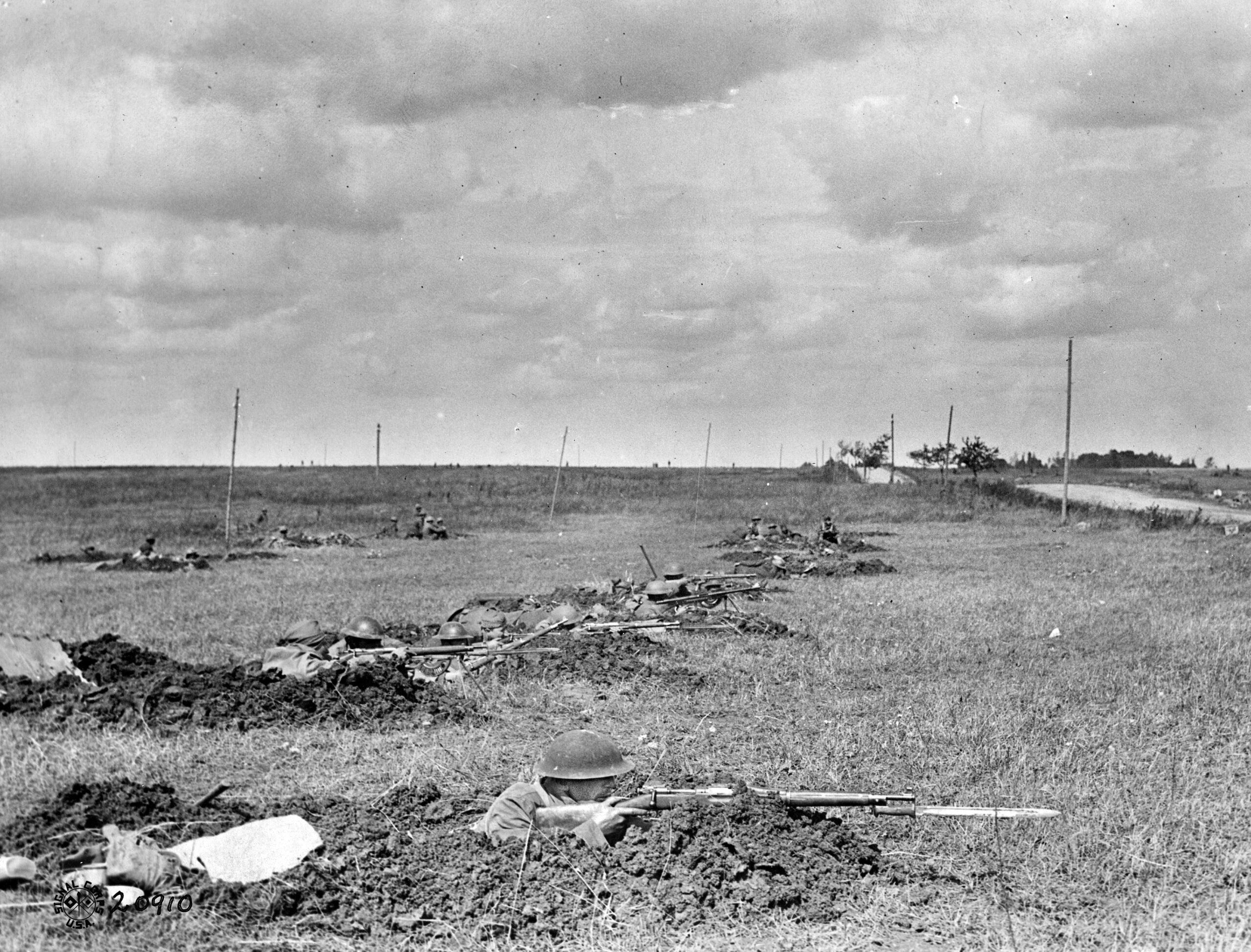
With the offensive going so well, and reports indicating the Germans were in total disarray, it seemed time for the cavalry to be sent in to exploit the chaos. Lt. Colonel Oliver Hazard’s Second Cavalry was called in to see what they could do. The troopers charged into an enemy wagon train, but were surprised by machine gun fire in the woods that hit them in the flank and rear. The trees were too thick for any mounted action, so the troopers fell back to form a dismounted skirmish line, their M1903 rifles as the primary weapon of choice.
But machine guns played havoc with their horses; some were wounded in the legs by the steady stream of bullets, and other mounts simply panicked. Unfortunately many of the mounts were green, unaccustomed to the noise and confusion of battle, and they became hard to control. The Americans returned fire, and as they retreated the troopers managed to kill most of the German machine gunners on their flanks. Officers reformed their units, and eventually the frightened horses were calmed.
On the bottom of the salient “U,” which some call the “Apex,” the Second French Colonial Corps performed its mission well. When General Fuchs ordered the German units in the Apex to withdraw, they were very reluctant to do so. All they could see was that they were successfully holding the French at bay, and didn’t realize that the American pincer movement behind them might soon cut off all escape.
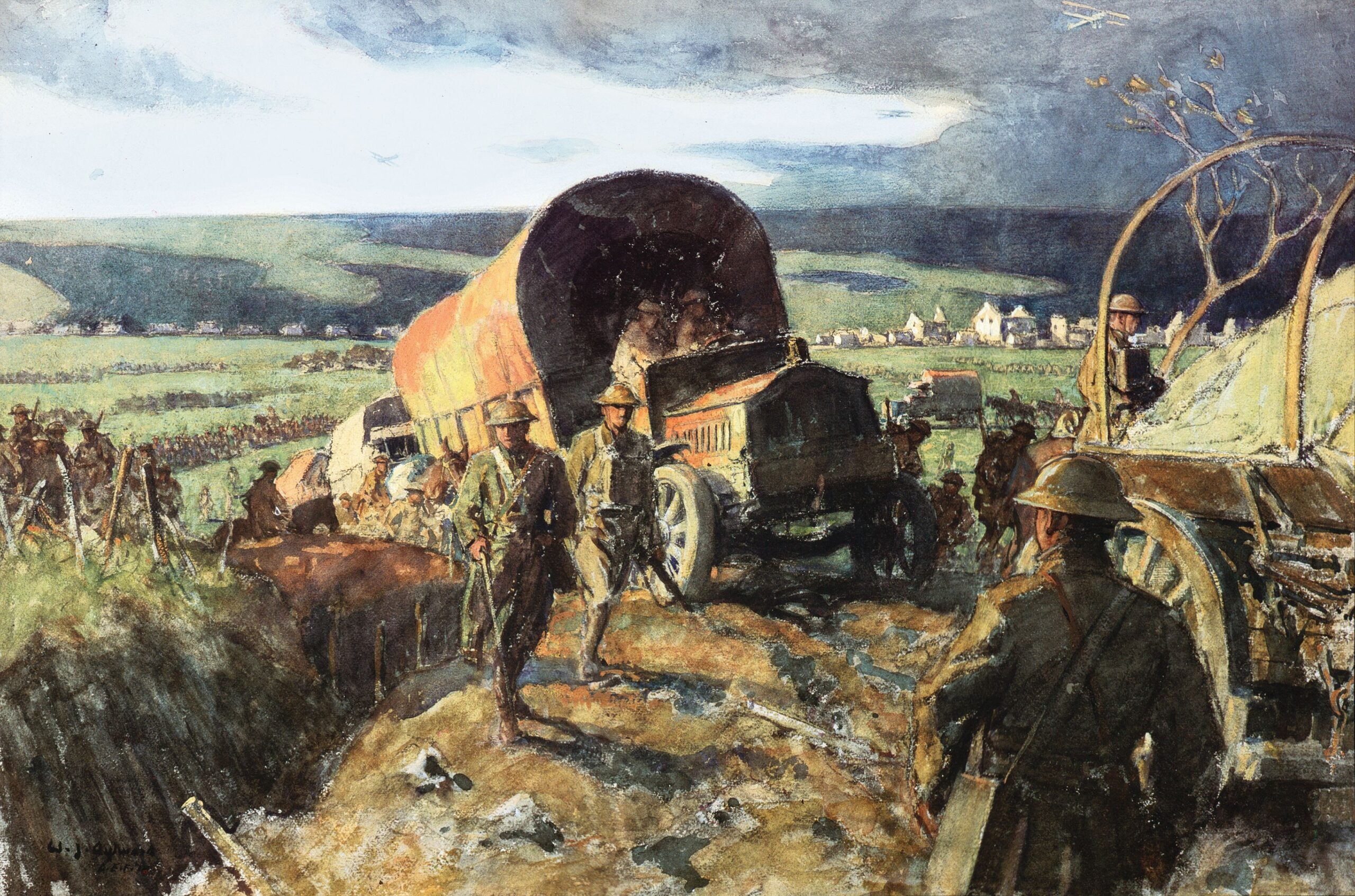
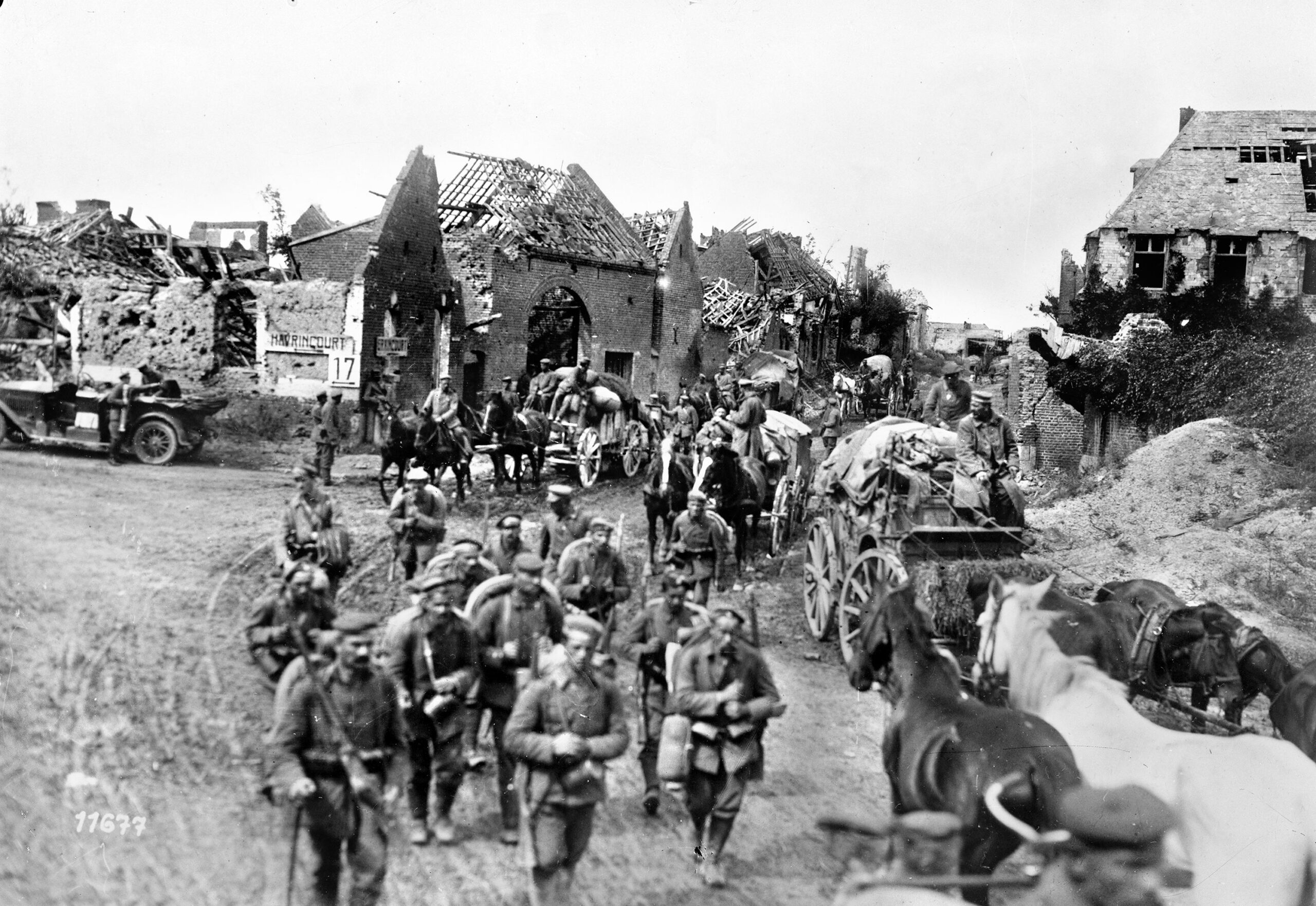
As the days wore on, bad weather, stubborn resistance in some sectors, and sheer fatigue slowed the American advance. Pockets of Germans continued to fight stubbornly, but now it was mainly to buy time for their comrades to retreat. The roads soon became clogged with retreating German infantry, horse-drawn artillery, and supply trains, all headed for the safety of the strong Michel defensive line.
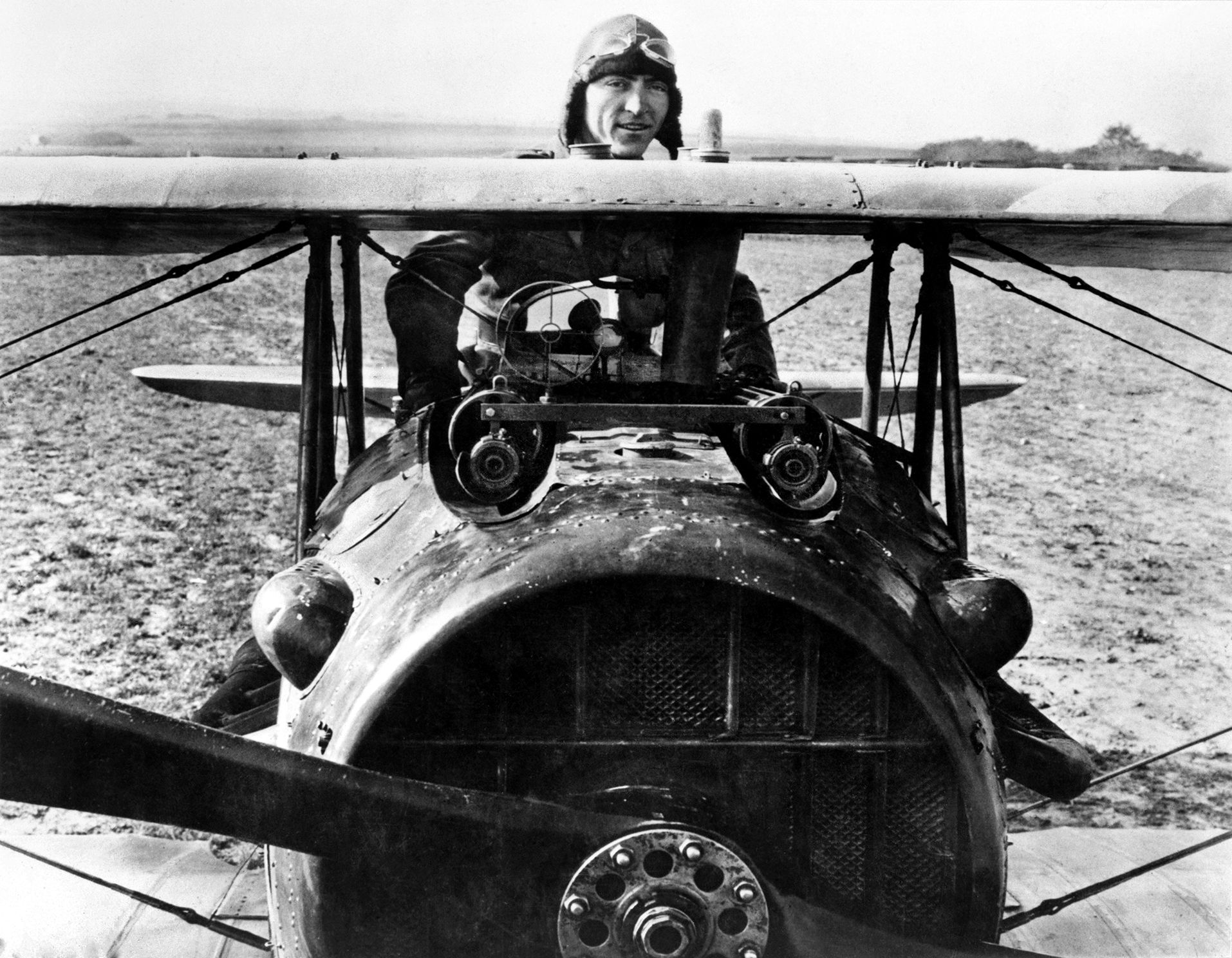
This was a golden opportunity for the American Air Service, who responded with alacrity. First Lieutenant Edward “Eddie” Rickenbacker of the 94th Aero Squadron decided he wanted to take a look at what was going on. It was raining, but that wasn’t going to stop Rickenbacker, who was already an ace with six confirmed kills. He asked airman Lt. Reed Chambers to accompany him on a flight to find out what the Germans were up to in this offensive.
Chambers readily agreed, so the pair jumped into their Spad XIII fighters and took off while others were having lunch. Reaching an altitude of 60 feet, they were just below the rain clouds and could see the surrounding countryside remarkably well. As they crossed the Meuse River, they could see burning villages, haystacks and supplies, all torched by the enemy as they pulled out.
They started flying along the main highway that linked Vigneulles to Metz. This road was in essence an ever-narrowing escape corridor between the two American pincers. Once the two pincers met at Vigneulles any Germans trapped in the resulting pocket would have no choice but surrender. Rickenbacker saw that this highway was “black with hurrying men and vehicles. Guns, stores, and ammunition were being hauled away to safety with all possible speed.”
But then Rickenbacker saw a battery of 3-inch guns being hauled away, with men, guns and horses stretching a half mile along the highway. The target was too tempting to pass up. Rickenbacker and his companion swooped down, strafing again and again, as “the whole column was thrown into the wildest confusion. Horses plunged and broke away. A driver leapt from his seat, (but) stepped full into my stream of machine gun bullets…. Some (horses) were killed and fell in their tracks…. Our little visit must have cost them an hour’s delay.”
At precisely 2:30 a.m. on September 13 advanced scouts from the 26th “Yankee” Division (V Corps) reached Vigneulles village, the place where they were scheduled to meet the Fourth Corps, thus closing the pincers and trapping any Germans left in the resulting pocket. A few hours later, at 9:30 a.m., troops from the First Division, Fourth Corps arrived to make the linkup official.
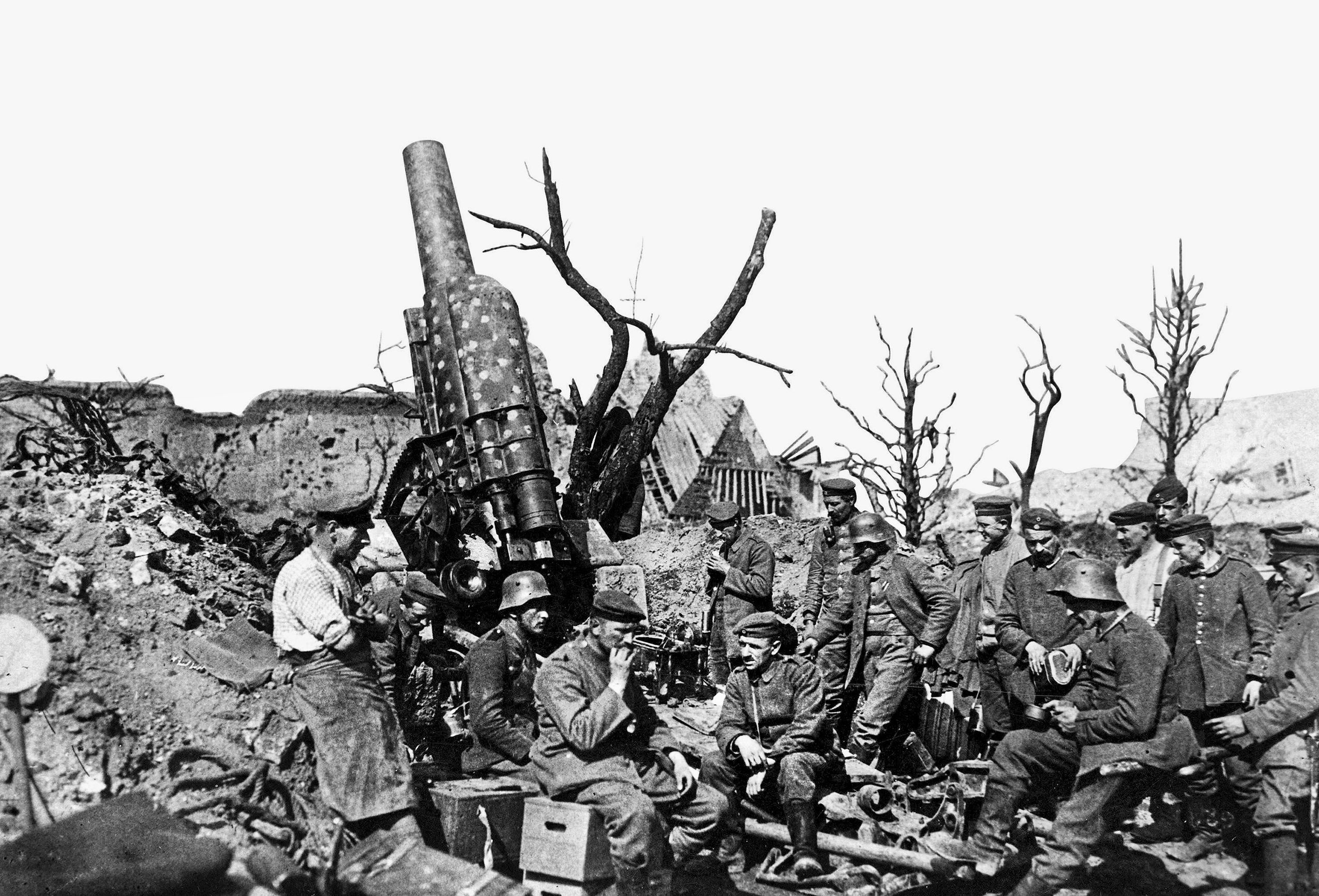
Officially the St. Mihiel Offensive continued until September 16, but for the most part those latter days were devoted to mopping up and consolidating new gains. The Germans lost around 2,300 dead and wounded, and 16,000 were taken prisoner. In addition, 450 artillery pieces were lost, as well as substantial amounts of supplies and ammunition. Germany was approaching exhaustion; advancing doughboys noted that some of the prisoners taken were older men and teenagers.
Yet the Germans could still find some bright spots in what seemed to be a debacle. A great many German soldiers had slipped the net, managing to escape to the Michel line before the Americans closed in. And the Michel Line, an offshoot of the vaunted Hindenburg Line, was formidable indeed. After their successful offensive, elements of the AEF tried to probe the Michel Line to test exactly how formidable it was.
The Yanks ended up with a bloody nose. When the Second Division attempted a probe, they ran into fields of interlocking machine guns and direct artillery fire that cut them to pieces. A few elements of the 42nd and 80th Divisions also attempted to try their luck but were bloodily repulsed by very heavy artillery fire. Accepting the verdict for the moment, the doughboys dug in and prepared to defend their newly won gains. The Michel Line remained unbroken and in German hands until the end of the war.
General Pershing was sorely tempted to push on to Metz, but was finally convinced to hold to the original agreement with the French. Already some reserve units were going south in preparation for the upcoming Meuse-Argonne Offensive. There were other considerations as well. Some of the First Army’s best divisions were exhausted and needed a measure of relief. There was also the widely held notion that the defenses at Metz were far more formidable than anything encountered at Saint-Mihiel. Some of Pershing’s subordinates were of the opinion that, though the First Army had done well, it was still not ready to tackle something as tough as Metz.
The Allies gained many advantages by the American success at Saint-Mihiel. The Germans were deprived of a base to threaten the flank of the upcoming Meuse-Argonne affair. The Paris-Avricourt railroad was now open and ready for use. The Americans also conclusively proved they could plan and successfully carry out a major operation independently.
The Americans also learned valuable tactical and operational lessons. Though it was hampered by bad weather at times, ground-air cooperation was effective and added to the success. In fact, the U.S. Army Air Service came of age in many respects at this time. Over four days, from September 12 to September 16, American aviation conducted 3,300 flights over the battle fronts totaling 4,000 hours in the air.
The Air Service also fired 30,000 rounds of machine gun ammunition and dropped 1,000 individual bombs, the total amounting to 75 tons of high explosive. But there are human beings behind all the statistics. General “Billy” Mitchell’s air force shot down 12 German balloons, 60 airplanes. But in return the Americans lost 53 planes and suffered 95 casualties, including 36 killed. Overall, the American First Army had 7,000 casualties on the offensive.
Eddie Rickenbacker scored two more victories during the St. Mihiel Offensive. By the end of the war, only two months away, he would become America’s Ace of Aces with 26 confirmed enemy planes shot down. He seemed to have a charmed life. Not only did he survive illnesses and the war, but he later survived a horrific commercial airline crash and was stranded at sea for over a month.
The St. Mihiel Offensive was the American Army’s trial by fire. They had to prove to the Allies, and to an extent themselves, that they could operate as full-fledged partners, capable of independent action. Having passed the test successfully, they were to move on to an even greater challenge: the Meuse-Argonne Offensive that ultimately helped end the war.

Join The Conversation
Comments
View All Comments