By Mark Carlson
The Battle of the Coral Sea in May 1942 was the first naval engagement in history to be fought between aircraft carriers. Too far apart for visual contact, the battle was a study in missed opportunities, mistakes and bad judgment. The Japanese were determined to sink the American carriers as they, in turn, tried to stop the Japanese landings on Port Moresby in New Guinea.
When Lieutenant Commander Kakuichi Takahashi’s Aichi D3A “Val” dive bombers found Task Force 17 on May 9, a swarm of 19 went for the Lexington and 14 others descended on the Yorktown. Among several near misses, two bombs hit the Lexington, but Wildcats from the Yorktown managed to break up the attacking Vals.
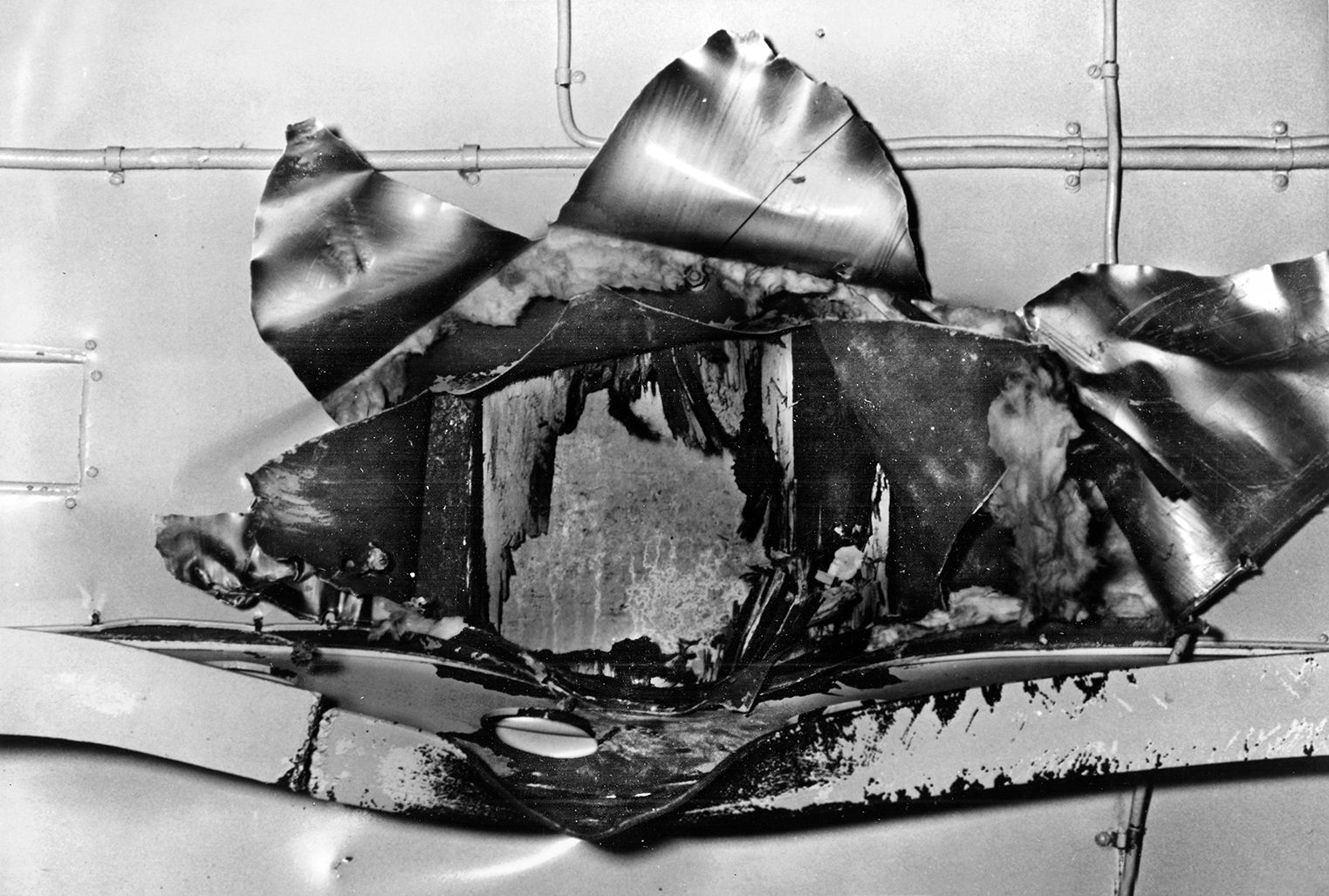
The ship’s luck changed for the worse when a single armor-piercing 551-pound bomb tore into the Yorktown flight deck 15 feet inboard from the superstructure and exploded four decks below, causing great internal damage. The lighting on three decks was out and more than two dozen main hull frames were wrecked. But the carrier remained afloat and her gunners brought down two more of Takahashi’s dive bombers.
One small Imperial Japanese Navy (IJN) carrier, the Shoho, had been sunk in the battle and big new Shokaku and Zuikaku, both veterans of the Pearl Harbor attack, were forced to return to their homeland. For the U.S, the beloved “Lady Lex” was lost and the Yorktown badly damaged.
Admiral Frank Jack Fletcher chose to head back to Pearl Harbor. The Japanese broke off and returned to Japan, claiming both carriers sunk. The battle forced Vice Adm. Shigeyoshi Inoue to cancel the Port Moresby invasion, but it had far more profound effects on the course of the war.

Back at Pearl Harbor, Admiral Chester W. Nimitz, Commander in Chief, U.S. Pacific Fleet (CINCPAC), already knew that Adm. Isoroku Yamamoto, Commander in Chief of the Japanese Combined Fleet, was about to launch a massive raid and landing on the tiny atoll of Midway, 1,200 miles northwest of Hawaii. Nimitz knew that could not be allowed to happen for, if Midway fell, it would provide a base for repeated strikes and landings on Hawaii. The Enterprise and Hornet of Task Force 16 under Adm. William F. “Bull” Halsey were still able to fight. But with the loss of the Lex, Nimitz had only two undamaged carriers. Yorktown might require protracted repairs on the mainland and the Saratoga was still out of commission after being torpedoed in January.
It was a matter of simple arithmetic. Nimitz needed a third flight deck, even if it was not in perfect condition. With Shokaku and Zuikaku out of commission, Adm. Chuichi Nagumo would still have four big carriers from which to hit Midway. But how could the battered Yorktown help in the Navy’s hour of need?
While TF 17 commander Admiral Frank “Black Jack’ Fletcher limped home with his remaining ships, Nimitz received preliminary reports of the damage to the Yorktown. The final assessment would have to wait until she reached Pearl around May 28. With the brilliant cryptanalysis from Station HYPO at Pearl, Nimitz knew that Nagumo was to attack Midway on June 4, leaving him exactly seven days to work a miracle.
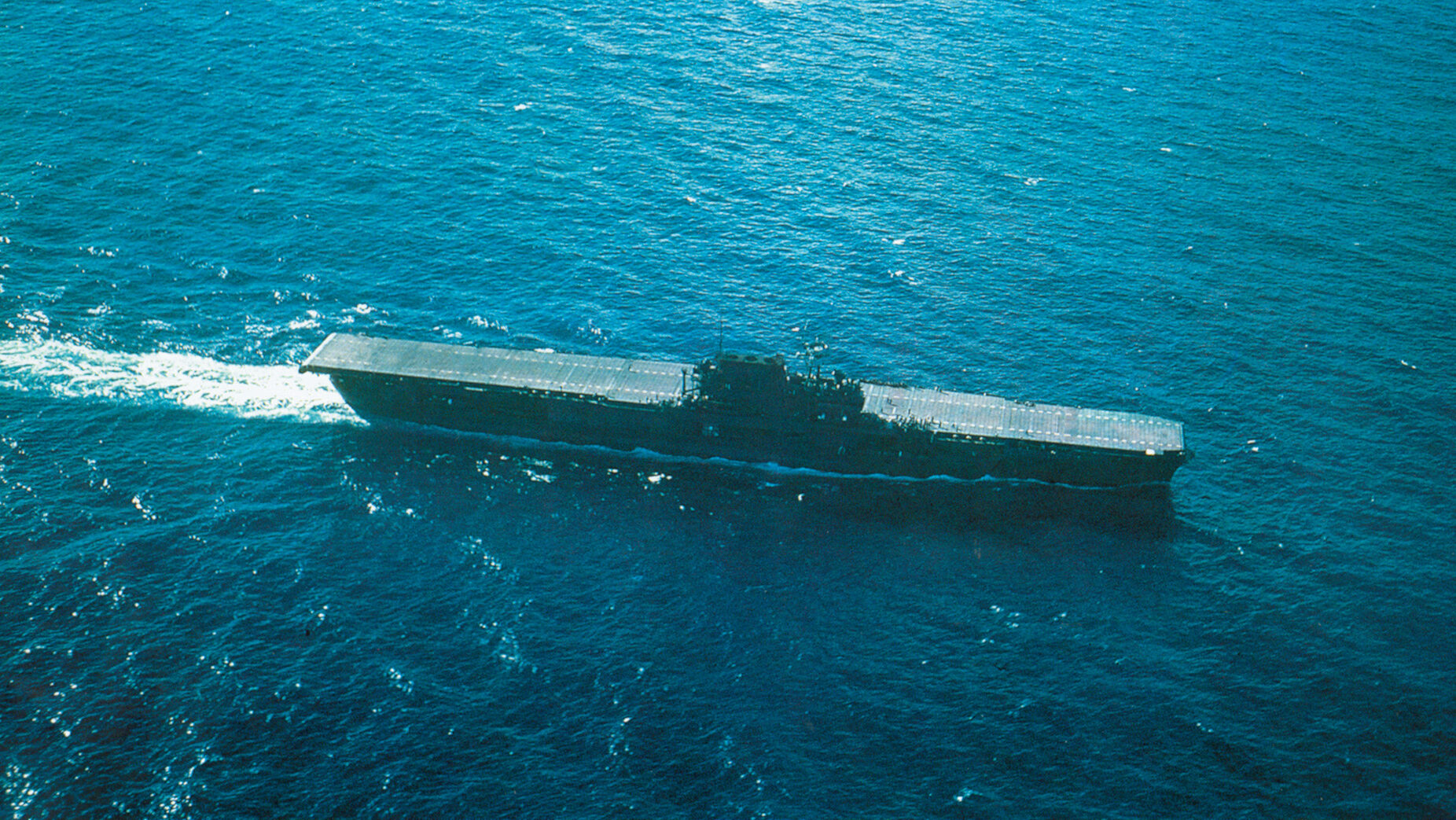
Yorktown’s captain, Elliott Buckmaster, pushed his crew and damaged ship as fast as possible. She reached a sustained speed of 20 knots, not quite enough for air operations. An iridescent slick of oil trailed for 10 miles in her wake. During the 18 days it took her to reach Oahu, her engineers and damage control parties managed to patch the gaping hole in the flight deck, doing so well that it appeared pristine. But much more had to be done below decks. Buckmaster prepared a detailed report of her damage, and on May 25, 100 miles from port, a plane managed to take off and deliver it. Nimitz ordered the Pearl Harbor Yard superintendent, Capt. Claude Gillette, and a team of specialists to fly to Yorktown aboard a Consolidated PBY Catalina flying boat and determine how best to get the ship back to sea as soon as possible.
As for Task Force 16, Admiral Halsey would not be at Midway. During the past two months, the tough old sailor had run himself physically ragged. He had lost about 20 pounds. His uniform, usually neat, hung on his thin frame, and his eyes were sunken. He had contracted a serious case of contact dermatitis, which had spread all over his body, and no one could do anything about it. Enterprise and Hornet, with the cruisers and destroyers, entered Pearl Harbor at 1100 hours on May 26 and tied up at docks F2 and F10 on Ford Island. Barges and water hoses began loading, arming, and fueling the ships. Since they had not expended any ordnance on their run to and from the Coral Sea, no bombs or torpedoes would be needed. But the crews needed some time on solid ground. In 12-hour shifts, sailors and junior officers went ashore. None knew what was coming, but they probably sensed some urgency in the air.
The two carriers received new aircraft and more than 19,500 barrels of fuel oil, while the gasoline lighter YO-24 pumped 82,000 gallons of aviation fuel into their tanks.

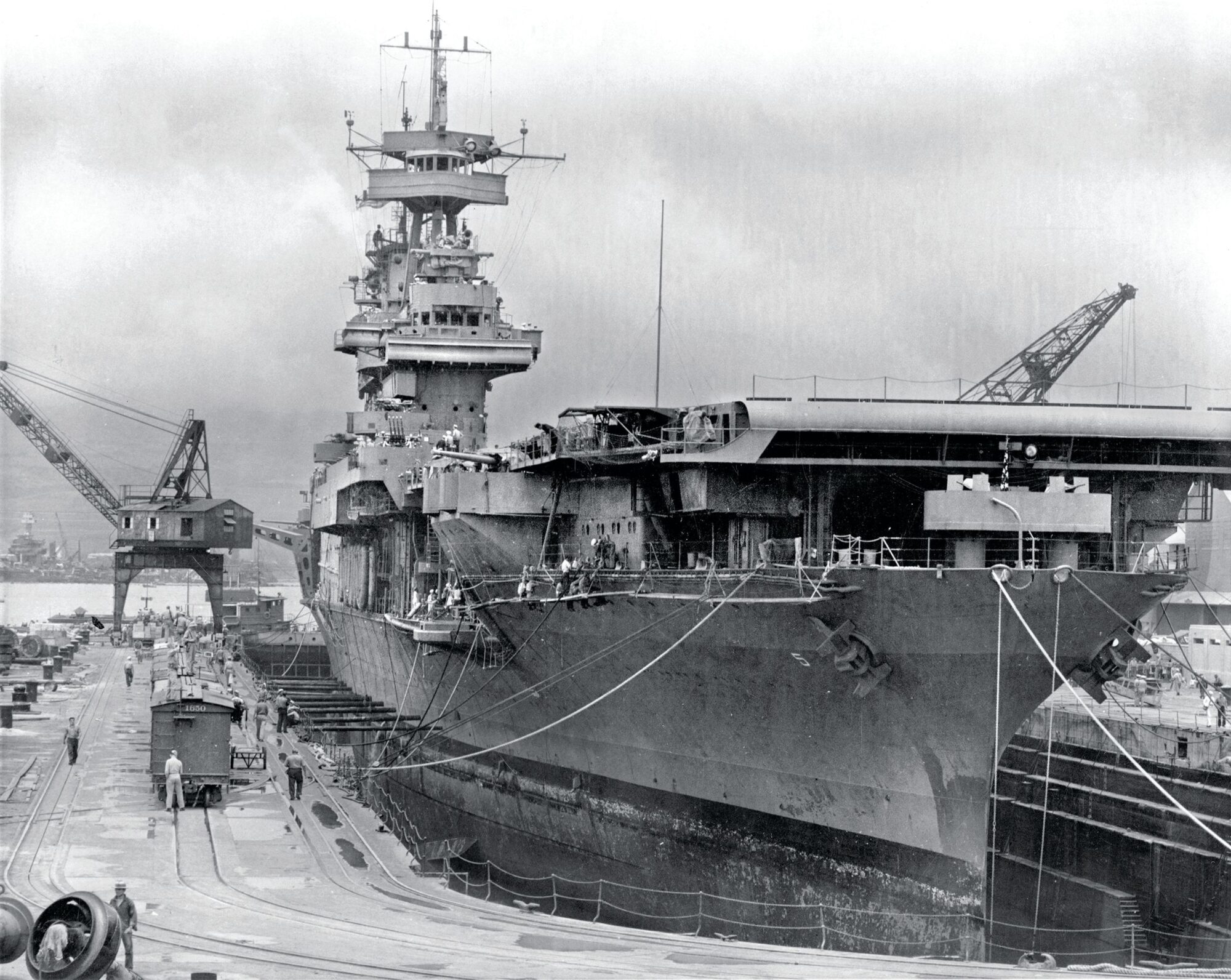
At 1352 hours on May 27, a day earlier than expected, the damaged Yorktown limped slowly up the channel to the Navy Yard where she was tied up at Berth 16, awaiting her entry into Dry Dock No. 1. Immediately, teams of engineers, welders, and surveyors streamed aboard and assessed what had been done to the ship by Japanese bombs. Captain Buckmaster oversaw the work of putting Yorktown back into service. He was determined to see his ship sail again, but he didn’t see how she could be repaired in less than two weeks.
When a tired Fletcher arrived at CINCPAC headquarters, he gave his assessment of the battle. But what he next heard shocked him right down to his toes.
“We are going to fix you up right away and send you to Midway,” Nimitz told his TF 17 commander.
“Midway?” Fletcher repeated, astonished.
“Yes. Midway,” Nimitz said, and explained the details of Operation MI and how both Task Forces 16 and 17 would be heading north to attack the Japanese carrier force before they could hit and occupy Midway.

“But Yorktown will need months to be repaired,” Fletcher protested. He was stunned when Nimitz insisted Yorktown would be back in service in time for the battle.
The worst damage was from the armor-piercing bomb that had smashed through the center of the flight deck near the island superstructure. It tore through the galley deck, hangar deck, and decks one and two before hitting the bulkhead of the forward engine room and exploding. It destroyed six compartments, damaged and bent 24 hull frames, and put an elevator out of commission. Two more near misses on both port and starboard dented and ruptured hull plates and frames, allowing fuel oil to leak. While much of the damage was extensive, it was the twisted and torn hull frames and deck beams that were the most critical. These had to be repaired or replaced to prevent fatal weakening of the hull.
After hearing the reports from the yard engineers, Nimitz broke a cardinal rule of safety by voiding the standing rule to pump out the tanks of aviation gasoline before any work could be done on the ship. Pumping out the volatile fuel would cost a full day, time CINCPAC could not afford. At 0645 hours, Yorktown slid into the cavernous dry dock, coming to a stop as the huge steel doors closed. Immediately the huge pumps began draining the concrete pit. Even before it was dry, Nimitz and Rear Admiral Edward Furlong, commander of the Navy Yard, were sloshing around under the massive hull, inspecting the damage.
Nimitz, wearing hip waders, turned to Lt. Com. H. J. Pfingsta and said in a grave voice, “We must have this ship back in three days.”
Suppressing a lump in his throat, the hull repair officer nodded and said, “Yes, sir.”
So began one of the most incredible efforts in the history of any navy to repair the crippled Yorktown in time to steam to Midway.
As Nimitz climbed the ladder to return to his headquarters, more than 1,400 welders, technicians, electricians, shipfitters, plumbers, and draftsmen went below to begin work on the massive job. So much power was required for lighting, generators, pumps, ventilators, arc welding, and cutting that Nimitz made a special request to the head of the Hawaiian Electric Company to divert city power to the yard. For the next two days, Honolulu endured a series of rolling blackouts, which were explained as emergency tests.

Only the most vital spaces and frames were repaired. The ship’s service store, soda fountain, and one laundry room were left to be repaired later. The starboard hull and deck frames were dealt with one by one. After cutting torches removed the worst damage, wooden templates were quickly built to match the missing metal. Then each one was taken topside where a steel plate was cut to the same shape, brought down to the frame, and riveted or welded into place. More than 20 steel beams and bulkheads were replaced in this way.
There was no time for drawings or blueprints. Every part was custom-made and fitted with no regard for neatness. On it went, frame by frame, beam by beam, in cramped, hellishly hot, stinking spaces with only emergency lighting to penetrate the gloom. Ventilators hummed and pumped fresh air into the spaces while men worked shirtless and sweating. The foremen made sure every man drank plenty of coffee and water and ate the hundreds of sandwiches brought down by mess stewards. Injuries were unavoidable, but most men simply wrapped a bandage on the wound and returned to work. It was a heroic effort. They knew Yorktown had to be repaired and they would do it no matter what it took.
Planes from the mainland brought new hoists for the damaged elevator and new radar and radio equipment. Through the nights, Yorktown was caught in a nimbus of bright yard lights as tiny blue sparks from the acetylene torches flared like fireflies. The noise of riveting guns and screeching metal never ceased. The huge ship was slowly coming back to life with the efforts of more than 1,000 dedicated men. Little effort was made to paint the new steel except to prevent corrosion.
As for the rupture in the hull, Pfingsta chose not to cut the damaged plating out. Instead, his crew manhandled a large steel plate over the rent and welded it tight. Hasty repairs like this could be redone later on the mainland. All they were trying to do was get Yorktown back into service.
It was decided that once the two task forces were clear of Hawaiian waters, they would rendezvous on June 3, about 325 miles northeast of Midway at 32 degrees north latitude, 173 degrees west longitude, a place euphorically called “Point Luck.”
Here the carriers, under the overall command of Fletcher, could hit the First Air Fleet from the flank, hopefully before its bombers hit Midway. Timing was critical. They had to be close enough to hit Nagumo first, but not so close as to invite a certain attack by the same planes that had bombed Pearl Harbor. There was no uncertainty about the skill of Nagumo’s “Wild Eagles.”
It was hoped that the American strikes could hit Nagumo with armed and fueled planes on the flight decks—the moment they were most vulnerable.
Vice Admiral Raymond A. Spruance, who inherited Task Force 16 from Halsey, moved his force out of Pearl at 0800 hours on May 28, starting with the destroyers and followed by the cruisers at 1015. At 1115, Enterprise steamed slowly out of the channel on one boiler while hundreds of men paused in their labors and lined the wharves and shore to cheer the Big E. She was followed at 1235 by Hornet under the command of Capt. Marc “Pete” Mitscher, a name that would soon become synonymous with fast carriers. When they reached the open sea south of Oahu, they turned to a course of 155 degrees and bent on 25 knots. Steaming 2,000 yards apart, preceded by the destroyers, the only intact carrier task force headed north for Point Luck.
At 0600 on May 29 (May 28 Hawaii time), as Task Force 16 was leaving Pearl, bells rang on board Yamamoto’s dark gray flagship as her moorings were cast off. A hazy plume of smoke rose from the giant battleship Yamato’s single funnel, and the hull thrummed with the power of four mighty turbine engines. All around the anchorage in Hiroshima Bay, a score of battleships, cruisers, destroyers, oilers, and minesweepers weighed anchor and turned to face the channel to the Inland Sea. Yamato, led by a semicircle of destroyers, steamed like a great mountain of gray steel with her nine 18.1-inch guns pointing the way into the wide Bungo Strait between Kyushu and Shikoku before turning south.
Yamamoto went over the myriad details of his all-out plan to destroy the U.S. Pacific Fleet. Ahead lay 2,500 miles of open ocean, but most of that was under Japanese control. From the vast anchorages at Truk Lagoon in the Carolines, Nagumo and the First Air Fleet steamed out and headed east to change the world. Akagi, the second-oldest IJN carrier after Hosho, led Kaga on the starboard column while Soryu trailed Hiryu. The First Air Fleet had 250 bombers and fighters, while the cruisers carried 16 floatplanes.
A hundred miles behind them were the ships of Tanaka’s Occupation Force, with more than a dozen transports with a screen of cruisers and destroyers in a protective ring. Vice Adm. Nobutake Kondo’s support force was in close proximity to cover the landings. Far to the north Vice Admiral Hosogaya’s small carriers Ryujo and Junyo were ready to launch air strikes on the remote naval base at Dutch Harbor in the Aleutians.
The First Carrier Striking Force was headed east, supremely confident that the U.S. Pacific Fleet was unaware of their approach, and that the two remaining American carriers would be surprised and overwhelmed.

There would be a nasty shock for at least one fleet commander, but it would not be either Fletcher nor Spruance. At 1100 hours on May 29 the dry dock was flooded and the patched Yorktown had water under her keel again. After being towed to the 10-10 dock, more equipment was hoisted aboard and installed. The elevator and radar were back in working order a few hours later. Fuel oil was pumped into her tanks as hundreds of yard workers continued to work inside her hull.
In a remarkable 48 hours, 20 less than Nimitz had insisted on, Yorktown had risen from the dead. While she was nowhere near fully repaired, she would be at Point Luck on time, ready to fight.
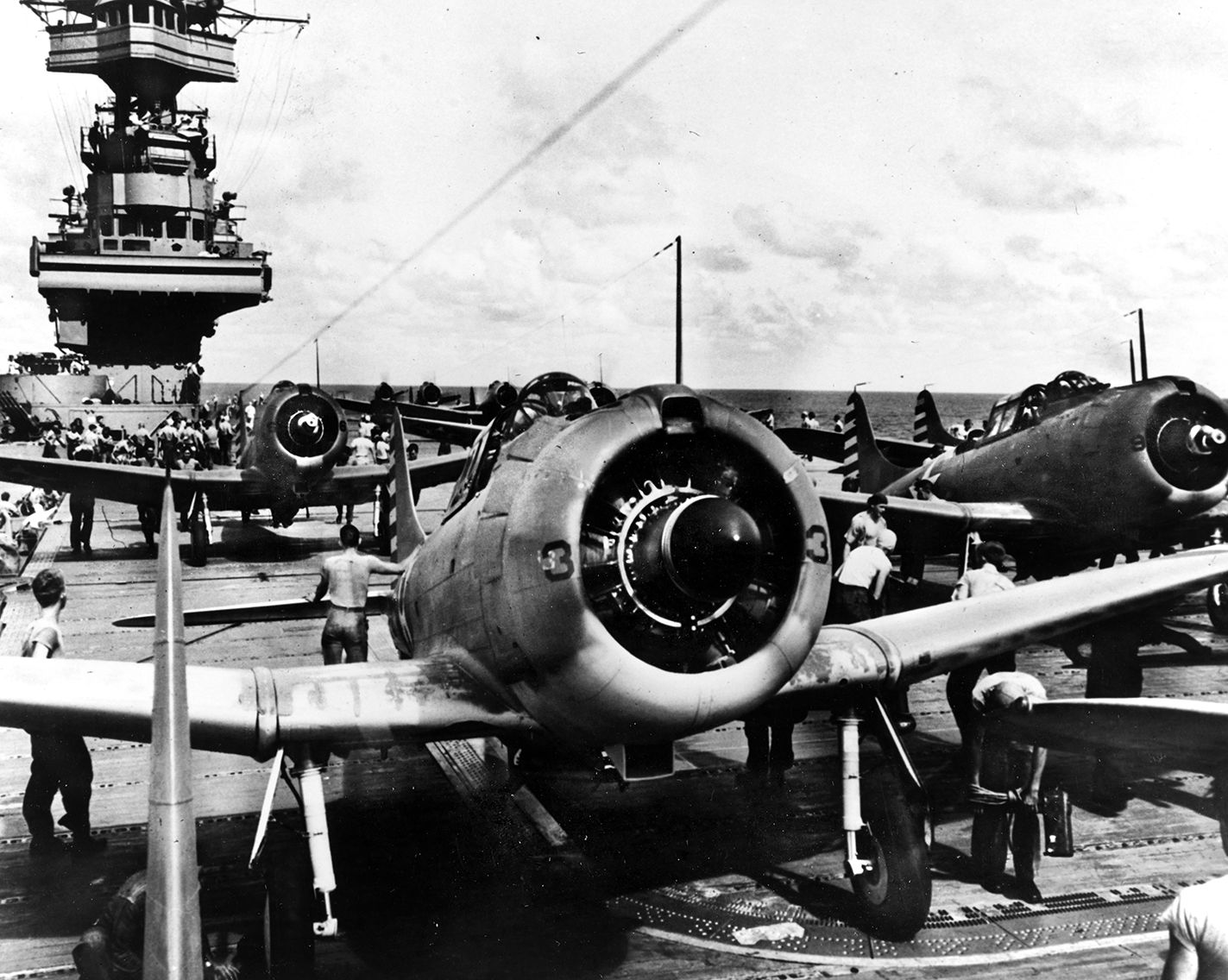
What Yorktown needed at that moment was a new air group. Since Saratoga was still on the West Coast, Air Wing 3 was at Naval Air Station Kaneohe Bay on eastern Oahu. Their SBDs, TBDs, and F4Fs would be consolidated into Air Wing 5, which had been cut down at the Coral Sea. Saratoga’s VF-3 merged with Yorktown’s VF-5 under Lt. Com. John “Jimmy” Thach, who was already recognized as a premier fighter pilot in the Pacific. His brainchild was the innovative “Thach Weave,” a cooperative maneuver between two Wildcat fighters that proved to be deadly against the more nimble Zero.
Instead of the old F4F-3, the new air wing had the F4F-4, which had folding wings, allowing the ship to carry 24 fighters. Likewise, several of Com. Max Leslie’s SBDs and pilots of Bombing 3 and Scouting 3 joined Yorktown, as did VT-3’s TBD Devastator torpedo planes under Lt. Com. Lance “Lem” Massey. The American practice of shifting air wings between carriers proved to be a huge benefit for Nimitz.
Yamamoto was unable to determine what Nimitz was up to. He was certain that only two American carriers were still afloat, but since they were seen in the Coral Sea in early May, they would not have time to be ready when word of the attack on Dutch Harbor sent them racing north.
But then a blow struck the First Air Fleet. Nimitz was not the only admiral faced with a sick subordinate. As Akagi steamed eastward toward Midway, Admiral Nagumo learned Com. Mitsuo Fuchida, his air wing commander, had to undergo surgery for appendicitis.

Two days later Akagi’s air operations officer, the man who had helped plan both the Pearl Harbor and Midway attacks, Com. Minoru Genda, was in sick bay with influenza and a high fever. Nagumo, like many Japanese sailors, believed in omens. And this was a bad one. But his inborn pragmatism would not allow him to become despondent. His mission came first. Nagumo had always been a surface ship commander. While an aggressive destroyer division commander, he was often hesitant with the carriers. His failure to launch a third wave at Pearl Harbor was still a stain on his honor and courage. The Midway air strikes would be led by Hiryu’s air wing leader, Lt. Joichi Tomonaga, who was more aggressive than Fuchida and not as well liked in the air fleet.
The reborn aircraft carrier Yorktown steamed out of the channel on the morning of May 30, preceded by her cruisers and destroyers. With even more enthusiasm than they had shown to Enterprise and Hornet, thousands of men waved and cheered the carrier as she sailed serenely past the team who had worked a virtual miracle. She would be a nasty surprise for Nagumo, who had every reason to believe her on the bottom of the Coral Sea. Fletcher, Buckmaster, and her crew were bone-tired from three months of combat operations and work, but they were ready to face the enemy.
After rounding Barbers Point, Task Force 17 headed north to join Task Force 16.
The next blow to Yamamoto’s complex plan came when the extensive submarine cordon intended to interdict the American ships arrived late. Even if they had been on time, it would have been too late. The American carriers had passed on June 1, two days earlier. The subs could not warn Nagumo that three, not two, U.S. carriers were already waiting for him. Although the final outcome was three days in the making, the Battle of Midway ended Yamamoto’s wild run.
The fact that Yorktown had made it to Midway was critical to American success. Since Hornet’s dive bombers did not find Nagumo’s ships on June 4, it was the dive bombers of Enterprise and Yorktown that decided the outcome of the Battle of Midway and ended Yamamoto’s ambitions to rule the Pacific.
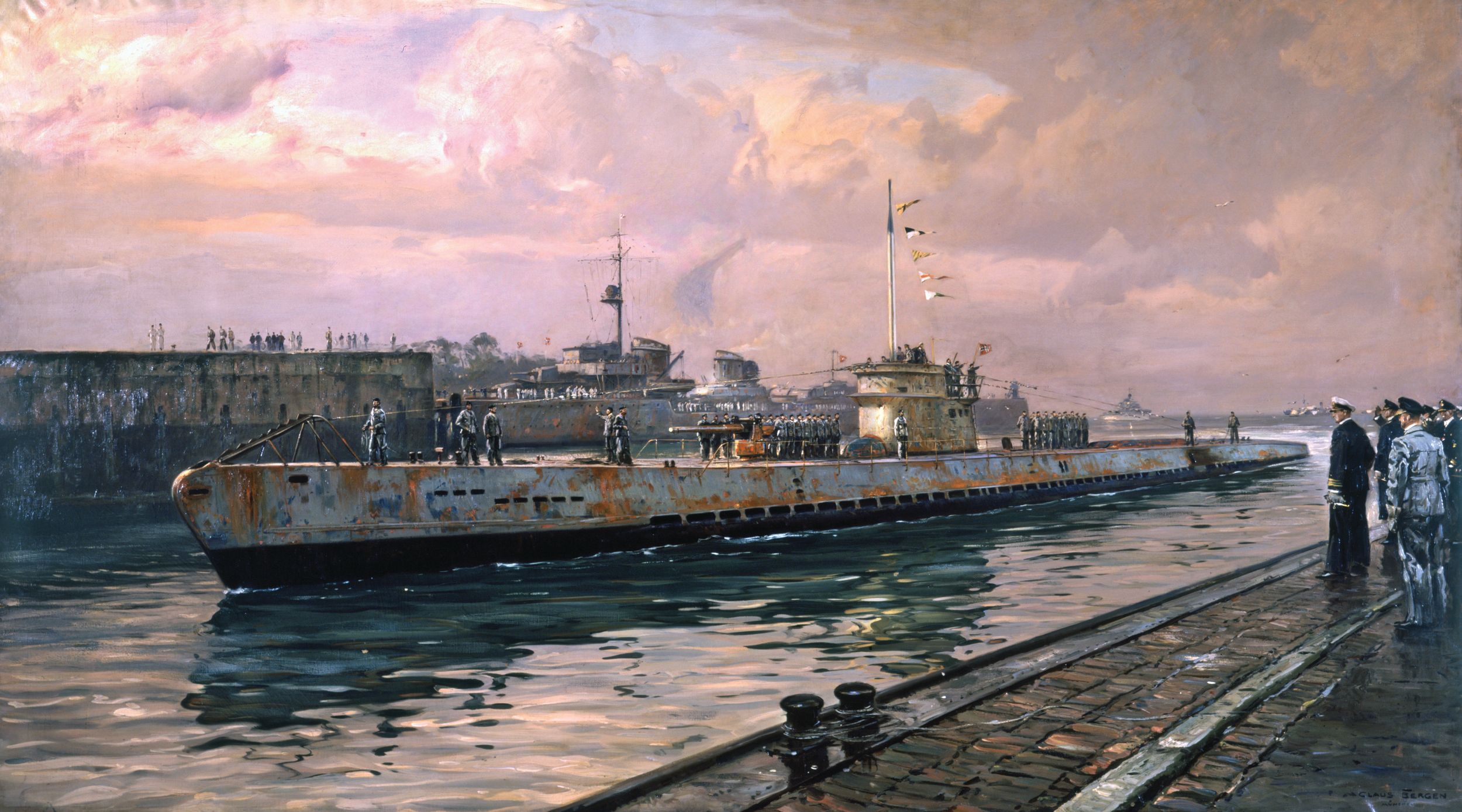
Lost in the battle were two American ships, the destroyer Hammann, and the valiant Yorktown, which had come back from near destruction to fight one last time. During the Battle of Midway, she had taken hits from three bombs and two torpedoes. On June 7, 1942, as she was being towed back to Pearl Harbor for another attempt at resurrection, Yorktown was hit and sunk by two torpedoes from the IJN submarine I-168.
Author Mark Carlson has written extensively for WWII History magazine. He is an expert on World War II in the Pacific and on various aspects of wartime aviation history.
Join The Conversation
Comments
View All Comments