By Chuck Lyons
The nights were “the most horrible ever experienced,” Bruce S. Wright, a Royal Canadian Lieutenant Commander later wrote about his time in Burma in February 1945. “[It] made a cacophony of hell that has rarely been duplicated on earth.”
He was there when nearly 1,000 Japanese soldiers, escaping a British attack on their positions, had slipped into a mangrove swamp on Burma’s Ramree Island. Throughout the several nights that followed, Wright wrote that the British troops that encircled the swamp could hear “scattered rifle shots in the pitch-black swamp punctured by the screams of wounded men crushed in the jaws” of half-ton saltwater crocodiles.
“At dawn,” he said, “the vultures arrived to clean up what the crocodiles had left.”
Before the British were able to go into the swamp and end the carnage, almost half of the Japanese who had entered it were dead. The incident often is listed as the worst example of animal predation on humans in history.
But did it really happen as Wright suggested?
Eight years after what has been called “The Ramree Island Massacre,” historians accept the heavy loss of Japanese life but doubt saltwater crocodiles were responsible.
Japan’s main aims when she entered the war in December 1941 were to acquire raw materials, particularly oil, rubber, and tin, and to create space for the population of her over-crowded home islands. The Japanese attack on the United States Pacific Fleet at Pearl Harbor had been planned with this in mind and with the idea that the attack would enable the Imperial Japanese army, air force, and navy to meet these ambitions before the western Allies could react.
The Pearl Harbor raid, however, had failed to sink America’s aircraft carriers, a main objective of the attack. By chance, the U.S. carriers were out to sea on Dec, 7, 1941. On hearing the aircraft carriers had escaped destruction, the BBC even wrote that Japanese Adm. IsorokuYamamoto, commander-in-chief of the Japanese Combined Fleet and architect of the Pearl Harbor attack “knew that the war was already as good as lost.”
Nonetheless, in January 1942, less than two months after the Pearl Harbor attack, the Japanese Fifteenth Army, commanded by Lt. Gen. Shōjirō Lida, invaded Burma from Thailand in hopes of gaining control of Burma’s rubber plantations and then denying the United States the rubber they produced. The Japanese also hoped to cut the famed 717-mile Burma Road that was used by the Allies to funnel military supplies to the Chinese still fighting against Japan.
Japanese forces had already taken Hong Kong. Indochina had fallen, and British, Australian, and Indian troops had surrendered on the Malay peninsula and in Singapore. The Dutch East Indies fell in March 1942, and Japanese control of the western Pacific threatened even Australia.
Burma’s primary defense force at the time was the 17th Indian Infantry Division, under Maj. Gen. Jackie Smyth, who in May 1915 had won a Victoria Cross during fighting near Richebourg L’Avoue in France and who would later serve as Conservative member of the British Parliament.
The Japanese forced the evacuation of Rangoon on March 7, 1942, which allowed them to close one end of the Burma Road. The fighting in Burma stalled after that until, March 1944, when the Japanese who were by then outnumbered in Burma grew alarmed at the growing British strength and attacked on two fronts.
As part of their efforts to meet the Japanese push in 1945, the Allies moved to take Ramree Island, about 12 miles off the coast of Burma (now known as the Republic of the Union of Myanmar). In 1942 the rapidly expansionist Imperial Japanese Army had captured the 521-square-mile island along with the rest of Southern Burma and used Ramree Island as a training facility. They also built an airfield at the island’s northern tip. The use of the area for training also meant the Japanese knew exact distances to specific landmarks, a fact that would greatly help them zero in their artillery on any attacking British forces that also had to face Japanese mines on the beaches and gun emplacements at likely invasion spots. The Allies planned to take Ramree Island along with two other islands, Akyab to Ramree’s north and Cheduba to the south, and use the three islands as sites for airbases that would be able to support the Burmese invasion and other operations being planned for Southeast Asia.
First Akyab was taken easily when the Allied landing force found the island unoccupied.
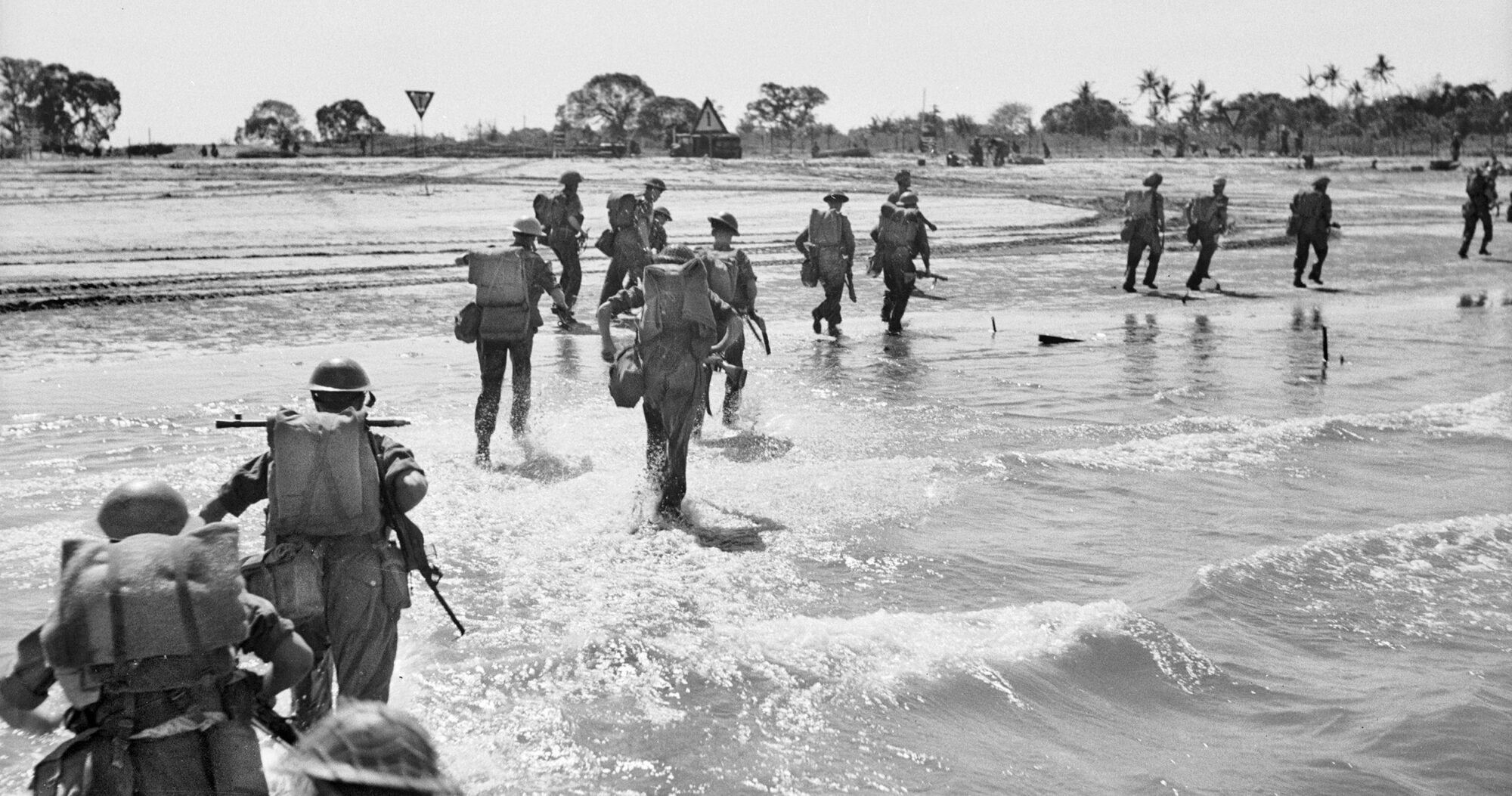
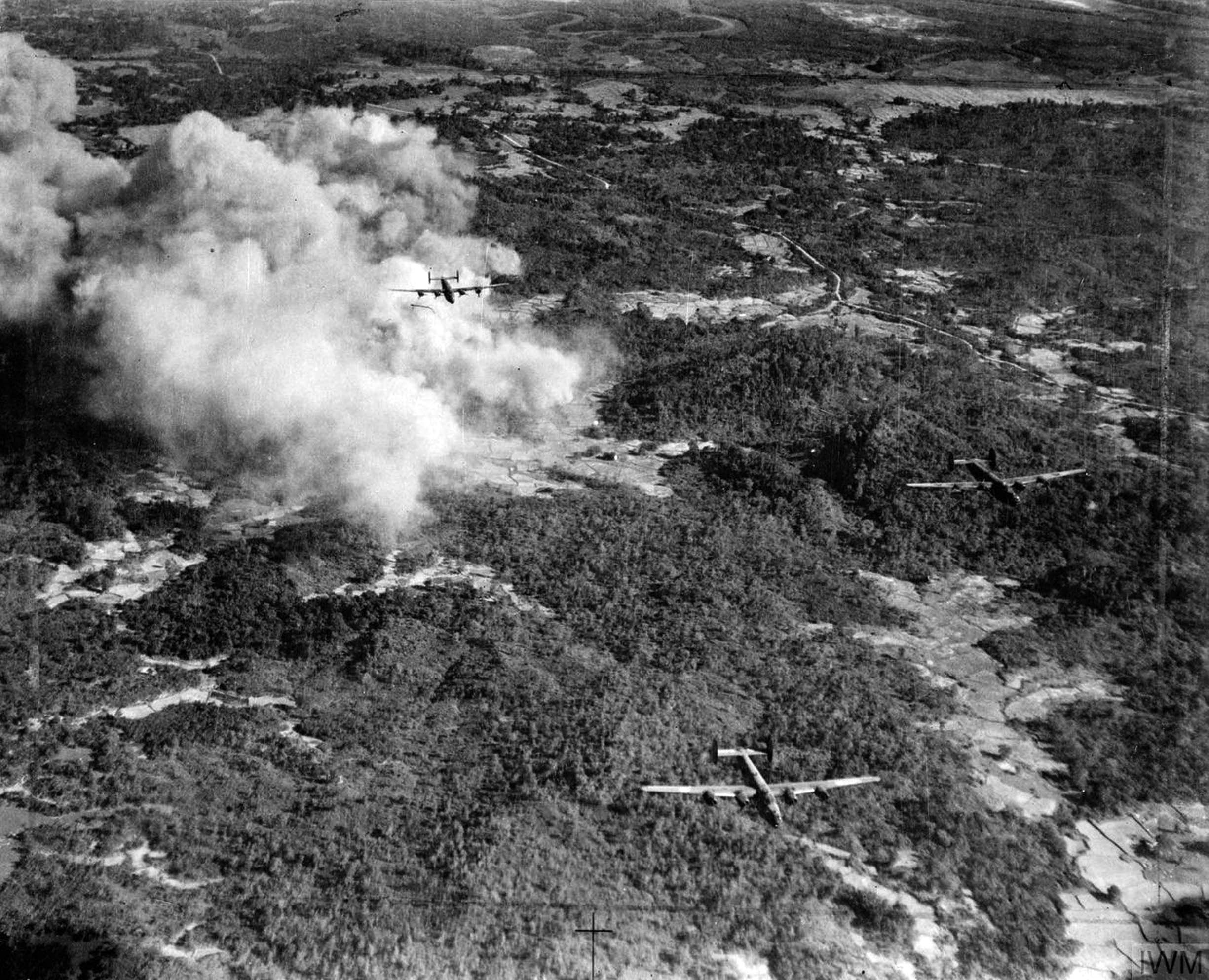
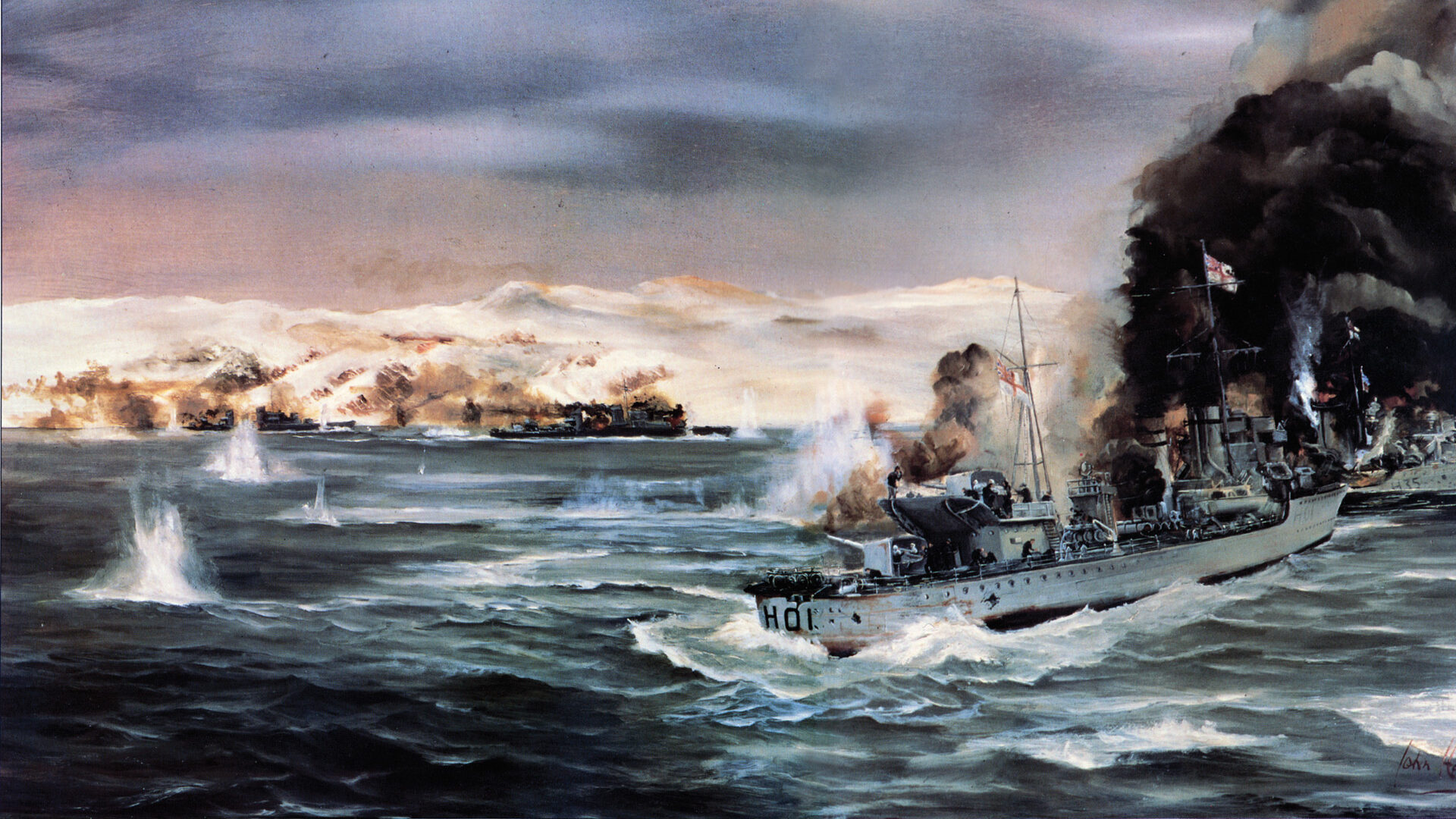
On January 21, 1945, the focus shifted to Ramree. An hour before the 26th Indian Division was to land, the 646-foot-long battleship HMS Queen Elizabeth opened fire with her main battery, the first time the ship had fired its guns in anger since they had bombarded the Dardanelles forts in 1915. The Queen Elizabeth had been unable to lower its 15-inch guns sufficiently from close range and had to move out and fire from “below the horizon.” Her bombardment, however, still did considerable damage to the rock caves on the island that housed Japanese artillery and to the Japanese beach defenses. The light cruiser HMS Phoebe also joined in the bombardment, and B-24 Liberators and P-47 Thunderbolts strafed and bombed the beaches. Troops then landed unopposed near the port of Kyaukpyu on the northern tip of the island and quickly secured the area.
The original landing site had been changed to the site near Kyaukpyu after Combined Operations Pilotage Parties had reconnoitered the proposed beaches before the invasion and found them heavily mined with artillery in the rock caves waiting for their attack. The site change led to a tactical surprise according to an official British report.

Work to develop the nearby harbor as a suitable anchorage for Allied ships began almost immediately including work to remove mines that had been laid in the inner harbor. The harbor was declared safe on January 24, and the commander of the 26th Indian Division, Ma. Gen. C. E. N. Lomax came ashore. He took command of local military operations and established his headquarters in a broken-down house that had been used by the Japanese staff.
The British then began moving south along the island’s coast pushing the Japanese before them and meeting only sporadic resistance until they were stopped by heavy fighting at a place called Yan Bauk Chaung. Meanwhile, on January 26, Royal Marines landed on the southern island of Cheduba to find it, like Akyab, unoccupied. On February 1, additional Royal Marines and other troops landed on the south side of Ramree under cover of another naval and air bombardment. There they were reinforced and ordered to move north and east flanking the Japanese force at Yan Bauk Chaung.
By February 7, the Japanese realized they were caught between the two British forces and moved inland pursued by the British. By then there were only remnants of the Japanese force left in the south.
In what has been called “a typical samurai decision,” these remaining Japanese defenders tried to escape the British by crossing a large mangrove swamp in the center of the island. Their breakout was ordered for dusk on February 19, but as the Japanese moved they were subjected to immediate and effective harassing fire from British air, ground, and sea units. Desperate to make their escape and suffering substantial casualties as they fled, the Japanese force slipped away on foot into the darkness of the mangrove swamp.
“It is hardly possible,” an official British report says, “that in their decision … the Japanese could be fully aware of the appalling conditions which prevailed.”
The route they had chosen forced the Japanese to cross nine miles of the swamp, and as they struggled through the thick forests the British encircled the area by blocking the channels (locally known as “chaungs”) leading out of the swamp. Any Japanese trying to escape the trap were shot. No food or drinking water could be obtained anywhere in the saltwater swamp, and the area was dark during the day as well as during the night. The swamp was filled with acres of thick and all-but-impenetrable forest, miles of deep black mud, mosquitoes, scorpions, snakes, and a myriad of insects. Sharks have also been known to enter the swamp from the ocean. There were also the saltwater crocodiles.
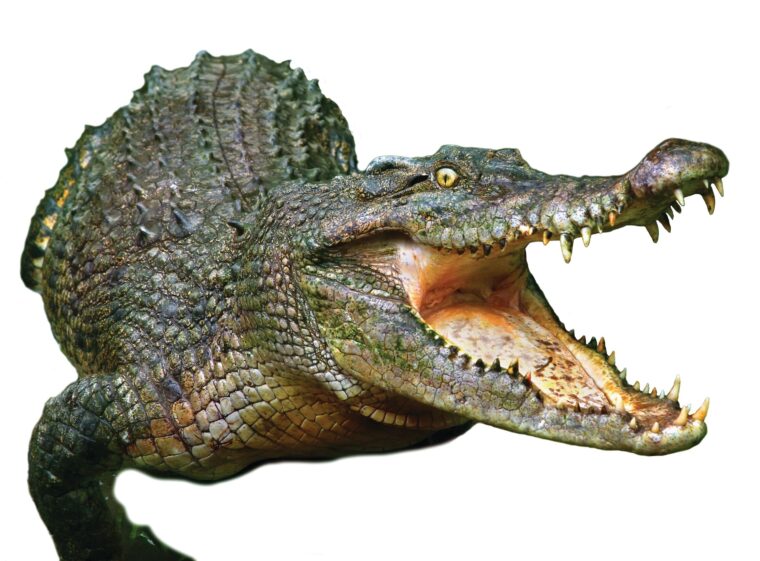
The saltwater crocodile is the largest of all living reptiles and has been called “the largest terrestrial and riparian predator in the world.” An average adult male can weigh between 1,300 and 2,200 lbs. and reach a length of 13-18 ft. The saltwater crocodile is considered formidable and opportunistic and hunts by ambush. It is capable of taking almost any animal that enters its territory, including fish, crustaceans, reptiles, birds and mammals, other predators—and humans. The species is found across Northern Australia, along the eastern coast of India, and throughout Southeast Asia.
The Ramree Island mangrove swamp was filled with them, and the night that followed the Japanese flights were filled with what Wright would call the “cacophony of hell.” Trapped in the deep mud-filled land, tropical diseases soon started afflicting the escaping Japanese soldiers, and in the course of several days, starvation and a lack of drinking water also became serious issues. All the while they were harassed by sporadic artillery fire from the British and bitten by snakes, stung by insects and scorpions, and attacked by the resident crocodiles.
Several times over the days that followed, the British called on the Japanese—citing their impossible position and urging these modern samurai to surrender. But those calls were met with silence. The Burma Star Association, a group of British Burma veterans, also records that a Japanese doctor “who had studied in Britain and the United States and spoke good English” could no longer stand the screams and other noises coming from the swamp “and fled floating down a chaung on a log away from the hell his compatriots were suffering. He offered to call on the others to follow his example, and although he spent all day in a motor-launch cruising up and down the chaungs calling on the Japanese to give themselves up, not a single Japanese appeared.”
They had chosen to die.
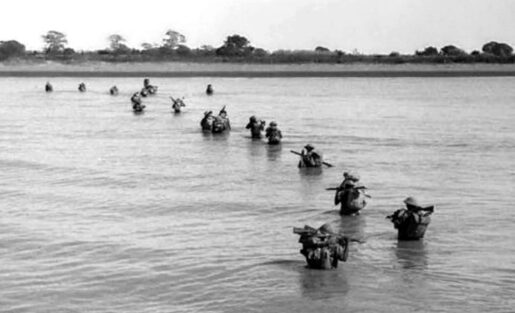
When the British eventually were able to move into the swamp, they found that of the 900-1,000 Japanese troops that originally fled there, only around 20 seriously wounded and weakened Japanese soldiers were alive perhaps “because they were too badly wounded to commit suicide,” the Star Association wrote. Roughly 500 of the original 1,000 Japanese soldiers had been able to escape the mangrove swamps alive and then had tried to escape the island and reach the mainland of Burma. Many of these were captured by British naval units patrolling around the island. Gen William Slim, by then commander of the entire British offensive in Burma, reported “that the last enemy fugitives fell victim to the naval patrols—and the sharks—as they attempted in small craft or on rafts to reach the mainland.”
The survivors discovered inside the swamp and some of the Japanese taken by the British navy told their captors horrific tales of dozens of crocodiles attacking them en masse and appearing out of nowhere to drag off their companions. The nights had been filled with screams, gunfire, and the sounds of animal attacks, they said.
By then, with the flanking maneuver by the Royal Marines at Yan Bauk Chaung and the encircling of the swamp, the battle for the islands was effectively over; no further fighting of any extent was taking place on Ramree, Akyab, or Cheduba. On February 22, the Allied ships were withdrawn for other duties, and the Ramree Island campaign was declared to be officially ended.
No official military report, Japanese or British, mentions a large crocodile attack on Ramree. The story lives on based almost solely on Bruce Wright’s mention of it in a one paragraph account in his 1962 book Wildlife Sketches: Near and Far. It has generally been accepted as factual because of Wright’s reputation as a naturalist.
Two years after Wright, conservationist Roger Caras’ book, Dangerous to Man, mentioned Ramree as “one of the most deliberate and wholesale attacks on man by large animals that is on record.” Caras has admitted that from “a source other than Bruce Wright, I would be tempted to discount it. [But] Bruce Wright, a highly trained professional naturalist, was there at Ramree.”
Wright was indeed on the island at the time, but he was not an eyewitness. He wrote in his 1968 book, The Frogmen of Burma, that he heard about the attacks from Brits serving on patrol boats in the islands. Despite Wright’s reputation and because of second-hand sourcing, many historians have doubts about the events of the so-called “most horrible” night.
This does not prove Wright’s account untrue, but over the decades, several historians have disputed his description of the events within the swamp for several reasons.
For one, local villagers who were alive during the battle, including some who had been conscripted by the Japanese military, claimed most of the Japanese casualties were due to dehydration and disease caused by exposure as well as the lack of clean food and water.
For another, though military historians recognize that crocodiles attack humans, they argue at the same time that “Japanese firepower, which tore holes in British tanks and armour” would have been able to handle large numbers of them.”
“That late in the war,” another historian wrote, “with supplies being interdicted by the allies, Japanese troops were already in poor health. It is likely that most of the troops [entering the swamp] were already suffering from malaria, beriberi, dysentery, or even all three…. They would not have lasted more than a couple of days without water, trying to slog their way through muddy swamps. They would have collapsed and drowned.”
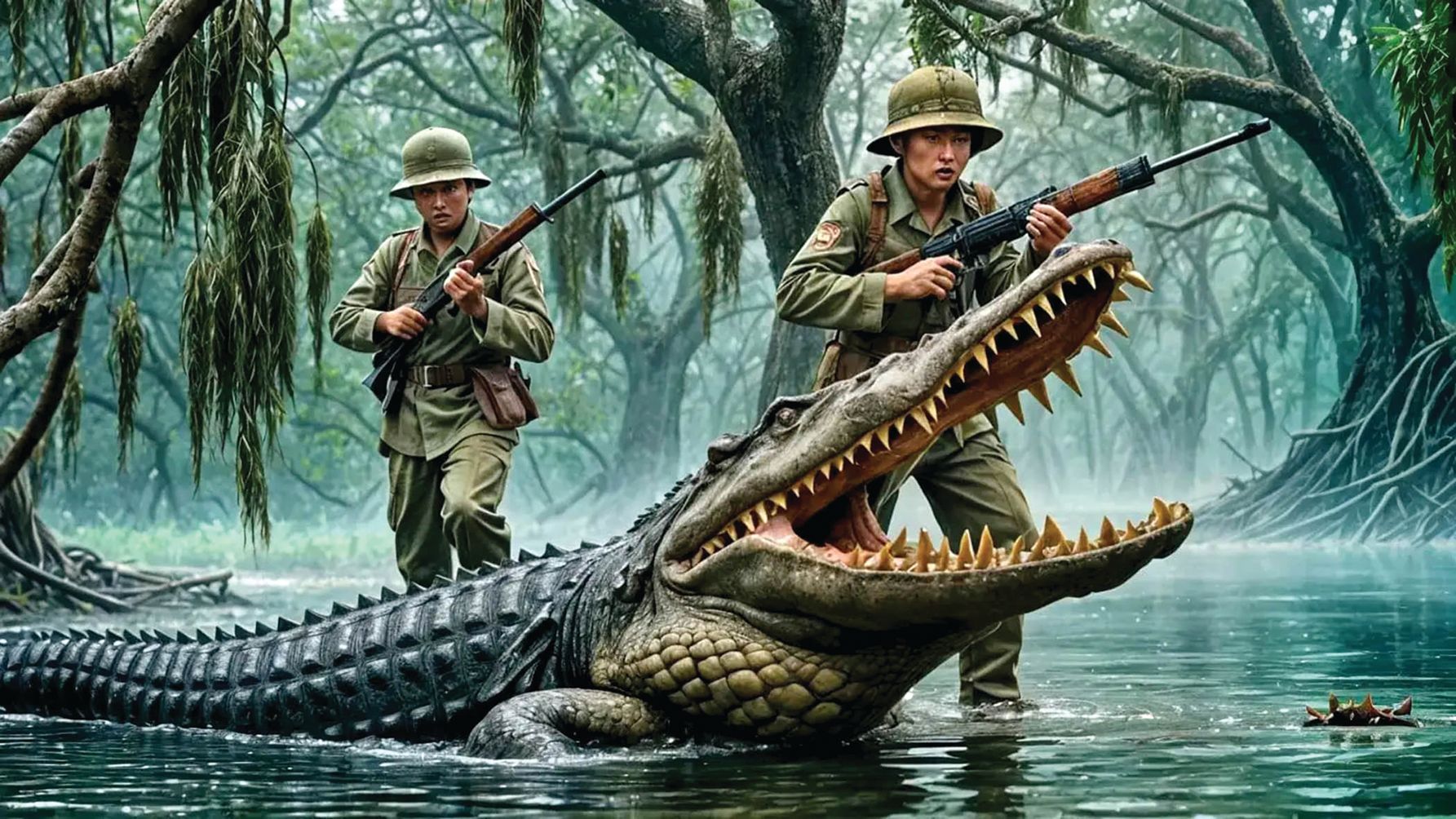
The size of the supposed crocodile population has also been questioned. The Ramree mangrove swamp simply would not have been able to support the alleged thousands of crocodiles that were said to have preyed on the Japanese. “How had these ravening monsters survived before [the coming of the Japanese],” historian Frank McLynn wrote, “and how were they to survive later?”
Scientists who study crocodiles also claimed that crocodile “feeding frenzies” of this scale, especially involving humans, are unheard of.
Yet the saltwater crocodile (Crocodylus porosus), is known to be one of two crocodile species that “regularly prey on humans,” according to scientists, and they are said to aggressively defend their territory. Saltwater crocodile predation is still happening. In 2015, there were 180 total crocodile attacks, 79 of them fatal, reported in Southeast Asia, coastal India, and Oceania—the regions where saltwater crocodiles live. A Burmese man was killed by a saltwater crocodile in 2008 and an unfortunate 8-year-old girl was attacked and eaten in Indonesia in 2021.
Crocodiles are dangerous, but it is unlikely they were the sole cause of what had been termed the “Ramree Island Massacre.”
But in that case, what caused the terrifying sounds that British boat patrols reportedly heard in February of 1945? Especially the gunshots. They are not explained by dehydration, starvation, or topical disease.
According to British military records uncovered in a National Geographic investigation into the Ramree Island deaths, however, in the early hours of Feb. 18, 1945, the Allies discovered a “desperate attempt” by hundreds of Japanese soldiers to swim across a channel separating Ramree from the Burmese mainland. “Except for a few swimmers, it’s doubtful that any survived the crossing,” reads the official British report as quoted by the National Geographic. “It’s estimated that at least 100 Japanese were killed or drowned that night … 200 killed is regarded as a conservative estimate—about 40 loaded boats were known to have sunk. Possibly another 50 Japanese died in the mangrove from exposure and want of food and water. 14 prisoners were taken.”
Some of the Japanese who died in the swamp were probably killed by dehydration as has been suggested. They were probably not in good health to begin with. Others drowned, and others were killed by snakes and insect bites. Others by disease. But others—perhaps the majority, perhaps not—were killed by the fearsome one-ton saltwater crocodiles of the Ramree Island swamp.
How many of these brave—and perhaps deluded—Japanese soldiers died from each of these causes could be—and has been—debated at length by historians and investigators, but the question has never been—and probably never will be—resolved.
There is no question, however, that the battle was a clear British victory and no question that far fewer Japanese soldiers came out of the swamp than had gone in.
The argument is about what killed them, the swamp itself, disease, dehydration, snakes, and scorpions, or 1,000-lb. saltwater crocodiles.

Well, you know what they say, there are things too strange to be believed, but not too strange to have actually happened. I’ll give the crocodiles the benefit of the doubt. At any rate, a bunch of enemy troops were eliminated.