By Mark Carlson
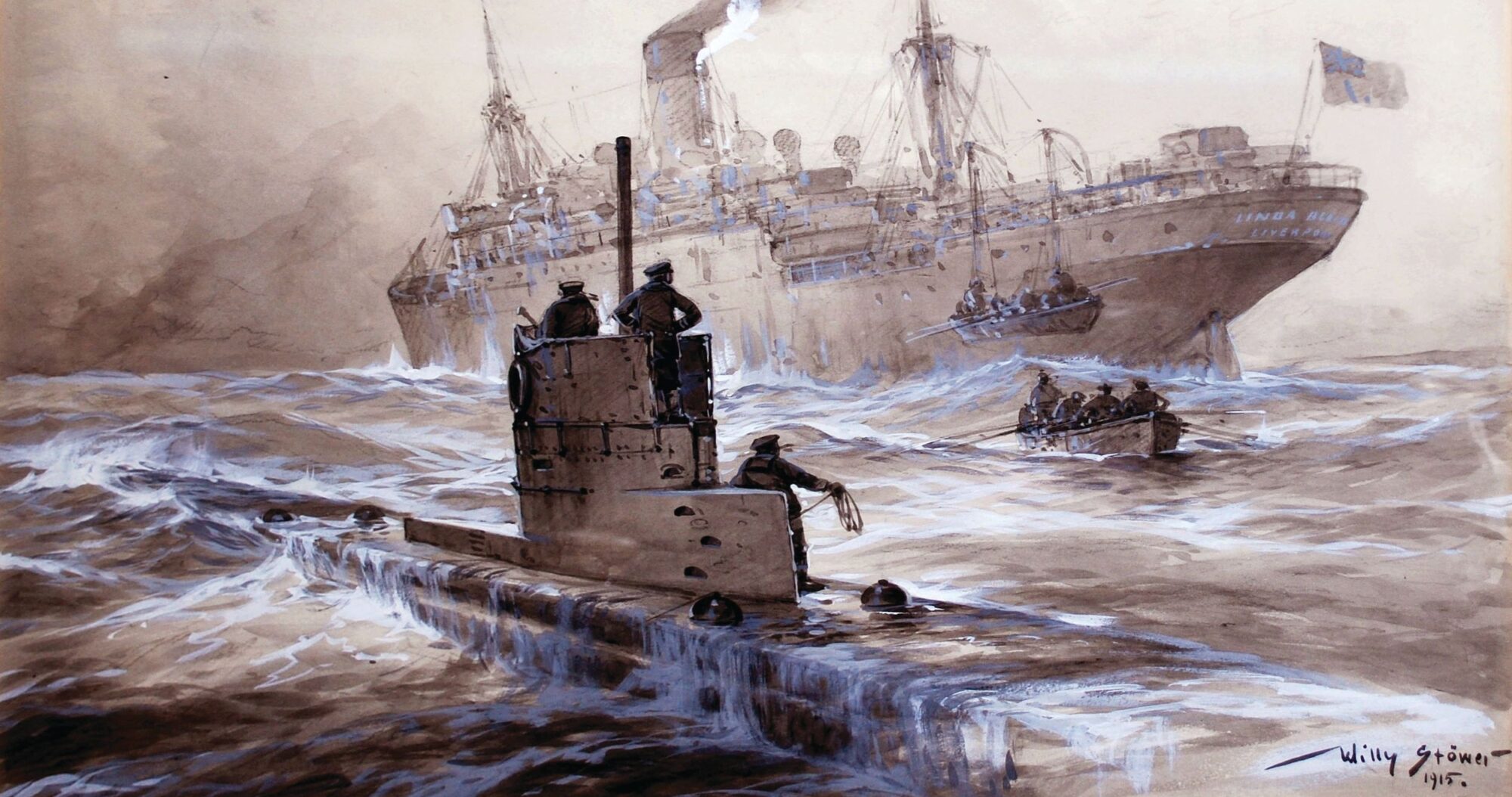
During the Great War, the German navy’s most effective and deadly warship was the U-boat, the key to cutting Great Britain’s lifelines from the rest of the world and forcing the island nation to its knees. By mid-1915, U-boats were running virtually unchallenged around the British Isles and eastern Atlantic, sinking allied merchantmen and even armed warships at will.
But there was a time when the U-boats ran scared, when they feared to approach and attack lone, defenseless merchant ships on the high seas. Was that plodding old rust bucket sailing into the war zone exactly what it appeared, or was it in fact a predator, a wolf in sheep’s clothing? One of those innocent-looking tramp steamers was commanded by a man who would go down in history as the most successful U-boat killer of the First World War.
In early 1915 the British Admiralty’s greatest fear was that Germany would begin unrestricted submarine warfare, sinking every ship that came close to the British Isles, neutral or not. Before the war many Royal Navy admirals had considered U-boats to be “dastardly, unethical, and un-English, the weapon of cowards.” But by late 1914, after U-boats had sunk four British cruisers and scores of merchantmen, it was obvious that the threat was becoming an unstoppable horror.
U-boats had been conducting their attacks under an article of the 1907 Hague Convention governing war at sea, generally known as “cruiser warfare.” A submarine, upon stopping a ship, must board her to determine its nationality, destination and cargo. Ships of any nation carrying war materiel for Great Britain could be sunk, but only after the crew and passengers were safely off in lifeboats.
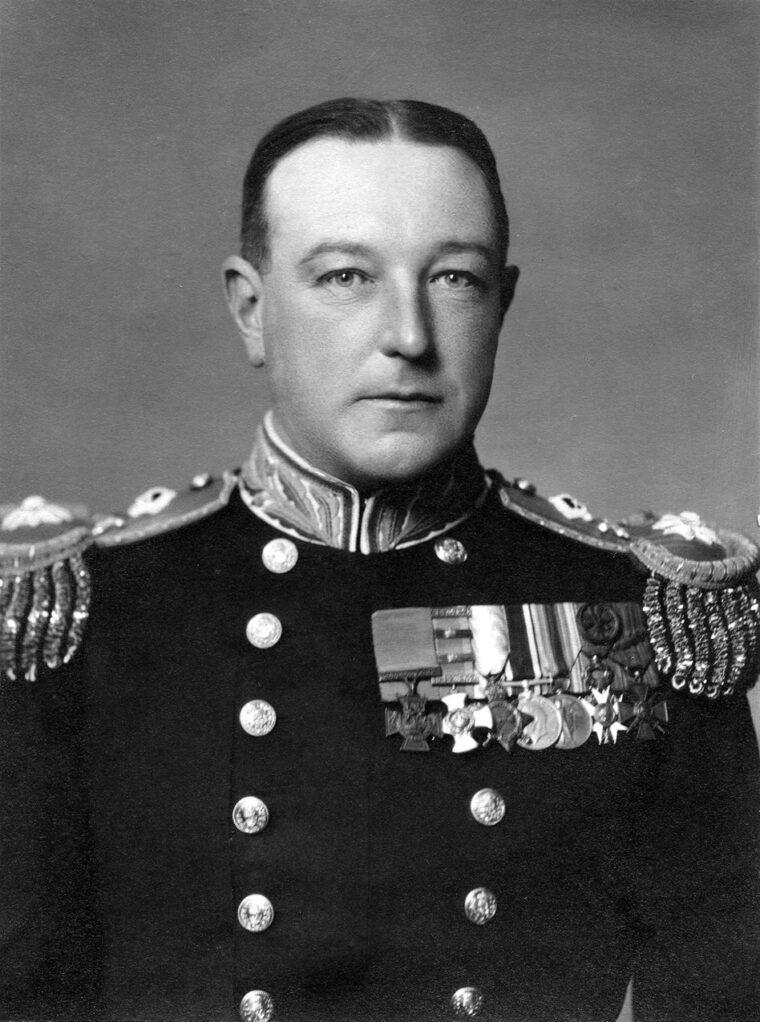
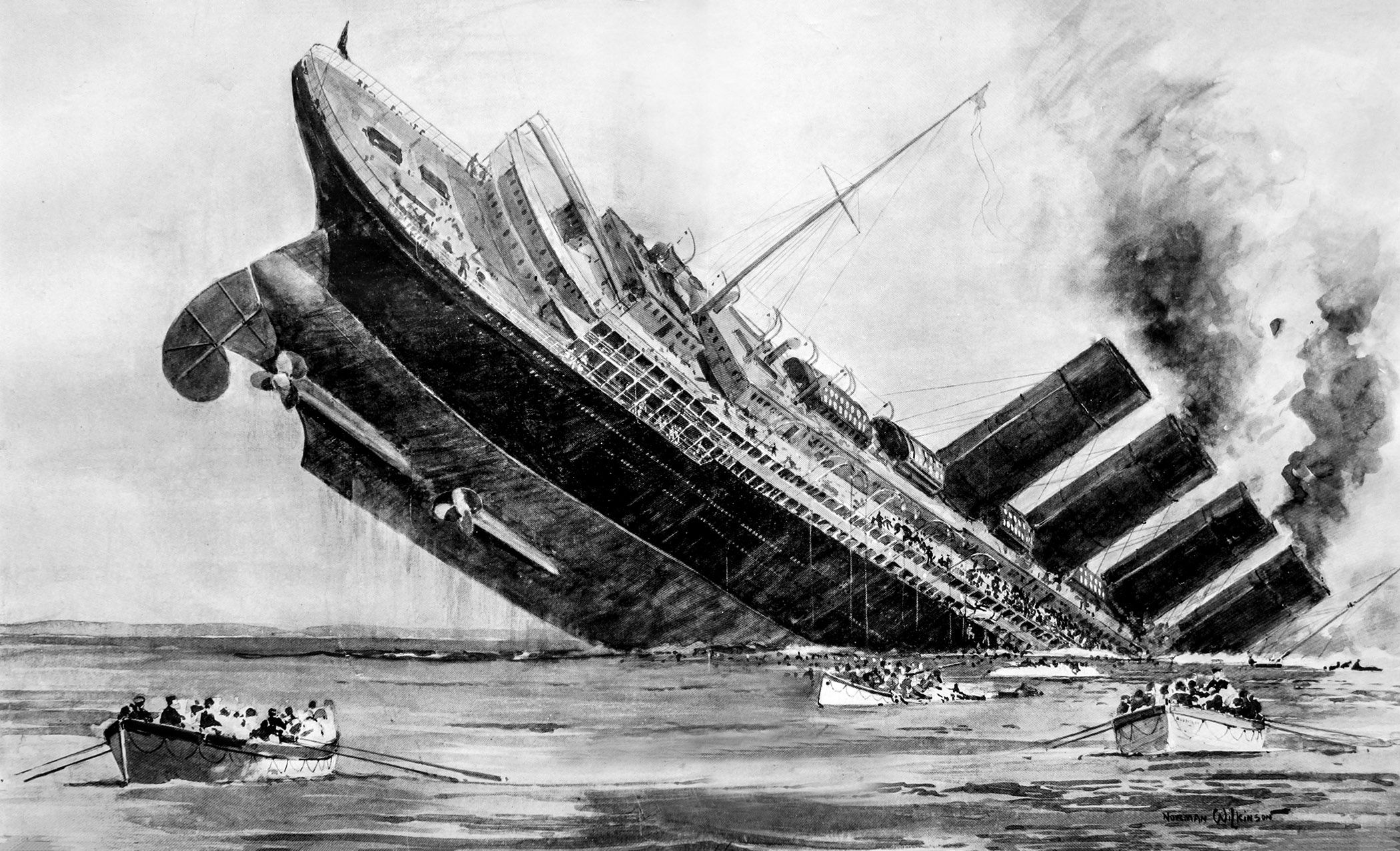
But this changed after U-20 torpedoed the liner Lusitania in May 1915. There were 118 Americans among the 1,261 who died. The “deed for which a Hun would blush” inflamed American passions and pushed President Woodrow Wilson closer to the decision to declare war on Germany. In Berlin, Chancellor Theobald Bethman-Holweg, a moderate, was desperate to avoid a war with the huge nation across the Atlantic. He knew full well it would mean Germany’s defeat, but he was fiercely opposed by Adm. Alfred von Tirpitz, Secretary for Naval Affairs. Tirpitz and the naval high command insisted that unrestricted submarine warfare on Allied and neutral shipping would cripple Britain in six months—then Germany could face America on nearly equal terms.
Kaiser Wilhelm II vacillated until September 1915 when Adm. Hugo von Pohl, Commander in Chief of the High Seas Fleet, chose to withdraw all U-boats from the sea, soothing simmering American emotions. But the pressure was still on. With the land war in an endless stalemate, the only certain means to bring the war to a close was to starve Great Britain by putting its merchant fleet on the bottom. This was a daunting proposition. Throughout most of the war the Kriegsmarine possessed about 130 U-boats, of which half were operational at any given time. In the first seven months of 1915, U-boats sank 790,000 tons of Allied and neutral shipping, of which about 570,000 tons had been British. This was nowhere near the total that would have to be sunk if U-boats were to force Britain to surrender. They would have to sink at least 600,000 tons each month for a year—7.2 million tons. This was absolutely impossible under the strict rules that governed submarine warfare.
In February 1916 Kaiser Wilhelm chose a compromise. All Allied ships in the War Zone were to be attacked without warning, as were all armed Allied ships on the open seas. Passenger ships were to be unmolested. Regarding neutral and unarmed ships outside the War Zone around the British Isles, Wilhelm insisted that the rules of cruiser warfare be observed. While this was about as civilized as a naval war could be, it put the U-boats at considerable risk. With no other choice, they went on patrol with this restriction. But the winds of war were already turning against the U-boats.
The British Admiralty considered ways of blunting the U-boat threat. Using the limited number of destroyers, most of which were assigned to screen the huge Grand Fleet, was impractical. Anti-submarine tactics and weapons were primitive and ineffectual. It became apparent that the only sure way to sink a U-boat was to bring it to the surface, where gunfire could be used to penetrate the pressure hull. Submarines were deadly underwater, but fragile on the surface. The trick was in enticing the sub to come up. The early-war U-19 class carried as few as six torpedoes, while the later U-boats boasted as many as sixteen. A sub commander used his meager supply of torpedoes sparingly for large merchantmen and warships. Small freighters of less than 5,000 tons displacement could be sunk by fire from the U-boat’s deck gun or by placing scuttling charges in the hull. In either case, a U-boat had to be on the surface. This led to the genesis of the “Q-ship.”
The most famous Q-ship was USS Intrepid of 1804, commanded by Lt. Stephen Decatur, disguised as a harmless Tripolitan ketch. Intrepid was loaded to the bulwarks with armed sailors and explosives to board and destroy the captured American frigate Philadelphia. Guile and audacity enabled Decatur to accomplish his mission.
Even before the sinking of Lusitania, Winston Churchill, in his role as First Lord of the Admiralty made the first move in Britain’s covert war on the German submarines. Churchill, in his zest for daring and even foolhardy schemes ordered that British trawlers tow submerged Royal Navy submarines and communicate by telephone cable. When a U-boat was sighted, the trawler sent an alert to the British sub, which then cut the tow and maneuvered to attack the U-boat. This unusual ploy worked in June and July of 1915, resulting in the sinking of two U-boats. The captain of U-40, sunk by the C-24 and rescued by the trawler Taranaki, loudly declared that his sub had been sunk by a “dirty trick.”
In order to advance the use of disguised armed ships, First Sea Lord Admiral Sir John Jellicoe appointed Rear Admiral Alexander Duff as head of an official anti-submarine division in December 1916. Duff began by establishing specific routes for merchant ships that changed on a regular basis to confuse U-boats, and most significantly, arming the next generation of Q-ships.
He collected scores of small, nondescript freighters of less than 6,000 tons displacement. They looked like the tramp steamers found in every port in the world—rusty, old, and of basic construction. But their engines and boilers were upgraded to give them more speed and their deckhouses were cut down to conceal gun mounts hidden behind collapsible walls.
Duff originally called them “special service ships” or “mystery ships.” The term “Q-ship” may have come from Queenstown in Ireland, where many of the ships were based. They were manned by trained reserve navy crews and not averse to flying the flags of neutral Brazil, Argentina, Norway, Finland, Iceland or the United States.
Even in the ultra-traditional Royal Navy, Q-ships had much leeway to do and try any subterfuge, any deviousness that would persuade a wary U-boat captain to surface.
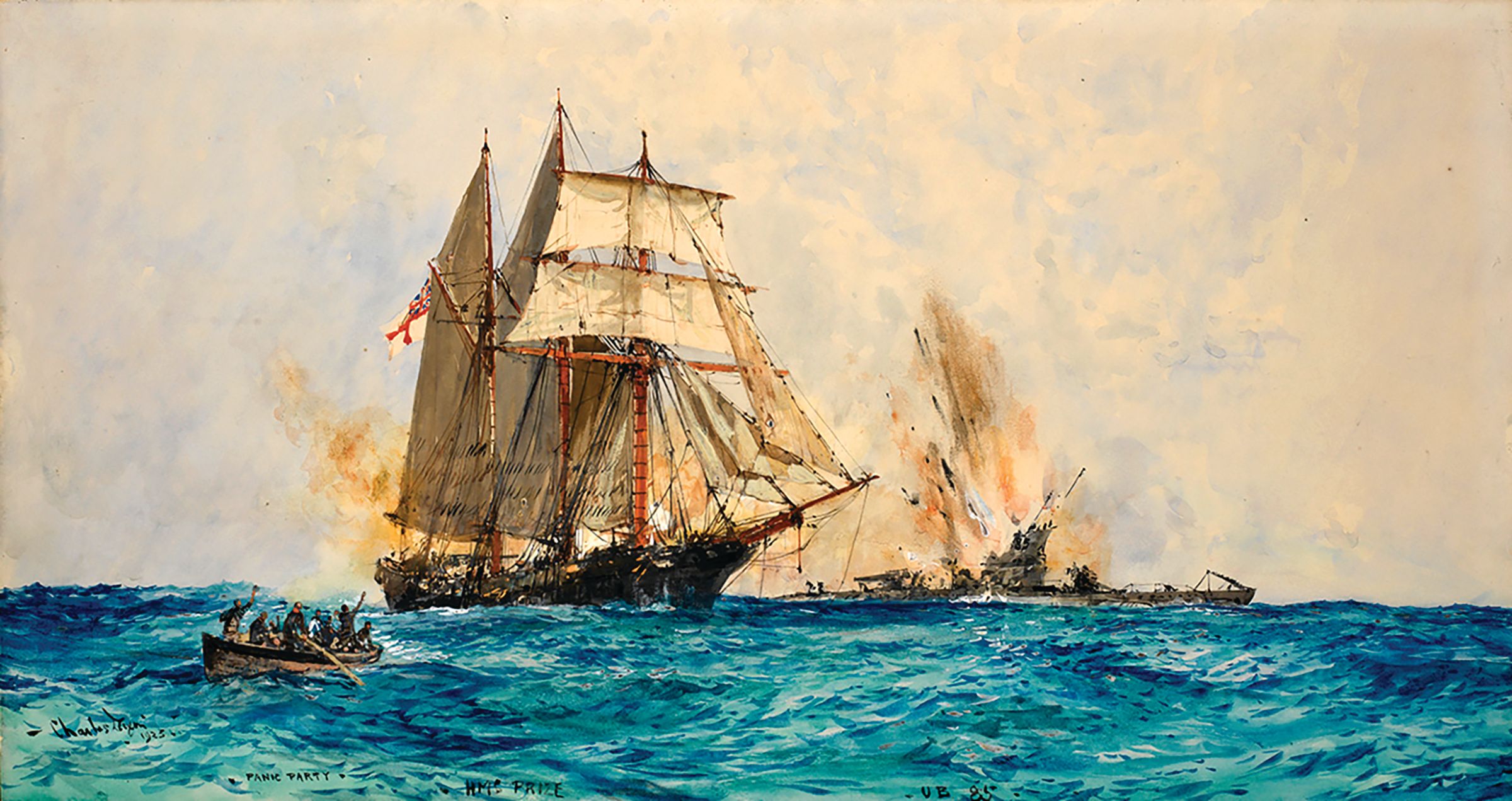
Image was everything. Q-ship crews had to assume they were always under scrutiny through a U-boat’s periscope. In order to make the crack Royal Navy reserve crew appear as harmless, slovenly foreign sailors and passengers, they grew long hair and beards and wore nondescript civilian clothing. Every aspect of “spit and polish” was buried in favor of sloppy, lazy and even insubordinate behavior. They assiduously avoided acting like trained sailors, going so far as to have fistfights on deck, refusing to salute, and adopting forbidden habits like smoking pipes and chewing tobacco. The more unkempt the ship appeared, the more likely it was to entice a U-boat to surface for a gun attack.
When a periscope was sighted the Q-ship’s captain began watching the sub’s movements through concealed holes in the superstructure. A common ruse was for specially trained “panic parties” to throw themselves into lifeboats and frantically row away to escape the attack. In order for this ploy to work, Q-ships often carried double the normal crew needed for a small freighter.
Well before the creation of an official Q-ship program, there had been engagements between disguised ships and U-boats. Lt. Com. Gordon Campbell was clever, daring and audacious to a fault. He was also patient, the one quality that Q-ship captains needed in abundance. The Sussex-born Campbell was 30 when he took his first Q-ship to sea in 1915. But he and HMS Farnborough’s crew had to wait nine months for their first chance at a U-boat. In the meantime, Campbell, exercising a latent skill as a theater director, refined the deception. He disguised one crewman as his wife, complete with a simulated baby, to sit in a lounge chair and read a book. He ceaselessly drilled the crew on the two 6-pounder and five 12-pounder guns. His chance came on March 26, 1916, off the southern coast of Ireland. A crewman spotted a torpedo coming at them. It passed harmlessly behind the ship. Campbell told his men to show no reaction. It took great courage and presence of mind to maintain the deception even under torpedo attack.
While a hit might kill some of the crew, the ship would probably not sink. Q-ships often had their holds stuffed with cork, empty barrels, balsa wood and other “unsinkable” materials. The gunners were ready when the U-68 surfaced directly astern and passed alongside the Farnborough. “Let go!” Campbell bellowed. The white Royal Navy ensign was raised and the guns opened fire. In minutes, the U-boat’s hull was riddled with shell holes and it sank. This was only the first of three victories for Gordon Campbell.
It was around that time the Q-ship threat became known to the Kriegsmarine. From that point on, every unescorted merchantman sailing alone was suspect and the U-boats became extremely wary in approaching a possible Q-ship. Sub captains carefully studied any rusty old ship, now referred to as Unterseeboot-Falle (U-boat trap), searching for any sign of false bulwarks or depth charge racks.
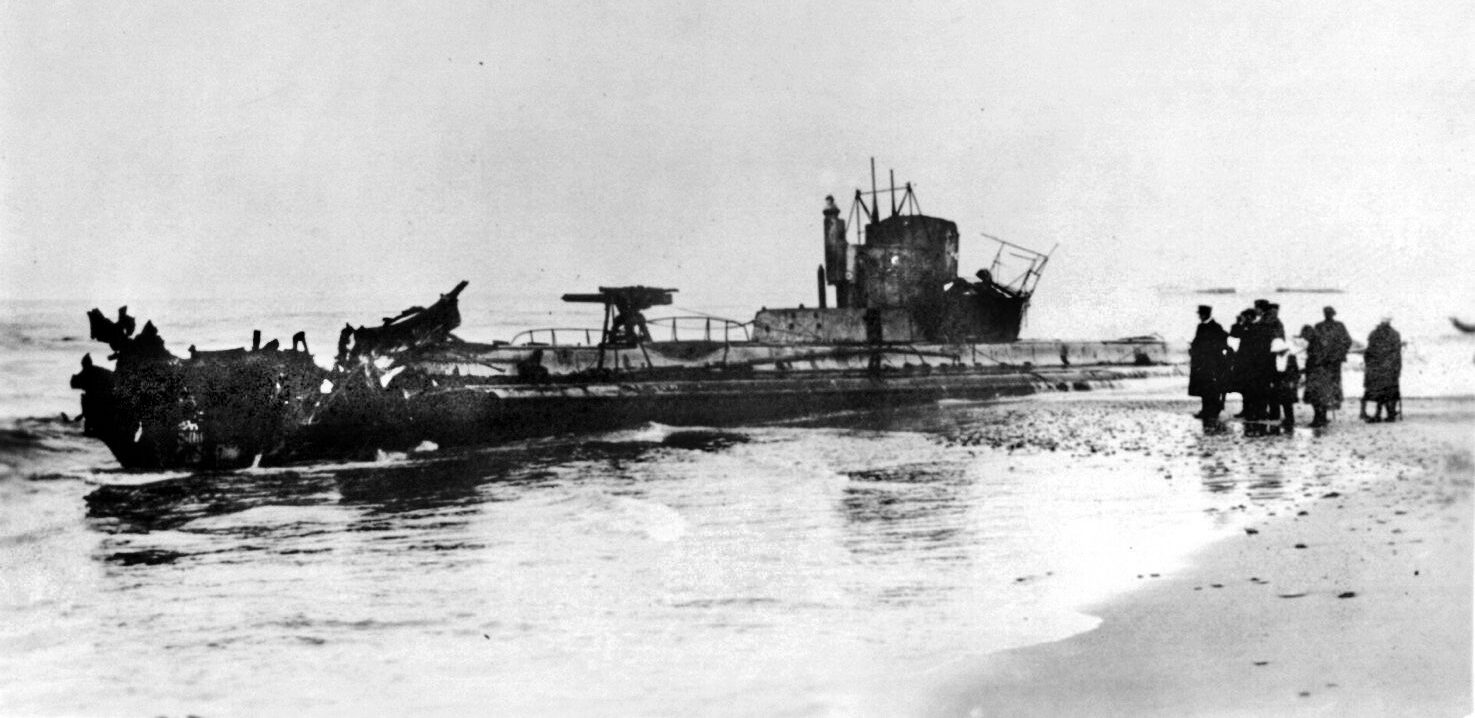
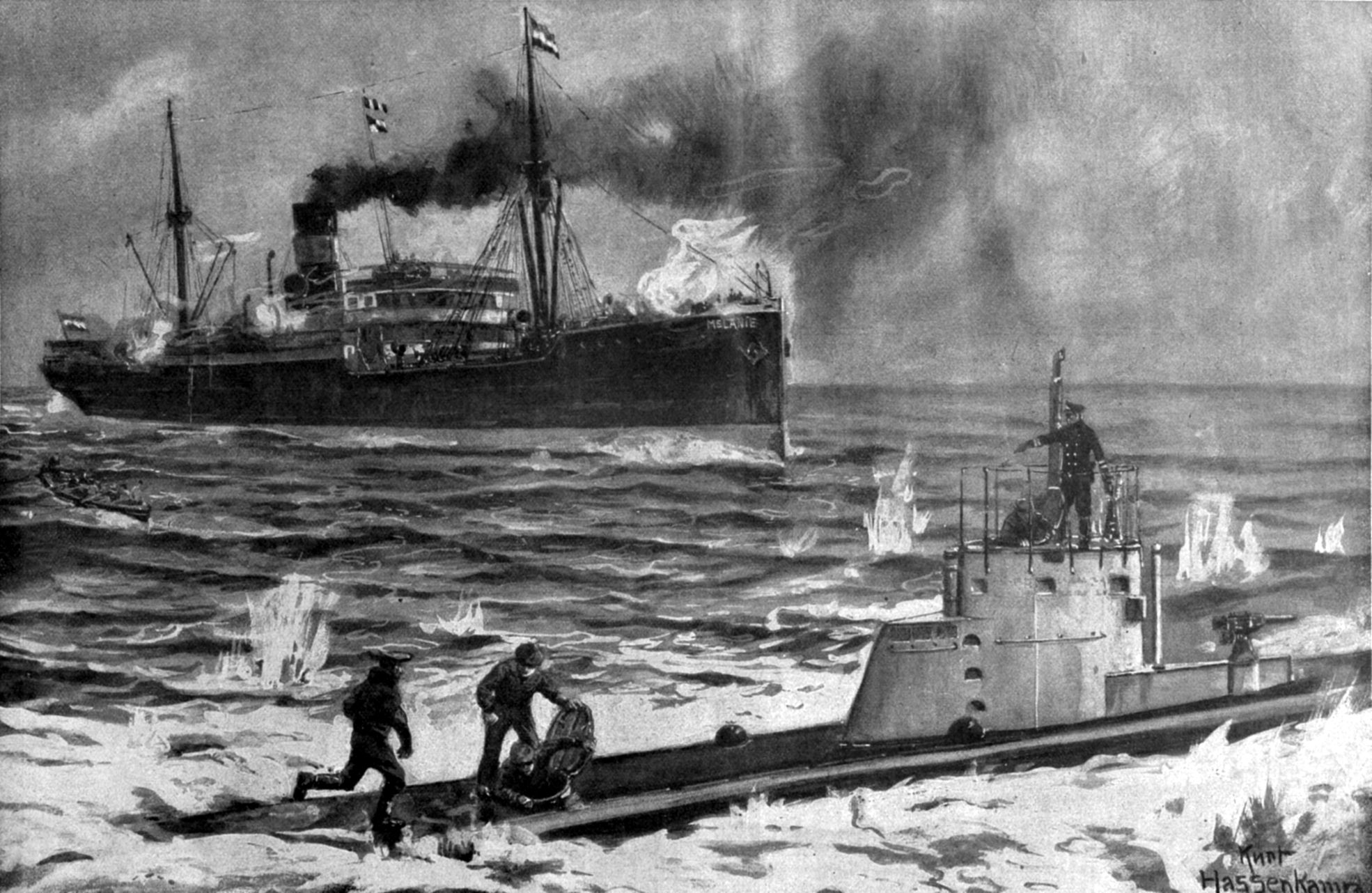
If there was any doubt, one of the safest tactics was to surface two or three miles from the rust bucket and shell it with the U-boat’s deck gun.
Having to remain concealed beside their own guns while enemy shells exploded among them was often the most nerve-racking time for a Q-ship crew. All they could do was hope the U-boat commander chose to come closer. Then it would be their turn. Some U-boat captains chose to use a torpedo to assure a kill without the risk.
It took almost a year for Gordon Campbell to face another U-boat. On February 17, 1917, now under the aegis of Admiral Duff’s new division, Farnborough was hit by a torpedo 100 miles southwest of Queenstown. While any competent naval officer would consider this a catastrophe, Campbell’s standing orders were for the deck officer to alter ship’s course and speed to assure a hit. Immediately the “panic party” went into action, making their headlong dash into the lifeboats as haphazard as possible. But as the two boats hit rowed away, the sub still had not risen.
The U-83, under Kapitanleutnant Bruno Hoppe, was not taking any chances. Aware of the existence of Q-ships, he continued to study the ship, noting that it did not seem to be sinking, even though most of its crew had fled in panic.
Hoppe’s periscope came so close to one of the lifeboats that the crew spoke in whispers so as not to be heard by the prowling German. U-83 moved so close to the Farnborough that Campbell could see the gray hull under the surface.
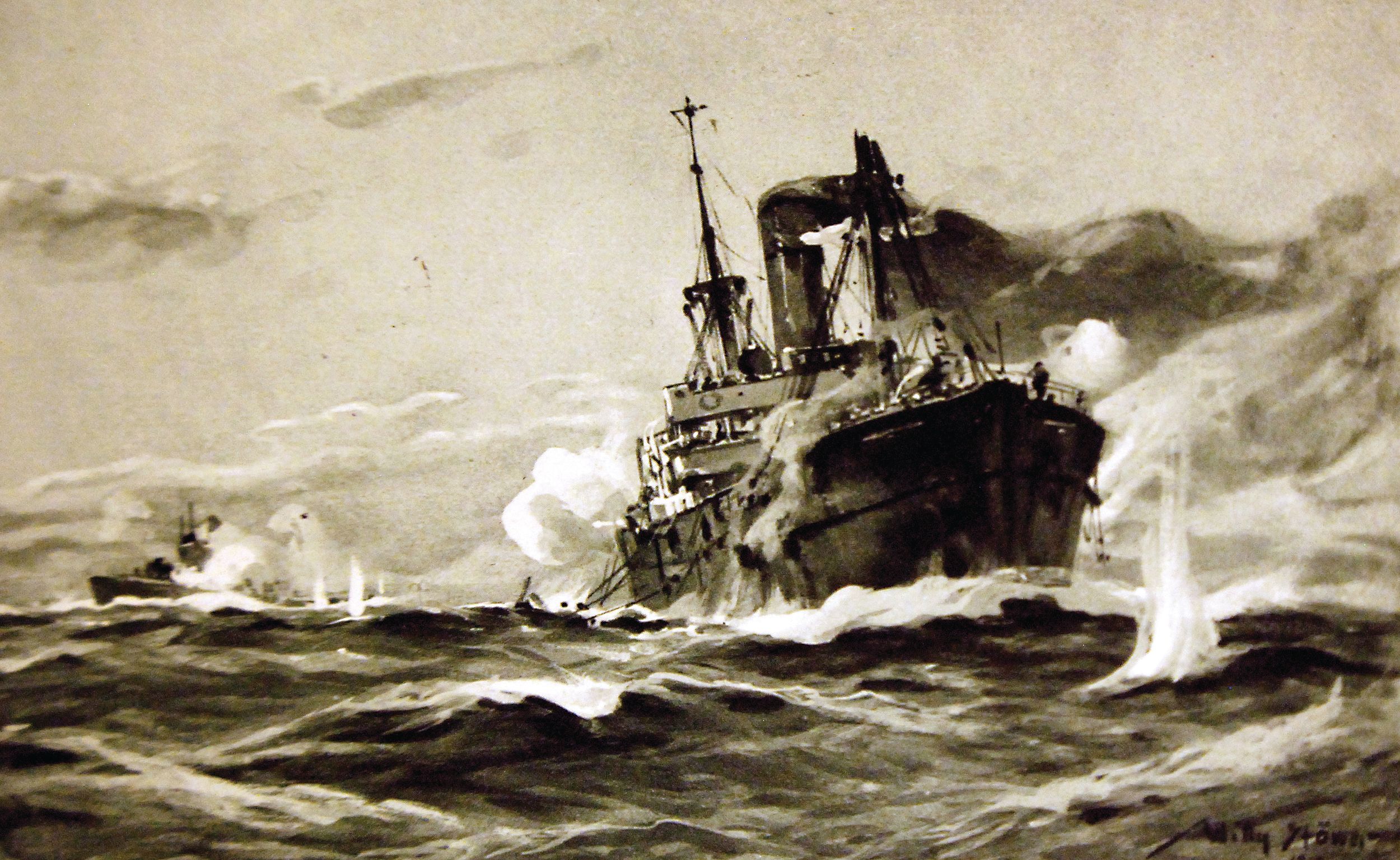
Only then did Hoppe decide to come up, breaking the surface only 100 yards away, a perfect target for Campbell’s skilled gunners. The first 12-pounder shell decapitated Hoppe as he climbed from the conning tower hatch. His gun crew was caught unawares as their skipper’s headless corpse fell back into the conning tower. Real confusion and panic ensued as the British guns fired again. With 45 holes torn in the hull, U-83 sank, killing 35 and leaving only two survivors. Campbell was awarded the Victoria Cross. Fifteen members of his crew also received decorations. The details of Campbell’s VC were never released, prompting the name “The Mystery VC.”
In June 1917 Campbell commanded the heavily armed HMS Pargust, a 2,800-ton Devonport-converted collier that carried two 4.1-inch guns, four 12-pounders and two 14-inch underwater torpedo tubes. But the latter were not as formidable as they might seem. It was virtually impossible to aim and fire the torpedoes accurately, as the ship was almost never able to maneuver in the manner that a submarine could.
Off the south coast of Ireland, Pargust was hit by a torpedo from the mine-carrying submarine UC-29. Campbell had added to the appearance of the “panic party” with further touches, including a bowler-hat wearing “captain” complete with a stuffed parrot in a cage. Every aspect of his crew’s reaction was intended to make the U-boat captain come closer to Pargust’s guns or torpedoes.
After half an hour, the UC-29 surfaced 50 yards away and Campbell gave the order for the gun crews to open fire. A torpedo was launched but missed the submarine. Several shells hit the sub, which then exploded, most likely from one of its own mines.
By the summer of 1917 the Q-ship versus U-boat war was reaching a climax—England had lost six Q-ships, while Germany had lost at least twelve U-boats. It was now virtually impossible to entice the subs to the surface. The most legendary battle between Q-ship and U-boat took place in the Bay of Biscay on August 8. The HMS Durnraven had added a new twist to the Q-ship concept. Instead of looking like an old tramp steamer, Dunraven portrayed a 3,000-ton armed merchant steamer. She had a single 4.1-inch gun visible on her stern, with four more guns concealed behind false bulwarks, in addition to torpedo tubes and two stern depth charge racks. The latter were more likely to work against U-boats. Having the ship appear as an armed merchantman was intended to goad a U-boat captain, who, unaware of Dunraven’s great firepower, into making a surfaced attack. Campbell the Q-ship ace was in command, but this was one battle he would lose.
At mid-day the U-61, cruising on the surface, approached Dunraven and submerged. Campbell made sure his ship gave the appearance of running in panic from the sub, even reducing speed to allow the submerged sub to catch up. His tactic worked and U-61 surfaced and opened fire with its deck gun from two miles away. It was the opening of a battle unlike any ever fought at sea.
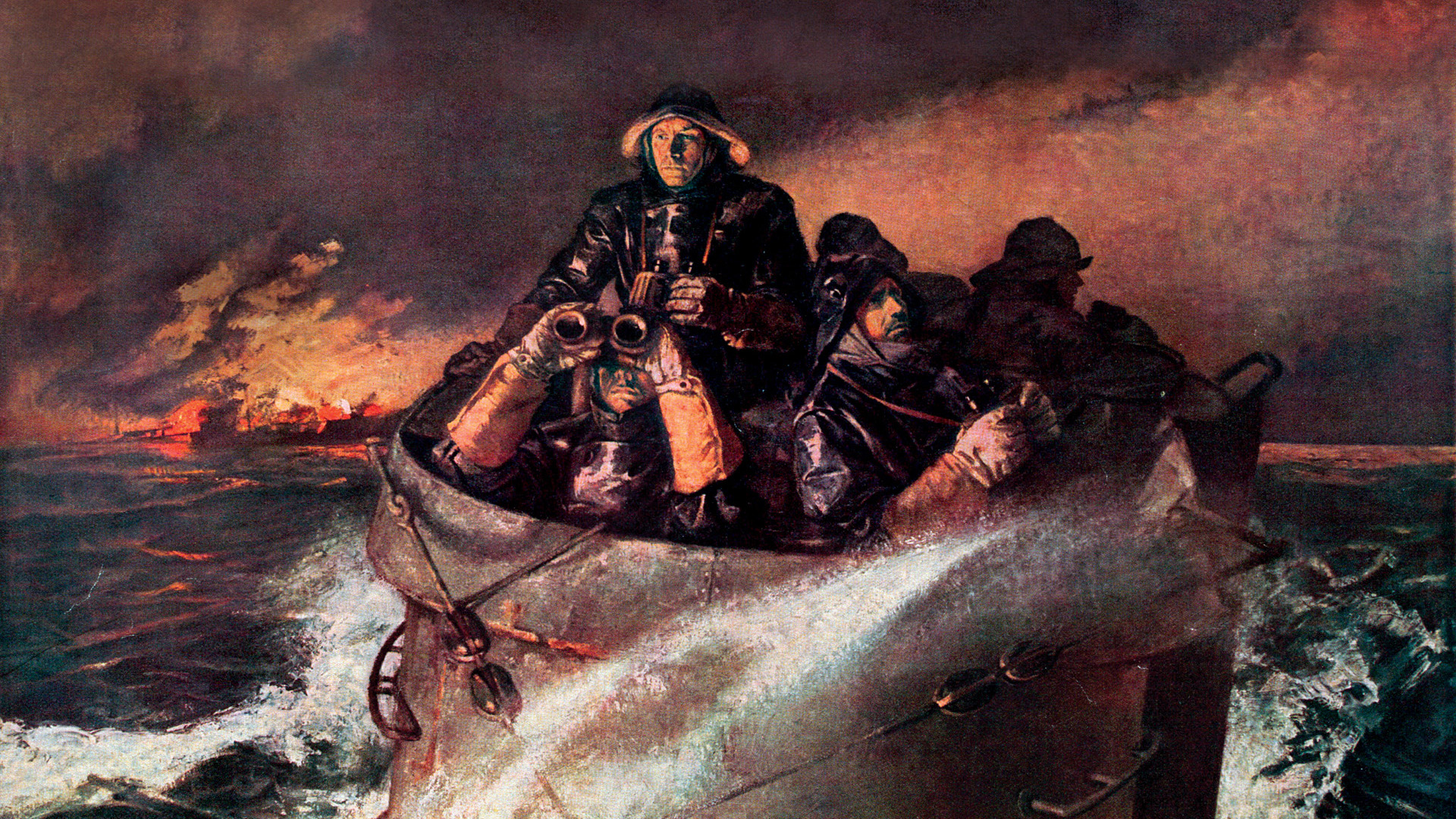
One shell came close and a great cloud of steam rose from the ship. It was another ruse, a special system that blasted steam as if from a ruptured boiler. Then the stern gun fired back, but missed intentionally, under orders from Campbell. He sent distress calls on an open frequency sure to be heard by the U-boat. When the U-61 was half a mile away, Campbell sent off the panic party. It was a masterful performance, even leaving one boat dangling in the davits. The gunfire continued, and one German shell hit Dunraven’s stern among the ready ammunition. An explosion sent a fireball into the air, but this was no ruse. Dunraven was badly hit. A fire started and a depth charge went off. The concealed gun crews remained at their stations as the sub came closer. With the black smoke obscuring their aim, Campbell had to wait. Two more depth charges cooked off in what Campbell described as a “terrific explosion.” This destroyed one of the concealed 4.1-inch guns, but the crew was unhurt. The fire was spreading quickly.
Blazing wood and hot shrapnel made the deck a deadly hell. The magnitude and number of explosions alerted the U-61 that they were dealing with a Q-ship and they submerge. Campbell, even though his ship was burning and the fire was certain to reach the magazines, continued to watch and wait. At 1:23 p.m. Dunraven took a torpedo hit and Campbell ordered “Abandon ship!” A second panic party went into the boats, but the remaining gunners stayed aboard with their captain.
The battle of wits and courage continued as more ammunition exploded. U-61 surfaced off Dunraven’s stern and continued to pour shells into the hull, safe from any return fire. At 2:53 the U-61 submerged and passed Dunraven’s port side, whereupon Campbell, watching the periscope, launched a torpedo, which missed. The sub did not notice it. Another was launched but failed to detonate upon striking. Having had enough, the U-61 moved off and returned to Germany. Now Campbell truly abandoned his ship, which sank later that evening, white ensign flying. Campbell was awarded a bar to his Victoria Cross, becoming the most decorated naval officer of the Great War.
Altogether there were more than200 Q-ships, of which 27 were sunk, having defeated between 12 and 14 submarines. They played only a minor role in the U-boat war, but their very existence was a factor in Germany’s decision to unleash unrestricted submarine warfare in February of 1917. This, of course, was the spark that ignited the United States’ declaration of war in April.
Ironically, the Germans, despite their claim that Q-ships were a “dirty trick,” employed them for their own use. The most famous German Q-ship was the armed windjammer Seeadler, which prowled the South Atlantic and Pacific from November 1916 to July 1917, sinking more than a dozen Allied ships and capturing their crews.
Join The Conversation
Comments
View All Comments