By Neil Taylor
Nestled among patches of dwarf birch trees on the side of a hill gently rising above the dockyard of the Russian Northern Fleet in Severomorsk (formerly known as Vaenga) lies a nondescript cemetery bearing witness to the savage conflict that engulfed the Soviet Union’s northern frontiers during the latter half of 1941.
Not far from the entrance to the Cemetery of Soviet Heroes are five black granite headstones surrounded by carefully groomed gravel and a black wrought iron fence. Each stone bears the name and details of a British or Commonwealth airman who died in the inhospitable tundra of the Russian Federation’s far northern Kola Peninsula during World War II. How did they come to be buried here, so far from their homelands, in the inhospitable tundra of the Russian Federation’s far northern Kola Peninsula?
The graves of these men, buried so far from their homelands, is a testament to the strange symbiotic relationship forged between two former adversaries brought together, through necessity and expediency, in the days immediately following the launch of Operation Barbarossa—Germany’s invasion of the Soviet Union.
In the interwar period, there was little cooperation between the democratic United Kingdom and the communist Soviet Union. In fact, at the conclusion of World War I, Britain intervened in the Russian Civil War in an effort to topple the Bolsheviks’ new socialist government. Although Britain recognized the newly established Union of Soviet Socialist Republics in 1924, Anglo-Soviet relations were continually beset by distrust and intrigue.
The Soviets signed a nonaggression pact with the Nazis in August 1939, but the outwardly shocking treaty was a sham in the mind of Adolf Hitler—a short-term agreement that would not stave off his invasion of the Soviet Union which began on June 22, 1941. The attack brought the United Kingdom and the Soviet Union together in an unlikely alliance against the Nazis.
Though he cited his aversion to Communism in a radio broadcast to the nation that night, Prime Minister Winston Churchill nevertheless pledged Britain’s support to the Soviet Union, noting that “any man or state who fights on against Nazidom will have our aid. … It follows therefore that we shall give whatever help we can to Russia and the Russian people.” Three days later a military delegation, called “30 Mission,” was dispatched to Moscow under the command of Gen. Noel Mason-MacFarlane, a skeptic who doubted Russia’s ability to survive the Nazi juggernaut.
While Mission 30 and a similar Soviet mission to London grappled with intelligence exchanges and the identification of Soviet military needs in supplies and equipment as the Red Army faced the Nazi onslaught, Stalin, despite his deep-held distrust of the British prime minister, finally responded on July 18 to Churchill’s offer of assistance by demanding the opening of additional fronts in northern France and the Arctic. In his reply, Churchill pointed out the impossibility of opening fronts in either location due to Britain’s limited military resources, but for the first time, he offered to base British fighter squadrons in the arctic port of Murmansk.
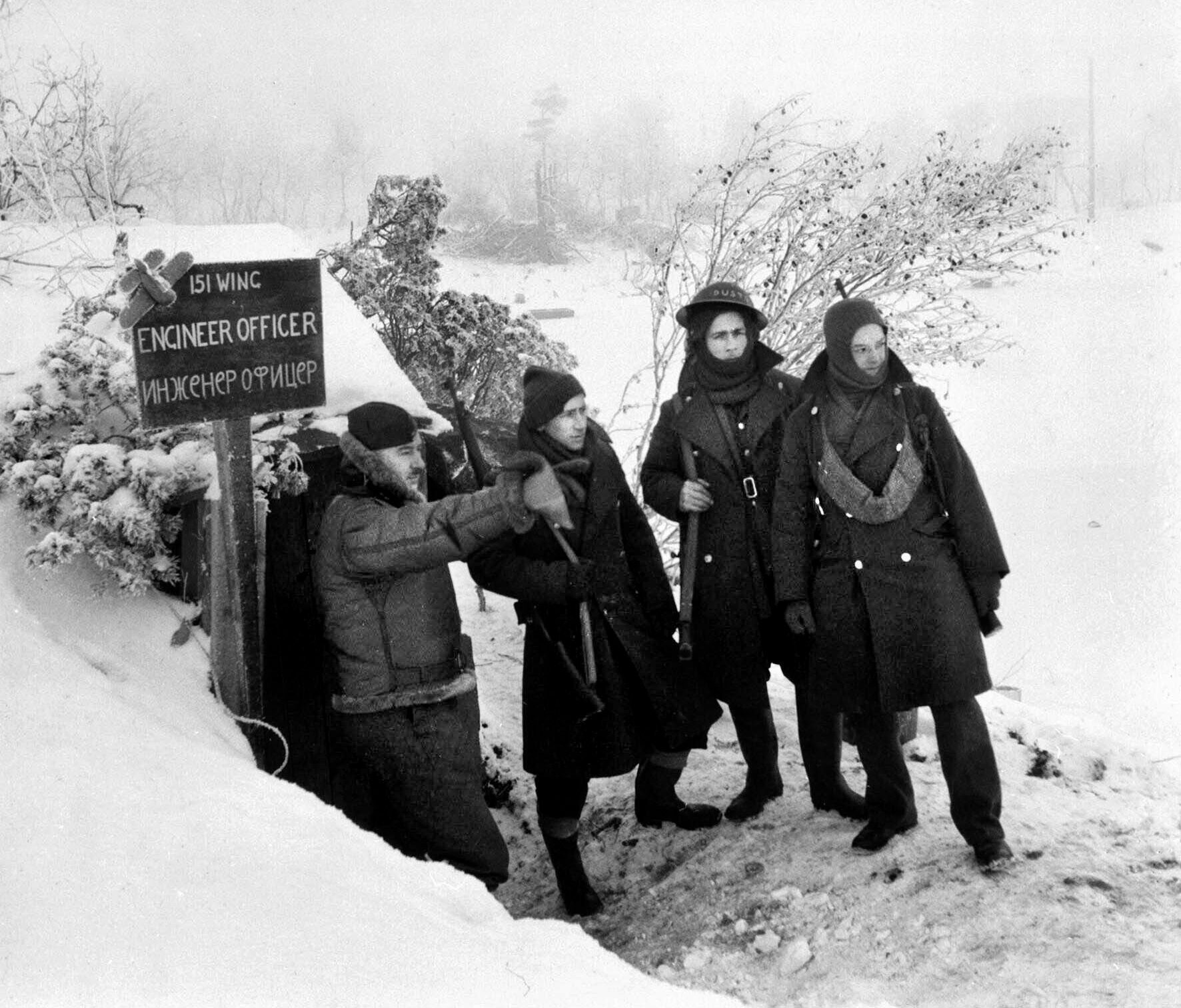
A few days earlier, on July 12, the Soviet Mission in London along with representatives from the Royal Navy and the Royal Air Force concluded that the airfield at Vaenga, northeast of Murmansk, could be used as a base for protecting Allied convoys bringing critical war supplies into Murmansk and Archangel. With Churchill’s commitment in hand, Chief of the Air Staff Sir Charles Portal created No. 151 Wing which, under the code name Operation Benedict, would be transported to northern Russia by aircraft carrier and convoy.

The No. 151 Wing aircraft and crew were placed under Wing Commander Henry Neville Gynes Ramsbottom-Isherwood, a 35-year-old New Zealander who had joined the Royal Air Force (RAF) in the 1930s and proven himself as a capable test pilot, winning the Air Force Medal for his accomplishments.
Two squadrons were activated to form No. 151 Wing: No. 81 Squadron, whose nucleus of airmen was drawn from A Flight of No. 504 Squadron, based at RAF Fairwood Common, and No. 134 Squadron, formed around the former commanding officer and 10 pilots of No. 17 Squadron based at RAF Elgin. Squadron leaders Tony Rook and Tony Miller were assigned command of the 81st and 134th, respectively. The squadrons were activated at Leconfield, Yorkshire, a busy Fighter Command airfield housing English, Polish, and Czech fighter squadrons.
Ramsbottom-Isherwood’s orders were to exercise full operational control of the wing while under the general command of Maj. Gen. A. A. Kuznetsov, Commander of the Air Force of the Russian Northern Fleet, with the primary responsibility of defending the naval base at Murmansk and cooperating with the Soviet forces in the Murmansk region.
After several disappointing delays, the Wing’s personnel were finally mustered in full uniform and kit on August 12 and dispatched by train to Liverpool, where they boarded the ex-luxury liner SS Llanstephan Castle. A group of 24 pilots stayed behind for a special task. They flew to Abbotsinch Airfield on the outskirts of Glasgow on August 18, transferred to trucks for a short journey to the dockyards, and then boarded the escort carrier HMS Argus. Also aboard were 24 new Hawker Hurricane IIB fighters stowed below the flight deck with their wings detached for storage.
The next day, the HMS Argus departed Greenock for Scapa Flow, the primary base of the British Home Fleet. By then, the Llanstephan Castle had already left Scapa Flow destined for Iceland, where the first trial convoy to Russia (code name Operation Dervish) was assembling. The convoy, led by Capt. J.C.K. Dowding, Royal Naval Reserve, contained several aging merchantmen loaded with wood, rubber and tin. Buried deep in the freighters’ holds was their most valuable cargo—15 new Hurricane IIBs stored in individual crates weighing five tons each. These, along with the 24 Hurricanes aboard Argus, would be flown operationally by the two squadrons before being passed on to the Russians.
The Dervish convoy departed Iceland on August 21, circling through the Denmark Strait between Iceland and Greenland, and out into the Norwegian Sea. Wary of German U-boats and long-range reconnaissance aircraft, the convoy swung far to the north before turning east.
After Argus reached port, a Fleet Air Arm officer had told 134 Squadron Leader Miller to pull back hard when his aircraft reached the sloped launch ramp at the end of the flight deck of Argus and give it a good thump to get airborne. Miller revved up the Hurricane’s Merlin XX engine, released the brakes and sprinted down the deck. Pulling the stick into his stomach, Miller felt his fighter hit the ramp leaping into the air. He had done it, but in the process damaged the undercarriage—the Hurricanes were not as sturdily built as the Grumman Martlet fighters (the British name for the F4F Wildcat) normally carried aboard the Argus.
The next two Hurricanes to take off also struck the ramp, one breaking off a length of propeller, the other severely damaging the undercarriage. Taking their positions in a Vic formation, the three damaged aircraft circled the Argus then flew off towards the Russian mainland.


The remaining Hurricanes took off without further incident and headed towards the coast. After 20 long minutes, the fog and clouds broke, and the pilots could see the barren landscape awaiting them. The airfield, a large oval of sandy ground lacking paved runways or any major buildings, was spotted easily, and except for the two damaged Hurricanes whose undercarriages collapsed when they touched down, the entire flight landed successfully.
In Archangel, a Russian labor gang had completed the new wharf and offloading began. A small engineering party from No. 151 Wing under the command of the wing’s engineering officer, Flight Lieutenant Harry Gittins, put ashore at Keg-Ostrov, a small airfield located on an island across from Archangel. Here the engineering party found 15 crated Hurricanes dumped on a mudflat outside a row of hangars. Gittins’ group, charged with assembling the Hurricanes as quickly as possible, immediately ran into problems—the specially designed propeller wrenches required for the heavy three-bladed propellers were missing. Luckily Gittins’ Russian counterpart, using a set of hastily drawn sketches, was able to machine new wrenches and other tools.
Another snag arose when a lifting tackle, used to cradle and maneuver Hurricanes until they were standing on their undercarriages, was found to be wanting. Again the Russians came to the rescue, providing three one-ton cranes and an assortment of heavy cables and bolts. Working countless hours, Gittins’ crew successfully uncrated and assembled all 15 Hurricanes in only nine days.
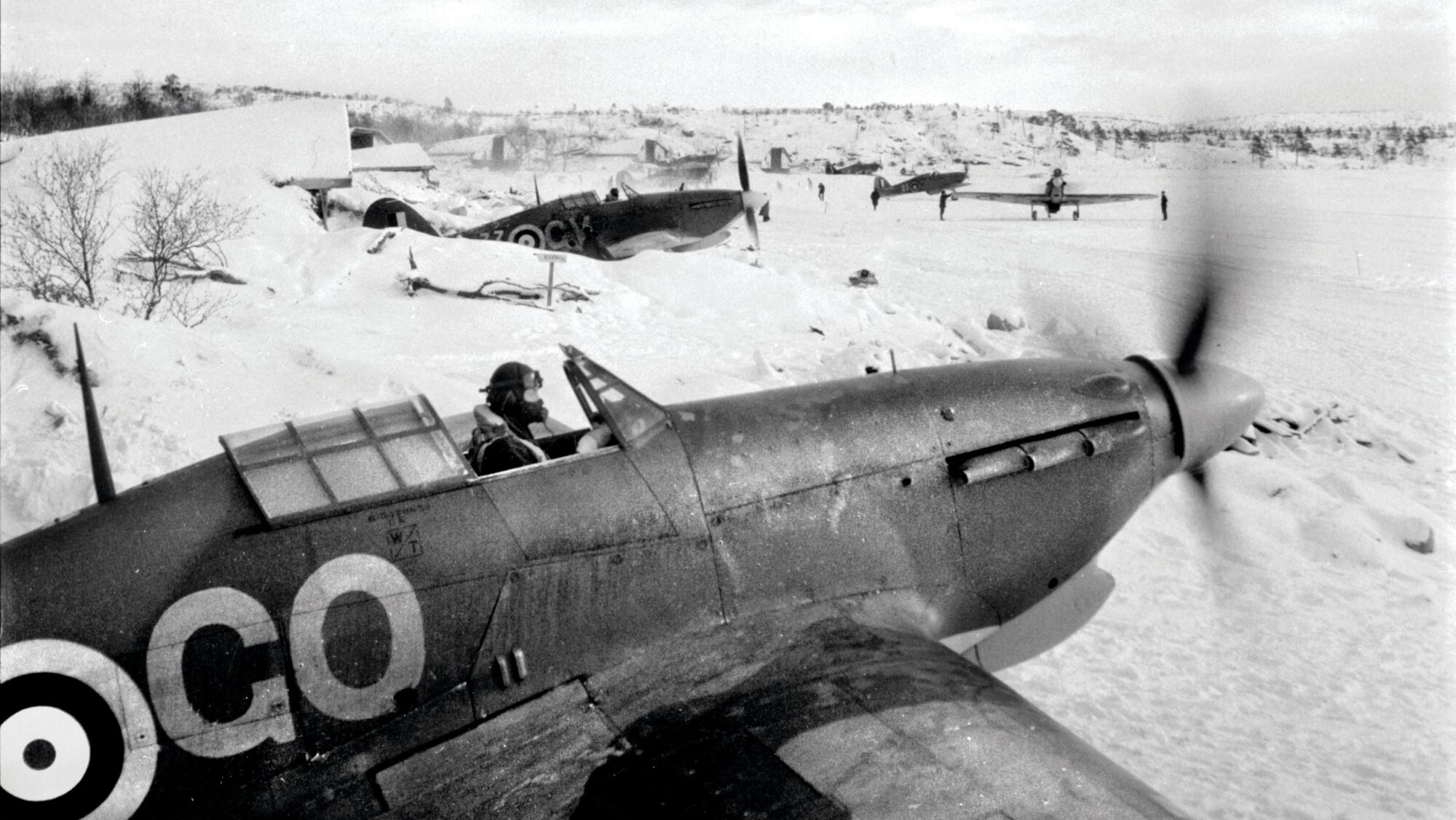
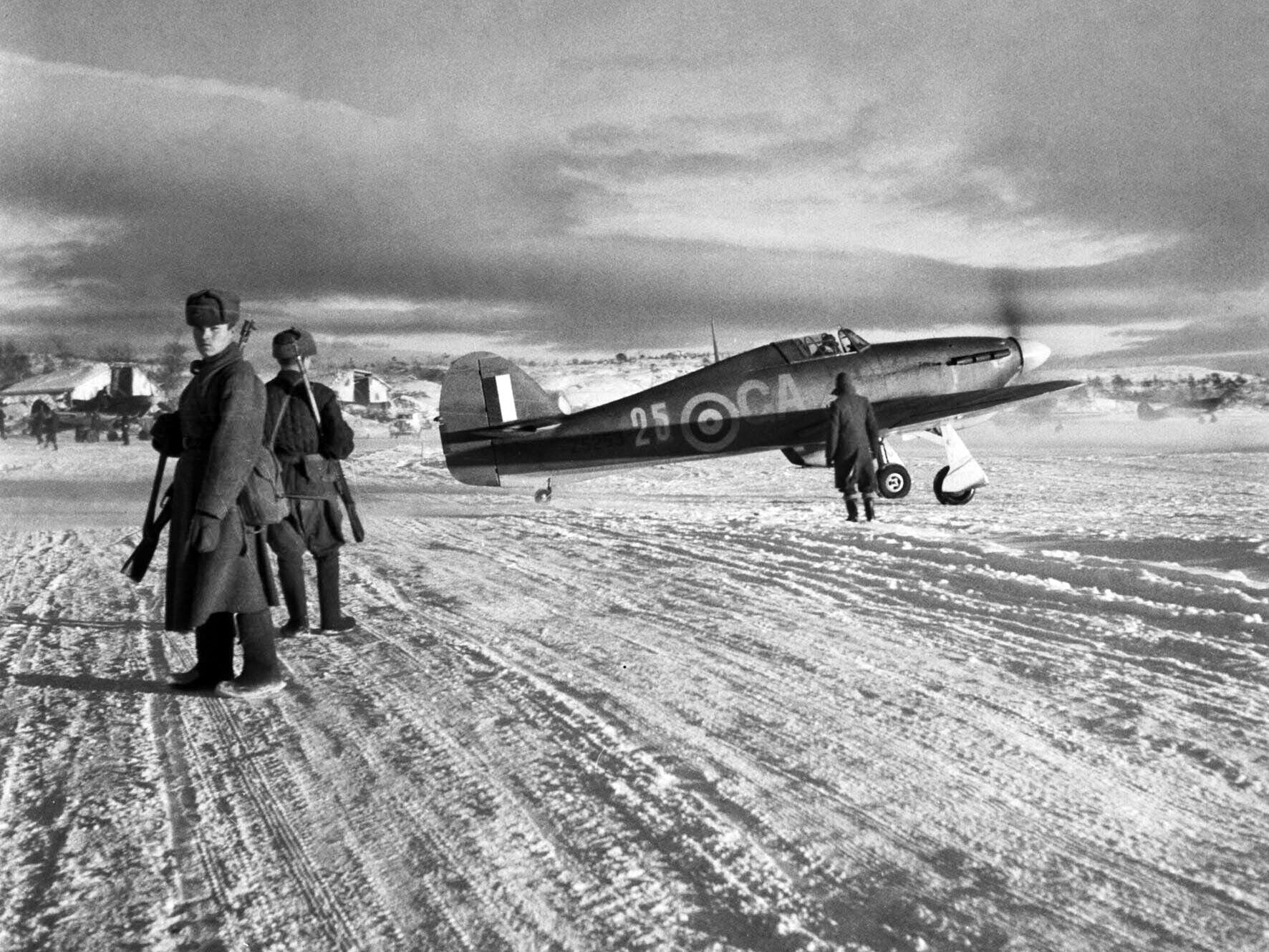
At Vaenga, the pilots who had flown off the Argus were getting accustomed to their new home. With the airfield less than 30 miles from the frontlines, it was frequently targeted for attack. Knowing that above-ground hangars would be susceptible to Luftwaffe attack, the Russians dug out 40-foot-wide underground hangars, erected roofs, then covered them with turf. In one day the Russians created 39 dugouts, easily accommodating all the Hurricanes to be based at Vaenga.

The Hurricanes’ armament was another concern. Normally equipped with 12 .303-inch Browning machine guns, those flown off the Argus had only been fitted with 6 as a weight-saving measure. Additional guns shipped overland arrived without their firing and safety mechanisms, rendering them useless. An emergency message to the Air Ministry requested immediate shipment of the necessary parts by Catalina flying boat, but pending their arrival, two aircraft in each of the four six-plane lights were stripped of their guns so the remaining aircraft could be fitted with at least eight machine guns for combat.
The pilots of No. 151 Wing began their operational sorties from Vaenga on September 11, even though the aircraft being assembled at Keg Ostrov were not yet available. All four flights from 81 and 134 Squadrons flew orientation patrols guided by a Russian pilot who showed them their operational area and the frontline. Although no enemy aircraft were encountered, several of the Hurricanes were plagued by engine cut-outs. All engines were successfully restarted in flight, but ground crew examination upon landing quickly discovered that Soviet aviation fuel had a lower octane rating than British fuel leading to fouling of the Merlin XX engines. This proved to be an ongoing problem until better quality fuel arrived.
Following the first snowfall of the looming Russian winter, Flight Sgt. Charlton “Wag” Haw led a patrol of five Hurricanes from 81 Squadron over enemy lines west of Murmansk where they intercepted five Messerschmitt Me-109Es of I./JG 77 escorting a Henschel Hs-126 two-seater reconnaissance aircraft. Haw’s flight turned toward the enemy who astonishingly turned tail and fled for safety behind German lines. The fleeing Me-109s took no evasive action, and Haw’s flight dove after them. Haw caught their leader in his sights and a 10-second burst left the 109 in flames; it then rolled onto its back and dove into the ground. Haw’s wingman, a Canadian, Pilot Officer Jimmy Walker, turned into two Me-109s for a head-on pass before spotting a 109 closing in on Haw. Pulling in behind the enemy pilot, Walker fired two short bursts before the Me-109 rolled over and fell toward the ground pouring smoke. Walker followed its downward path until it crashed.
Meanwhile, Sergeant Ken “Ibby” Waud found the tiny Hs-126 drifting across his gun sight so he gave it a short burst. The Henschel pilot fled but could not outrun a Hurricane. Waud overtook him and unleashed another long burst before the Hs-126 erupted in a plume of white smoke. Misgauging his closing speed, Waud yanked on his control stick, narrowly missing the stricken observation plane.
Regaining some height Waud then spotted a Hurricane and a Messerschmitt circling each other, each trying to get into position for a deflection shot. Pushing his nose down, Waud dove on the Me-109 and unleashed a burst from his machine guns before pulling sharply away. Waud circled and made a second run, forcing the enemy aircraft to break for home. As the enemy pilot flew at ground level following a dry riverbed, he made the mistake of not taking evasive action. Waud closed for a third time and carefully lined up his target before pressing the firing button. The Messerschmitt began smoking, skidded to port, and crashed into the riverbank.
Meanwhile, Haw had gotten himself into another tangle with an Me-109 but broke away when he spotted a smoking Hurricane losing altitude quickly. Diving after it, Haw pulled alongside and saw his friend Sergeant Norman “Nudger” Smith struggling to release the cockpit canopy. A giant hole had been punched through the fuselage behind the cockpit, evidence that the aircraft had taken German cannon fire. Helpless to intervene, Haw could only watch in horror as his friend’s aircraft continued its descent, then broke up as it impacted the ground.
With the skies cleared of enemy aircraft, the Hurricanes made their way back to Vaenga. No. 81 Squadron had drawn first blood, destroying three enemy aircraft and claiming a probable fourth. It was an auspicious start to their tour, tempered nevertheless by the death of Smith.
On the same day that the Vaenga-based Hurricanes achieved their initial successes; the first batch of nine Hurricanes assembled at Keg-Ostrov was finally ready to fly north. Flight Lt. Mickey Rook (cousin of Squadron Leader Tony Rook) led the flight. With a Russian bomber as a guide, the group headed north across the White Sea, landing to refuel at Afrikanda before continuing on to Vaenga. The last six Hurricanes followed the same route on September 15.
Also arriving in Vaenga, late on September 12, was the last contingent of No. 151 Wing —the headquarters team, under the Wing Adjutant, Flight Lt. Hubert Griffith. The team had left Archangel by train four days earlier, embarking on a circuitous 600-mile route through Belomorsk and Kandalaksha, to Murmansk. During the arduous journey, the men were jammed into two passenger coaches whose only furnishings consisted of pine boards spread on the floor of the coaches and covered with straw-filled mattresses. The quarters were so tight, only half the men could lie down at a time.
The rail line consisted of a single track, so the train had to pull into sidings on a regular basis. Twice the British airmen found themselves parked next to Russian hospital trains filled with bandaged and bloodied Russian soldiers who flashed thumbs-up at their RAF comrades. At these sidings, railway officials would often board bearing cans of boiling water to make hot tea. At one stop the RAF airmen were given a concertina, and throughout the journey Russians and British airmen, ignoring the language barrier, would break into song.

When the troop train finally pulled into Murmansk, there was a collective sigh of relief. Although the Luftwaffe regularly targeted train traffic in the region and German forces were nearing Kandalaksha, the RAF headquarters party had arrived unscathed.
Over the next few days, No. 151 Wing flew local patrols and attempted interceptions but failed to engage any enemy aircraft. On September 17, the Wing scored again while providing escort cover to a group of Russian Petlyakov Pe-2 twin-engine dive bombers. Squadron Leader Tony Rook led seven other members of 81 Squadron aloft, and as they patrolled the frontline near Petsamo, Rook noticed two Me-109s preparing to attack the bombers. Rook locked onto the leader and delivered a short burst that hit his opponent’s radiator. Leaking glycol smeared Rook’s windscreen as he chased the 109 down on the deck. After emptying his machine guns, slowing the Me-109 dramatically, he broke away to allow Sergeant Sims, on his starboard quarter, and Sergeant “Avro” Anson, on his port quarter, to make passes. Bullets from both planes struck home, and the enemy aircraft began to disintegrate before plummeting into the ground.
Haw gave chase to a second Me-109, firing once and missing before the enemy aircraft turned across him, opening up a quarter attack from behind. Smoke poured from the stricken aircraft before its pilot jettisoned the canopy and bailed out.
Pilot Officer Bush, on high alert, spotted six other Me-109s diving from above and behind. Turning sharply into the attack, he engaged the nearest aircraft. Soon the airplanes were locked in a deadly turning duel. With its tighter turning radius, Bush’s Hurricane steadily gained on the Messerschmitt, finally getting behind it to deliver a long burst that sent it flaming into a hillside.
No. 81 Squadron returned to Vaenga in triumph—they had downed three Me-109s without a loss. The wing’s tally was growing at a rapid rate.

Foul weather grounded the wing for the next few days before the first major snowstorm of the year blanketed the region in white on September 22. As the weather worsened, the wing was warned that good flying days would be few and far between as Arctic air relentlessly spread across northern Russia. The arrival of winter conditions also brought the northern ground war to a standstill. German forces in Norway retreated to the west bank of the Litsa River and assumed defensive positions—they would no longer pose a serious threat to Murmansk.
On September 26, No. 151 Wing participated in another bomber escort mission—12 Hurricanes from 81 Squadron escorted 4 Russian bombers on a raid on Petsamo. B Flight was bounced by a group of Me-109Fs, cannon shells streaking past the Hurricanes. The four Hurricanes turned into the attack, and from directly head-on Sgt. Vic Reed poured rounds into the nearest 109, causing it to erupt in black smoke before spiraling into the ground. Pilot Officer Basil Bush found himself under attack from two Me-109s, but Pilot Officers Scottie Edmiston and Arty Holmes came to his rescue raking both enemy aircraft with deadly fire. Holmes recorded a kill, and Edmiston a probable, as they thwarted the enemy attack. Flight Sergeant Reed also claimed his first victory.
The next day, while on another escort operation with Russian Pe-2 dive bombers and Pe-2FT heavy bombers, 81 Squadron again came under attack. In the ensuing dogfight, Haw recorded his third victory and Edmiston his second.
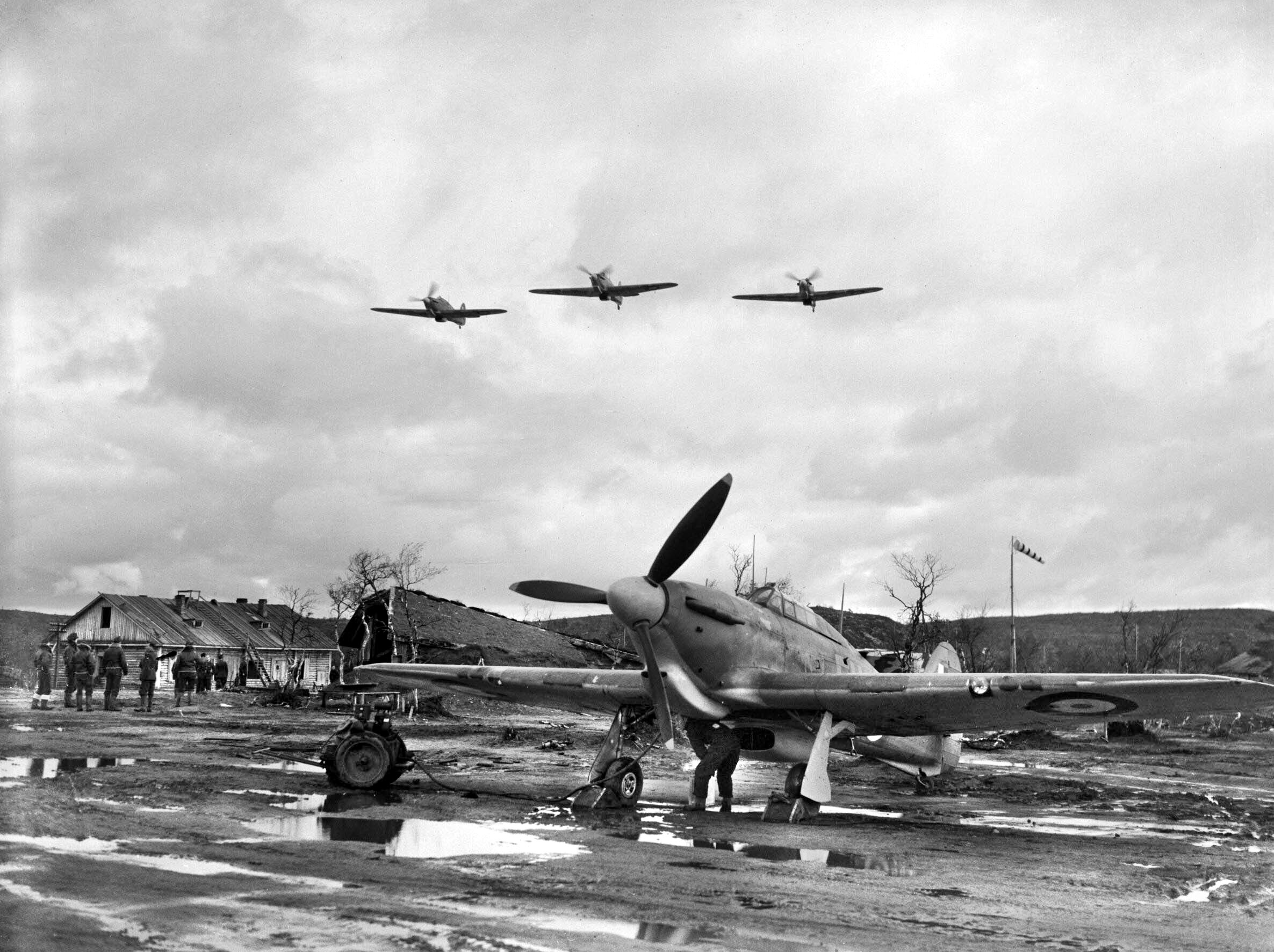
However, the Luftwaffe was not about to accept these losses without retaliating. Late on September 27, the Germans struck back, dispatching a formation of Junkers Ju-88 bombers to bomb Vaenga airfield. The base was soaked from the recent snowstorms, with standing water covering the airfield and most of the dispersal bays. To get through the bog, pilots resorted to extra engine power, which required two ground crew members to drape themselves over each of the Hurricane’s horizontal stabilizer to keep the nose up and prevent the aircraft from tipping over.

No. 134 Squadron stood at readiness that day, so when the German bombers were spotted approaching, the squadron’s Hurricanes scrambled to intercept. Flight Lt. Vic Berg dashed to his airplane, fired up the engine and, as soon as the chocks were removed, opened the throttle. Aircraftmen James Ridley and Glanville Thomas had draped themselves over the tailplane expecting Berg to taxi across the bog to a drier spot for takeoff. When he suddenly threw open the throttle, the two ground crew members were pinned against the tail by the slipstream. Berg roared across the airfield and upon achieving flying speed pulled the throttle back. His Hurricane rose into the air with the two men still clinging to the tail. The airplane stalled when it reached an altitude of 60 feet, then nosed over and plunged to the ground. It cartwheeled on impact, throwing Ridley and Thomas high into the air, killing them instantly as they hit the ground. Berg was pulled from the wreckage unconscious and severely injured. He woke up in a Russian hospital unable to remember the accident. Eventually, he was evacuated back to Britain where his fractured thigh had to be reset—it was two years before he flew again.
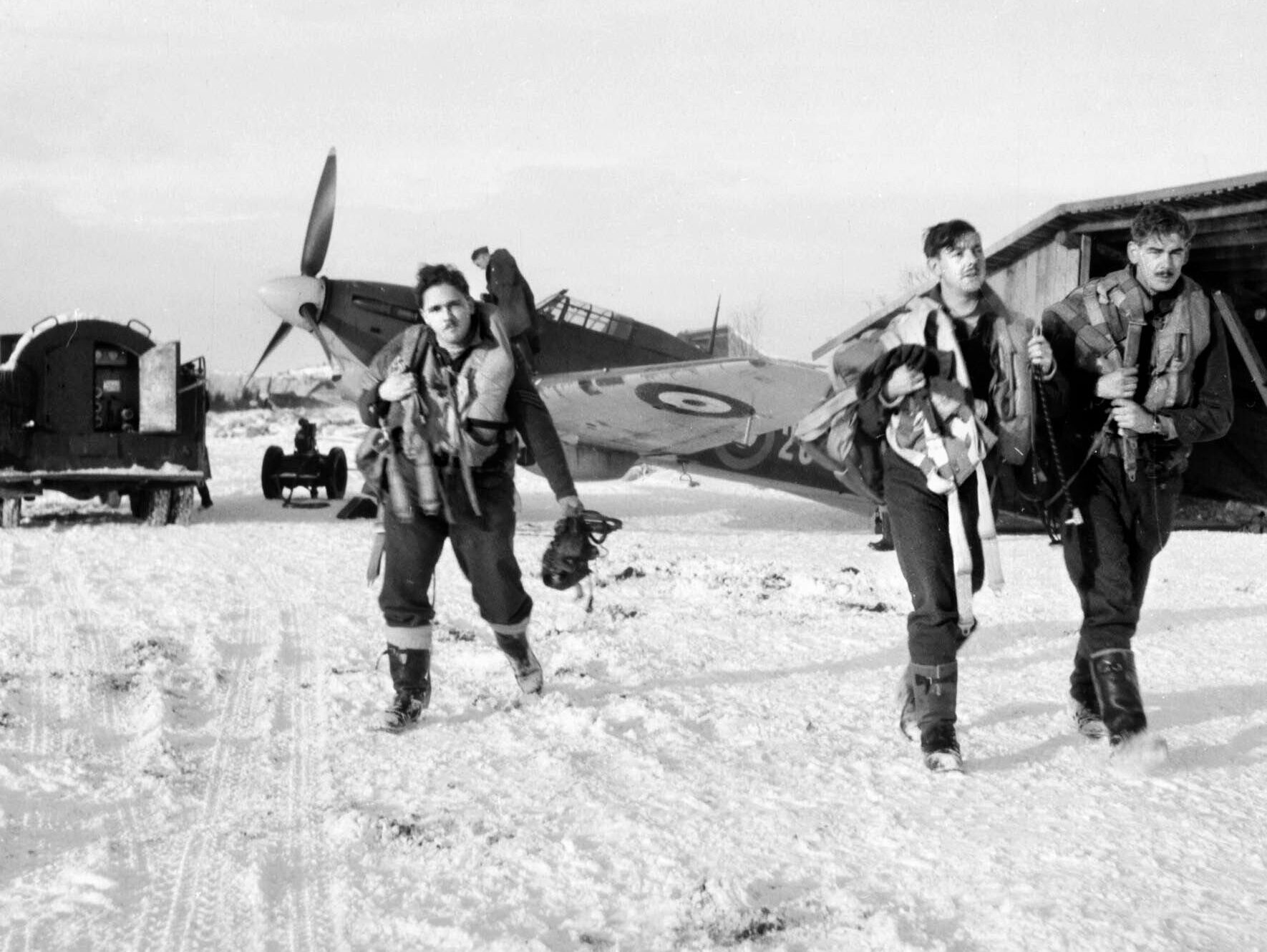
Ridley and Thomas were buried in plots next to Smith in the Cemetery of Soviet Heroes overlooking Vaenga. A solemn burial party, drawn from the ranks of the RAF and the Soviet Air Force, fired a final salute as most of the wing looked on. It was a bitter moment for No. 151 Wing—its members were prepared for death at the hands of the enemy but to lose two members in a tragic accident was numbing.
While 81 Squadron had achieved considerable success in the air war over Murmansk, 134 Squadron had little opportunity to demonstrate its aerial combat skills. Its primary role was to teach Russian pilots how to fly Hurricanes and Russian ground crew and engineers how to service and maintain them. The airfield commander, Major General Kuznetsov, was anxious to take a Hurricane aloft, so he used a Russian female interpreter to write out the cockpit drill and quiz him on the details. An experienced aviator and former flight instructor, he quickly grasped all that was required, and on September 25 he became the first Russian to solo in a Hurricane.
Training progressed at a fevered pitch, but it was not without its problems. Initially, the Russian pilots were hesitant to fly the Hurricanes with their canopies closed—they were used to the open cockpits of the Polikarpov I-16s fighters. They also had a habit of not winding up the undercarriage after getting airborne, and it took a stern warning from General Kuznetsov to get them to comply.

One of the biggest problems was the Hurricanes’ armament. The 12 Browning machine guns, while seemingly packing a tremendous punch, had difficulty penetrating the armor on German aircraft. The Russians joked that “these light weapons were good only to spoil the Germans’ paint.” To overcome this problem, later shipments of Hurricanes had their Browning’s replaced by two ShVAK 20mm cannon and two 12.7mm Berezin UB heavy machine guns.
As September drifted into October, weather conditions worsened as the sky darkened and periods of rain, sleet and snow alternately assaulted the airfield. The skies cleared enough on October 6 to permit flying for the first time in a week. Taking advantage of the good weather, the Germans dispatched a formation of 14 Junkers Ju88 bombers from their northern Norway base. In what would prove to be a costly mistake, an expected escort of Me-109 fighters never arrived.
A patrol of six Hurricanes from 134 Squadron spotted the Junkers as they approached Vaenga from the west. After a quick radio call to base, every available fighter was scrambled. Bombs were already falling as the last of the pilots—Bush, Edmiston, and Holmes—opened their throttles. Holmes’ aircraft was buffeted by one explosion, but Arty managed to will the Hurricane into the air. Edmiston wasn’t as lucky; a bomb explosion near him produced a shock wave that seized his engine. He scrambled onto the wing only to have another bomb blast blow him into a deep snowdrift, dazed but unhurt.
Overhead, the 134 Squadron pilots tore into the enemy formation. Pilot Officer Neil Cameron attacked the leading Ju-88 firing a long burst from below and astern of the aircraft. Its starboard engine erupted in black smoke as he swept past. Turning tightly he opened fire at a second bomber but registered no results. He then bore in, attacking a third Ju-88 head-on, setting both engines on fire. Cameron’s wingman, Pilot Officer Rex Furneaux, made several passes on another Ju-88, setting its port engine ablaze. Hook, the 81 Squadron leader, joined the attack and scored hits on the starboard engine, sending the bomber into a dive from which it never recovered. Sgt. A. J. Gould also scored hits on another Ju-88 before losing it in the swirling battle.
Other members of 134 Squadron, who had scrambled from Vaenga airfield as the bombs began to fall, now entered the fray. Flying Officer Tim Elkington locked onto the tail of a Ju-88 beating a hasty retreat toward Norway and fired two long bursts into its tail, ripping it apart. Flight Sergeant B. Barnes joined in the attack, closing to within 50 yards as he poured rounds into the starboard engine. Return fire from the bomber’s rear gunner forced Barnes to break away, but after a third attack, the rear gun fell silent and the bomber exploded in flames. Although Elkington and Barnes then lost sight of the bomber, it was later claimed as destroyed.
No. 81 Squadron also inflicted further damage on the enemy bombers. Sergeant K. Bishop, along with two other Hurricanes, brought down a Ju-88, and Pilot Officers Alan McGregor and Jimmy Walker set bombers on fire which then managed to escape by flying at treetop level. By the end of the engagement, the two Hurricane squadrons had destroyed three aircraft, recorded another three probables, and damaged at least six more bombers. It made for lively conversation in the various messes that night.
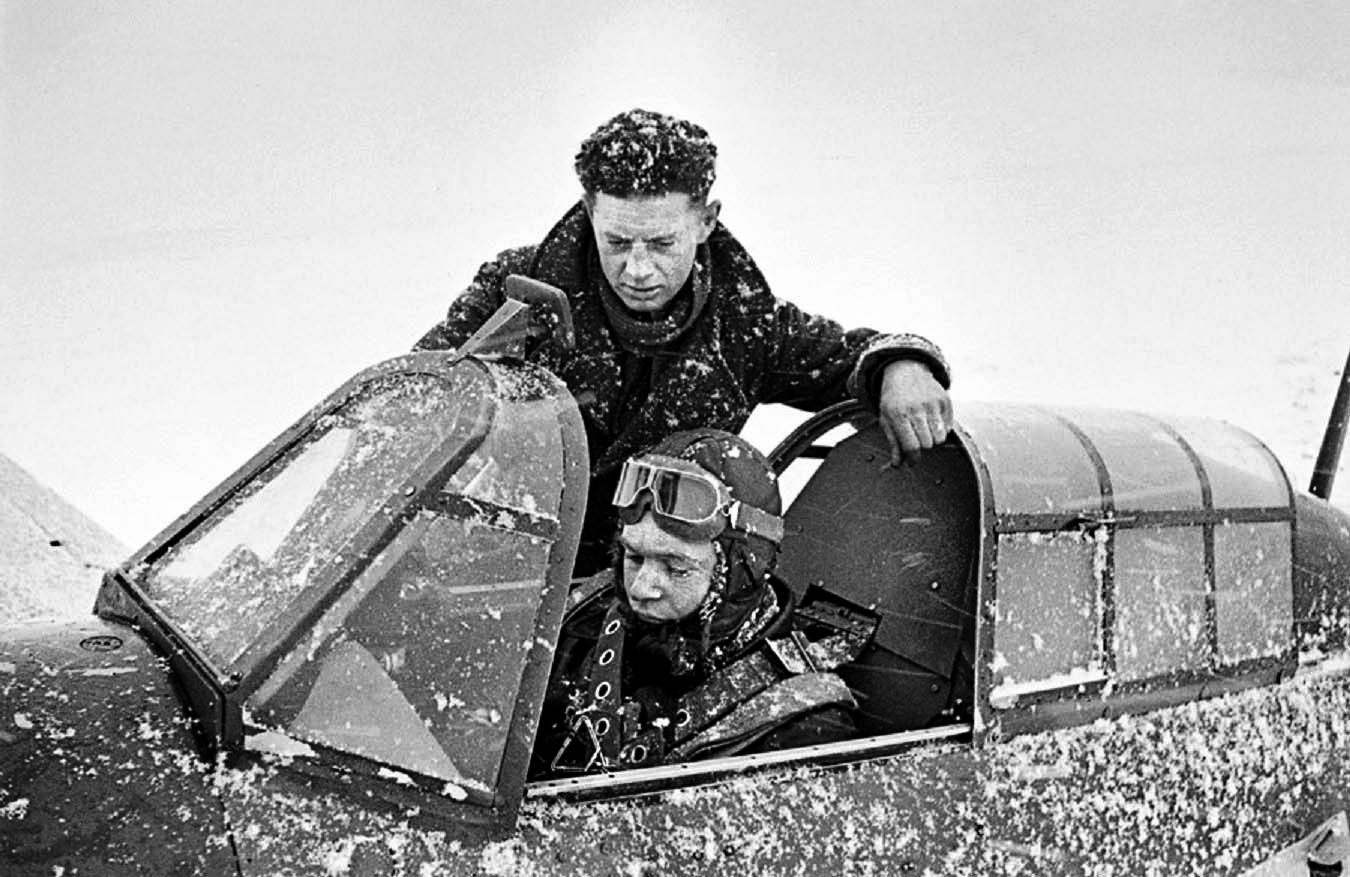
By the second week of October, the Russian winter had descended in earnest, with temperatures falling to 10 and then -15 degrees Fahrenheit. Snow blanketed the ground and cold penetrated all aspects of operations as pipes and hoses cracked, fuel and lubricants froze, and batteries failed prematurely. Still, the training of Soviet airmen not only continued, but accelerated.
On October 12, No. 81 Squadron turned all of its Hurricanes over to the Russians. No. 134 Squadron flew a few more bomber escort missions involving both RAF and Russian pilots, but on October 19 delivered all of its planes and equipment to Major General Kuznetsov’s forces. No. 151 Wing’s time in Russia was drawing to a close.
For Ramsbottom-Isherwood, the biggest problem was how to keep his idled airmen occupied. Some of them took to cross-country skiing and tobogganing, but drinking the low-cost alcohol available in the messes and teaching their Russian colleagues how to play darts were particularly popular.
While the wing sat idle, rumors circulated as to its next destination. Communications from the Air Ministry notified the wing to prepare for transit across the Soviet Union to the Middle East. It was only after repeated communiques, documenting the terrible status of the Russian rail network and the massive amount of provisions that would be required to make the journey across a war-torn country, that the idea was abandoned. Instead, it was finally agreed that No. 151 Wing would be evacuated back to Britain by the Royal Navy.
The first party departed on November 16 aboard the Royal Navy minesweepers HMS Hussar, Gossamer and Speedy, which were unexpectedly called to assist an incoming convoy bound for Archangel. The violent seas made it a memorable voyage, and when the minesweepers neared Archangel, they needed to drop anchor and transfer the RAF men to a much larger Russian icebreaker that through brute force got them into Archangel where they were transferred to various merchant vessels for the journey home.
On November 21, the cruiser HMS Kenya, joined a day later by the destroyers HMS Bedouin and Intrepid, anchored off Murmansk. The bulk of No. 151 Wing boarded these vessels. There was, however, one last task for these ships to accomplish before the wing could depart Arctic waters forever.
The convoy that Kenya was to escort was delayed, so the Royal Navy decided to commit its warships to another combat action. Two Russian destroyers, the Gremyaschi and Gromki, were invited to join the three Royal Navy vessels in staging a raid on the Norwegian coast. The ad hoc task force hoped to trap a German supply convoy, but finding the seas empty it sailed to Vardø at the extreme northeastern tip of Norway and bombarded the fort and harbor facilities.
The few remaining members of No. 151 Wing were put aboard various merchant ships at Archangel forming up as a return convoy to Britain (assigned the convoy number QP-3). Departing was not to be an easy task as the estuary at Archangel was frozen solid. Thanks to the efforts of the massive Russian icebreaker Lenin, the convoy escaped the icy grip of the Russian winter on November 27. Even with that assistance, the ships had to move quickly; it was so cold that the ice in their wake quickly refroze.
Having broken through the ice pack, the merchant ships formed on their naval escorts for the long, dangerous voyage around the top of Norway. In a final fitting gesture, a squadron of Hurricanes, flown by the Russians the British had trained and led by the Soviet ace, Capt. Boris Safonov, passed over the convoy and waggled their wings to say goodbye.

The next day, Kenya, Bedouin and Intrepid joined the convoy’s escorts and together again, albeit on separate ships, No. 151 Wing sailed for home. Arctic gales and massive waves viciously tossed the ships about, then an alert claiming a German U-boat was operating in the area caused the convoy to scatter. Luckily, no other problems ensued and one by one the warships and merchantmen straggled into British harbors. Kenya arrived first on December 6 at Rosyth, Scotland, while the iron ore carrier Harpalion was the last to arrive, berthing at Leith, Scotland on December 12.
Mission completed, the officers and men of No. 151 Wing prepared for reassignment after a well-deserved leave. No. 81 Squadron assembled at RAF Turnhouse near Edinburgh for conversion to Spitfires. After flying defensive patrols for several months, 81 Squadron moved to southern England to begin offensive sweeps over northwest Europe before moving on to Gibraltar to support Operation Torch, the invasion of North Africa. It participated in the Tunisia campaign, then moved to India and Ceylon to finish the war fighting the Japanese. Meanwhile, No. 134 Squadron reformed at Catterick, also converting to Spitfires, before reassignment to RAF Eglinton in Northern Ireland. In 1943 it served overseas in Egypt before being reassigned to India and Burma where it flew P-47 Thunderbolts.
On March 31, 1942, in recognition of the unique bond between the RAF airmen and their Russian counterparts, Soviet Ambassador to the United Kingdom Ivan Maisky presented the Order of Lenin to Ramsbottom-Isherwood, Miller, Rook, Haw (the top-scoring pilot in No. 151 Wing)—the first foreigners to receive the Order of Lenin, the highest civil decoration awarded by the Soviet Union during World War II.
While all the RAF airmen and ground crew who served in Murmansk in 1941 are deserving of recognition, the campaign has been largely forgotten in the Western world. Today, the Severomorsk cemetery graves of Sergeant Nudger Smith, Aircraftman 1st Class James Ridley, and Aircraftsman 2nd Class Glanville Thomas (along with those of two other RAF airmen killed later while serving in northern Russia) are mute testimony to the violent conflict that temporarily brought British and Russian airmen together to fight their common foe in one of the most remote and desolate locations to see conflict during World War II.
Author Neil Taylor has written for WWII History on varied topics related to the conflict. He resides in Edmonton, Alberta, Canada.
Hi, very good piece indeed.
I am writing a book on an 81 Squadron pilot and would be interested in discussing this article with the author Neil Taylor.
Cheers,
Drew Brown.