By Roy Morris Jr.
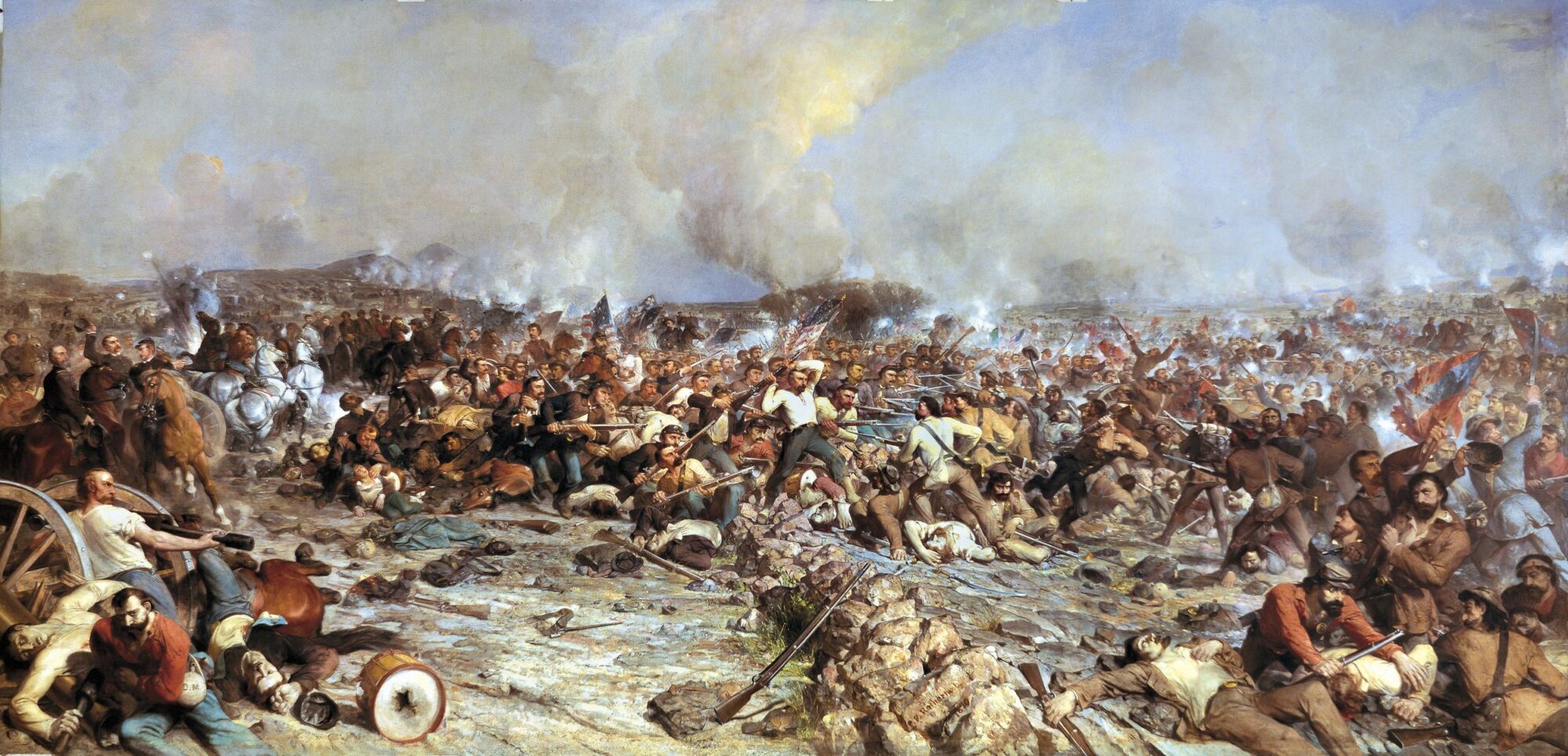
Throughout history, many generals have paid a heavy price for being wrong. But few generals have ever paid a heavier price than Longstreet for being right. His inability to convince Gen. Robert E. Lee not to make a naked frontal assault on the Union center at Cemetery Ridge on the third day of the Battle of Gettysburg not only doomed an additional 5,000 Confederate soldiers to death, but also made Longstreet the convenient scapegoat for Lee’s industrious legion of post-war apologists. It was a battle that Longstreet could never win, although he continued to fight to the last with his customary stubbornness.

The Lee-Longstreet encounter on Seminary Ridge in the hours before Pickett’s Charge has become legendary, due in large part to Longstreet’s own recounting of it in his 1896 memoirs, From Manassas to Appomattox. The meeting got off to a rough start when Longstreet suggested, not for the first time, that Lee move around the Union army and lure it into battle some place between Gettysburg and Washington. “I have had my scouts out all night,” Longstreet said, “and I find that you still have an excellent opportunity to move around to the right of Meade’s army and maneuver him into attacking us.”
Lee, who was already piqued at Longstreet for failing to attack as quickly as he had wanted on the second day of the battle, would have none of it. “The enemy is there,” Lee said, pointing toward Cemetery Ridge, a mile away, “and I am going to strike him.” Longstreet repeated his famous demurral that “no fifteen thousand men ever arranged for battle can take that position.” Then, good soldier that he was, he saluted and obeyed.
In a post-war letter, Longstreet reiterated his opposition to the attack. “I should not have been so urgent had I not foreseen the hopelessness of the proposed assault,” he wrote. “I felt that I must say a word against the sacrifice of my men; and then I felt that my record was such that General Lee would not or could not misconstrue my motives.” Lee, for his part, did not misconstrue the motives of the man he once called “my old war horse,” but following Lee’s death a coterie of his fellow-Virginians—Longstreet was from Georgia—took turns denouncing Longstreet as “the man who lost Gettysburg.”
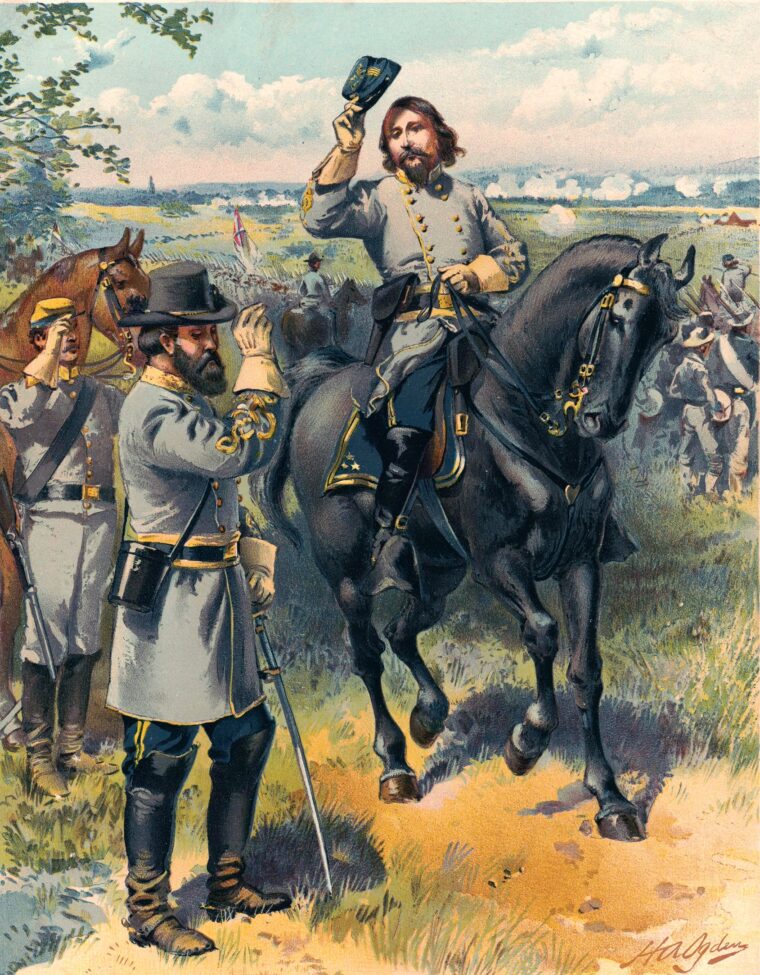
The attacks on Longstreet began in 1872, when former general Jubal Early claimed at a gathering in honor of Lee’s birthday that the South would have won a great victory at Gettysburg if only Longstreet had attacked the Union left at dawn on July 2, as Lee had wanted him to do. Other Confederate generals, including John B. Gordon, Fitzhugh Lee (Robert E. Lee’s nephew) and William Nelson Pendleton, Lee’s former chief of artillery, seconded the notion. By then, Longstreet had committed the political apostasy of becoming a Republican and, worse yet, of accepting a post as custom’s agent for the port of New Orleans from his old friend, President Ulysses S. Grant.
Longstreet added fuel to the fire when he alleged in his memoirs that Lee had been “excited and off his balance” at Gettysburg and had “labored under that oppression until enough blood was shed to appease him.” Longstreet’s fault—according to E.P. Alexander, who had directed the massive artillery barrage that presaged Pickett’s Charge—was “not in the war, but in some of his awkward & apparently bitter criticisms of Gen. Lee in his own books.” Still, Alexander acknowledged that Longstreet had not been wrong that day at Gettysburg. “It is true that he obeyed reluctantly at Gettysburg, on the 2nd & on the 3rd,” Alexander wrote, “but it must be admitted that his judgment in both matters was sound & he owed it to Lee to be reluctant, for failure was inevitable, do it soon, or do it late, either day.” As for Lee, Alexander said that he had “never paid his soldiers a higher compliment than in what he gave them to do” at Gettysburg, but that “the Union position could never have been successfully assaulted.” That’s what Longstreet had tried to tell him that day on Seminary Ridge.


Join The Conversation
Comments
View All Comments