By Kevin M. Hymel
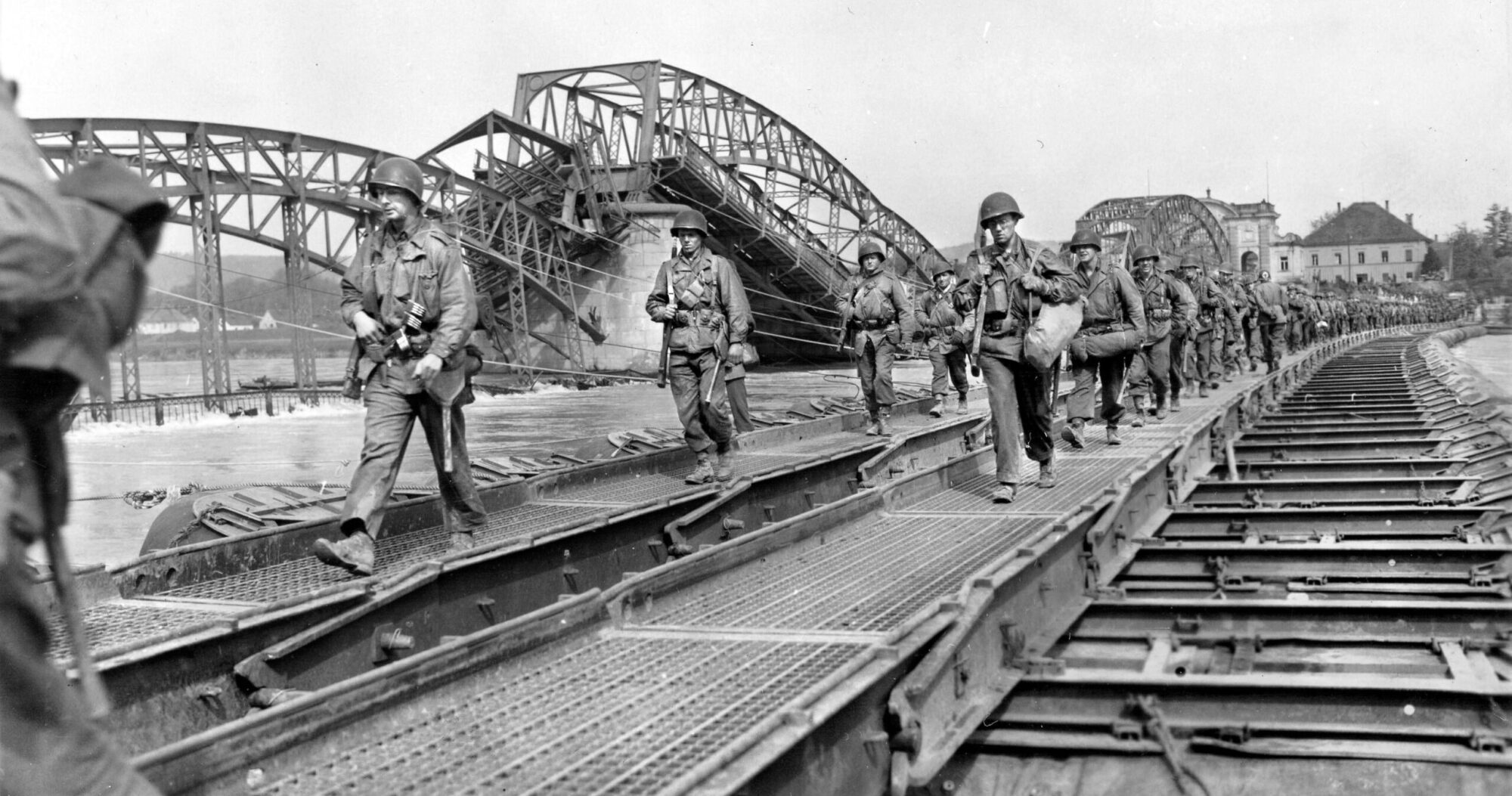
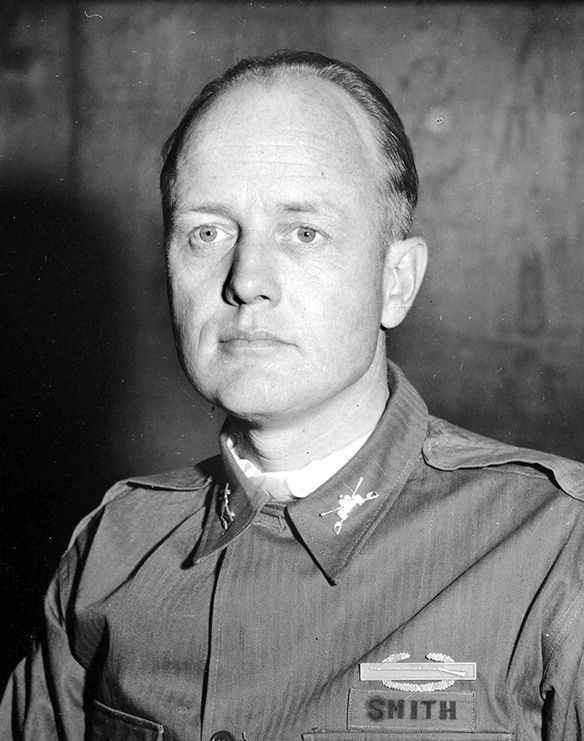
American infantrymen in jeeps and halftracks raced for a bridge over the Inn River. If they captured it intact, they could cross from Germany into Austria and capture the town of Braunau, the birthplace of Adolf Hitler. It was May 2, 1945. Hitler had committed suicide in his Berlin bunker on April 30. But before a single man from Lt. Col. Ridgway P. Smith’s 67th Armored Infantry Battalion could place a foot on the bridge, the Germans detonated charges, dropping it into the river.
In the final days of the war in Europe, the Western Allies and the Soviets were taking possession of almost every place Hitler called home. The same day that the 67th reached the Inn, the Soviets had captured both Hitler’s Berlin home in the Reich Chancellery and his last residence in the Führerbunker, although they would not identify Hitler’s remains for another 10 days. Soviet female personnel were among the first to enter the bunker and promptly raided the wardrobe of Eva Braun, Hitler’s mistress who died by his side.
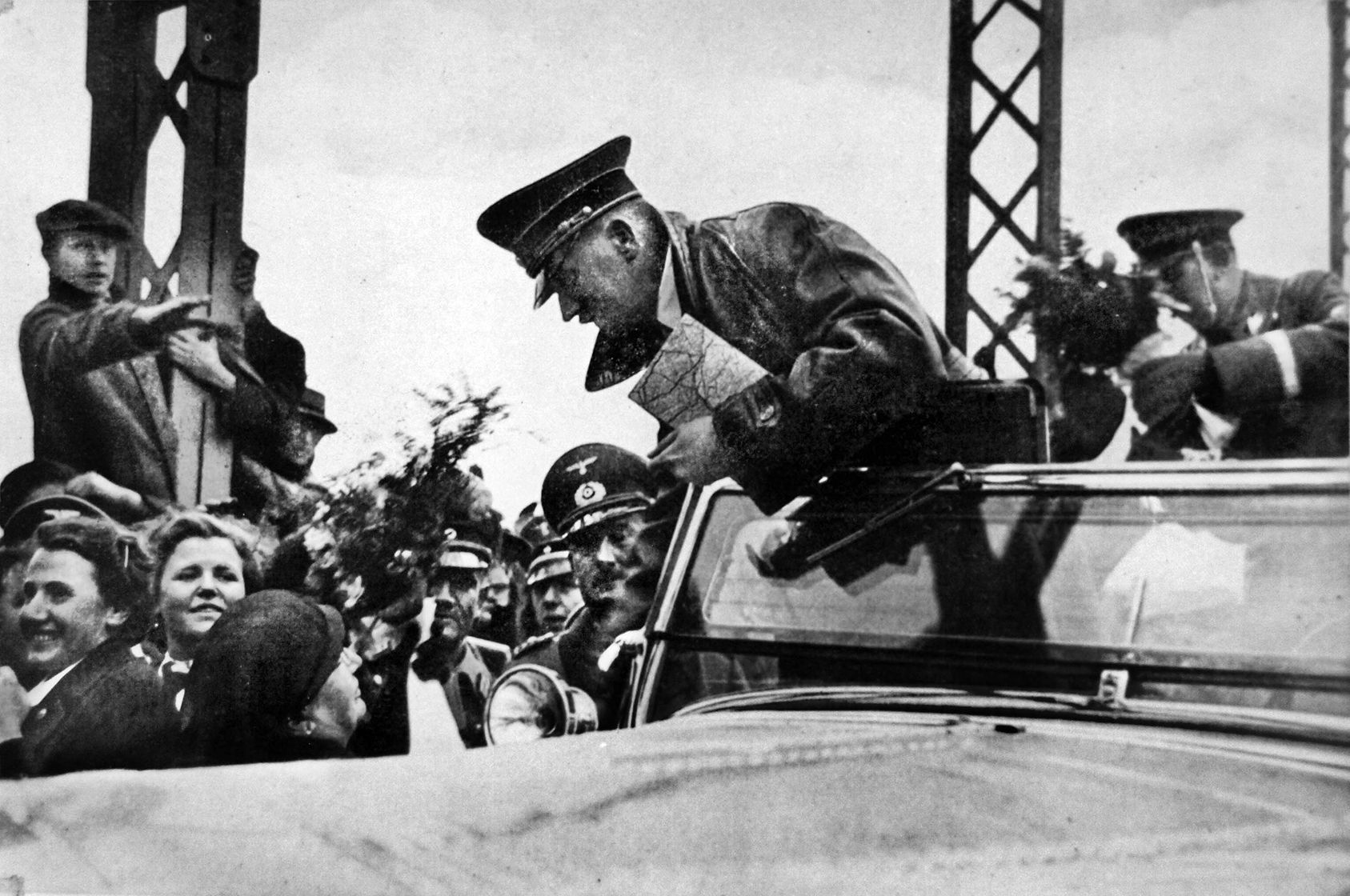
Two days earlier, soldiers of the American 45th Infantry Division captured Hitler’s private apartment in Munich, where he met with world leaders during the Munich Conference in 1938, and where Vogue reporter Lee Miller famously had herself photographed washing in Hitler’s bathtub. The capture of Hitler’s Bavarian retreat in Berchtesgaden by the 3rd Infantry Division was still two days away. The men of Smith’s 67th desperately wanted to cross the Inn and claim the ancient town of Braunau for themselves.
Hitler had been born in Braunau on April 20, 1889, to Alois Hitler and Klara Pölzl. His parents’ marriage raised eyebrows since they were closely related. She was also his third wife, the first two having died of consumption. Klara gave birth to Adolf after her first three children had died soon after birth. Rosa Hort, a 27-year-old midwife, aided in bringing the infant Hitler into the world. The delivery took place on the third floor of a boarding house his parents shared with six other families. Sometime before or after Hitler’s birth, the building’s first floor became the town’s public library.
Hitler grew up with a half-sister and half-brother from his father’s second marriage. He was only three when the family moved to Passau, where his father had accepted a new job. Hitler later admitted in Mein Kampf that, “Little remains in my memory of this period.”
Despite his brief stay in Braunau, Hitler felt a higher power had placed him there to ensure that someday all German-speaking people would live in a world without borders. “Today it seems to me providential that fate should have chosen Braunau am Inn as my birthplace,” he wrote in Mein Kampf. “For this little town lies on the boundary between two German states which we of the younger generation at least have made it our life-work to reunite by every means at our disposal… This little city on the border seems to me the symbol of a great mission.” Of course, the “we” that Hitler wanted to bring together would require a “them.”
By the 1940s, most Germans knew of the Führer’s birthplace. Along with adults who knew his origin story from radio and newspaper propaganda, school children were required to recite the city and country of his birth.
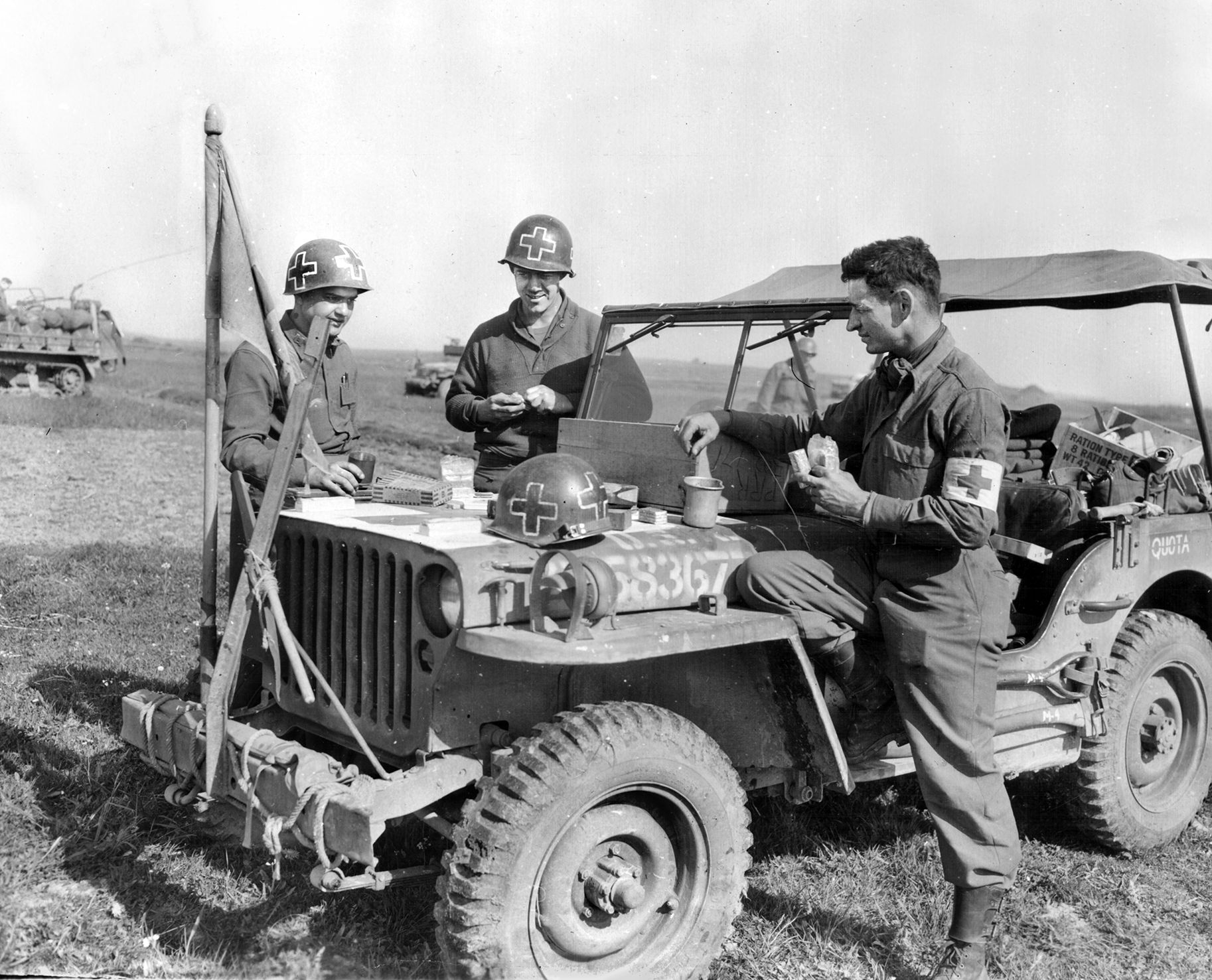
Following the Anschluss on March 11–12, 1938, Hitler made a triumphant entrance into Austria, crossing the Inn River into Braunau. He rolled up to his old house in a car and simply looked at it, possibly wondering if he could remember anything about it before his driver whisked him away. He did stop to touch hands with cheering locals before departing for Vienna. He would never return to Braunau; still, in 1945, the Americans of Smith’s 67th Armored Infantry understood its importance.
The 67th was part of Brigadier General Wayland Augur’s Combat Command A (CCA) in Maj. Gen. John Millikin’s 13th Armored Division. Millikin had been a corps commander for both the Third and First armies and had captured the Ludendorff Bridge over the Rhine River on March 7, 1945, but his army commander, Lt. Gen. Courtney Hodges, disappointed that Millikin had not moved aggressively enough, relieved him of command. Instead of returning to the United States in humiliation, he stayed in Europe. When he heard that the commander of the 13th Armored, Maj. Gen. John B. Wogan, had been shot through the neck during the fight for the Ruhr Pocket, he took command of the division. While it was a step down for a corps commander, it allowed Millikin to stay in the fight.
The 13th Armored was relatively new to combat. It entered the war in Germany on April 4, 1945, well after Lt. Gen. George S. Patton’s Rhine River crossing on March 22. The war was winding down, but there was still fighting to be done. Smith’s 67th Armored Infantry received its baptism of fire clearing a wooded area west of the village of Lichenroth, between Frankfurt and Fulda. Supported by tanks, the armored infantrymen accomplished the mission in one day with no casualties. Smith’s unit would spend the month driving 500 miles southeast across central Germany until it reached the Inn River, the border between Germany and Austria.
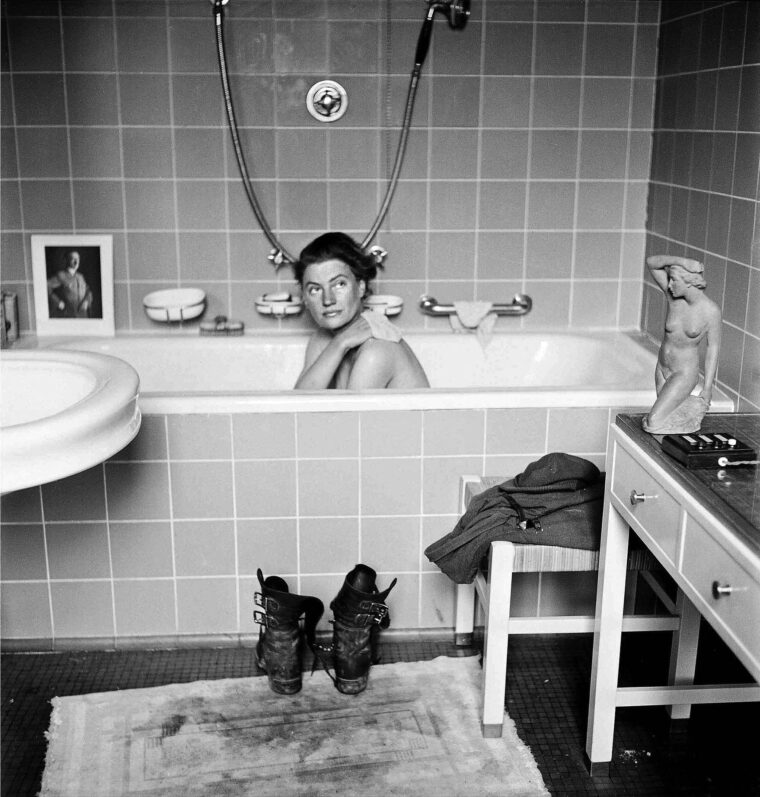
The division had recently taken the German town of Winhöring, Bavaria, home to Heinrich Hoffmann, where the Americans discovered the photo negatives of Hoffmann’s cameraman. “These plates may help to identify some leading war criminals,” Smith told a reporter.
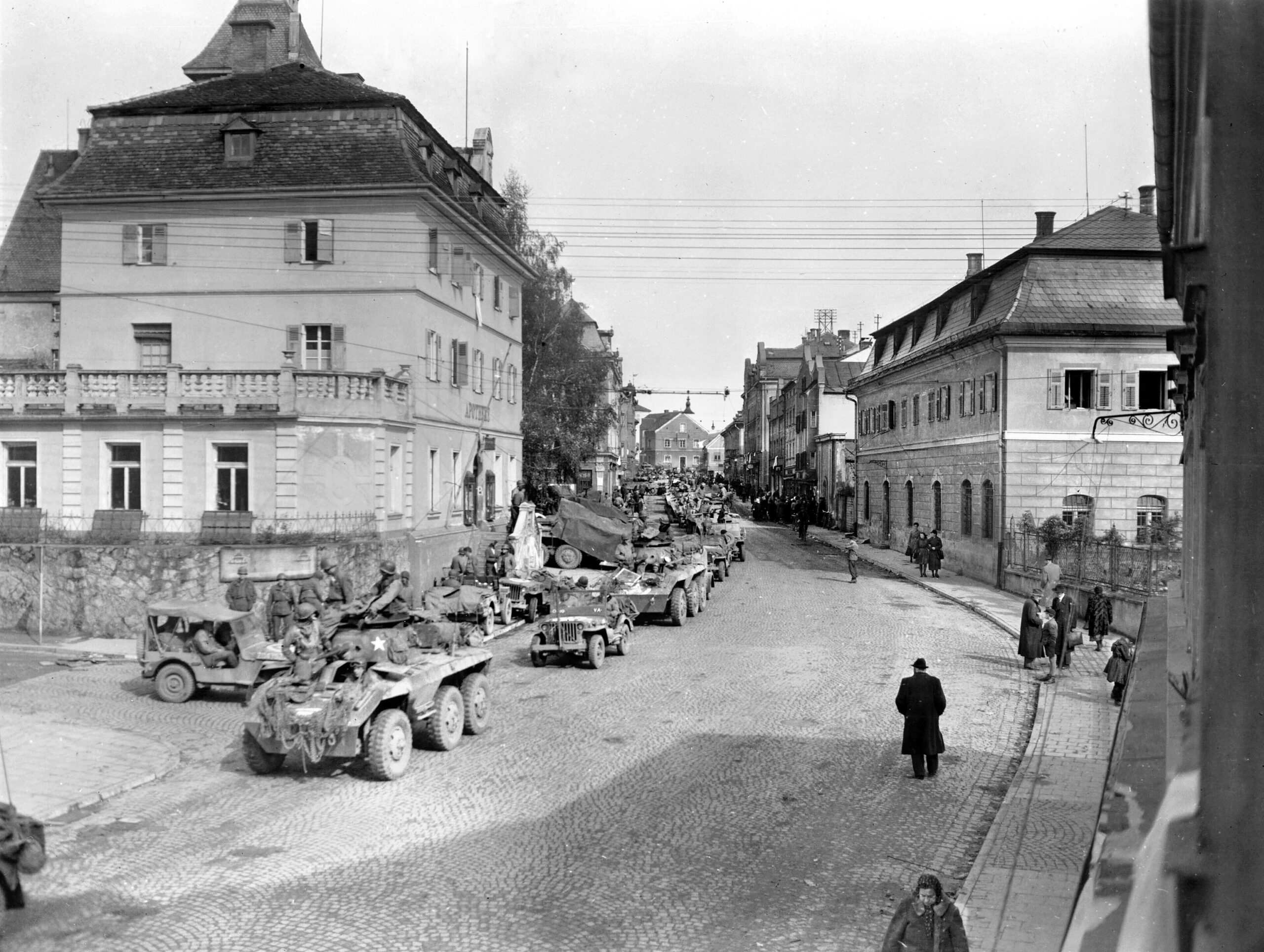
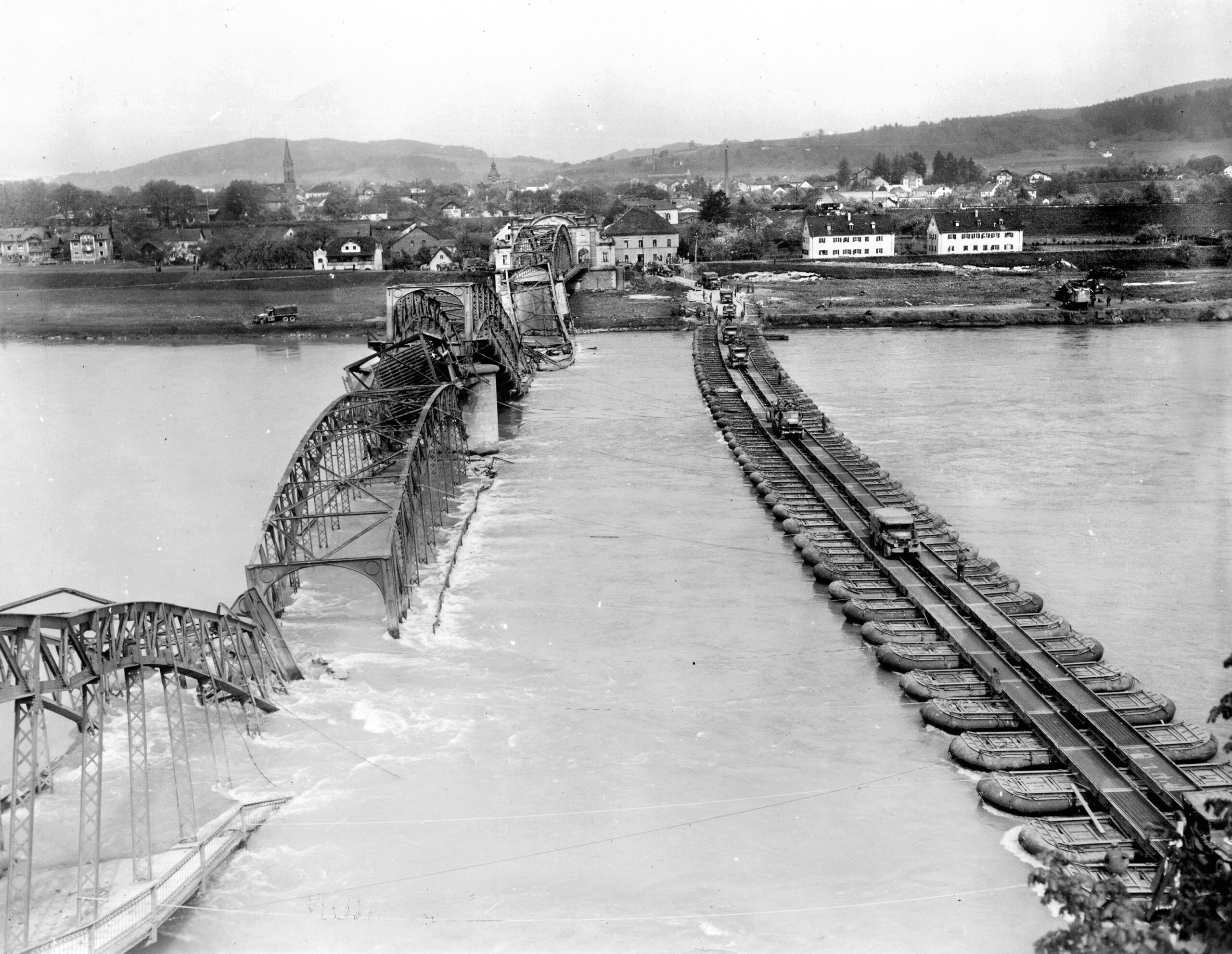
On the morning of May 2, Smith’s 67th seized the Ering dam on the Inn River and sent companies A and B seven miles south along the river to Simbach, across the river from Braunau, in hopes of capturing the connecting bridge, only to have it blown up in their collective faces.
Brig. Gen. Augur, the CCA commander, came forward to Smith’s position to see about capturing Hitler’s birthplace. When he saw the blown bridge, he had Maj. W.A. Gray order Simbach’s mayor to row across the river with a note that simply read: “Surrender or have the city destroyed.” The mayor brought back the garrison commander’s reply: “I ask for mercy for the city of Braunau, for its women and children. Our fight is against the Bolsheviks only, not against the Americans.” Augur was having none of it. Artillery was brought up and loaded, with orders to open fire at noon.
With only three minutes to go before the town clock struck twelve, a rowboat appeared on the far shore, with men rowing rapidly across. Once the boat reached the west bank, one of the men got out and introduced himself as Braunau’s chief of police, who explained through an American interpreter that the citizens had convinced the garrison commander that resistance was hopeless against the Americans’ firepower and that the city was ready to surrender. When one of the American officers told the chief that Hitler was dead, he shrugged his shoulders and said, “I knew it was coming sooner or later.” As the soldiers accepted the surrender, 350 German soldiers slipped out of the town and headed east.
Smith’s men found some leaky rowboats at a local yacht club and climbed in. Smith took a position in the lead boat and the men started paddling. The first boat made it across the river without incident, but three others drifted downstream and crashed into the damaged bridge. One soldier fell out and drowned. The soldiers were irritated, not only from the struggle to cross the river, but from a report the previous day that announced that Braunau had already been taken. “If that’s so,” griped one soldier, “why the hell are we sweating now?”
Once on the far bank, Smith climbed out of his boat and was quickly showered with flowers and pats on the back by Braunau’s grateful citizens. The presence of the Americans meant their war was over and, more importantly, their town had been saved from the Soviets. As Smith collected bouquets, he repeatedly asked himself, “How can I put these flowers down without hurting someone’s feelings?”

Soon engineers stretched a footbridge over the debris of the destroyed bridge so soldiers from Company B could occupy the town. The locals, who looked well-fed, offered the soldiers more flowers and laughed at a downtrodden police officer saddened by the news of Hitler’s death. Many had not known about the Führer’s death until informed by the Americans.
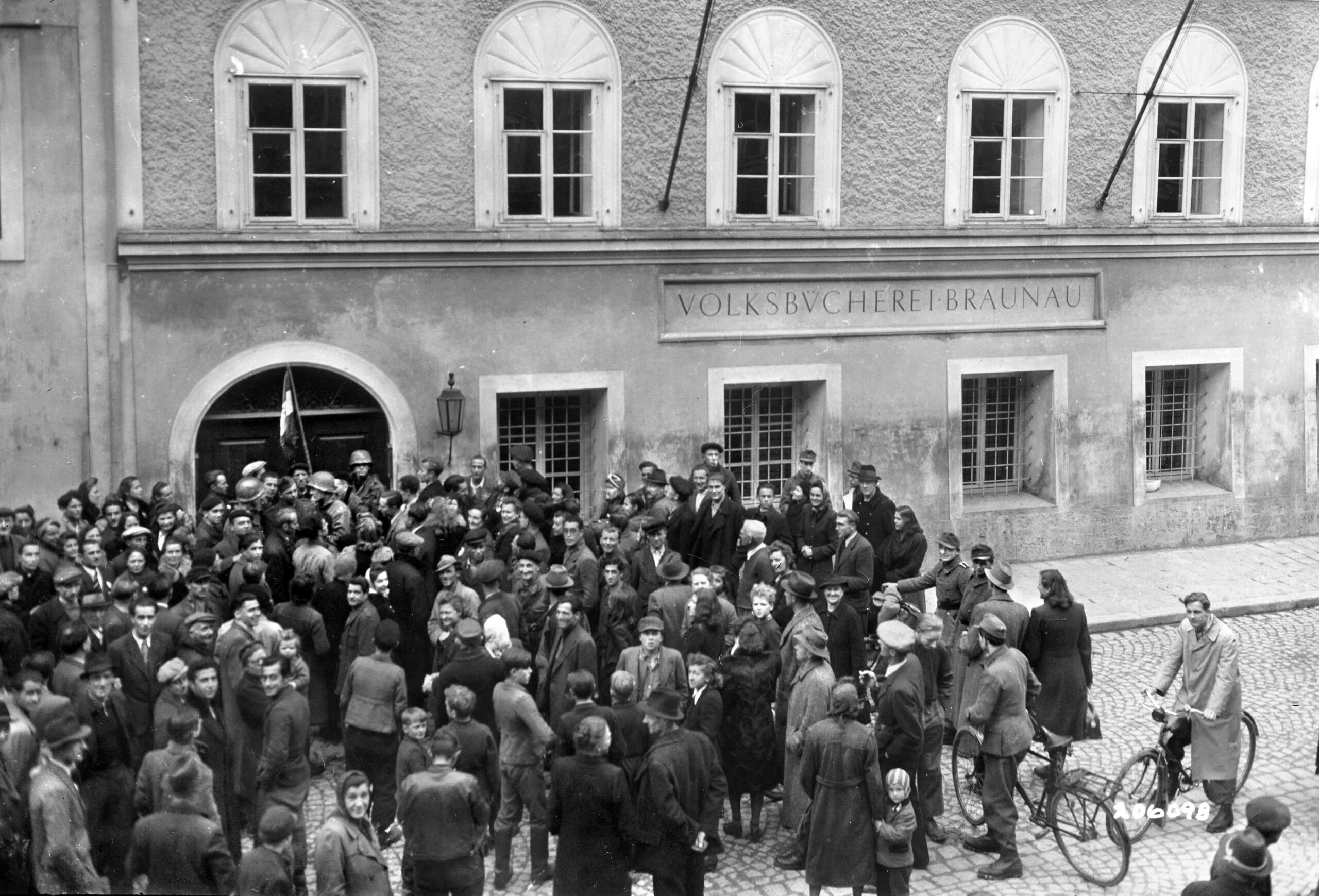
The locals led the Americans to Hitler’s birthplace, a yellow house on Salzburger Vorstadt. An engraved plaque above the first-floor windows read “VOLKSBÜCHEREI BRAUNAU,” meaning Braunau Public Library. Inside, they found the first floor had been torn up by liberated Mauthausen concentration camp survivors. On the third floor, they found a few chairs arranged like a school classroom where Hitler’s childhood bed once stood. On one wall hung a portrait of Hitler, on another a map of Germany. In the center of the room stood a pedestal with a bust of Hitler with a red drape behind it.
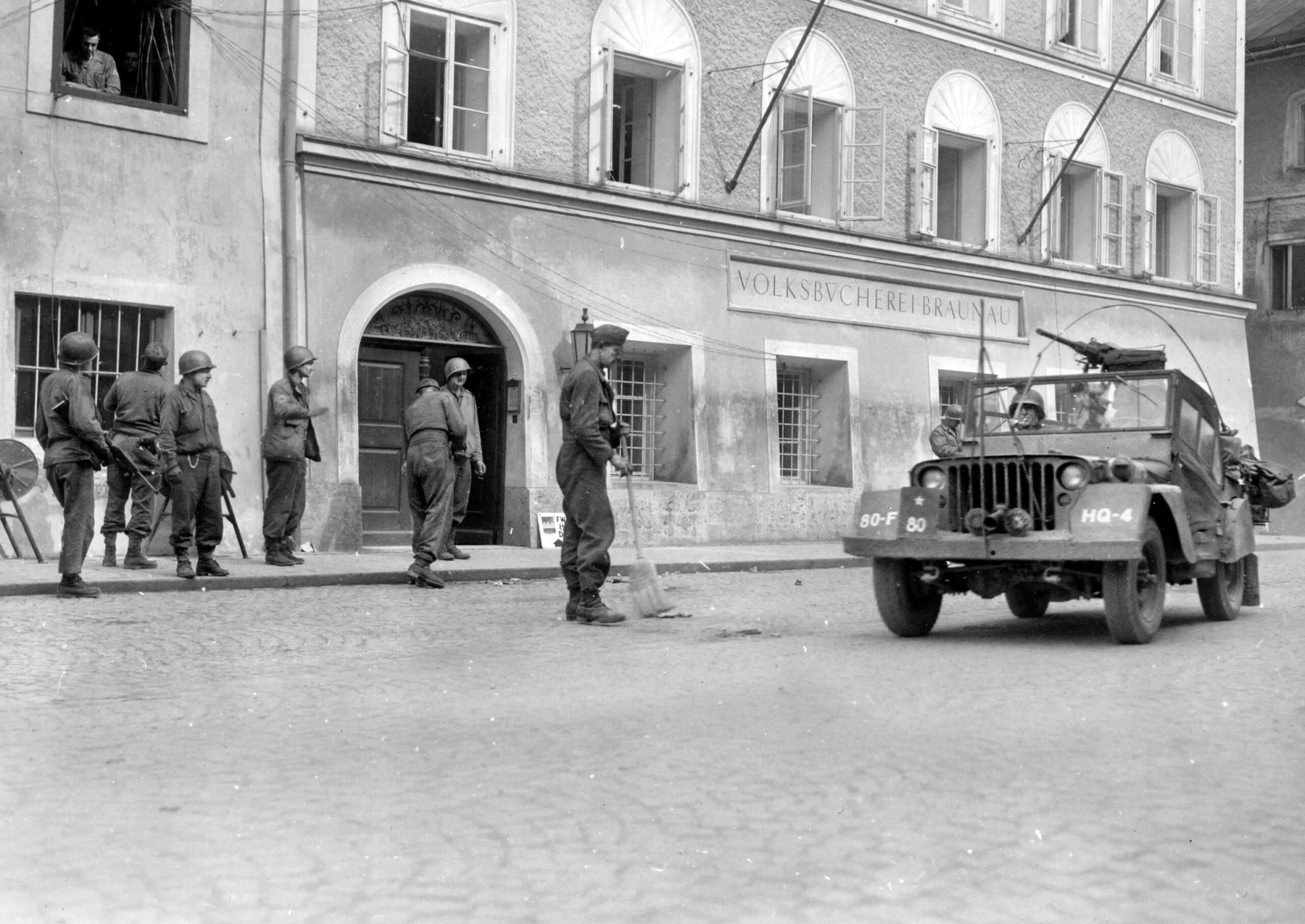
The Americans searched for souvenirs and snapped photographs of themselves. A New York Times reporter referred to the inside of Hitler’s birthplace as “more like something from the five-and-ten-cent store than the mecca of Nazidom’s loyal sons and daughters.”
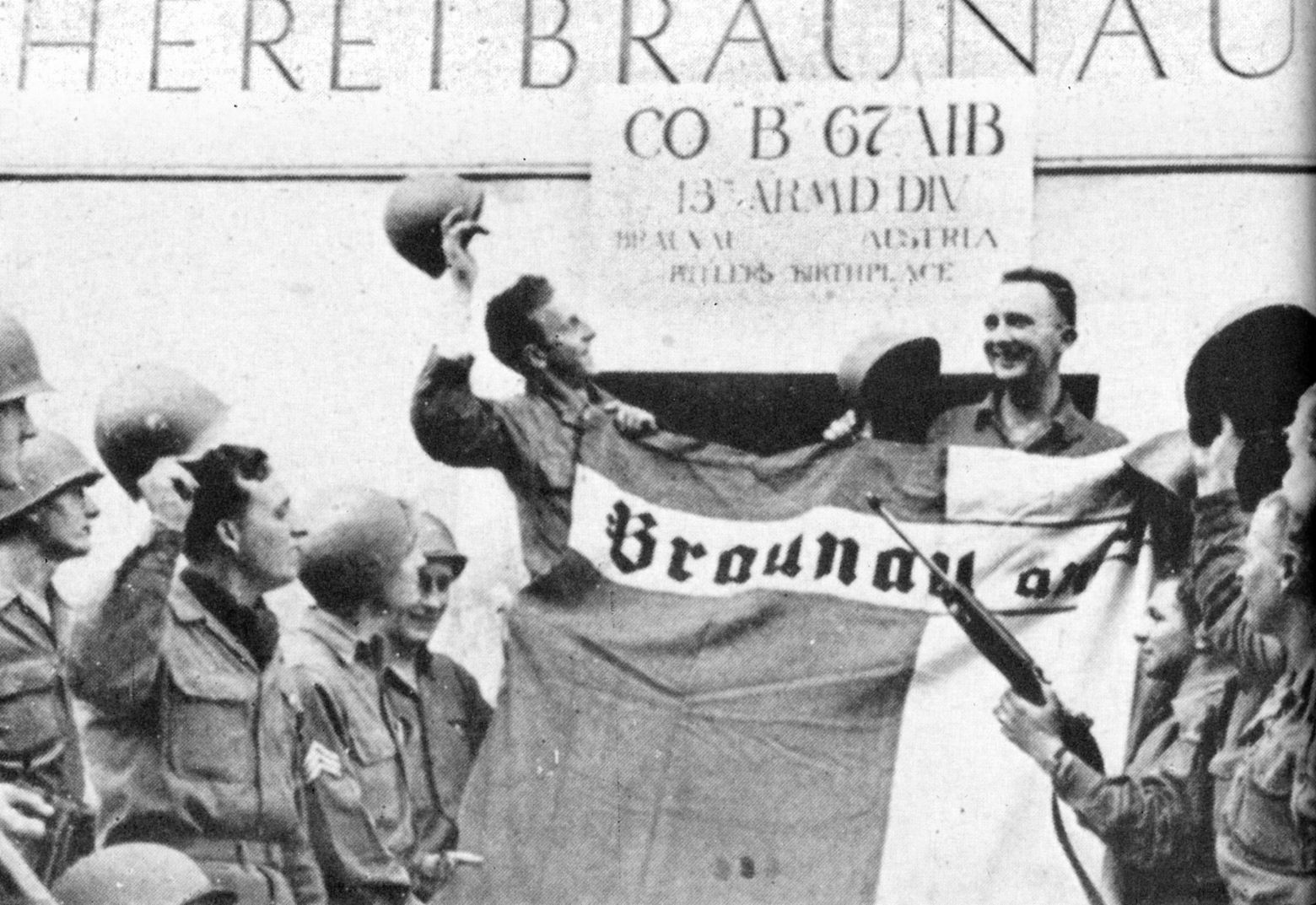
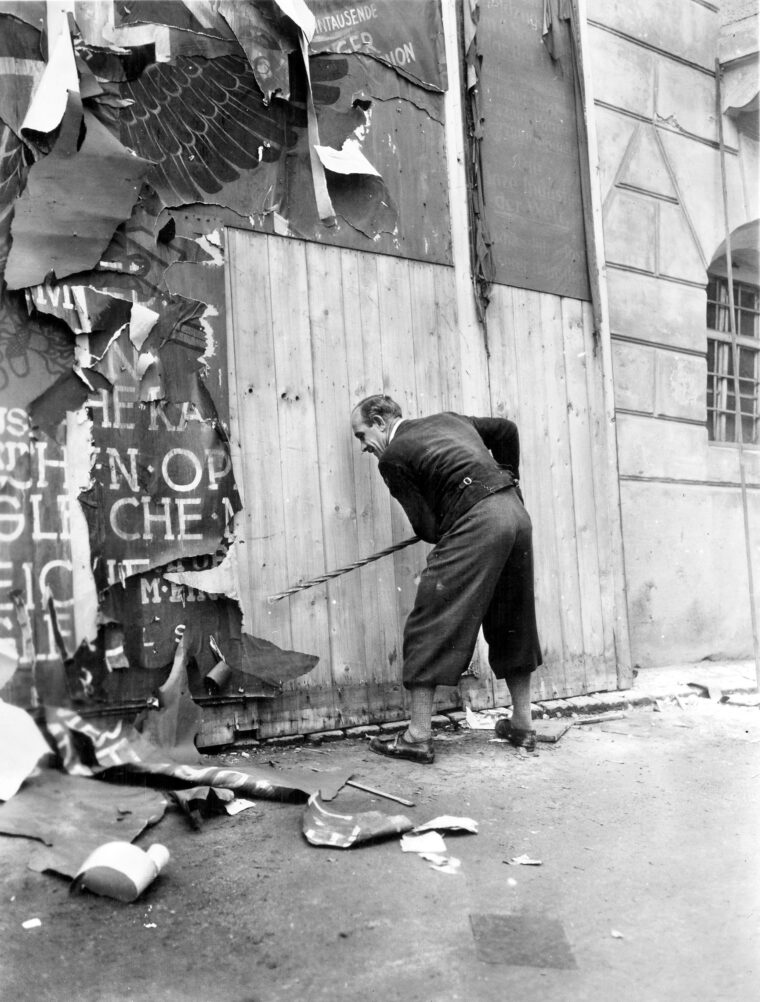
The soldiers posted a sign from the second floor that announced, “All is kaput in Hitler-town.” Outside, soldiers erected a Company B unit sign and posed with a Braunau city flag for photographers while tipping their helmets to the Führer’s first residence. The building became a regimental command post with communication wires stretched out a second-story window. The Americans put surrendered German soldiers to work sweeping the streets. The city’s residents wasted little time in tearing down Nazi signs and symbols anywhere they found them.
Smith’s men soon found Rosa Hort, Hitler’s midwife, who was now 83. She lived in a boarding house on Adolf-Hitler-Platz, behind the church where Hitler had been baptized. While she told the Americans she was glad Hitler was dead “because he had led Germany and Austria to ruin,” she admitted that she was proud when he assumed leadership in Germany. She further explained that everyone in Braunau thought he was a good man, “until the Prussians turned his head.” The Germans of southern Germany—watchmakers and craftsmen—had no love for the militaristic Prussians.
Hort, who claimed to have delivered 700 Braunau babies, said that Hitler’s parents were good people who were not involved with politics “or had trouble with the Jews or anybody else,” and that Hitler was an ordinary, healthy baby.
The citizens of Braunau seemed to disagree with Hort’s assessment, or at least that’s what they told the Americans. One man said that only 36 people in Braunau actually liked Hitler, “the other 6,000 always hated him.” Another man said that his own father had told him that Hitler was “a good-for-nothing and murderer and no good would ever come from him,” while a woman insisted “He was a thief, dumb in school, and he used to steal the butcher’s meat.” An impressive record for a three-year-old child, though it’s worth noting that local accounts collected by GIs in May 1945 were notoriously exaggerated or fabricated by locals eager to distance themselves from Nazi ties.
One citizen, Joseph Ransmeir, claimed to have played with Hitler as a child and recalled that the future Führer once shot him in the neck with an air gun. He claimed that whenever the children played cowboys and Indians, Hitler always wanted to play the leader, and whenever he was outvoted, he would walk away and sulk. Ransmeir further claimed that if one of the children ever defied Hitler, his face would turn red, his eyes bulge, and he would scream and shout before leaving the game in search of other children with whom to play. Ransmeir added that Hitler had returned to Braunau in 1921, and told him, “Watch me, Joseph, I’ll save Germany.”
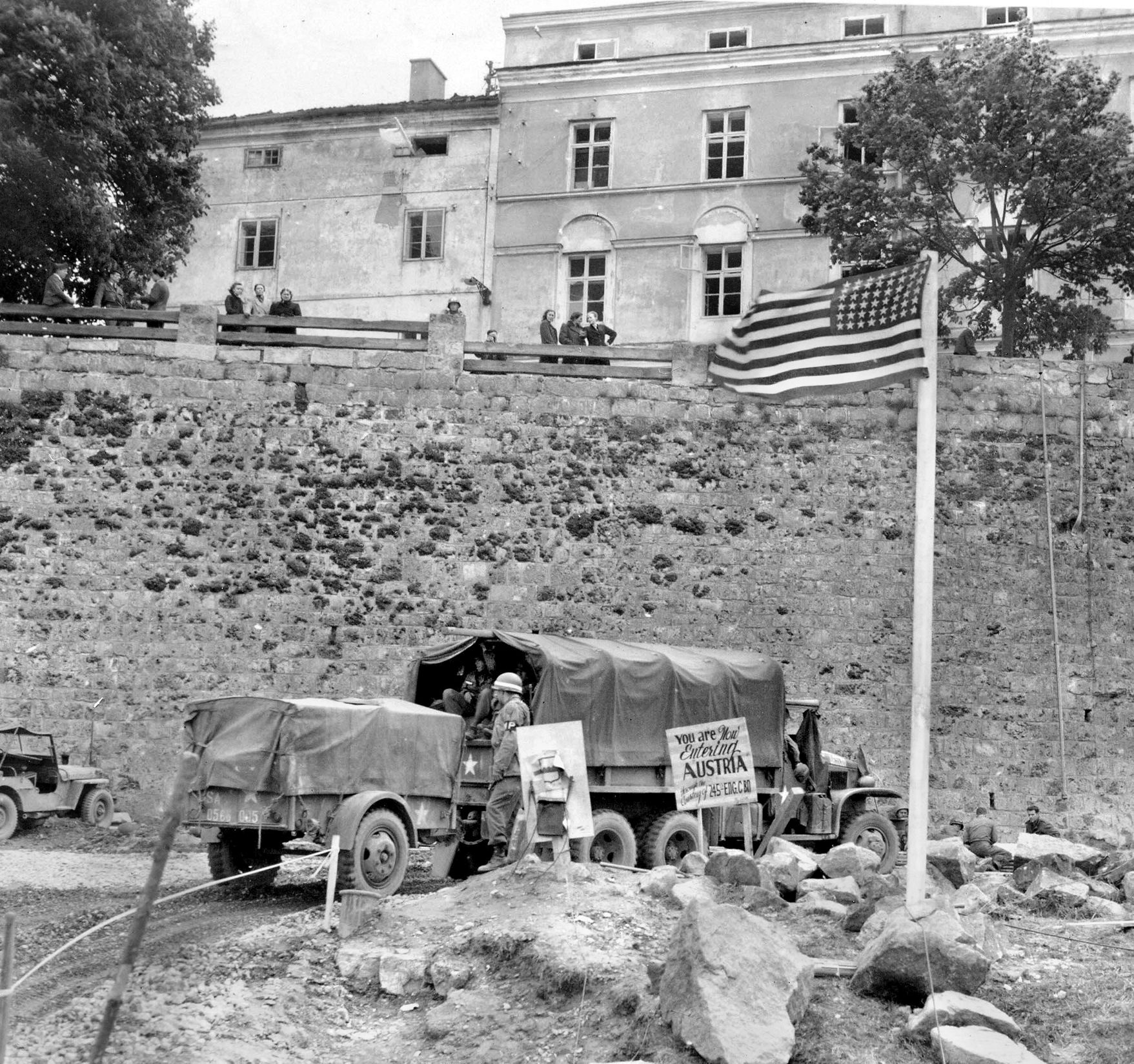
The next day, engineers with the 245th Engineer Combat Battalion stretched a pontoon bridge across the Inn River about 50 yards downriver from the collapsed bridge. They even erected a sign reading, “You are NOW Leaving Germany, Thank God.” Smith’s men were joined in Braunau by soldiers of the 317th Infantry Regiment, of Maj. Gen. Horace McBride’s veteran 80th “Blue Ridge” Infantry Division. The Americans occupied the town until the end of the war, when the building reverted to a library, and later housed a social services agency.
As of July 2026, the building known for being Hitler’s birthplace—Salzburger Vorstadt 15—officially opened as a police station after an estimated $21 million renovation. The Austrian government repurposed the previously vacant 17th-century building as a measure to erase any mystique surrounding the site and prevent it from becoming a shrine and pilgrimage destination for neo-Nazis and far-right extremists. Though some critics and Holocaust survivor groups argued it would have been better suited as a museum or center for historical education, the refurbished building houses local police officers and a human rights training branch, and features security cameras alongside a memorial stone outside dedicated to the victims of fascism—a large stone block from the Mauthausen concentration camp displays an inscription in German that reads, “FOR PEACE, FREEDOM, AND DEMOCRACY—NEVER AGAIN FASCISM. MILLIONS OF DEAD SERVE AS A WARNING.”
Frequent contributor Kevin M. Hymel is a contract historian for Arlington National Cemetery. He is also the author of the three-volume Patton’s War: An American General’s Combat Leadership. He is a historian/ tour guide for Stephen Ambrose historical tours and cohosts the podcast “World War II Live” with his friend John McManus.
Join The Conversation
Comments
View All Comments