By Rick Britton
At the crossroads, Col. John E. Bendix and his 7th New York Infantry Regiment, made up mostly of German immigrants, waited in reserve. It was 4 a.m. and, if all went well, they’d join in a surprise dawn assault against their Confederate foes in a few hours. Many of Bendix’s officers and men had served in European armies, but this would be their first fight in their adopted homeland. Their nervousness overflowed into chatter.
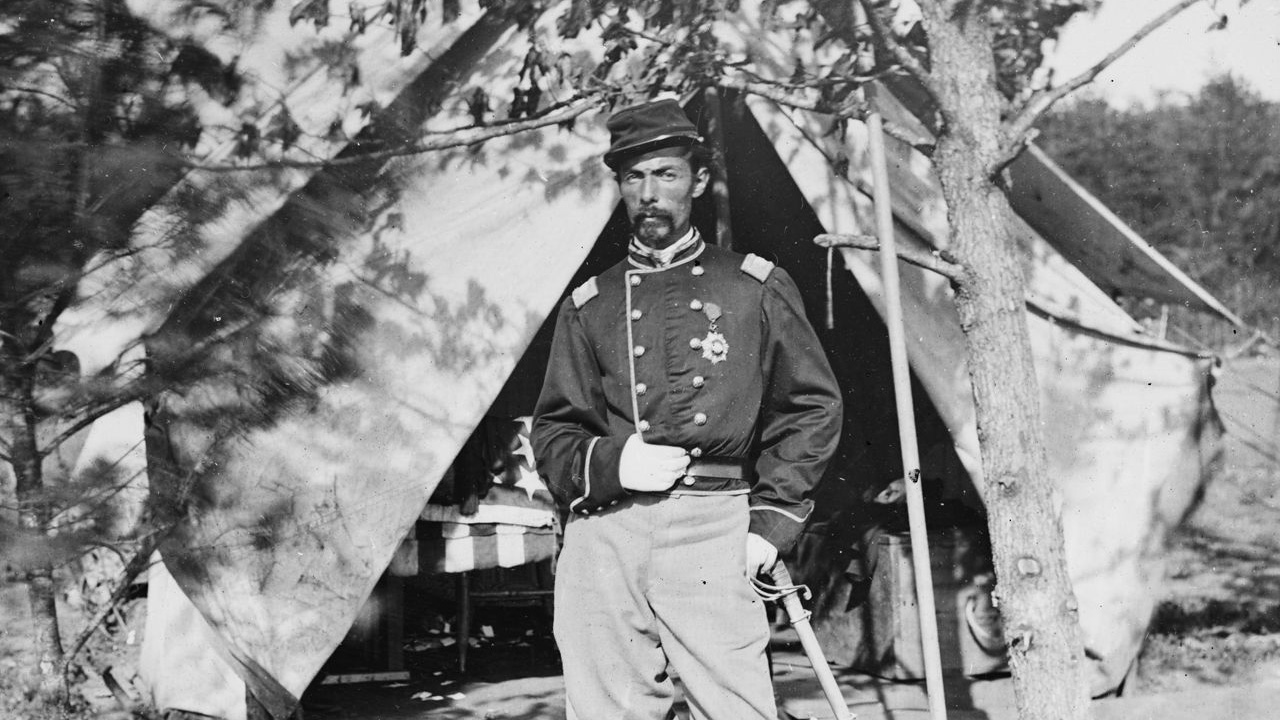
The moon shone bright at that hour, but a heavy ground fog made visibility problematic. Suddenly, through the mist, Bendix later wrote, “we saw what I supposed [to be] some cavalry.” Behind them marched infantrymen uniformed in gray. As Bendix ordered a nearby field piece loaded, his jittery Germans commenced firing. Startled, his opponents dodged into the dense underbrush and fired back. Twenty-one of their dead and wounded littered the road. This blind combat continued until it was discovered—to Bendix’s “horror”—that their antagonists were not Southerners, but Col. Frederick Townsend’s 3rd New York Infantry. The “cavalrymen” were Union Brig. Gen. Ebenezer Peirce and his staff. The Federal operation against Big Bethel was getting off to an inauspicious start.
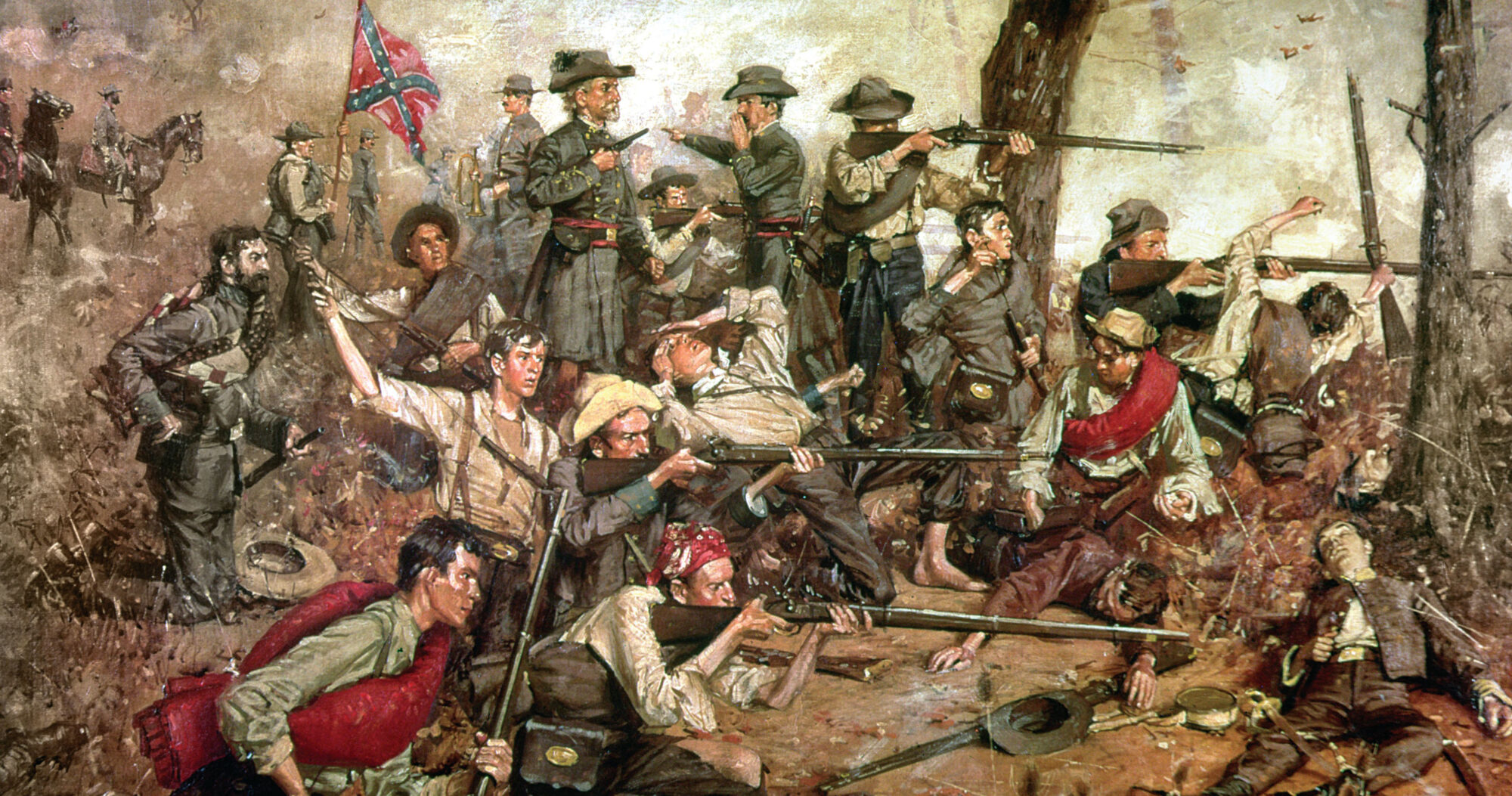
Fought on June 10, 1861, the Battle of Big Bethel pitted Peirce’s 4,500-man Union force, made up of New Yorkers, Vermonters, and Bay Staters, against Confederate Col. John B. Magruder’s 1,400 North Carolinians and Virginians. It featured the war’s first major tactical use of field entrenchments and a slew of amazingly poor battlefield decisions. The result stunned the nation.
Big Bethel was a weatherbeaten country church on the Virginia Peninsula, between the York and James Rivers, ten miles southeast of Yorktown. By June 1861, however, the area’s most important landmark was Union-held Fort Monroe, ten miles to Big Bethel’s southeast. As long as the immense stone and brick structure remained in Federal hands—a thorn on Virginia’s eastern flank—its guns were a threat to Confederate vessels in both the James River and the Chesapeake Bay. More importantly, Northern troops from Fort Monroe could march up the Peninsula against the newly established capital at Richmond. For these reasons, the Confederate War Department was eager to establish a defensive position on the lower Peninsula.
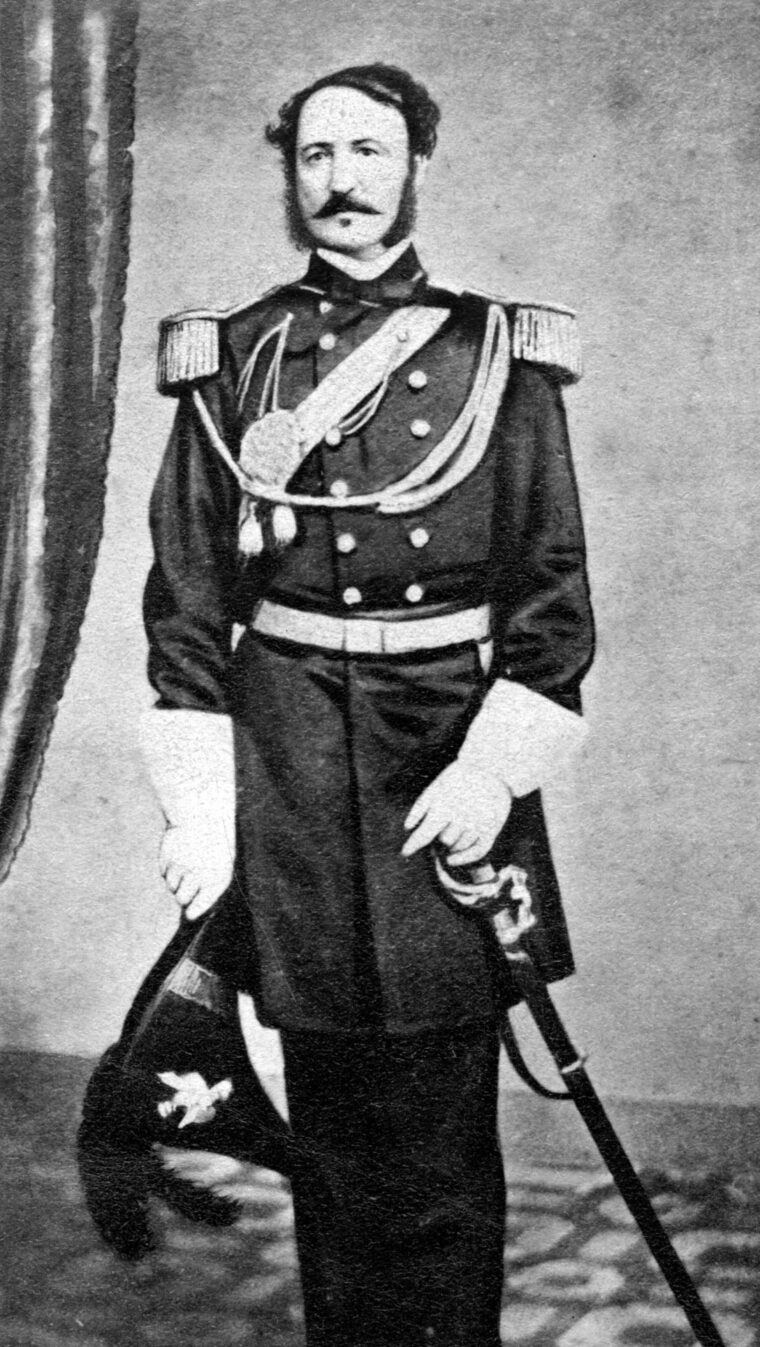
Enter Magruder, a handsome, 54-year-old West Point-trained officer who’d served with “zeal and ability” during the Mexican War. Always flamboyantly dressed—leaning heavily toward the theatrical in both speech and manner—he’d been nicknamed “Prince John” by his friends. When he first arrived in Richmond, he’d announced to Virginia Gov. John Letcher, “Give me 5,000 men, and if I don’t take Washington, you may take not only my sword but my life!”
On May 21, Magruder was given command of the Department of the Peninsula, comprising everything between the York and the James. He established his headquarters at Yorktown and went to work with a passion. When he informed Richmond that his 2,500 men were not sufficient to block the route of invasion, he received his first reinforcement: the 1st North Carolina Volunteers, numbering 700.
Organized in Raleigh the previous month, the Old North State’s first regiment was well-drilled and well-led. Its 39-year-old colonel, Daniel Harvey Hill, was a hard-nosed West Pointer who’d been breveted twice in the war with Mexico. As the correspondent for the Charlotte Western Democrat wrote on May 26, the day after the regiment arrived at Yorktown: “We now occupy the point of danger between the enemy and Richmond. . . . This is not playing soldier now; it is a stern reality.”
Facing Magruder on the lower Peninsula was a criminal defense attorney and former Democratic state senator from Massachusetts. Maj. Gen. Benjamin Franklin Butler was a squint-eyed 45-year-old political appointee who’d risen to prominence in the war’s early days. In April, when Maryland Secessionists had threatened to isolate Washington, Butler, with a few regiments, occupied Baltimore and reopened communications. Acclaimed by the press, Butler was ordered on May 18 to take command at Fort Monroe.
Landing on the Peninsula with the idea of building on his newfound fame, Butler immediately began planning grand movements against Richmond. When these were rejected by Commanding General Winfield Scott, he turned to civil policy. The rights of local property-owners were carefully detailed in his orders. “Foraging and depredations of all kinds were forbidden,” wrote Col. Joseph Carr. But when three enslaved men owned by a Confederate officer escaped into his lines, he refused to return them. Butler classified them as “contrabands of war,” a name that quickly took hold. As escaped slaves flocked to his protection, Butler put them to work.
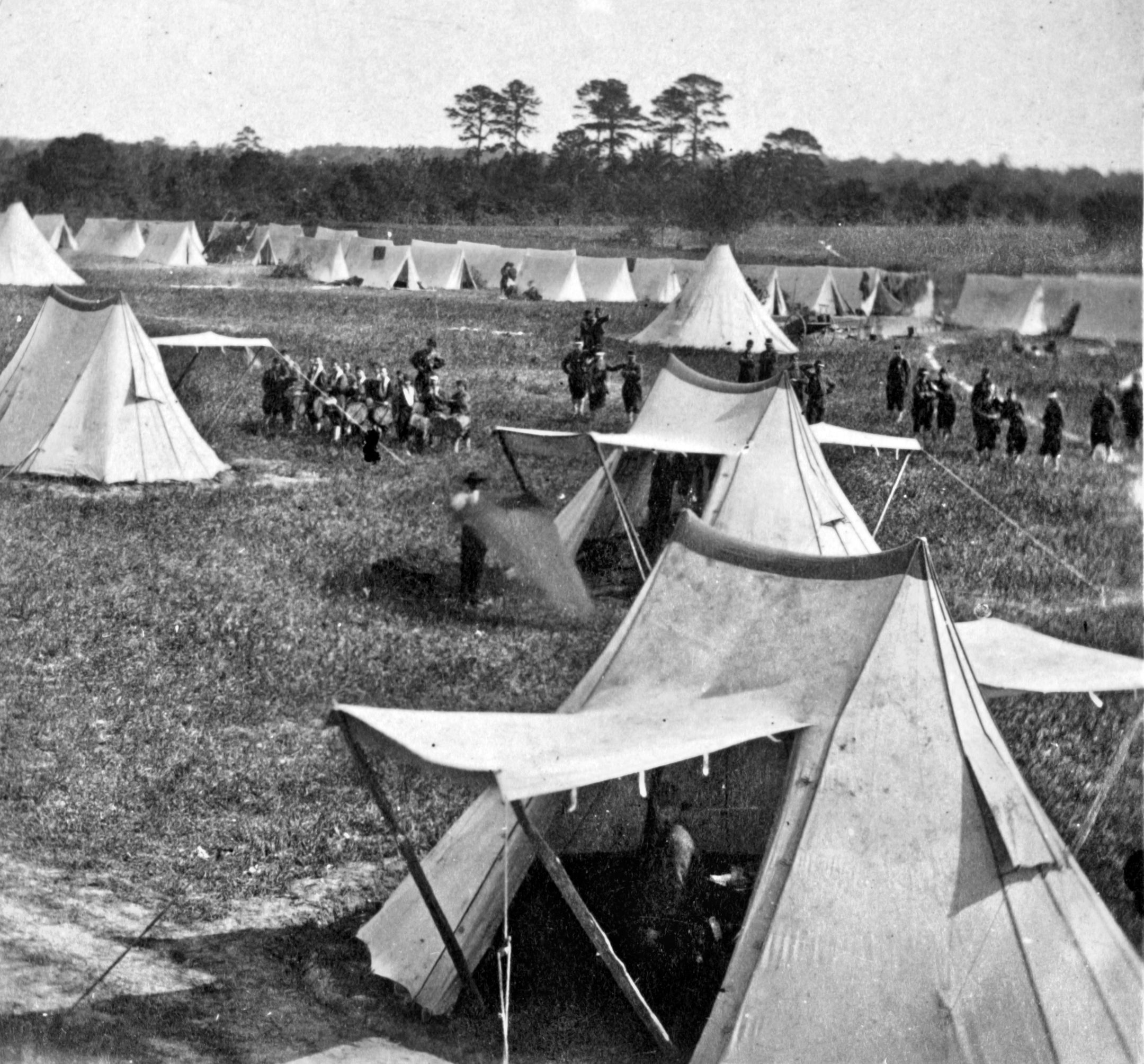
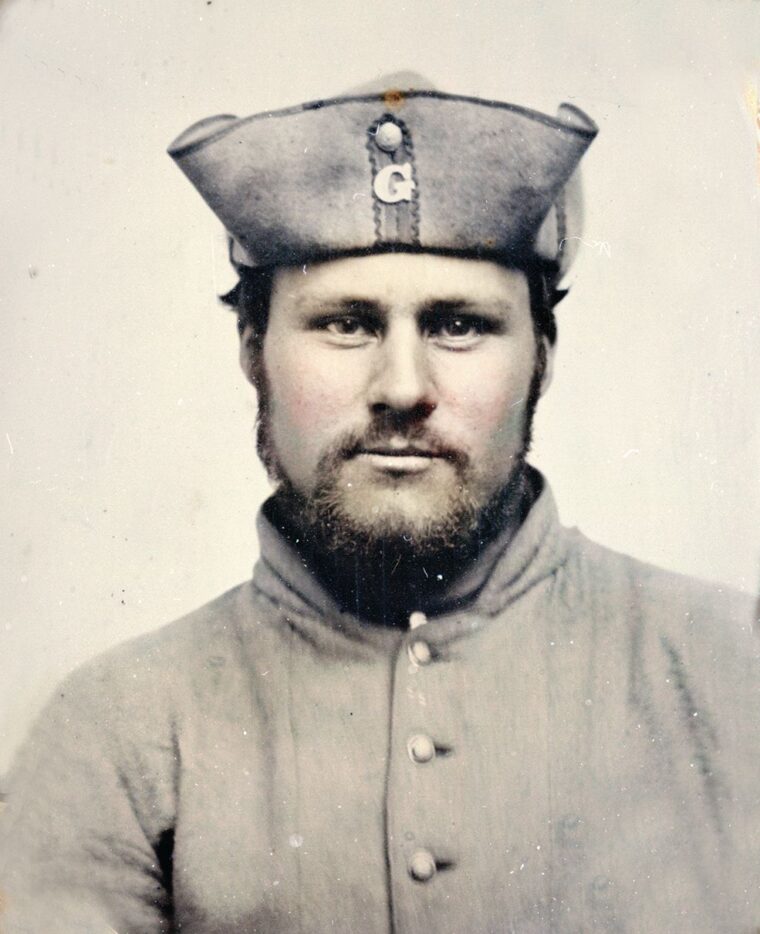
Like Magruder, Butler requested reinforcements. On arrival he’d found his force included only the regular garrison of four artillery companies, plus the 3rd and 4th Massachusetts Volunteers. Carr’s 2nd New York Volunteers landed on May 24. The 5th New York Volunteer Infantry Regiment, better known as Duryée’s Zouaves after their commander, Col. Abram Duryée, arrived the next day—unforgettable in their gaudy getup of baggy red pantaloons, jaunty dark blue jackets with red trim, and white turbans made popular by French North African troops in the Crimean War. Within the next two weeks, Butler’s force was further augmented by the 1st Vermont Volunteers, the 1st New York Infantry, the gray-uniformed 3rd New York (also known as the “Albany Regiment”), and the largely German 7th New York (the “Steuben Guard”).
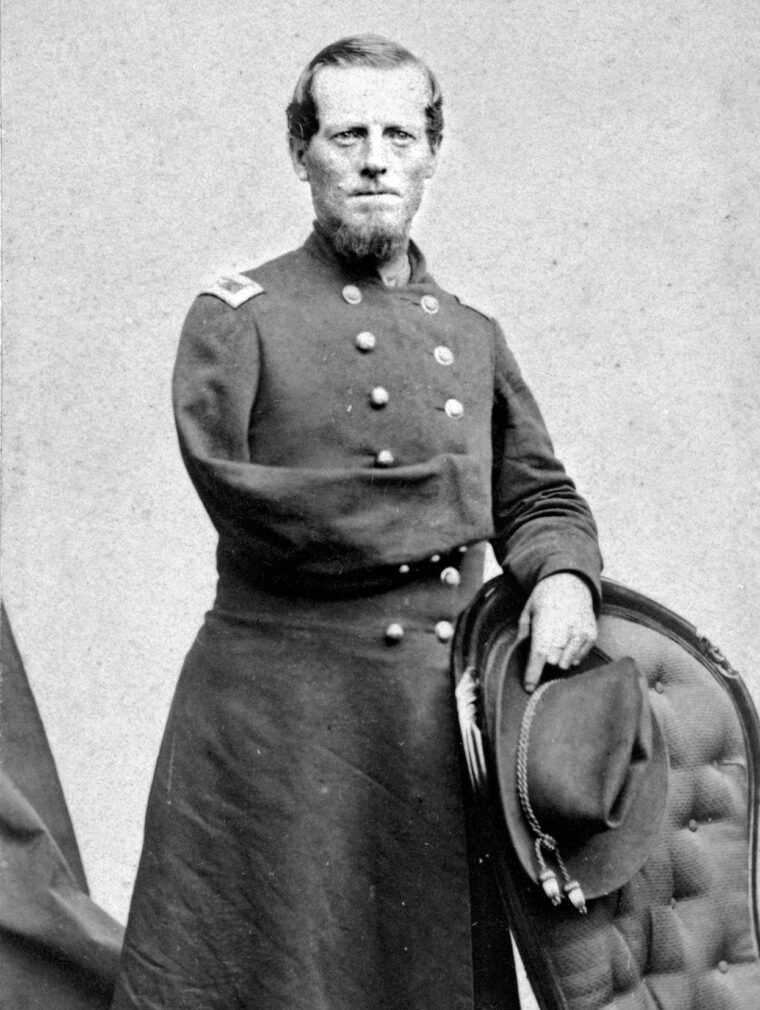
As Butler’s little army grew, he established Camp Hamilton, two miles to the west of Fort Monroe at Hampton, and placed Peirce in charge. The 39-year-old Peirce—whose name is sometimes awkwardly spelled “Pierce”—was a well-to-do sheep farmer now serving as a brigadier general in the Massachusetts State Militia. Federal troops also set up Camp Butler at Newport News, six miles to the southwest.
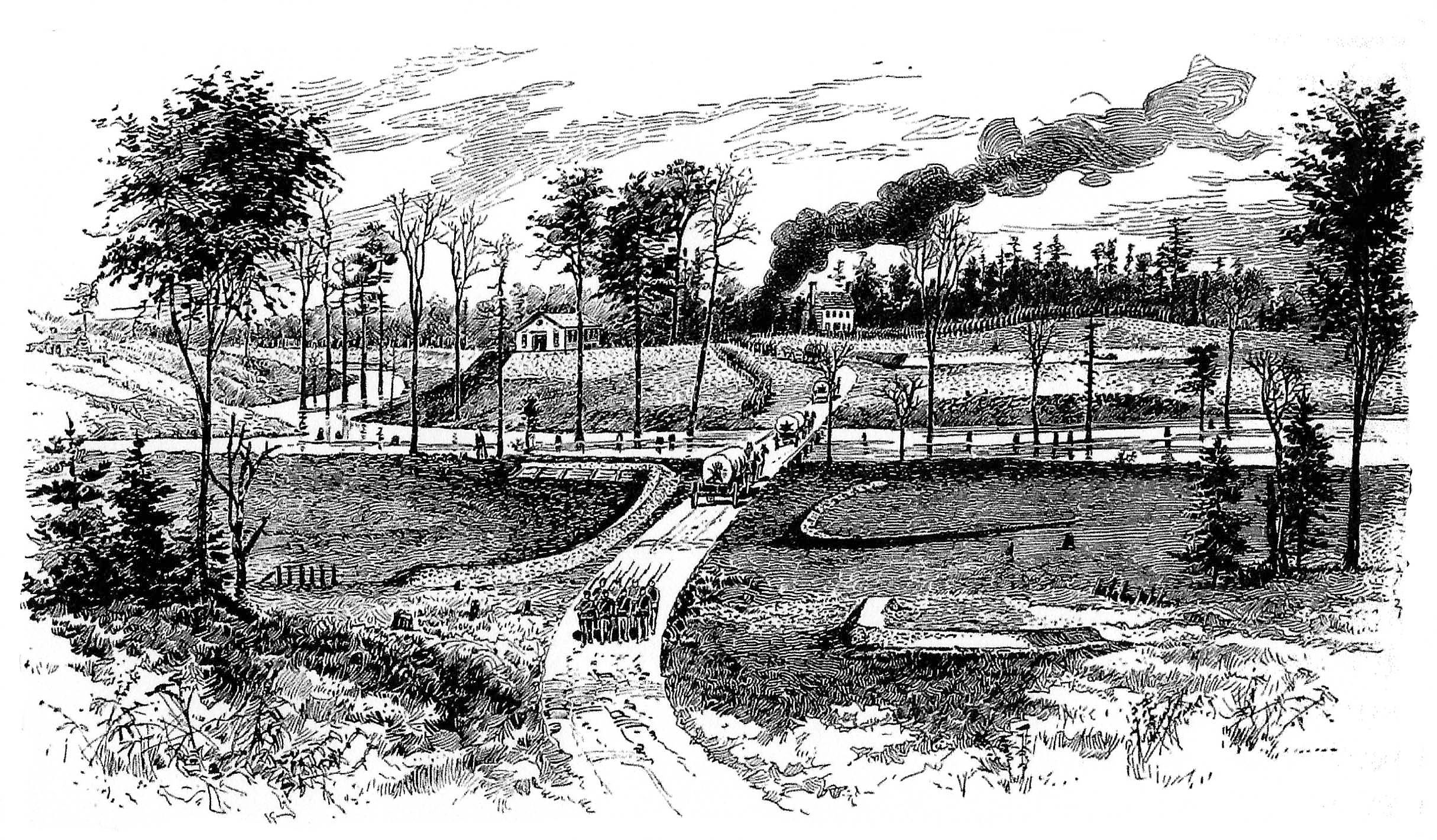
Noting Butler’s build-up, Magruder on June 6 ordered Hill’s 1st North Carolina and the Richmond Howitzers—a 6-gun battalion under Maj. George W. Randolph, Thomas Jefferson’s youngest grandson—to an advanced position at Big Bethel Church. Sitting a few paces off the main road, close to where it bridged Marsh Creek on its way to Little Bethel, three miles south, it was an admirable spot for defense. Centrally located on the lower Peninsula, Big Bethel was only nine miles from Fort Monroe.
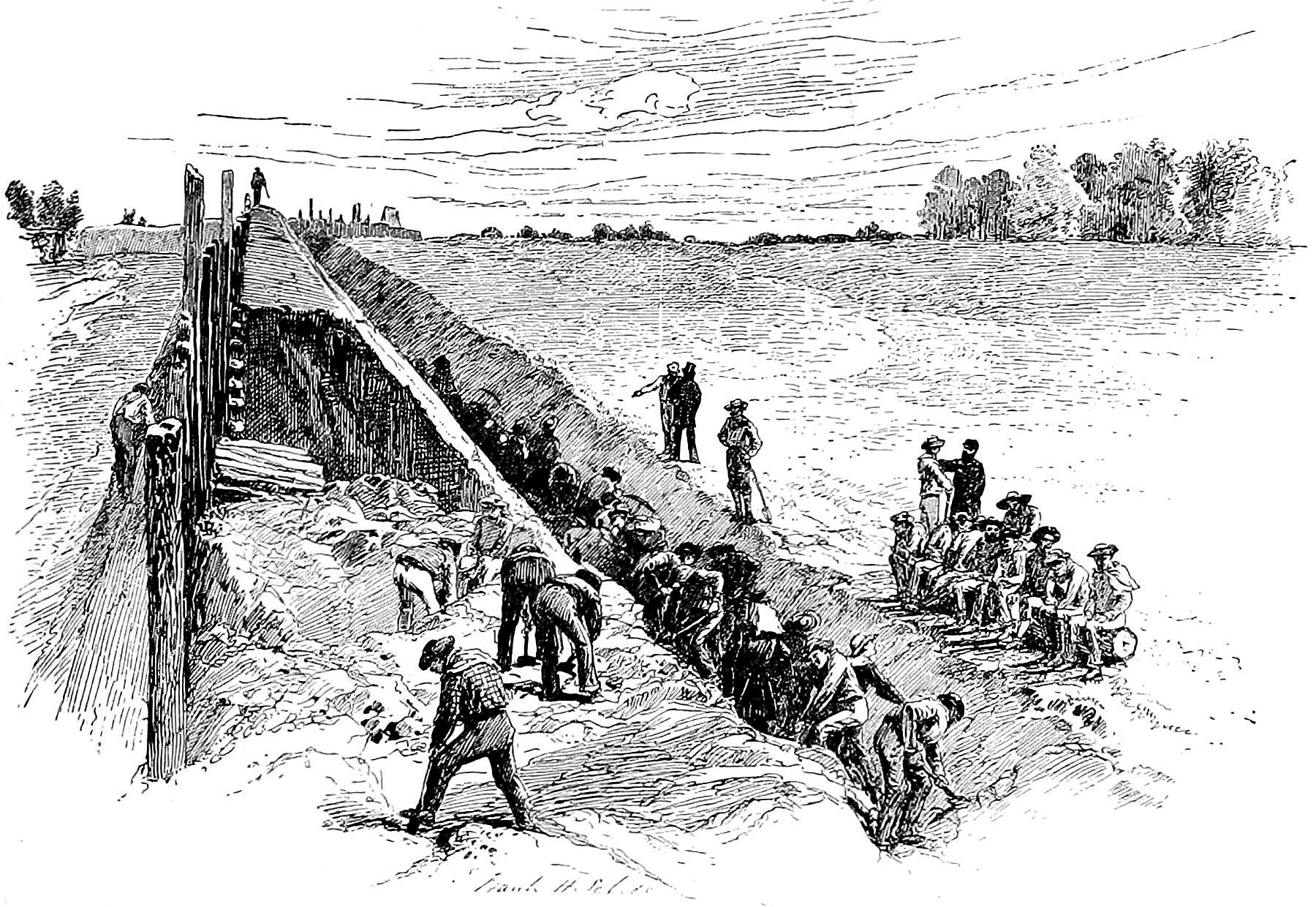
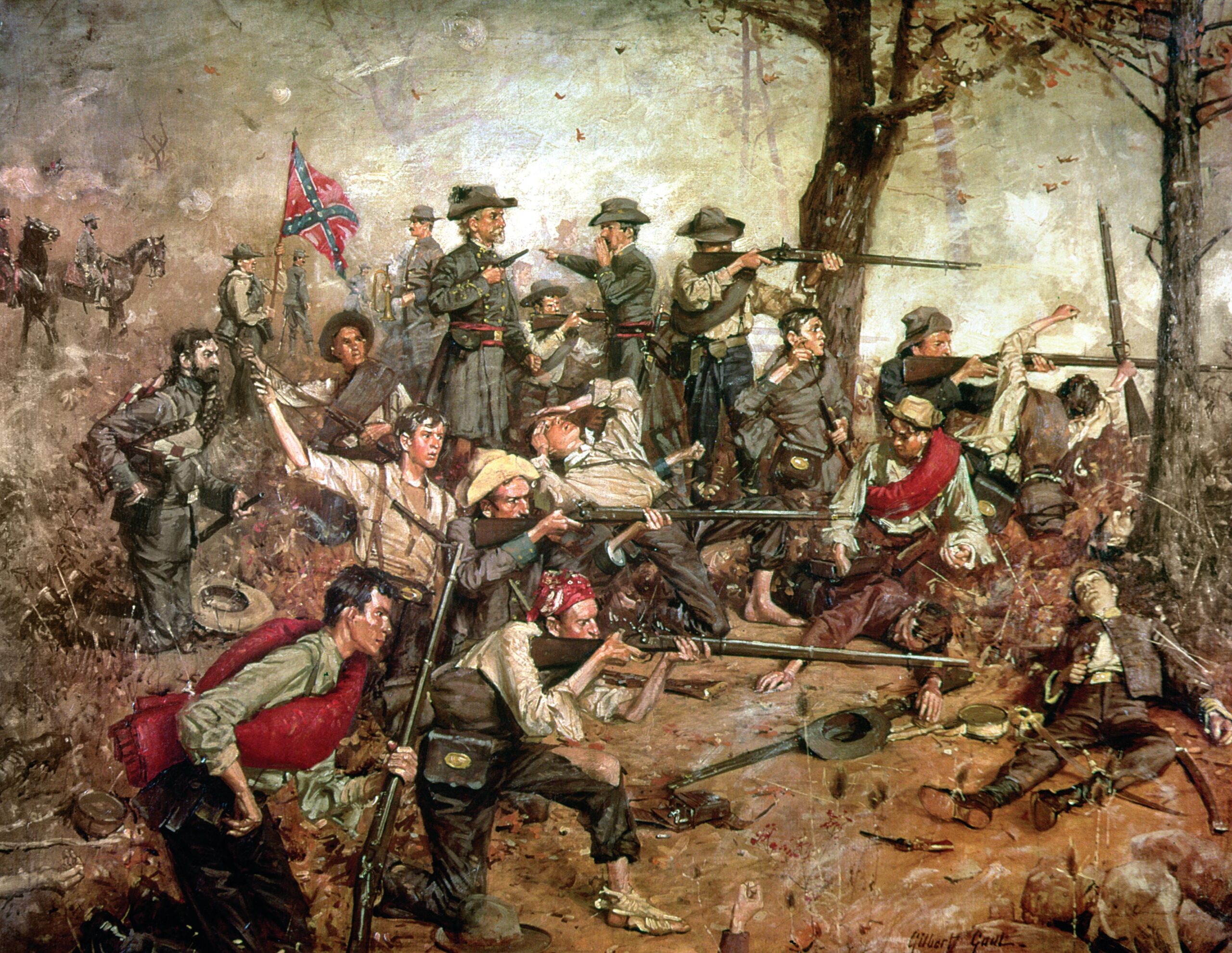
Despite a shortage of spades, Hill put his men to work improving the position. They constructed a four-sided redoubt on the north side of the stream, astride the road. The face of the work overlooking the creek was made into a battery covering the bridge, wrote Hill, “and Major Randolph placed his guns so as to sweep all the approaches.” Additionally, a 200-man battalion of Virginia infantry under Maj. Edgar B. Montague arrived from Yorktown and immediately began erecting a breastwork to the west of Hill’s main redoubt. The defenses were strong, but slightly higher commanding ground on the south side of the creek worried Hill. One of Randolph’s howitzers was ordered there, and a small surrounding earthwork was commenced.
With his defenses under way, Hill began making his presence felt on the lower Peninsula. On June 8, learning that two enemy detachments were in the vicinity of Little Bethel, he organized two sorties, each comprising infantry and a howitzer. With a few well-directed shells, the Federals were quickly put to flight, chased across the New Market Bridge toward Hampton.
That evening Magruder galloped into Hill’s Big Bethel redoubt and assumed command. With him arrived Lt. Col. William D. Stuart and 200 men of his 15th Virginia Regiment (an addition that bolstered the Confederate force to about 1,400). Ordered into the advance works, Stuart and his infantrymen, along with two companies of the 1st North Carolina, splashed across the stream and took position on either side of the howitzer. Soon to figure prominently, this forward position was now under Stuart’s command.
Butler was infuriated when he heard of how Hill’s men had driven in his detachments. New Market Bridge was barely five miles from Fort Monroe. Worse still, his scouts reported that a large Southern force was constructing an outwork at Big Bethel and had posted an advance guard at Little Bethel. From these positions, he wrote in medieval jargon, “the whole country was laid under contribution.” He determined he would drive the enemy from both.
Butler wasted no time in planning an attack for June 10. The objectives were the outpost at Little Bethel and Hill’s redoubt at Big Bethel. Duryée’s Zouaves would lead off around 2 a.m. by crossing New Market Bridge and positioning themselves before dawn behind Little Bethel. Peirce would follow two hours later with two howitzers and Townsend’s 3rd New York.
Simultaneously, another force under Bendix would march against Little Bethel from Newport News. Lt. Col. Peter T. Washburn would command the advance, consisting of 300 men from his 1st Vermont, another 300 from the 4th Massachusetts, 150 from the 7th New York, and one howitzer. The balance of the 7th New York would follow. Two other regiments at Newport News were ordered “to hold themselves in readiness.” Butler put Peirce in overall command, ordering that after the two-pronged dawn attack on Little Bethel, the forces would continue on to assault Big Bethel. Butler would remain in the rear, from which point he could forward reinforcements, and advice, as necessary.
Aware of the varied uniforms worn by the Union troops, Butler ordered them to wear strips of white cloth on their left arms. The watchword “Boston” was given to the men marching with Peirce—with the admonition that “no attack should be made until the watchword was shouted.” Sadly, no one advised Bendix about this important measure. Eager to defeat the enemy, the Federal volunteers moved out in the dark of night.
As Peirce and his staff approached the rendezvous near Little Bethel, the disastrous friendly-fire incident detailed earlier unfolded. Bendix’s jittery Germans, unaware of the “Boston” watchword, unleashed the volley that cost twenty-one Union casualties and permanently crippled the operation’s element of surprise.
At Big Bethel, Magruder had also planned an offensive for June 10 and at 3 a.m., he marched south with 600 North Carolinians. They’d covered a few miles, recounted Lt. Benjamin Huske, when “the order was given to countermarch, a lady having run up the road… and informed Colonel McGruder [sic] that the enemy were advancing.” Alerted by the firing, the Confederate pickets at Little Bethel withdrew to Big Bethel.
Once Little Bethel was occupied, Peirce began reorganizing the Federal effort. The men were rested, the wounded provided for; the Confederate encampment was burned. Reinforcements, the 1st and 2nd New York Regiments, were hustled up from Newport News. Despite the initial fiasco, and over the strong protests of Colonels Duryée and Washburn, Peirce was determined to continue against Big Bethel. Numbering about 4,500, Peirce’s force headed out at 7 a.m. Duryée’s light infantrymen took the advance, followed by three 12-pounder howitzers under the command of Lt. John Trout Greble of the 2nd U.S. Artillery, Battery E. As the temperature rose, the volunteers began to suffer.
One mile south of Magruder’s works, a company of Duryée’s Zouaves under Capt. Hugh Judson Kilpatrick, a recent West Point graduate, drove in a Confederate picket post. Kilpatrick, a glory-seeker described as “wiry, restless, [and] undersized,” shoved on until he came within sight of Big Bethel.
Peirce—remembering Butler’s instructions to fire a volley, then charge with the bayonet—pushed his men forward as he quickly sized up the situation. Most of Magruder’s men were behind Marsh Creek, which flowed west to east. The main road from Little Bethel bisected the battlefield. The ground to the right of the road—featuring a dense rectangular wood—did not look inviting for maneuver. In front of the trees lay boggy fields that drained north into Marsh Creek. A farm lane intersected the main road south of Magruder’s position and, passing to the right behind the woods, led to a ford three-quarters of a mile east.
The area to the left, or west, seemed promising. Most of the ground was open, except for a large orchard and several homes and shops, which offered shelter for Federal marksmen. Unfortunately, the Confederate works on the south side of Marsh Creek completely dominated this portion of the battlefield.
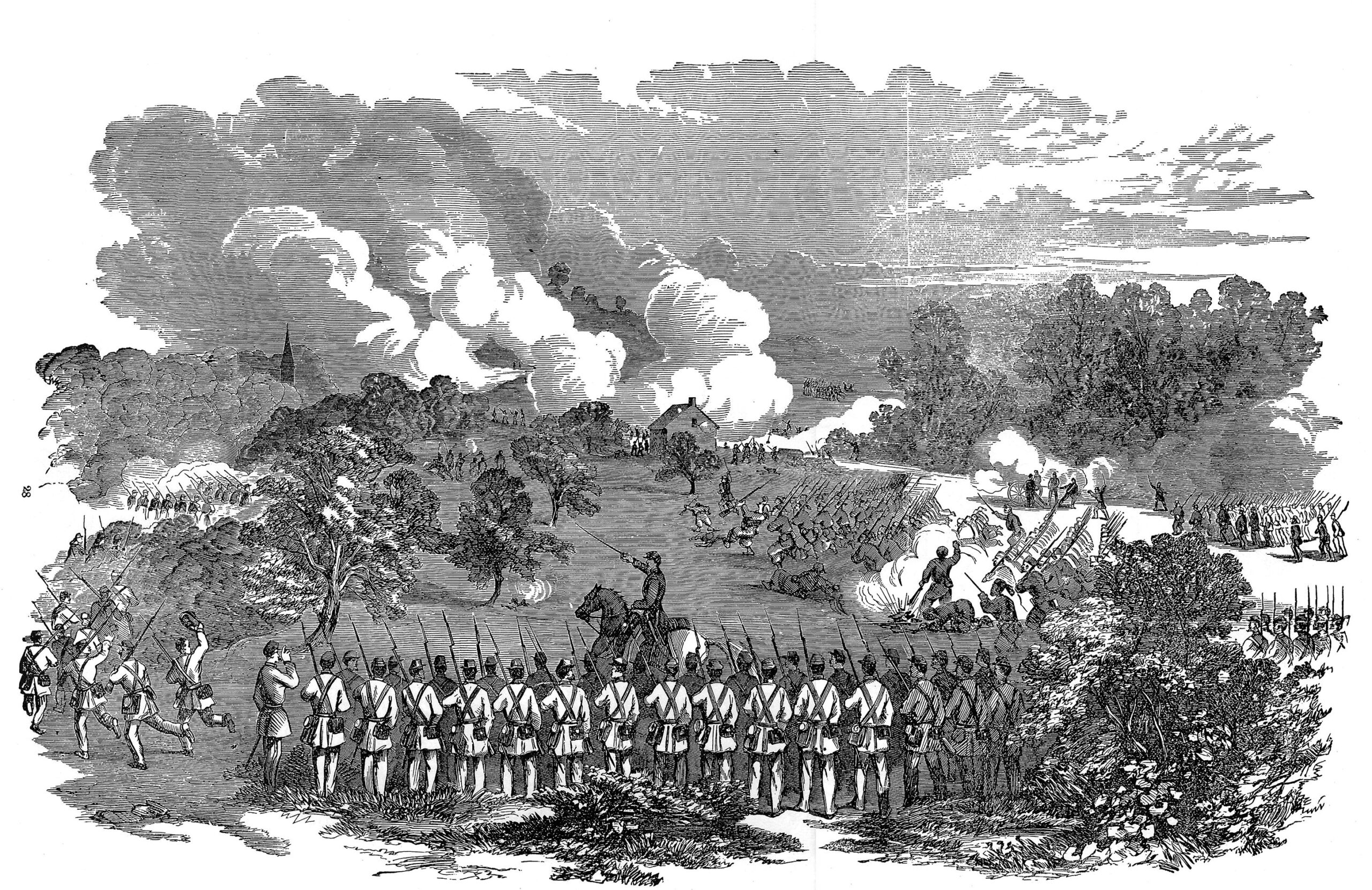
Peirce made his opening dispositions quickly. Three companies of Zouaves under Kilpatrick were double-quicked forward as skirmishers, their line straddling the road. The rest of Duryée’s 5th New York was deployed to the right, the right-hand companies behind the woods. Townsend’s 3rd New York was ordered to the left, behind the orchard. Two companies of 3rd New York skirmishers, under Captains John Butler and Edwin Jenny, trotted through the orchard and linked their right with Kilpatrick’s left. The three guns under Greble were unlimbered at the intersection. It was now 9 a.m.
Magruder’s men watched in amazement as Peirce’s lead elements came into view. The shooting war in Virginia was about to begin right here. The Richmond Howitzers opened the ball when it became obvious, from the number of bayonets visible in the road, that the enemy was within range. Randolph, estimating the distance at 600 yards, aimed the cannon that fired the first shot. The bolt from the 10-pounder Parrott, he later wrote with pride, “struck the center of the road a short distance in front of their column, and probably did good execution in its ricochet.” The Civil War’s first land battle was on.
Greble’s gunners attempted to engage the Southern cannon, but their first shots flew wild. A number of them, aimed at Stuart’s position, whistled overhead toward Major Montague’s men. “One ball passed under my horse between his fore and hind feet,” wrote Montague, “and a few buried themselves in our breastwork.”
Along the Federal skirmish line, the firing began to intensify. After greeting Randolph’s discharges with a cheer, the Zouave skirmishers pushed forward, wrote Kilpatrick, “till we reached a point… where the fire was so hot and heavy that we were compelled to halt…. My men were falling one after another…”
Peirce was beginning to appreciate the strength of Magruder’s position. Carrying Big Bethel was going to involve more than just a volley and a charge. And it was probably going to take more than the two New York regiments, 1,500 men, then deployed. Accordingly, Bendix’s Newport News command—the 7th New York and the detachments from the 1st Vermont and 4th Massachusetts, another 1,450 officers and men—was deployed behind the 3rd New York, immediately drawing fire from Randolph’s guns.
Peirce soon changed his mind, however, ordering Bendix’s command to march to the right, behind the cover of the woods, against Magruder’s left. One battalion of the 5th New York was sent to the right flank in support of this effort.
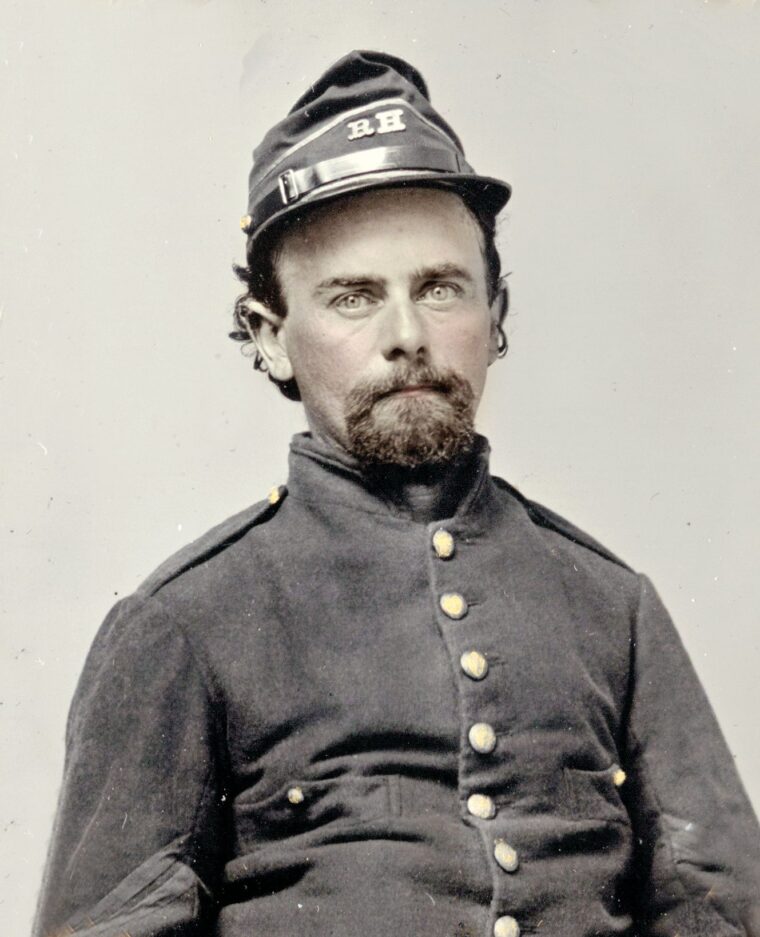
While this flanking force hustled downstream, Peirce turned up the pressure on the forward Confederate works. Townsend was directed to advance his 650-man 3rd New York. With the color-guard out front, the gray-clad regiment passed through the orchard and into the open “as if on parade,” Townsend recorded proudly. Butler and Jenny’s skirmish companies, meanwhile, were ordered to feel out the Confederate right.
Townsend’s advance was supported on the right by one hundred Zouave skirmishers, many of whom, noted Stuart, found cover behind “several frame buildings and sheds” that sat close by the roadway. He was “annoyed,” he wrote, by the fire they laid down.
Greble sped up his rate of fire as Townsend went forward. His shells plowed through the trees and slammed into the embankments with earth-scattering thuds. Hill, seeing his men ducking as the cannonballs shrieked overhead, shouted, “Boys, you have learned to dodge already. I’m an old hand at it.” When a loud round approached, he dodged to one side and, pointing a finger at Greble’s guns, yelled, “You dogs! You missed me that time.” Amused by the colonel’s antics, the North Carolinians were beginning to appreciate his knowledge of earthworks. Lieutenant Huske noted that “Some of the boys lying down said ‘Col. Hill knows more about good banks and ditches than we, and [we’ll] never grumble at pitching dirt again.’”
When Townsend’s New Yorkers neared the Southern works, Stuart’s infantrymen leveled their weapons over the earthwork and blasted away. His lone howitzer fired a few canister rounds but was soon rendered useless by the breaking of the priming wire in the vent. The 3rd New York Regiment shuddered as men collapsed to the ground. Hastily organized stretcher teams began streaming to the rear with their bloody charges. The Albany men returned the fire, but their rounds flew high, zipping through the leaves above the Southerners.
While Townsend supervised this ineffectual firing, his two detached companies—about 130 men under Captains Butler and Jenny—slowly pushed through the underbrush on Stuart’s right. A large ravine that wrapped around the Confederate earthwork provided good cover.
At the same time, on the far Confederate left, three-quarters of a mile downstream, some 200 men from Massachusetts and Vermont led by Bendix debouched from the woods and formed ranks. Two hundred yards to their right front lay a shallow ford of Marsh Creek defended by a picket force of only forty North Carolinians. The Southerners, from behind trees and shrubs, greeted the New Englanders with a ragged volley.
A determined attack could perhaps have taken the crossing. But Bendix dithered. And Confederate reinforcements arrived—a company of infantry and a howitzer. They obstructed the ford and unlimbered the howitzer “120 yards up the creek … where [it] had a beautiful range for grape or canister…” The Southern gunners quickly loaded the piece and yanked off a round, “striking one man down by my side,” according to Bendix. That was enough for the colonel. He later reported that his force wasn’t strong enough, so he “withdrew back into the woods.” He would see no more action that day.
Union troops moving against Stuart’s advance works, however, were faring better. His position had become perilous. Kilpatrick’s skirmishers peppered his men on the left while Butler and Jenny’s men threatened his right. The 3rd New York volleyed noisily from the open field in front. Thus far, Stuart’s 350 infantrymen had held up well: they’d only suffered a few wounded. When Greble began advancing his howitzers, however, Stuart dispatched a runner to headquarters.
Magruder immediately ordered Stuart to get out. A special pathway had been cleared through the creek bottom for this purpose and his men, wrote Stuart, “retired in order through the swamp.” The disabled cannon was rolled over the earthwork into a ditch.
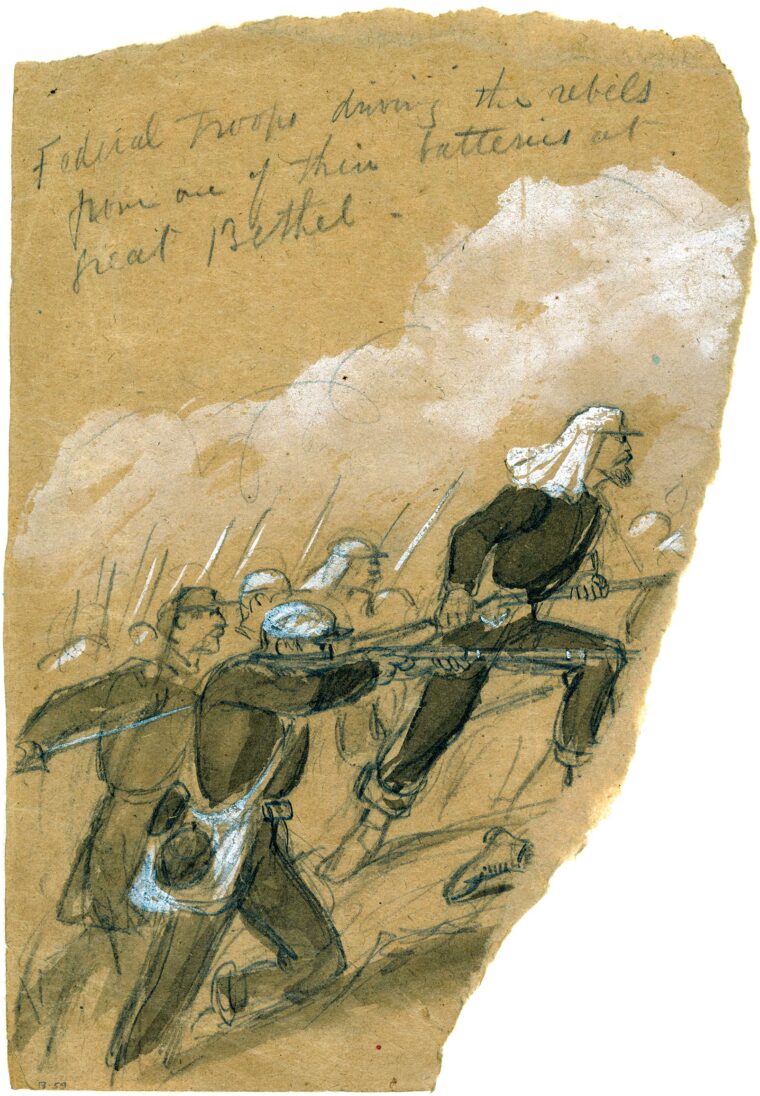
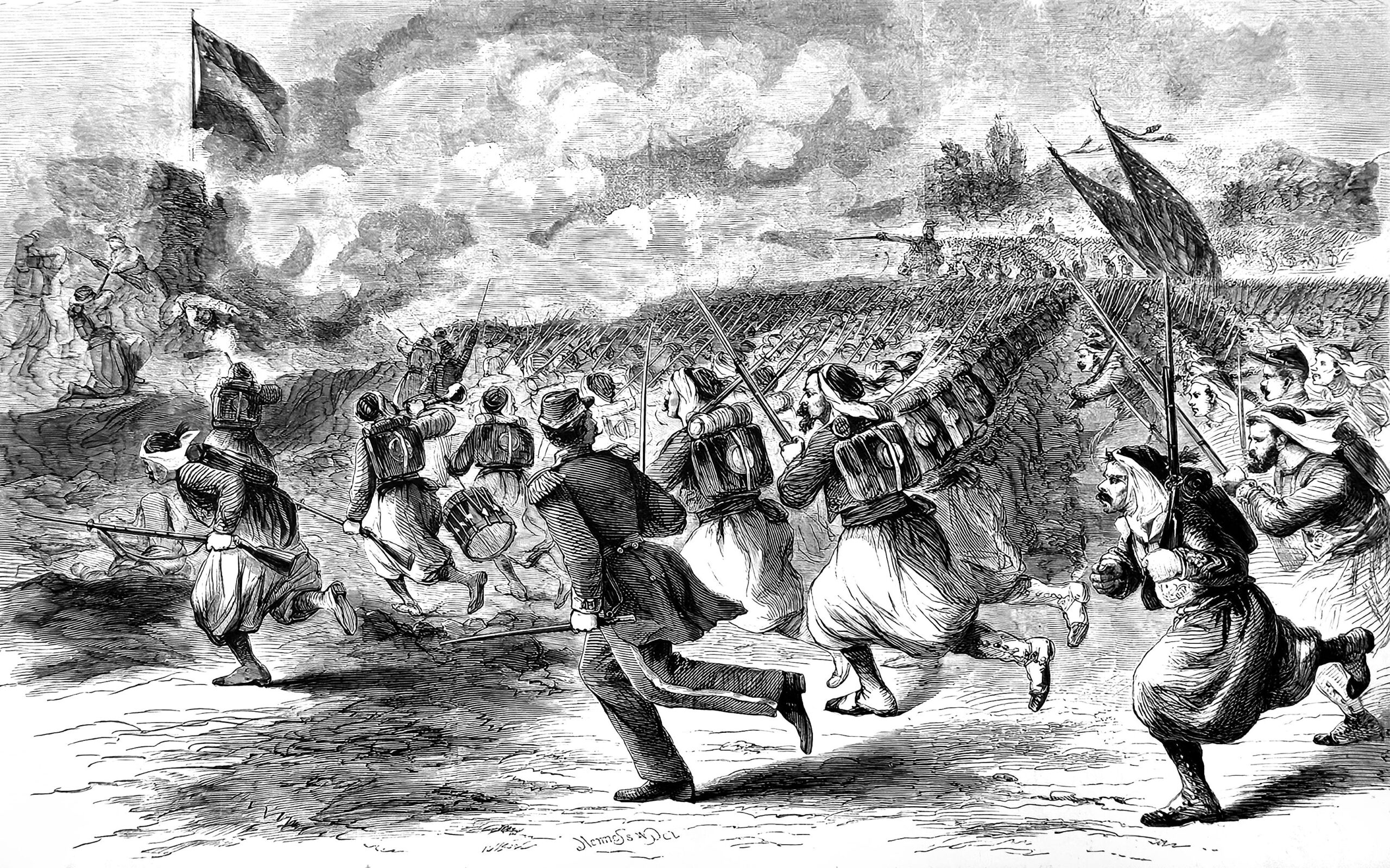
The Southern withdrawal from the forward works was a “near run thing.” The impetuous Kilpatrick watched intently as the Confederates began their retreat. Opportunity gleamed bright. Greble’s gunners unleashed a hail of canister, a charge was ordered, and a battalion of Duryée’s Zouaves double-quicked across the field. Swarming into the earthwork, they discovered there was no one to bayonet. Kilpatrick later claimed the Confederates were “forced out.”
Townsend’s 3rd New York was supposed to cooperate in this attack. The colonel, however, was busy misreading the field. During his advance, his leftmost company had gotten separated. Peering through the heavy smoke, Frederick Townsend saw “the glistening of bayonets in the adjoining field” and concluded that the enemy was on his flank. Without hesitation, he decided “to retire and repel” the non-existent threat. At the very moment that Federal arms were gaining an advantage, the men from Albany were heading for the rear. The battalion of Zouaves was on its own.
Colonel Duryée’s 5th New Yorkers were at first elated over their deceptively easy triumph. Then they came under close-range Southern fire. Several North Carolina companies volleyed into the Zouaves from behind the high-banked breastworks on the other side of Marsh Creek. Roaring blasts of canister swept through the position’s open, northern side. The New Yorkers ducked and dodged. The Zouaves, printed the Charlotte Western Democrat, “practiced their tilting and tumbling maneuvers … hoping to scare some of us by their monkey actions; but when we opened fire, the column fell like wheat-straw before a scythe-blade.” Isolated—and unsupported—the four companies of the 5th New York maintained their position only briefly. “[E]verything promised a speedy victory,” Kilpatrick wrote, “when we were ordered to fall back. Where this order came from, I do not know.”
Magruder spied the New Yorkers preparing to skedaddle and instructed Capt. John L. Bridgers of the 1st North Carolina to rush his company in. “But Col. McGruder’s [sic] orders were hardly issued,” wrote Lieutenant Huske, “before the Yankees were double-quickly out of the entrenchments and our men into them…” This movement—which “Prince John” termed “a timely act of gallantry”—was performed with much bravado but without loss. Stuart followed Bridgers with his Virginians and another howitzer.
The recapture of the forward works marked the battle’s turning point. “We were now as secure as at the beginning of the fight,” wrote Hill, “and as yet had no man killed.” That was about to change. When the Zouaves fell back to the rear, many of them remained among the buildings between the lines. Their rifled muskets soon barked from around corners and upper-story windows. When Bridgers called for men to set fire to one of the small houses, Pvt. Henry L. Wyatt and three others volunteered. As they rushed out of the earthwork, matches in hand, Wyatt fell dead, shot in the forehead. The other three were quickly recalled.
Another Federal advance now targeted Magruder’s immediate left. Wading through a waist-high spot of Marsh Creek—rifled muskets and cartridge boxes held high—a strong column of infantry soon arrived within sight of the redoubt’s eastern face. This force, New Yorkers from the 5th and 7th regiments, was led by Maj. Theodore Winthrop, a Yale graduate and published writer serving as Butler’s military secretary. Once across, they formed up for an assault. Behind the breastworks, two companies of North Carolinians loaded and primed.
Winthrop was out front, saber in hand, as they came into small-arms range. “May I fire?” North Carolinians were heard to ask, “I think I can bring him.” In return, the Federal rifle fire was sporadic and noisy. “You can’t form any idea of how [the bullets] hissed and struck,” wrote Lieutenant Huske, “just like a shower of hot stones falling into water.” When the New Yorkers reached a rail fence only 75 yards away, Winthrop and two privates recklessly mounted the top rail. Waving his saber overhead, Winthrop shouted: “Come on, boys; one charge, and the day is ours!” A well-aimed Southern volley felled Winthrop and the two others. The balance, wrote one Confederate, “beat a precipitate retreat.”
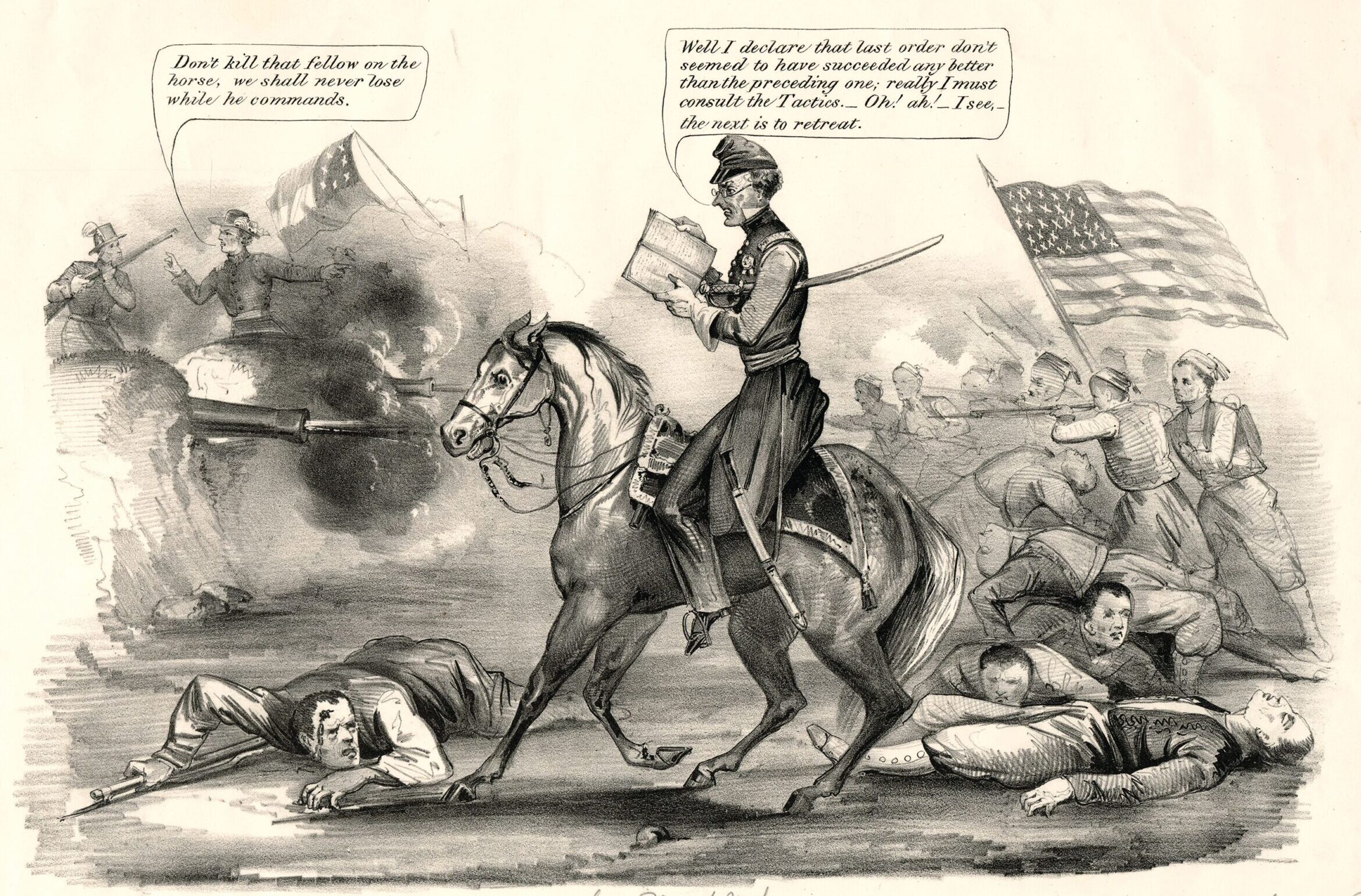
By 1 p.m., Peirce and his men were played out. Several assaults had been attempted—only one had succeeded (and that one only briefly). When Duryée informed Peirce that the Zouaves were exhausted and “must be taken to the rear,” he decided to retreat.
At that moment, Randolph was directing fire against the Federal gun line Greble had redeployed alongside the buildings. During the exchange, a Southern round, wrote Randolph, “entered a window of the house … and, as I have reason to believe, disabled one of the enemy’s pieces.” This glancing shot also killed Greble.
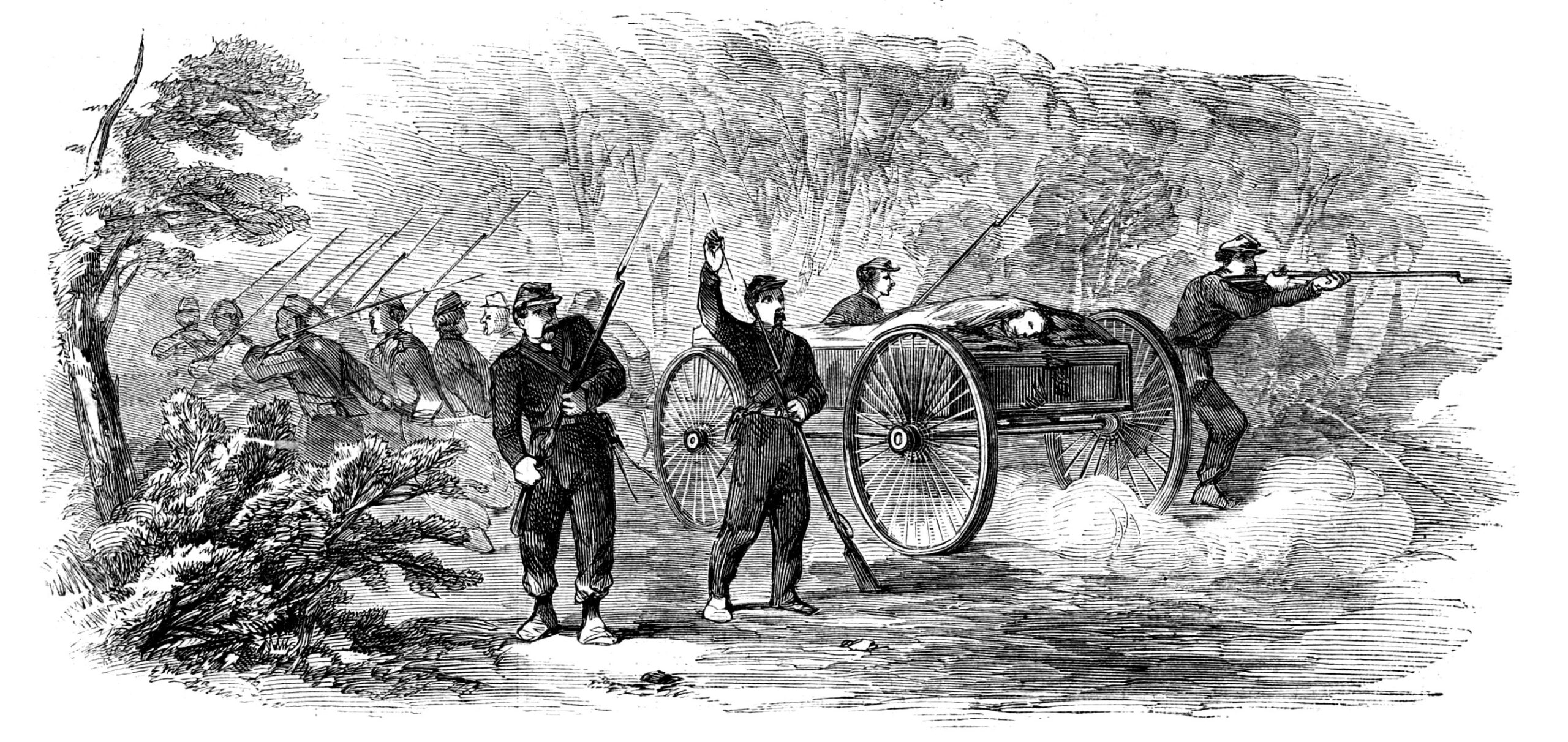
To cover the withdrawal, Peirce called forward the 1st and 2nd New York Regiments. He also ordered the killed and wounded “placed in whatever vehicle could be procured….” Many, however, were left behind, including Winthrop. The worn-out Zouaves led the hasty retreat, followed by the 3rd New York and the forces from Newport News.
Magruder reacted quickly, first ordering a company of North Carolinians to clear the front of enemy sharpshooters. Then 100 Virginia dragoons dashed out of the redoubt in pursuit. The signs of rout were everywhere. “The enemy in his haste threw away hundreds of canteens, haversacks, overcoats, etc.,” Hill wrote. As Peirce later admitted: “Some difficulty was experienced in keeping the men in proper order during the retreat…”
The battleground, still reeking of black powder, now became a matter of curiosity to the victorious Southerners. They hopped the breastworks and searched the fields for souvenirs. The captured Federal wounded were transported to houses in the rear where the farmers, according to Magruder, “received them most kindly and bound up their wounds.” The dead were buried together.
The total Union loss was officially reported as eighteen killed, fifty-three wounded, and five missing. The New York units, of course, had borne the brunt. Townsend’s 3rd Regiment lost a total of thirty, twenty-one of whom were friendly-fire casualties—while Duryée’s Zouaves lost six killed and thirteen wounded. Greble gained the awful distinction of being the first Regular Army officer to die in the war. His corpse traveled to the rear draped over a gun tube.
Confederate losses, by comparison, totaled one killed and ten wounded (three of whom were members of the Richmond Howitzers). Many more casualties would have resulted if not for the Southern earthworks. Private Henry L. Wyatt became the first of countless North Carolinians to fall in defense of Virginia. His burial in Richmond’s Hollywood Cemetery, with full military honors, gave the city its first small taste of the horror to come.
Magruder’s success was much touted by the Southern press. The Richmond Dispatch, for example, called Big Bethel “one of the most extraordinary victories in the annals of war…. Does not the hand of God seem manifest in this thing?” Thanks to the victory, Prince John became one of the South’s first war heroes. A fitting paladin for the first spring under arms, he would not last through the second. After performing poorly during the Seven Days’ Battles outside Richmond, he was shipped out west to command the District of Texas. Following the war, he served in an administrative role under Emperor Maximilian of Mexico. After this venture failed in 1867, Magruder made a living in the U.S. as a lecturer. He died in a Houston hotel in 1871.
Hill’s earthworks had played a huge role at Big Bethel. During the war, Hill became known for his hard fighting and his argumentative nature. As a major general, he led his division at the Seven Days’ Battles, South Mountain, and Sharpsburg. After being promoted to lieutenant general, Hill was sent west to assist Gen. Braxton Bragg. When Hill recommended that Bragg be removed for incompetence, the president relieved Hill instead. In 1865, Hill commanded a division at the Battle of Bentonville, North Carolina, and surrendered in that state with Gen. J. E. Johnston. After the war, he edited a Charlotte magazine and served as president of two educational institutions. He went to the grave in 1889.
Randolph’s cannon had been crucial to the victory. First promoted to colonel of artillery, then to brigadier general, Randolph was appointed secretary of war in March of 1862. He resigned eight months later, intending to return to field command. Poor health intervened, however, and he left the country to recuperate. He died in 1867 and was buried in the family cemetery at Monticello.
Northerners were taken aback by this early reverse. Northern newspapers saw Big Bethel as the first of many reasons to question the abilities of Butler. A member of the 5th New York stated defiantly that Empire State volunteers should not serve under Massachusetts generals “who have been fledged in the foul nest of party politics, without the least military merit.”
Butler, in turn, blamed everybody else. “Everything was utterly mismanaged,” he wrote in his autobiography. His subsequent military career is a litany of failure (minus his capable military governorship of New Orleans in 1862). Removed from command in late 1864, he served as a U.S. Congressman from 1866 to 1879. In 1883, Butler was elected governor of Massachusetts, but was unsuccessful the following year in his bid for the presidency. Butler died on January 1, 1893, two days after arguing a case before the U.S. Supreme Court.
Thanks to his subpar performance, Peirce became the scapegoat for the battle. Responding to vicious attacks in the Northern press, he demanded a court of inquiry. Butler turned him down. After fighting in both the 1862 Peninsula Campaign—where he lost his right arm—and the 1864 Overland Campaign, Peirce was discharged in November 1864. He died in 1902.
Big Bethel is a fitting metaphor for the nation’s overexuberant and underprepared commencement of war. The fight witnessed green and undisciplined Union volunteers led into combat by incompetent officers. It was also the war’s first stand-up fight. A week earlier at an affair in western Virginia nicknamed the “Philippi Races,” the Confederates had fled at the approach of Union forces. At Big Bethel, however, several thousand Northerners and Southerners traded potshots, volleys, and cannon blasts for an entire morning. The first land battle of the American Civil War was small compared to those to come, but in the wide-eyed spring of 1861, it was a big fight—bigger than many fought in the South during the Revolutionary War.


Join The Conversation
Comments
View All Comments