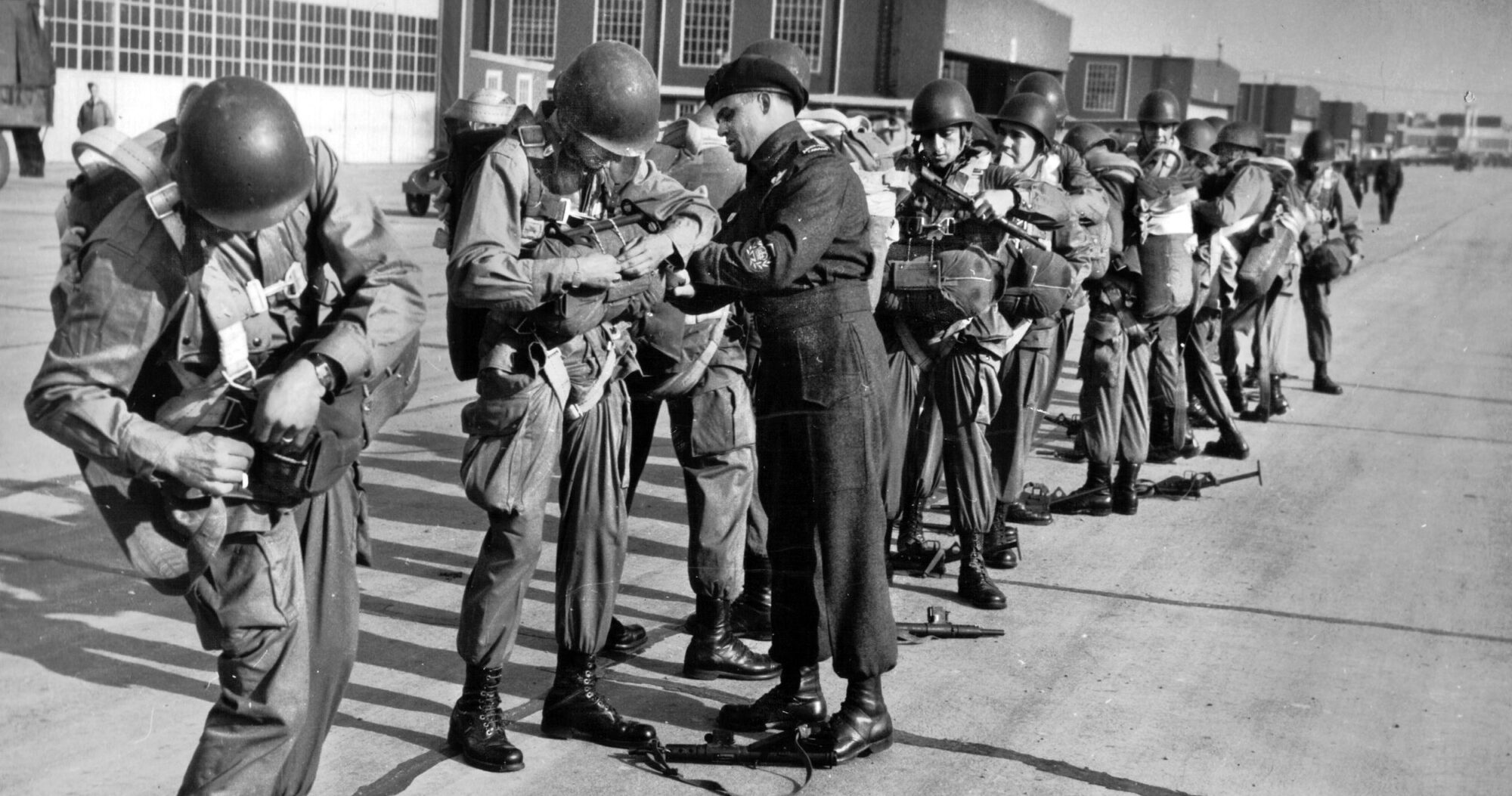
By Colonel Bernd Horn, Canadian Army (ret.)
What drives individuals, or more specifically, units or large parts thereof, to commit acts of mass disobedience? Intuitively, there are several reasons that rise to the surface as potential causes—unacceptable conditions for living or working and draconian or inhuman treatment. But, given the deprivation and demands of troops on operations, or during a wartime setting, large-scale acts of disobedience are almost invariably seen as unacceptable due to the severe circumstances and the adverse consequences that could arise. Moreover, those mass acts of disobedience that are actually committed can often be attributed to units that are green, inexperienced, ad hoc and/or those which have poor cohesion and strained morale. Furthermore, the leadership component of these organizations is also normally a contributor to the problem. It is often weak, inexperienced, transient and relatively new to the organization. These collective characteristics and weaknesses are usually exacerbated by a catalyst such as trauma, fear, a major disappointment—or a combination of all them.
Faced with these challenges and circumstances a breakdown of discipline is not overly surprising. But, how can an act of disobedience by a specially selected, arguably elite combat-hardened unit in a garrison setting occur? What could prompt such a seasoned group of cohesive and experienced soldiers to undertake such action, particularly in wartime?
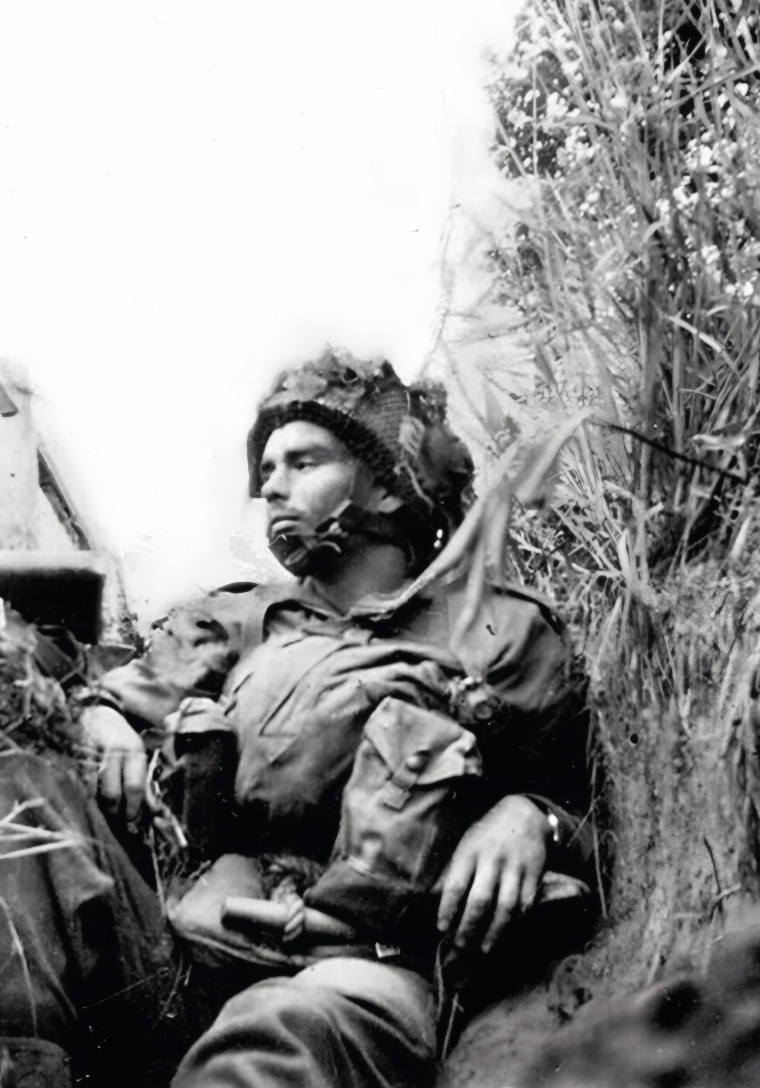 As inconceivable as this sounds, this was the case with the 1st Canadian Parachute Battalion (1 Can Para Bn) hunger strike in Bulford, England from October 20-23, 1944. The Battalion was formed on July 1, 1942. Selection for entry into the unit was rigorous, as was the training regime. The process ensured that 1 Can Para Bn had some of the fittest, most motivated and capable soldiers in the Canadian Army. Newspapers invariably described the parachute volunteers as “hard as nails” representing the toughest and smartest Canadian soldiers. One journalist wrote, “They are good, possibly great soldiers, hard, keen, fast-thinking and eager for battle.” Another asserted that they were “Canada’s most daring and rugged soldiers … daring because they’ll be training as paratroops: rugged because paratroops do the toughest jobs in hornet nests behind enemy lines.” Others painted a picture of virtual super-men. “Picture men with muscles of iron,” one writer waxed, “dropping in parachutes, hanging precariously from slender ropes, braced for any kind of action … these toughest men who ever wore khaki.” Another simply explained, “your Canadian paratrooper is an utterly fearless, level thinking, calculating killer possessive of all the qualities of a delayed-action time bomb.”
With no ability to field its own large airborne formation, the unit was offered to the British, who quickly accepted. In March 1943, 1 Can Para Bn was included in a second British airborne division that was forming. The Battalion’s 31 officers and 548 men deployed to England for overseas duty in late June. They were subsequently attached to the 3rd Parachute Brigade (3 Para Bde), as part of the 6th Airborne Division (6 AB Div).
Their new Brigade Commander was the incomparable Brigadier James Hill who, based on his operational experience, believed that the unforgiving nature of airborne warfare was such that the survival of his paratroopers depended to a great extent on their physical fitness. Therefore, he set demanding standards, expecting a unit to cover 50 miles in 18 hours with each soldier carrying a 60-lb. rucksack and weapon. Ten-mile marches within a two-hour time period were also considered the norm.
Hill welcomed the Canadians, seeing in them the making of great warriors. “As the days passed,” Hill wrote, “General Gale [6 AB Div Commander] and I realized what a unique and interesting Battalion had joined us as brothers.” At this point the planning and preparation for the invasion of Europe was in the final stages and missions had already been assigned. The 6th Airborne Division was responsible for protecting the left flank of the 3rd British Infantry Division that was to land on a beach west of Ouistreham. In turn, 3 Para Bde was given the daunting tasks of destroying the coastal defence battery at Merville, demolishing a number of bridges over the River Dives, as well as controlling the high ridge centered on the small village of Le Mesnil that dominated the landing beaches.
Hill assigned 1 Cdn Para Bn the responsibility of covering the left flank of the Brigade’s drop zone (DZ) and protecting its movements within the DZ. The Battalion was also given three primary missions—the defense and protection of 9 Parachute Battalion’s left flank during its approach march and attack on the Merville battery; the destruction of two bridges spanning the River Dives; and the destruction of German positions and a headquarters, as well as a bridge at Varaville.
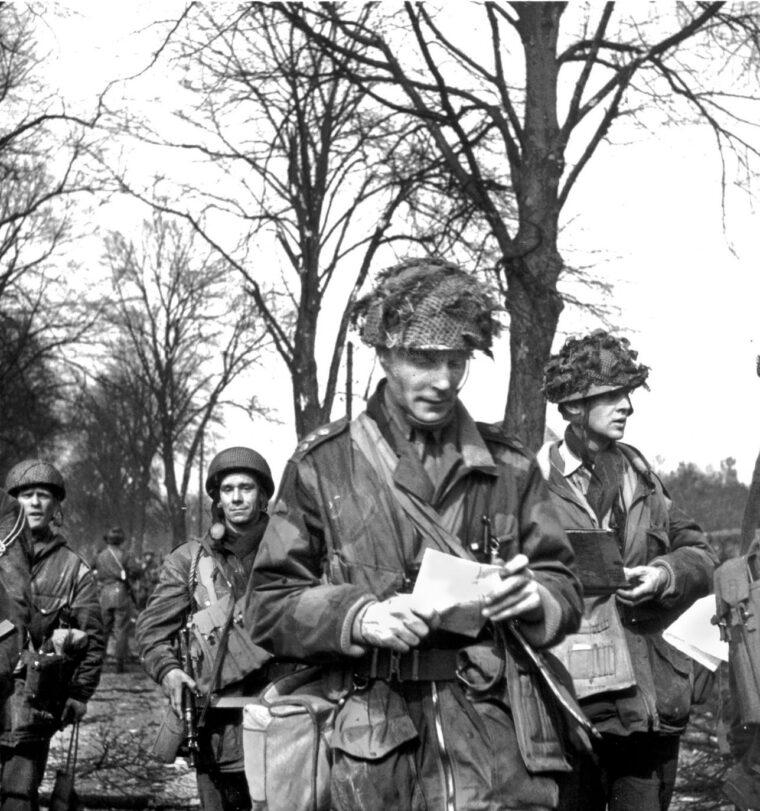
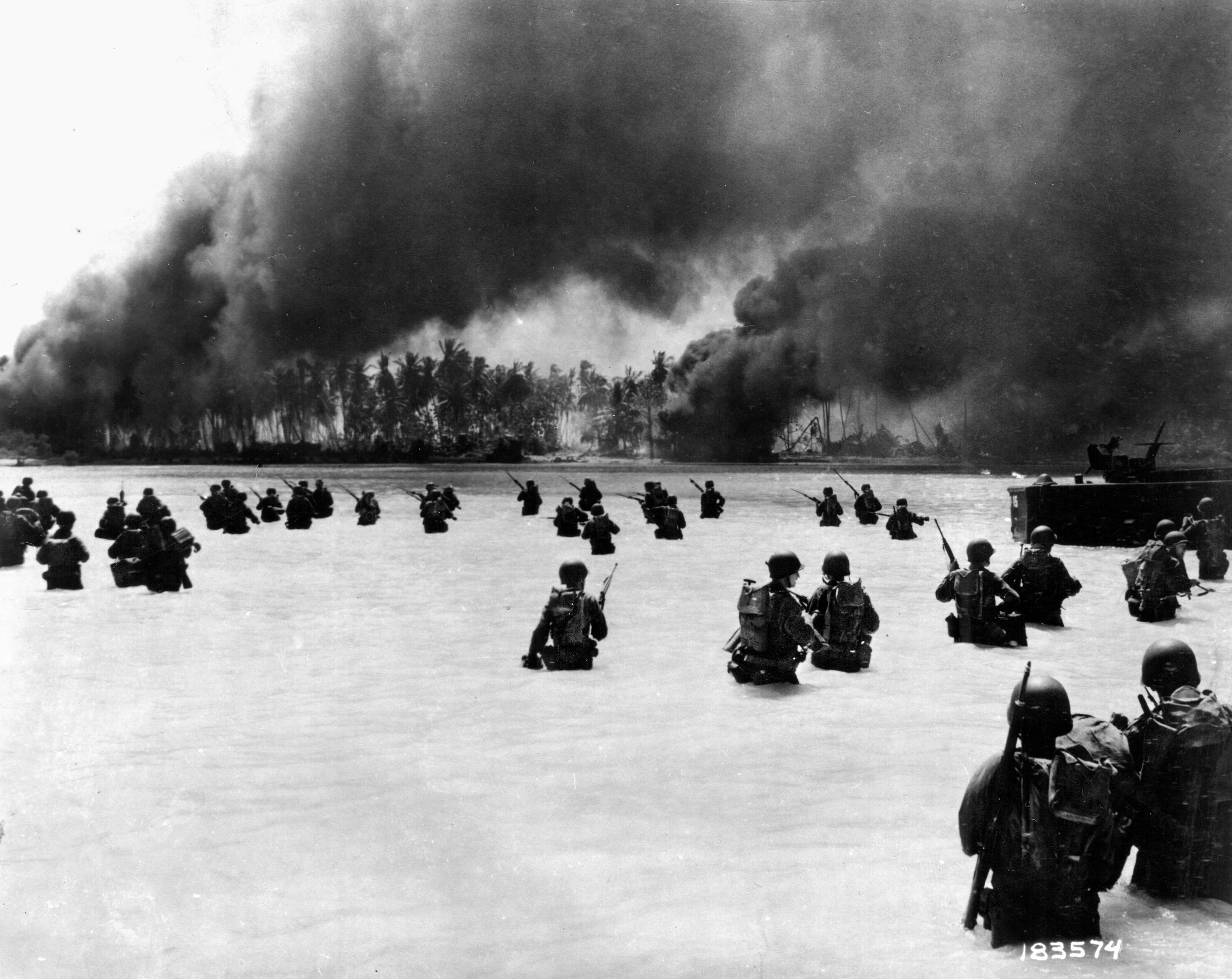
The Canadian paratroopers attained all their assigned objectives with less than 30 percent of the troops and equipment originally allocated to the tasks. Subsequently, despite heavy losses, the Battalion held off all German counter attacks until the eventual Allied break-out. On September 4, the Battalion began its departure from France and returned to its adopted home in Bulford three days later.
The 1 Cdn Para Bn distinguished itself in its first combat action, but at a great cost. During the three-month period between June 6 and September 6, 1944, the battalion had 83 men killed, 187 wounded, and 87 taken prisoner out of the original 544 paratroops dropped. The 1 Cdn Para Bn’s performance on D-day was praised by Hill, who wrote, “they really put up a most tremendous performance on D-Day and as a result of their tremendous dash and enthusiasm they overcame their objectives, which were very sticky ones, with considerable ease.”
The unit returned to England to reconstitute itself and prepare for its next mission—its first priority was bringing itself back up to strength through the integration of reinforcements from the 1 Canadian Parachute Training Company. The general feeling that prevailed Sergeant R.F. Anderson recalled, was one of “tremendous relief and of great success and of having survived a most harrowing experience.” During the next four days activities were mostly administrative in nature, consisting of clothing, pay and medical parades. While discipline remained high, the officers and the senior NCOs ensured that the tempo of activity was relaxed and that the men were not rushed. Everyone knew that these first few days would prove difficult. Many familiar faces had vanished. “Out of my company’s 120 men,” John Kemp recalled, “there were 22 of us that returned to Carter Barracks.”
The survivors were treated well and the base staff went out of their way to welcome the paratroopers back home and great care was taken to prepare excellent meals. Furthermore, many day passes were issued enabling them to go out on the town, dance and have a few pints. For those who preferred to stay in camp, they had the option of taking in a movie or show. On September 11, the paratroopers were given a well-deserved 13-day furlough. Prior to heading off to their various destinations, the paratroopers were warned that the day following their return, training would start once again in earnest.
As promised, on September 26, 1944, Acting Lt.-Col. Jeff Nicklin, the Battalion’s new Commanding Officer (CO) had the unit formed up for a special parade. His address was short and to the point. He wanted to command the best battalion in the Division. As a result, he insisted that training would be very demanding. His previous “in-your-face,” harsh disciplinary style as the unit’s Deputy Commanding Officer (DCO) had been tolerated by the untested troops in the training leading up to Normandy. However, it now annoyed the hardened combat veterans. Nonetheless, Nicklin’s command approach was fully endorsed by Hill who believed that strong leadership was necessary to ensure that the paratroopers put forth full commitment and effort during training. In fact, in an evaluation report on Nicklin, Hill wrote that he was “an officer of the highest integrity who possesses unusual drive and determination. He sets a very high standard in the Battalion and is prepared to accept no compromise. He is a stern disciplinarian, but takes infinite trouble to safeguard the welfare of the men. He is a good trainer of troops and is tactically sound in his ideas.”
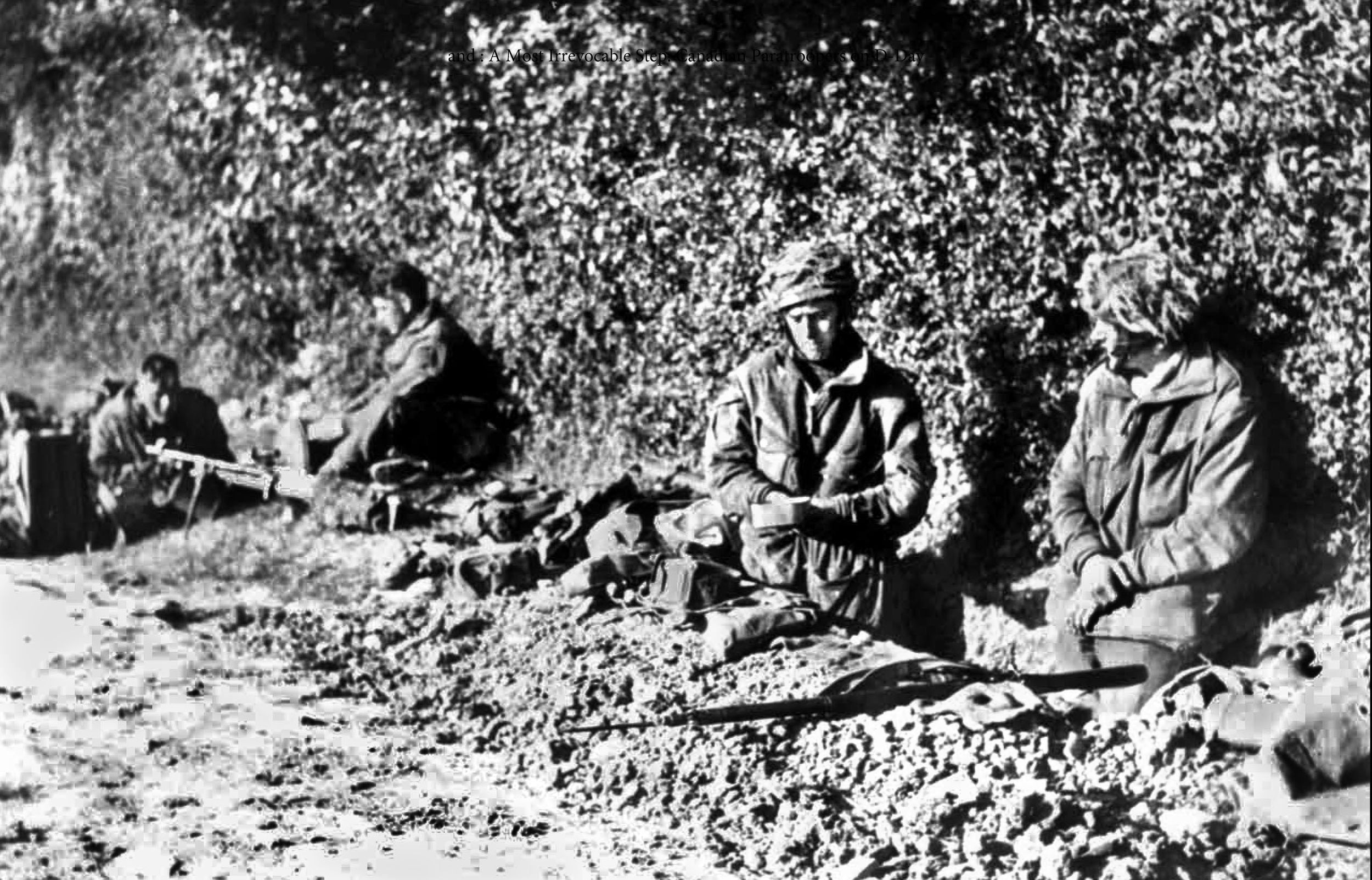
Part of the problem, however, also lay in the difference between the old and the new CO. Lt.-Col. G.F.P. Bradbrooke, prior to D-Day had been judged by most, including his superiors, as acceptable insofar that he commanded a unit that had not seen combat. Hill rated Bradbrooke as “a good administrator, a very good CO in peacetime and an intrepid parachutist.” However, in Normandy, Bradbrooke’s leadership during the defense of the Le Mesnil crossroads and the subsequent pursuit of the retreating German forces was not up to Hill’s, or the unit’s, expectations. As the Normandy Campaign progressed, Hill noted that Bradbrooke lacked the aggressive leadership required to lead his men during combat. The soldiers were also well aware that the CO was seldom seen on the front lines.
Comparatively, the behavior and demeanor of the Battalion’s DCO, then Major Nicklin, caught Hill’s attention. Nicklin had been very active throughout the entire course of the campaign. The ex-Canadian Football League star regularly visited his soldiers in their forward positions. Furthermore, he enjoyed the action and even took part in reconnaissance patrols. “Jeff Nicklin,” observed one senior NCO, “was one who almost seemed indestructible, 6’ 3” tall, football hero back home, a stern disciplinarian, physical fitness his specialty.” Those who played football with Nicklin back home “rated him almost immortal.” Unquestionably, Nicklin was a physically rugged individual, who was feared and could sense fear, recalled Hill. In this officer, Hill discerned the leadership qualities that could prove very useful to supervise the Battalion’s post campaign training.
While Hill respected the accomplishments and sacrifices of his Canadian paratroopers, he had nevertheless learned a valuable leadership lesson while commanding soldiers during the Battle of France, in 1940 and paratroopers later in North Africa, in 1942. The Brigadier had observed that “blooded” veterans who returned from combat duty to resume daily training routine showed an unwillingness to “snap to it” and put up with various aspects of garrison duties and discipline. Therefore, he believed that a strong hand was required to once again motivate, closely supervise, and control battle hardened troops. Hill was right. Having faced death and survived, many veterans now thought that they were better than their new untested comrades. Hill identified this type of combatant as, “heroes and crooked berets that had to be knocked on the head and have discipline reimposed.”
This post-operational mindset was seemingly now developing within 1 Can Para Bn. “Here we have very tough chaps, heroes,” explained Hill, “They had to be disciplined. So, I popped in Jeff Nicklin.” In the end, regardless of what the paratroopers had accomplished, Hill would not shy away from his two airborne tenets—discipline and physical fitness. There was still much to accomplish and the war was from over.

Nicklin now focussed on correcting the deficiencies and shortcomings experienced during the Normandy Campaign. He specifically targeted those skills required for offensive operations. As a result, the new training plan emphasized weapons handling, physical fitness, rapid clearance of drop zones, the efficient execution of offensive and defensive battle drills, and especially street fighting.
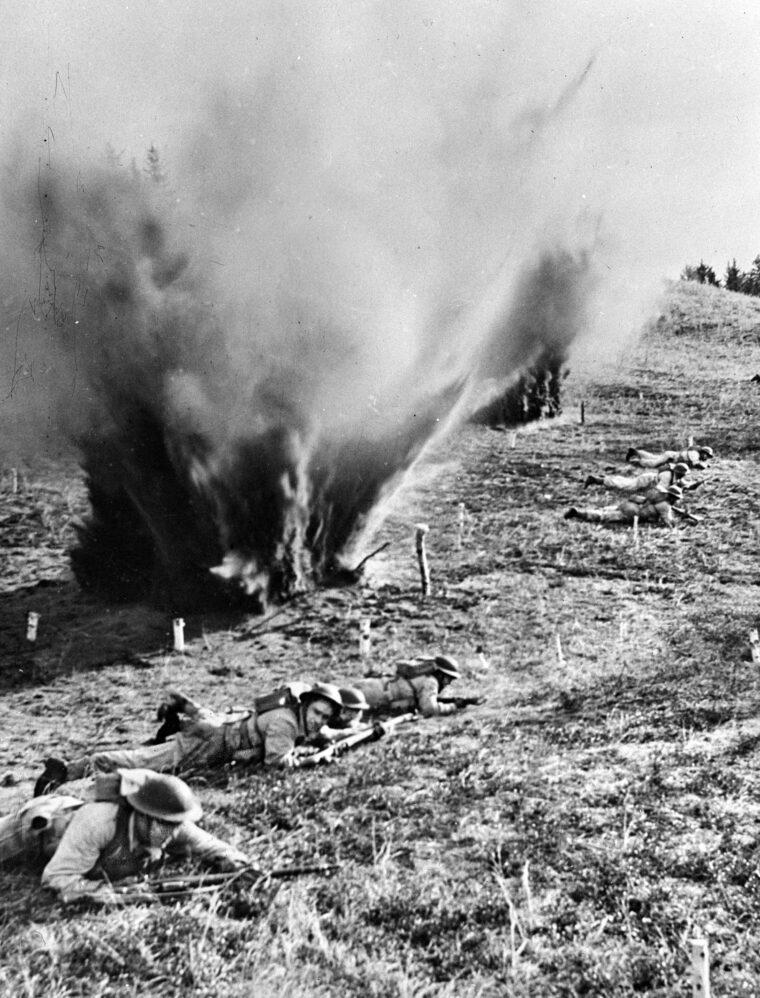
The battalion had a lot of work to do to get back to its pre-D-Day level of operational readiness. Now Lieutenant-Colonel Nicklin accepted this challenge without hesitation. The men immediately noted the change in the tempo. “The training got more severe,” Sergeant John Feduck said, “and nothing was let go. Nothing was overlooked.” He added that “Nicklin was the type of guy, who did everything strictly by-the-book, and he had his own way of training, making sure you went for your runs. There was no slacking off.” Nicklin’s training schedule was very simple. “You trained all the time,” Feduck said. “You had no time for yourself, leaves were a little shorter and you worked harder.”
Physical training under Nicklin “was a hell of a lot tougher,” Sergeant Harry Reid said. “He wanted us to become linebackers.”
The new CO’s objective was clear. “He wanted to have the best battalion in the Brigade,” Sergeant Andy Anderson said. “Nicklin had us out on the parade square at six o’clock in the morning and worked us till dark.” The NCO noted, “Brigadier Hill was thrilled and he did not object to that.”
Nicklin really enjoyed the physical part of the training, personally leading the bimonthly 10-mile forced march. As the paratroopers arrived at the finish line, “he [Nicklin] and the RSM [Regimental Sergeant Major] would stand at the gate with a clipboard,” Anderson recounted, “and took down the names of the stragglers.” No quarter was given. “If they could not keep up,” Anderson said, “they were gone.” Nicklin wanted each platoon to arrive at the finish line as a group.
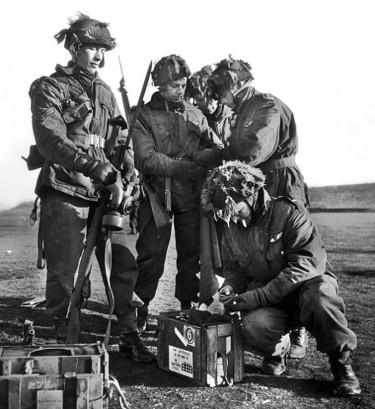 Nicklin’s Normandy experience had confirmed in his mind that a well-trained group that worked skillfully together could inflict greater damage than a few isolated paratroopers. Since the battalion’s return from France, Nicklin inculcated the importance of teamwork in all training to both the veterans and to the reinforcements. Nicklin knew that it would enhance the effectiveness of his paratroopers.
Furthermore, Nicklin insisted that all his officers become team players. They were now ordered to take part with their men in all training activities. Under Nicklin there were no exceptions. “He started pushing them hard,” Sergeant Roland Larose remembered, “He ordered all the officers to take part in these runs and physical training exercises.” This was one of the rare Nicklin training directives that the troops appreciated.
The hard training and demanding exercises assisted in integrating the reinforcements that the unit received. Nonetheless, the first few weeks proved difficult for the new men. “That’s when the BS [bull shit] started, the attitude of some of the veterans was, ‘We were there [Normandy] and you weren’t,’” Major Hilborn explained. The new men had to prove to the veterans that they could indeed fit in and, more importantly, keep up.
Nicklin had anticipated this situation and told his officers he would not put up with such behavior. “There was no lording over others,” Lt. Alf Tucker recollected. Nicklin insisted that all veterans use “their experience to show the replacements how to react and protect themselves or how to act in a manner that was in their best interest. I remember,” Tucker said, “that the officers took that to heart.”
“The problem,” Hilborn conceded, “now became one of reintegrating the old with the new. They all had to be taught to think alike.” A redeeming factor was that the reinforcements were all qualified paratroopers. They had also undergone advanced weapons and fieldcraft training similar to those of 1 Can Para Bn. The men had a good handle on their basic skills. Now, they just had to be accepted by the veterans. The integration of the new members eventually worked itself out. By mid-October 1944, the Battalion’s training program was progressing well and the undesirables had been weeded out. Corp. Richard Creelman recalled, “There were quite a few that did not come up to what they were expected to and they were replaced. They [Battalion Headquarters] found out quickly who were the leaders and who weren’t.” Those who chose to remain knew that they would have to work hard. “We had some experience by now,” Creelman acknowledged, “and we knew what was expected of us. We knew what it was like getting shot at.”
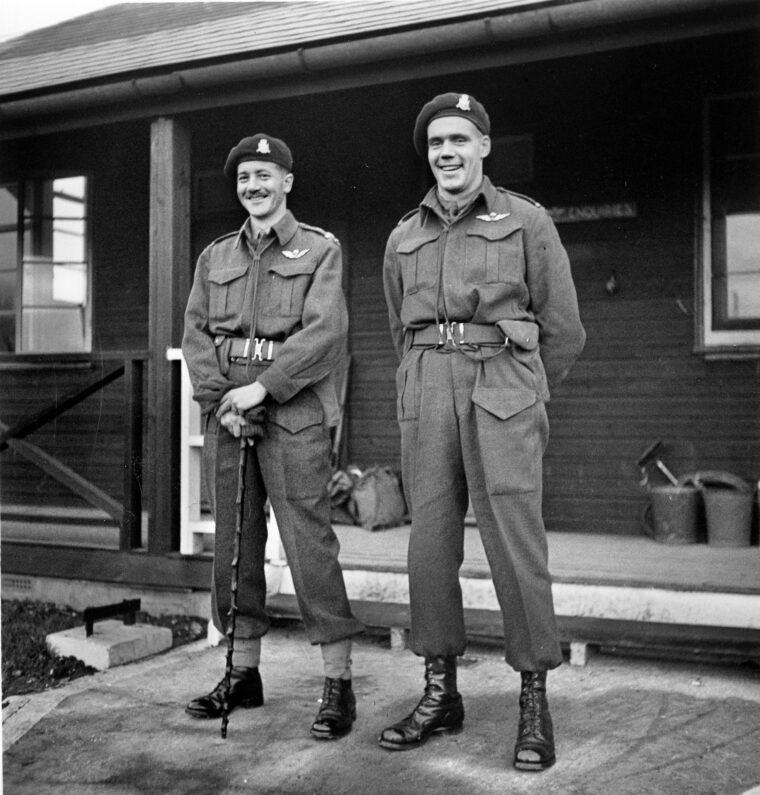
It was also easier to keep the men in line. “All you had to do,” Sergeant Larose said, “was to tell them to smarten up, or they’d be back to the Canadian Army. That was it.” Even though the training was difficult, the pride of wearing the distinctive maroon beret and the unique Canadian Parachute Qualification Badge, as well as the fact that they were the first to take the fight to the enemy were reasons enough for the paratroopers to dig deeper and find the energy to keep up with the unrelenting tempo.
Those who remained were extremely professional. They were self-motivated and possessed good leadership skills and initiative. “In the Nicklin regime, we had to be prepared and were expected to take on a lot of initiative,” Andy Anderson said. “Certain phases during the exercises were especially prepared to evaluate candidates [all ranks] and their use of initiative,” he explained, “You would be briefed and once you landed [during an exercise], referees would black arm band [identification system used during an exercise to simulate casualties and wounded personnel] a certain percentage of your stick.” A paratrooper would then be designated by the referees to carry on with the unit’s task. “You had to know where you were,” Anderson said, “who was missing, what you had to do and what resources were at your disposal.” Anderson noted that this new training, based on their experiences in Normandy, “really paid off.” This was a new part of the training that had been derived from our Normandy experience.” Training the men to think quickly and adapt to any situation resulted in a successful mission and also kept casualties to a minimum.
Despite the challenging training, the paratroopers were becoming increasingly disgruntled with certain aspects of the CO’s uncompromising level of discipline. Roland Larose recalled one particular case. “Sometimes NCOs had to give drill exercise to defaulters [paratroopers who had committed infractions or had not performed up to expectation]. He [Nicklin] got them to wear a smock with a big yellow stripe down their back. That really cheesed us off,” Larose groused. “You can only push a guy so far … they weren’t yellow, that’s the part we didn’t like.”
Even the smallest detail did not escape Nicklin’s watchful eye. “We used to have to blanco [color] our stripes [rank insignia] white,” Corporal Ernie Jeans said, “I didn’t do that because I wasn’t on parade much. However, one day, Nicklin noted my stripes and hollered at me from across the parade square. I had to race over and I had a lot of explaining to do.” By all accounts the CO was unrelenting. “[Lieutenant-] Colonel Nicklin,” Anderson wrote, “was a by the book commander, absolutely no quarter given and he had no compassion for defences that were mounted.” He added, “the number of soldiers punished severely for what might be minor infractions gave the colonel the un-kind title of the ‘Tyrant.’” By late October, a group of paratroopers decided that they would no longer put up with this excessive discipline and organized a hunger strike.
The Battalion War Diary entry for Friday, October 20, 1944, simply reads “On evening supper parade great confusion was caused when the men refused to eat.” It explained, “The complaint lay not in the food but in the treatment of the men by the commanding officer.” What in fact transpired was a refusal of some 70-80 men to eat their meal. The following day, the War Diary simply noted “Personnel still not eating.” However, what it failed to highlight was the fact that the hunger strike had now spread through the whole battalion, including the training company. On Sunday, October 22, the War Diary reported, “Personnel in camp refused to eat again today.” Clearly, the hunger strike was meant to pass a serious message. The troops, however, “were observing all orders meticulously and were actually attending meal parades but were not eating.”
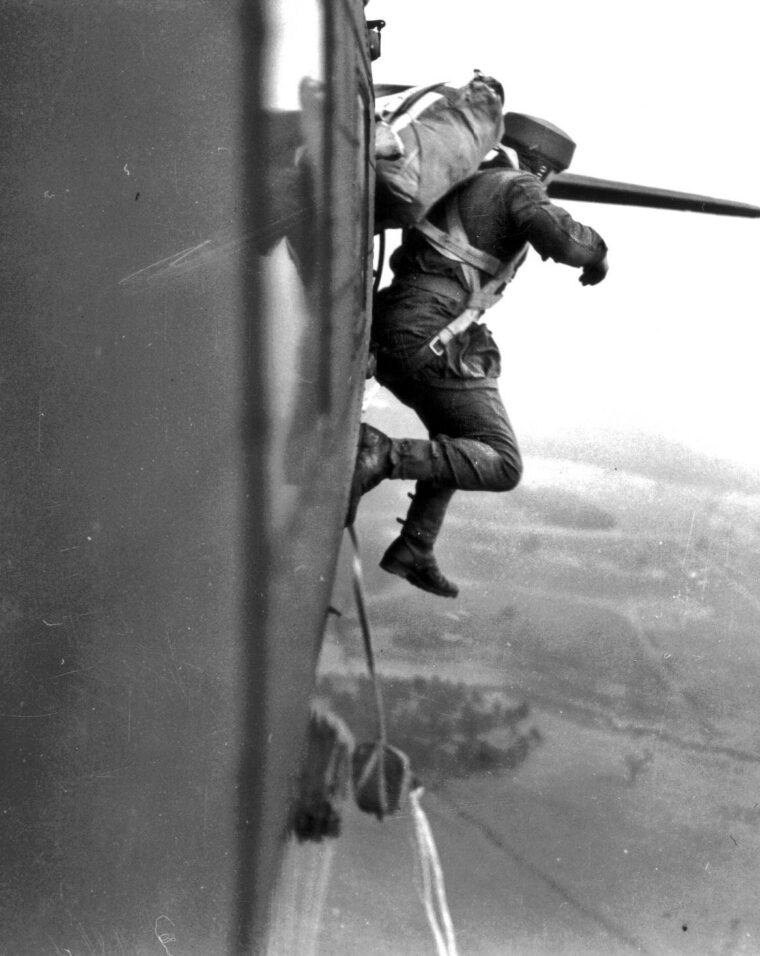
The protest, argued by some of the senior leadership, was organized by a group of malcontents to complain about what Captain Madden described as “a parade square type discipline.” The men knew that much of it had nothing to do with actual combat. “The men saw it as chickenshit,” Madden explained. Private Jan de Vries added, more diplomatically, that “many paratroopers were uncomfortable with this course of action.” However, he conceded, “we were put in a position that we had to show solidarity and go with the flow.”
Whereas discipline was an integral element of a military life, Nicklin enforced it with an iron hand on absolutely every facet of the daily lives of his men. “He [Nicklin] imposed such requirements,” Madden complained, “that when they went to the canteen at night, they couldn’t go casually dressed. They had to go with their battledress jacket buttoned up. They couldn’t wear their fatigue shoes; they had to wear proper ammunition boots, and that sort of thing.”
The hunger strike came at an inopportune moment. With the influx of a large number of new paratroopers, NCOs and officers, the incident threatened to cause irreparable damage to the unit’s cohesiveness and morale. Many officers were very concerned by this turn of events. While some backed the CO’s actions wholeheartedly, others thought that Nicklin was unnecessarily hard on the men. “It was disconcerting,” Madden said, “in that you were expected to go back to battle with these guys and here they had, you know, dug in their heels and shown that they weren’t prepared to obey orders or do what was required.”
Lieutenant William Jenkins agreed that the experience around camp was unpleasant, “because morale was usually very high. But, now whose part do you take?” Jenkins added, “You could not condemn them for what they did. The position that most of us [officers] took was that it was your business and do whatever you like … it was a tense period for a while.” The strike went on for three days and further strained the relations between the men, the NCOs and the officers.
Its impact threatened to reach even beyond the unit. The press was soon on the story. Col. W.G. Abel at Canadian Military Headquarters impressed on Rear-Adm. G.P. Thomson, the chief press censor at the Ministry of Information, to kill the story. But the story was not a threat to security, therefore, editors could only be requested to suppress the story. However, Abel argued that the “hunger strike amounted to mutiny and it would be valuable for the enemy to know that a Canadian formation was not at present battle worthy because of incipient mutiny.” The War Office was of the same mind frame and they were intent that “every possible step will be taken on the highest level necessary to prevent it [publication].” The senior leadership was concerned of the “possible serious effect if publicity were to encourage the spread of the hunger strike as an instrument of protest in the Army.”
On Saturday afternoon (October 22, 1944), the news editor of the London Daily Mail called Hill to inquire whether he could come and take a look at the “hunger strike.” Hill responded, “Look there is a war on. The war has to be won. Give me until Monday and if that strike isn’t settled on Monday, you can come and see me and look into it.”
Hill monitored the situation and finally on October 23, decided to intervene. Hill was revered by the men. “Brigadier Hill was a tremendous officer,” remembered Sergeant Flynn, “He was out every morning and did all the things he expected us to do. He had a smile all the time. I was certainly impressed with him.” Sergeant Anderson concurred. “I can hardly think of any general officer that the men could feel any affection for, except Hill,” he said. “He is always up front, he has been wounded at least six times, he is totally without fear, and what I always imagine as a great leader, however you measure it.”
Hill ordered the entire Battalion to be assembled in the base auditorium. On Hill’s arrival all officers and Warrant Officers were asked to leave. The men were then given a few minutes to present their concerns. The Brigade Commander then interjected, “Look, you are letting the whole party down.” He then appealed to their sense of pride. “More importantly,” he chided, “you are letting Canada down.” The meeting was short and to the point. Deep down, the paratroopers knew that the Brigadier was right. He was a professional soldier and would not tolerate such nonsense. Hill ended the meeting abruptly. “Now,” he emphatically asserted, “I am making it absolutely clear I am giving you an order, and you are going back to eat your lunch.” A few hours later, Hill was informed that the Canadian paratroopers had done as they were told.
The following day, six paratroopers requested to meet with the Brigadier. They identified themselves as the ring leaders and apologized for their behavior. Hill, impressed by this show of character, accepted their apologies and thanked them for coming in.
“I always loved those Canadians and that made me love them more and more,” Hill wrote. “That couldn’t have happened to any other battalion except a Canadian battalion. It was wonderful. Of course, really, that I had the grip on them to some extent was that I loved them, literally. If you love people you are commanding and, lead, they will always reciprocate.”
A Canadian Army investigation into the hunger strike concluded that a number of factors caused the protest. These were reported as:
- The battalion was being reconstituted and that roughly two-thirds of the men were new since the operation in Normandy.
- Most of the junior officers were new.
- The former CO had not been a strict disciplinarian and the men had been getting away with a lot, though discipline as a whole was not bad.
- The new CO was an exceptionally strict disciplinarian and, in his enthusiasm, had been punishing minor offences on a much too severe basis and in some respects had produced regulations, particularly concerning dress within the camp area, which were not entirely reasonable ones.
- Many of the new junior officers have not grown to know their men as they should.
- It appears that a number of the new men in the Battalion were among those at Camp Shilo, Canada, who staged a similar hunger strike successfully there some time earlier this year.
- Paratroops, as a whole, appear to be somewhat over-pampered and temperamental Prima donnas, and they dislike going through the training process again after their operations in Normandy.
No action was taken against the soldiers or instigators. Hill believed that the incident “had pretty well burnt itself out” and he felt it would be “unwise to exaggerate the importance of the whole matter by digging them out at this stage and making examples of them.” Part of the problem was also the rationale behind the protest. Although both Hill and the Divisional Commander, Gen. Richard Gale, expressed complete confidence in Nicklin, both were “satisfied that the main cause was the slightly excessive enthusiasm for perfection in disciplinary matters by the CO.”
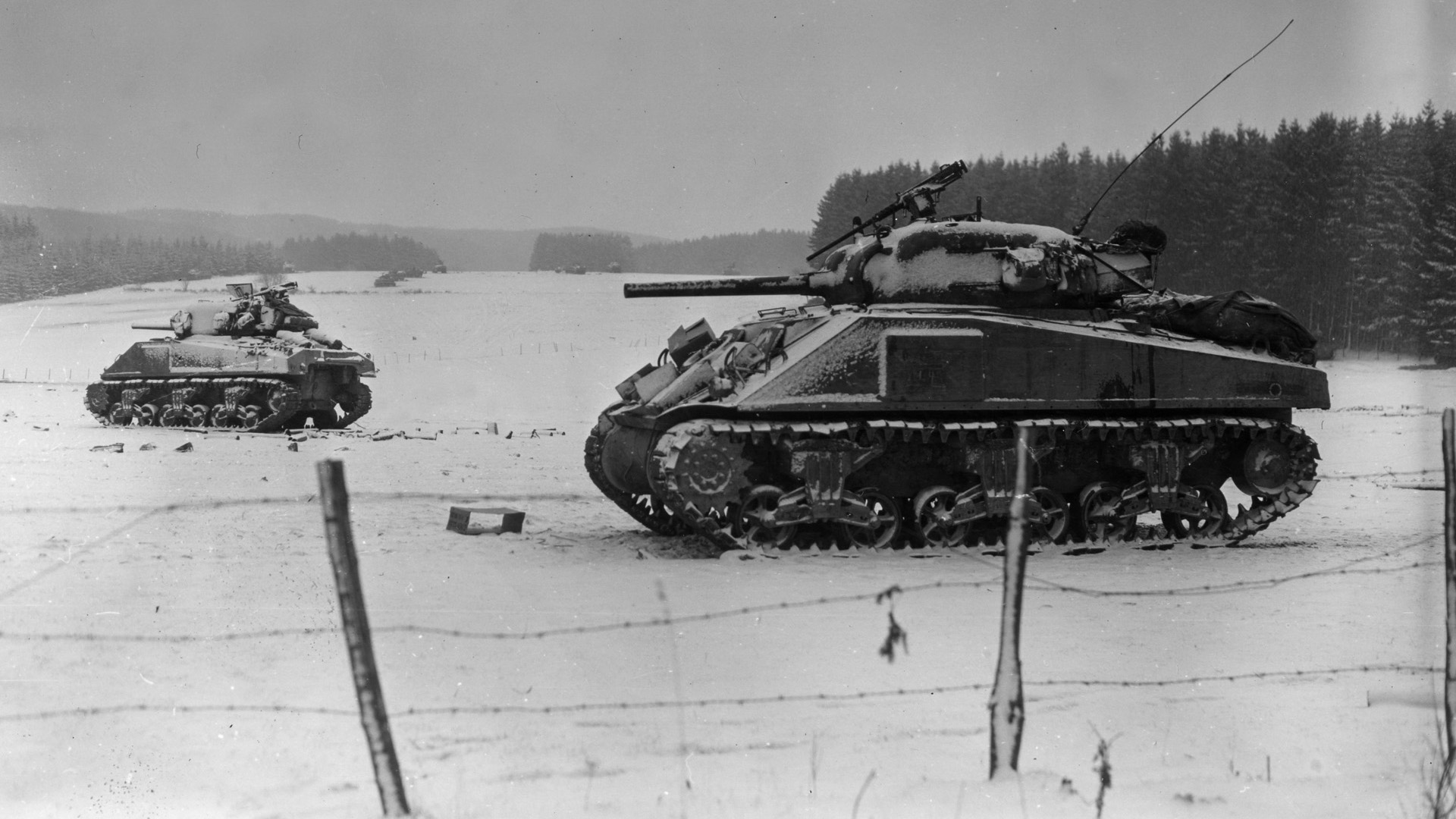
Despite the belief of Hill and Gale that “the CO’s appreciation of the disciplinary situation is cured,” in the end, whereas the men had given in, Nicklin refused to change his rules. With the hunger strike behind them, everything returned back to normal at Carter Barracks and the Battalion began its November training. In the end, the hunger strike did not seem to adversely affect the Battalion’s later performance. Their record of action and accomplishments in the aftermath of the hunger strike were commendable. They distinguished themselves when they were rushed to Belgium to assist the Allied effort at stopping the Germans during the Battle of the Bulge in December 1944. In addition, they demonstrated their professionalism and effectiveness during Operation Varsity, the airborne assault across the Rhine in March 1945 and the subsequent pursuit of the German forces across North West Europe.
Nicklin, however, was killed in battle, on March 24, 1945, in the parachute assault during Operation Varsity. As a result of rumours and supposition, the Canadian Army sent an investigative team to determine whether Nicklin’s death was as a result of enemy action or “fragging” to use a contemporary term. In the end, his death was attributed to enemy action. He had landed in a tree directly above an enemy machine-gun nest—he never had a chance. Ironically, Nicklin normally jumped in the middle of the stick so that he could have half of his headquarters on either side of him upon landing. However, for this operation he wanted to be the number one jumper so that he could lead his troops into battle, a decision that cost him his life.
Colonel Bernd Horn is a retired infantry officer of the Canadian armed forces and held numerous command posts during his career, including Deputy Commander of Canadian Special Operations Forces Command. He has authored, edited, co-authored, or co-edited more than 45 books and many monographs.
Join The Conversation
Comments
View All Comments