By Joshua Donohue
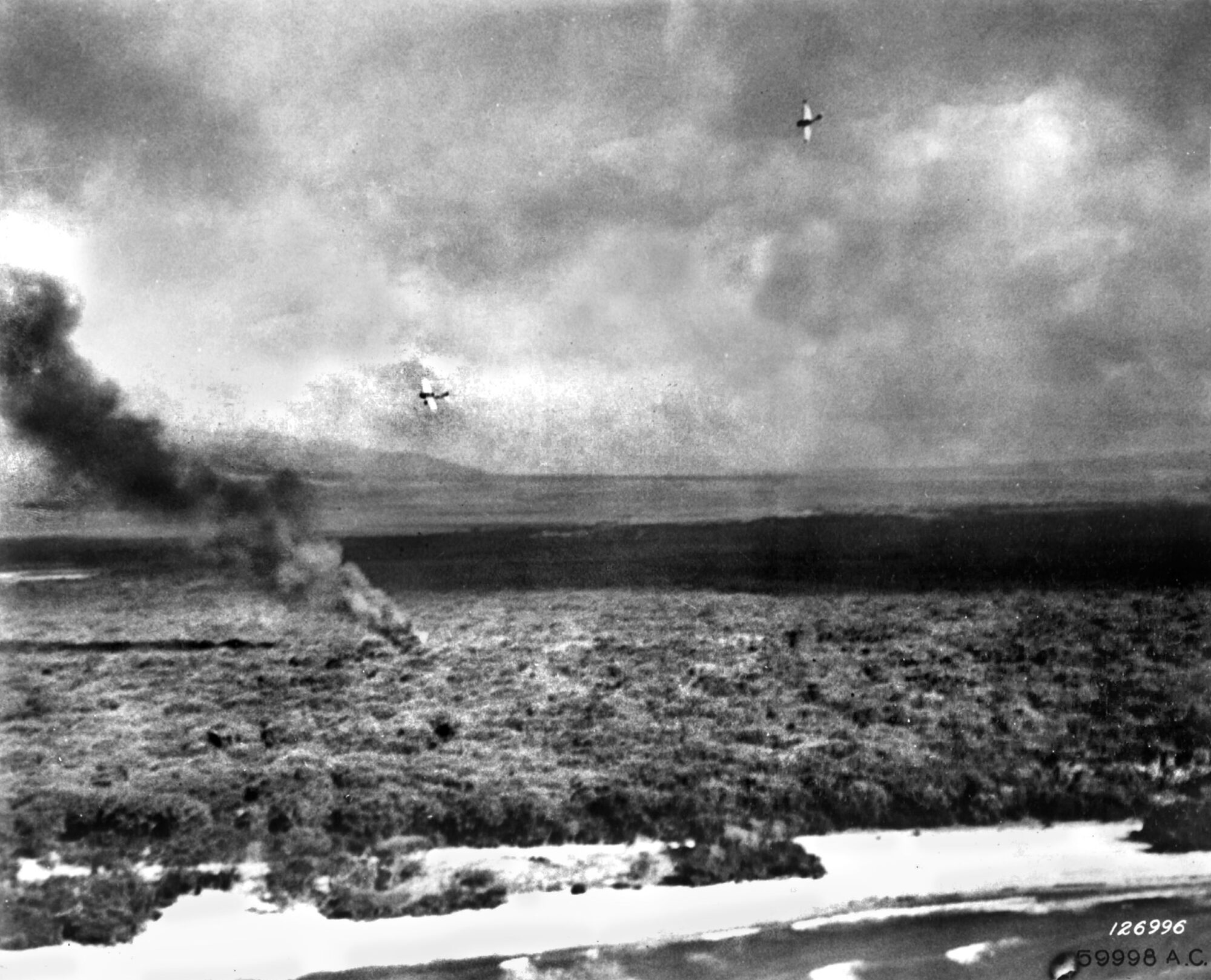
Lieutenant Commander Shigeru Itaya eased the throttle lever forward in the cockpit of his Mitsubishi A6M2 Zero fighter as it left the deck of the Imperial Japanese Navy (IJN) carrier Akagi just after 6 a.m. on December 7, 1941. Having risen through the ranks since the Sino-Japanese War, Itaya was chosen to lead the first wave of fighters from the six IJN aircraft carriers deployed for the attack on Pearl Harbor.
As the first wave arrived at the northern tip of Oahu, Territory of Hawaii, the Zeros split into two groups ahead of the torpedo bombers to seize control of the skies. Their first target was the Marine air station at Ewa Mooring Mast Field, followed by Hickam Army Airfield and the Naval Air Station at Ford Island.
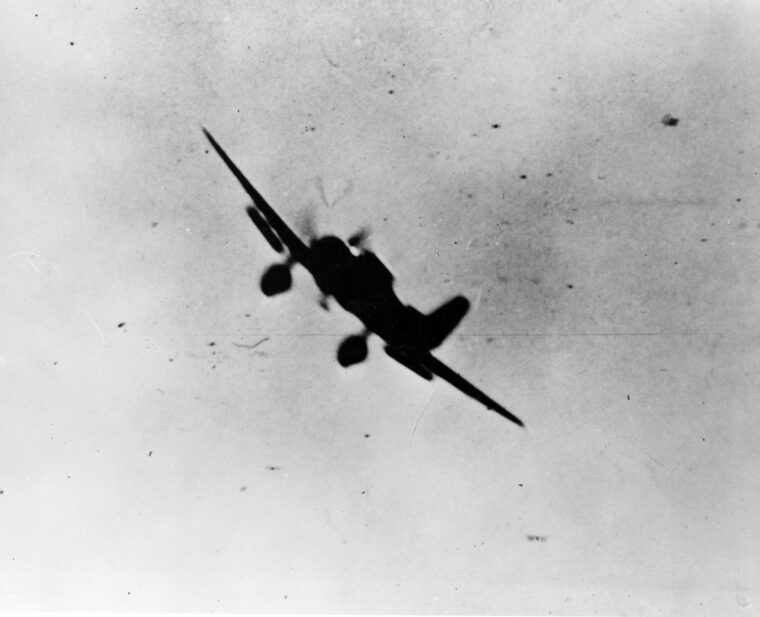
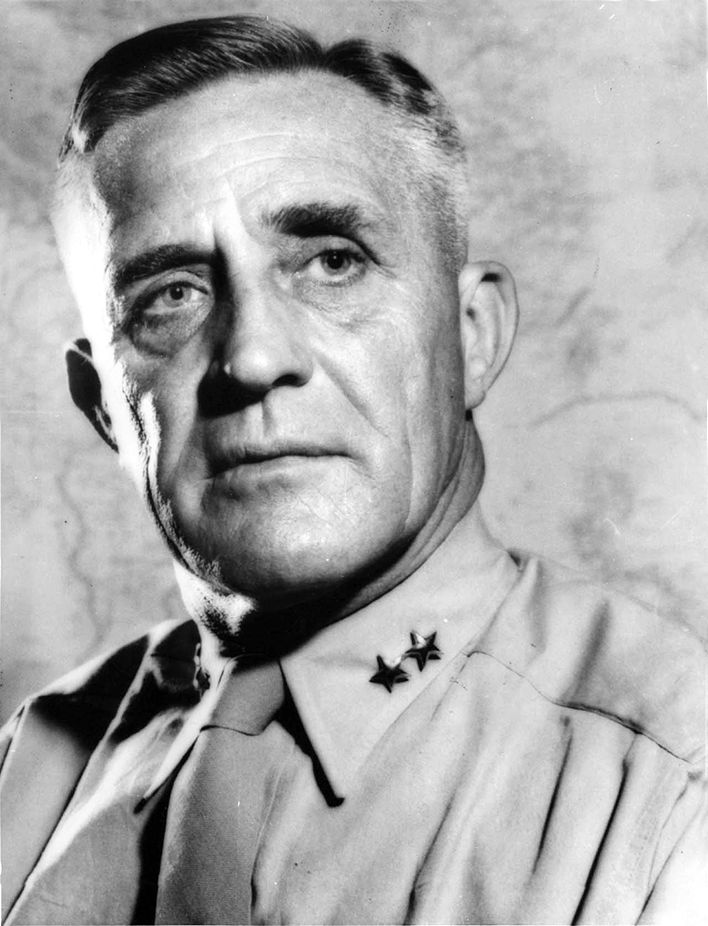
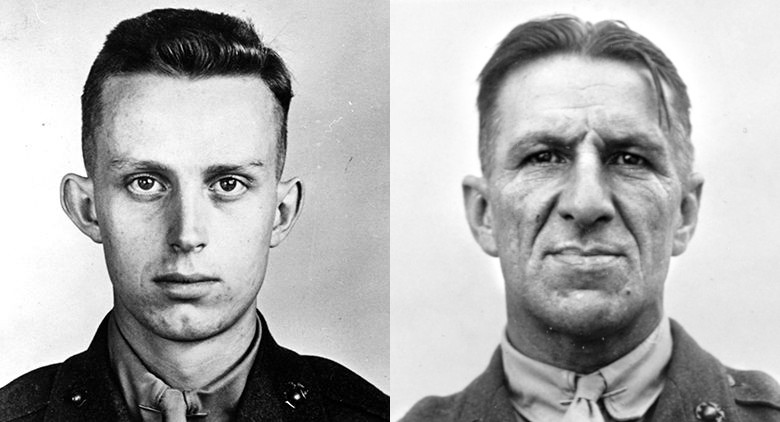
Around that same time, Marine Corps Air Station Ewa’s commanding officer, Lt. Col. Claude A. Larkin, affectionately known as “The Sheriff,” was en route to the base from his home in Honolulu in his 1930 Plymouth, when the first wave of Japanese planes filled the skies above him. About a mile from the station’s main gate, a lone Zero began firing on his car, forcing him to abandon it with the engine still running. Taking cover in a nearby ditch, Larkin waited for his attacker to pass, jumped back into his car, and after narrowly avoiding another strafing Zero, got to Ewa at 8:05 a.m.
Itaya’s group of nine Zeros were already in the process of working over Ewa’s flightline when Larkin stepped out of the Plymouth and was hit by shrapnel. In one of several displays of resiliency under fire that morning, he refused immediate medical treatment and continued to direct the defense of the base.
Following the outbreak of World War I in the summer of 1914, Larkin enlisted in the United States Marine Corps on December 21, 1915. His first official duty following his enlistment was aboard the battleship USS Oklahoma (BB-37) when it was commissioned in Philadelphia on May 2, 1916. After a year and a half, he was commissioned as a 2nd lieutenant and joined the famous mounted soldiers known as the “Horse Marines” in Cuba. After transferring to aviation, Larkin became a naval aviator on April 6, 1930, when he completed his flight training at Naval Air Station, Pensacola, Florida. He piloted a variety of aircraft during this time and gained valuable experience and flight hours while attending the Army Air Corps Tactical School in Montgomery, Alabama.

In November 1941, Larkin took over the “command and the destinies of the emergent Ewa Field,” serving as the temporary commanding officer.
At the time of the Japanese attack on Pearl Harbor, the Marine Corps Air Station at Ewa (pronounced “Eva”) was also known as Ewa Mooring Mast Field. Originally belonging to the James Campbell estate, the site selected for the field sat on approximately 3,500 acres purchased by the Navy. By 1925, a single runway was constructed along with a 160-foot mooring mast meant for the docking of the Navy’s new rigid airships. It was during this time when the United States Navy was experimenting with the use of dirigibles and planned for Ewa to serve as a major operational station during the expansion of their Z-Craft program. By 1935, three of the Navy’s airships, USS Shenandoah, USS Akron, USS Macon, were all lost to accidents and the program was abandoned soon afterward.
Before the outbreak of war, Congress allocated funds to help bolster the defenses of the Hawaiian Islands. Ewa’s mooring mast was lowered to approximately 77 feet in 1932 and was repurposed as the airfield’s control tower. Upon the arrival of the Second Marine Aircraft Group (MAG-2) in January 1941, the base was officially commissioned as an operational air station by early February. Before arriving in Hawaii, MAG-2 was based in San Diego, California, and consisted of around 100 officers and 800 enlisted men. The group embarked on the aircraft carrier USS Enterprise (CV-6) on January 11, 1941, and arrived at Pearl Harbor on January 21.
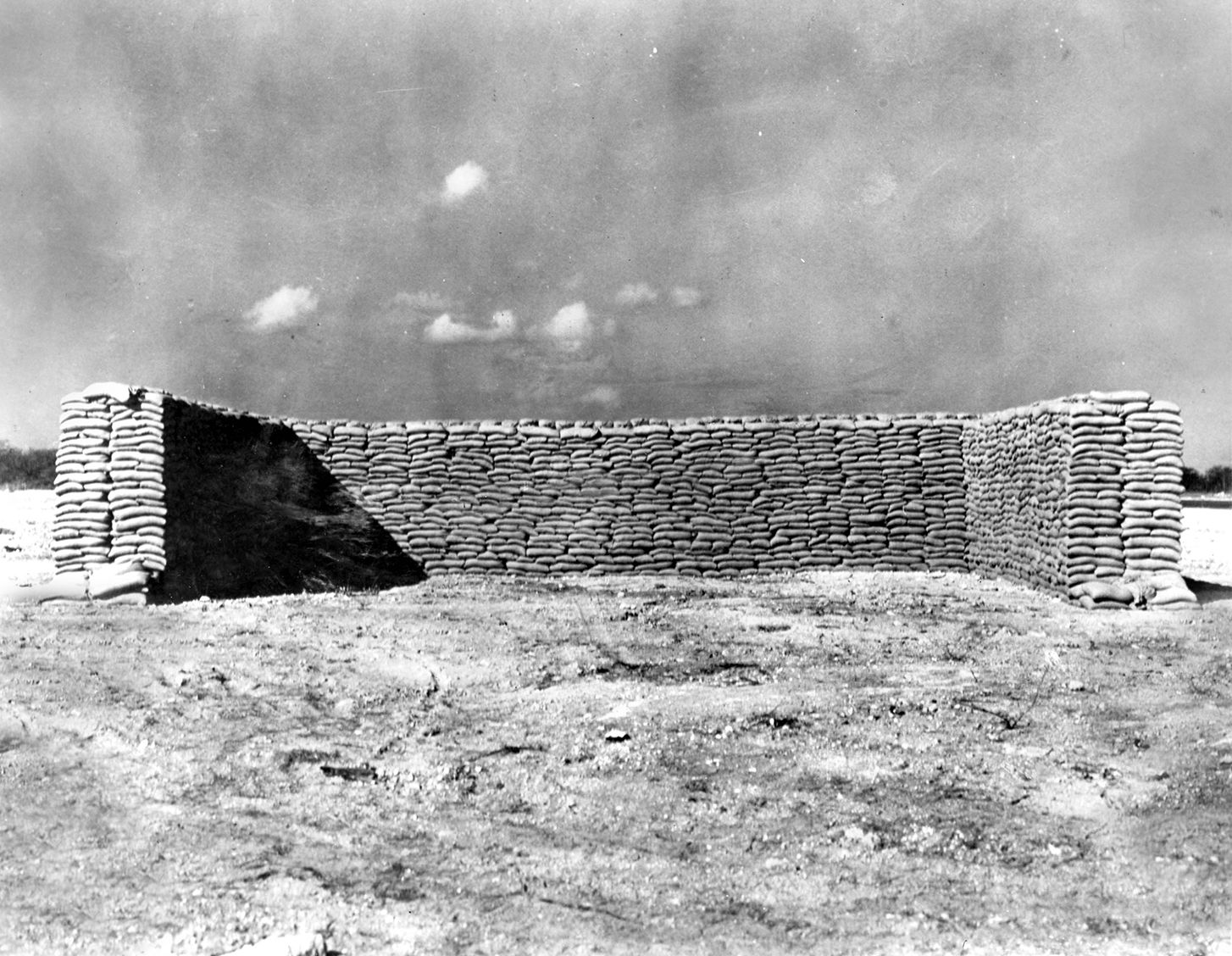
By the autumn of 1941, the pace of activity in and around the base was increasing with foundations laid down for nine 128-foot wooden barracks with two hot water systems shipped to the base for installation. The Marines were finally beginning to leave the tent city that dotted the northwestern side of Ewa’s main runway. A railroad spur from a line which ran along the northern perimeter of the base helped expedite the amount of building supplies and other materials needed for construction. By the end of October, Ewa’s enlisted men had moved into the newly constructed barracks, which soon increased by five more buildings.
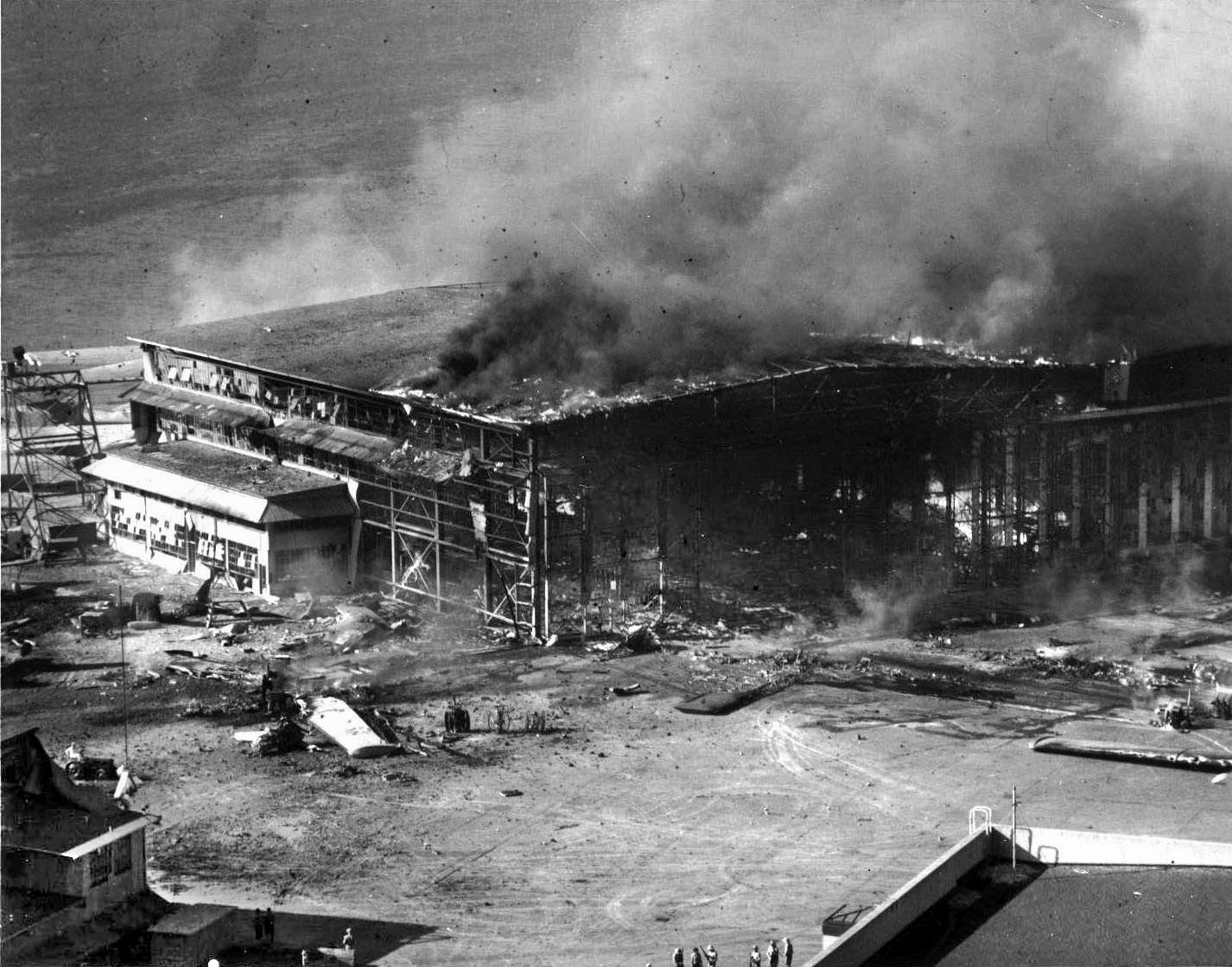
When Itaya and his wingmen finished their strafing runs on Ewa’s flightline, the nine Zeros turned their attention to Hickam Army Airfield and Naval Air Station Ford Island. Ewa’s Marines barely had time to recover when another formation of nine Zeros, this time from the IJN carrier Kaga and led by Lt. Yoshio Shiga, approached the base for a follow-up attack. Shiga’s pilots banked their planes toward the base and swarmed in at treetop level to finish off any remaining planes that may have been missed. Both fighter groups had concentrated their fire on the wing tanks of Ewa’s vulnerable aircraft to ensure their complete destruction.
Approaching from the opposite direction from Itaya’s group, Shiga’s fighters made repeated passes on Ewa, reaching altitudes as low as 20-25 feet. In a matter of 15-20 minutes, most of Ewa’s parked aircraft were set ablaze by incendiary rounds. As Ewa’s Marines began to fire back at the Japanese planes, another instance of American heroism under fire was noted by Shiga himself: “I strafed those parking planes with 7.7mm guns with pretty ease. I noticed a gallant soldier on the ground attempting to fire at us with his pistol, to whom I paid a good respect.” The rounds came from the .45-caliber pistol of Private First Class Mel Thompson, who was stationed at Ewa’s main gate during the attack.
About 10 to 15 minutes after these initial attacks from Itaya and Shiga’s Zeros, two more fighter units approached Ewa from the north. Nine Zeros from the 3rd Combat Unit led by Masaji Suganami from the carrier Soryu were joined by six fighters from the 4th Combat Unit led by Kiyokuma Okajima from the Hiryu. Flying through thick columns of smoke billowing from the blazing aircraft on the ground, Suganami and Okajima’s Zeros experienced a heavier volume of fire from the defending Marines on the ground.
Master Technical Sergeant Emil S. Peters rushed to the central ordnance depot, hoping to find a weapon or any ammunition stores. Finding no success, Peters noticed one of the base’s Douglas SBD-2 Dauntless dive bombers was parked behind the tents belonging to VMSB-232. Pvt. William Turner, the squadron’s clerk, assisted Peters with getting .30-caliber belted ammunition for the rear gun position. The two Marines sprinted out to the SBD, and Peters manned the Browning in the aft cockpit while Turner stood on the wing holding the ammunition belt. This particular SBD-2 (2-B-6) was a former Navy machine belonging to the USS Lexington that had escaped serious damage at that point during the raid.
Turner and Peters endured a barrage of enemy fire as they began to draw the attention of the Japanese fliers. As dangerous as Ewa’s parking apron was at that moment, they continued to pour accurate fire from the parked dive bomber. Their fire claimed one, possibly two, Japanese planes before Turner fell from the wing with a wound to his abdomen. Peters survived the attack, but Turner lost his life five days later at Ewa Plantation Hospital. Both men received the Bronze Star for their actions. Larkin’s Marines did not have to wait long until yet another wave of Japanese planes arrived.
At 8:35 a.m., a formation of Japanese planes approached the heavily damaged base from the east. Lt. Cdr. Kakuichi Takahashi led a string of Aichi D3A Val dive bombers from the carrier Shokaku at treetop level to strafe and bomb the base. The Vals were returning from their runs over Pearl Harbor and Hickam with the intention of expending any remaining 7.7mm ammunition and bombs on Ewa.
Sergeant Carlo A. Micheletto, 26, was another Marine who found himself amid the maelstrom at Ewa. Micheletto had entered the Marine Corps in 1939 and was attached to Marine Utility Squadron 252. During the first wave, he rushed to VMJ-252’s parking area and was one of several Marines who assisted in extinguishing the numerous fires that had broken out. As the intense strafing attacks continued, Micheletto dropped his firefighting equipment, grabbed a Springfield rifle and took cover behind a small pile of lumber. As Micheletto fired away at the incoming planes, the Japanese pilots concentrated their fire on his position with each pass. The brave sergeant held firm until a burst of enemy fire struck him in the head, killing him instantly.

At 9 a.m., more planes appeared over Ewa, but this time in the form of friendlies—six SBD Dauntless dive bombers from the Enterprise had been sent ahead of the carrier and landed at the base amid the chaos and confusion. The Enterprise had been scheduled to return to Pearl Harbor at the exact time of the attack, but had been delayed by weather on its return trip from delivering Major Paul A. Putnam and VMF-211 to Wake Island. The planes were quickly refueled and sent back into the air with 500-pound bombs and ammunition for their guns.
A third and final attack on Ewa came at 9:30 when a group of at least 15 Vals from the carriers Kaga and Hiryu flew east after dropping their bombs on the ships moored at Pearl Harbor. Ewa from the direction of Pearl Harbor. They, too, were looking to get rid of any remaining ammunition and fired 7.7mm rounds at anything they could see through the rolling smoke. With their two forward-firing machine guns and a rear gunner position firing a Type 92 machine gun, the D3As were just as menacing as the Zeros. The Val pilots would typically pull up from a dive and maneuver their planes to give the rear gunner a more favorable angle of attack. Just as in the previous attacks, the last group of Vals flew in just above treetop level with short bursts of machine-gun fire.
In addition to the deaths of Micheletto, Turner, and Pfc Edward S. Lawrence of VMSB-232, a fourth Marine, Sgt. William E. Lutschan, Jr., lost his life under mysterious circumstances during the attack. Larkin himself even makes mention of the incident in his report of action dated December 30, 1941, in which he details the events which occurred at Ewa on December 7.
“Every officer and man on this airdrome during the attack, with one exception and in this case report has been made to the Major General Commandant, displayed courage, willingness to perform any duty required, initiative, leadership in numerous instances, and eagerness to fight back with any weapon at hand,” Larkin wrote.

That “one exception” was undoubtedly Lutschan. Multiple accounts of his death have surfaced in the aftermath of the attack, but the exact details remain unknown to this day. A closer examination of the events surrounding the death of the young sergeant on the morning of December 7 based on eyewitness accounts offers a revealing perspective on what might have occurred.
What is known about Lutschan is that he enlisted in the Marine Corps on April 18, 1936, and was attached to Headquarters and Service Squadron, 8th Marine Corps Reserve. Following his reenlistment on May 21, 1940, he served as a truck driver attached to HQ & Service Squadron 21 at Ewa by 1941. It has been theorized that Lutschan was suspected of being a spy along with accounts of him allegedly committing acts of sabotage during the attack on Ewa. Although these accusations have never been proven conclusively, a comprehensive historiography on the incident may provide new explanations. In the 1992 monograph, “Infamous Day: The Marines at Pearl Harbor 7 December 1941,” by Robert Cressman and Michael Wenger, there is a mention of the Lutschan incident: “A tragic drama however, soon unfolded amidst the Japanese attack. One Marine, Sergeant William E. Lutschan, Jr. USMC, a truck driver, had been ‘under suspicion’ of espionage and he was ordered placed under arrest. In the exchange of gunfire that followed his resisting being taken into custody, though, he was shot dead.”
Another account of the Lutschan incident was described by Colonel Willis R. “Bill” Lucius in Stan Cohen’s 1981 book, East, Wind, Rain: A Pictorial History of the Pearl Harbor Attack. Upon arriving at Ewa, Lucius noted that “everything there was in a state of chaos. One specific incident: A Marine private by the last name ‘Lucas’ has reportedly been found in the nearby cane fields starting fires in the shape of an arrow, obviously directed toward our base and which can be seen from the air. He was promptly shot by Marines.”

In a September 3, 1995, Honolulu Advertiser article Domingo Bolosan, who was 13 in 1941, describes what he and his friends witnessed that morning. Bolosan lived at the Ewa Plantation village, near the air station’s main gate. Bolosan said they witnessed a group of Marines firing their rifles and machine guns into a metal scrap pile.
While he never saw who they were shooting at, Bolosan describes how he later saw a car “racing back and forth” as a Marine fired his Thompson submachine gun into the scrap pile. Shortly afterward, he described how this same car left the scrap pile with the body of a deceased man mounted on the rear rack of the car.
Bolosan and his friends approached the car as it stopped at a nearby railroad spur. He goes on to describe how they asked who the deceased man was, and why he was killed by his fellow Marines. After further questioning of the Marines (including asking if he was a spy), they told the group of teenagers that the dead Marine’s name sounded like a Sergeant “Loo-zhun. While Bolosan’s story is compelling, it does seem odd that these Marines who are presumably the same group who allegedly killed Lutschan would simply stop with his body on the back of the car and answer such direct questions from a random group of teenagers. However, there are details in Bolosan’s story which correlate with the account described by Marine Corporal Albert Grasselli.

Appearing in the April 1991 issue of Naval History magazine, Grasselli wrote a firsthand account of the events that took place at Ewa. Grasselli recounts the events from the moment he sprang into action, threw on his khakis, grabbed his Springfield 1903 rifle, and looked skyward. Grasselli was among the group of Marines who were gathered along Ewa’s swimming pool as they fired at the incoming Japanese planes. As Grasselli recounted, “I immediately headed for the nearest shelter, which so happened to be the freshly laid cement foundation for the new swimming pool.”
He also goes on to describe how he was a participant in the killing of Lutschan. “One instance which I will never forget involved the shooting of a fellow Marine. Shortly after the first attack, the duty officer gave orders to my tent mates to arrest one of our fellow tent mates who, we were told, was a German spy. Corporal Werner had lived and worked with us over the past 11 months. We had, therefore, grown very close. He resisted our effort to arrest him and opened on us; he was subsequently shot and killed. There were so many bullet holes in him that, thankfully, we never knew which one of us had fired the shot that killed him.”
In 2015, The Department of Land and Natural Resources released a 213-page application form which was a major first step in adding Ewa into the National Register of Historic Places. The Lutschan incident is referenced in the historical section of the application and concludes that “this Marine was cleared of spying charges posthumously, and was buried in a military cemetery in California.”

Following the attack, the entire military establishment along with the civilian population on the islands was in a state of chaos. The hospital tents in Ewa Field’s Camp Area which housed the sickbay and dispensary had been set on fire by incendiary ammunition, and a large quantity of equipment and medical supplies were damaged by enemy gunfire. For three weeks after the raid, Ewa provided quarters, mess and operating assistance for the 46th Army Pursuit Squadron, which could not operate from its home base at Wheeler Army Airfield due to the heavy damage suffered at the hands of the Japanese pilots. Ewa also provided quarters, mess and clothing for personnel from the battleships USS California and USS West Virginia immediately following the attack in order to furnish some relief from demands of such service to the Navy shore units in the Pearl Harbor area.
In January 1942, the tactical strength of Ewa was also bolstered by the addition of the entire USS Saratoga air group. By mid-June 1942, the physical aspect of Ewa Field had changed so drastically that it bore little resemblance to its original configuration.
In November 1943, Larkin was presented with the Legion of Merit for outstanding service for planning, arranging, and operating air activities as “SNAP” of Marine Aviation Units in the Hawaiian areas in the defense of Wake Island and in the battles of Midway and the Solomon Islands. He was later in charge of air operations in the Northern Solomons as Deputy Commander General of Marine Aircraft, South Pacific, from May 21 to June 14, 1944. From August to December 1944, Larkin was commanding officer of the Third Marine Aircraft Wing in the Pacific. He later served as Commanding General of Marine Fleet Air, West Coast, until the end of his military career.

In an effort to generate public support for the preservation of the battlefield, local Ewa historian John Bond has also pushed for endorsement by the National Park Service, which oversees other historic locations involved in the Pearl Harbor attack. Following the submission of the formal plan for Ewa’s recognition as a historic location in May 2015, the National Park Service outlined future plans for the battlefield. Ewa was placed on the National Register of Historic Places in 2016. In 2018, Bond drafted a proposal with the intention of converting MCAS Ewa into a historic park.
There are plans to have Ewa become part of the World War II Valor in the Pacific National Monument, which formally recognizes significant sites which contributed to the Pacific Theater of War.
Historian Josh Donohue has previously written for Sovereign Media on the Japanese assault against Wake Island. This article is dedicated to the memory of Demi Bamber, September 12, 1989 to September 12, 2023.
Join The Conversation
Comments
View All Comments