By Giuseppe Rava
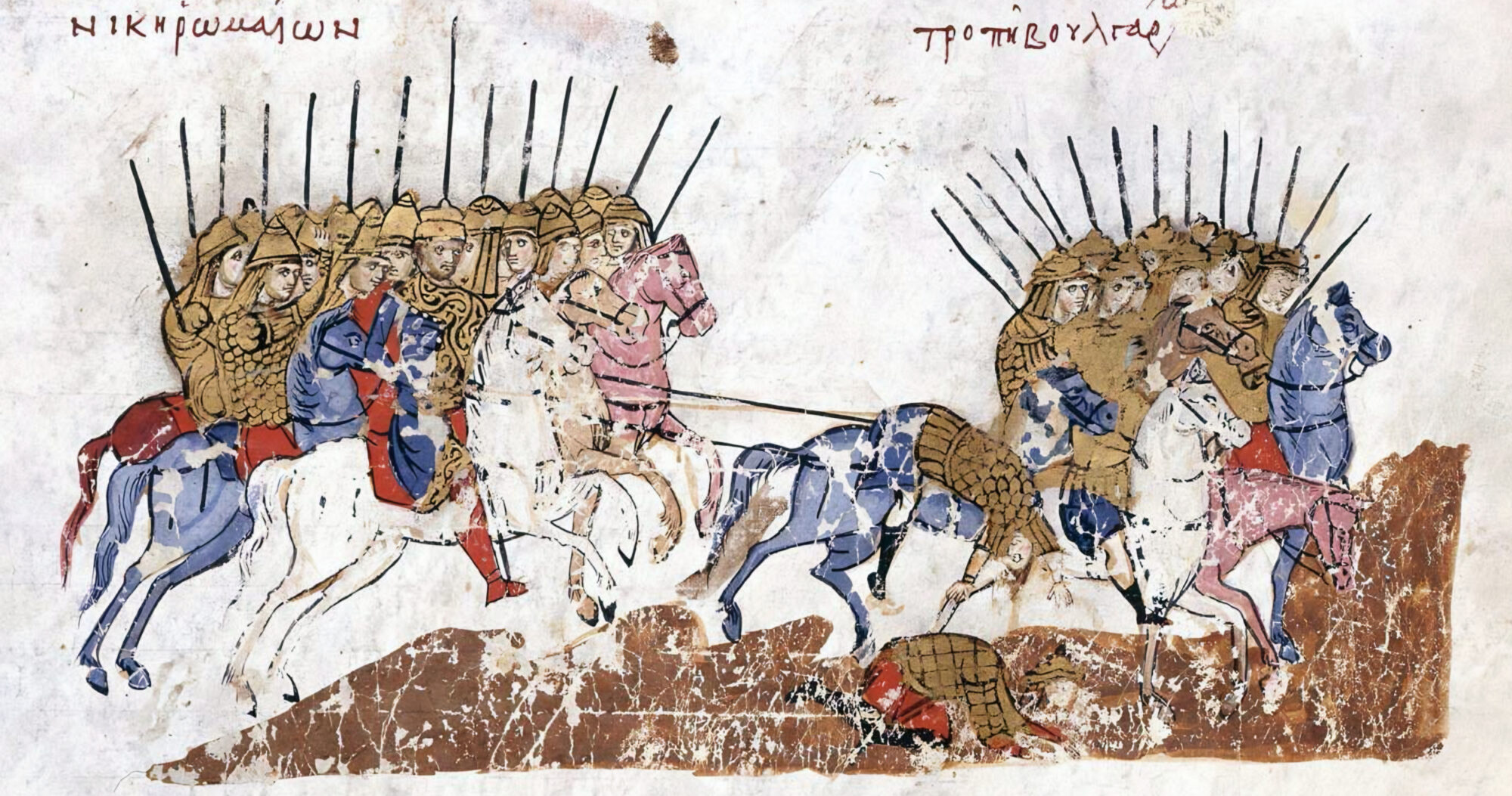
The Byzantine Empire extended from the 4th century through the fifteenth century, with one of the most effective militaries in the world.
Over time, the Byzantine Army became a largely professional fighting force, with little reliance on militia. Augmenting their powerful, well-drilled infantry, the army included mounted Katafraktoi (cataphract) cavalry, making up as much as 15 percent of the armed forces.
Copied from Persian heavy cavalry encountered in battle, the Byzantine cataphract was often heavily armored cavalry, armed with bows, lances, swords and heavy maces. Typically only charging short distances due to the weight of their armor, their impact on the battlefield proved to be devastating to the enemy.
Helmet: Conical iron helmet, topped with a dyed horsehair plume. Ring mail face protection below the helmet.
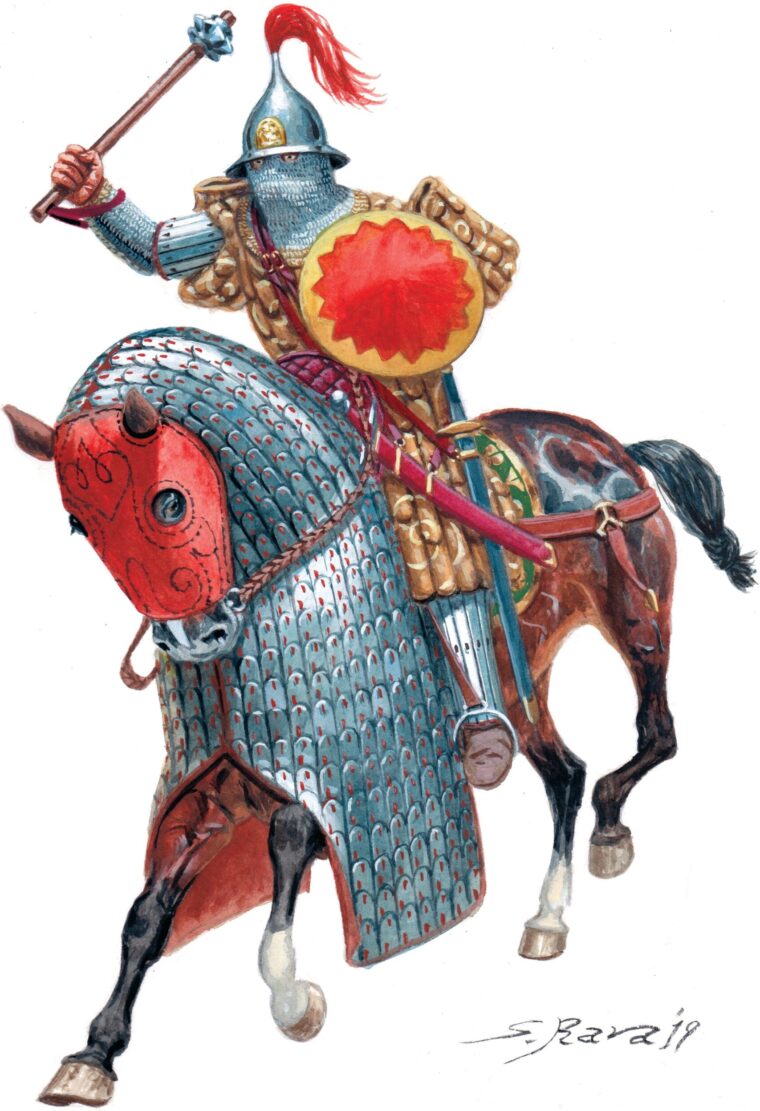 Shield: Round cavalry shield made of wood and leather; strapped to the arm to free the hand to grasp reins or weapons.
Epilorikion: A padded, coat of silk and heavy cotton worn over a hauberk (mail shirt), both extending to the knee. The hauberk is covered by a cuirass (breast and back plates) of lamellar construction (small steel plates laced together) for additional protection of the torso and upper arms.
Weapons: Two or three iron maces, as well as a spathion (straight, double-edged sword) and a paramerion (saber-like curved sword).
Horse armor: Decorated heavy leather mask, and leather and iron barding (armor).
Greaves: From the Old French greve (shin, shin armor) lamellar armor covers the lower legs.
Join The Conversation
Comments
View All Comments