By Edward F. Murphy
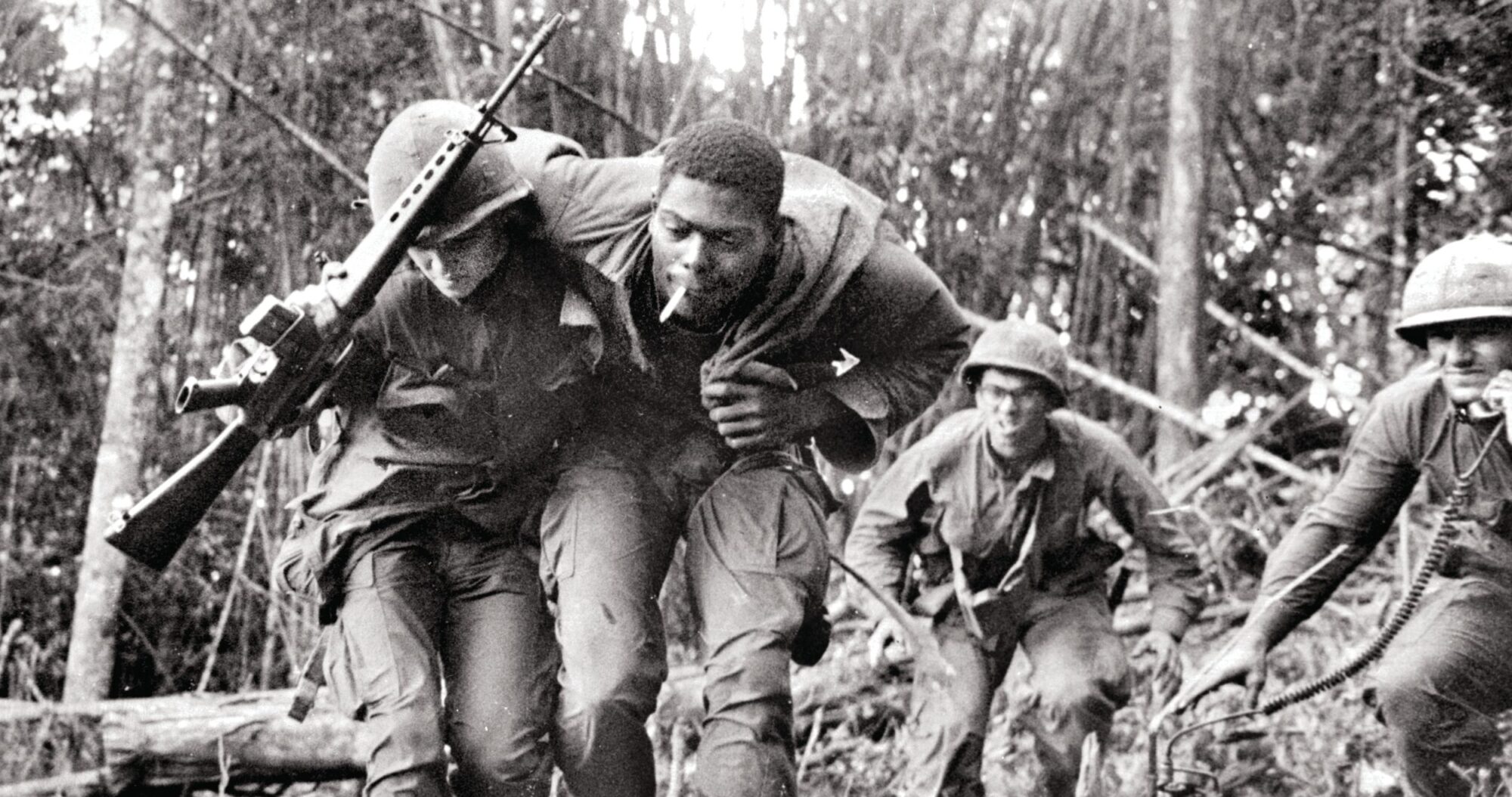
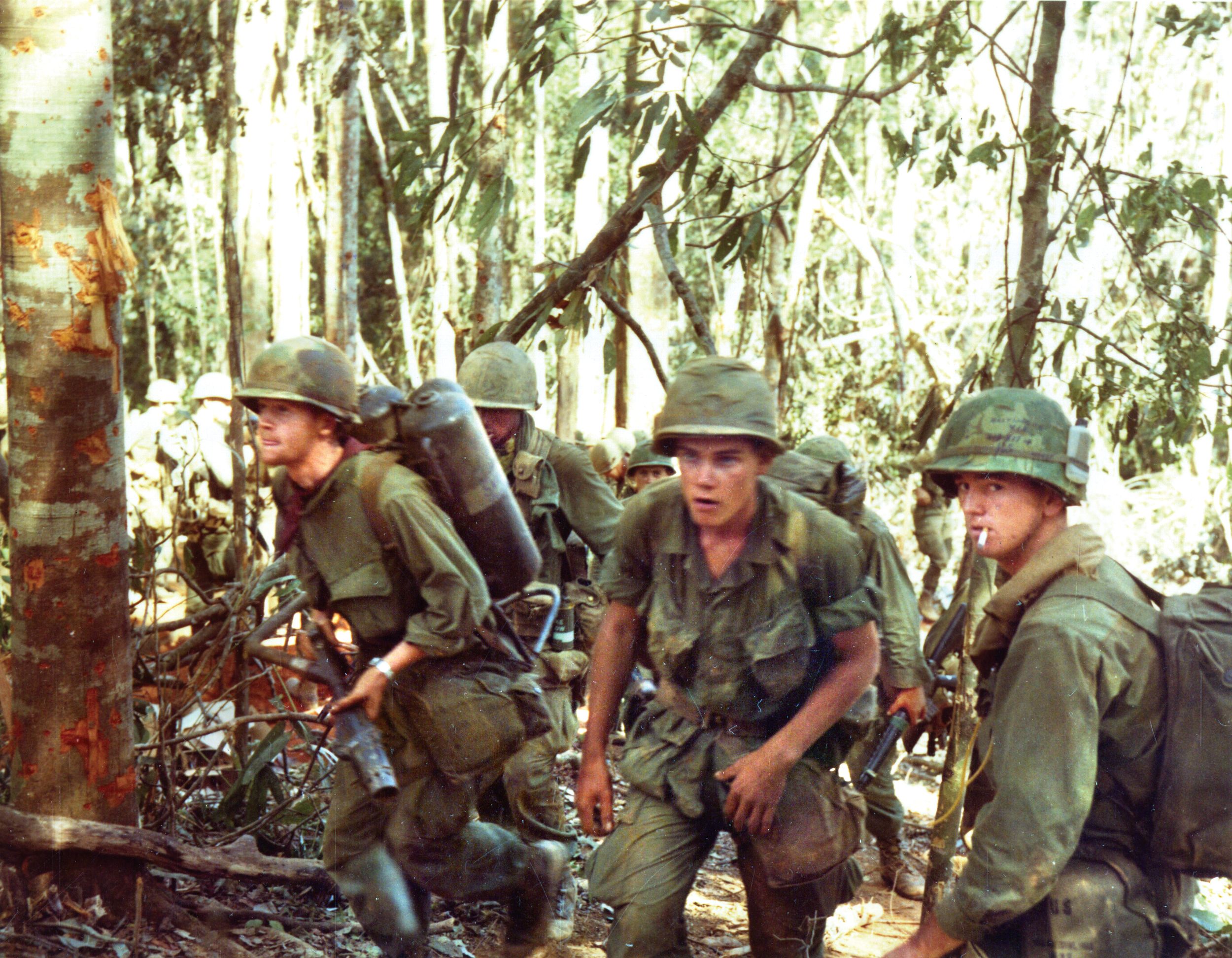
The morning calm was shattered by the sharp crack of rifle fire. Though the nearly impenetrable jungle vegetation and a dense layer of fog dampened the noise, the paratroopers of Alpha Company, 2nd Battalion, 503rd Infantry, 173rd Airborne Brigade tensed immediately.
“Sounds like second platoon’s reconning by fire,” one man said.
“Bullshit,” another replied. “That’s AK fire.”
Twenty minutes earlier, First Lieutenant Donald R. Judd had started his 2nd Platoon down the narrow jungle trail atop a steep finger of ridge running northeast off Hill 1338 down to the hamlet of Dak To, where the battalion operations center was located at the nearby airstrip. Judd had graduated from West Point the year before and, though he’d only been in the field two days, he knew it was an infantryman’s maxim to avoid an existing trail. But he had little choice, as cutting a new one would add a whole day to the six-kilometer trek.
As the enemy rifle fire ripped into them, Judd pulled his men into a tight perimeter. At the company’s laager site, Alpha’s commanding officer, Capt. David H. Milton, ordered 1st Lt. Richard E. Hood, Judd’s friend and classmate, to hustle his 3rd Platoon down the trail. Though in the field for less than a week, Hood never hesitated. Under near-continuous sniper fire, Hood’s paratroopers entered 2nd Platoon’s line as enemy fire increased.
Milton was radioing for supporting artillery fire when the sound of gunfire from downhill reached a crescendo. For nearly 10 minutes, all Milton and the others could hear was the near-continuous roar of small arms fire. Milton wondered what the hell was going on.
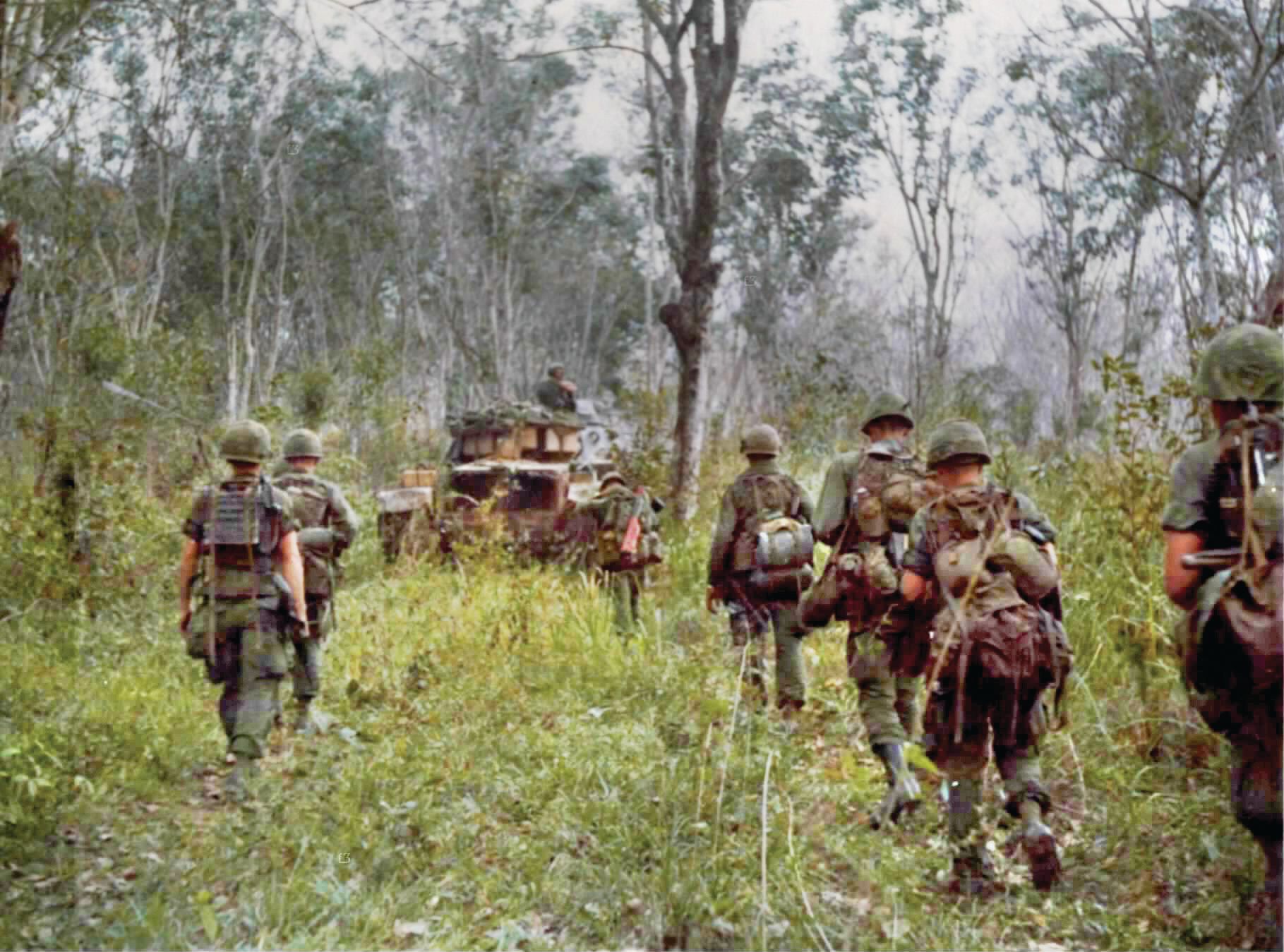
He turned and nodded at Second Lieutenant Jeffrey R. Sexton. Without hesitation, Sexton led his 1st Platoon down the trail. A veteran of nearly a year with the 173rd as an enlisted man, Sexton had only recently rejoined the brigade after completing Officer Candidate School at Fort Benning, Georgia, after receiving a battlefield promotion. Milton and Alpha’s Weapons Platoon members watched nervously as Sexton’s platoon disappeared in the mist as it moved down the trail. Soon, the roar of gunfire again filled the air.
The 173rd Airborne Brigade had been the first army unit dispatched to the growing war in South Vietnam. Activated on June 25, 1963, the brigade was created to test Secretary of Defense Robert McNamara’s new concept of airmobile vertical assault and to act as a ready reaction force in the Pacific Theater. Its home station on Okinawa was deliberately chosen so the unit would be free to test new warfare concepts far from the prying eyes of Pentagon staffers. The brigade participated in numerous exercises with allies throughout the Pacific Theater, earning the respect of its sister parachute forces. It so impressed the Chinese Nationalist airborne soldiers during a successful joint operation early in 1965, they dubbed the 173rd paratroopers Tien Bing, or “Sky Soldiers” and the nickname stuck.
As the war in South Vietnam intensified, General William C. Westmoreland, commander of the Military Assistance Command, Vietnam, specifically requested the brigade for temporary duty in the war zone to secure base camp sites for incoming maneuver divisions. The brigade’s two battalions arrived from Okinawa on May 5, 1965, the first major U.S. Army unit to enter the growing war zone.
“You’ll be back on Okinawa in sixty days,” Westmoreland assured the 173rd’s commander, Brigadier General Ellis W. Williamson. The brigade remained in South Vietnam until August 1971.

For its first two years in-country, the 173rd’s area of operations was Saigon and the surrounding region. Though based at the sprawling Bien Hoa Air Force Base, 25 kilometers northeast of the city, the Sky Soldiers were rarely there. They spent most of their time in the field on combat operations, seeking the insurgent Viet Cong in the area’s vast expanse of rice paddies and jungle. From the outskirts of Saigon to War Zone D and the Iron Triangle, the Sky Soldiers actively hunted their foe on search-and-destroy missions. And there were frequent clashes. Most involved small bands of marauding VC, but larger fights erupted, too. The Sky Soldier’s first major fight came on November 8, 1965, about 25 kilometers north of Bien Hoa during Operation Hump.
On that third morning of the operation, Charlie Company, 1st Battalion, left its laager site to reconnoiter the area where a sister company had suffered heavy casualties in an ambush the previous day. The paratroopers were on edge because the enemy was displaying a high level of aggressiveness. Usually, their foe fired off a few rounds in the direction of the advancing paratroopers, then disappeared. Not on November 7, though. They had maintained contact until artillery finally drove them off.
As Charlie Company moved through a stand of thick trees, a sharp blast of enemy fire tore into the lead platoon. As the wounded and dead fell to the ground, their comrades desperately searched the undergrowth for targets. The vicious fight raged for hours, continuing until two reinforcing companies of Sky Soldiers broke through, forcing the enemy to retreat. The three companies suffered 82 wounded and 50 dead. Evidence from the 110 enemy bodies revealed the Sky Soldiers had fought North Vietnamese Army regulars for the first time. It would not be the last.
For the rest of 1965 and into 1966, the Sky Soldiers conducted air-assault operations throughout the Saigon region. Some resulted in brief clashes with guerrillas, while others saw daily enemy contact. In February 1967, the brigade participated in Operation Junction City, the largest U.S. offensive operation to date in South Vietnam. Focused on Tay Ninh Province, north of Saigon, Junction City included elements of two infantry divisions and the 173d Airborne Brigade. On February 22, 1967, the 2d Battalion, 503d Infantry made the only combat parachute jump of the Vietnam War, dropping into landing zones just south of the Cambodian border. The 1st Battalion soon flew in via aircraft to act with the 2nd Battalion as a blocking force as the regular infantry units swept the ground to their south, hoping to ferret out an elusive enemy headquarters. Though the search lasted more than 80 days, the VC headquarters wasn’t found.
While the 173rd Airborne Brigade clashed with irregular VC forces in and around Saigon, NVA regulars had infiltrated the rugged Central Highlands of Pleiku and Kontum Provinces, in the tri-border region of South Vietnam. It was an effort to pull U.S. forces away from the country’s cities in preparation for their upcoming 1968 Tet operations, their much-anticipated General Offensive/General Uprising intended to throw the U.S. out of their country.
Beginning in February 1967, line units of the 4th Infantry Division, based in Pleiku City, experienced a sharp increase in contacts with regular NVA forces throughout their area of operations. Over the next few months, deadly clashes with the NVA increased dramatically, with heavy casualties. As a result, the 4th’s commander requested reinforcements. Westmoreland tapped the Sky Soldiers and by the end of May, the entire 173rd Airborne Brigade had flown into Catecka, 12 kilometers south of Pleiku.
The 4th Division’s senior officers did not hold the 173rd in high regard. This was more than the inherent rivalry between straight-leg infantry and airborne infantry. Col. James B. Adamson, commanding officer of the 4th’s 2nd Brigade, knew there had been little recent action in the 173rd’s AO. In his briefing, Adamson matter-of-factly told Brig. Gen. John R. Deane, the Sky Soldier’s commander, “This is a different war up here.”
“First, you will be fighting regular NVA soldiers,” Adamson warned. “These aren’t rice farmers. They are professional soldiers who know how to fight. Second, don’t ever let a company get out by itself where it will be easy pickings for the NVA. They’ll wipe it out.”
Deane, who resented Adamson’s implications, ignored him.
The Sky Soldiers spent several frustratingly futile weeks seeking the NVA in the upper Ia Drang Valley, south of Catecka. Then the enemy attacked the Special Forces camp at Dak To, a hamlet in Kontum Province, 80 kilometers to the north. To reinforce the soldiers, the 2nd Battalion, 503rd Airborne Infantry, flew into Dak To on June 17. The next day, Captain Milton and the 130 men of Alpha Company boarded Huey helicopters and flew south to Hill 1338, the highest peak overlooking Dak To.

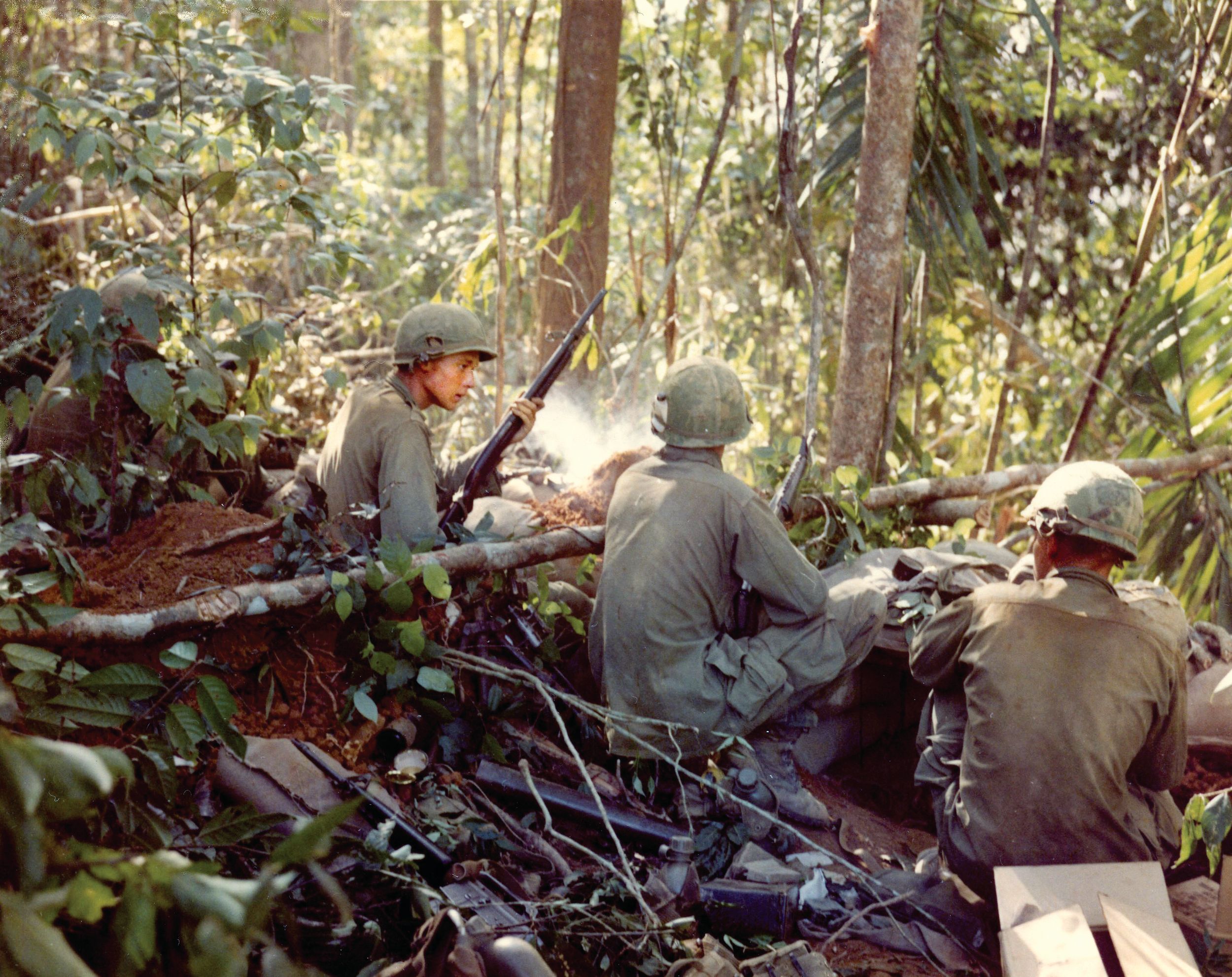
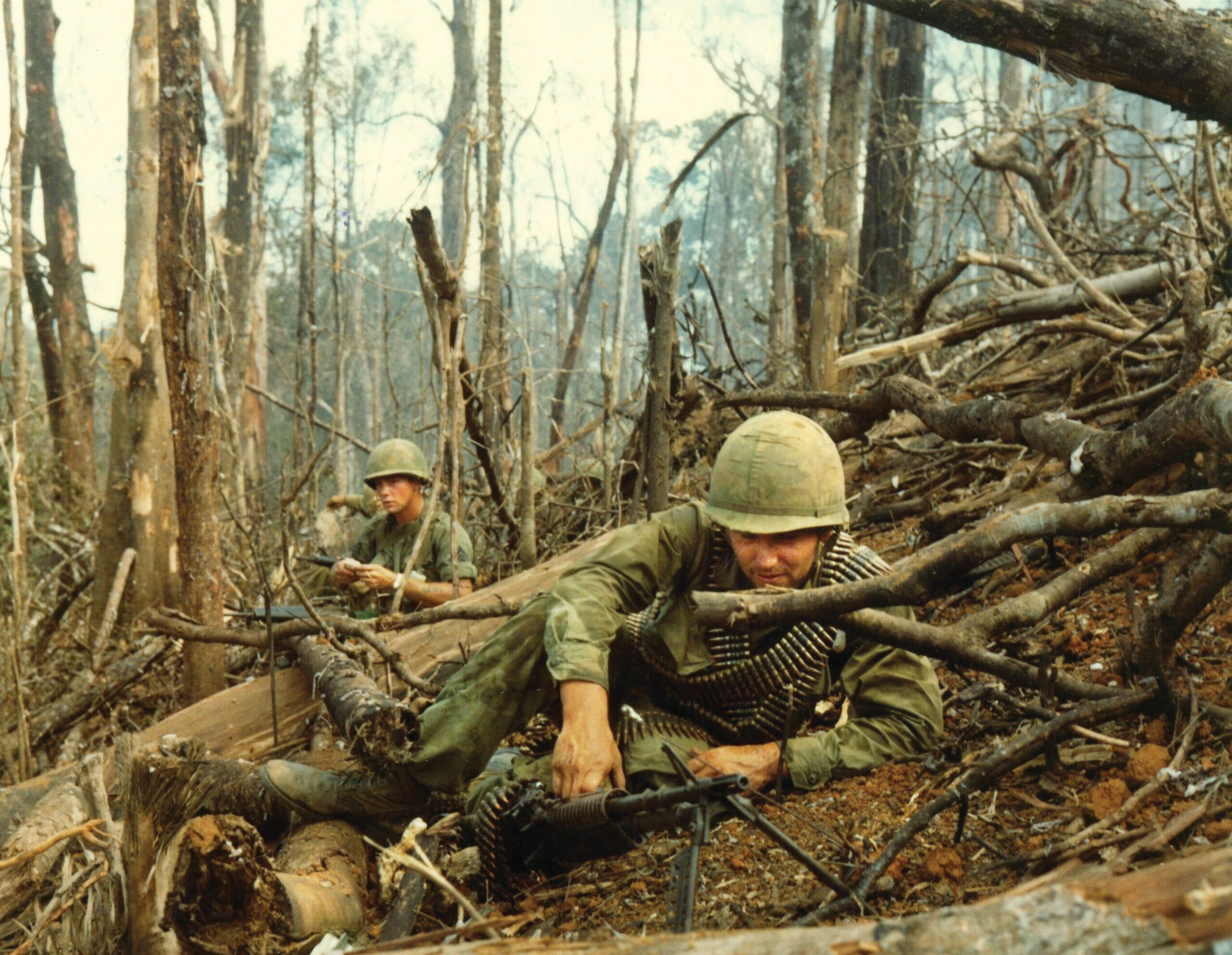
Milton, 28, was a former enlisted man with 11 years in the army who had earned a Silver Star for gallantry in action the previous year with the 82nd Airborne Division during its deployment to the Dominican Republic. He established a base camp halfway up the hill, then dispatched his platoons to search for the NVA. The paratroopers spent two days roaming the north side of Hill 1338, but found little evidence of an enemy presence. What they did find was dense, triple-canopy jungle with thick stands of bamboo competing with 200-foot trees and tropical foliage to reduce visibility to less than 10 meters in an eerie twilight-like atmosphere. The daily rain made the jungle floor a thick morass, further slowing the soldier’s progress. The company did find a narrow trail that led to the higher elevations of Hill 1338. Milton set up ambushes along it, but no NVA entered the traps.
With Alpha Company due to rotate back to Dak To the next day, Capt. Ronald R. Leonard’s Charlie Company helicoptered into an LZ a little to the north of Alpha’s position on June 21. They passed through Milton’s perimeter headed south, following the narrow trail up toward the hill’s summit. Alpha’s paratroopers put out listening and observation posts, then huddled under ponchos in a vain attempt to stay dry and warm, thinking of the bunkers and hot chow that awaited them at Dak To.
Fifteen hundred meters farther up Hill 1338, Charlie Company established its night position. Four years earlier, while employed as a high school chemistry teacher, Leonard, motivated by a strong desire to serve his country, applied for and received a direct commission in the Air Force. Two years later, bored with his duty assignment, he requested a transfer to the Army’s infantry. Newly promoted to captain, Leonard arrived in South Vietnam in May 1967 and took command of Charlie Company.
Before it left Dak To for the flight out to Hill 1338, a squad of Special Forces-trained Civilian Irregular Defense Group soldiers, a local indigenous militia, was attached to Charlie Company. During the trek up Hill 1338, the CIDG’s commander grew increasingly skittish, constantly warning Leonard, “Many VC! Many!” Focused on his mission, Leonard ignored him. After selecting a night laager site, Leonard ordered his 2nd Platoon commander, 1st Lt. Phillip Bodine to set up a listening post back down their trail to catch any shadowing enemy. Two of the CIDG accompanied Bodine’s patrol.
Forty meters outside of Alpha’s perimeter, a sudden burst of gunfire halted the small patrol. Bodine’s pointman had spotted several NVA sneaking up the trail toward them and opened fire. The NVA shot back, killing one of the CIDG. After radioing Leonard about the contact, Bodine and his patrol returned to Charlie’s perimeter. Medics wrapped the dead CIDG in a poncho and placed it in the middle of the perimeter. Fully expecting an assault, no one in Charlie Company slept that night.
Dawn on June 22 revealed a thick layer of fog over Alpha’s laager site. The paratroopers anxiously rolled up ponchos, arranged their web gear, and downed a quick C-ration breakfast. Everyone knew they were headed out of the jungle and back to Dak To for a stint as the palace guard. The sooner they started, the sooner their good duty began.
The thick layer of fog also socked in Charlie Company higher up Hill 1338. PFC Jimmy Lee Cook, who had just joined Charlie as it loaded aboard helicopters for the short flight out to Hill 1338, stepped away from his overnight listening post to relieve himself. Returning to the perimeter, he tripped a flare. In the eerily illuminated mist, a nervous sentry raised his M-16 and fired at the shadowy figure. Not until the sentry and his squad leader moved forward to investigate, did they realize the tragic mistake.
Now burdened with two corpses, Leonard was extremely angry. The low visibility meant they would have to carry the bodies until the weather cleared enough for medevac choppers to reach them. He radioed the bad news to the battalion’s tactical operations center at Dak To as his men prepared to move out.
About the same time, Milton signaled Judd to start his platoon down the trail that would take them to Dak To. He radioed the TOC at 0625 that Alpha was moving. It should be at Dak To by early afternoon. At 0658, the gunfire below Alpha erupted.
Milton quickly radioed Judd. The rookie platoon leader reported that his point men had walked into a group of NVA soldiers moving toward them on the same trail. Judd immediately established a defensive perimeter in a clearing. Soon, Hood’s platoon arrived and expanded the perimeter. Shortly, Sexton and his men joined the fight and took up defensive positions in the foliage.
As protective friendly artillery rounds dropped onto Hill 1338, the reality of their ineffectiveness in the dense jungle became apparent. Most of the rounds exploded harmlessly in the treetops. The thick jungle made range adjustments nearly impossible. Milton could only call in supporting rounds where he thought the enemy might be.

From his position at Alpha’s laager site, Specialist 5th Class Richard E. Patterson, the company’s senior medic, listened to the growing firefight downhill. Not yet 19, Patterson had nearly two years of service and almost a year in-country with the Sky Soldiers. Knowing his fellow medics needed help, he grabbed his medical bag and bounded down the muddy trail without hesitation. When he reached the pinned-down platoons, the Boston native could not believe his eyes. Everywhere he looked lay crumpled bodies in green fatigues. A barrage of hand grenades flew from the other side of the clearing to erupt with sharp flashes among the Sky Soldiers. Patterson hit the ground as small arms fire erupted anew. Disregarding the heavy fire, he crawled to help another medic with a seriously wounded man. Patterson had just begun treatment when the other medic collapsed, blood gushing from his throat. He pushed the body off his patient and resumed his lifesaving efforts.
By 0800, the fog had cleared enough to allow the battalion commander, Lt. Col. Edward A. Partain, and the battalion sergeant major, Vincent Rogiers, to helicopter out to Hill 1338. Eager to call in punishing air strikes, Partain quickly faced another reality of close-quarters combat in the Central Highlands—the thick jungle made it nearly impossible to get a clear view of the ground. He ordered Judd and Hood to pop smoke grenades. The tall trees so badly dispersed the smoke that Partain could not pinpoint the platoons’ position. He could only direct the inbound jets to drop their bombs where he thought the enemy might be. Most of the time, the strikes were wildly off target.
In the meantime, Charlie Company had moved about 200 meters further up Hill 1338 when Partain radioed Leonard to halt and prepare to move to Alpha’s position. At 0930, Leonard received orders to reverse course and move downhill to Alpha’s position as fast as possible. Burdened with the two corpses he was reluctant to leave behind in the jungle and leery of an ambush, Leonard ordered his point squad to cut a new trail. Proceeding cautiously, the column slowly moved downhill. Partain repeatedly radioed Leonard to pick up his pace, but Leonard refused to rush. He feared the NVA were all around him, and he did not want his isolated company to walk into an ambush.
Charlie Company’s 1st Platoon’s leader, First Lieutenant Matthew C. Harrison, did not know what to expect. Just beginning his third day in the field, as well as his first combat assignment, Harrison focused on the jungle in front of him and the sounds of an intense firefight downhill. Two of his close friends, and fellow West Point graduates, Judd and Hood, served with Alpha Company. Harrison had originally been assigned to Alpha Company when he arrived in the 2d Battalion until Leonard, who had known him in their previous stateside assignment, asked for Harrison to be assigned to Charlie Company. So, Harrison joined Charlie Company while Judd switched to Alpha Company. Now, Harrison hoped his two friends were okay.
Downhill at Alpha’s ambush site, medic Patterson repeatedly braved the enemy’s near constant small arms fire to reach his injured comrades and treat their wounds. He found many he could not help, but there were too many who still needed his help to dwell on those who did not. As he applied a battle dressing to another wounded Sky Soldier, an enemy grenade went off near him. Chunks of red-hot shrapnel slashed open his right thigh, stunning him. Before Patterson could dress his own wound, the volume of enemy fire increased, followed by NVA soldiers pushing into the paratrooper’s perimeter itself. Frantic cries for ammunition carried across the small clearing. Out of the brush, a wounded sergeant crawled up to Patterson. “We’re running low on ammo. If you can, get back to the CP,” the NCO told Patterson before he crept away.
Though reluctant to leave his buddies, the badly wounded Patterson had little choice—he took the sergeant’s advice. But, before he reached concealing denser foliage, an enemy round shattered his right hip. Fighting off excruciating pain, Patterson desperately pulled himself across the jungle floor. As bursts of automatic weapons fire erupted behind him, he looked back. The sight stunned him. More individual NVA soldiers had emerged from the jungle, firing their AK-47s point-blank at the prostrate paratroopers. Patterson pulled himself deeper into the foliage as wounded Americans frantically cried out for mercy as the NVA executed them. After what seemed an eternity of slowly snaking his way uphill through the jungle, two fellow Sky Soldiers finally rescued Patterson and carried him to safety. Though permanently crippled, he felt very fortunate to have escaped the carnage in the clearing.
Sexton radioed Milton just before 1000, “They’re coming, but I think we can hold out.” The following near-constant gunfire startled Milton and his remaining men at the laager site. Slowly, the din gradually faded to be replaced by distinct individual rifle shots. At 1035, Milton radioed Partain that he no longer had contact with his three platoon leaders.
At the battalion’s TOC adjacent to the Dak To airstrip, staff officers correctly surmised Alpha had stumbled into a large NVA unit retreating into Cambodia after launching numerous attacks against Army of the Republic of Vietnam units around Dak To, rather than being a victim of a prepared ambush. The staff plotted likely escape routes for the NVA, then called in interdicting artillery and air strikes, hoping to catch the fleeing enemy. It was a crap shoot.
After their cautious trek through the thick jungle, Charlie Company’s point squad made contact with Milton at 1420. Leonard put his men into position around the laager site, then sent a squad downhill toward the ambush site. Within minutes, they reported finding American bodies. As they neared the battle site, a flurry of small arms fire drove them to cover. Leonard recalled his squad. It made no sense to tangle with an unknown number of enemy this late in the day.
Leonard ordered a landing zone cleared higher up the hill from Alpha’s laager site. Soon, medevacs dropped down through the towering trees and removed the wounded. Then, Milton and all of the remaining Alpha Company paratroopers boarded choppers, too, and flew back to Dak To. Leonard was surprised that Milton would not only depart the battlefield when over half of his company were missing but also leave it up to Leonard and his men to recover Alpha’s dead and police up their battlefield.

The grisly task began just after dawn on June 23. When Charlie’s paratroopers reached the battle site, they found dozens and dozens of American paratroopers sprawled in death’s grotesque grip. It was obvious to Harrison that the NVA had executed many Sky Soldiers with close-range gunshots to the head. Not only did this complicate identification, but the NVA had also switched or removed dog tags from the casualties to make the gruesome task even worse. Barely able to control his rage, Harrison relied on his military training to help him ignore the carnage and search for his classmates. He eventually found both Hood and Judd. Their deaths so soon after they went into the field seemed surreal to him, as did the randomness of Fate that saved him and doomed Judd.
It took most of the day for Charlie Company to locate all of Alpha’s casualties. They found three paratroopers alive but badly wounded. That day was a horrific experience that no one in Charlie Company would ever forget.
Alpha Company began the morning of June 22, 1967, with 131 men in the field. Seventy-six of them died in the three-hour firefight, with another 23 wounded, a casualty rate of 75 percent, the highest number of dead and wounded suffered by a single rifle company, army or Marine, in one engagement during the entire Vietnam War. Forty-three of the dead suffered fatal, close-range head wounds.
Senior army commanders would not let such a one-sided disaster stand. The Vietnam War’s yardstick for battlefield success was the body count. Charlie Company spent the following several days scouring Hill 1338 for enemy dead. Even after digging up some fresh graves, the enemy body count did not exceed 75. The resultant Military Assistance Command, Vietnam (MACV) press release, however, reported the extraordinary body count of 475 NVA. The release factually claimed 106 enemy dead by actual body count, but the additional 369 dead were estimated to have been killed by the interdicting artillery fire, although not one body was found to substantiate that claim.
Never one to miss an opportunity to promote a success, real or imagined, in his war of attrition against North Vietnam, General Westmoreland flew into Dak To on June 23. After a briefing from the 2nd Battalion’s staff about the disaster, he went to speak to some of Alpha’s surviving paratroopers. Standing on a jeep’s hood, Westmoreland praised their courage, then proclaimed, “You took on a tough NVA unit and whipped their asses!”

The survivors stood in stunned silence. They all knew they were the ones who had been whipped and whipped badly. One survivor turned to a friend and whispered, “Wonder what he’s been smoking.” Minutes later, Westmoreland climbed off the jeep and headed to the airstrip for his flight back to Saigon.
Someone had to take the blame for Alpha Company’s disaster. Rather than hold Captain Milton responsible for not adequately scouting Alpha’s route back to Dak To and then inserting his platoons piecemeal into the fray, the army’s finger pointed at Captain Leonard. Disregarding the evidence and convinced Leonard’s cautious trek to the battle site allowed the NVA to massacre the isolated Alpha Company, Colonel Partain transferred him out of the 2nd Battalion. Leonard moved to the brigade’s 4th Battalion and assumed the duties of a staff officer. The purge of Charlie’s officers did not end with Leonard: All three of its platoon leaders were also transferred.
Five months later, during the 173rd’s brutal week-long fight for Hill 875, west of Hill 1338, Leonard took command of the 4th Battalion’s badly battered Bravo Company during a brutal firefight after its commander suffered serious wounds. Leonard led his new company with such conspicuous gallantry during the subsequent capture of Hill 875 that he ultimately received the Distinguished Service Cross.
Replacements quickly filled Alpha Company’s depleted ranks. With more than 100 brand-new officers and enlisted men, Milton soon returned his company to the hills around Dak To. On July 9,1967, while registering night defensive artillery rounds, a 105-mm shell fell short, exploding in a tree above Milton’s CP. Three of the new men died, and six were wounded. Milton himself suffered such severe abdominal wounds he was eventually forced to retire early.
Hill 1338, with its commanding view of Dak To, continued to be the site of bitter clashes between the U.S. Army and the NVA. The fighting on and around the prominent landmark peaked in November 1967 when elements of the 4th Infantry Division repeatedly engaged NVA regulars. The body count on both sides grew as nearly daily firefights erupted on the jungle-clad slopes. Not until the NVA retreated into Cambodia after they lost nearby Hill 875 to the 173rd Airborne Brigade on Thanksgiving Day, did a quiet descend on the Dak To area. It remained in place until the spring of 1968, when NVA units, after their much vaunted Tet Offensive failed, returned to the tri-border region. The fighting there erupted anew and continued sporadically until the collapse of South Vietnam in April 1975.

Join The Conversation
Comments
View All Comments