By Christopher Miskimon
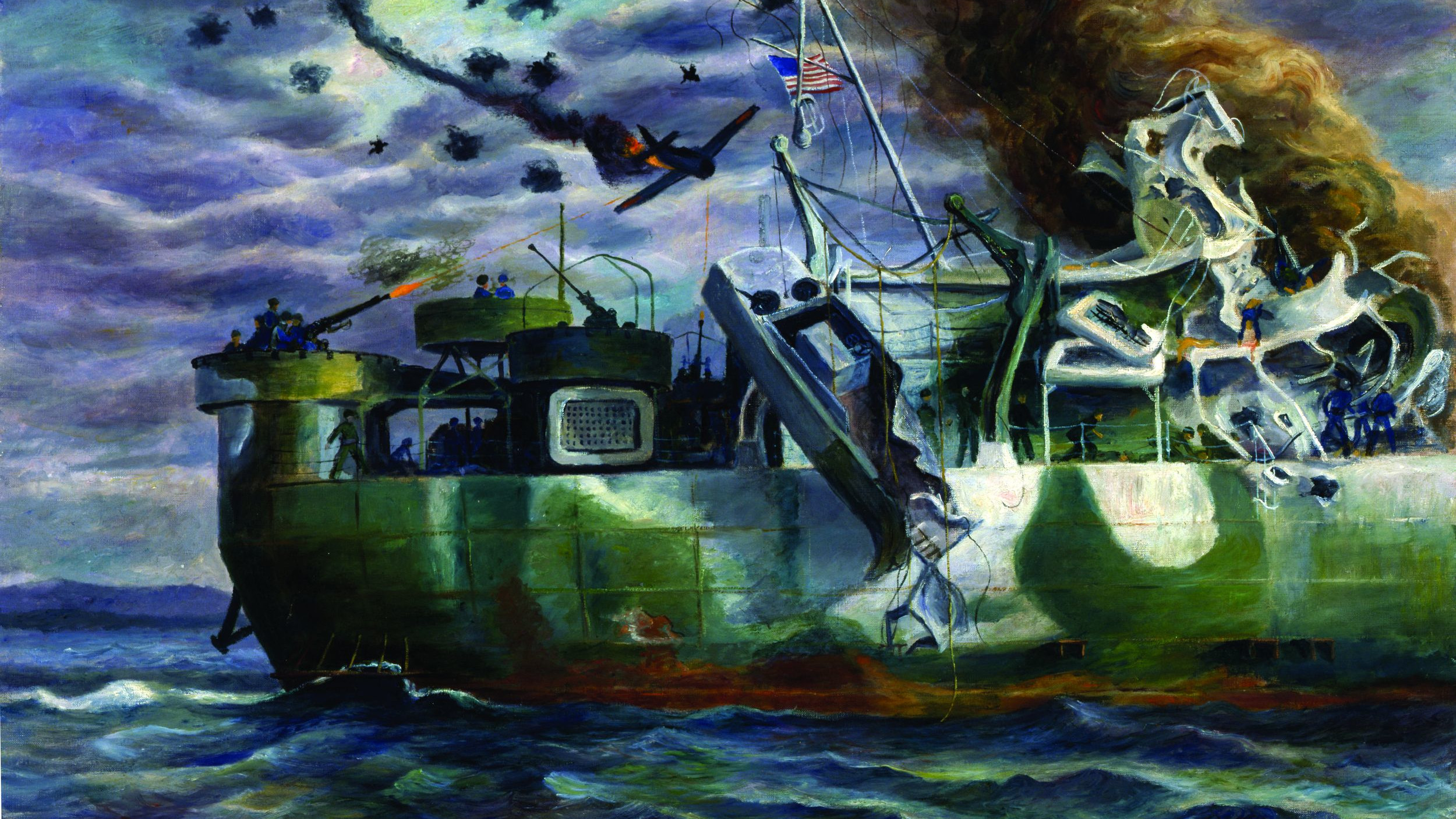
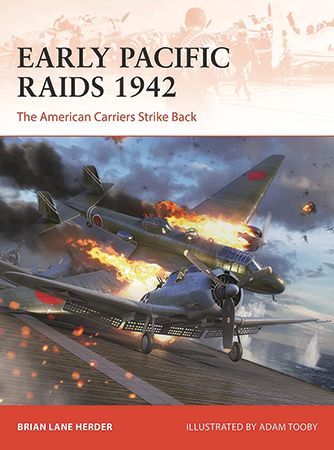 In the chaotic period immediately after the Pearl Harbor attack, the Japanese military launched numerous offensives in support of its goals to expand Japan’s territorial holdings in Asia and the Pacific. What is less known are the carrier raids carried out by the United States Navy from January through March 1942. The Americans sought to keep the Japanese off balance while the U.S. recovered from the blows it received in Hawaii, Wake Island, the Philippines and elsewhere. Japanese bases in the Marshall and Gilbert Islands, Wake Island, Rabaul, Marcus Island, Lae, and Salamanca all suffered quick hit-and-run attacks, proving America was in the fight and determined to carry forward.
These early-war carrier raids are usually given brief coverage if they are mentioned at all. This interesting new book instead focuses on them, bringing to light the planning and execution of these risky missions. These raids helped American aircrews gain experience and set the stage for future battles such as Coral Sea and Midway; this book provides a detailed look at them.
Early Pacific Raids 1942: The American Carriers Strike Back (Brian Lane Herder, Osprey Books, Oxford, UK, 2023, 96 pp., maps, photographs, bibliography, index, $25, softcover)
I have always been most interested in these early raids as they set up the US for future actions. They also demonstrated the consequence to the Japanese of their failure to follow up Pearl Harbor with continued attacks on other US locations and bases. Yamamoto was correct but failed to follow his own observation that continued operations would be necessary to force the Americans to the peace table. That would not have happened in any event but even a faulty plan could have extended the war in the Pacific.