By Justin D. Lyons
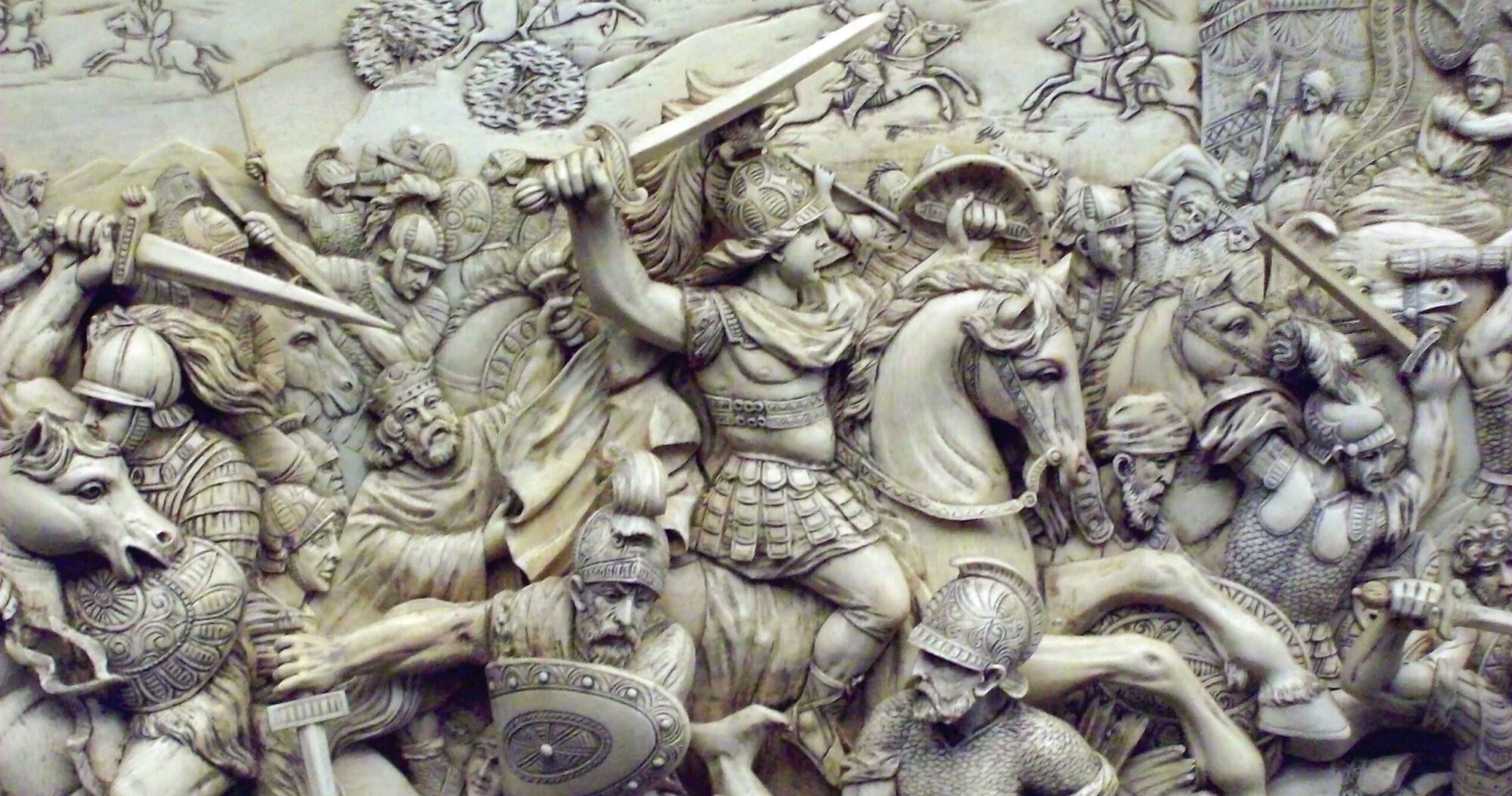
The acoustic footprint of modern warfare is dominated by high explosives and mechanized machinery: heavy artillery, aerial bombardment, and automatic gunfire. Yet combat in the ancient Mediterranean was equally defined by its volume. Because battle was concentrated within narrow spatial boundaries rather than expansive, mobile fronts, thousands of armored men collided in close physical proximity. As shield-to-shield formations clashed and war cries rose from the ranks, combatants became immersed in an overwhelming soundscape—one capable of disorienting even veteran soldiers.
Homer points to these effects in the Iliad, when the warrior Diomedes, aided by the goddess Athena, wounds Ares, driving his spear into the god’s belly. The roar of pain from Ares is described as being as loud as the war cries of ten thousand men, causing both the Greeks and Trojans to tremble in terror. There is a reason that the poetry of the Spartans, the foremost warriors of ancient Greece, was so focused on overcoming fear and holding one’s place in the battle line.
The ancient Greeks were well aware of the potency of sound on the battlefield and developed a rich vocabulary to describe the clash of arms. The Iliad employs numerous onomatopoeic words to convey the tumult of conflict. The Greek poets Kallinos and Tyrtaeus and playwrights Aristophanes and Sophocles also strove to capture the thud of bronze and wood, the clang of metal against metal, and the grunts, groans, and screams of embattled men. These sounds are the natural accompaniment of ancient warfare. Among the epithets used to describe the war god Ares, several reference sound, describing him as raising the clamor of combat and clattering in his armor.
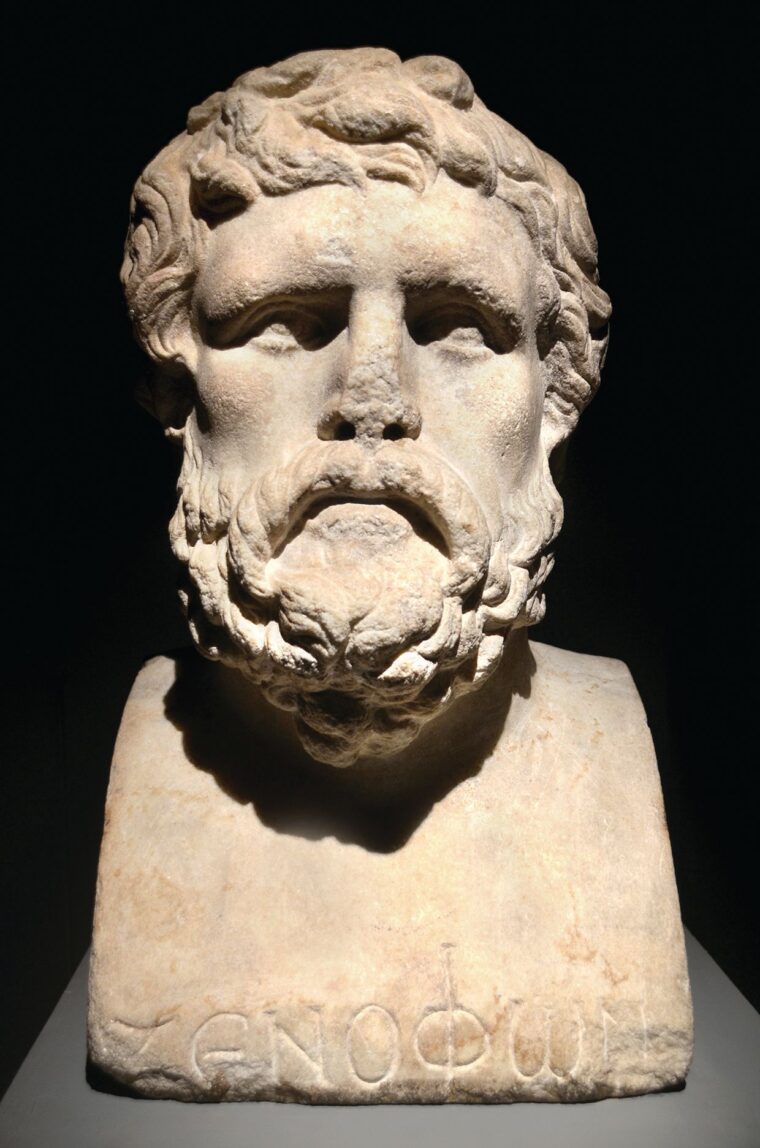
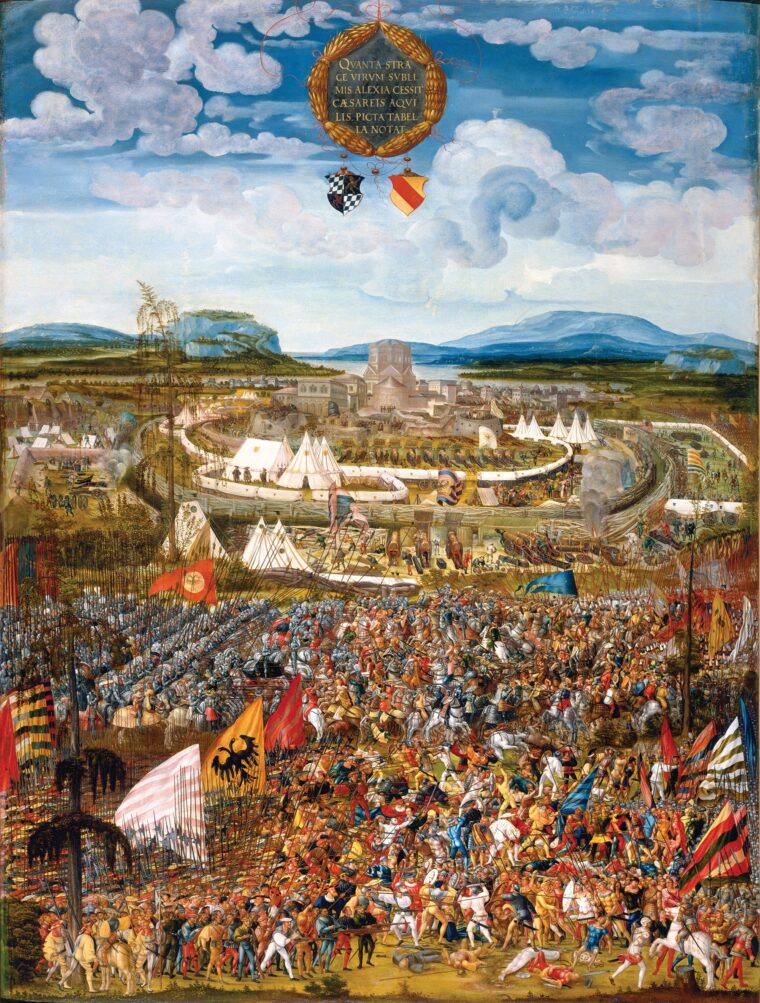
Ancient historians also describe the sounds of the battlefield. Xenophon, who himself fought and commanded in war, described that “particular sound,” the awful crash of battle, the mixture of the sounds of striking weapons, shouts, exhortations, prayers, and screams. The Romans were no less aware of the noise of war or its effect on military operations. Livy, recounting the Battle at Lake Trasimene in the Second Punic War, describes how the din of battle overwhelmed shouted orders and confusion clouded the minds of the Roman legionaries. Their sight obstructed by fog, they had to rely upon hearing, but their ears delivered only the chaotic jumble of the cries of the wounded, the sound of blows on body or armor, and the mingled shouts of triumph or panic, causing them to charge vainly in every direction and ultimately go down to disastrous defeat. In his Gallic War, Caesar describes how the troops defending the double siege lines at Alesia were particularly alarmed by the shouts of the enemy behind them because they could not face the threat directly and had to rely upon the valor of others.
These authors were attempting to describe something at the heart of the experience of ancient warfare: the soundscape of the battlefield.
Modern war has seen a dramatic increase in the level of martial sound, but its physiological and psychological effects are nothing new. The ancients knew that sound is not merely present on the battlefield but could be used to affect it. Sound can be used to terrify, disorient, deceive, and discourage. A survey of ancient military histories reveals many instances of the tactical use of sound.
A very common use of intentionally produced sound in ancient warfare was logistical. The life of the Roman legionary, in particular, was dictated by trumpet calls; they went to and rose from bed, were called to and relieved from guard duty, assembled, struck camp, and prepared to march in response to such calls. Tactically, there were many auditory signals which legionaries had to recognize and react to in the face of the enemy, such as those ordering them to advance, retreat, turn, wheel, double up by depth, and to reform. To relay these orders, musicians accompanied the legions. As the legions did not march to music in or out of battle, their only official role was to sound these signals upon the tuba, cornu, and buccina, which may be translated as straight trumpet, horn, and bugle. Such signals had the advantages of volume and range over spoken orders and could be effective even when vision was occluded by dust, smoke, or terrain.
Sound had an important part to play in the psychologically rich moment just before the collision of armies. Pre-battle intimidation was often enhanced by the shouts of warriors with drums or trumpets and, in some cases, crowds of women screaming from behind the lines. Polybius records that the Romans were dismayed by noise at the Battle of Telamon in 225 BCE when the Celtic host blew upon innumerable horns simultaneously throughout their army and raised continuous, loud, piercing cries amounting to a sonic barrage. The Germanic tribes sang the intimidating and guttural barritus, which began in a low murmur and rose to a crescendo and was compared to a wave crashing into a cliff. Tacitus reports that the Germans would measure the vigor of the hosts through the volume of this performance, being either inspired or intimidated as a result.
Such auditory expressions had a natural culmination in the joining of battle, when psychological preparation was over and the time for action had come. Action and sound melded at this moment, with each side elevating and modifying sound into the war cry as they plunged into the terrifying cacophony of combat. There are examples, however, of the transition from silence to sound being intentionally employed to shock the enemy. In Arrian’s account, Alexander gave specific sound instructions to his commanders just before the battle of Gaugamela, counseling them to maintain silence in the advance until the moment came to raise a shout and howl to terrify the enemy. This is the advice of the Roman military author Vegetius, who writes that the war shout should not be given until the armies have joined, combining the horror of the noise with the points of the weapons to maximize the effect upon the enemy.
The Romans took different approaches over their long history. The early militia army had advanced noisily, shouting and banging weapons on shields. The later, professional army maintained silence, sounding trumpets and yelling only after the pila were thrown and the charge commenced. In late antiquity, the Romans, having fought for so long in the company of Germanic peoples, both friend and foe, adopted the barritus, holding their shields close to their faces to create an unnerving, echoing effect.
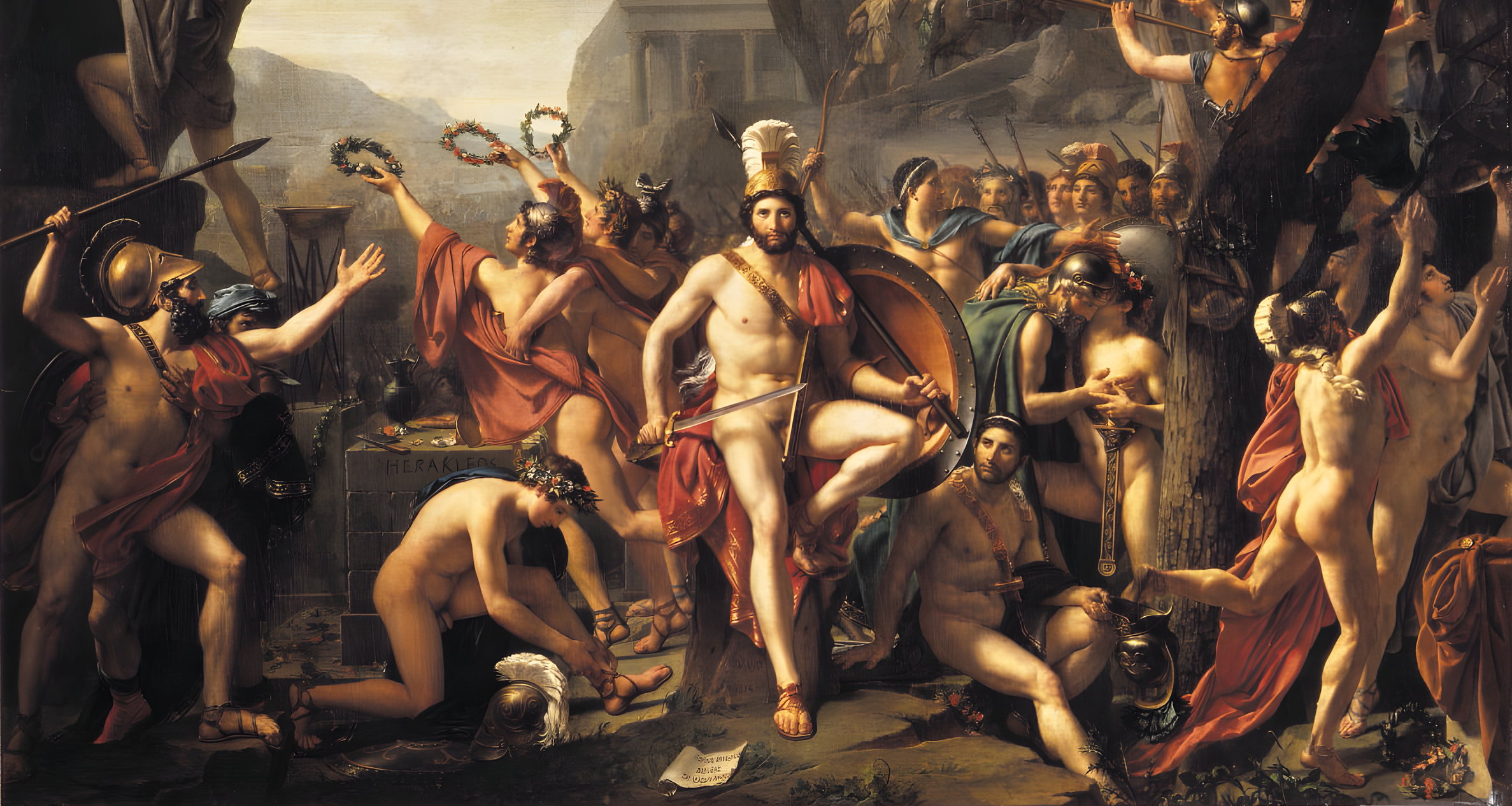
The practice of the war cry is no doubt as old as war itself, and the armies of every nation employed it both to invigorate their own troops and to panic the enemy. One finds references to war cries in virtually every ancient source describing battle. In his Civil War, Julius Caesar praises the ancient practice of accompanying the trumpet signal to attack with a general shout, harnessing the power of sound. Though not himself a commander, the Greek philosopher Onasander, writing on the psychological aspects of leadership and war in The General, similarly advocates the war cry as an essential part of the charge to destroy the fighting spirit of the enemy. But wild uproar was not the only way to intimidate. The Spartans were famous for marching calmly and cheerfully to battle, stepping in time with the rhythm of flutes. They displayed neither fear nor fury. They sang the poetry of Tyrtaeus, connecting them to their lifelong ingrained training that had prepared them for this moment. Combined with their martial reputation, it was their composed, invincible calm that was so terrifying.
Both pre-battle performances and war cries were expressions of the culture which produced them. The Greeks universally sang the paean hymn before battle. While these varied by content and dialect, each army would have recognized common cultural elements with their foe as they called upon the gods. This practice had more to do with preparation than intimidation, keeping the men moving forward to the rhythm of the chant, immersing them in the communal identity of the army. But when the moment came for the charge and collision, the paean gave way to the full-throated war cries “Alala!” or “Eleleu!”
But often such performances relied for their effectiveness on the distinctive otherness of the sound. To the Romans, the Gauls and the Germans appeared savage and wild. They sounded that way as well, clashing their weapons together, singing strange battle songs, and sounding the menacing blare of their war horns. Plutarch notes that when Gaius Marius engaged the Germanic tribes near the Rhone River, their fearsome aspect was due in part to speech and cries unlike those of other peoples and unknown to the Romans. Knowing that novelty can impart terror which familiarity will dispel, Marius stationed his troops on the fortifications by detachments, bidding them to observe and listen to the enemy. Soon, having taken true measure of the foe, they were eager to fight. It is notable that Roman armies did not expect to terrify each other in such ways and, as Appian describes, raised no battle cry when they fought. Familiarity defeats the theater of fear.
Apart from the joining of battle, sound was also used to deceive the enemy. When Darius of Persia was attempting to withdraw his army from Scythia, he kept the enemy in ignorance of his movement by maintaining a false camp. Lighting all the campfires as usual, he departed, aiding the deception by leaving all the donkeys tied so that they would make noise. Left without the crowd of men, the donkeys brayed more loudly than usual throughout the night. Hearing them, the Scythians believed the Persians had remained in place.
When Alexander reached the Hydaspes River, he found that an army had gathered under King Porus on the far bank to oppose his crossing. Accordingly, Alexander adopted the following stratagem: he nightly led his cavalry forces along various points on the bank, shouting and making as much clamor as possible to give the impression that a crossing was being attempted. Porus roused his troops and led them toward the sound. When this happened night after night, Porus stopped responding to these constant feints and alarms and remained in camp. When Porus had become thus complacent regarding these frequent forays, Alexander put his plan into effect. Dividing his force. Dividing his force, he marched some twenty miles upstream where a wooded promontory and island provided a concealing screen. Here he would gain the far bank and force the enemy to make the difficult choice of deploying to counter him, maintaining his position across from the main camp to prevent a crossing there, or attempting both by dividing his forces. By desensitizing Porus to sound, Alexander created an effective cover for his plan.
While defending the position within the city of Nola against Hannibal, the Romans combined a rush attack with the shouting of the camp followers and those guarding the baggage to give the Carthaginians the impression of a larger force than they possessed.
At the siege of Uxellodunum in Gaul, Caesar used sound to buy time by alarming the enemy. Though circumvallation of the town was complete, the besieged resisted stubbornly, rolling flaming barrels filled with grease, pitch, and wood chips into the siege works and pressing their attack. Seeing his men in danger of being overrun, Caesar ordered cohorts to ascend the surrounding hills and raise a great shout as if in preparation for an assault on the enemy walls. Frightened, the enemy called off their attack and pulled back to defend the town, allowing the Romans to extinguish the flames and shore up their defenses.
Ambient sound can also camouflage military operations. While besieging Arpi in the Second Punic War, Quintus Fabius Maximus planned a night operation in which picked troops would scale the wall and break open the gates from the inside, signaling their success with a trumpet blast. Livy notes the sound of an unusually heavy rain concealed the noise of the men working at the gate and, when later falling more gently, lulled the guards into slumber.
But sound is a double-edged sword. Like anything else on the battlefield, it can miscarry and cause confusion.
The sixth-century Byzantine military treatise, the Strategikon, notes that even the war cry could be a double-edged sword. Giving voice to the martial passions stirred by the moment of contact with the enemy can cause the army to lose cohesion. Battle rage can cause troops to abandon discipline and break formation, abandoning the advantages of training and unified action.
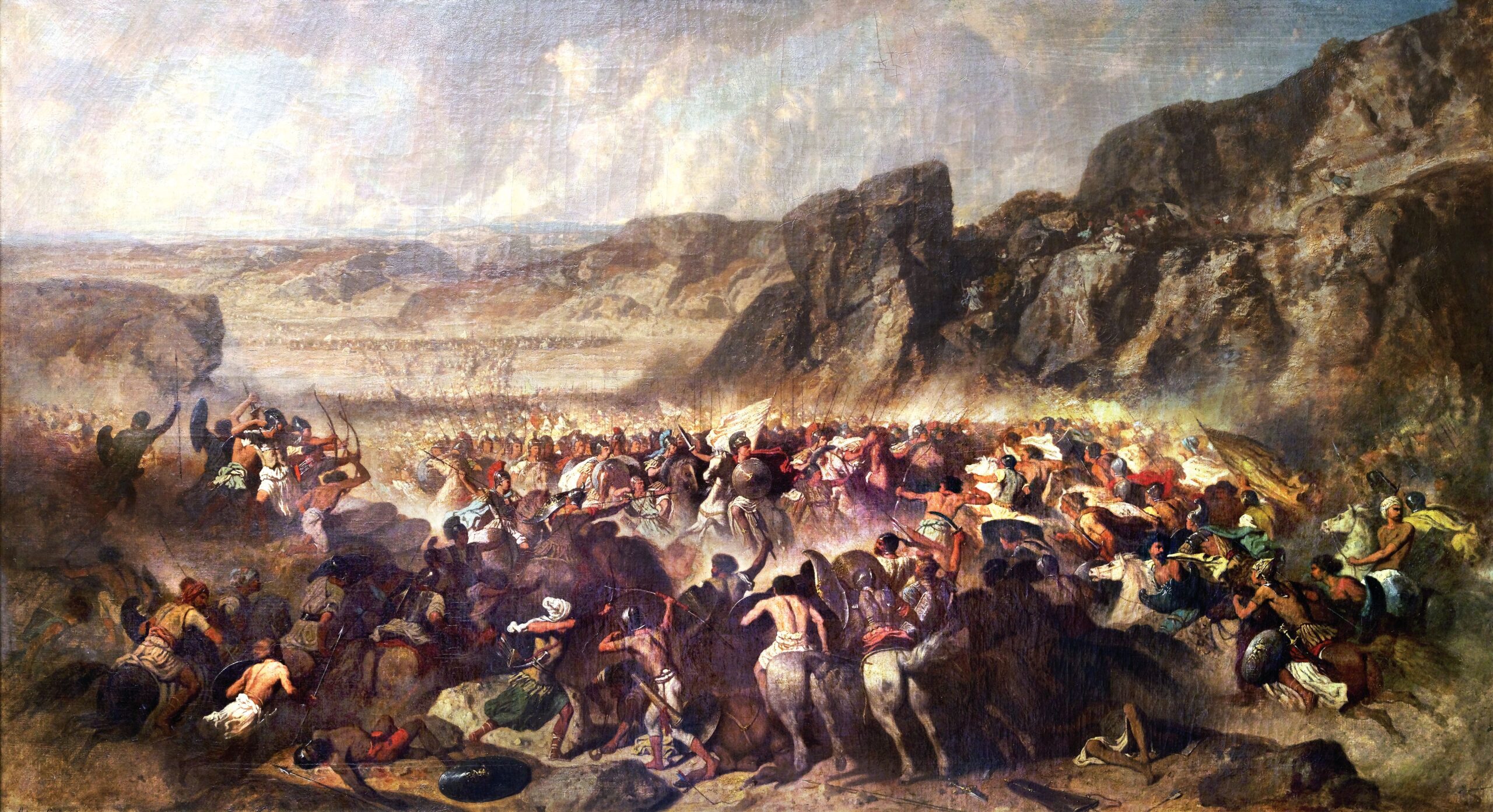
While besieging the city of Thapsus in 46 BCE, Caesar tried to restrain the impulsiveness of his troops, disliking that battle should be joined through reckless outburst rather than disciplined strategy. But on his right wing, a bugler sounded the advance without orders, and the call was taken up. Even the centurions physically opposing the troops could not stop the legionaries from engaging against the general’s orders.
Having overrun the enemy camp at Gergovia in Gaul through swift stealth and not wishing to assault the town itself, Caesar ordered the signal for retreat to be sounded. But, according to his own account, some of the legions did not hear the trumpet because a wide ravine lay between them and the trumpeter. Carried away by hopes of victory, they continued the assault. But they soon found themselves hard pressed and were driven off with heavy losses.
During a night attack on the Epipolae, the high ground above the city of Syracuse in Sicily, the Athenians suffered defeat largely because of sound. In the darkness, what did them the most harm was the singing of the paean. They could not distinguish between the songs of the Dorian peoples serving in their own army and the hymns of the enemy. Thrown into disorder and terror, they collided with each other and even came to blows. Many fell from the cliffs in a rout while others wandered until they were cut off and killed by the enemy when day broke.
Sound can also give you away, exposing your operations to the enemy. Herodotus reports that the Persian ascent of Mount Anopaia to get behind the Spartan position at Thermopylae was revealed to the Phocians guarding the path by the noise the Persians made marching over fallen leaves. In another anecdote, he tells of the Persian siege of Barke being delayed when a blacksmith of the city used the sound vibrations of a bronze shield to detect their underground tunnels.
Humans are not the only noisemakers on the battlefield. Animal noises often contributed to the general clamor as well.
Horses were nearly ubiquitous on ancient battlefields, and cavalry was often a decisive military asset. Horses make many noises, such as neighing, snorting, blowing, and squealing that added to the general din of battle and, of course, the thunder of thousands of cavalry charging had an alarming effect. But horses are not only producers of sound; they are also affected by it. As Xenophon noted in his treatise, On Horsemanship, horses, like humans, can be upset and bewildered by sudden and alarming sounds. The training of war horses involved desensitizing them to such sounds, but noise was sometimes used in attempts to negate their effect on the battlefield by throwing them into confusion. At Cunaxa, the Greeks clashed their shields against their spears to frighten the Persians’ horses. Marc Antony used the same stratagem against the Parthians. As Hannibal crossed the Alps, the natives created disorder in his marching column by frightening his horses. Charging down with wild shouts magnified by echoes from the woods and valleys, they panicked the animals which, in their terror, pushed men over the precipice as they plunged into the depths below.
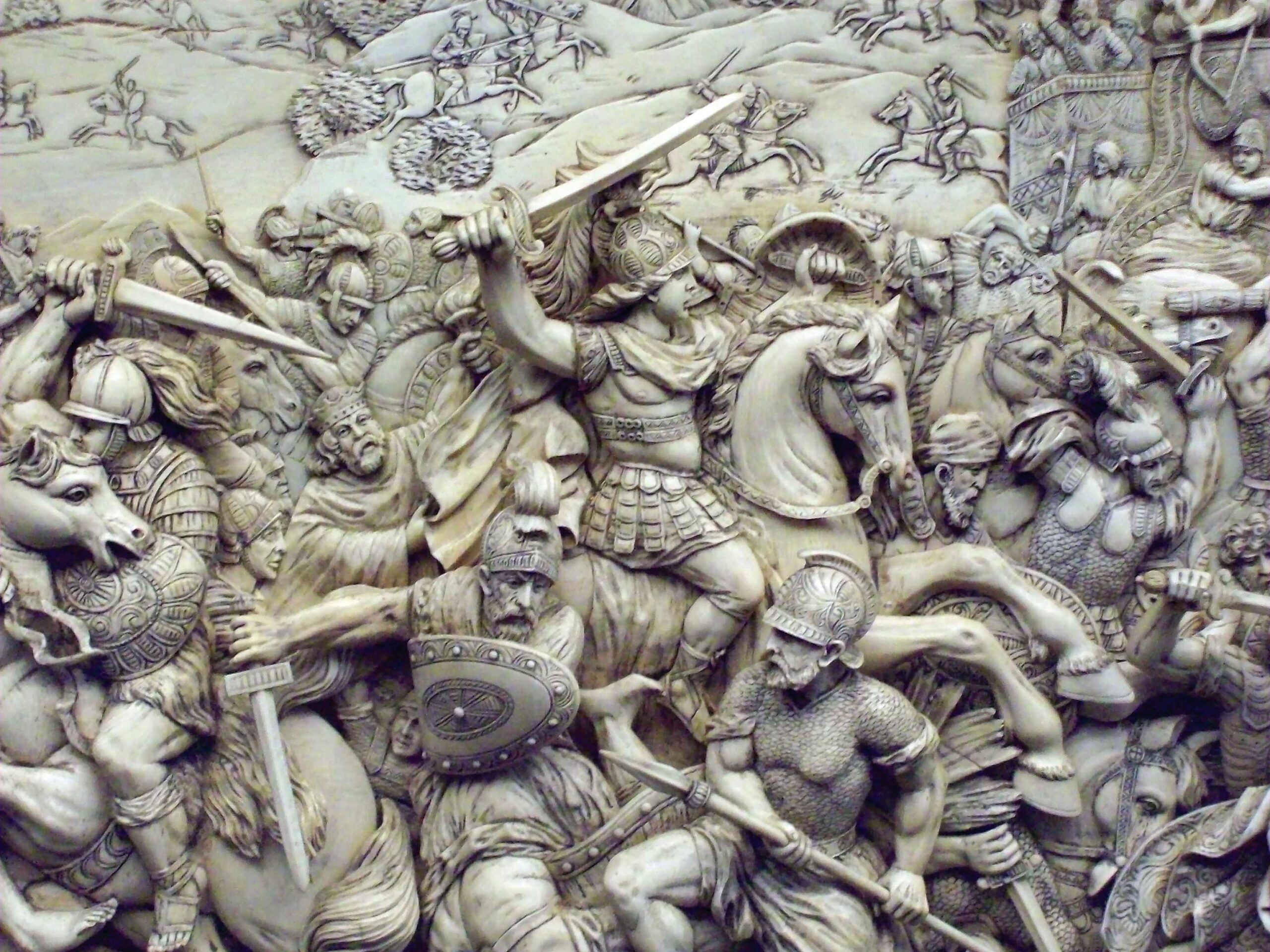
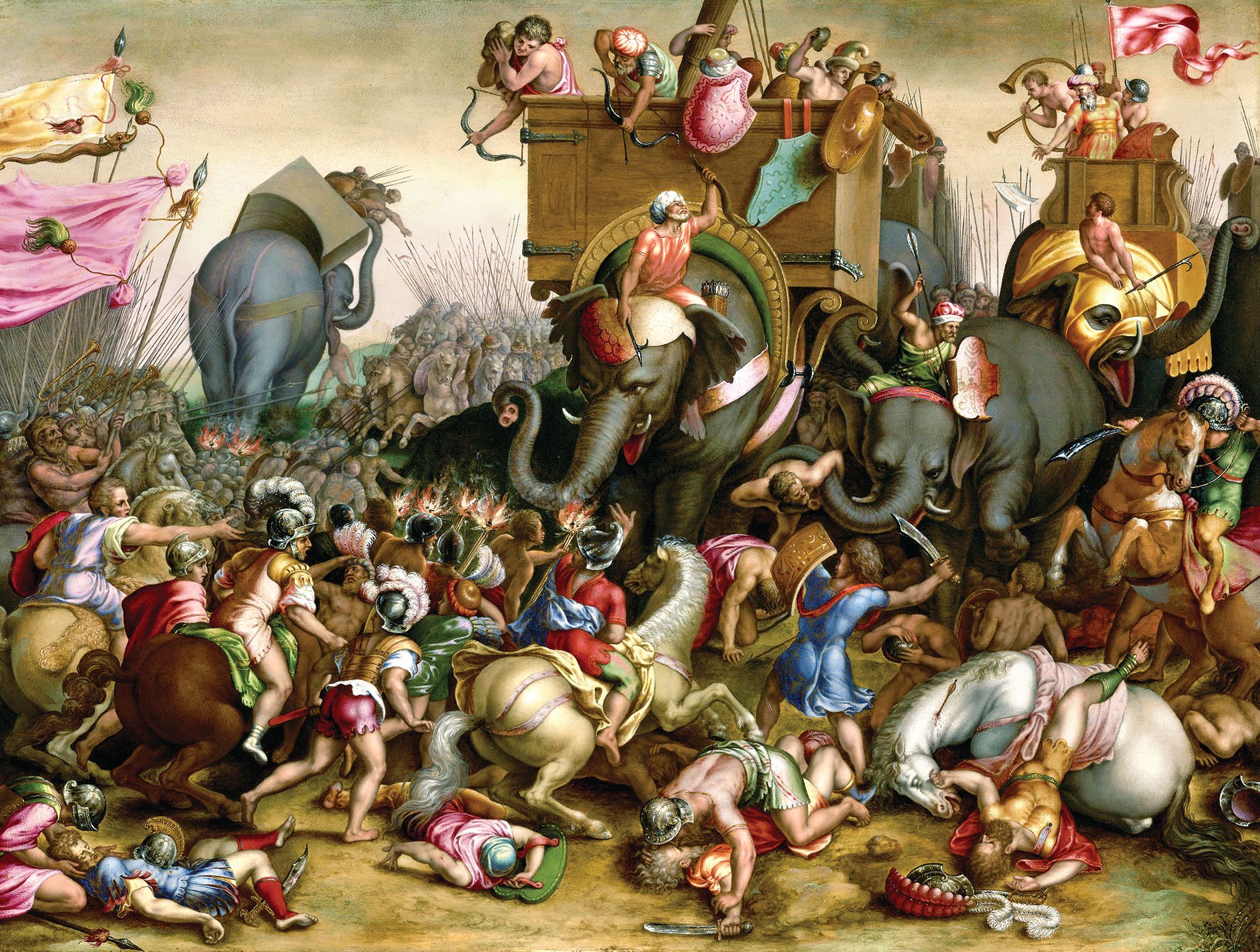
Equine fear of certain sounds forms an intersection with another animal present on many ancient battlefields, the elephant. In addition to their size and power, elephants provided another advantage which could turn the tide of battle even when deployed in small numbers: horses are afraid of them. They are alarmed by the size, smell, and trumpeting of elephants, serving to limit or nullify the effectiveness of enemy cavalry. Hellenistic kings viewed this as a primary function of elephants in battle. Antiochus I was reportedly victorious over numerous Gallic cavalry in 278 BCE because of the presence of only sixteen elephants. Thus, one of the advantages of placing elephants on the wings was to put them opposite enemy cavalry, which customarily occupied that position. Alexander resorted to deception at the Hydaspes largely because Porus had deployed a large number of elephants, and he knew that the Macedonians’ horses would go mad at the sight, sound, and smell of them, refusing to climb the bank in the face of their charge or even to remain on the floats that ferried them across.
Some attempts were made to overcome this natural aversion. Polyaenus, in his Stratagems, records that Perseus had wooden elephants built, realistic in size and color, stationing a trumpeter within to sound loud, harsh notes to accustom the Macedonian horse to the appearance and sounds of the beasts. Caesar attempted something similar in preparation for battle with his Pompeian rivals at Thapsus in 46 BCE. Aware of the fear elephants created in those unaccustomed to them, he had several of them shipped to North Africa from Italy for the purpose of accustoming his troops and cavalry to the great beasts. Kept in proximity, the horses became familiar with the animals and so lost their fear of them.
Yet war elephants were equally vulnerable to acoustic disruption. Possessing relatively poor eyesight paired with remarkably acute hearing, the beasts were prime targets for sound-based terror—and their acoustic Achilles’ heel proved to be the piercing squeal of panicked pigs. Polyaenus records that during the Siege of Megara by Antigonus II Gonatas (c. 266 BCE), the Megarians set fire to pigs coated with grease and pitch. The squeals of pain and terror from these living torches rushing among them drove the elephants into a panicked flight. According to Procopius, the Romans defeated the Persian attack on Edessa in the sixth century CE by hanging a squealing pig from the wall in the face of the foremost elephant. As with horses, some attempts were made to desensitize elephants by raising swine among them so that they became accustomed to their noise.
Other noise was used to combat elephants as well. As the Carthaginian elephants advanced at Zama in 202 BCE, thousands of Romans shouted and sounded trumpets. Startled, and suffering from missiles striking from the front, many of the elephants veered toward the wings and tangled with their own cavalry, throwing them into disorder. The result was a one-sided victory with over 20,000 Carthaginians killed upon the field with as many taken prisoner.
All of the senses are bombarded in war. While we tend to associate the power, terror, and effective use of battlefield sound with modern warfare, they have always been a part of armed conflict. Archaeology has revealed Roman sling stones with small holes in them recovered in Scotland that caused them to whistle as they flew. While the noise produced would fall far short of modern explosive artillery, thousands of such bullets shrieking across a battle line would produce a profound psychological disturbance. Though there is little archaeological evidence for the past uses and experience of sound, it is to be hoped that future discoveries and the emerging field of archaeoacoustics will reveal more about the auditory experience of ancient warfare.
Join The Conversation
Comments
View All Comments