Pacific Theater
Japanese Atrocities at Los Baños
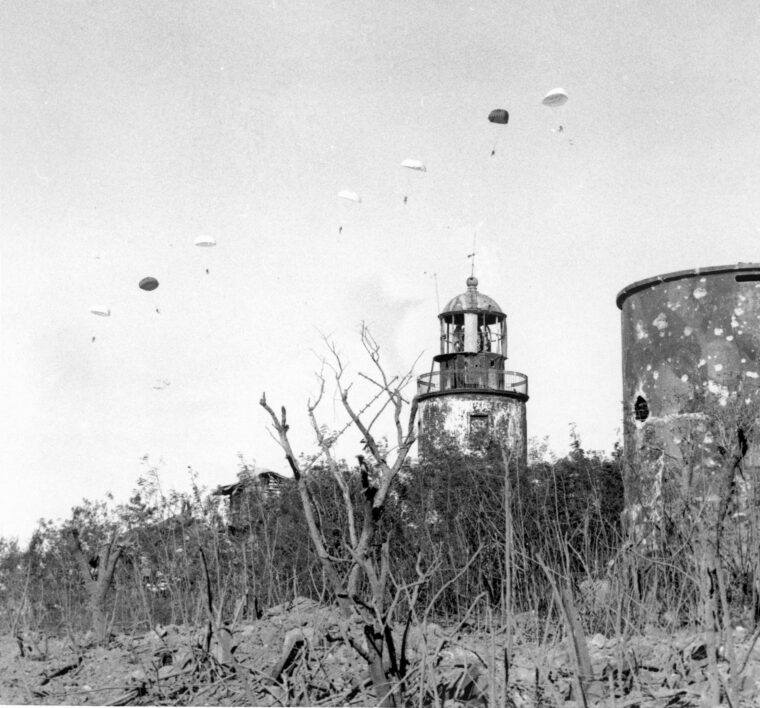
By Donald J. Roberts IIWithin a week of the Los Baños raid, paratroopers from Burgess’s 1st Battalion moved back into the Los Baños area to occupy the region. Read more
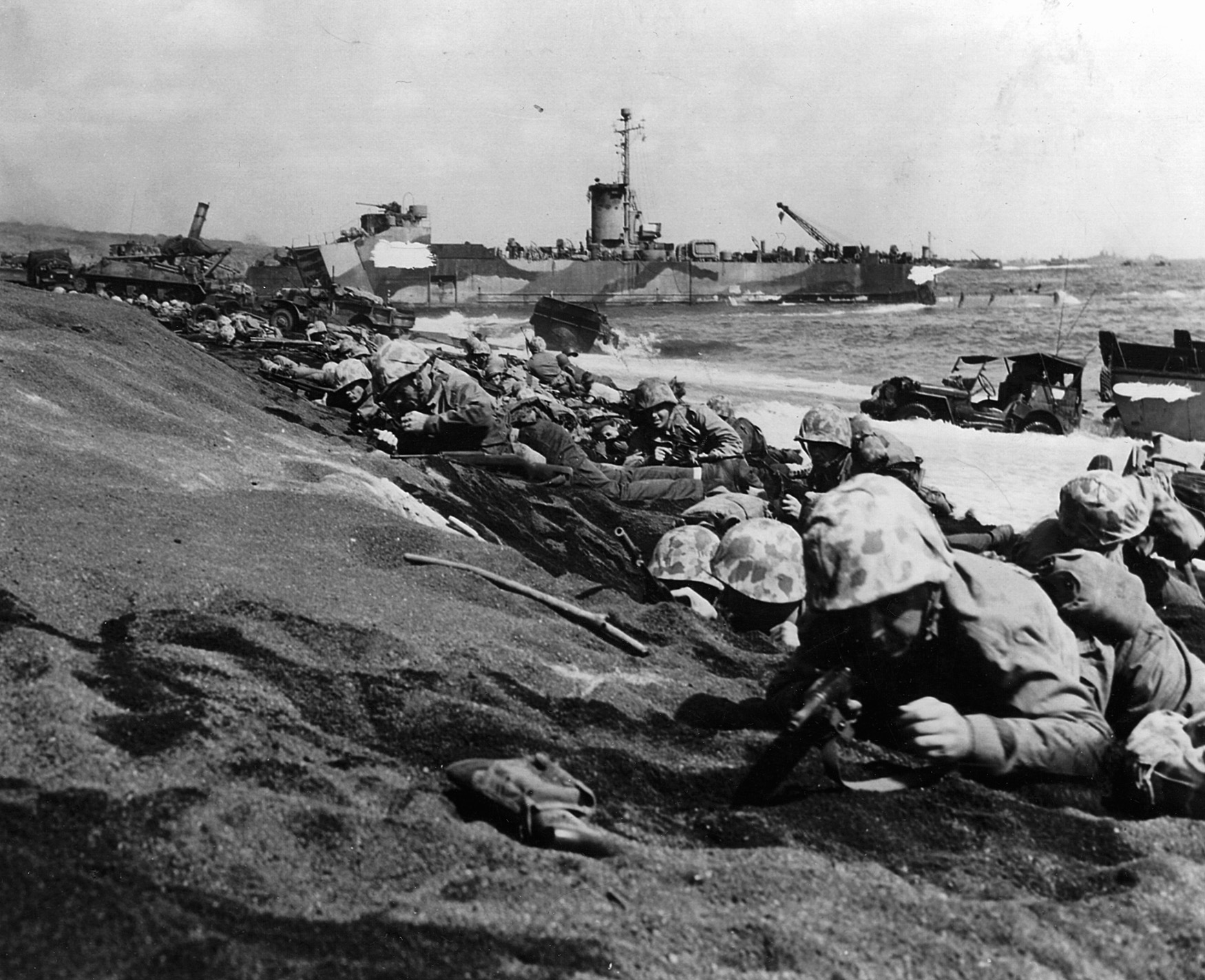
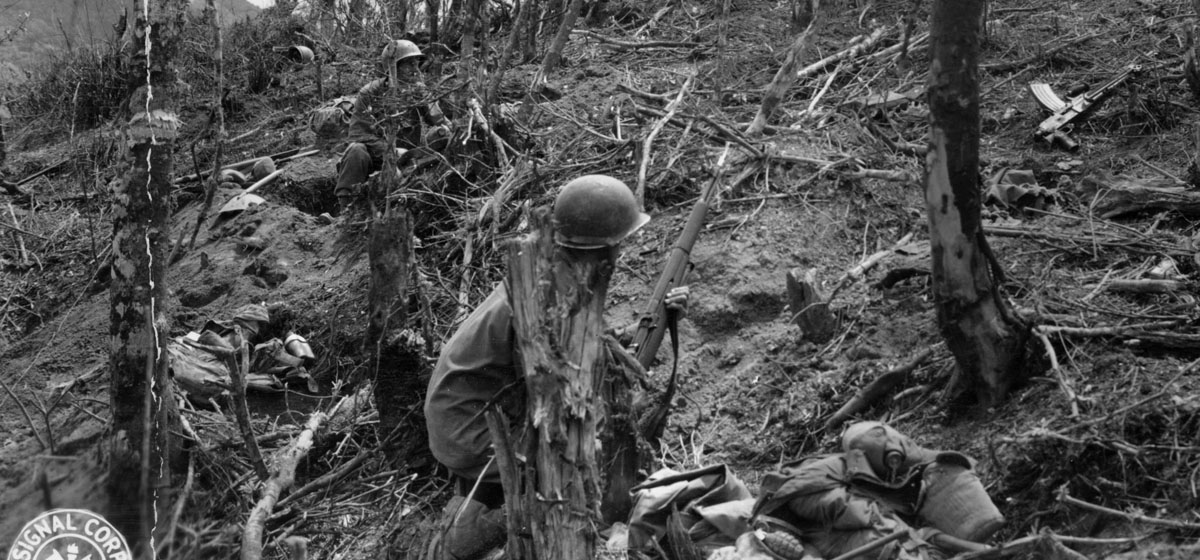
The Pacific Theater during World War II is generally regarded as the area of military confrontation between the Allied powers and Imperial Japan. The Pacific Theater consists of the entire operational expanse of the war from the Aleutian Islands in the north to Australia in the south, including island chains such as the Solomons, Gilberts, Marshalls, and Marianas. The China-Burma-India (CBI) Theater is also considered a major component of the Pacific Theater.
Pacific Theater
Within a week of the Los Baños raid, paratroopers from Burgess’s 1st Battalion moved back into the Los Baños area to occupy the region. Read more
Pacific Theater
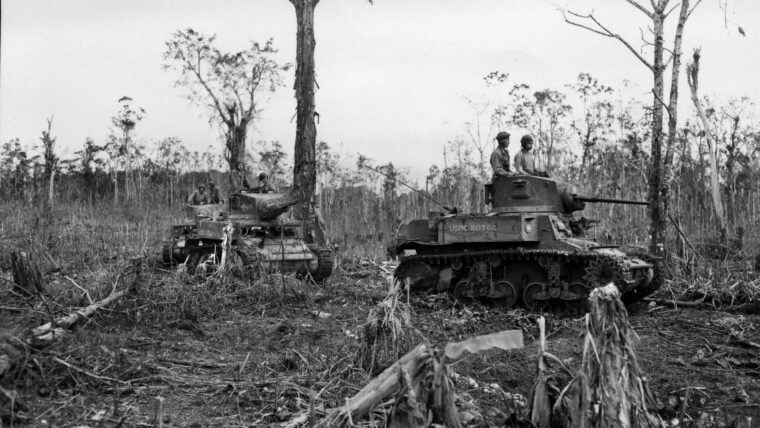
Vice Admiral William “Bull” Halsey, commander of the U.S. 3rd Fleet, did not want another protracted campaign like he had experienced while trying to take Munda in New Georgia. Read more
Pacific Theater
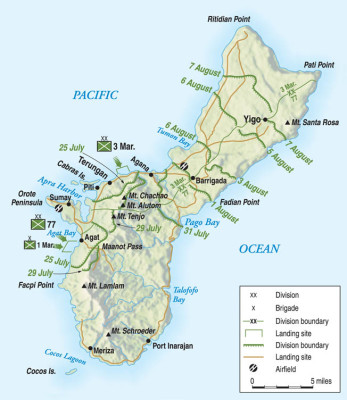
For U.S. forces, the Pacific Theater was orchestrated by two leading commanders: Admiral Chester Nimitz controlled the Pacific Ocean Areas (POA), and General MacArthur was the Supreme Allied Commander of the South West Pacific Area (SWPA). Read more
Pacific Theater
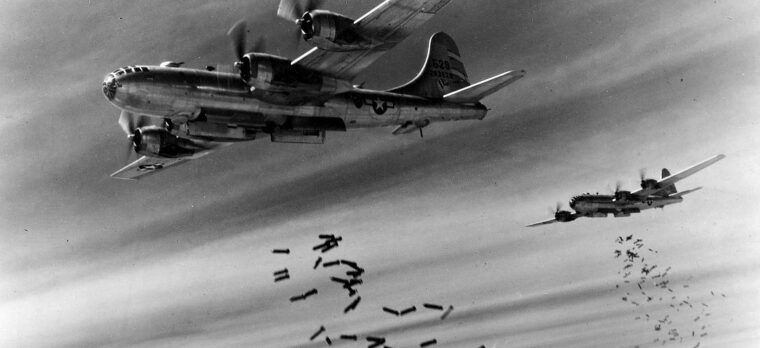
By Joe Kirby
When Maj. Gen. Curtis LeMay, the hard-driving commander of the Twentieth U.S. Air Force based in Guam, decided to change tactics in early 1945 to boost the effectiveness of the B-29 Superfortress, it was the Bell Aircraft plant in Marietta, Georgia, that ultimately provided him with the stripped-down bombers that played such a key role in ending the war in the Pacific. Read more
Pacific Theater
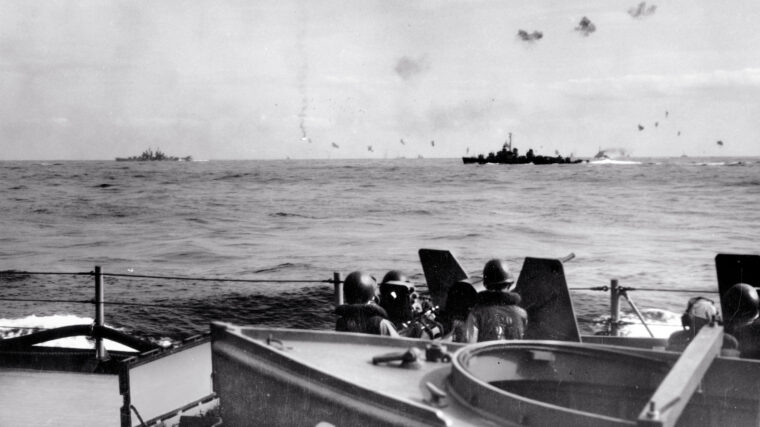
Only 340 miles from the home island of Kyushu, the final objective of the American military surge across the Pacific during World War II, short of an invasion of Japan itself, was Okinawa in the Ryukyu archipelago. Read more
Pacific Theater
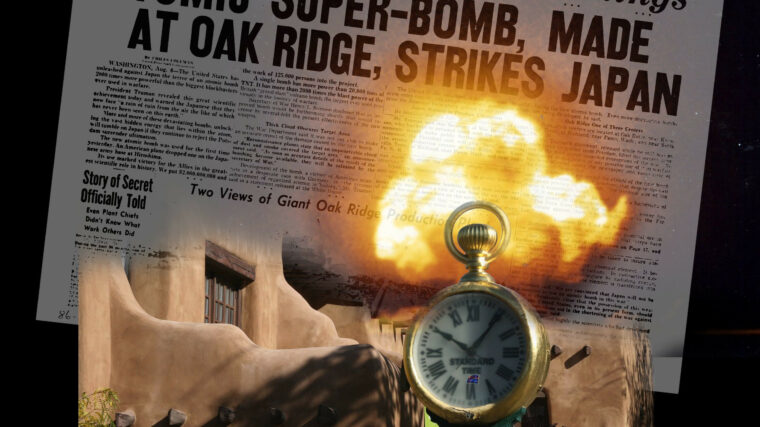
New Mexico and its capital of Santa Fe bring to mind some beautiful images. Stunning sunsets, unlimited vistas, a plethora of art galleries, the spectacular food enlivened with the local green chile, an ancient Native American culture that still thrives, and a Spanish heritage tradition going back to within 50 years of Columbus’s arrival all make for a unique cultural and physical environment. Read more
Pacific Theater
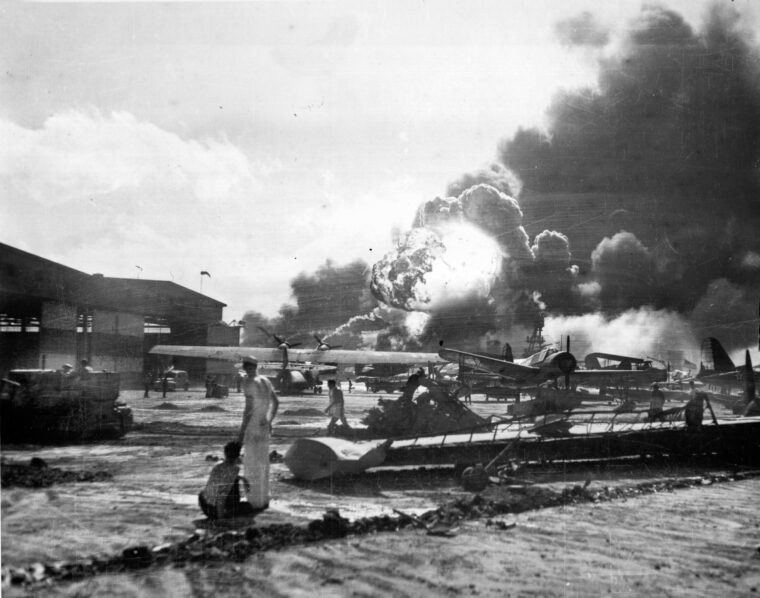
“You are probably the nearest to war that you’ll ever be without actually being in it,” said Commander Harold M. Read more
Pacific Theater
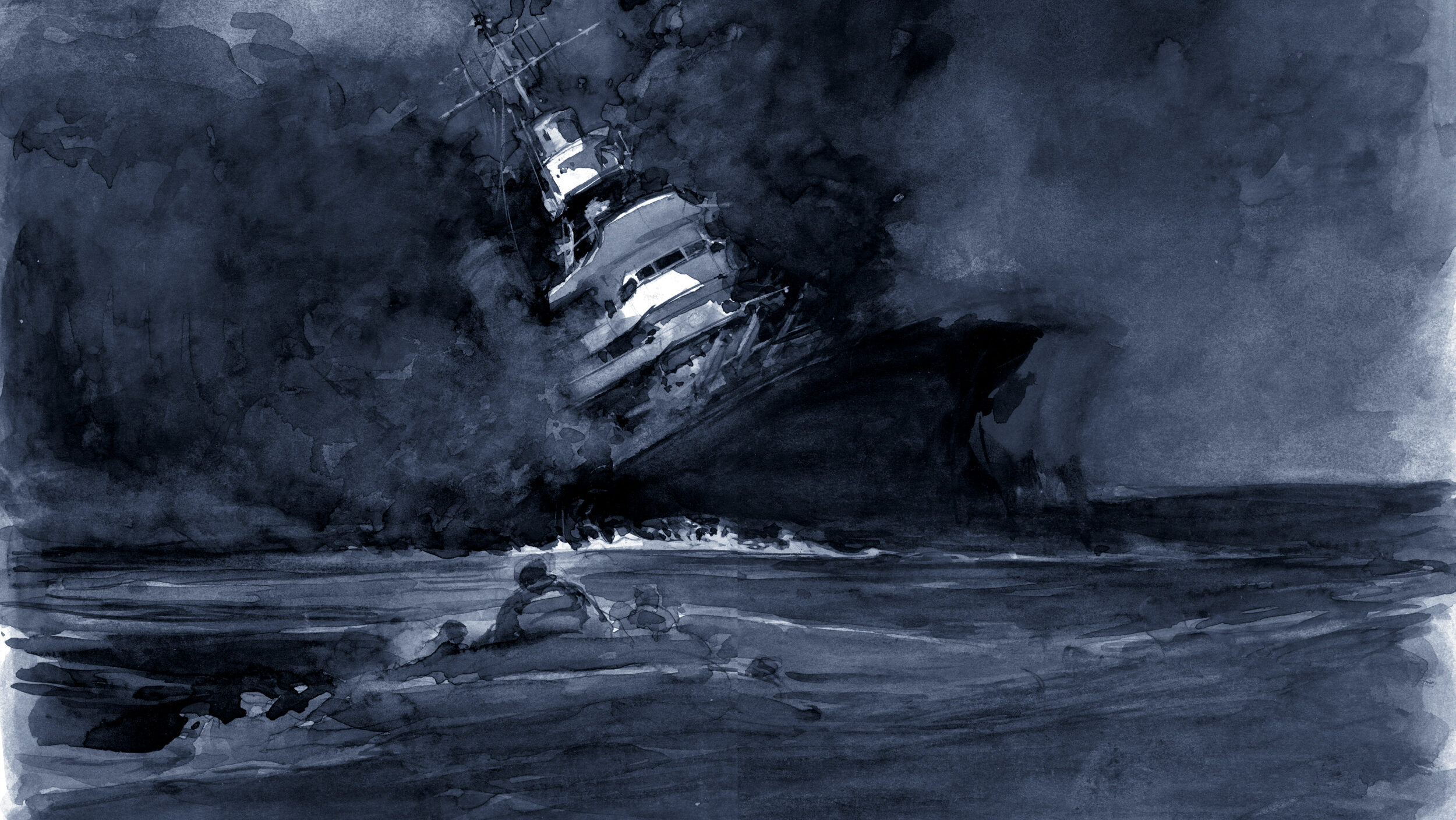
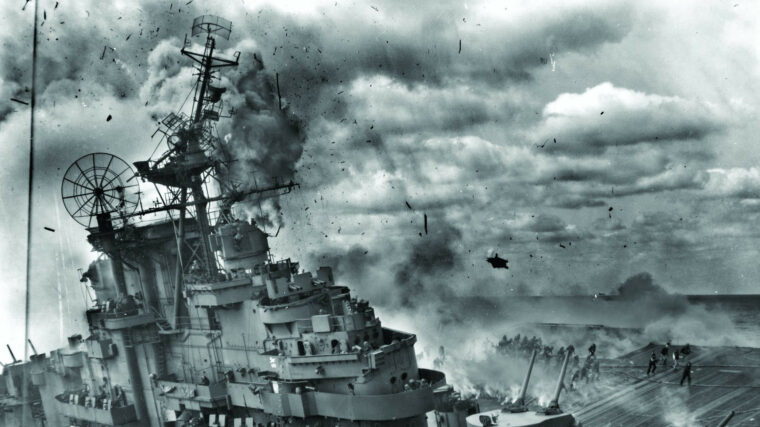
On March 19, 1945, the Essex-class carrier USS Franklin (CV-13), dubbed “Big Ben,” lay 50 miles off Honshu, one of Japan’s Home Islands. Read more
Pacific Theater
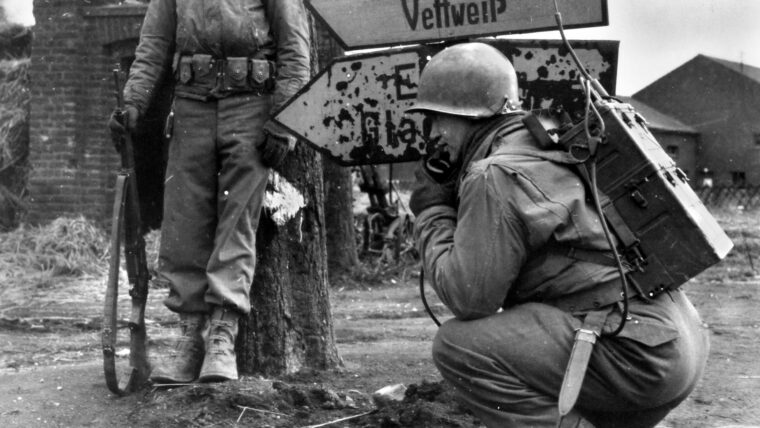
Early in 1945, in the Northern Appenine mountains of Italy, T/5 Harvey, a radioman with the 10th Mountain Division, is carrying his WW2 radio backpack, the ever-handy SCR-300, into combat for the first time. Read more
Pacific Theater
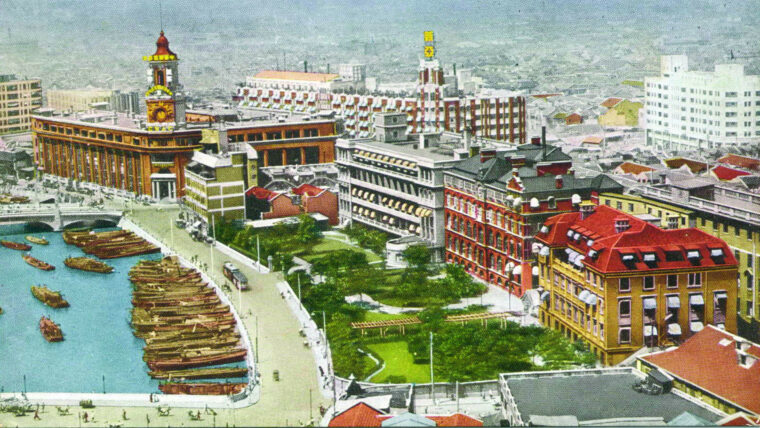
By the 1930s, Shanghai was already a legend in its own time––the most modern, populous, and decadent city in China. Read more
Pacific Theater
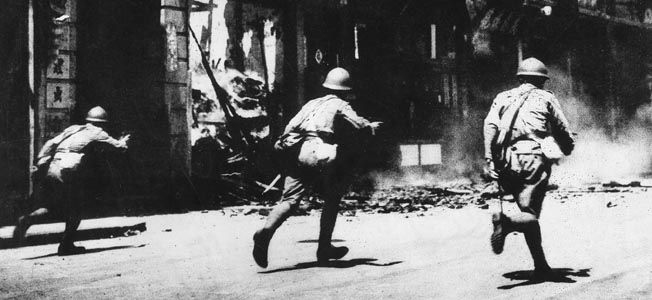
In Western countries, “military police” are associated in the public mind with keeping order among off-duty personnel, such as arresting drunken servicemen. Read more
Pacific Theater
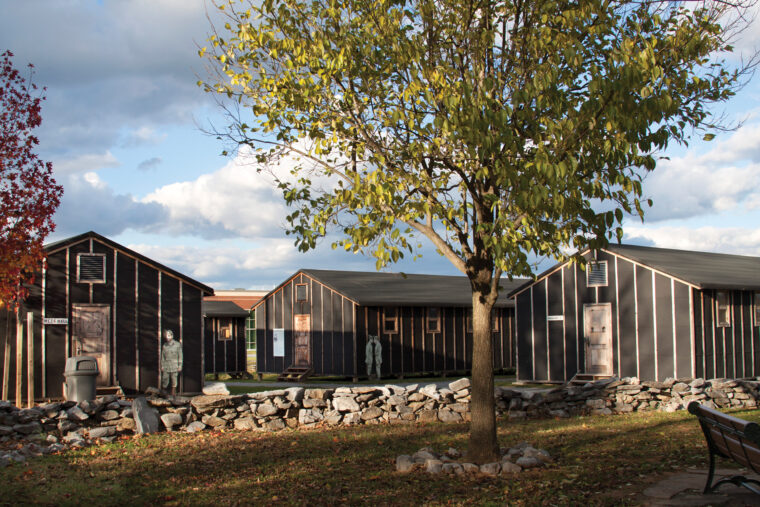
In the heart of Pennsylvania, not far from the Civil War battlefields of Gettysburg, stands the U.S. Read more
Pacific Theater
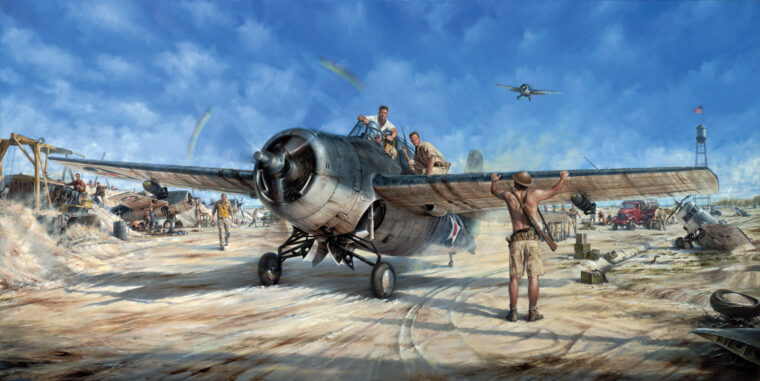
“All hands have behaved splendidly and held up in a manner in which the Marine Corps may well tell.” Read more
Pacific Theater
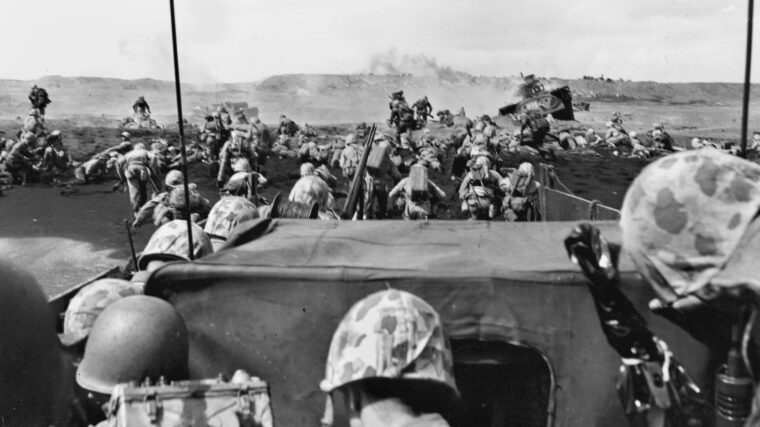
“You know,” said Marine Maj. Gen. Clifton B. Cates to a war correspondent on the eve of Operation Detachment, the invasion of Iwo Jima, “if I knew the name of the man on the extreme right of the right-hand squad of the right-hand company of the right-hand battalion, I’d recommend him for a medal before we go in.” Read more
Pacific Theater
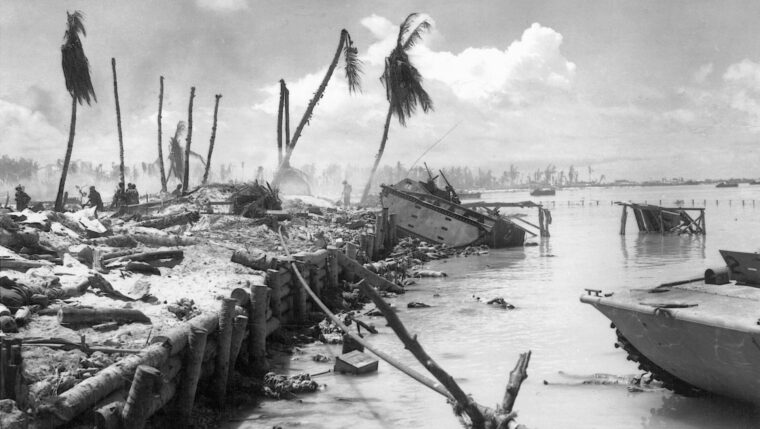
He wore the clothes of one of Tarawa’s most well-known and decorated heroes, but his name will not be found in any history book. Read more
Pacific Theater
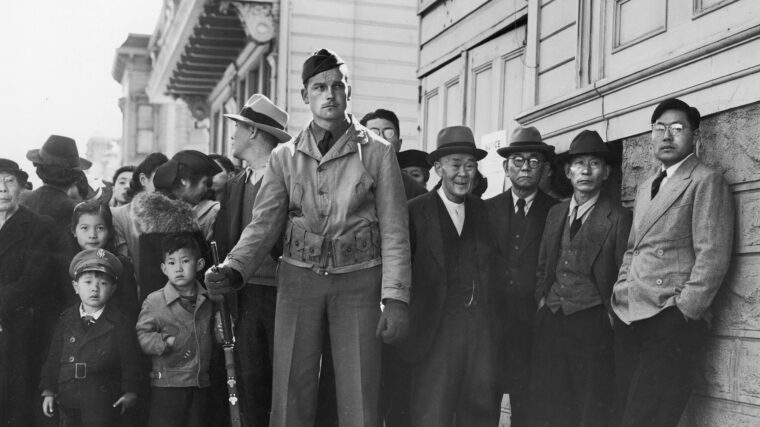
“We were stunned when we entered the camp,” Yoshio “Yosh” Nakamura said, remembering the day when he and his family, from El Monte, California, were herded through the main gate at the Gila River Relocation Center—a Japanese American internment camp 30 miles southeast of Phoenix, Arizona—carrying only suitcases into which their worldly possessions had been crammed. Read more
Pacific Theater
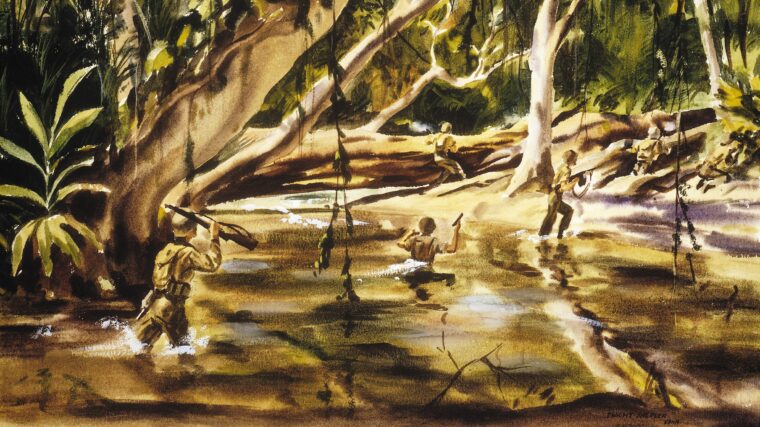
On August 6, 1942, the men of Maj. Gen. Alexander Vandegrift’s U.S. 1st Marine Division watched from the railings as their troopship, the USS George F. Read more
Pacific Theater
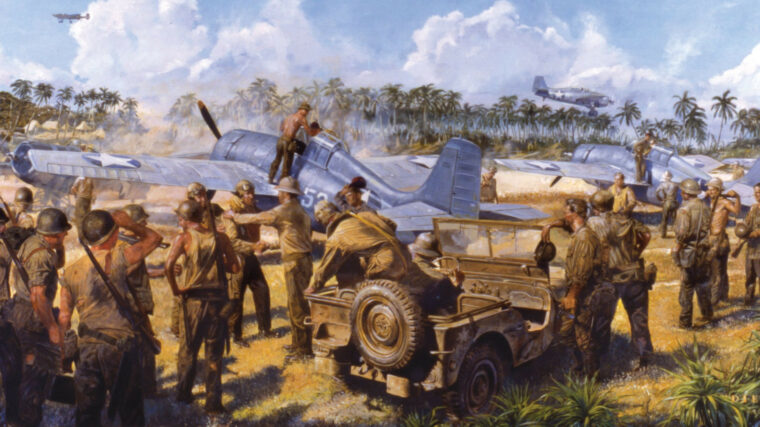
“As a returning flight of Marine SBDs, dive bombers, were setting down on the airstrip, one of the planes lost a bomb which had failed to release during the mission. Read more
Pacific Theater
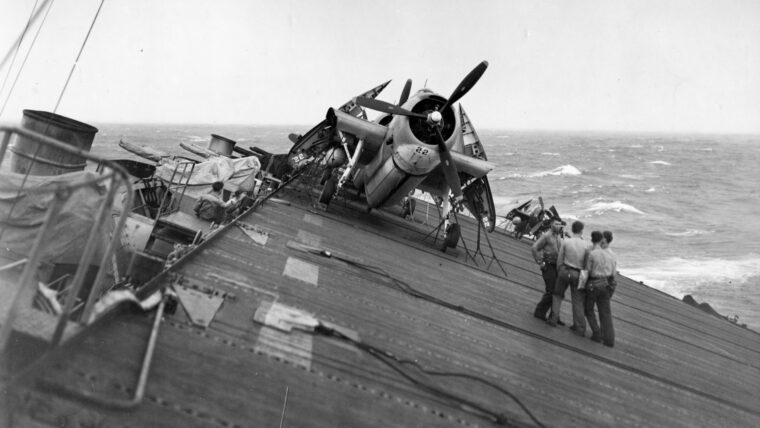
After two grueling months of action in the Pacific, Vice Admiral John S. “Slew” McCain’s powerful Task Force 38 retired in late November 1944 to the big Caroline Islands base of Ulithi Atoll for a 10-day breather. Read more
Pacific Theater
Under a midnight moon, hundreds of soldiers crept forward into position along the riverbank. Fields of tall reeds helped conceal them from observation but could not muffle the sounds of weary men slipping in the mud. Read more