Dwight D. Eisenhower
The Mystery of Slapton Sands: Operation Tiger
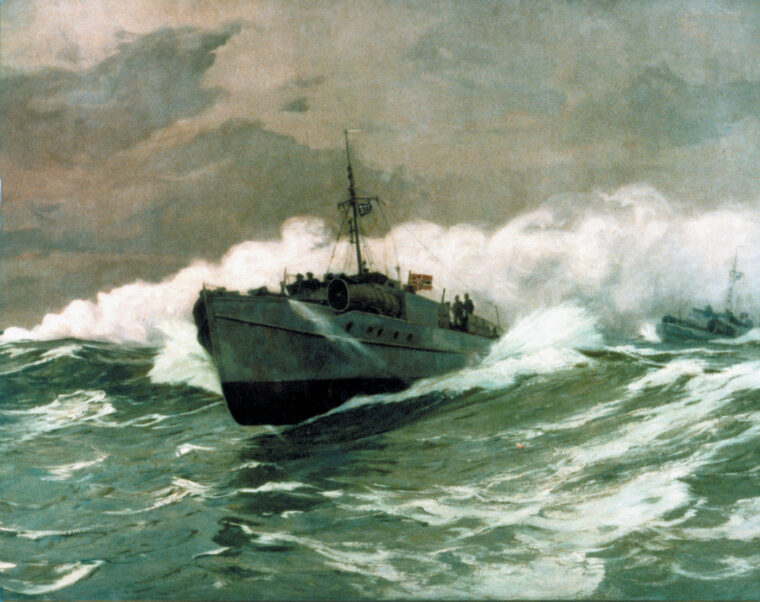
By Charles WhitingIn the early 1970s, a former British Royal Air Force policeman–turned-hairdresser, Ken Small, visited South Devon on England’s Channel coast. Read more
Dwight D. Eisenhower
In the early 1970s, a former British Royal Air Force policeman–turned-hairdresser, Ken Small, visited South Devon on England’s Channel coast. Read more
Dwight D. Eisenhower
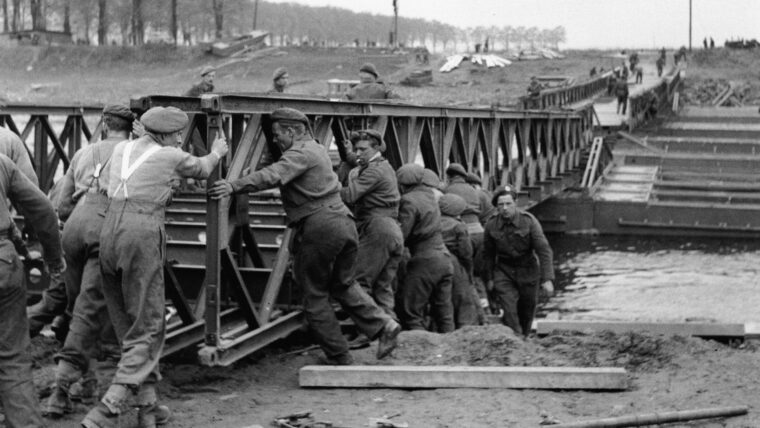
I was always fascinated by the mastery of water,” Sir Donald Coleman Bailey reflected, long after the end of World War II. Read more
Dwight D. Eisenhower
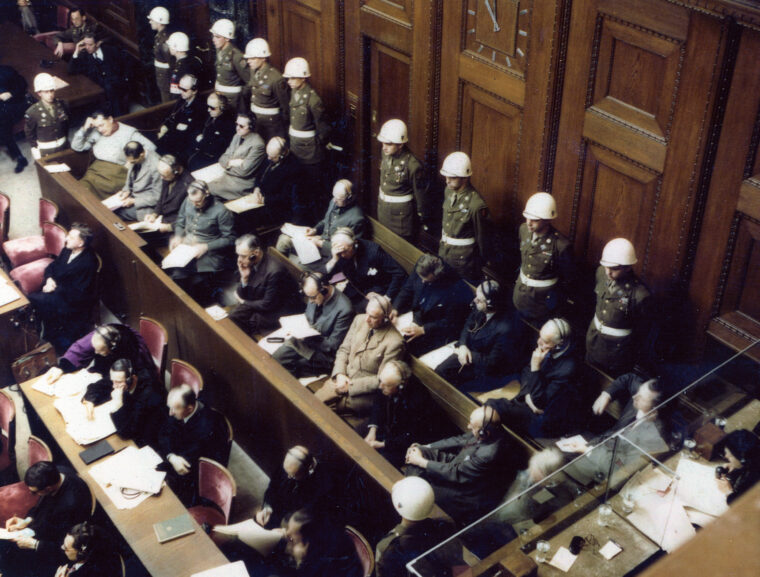
Stripped of the regalia and high position of Reich Marshal in the Nazi regime and tried as a war criminal, the former Luftwaffe chief was by far the most colorful and outspoken defendant during the postwar proceedings. Read more
Dwight D. Eisenhower
It was an impressive sight. Upon the reviewing stand as honored guest was General Dwight D. Read more
Dwight D. Eisenhower
The three rubber dinghies struggled through the rough surf in the pitch black night toward an inhospitable stretch of rocky beach. Read more
Dwight D. Eisenhower
Two men were seated on either side of a paper-strewn table inside an office of MI5, the British intelligence service, in the Royal Victoria Patriotic School at Clapham, London, shortly after the fall of France in the spring of 1940. Read more
Dwight D. Eisenhower
Rain battered the shore and the seas were rough on the night of October 21, 1942. Under the surface of the water, a submarine carried the Allies’ best hope for turning the tide of war in 1942. Read more
Dwight D. Eisenhower
On June 6, 1944, the Allies unleashed on land, air, and sea the largest invasion force in world history in an enormous effort to liberate Europe from Nazi tyranny. Read more
Dwight D. Eisenhower
Peering intently through a telescope, General Lemuel C. Shepherd, the commandant of the Marine Corps, scanned the shell-pocked Korean terrain in front of his position. Read more
Dwight D. Eisenhower
In June 1961, Walter Ulbrecht, longtime Communist party leader of East Germany, denied that his government had any intention of building the Berlin Wall, which would separate East and West Berlin. Read more
Dwight D. Eisenhower
When Adolf Hitler became chancellor of Germany on January 30, 1933, the world changed forever.
Not only was Hitler determined to pay back Germany’s enemies for his country’s defeat during the Great War, but he was also determined to rid Germany and the rest of Europe of persons whom his twisted Aryan ideology believed were “inferior” or “subhuman.” Read more
Dwight D. Eisenhower
The United States had not yet entered World War II when Time magazine noted that the Army had created two new armored divisions. Read more
Dwight D. Eisenhower
In the weeks leading up to the still-undefined D-Day, commanders argued about every detail of Operation Overlord. Read more
Dwight D. Eisenhower
Commonly known as D-Day, the Western Allies invaded Nazi-occupied Europe during World War II on June 6, 1944. Read more
Dwight D. Eisenhower
The Normandy Invasion (code-named Operation Neptune) was the largest amphibious invasion in the history of armed conflict. It combined efforts from nearly 290 escort vessels, 5,000 landing and assult craft, and 160,000 troops. Read more
Dwight D. Eisenhower
SUPEREME HEADQUARTERS ALLIED EXPEDITIONARY FORCE
Soldiers, Sailors and Airmen of the Allied Expeditionary Force!
You are about to embark upon a great crusade, toward which we have striven these many months. Read more
Dwight D. Eisenhower
Dwight David Eisenhower began life as David Dwight Eisenhower in Abilene, Kansas, on October 14, 1890, the third of five sons. Read more
Dwight D. Eisenhower
The 83rd U.S. Infantry Division had been mobilized for World War I in September 1917. Its unit patch was a downward-pointing black triangle with the letters O-H-I-O stitched as an abstract gold monogram in the center. Read more
Dwight D. Eisenhower
Operation Bolero, the marshaling of Allied forces for the planned 1944 invasion of Normandy, was in full swing by late 1943, and much of England had been turned into a great armed camp. Read more
Dwight D. Eisenhower
“We were stunned when we entered the camp,” Yoshio “Yosh” Nakamura said, remembering the day when he and his family, from El Monte, California, were herded through the main gate at the Gila River Relocation Center—a Japanese American internment camp 30 miles southeast of Phoenix, Arizona—carrying only suitcases into which their worldly possessions had been crammed. Read more