D-Day
Donald Malarkey: The Story of Easy Company’s Brother from Astoria
By Kevin M. HymelDonald Malarkey’s comrades thought highly of him as a warrior and as a man. Staff Sergeant William “Wild Bill” Guarnere considered him his hero. Read more
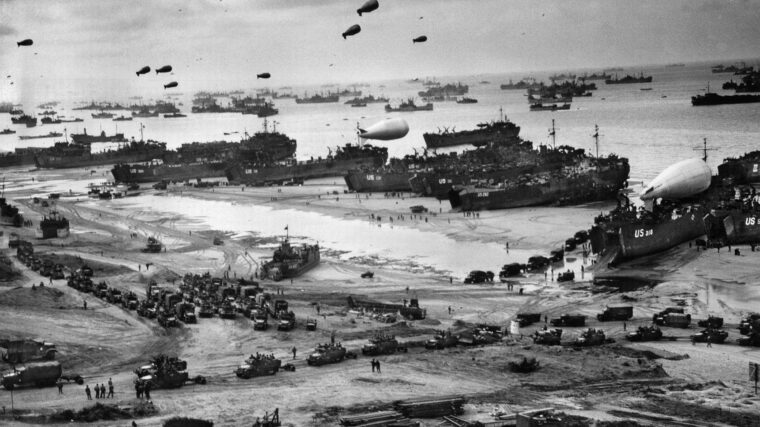
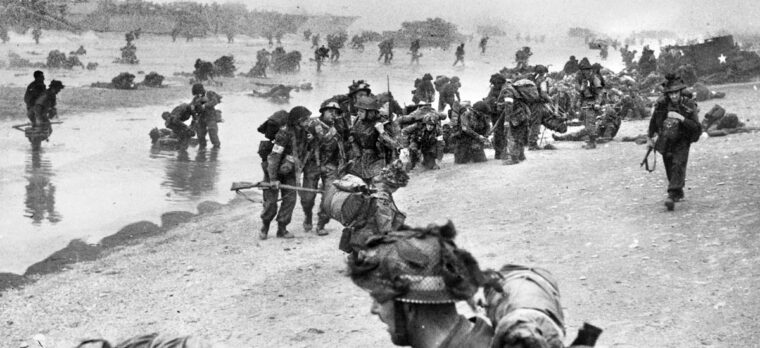
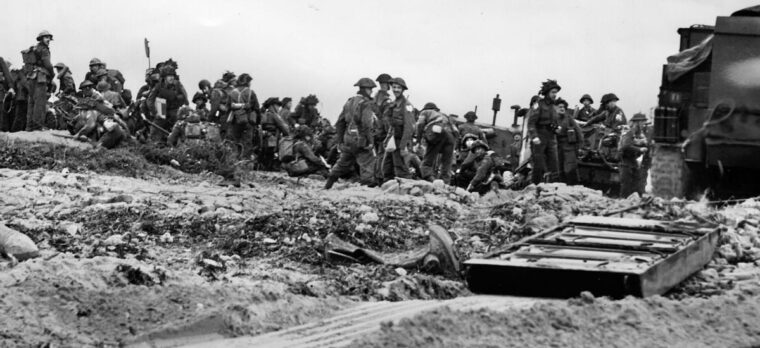
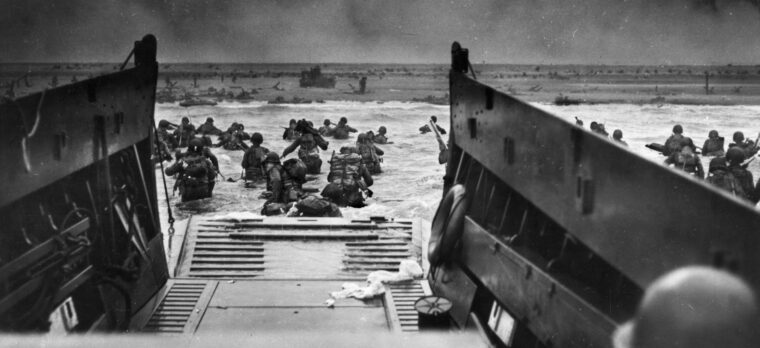
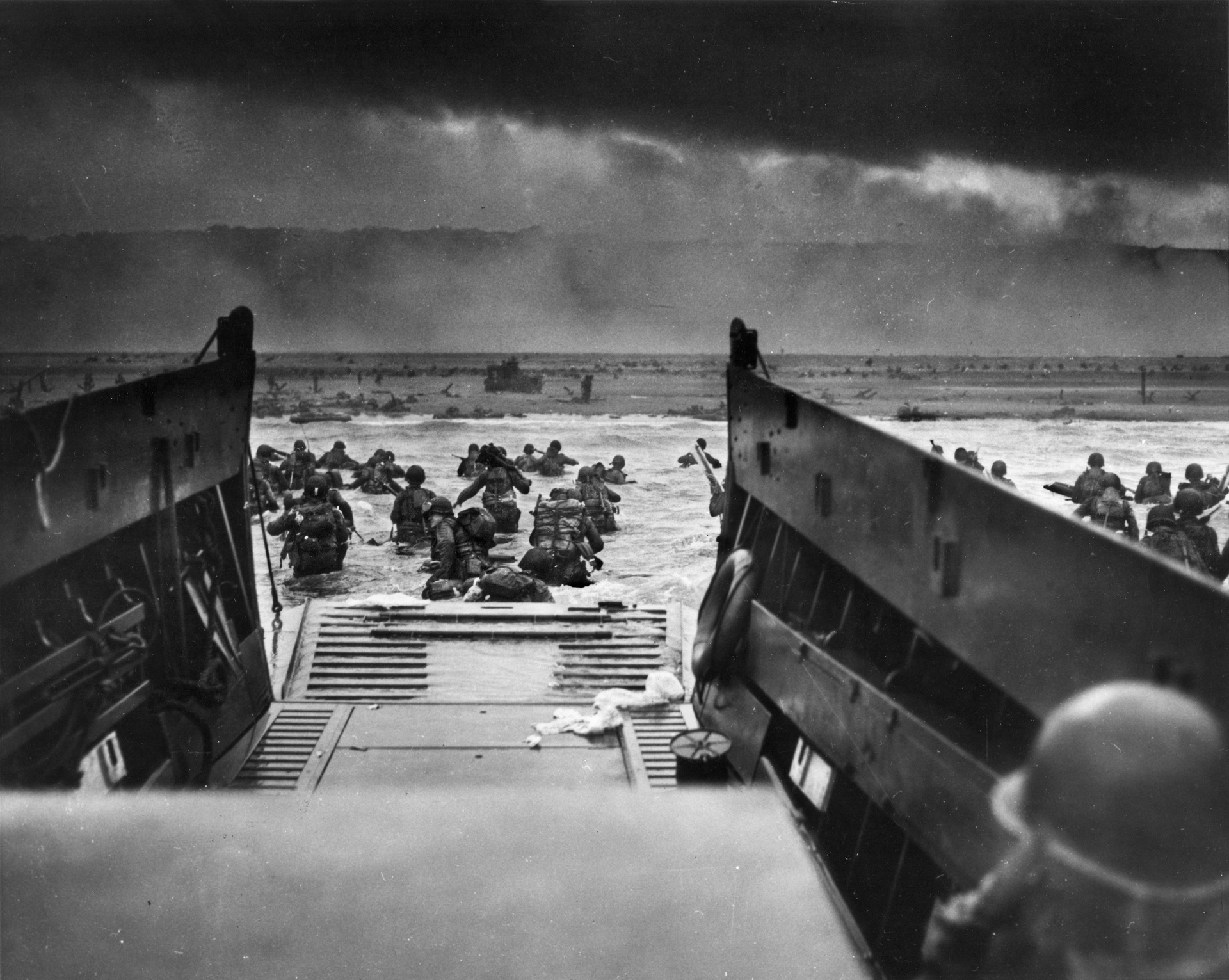
Code named Operation Overlord, the D-Day Invasion occurred on June 6, 1944, as elements of five Allied infantry and three Allied airborne divisions assaulted the Normandy coast of Nazi-occupied France during World War II. Under the overall command of General Dwight D. Eisenhower, the landings on Gold, Juno, Sword, Utah, and Omaha beaches succeeded in establishing a foothold on the continent. Following an arduous campaign in Normandy and savage fighting across the German frontier, troops of the Western Allies met the Soviet Red Army, advancing from the East, and Nazi Germany surrendered on May 7, 1945.
D-Day
Donald Malarkey’s comrades thought highly of him as a warrior and as a man. Staff Sergeant William “Wild Bill” Guarnere considered him his hero. Read more
D-Day
D-Day
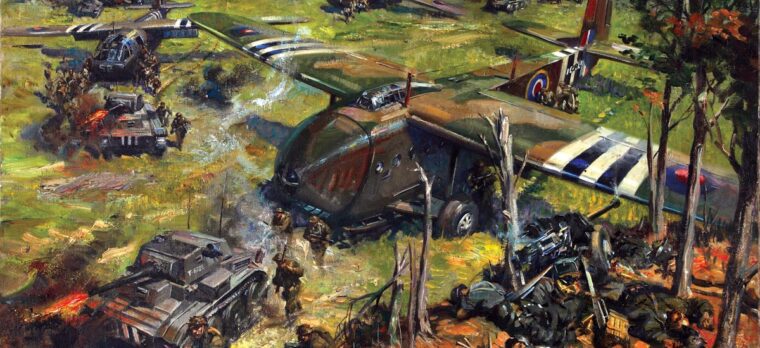
Late on the night of June 5, 1944, while American paratroopers were on their way to drop behind Utah Beach, another, smaller air armada carrying 170 British airborne troops was also dashing headlong into battle like an aerial cavalry charge towards the far eastern flank of the Normandy invasion site. Read more
D-Day
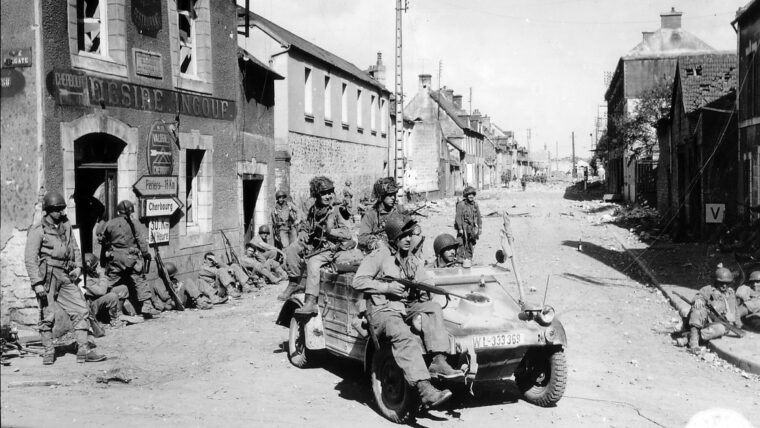
“Dead Man’s Corner,”at a road junction south of Saint-Côme-du-Mont, has become one of Normandy’s most famous landmarks. Read more
D-Day
The easternmost Allied landing beach of the Normandy invasion of June 6, 1944, was code-named Sword. It was the responsibility of British Maj. Read more
D-Day
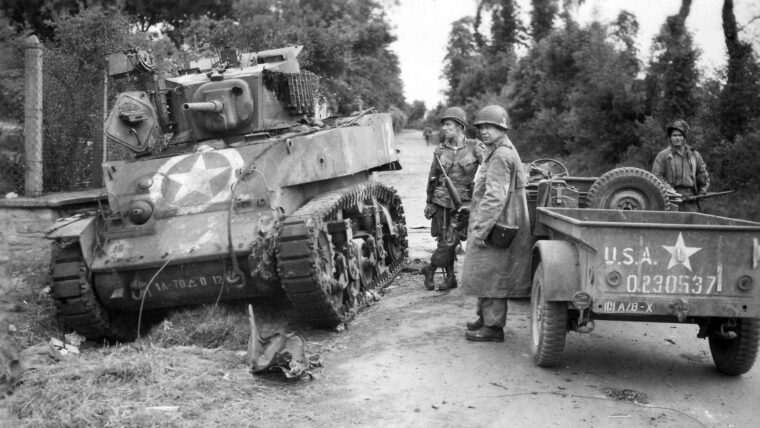
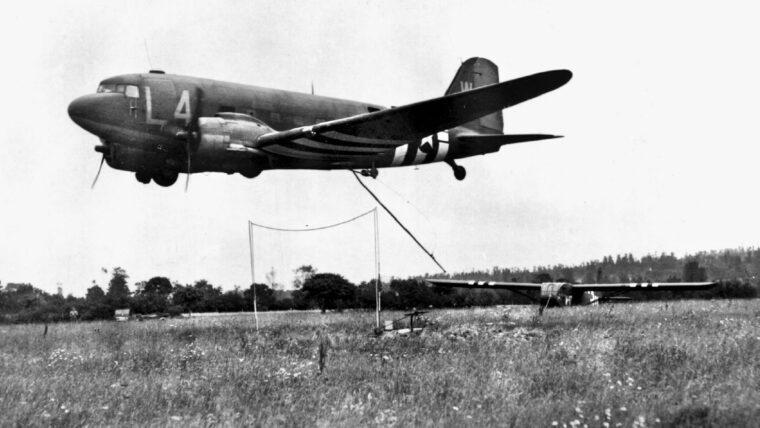
High over Normandy, France, eight paratroopers of the 82nd Airborne Division charged out the rear door of their C-47 Skytrain aircraft. Read more
D-Day
By Alan Davidge
In the early hours of June 6, 1944, a 20-year-old German soldier hurried to his post at Wiederstandsnest 62 (WN62) overlooking Omaha Beach to man his MG 42 machine gun. Read more
D-Day
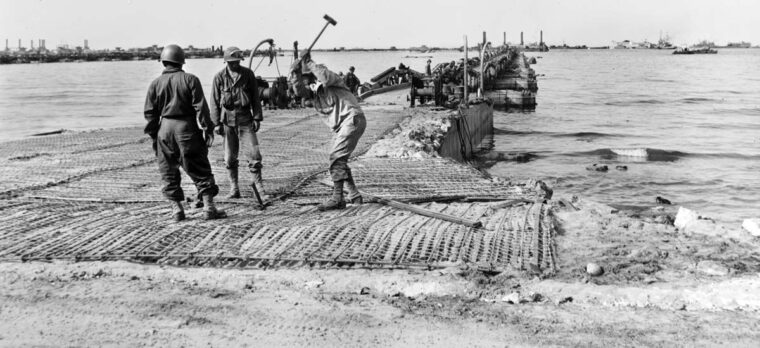
BACK STORY: The author has always had a soft spot for the story of the Mulberries. His mother, who was a skilled maker of wedding dresses in London, was conscripted to learn welding and sent to Jones’ Cranes, at Letchworth, just north of the capital city. Read more
D-Day
In the weeks leading up to the still-undefined D-Day, commanders argued about every detail of Operation Overlord. Read more
D-Day
In a field hospital in Normandy, France, 1st Lt. Madeline “Del” D’Eletto was watching an Army doctor operate on a soldier’s head injury when one of her fellow nurses asked, “What do I do with this?” Read more
D-Day
Teddy Roosevelt Junior had enjoyed a distinguished career even before D-Day. He had commanded a battalion in France during the Great War, served as secretary of the Navy from 1921 to 1924, been the governor of Puerto Rico from 1929 to 1932, and been governor-general of the Philippines for a year in the early 1930s. Read more
D-Day
With his troops in a bitter fight with German forces in northern France in the late summer of 1944, General Omar Bradley, commander of the Allied 12th Army Group, could not believe his ears. Read more
D-Day
Most students of World War II know that there were five invasion beaches included in Operation Overlord, the invasion of northwestern Europe, on June 6, 1944. Read more
D-Day
Few events in human history have been so fraught with drama as the Allied invasion of Normandy on June 6, 1944. Read more
D-Day
The Winter Line was the German Army’s defensive position in Southern Italy in late 1943. Set into high mountains which dominated the surrounding terrain, numerous Allied attacks against it failed, always with heavy casualties. Read more
D-Day
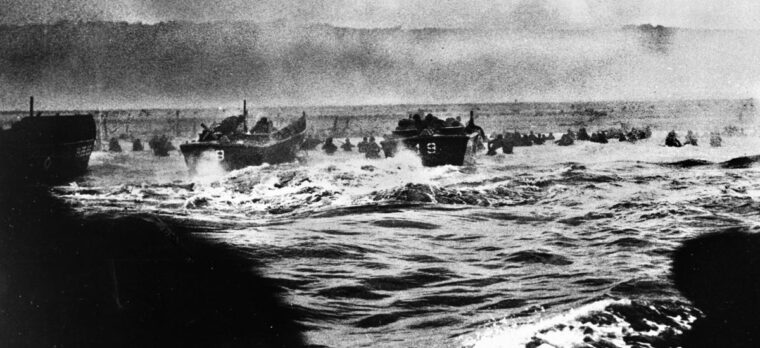
Twelve Landing Craft Vehicle Personnel (LCVPs) carrying Captain William Callahan’s F Company and Captain Eccles Scott’s G Company—some 400 men—slapped the English Channel’s rough waves as they approached Omaha Beach’s Les Moulins Draw. Read more
D-Day
The green light lit up the inside of the Douglas C-47 Skytrain’s fuselage, and 20 paratroopers from Easy Company’s Stick 70, 506th Parachute Infantry Regiment, 101st Airborne Division charged out the door. Read more
D-Day
As their landing craft plunged through heavy surf on the morning of June 6, 1944, it was obvious to the men of Company A, 116th Infantry Regiment, U.S. Read more
D-Day
“Oui.” It was one of the few words 101st Airborne paratrooper Norwood Thomas knew in French, and it served him well on the morning of June 6, 1944. Read more
D-Day
By Elmer Wisherd with Nan Wisherd
Elmer Wisherd was born on December 1, 1920, in North Dakota. Shortly thereafter, his family moved to a farm in Bruce, Wisconsin. Read more