Confederate
Grant’s Ordeal at the Battle of Shiloh
By Eric NiderostIt was raining heavily, a deluge of almost Biblical proportions that hammered down on the exhausted men of the Union’s Army of the Tennessee. Read more
Confederate
It was raining heavily, a deluge of almost Biblical proportions that hammered down on the exhausted men of the Union’s Army of the Tennessee. Read more
Confederate
For the Federal government at Washington, D.C., the news from Tennessee was grim in late September 1863. The Union Army of the Cumberland, under Maj. Read more
Confederate
Late in the morning of January 2, 1863, Confederate Maj. Gen. John Breckinridge gazed through the brush at newly arrived Union infantry occupying a partially wooded hill to his front near Murfreesboro, Tenn. Read more
Confederate
At the start of the American Civil War in April 1861, U.S. President Abraham Lincoln proclaimed that he planned to blockade the Confederacy by stationing warships in waters off its shores. Read more
Confederate
As the fateful day drew to a close, the exhausted World War I soldiers of the German 25th and 82nd Reserve Divisions huddled in their trenches. Read more
Confederate
The occasion was, for the North, inauspicious. In the Battle of First Manassas, the Federals were routed, humiliated, and almost utterly crushed. Read more
Confederate
When the American Civil War erupted in 1861 Iowa soldiers were equipped with old converted smoothbore flintlock muskets. Read more
Confederate
All day on July 4, 1863 the Union and Confederate armies stared at each other during the Battle of Gettysburg. Read more
Confederate
The Confederate II Corps commander was as bruised and tired as the troops in his command by the late afternoon of July 1 at the strategic Pennsylvania crossroads town of Gettysburg. Read more
Confederate
Louisiana held an interesting political climate during the American Civil War. It was a prominent slave state; by 1860, nearly half of Louisiana’s population came from slaves. Read more
Confederate
On June 12, 1864, the American Civil War Battle of Cold Harbor came to a close, which became one of the final battles in Ulysses S. Read more
Confederate
When the American Civil War erupted in April 1861, the 10 companies of the 4th U.S. Infantry were spread along the West Coast from Puget Sound to the Gulf of California in various small, far-flung garrisons. Read more
Confederate
Under bright moonlight, Union troops marched into Alexandria, Virginia, on May 24, 1861, one day after Virginia seceded from the Union. Read more
Confederate
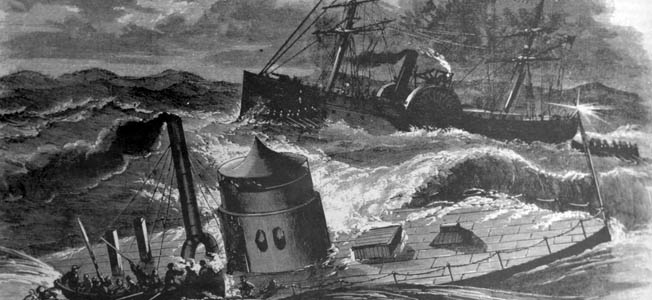
The subsequent careers of the Monitor and Merrimack were not as dramatic as their first clashes. The two ironclads never met in combat again after their infamous battle on March 9, 1862. Read more
Confederate
During the Battle of Williamsburg, Virginia, in May 1862, General Joseph Hooker’s Union forces were in pursuit of the withdrawing Confederates. Read more
Confederate
No one expected this—not the fiercest “fire-eater” in South Carolina or the flintiest abolitionist in New England. Read more
Confederate
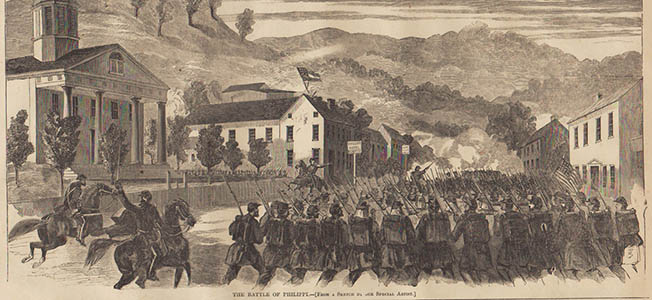
On this day in 1861, Union and Confederate forces met at the Battle of Philippi in modern day West Virginia. (The area still belonged to Virginia during the early years of the Civil War.) Read more
Confederate
Much of the American Civil War can be understood through military correspondence, army documents and letters. But to understand the social impact of the bloodiest battles in the nation’s history, researchers and citizens alike often turn to what was then a budding technology: photography. Read more
Confederate
Although Union Colonel Silas Colgrove had previously led his men through some of the most horrific fighting in the eastern theater of the Civil War, the order he received on the morning of July 3, 1863, in the woods near Culp’s Hill at Gettysburg, was the most unnerving he had ever received. Read more
Confederate
When Maj. Gen. Curtis Lemay, the hard-driving commander of the Twentieth U.S. Air Force based in Guam, decided to change tactics in early 1945 to boost the effectiveness of the B-29 Superfortress, it was the Bell Aircraft plant in Marietta, Georgia, that ultimately provided him with the stripped-down bombers that played such a key role in ending the war in the Pacific. Read more