Charles de Gaulle
The Scholarly Spies
By Tim MillerEarly in June 1940, refugees from northern France and the low Countries who had flooded Paris in May fled with the residents of the city as the German advance neared. Read more
Charles de Gaulle
Early in June 1940, refugees from northern France and the low Countries who had flooded Paris in May fled with the residents of the city as the German advance neared. Read more
Charles de Gaulle
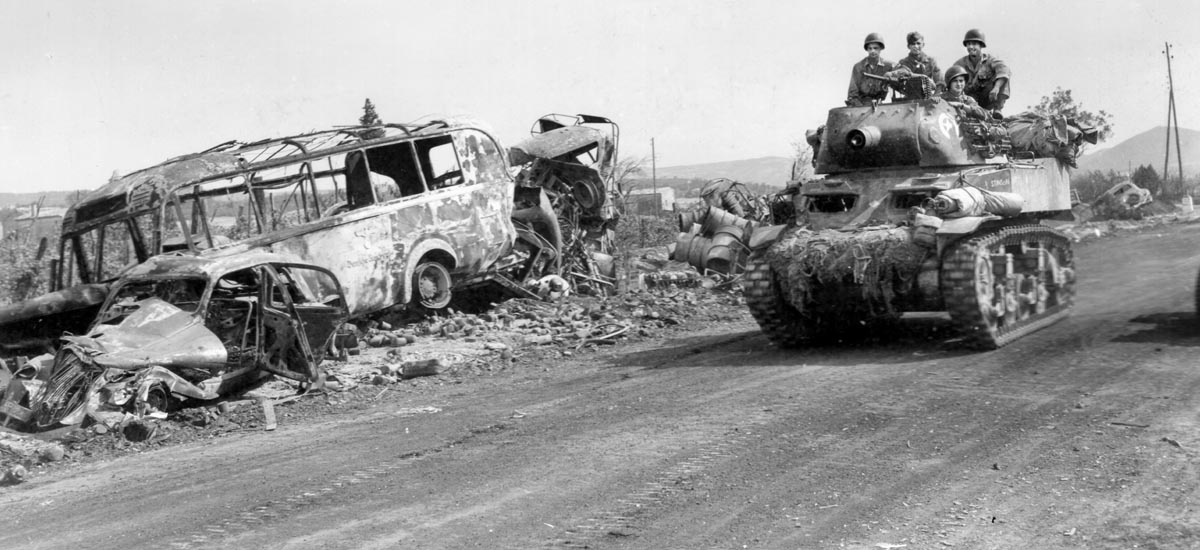
Less than a year after the sudden and devastating Japanese attack against the United States at Pearl Harbor on December 7, 1941, the American military was about to embark on a large-scale offensive operation against German and Italian forces in North Africa. Read more
Charles de Gaulle
On the evening of June 16, 1940, Marshal Henri Philippe Pétain was appointed Prime Minister of France. It was a critical time. Read more
Charles de Gaulle
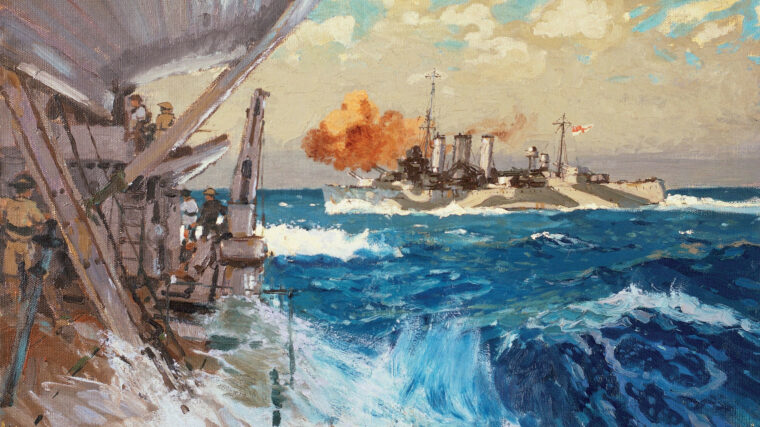
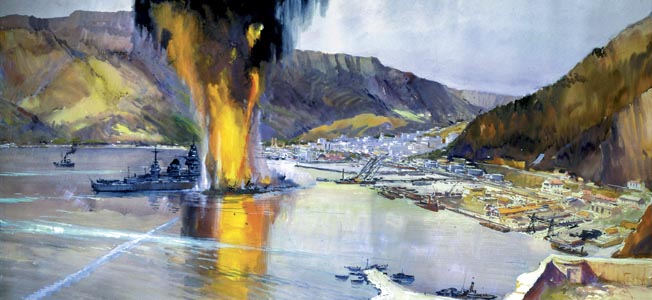
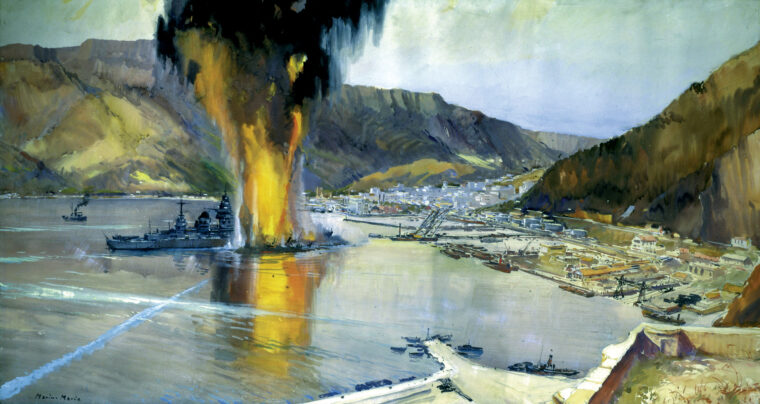
Steaming through the summer Mediterranean night, the world having gone sour in two awful months, British Vice Admiral Sir James Somerville read the message just sent to him from London: “You are charged with one of the most disagreeable and difficult tasks that a British Admiral has ever been faced with, but we have complete confidence in you and rely on you to carry it out relentlessly.” Read more
Charles de Gaulle
Rain battered the shore and the seas were rough on the night of October 21, 1942. Under the surface of the water, a submarine carried the Allies’ best hope for turning the tide of war in 1942. Read more
Charles de Gaulle
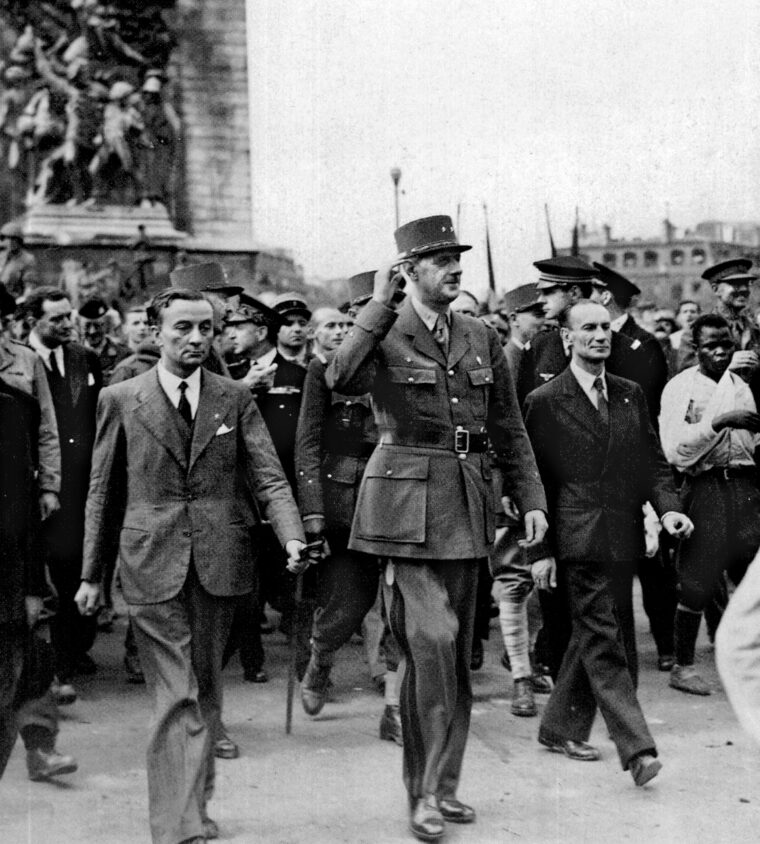
At dusk on August 24, 1944, south of Paris, about half a mile from Croix de Berny crossroads, stood a tall, lanky man tapping a malacca cane. Read more
Charles de Gaulle
Early in 1944, German Field Marshal Erwin Rommel, the defeated hero of North Africa and now head of Army Group B in France, was tasked with strengthening the Atlantic Wall defenses against Allied invasion. Read more
Charles de Gaulle
The ancient Chinese military strategist Sun Tzu wrote, “Go forth to the enemy’s positions to which he must race. Read more
Charles de Gaulle
The world was understandably shocked when France capitulated to Nazi Germany in June 1940, but not all Frenchmen accepted their country’s humiliation. Read more
Charles de Gaulle
Flying a tortuous route from North Africa tothe French coast of Normandy via Casablanca and Gibraltar, an unarmed Lockheed Lodestar of the Free French Air Force broke through cloud cover over the English Channel on the morning of Sunday, August 20, 1944. Read more
Charles de Gaulle
The director flicked his finger, and General Charles de Gaulle began reading his address into the British Broadcasting Corporation’s microphone, speaking from London to his defeated countrymen across the English Channel, calling upon them to continue resistance in the face of overwhelming German supremacy. Read more
Charles de Gaulle
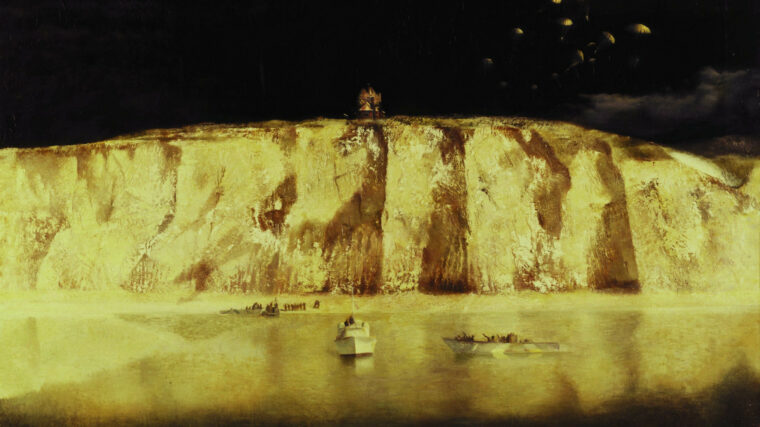
The parachute of aptly named Major J.D. Frost cracked open in the freezing air high above the French Channel coast at 12:45 am, and he commenced drifting down through the moonlit gloom. Read more
Charles de Gaulle
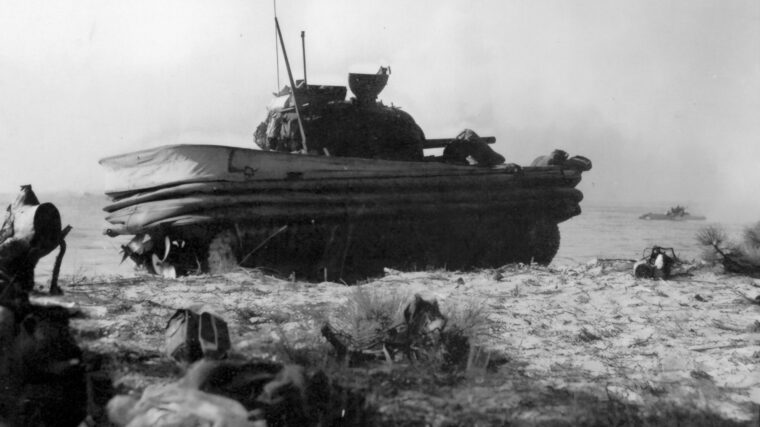
German defenders hunkered in their concrete and steel bunkers along the Normandy coast were in for two major shocks on Tuesday, June 6, 1944. Read more
Charles de Gaulle
Like all Palestinians and most Arabs, Haj Amin al-Hussaini not only looked forward to an Axis Pact victory in World War II but also saw it as a means of defeating what he believed was a joint British-Jewish conspiracy to foist an Israelite homeland on the Middle East that would be to the detriment of his own people. Read more
Charles de Gaulle
After the humiliating fall of France in June 1940, two impassioned patriots—a general and an infantry captain—refused to accept defeat and determined, against all odds, to exact retribution from the German invaders. Read more
Charles de Gaulle
“What General Weygand has called the Battle of France is over,” intoned British Prime Minister Winston Churchill. “The Battle of Britain is about to begin.” Read more
Charles de Gaulle
By the late summer of 1944, the Third Reich was almost surrounded. Two years earlier Adolf Hitler had ground 10 European countries under his heel along with vast expanses of North Africa and Soviet Russia. Read more
Charles de Gaulle
Hitler was enraged as he stalked his way around the room during the waning months of World War II. Read more
Charles de Gaulle
When the armistice between France and Germany was put into force on June 25, 1940, the fate of the powerful French Navy—the fourth largest in the world—was of critical importance to the British. Read more
Charles de Gaulle
In the late 18th century, the French established Catholic missions in Indochina, and until the 1820s they enjoyed local protection, but after that persecution began and increased steadily, particularly under Emperor Tu-Duc, who reigned from 1847 to 1883 and wanted to stamp out Christianity. Read more